15 Two Car Garage Organization Ideas for 2026

A two-car garage should give you enough room to park your vehicles without sacrificing storage for tools, outdoor equipment, and household essentials. Yet, without a practical organization system, even a spacious garage can quickly become crowded with boxes, bicycles, and forgotten belongings.
The good news is that you don't need an expensive renovation to make your garage more functional. A few well-planned storage solutions can help you reclaim valuable floor space, keep everyday items accessible, and make the entire area easier to maintain.
From wall-mounted organizers to overhead racks, these two-car garage organization ideas will help you create a cleaner, safer, and more efficient space that works for your household.
Why Most Two-Car Garages End Up Cluttered?
Garage clutter usually develops gradually. A box of holiday decorations goes into a corner, gardening tools lean against the wall, and sports equipment gets left wherever it is convenient. Eventually, these small decisions turn into a larger storage problem.
One common issue is the lack of clearly defined storage areas. When tools, cleaning products, seasonal supplies, and recreational equipment share the same space, finding anything becomes unnecessarily difficult.
Another problem is relying entirely on the floor for storage. Large containers, spare tires, and bicycles can occupy the exact areas needed for parking and walking. Items that are rarely used also tend to accumulate because there is no regular process for reviewing what is worth keeping.
The solution is to establish a simple system. Remove belongings you no longer need, group similar items together, and assign each category a designated home. Once you start using vertical storage and sensible zones, a two-car garage becomes much easier to manage.
How to Turn Chaos Into a Functional Garage?
Start by measuring your garage and identifying how much room your vehicles need, including space for opening doors and walking around them. This measurement should guide every storage decision.
Next, sort your belongings into categories such as automotive supplies, gardening equipment, sports accessories, household storage, and seasonal decorations. Donate usable items you no longer need and dispose of unwanted materials appropriately.
Look at your walls and ceiling before purchasing storage products. Shelves, hooks, cabinets, and overhead racks can accommodate many belongings without consuming valuable parking space. Transparent containers and clear labels make stored items easier to identify.
Finally, create designated zones based on how frequently you use each category. Keep everyday tools within easy reach, place occasional-use belongings higher up, and reserve the most accessible areas for essential equipment. A practical layout should allow both cars to enter and exit comfortably while leaving storage easy to access.
1. Mount Fitness Gear on Slatwall
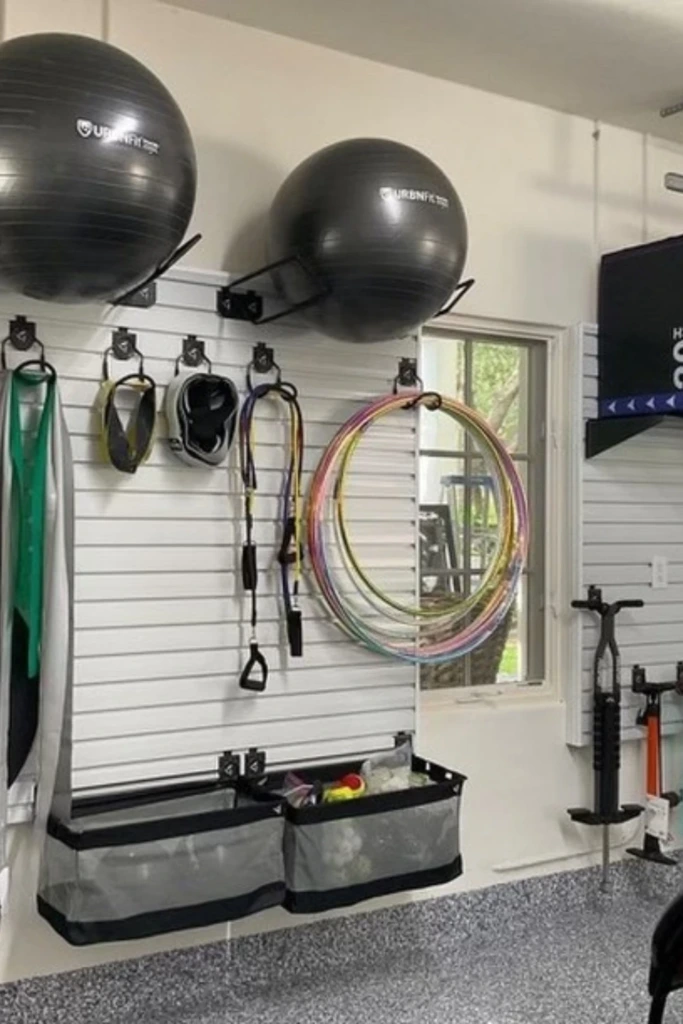
Exercise equipment often ends up scattered across the garage floor because resistance bands, skipping ropes, hoops, and similar accessories are awkward to store in conventional cabinets.
A slatwall panel offers a flexible alternative. Install compatible hooks, baskets, and holders to keep fitness accessories grouped together along one wall. You can arrange the accessories according to their size and frequency of use, making it easier to grab what you need before a workout.
This approach also makes future adjustments simple. If your exercise routine changes or you acquire new equipment, you can reposition the accessories instead of installing an entirely new storage system.
Choose a panel and mounting hardware suitable for the equipment's weight, and keep frequently used items at a comfortable height.
2. Hang Bikes to Free Floor Space
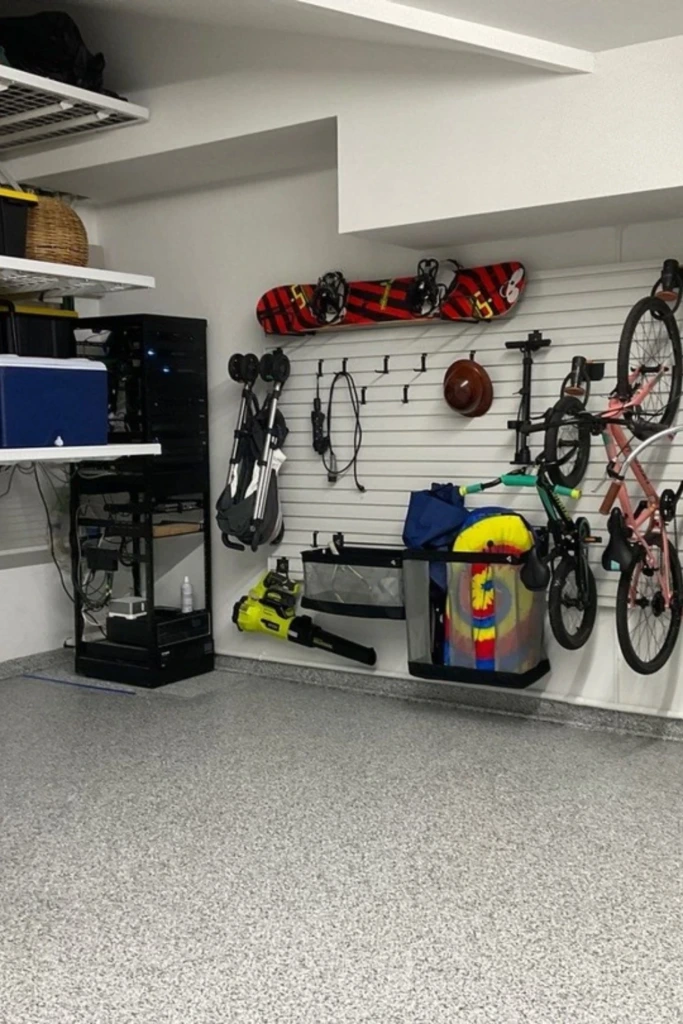
Bicycles can take up considerable room when they are parked against walls or left leaning beside a vehicle. They may fall over, obstruct walkways, and make opening car doors more difficult.
Wall-mounted bike hooks provide a straightforward solution. Depending on your garage layout, you can hang bicycles vertically by a wheel or use a suitable horizontal mounting system. A slatwall organizer with compatible bike hooks can also make it easier to adjust the arrangement later.
Before installation, check the manufacturer's weight limits and make sure the hooks are attached to appropriate structural support. Leave enough clearance for handlebars, pedals, and neighboring bicycles.
Position the bikes so that adults and children can retrieve them without moving other belongings. This small change can reclaim a surprising amount of floor space.
3. Use Shelving for Clear Zones
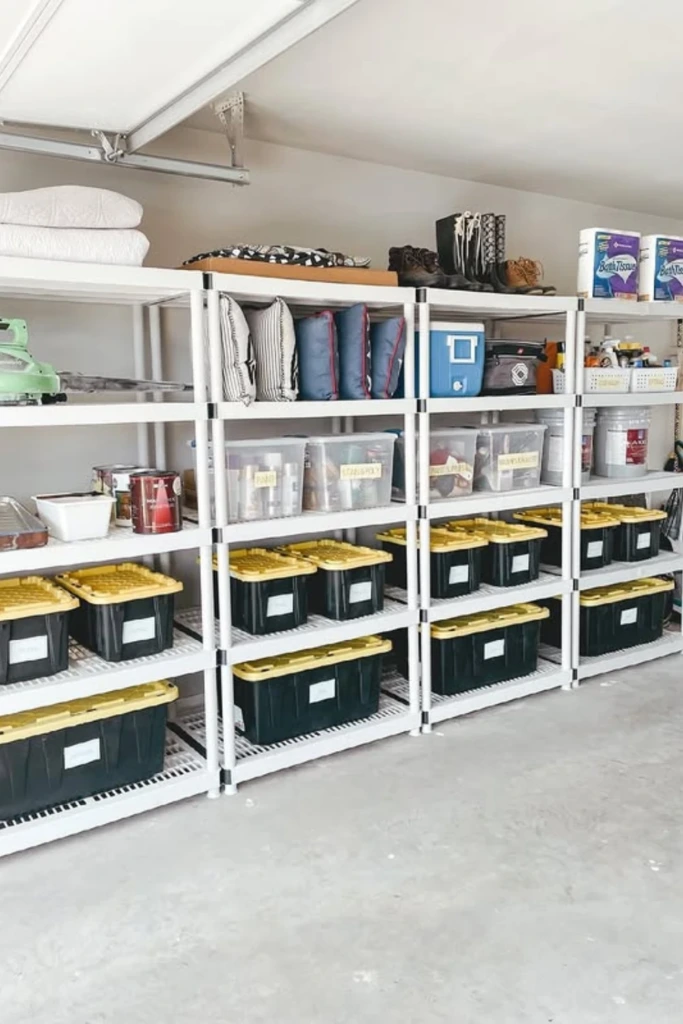
A sturdy shelving unit helps transform miscellaneous garage storage into an organized arrangement. Instead of stacking boxes in different corners, give each shelf a specific purpose.
For example, one section can hold automotive supplies, another can store outdoor accessories, and a separate shelf can accommodate household backups or seasonal decorations. Transparent containers make it easier to identify contents without opening every box.
Use durable, appropriately rated shelving that can handle the combined weight of the items stored on it. Heavier containers should generally sit on lower shelves to improve stability and reduce lifting risks.
Labels add another layer of convenience, especially when several containers look alike. By keeping similar items together and returning them to their assigned locations, you can maintain a more orderly garage without repeatedly reorganizing the entire space.
4. Mount Bikes on Wooden Slats
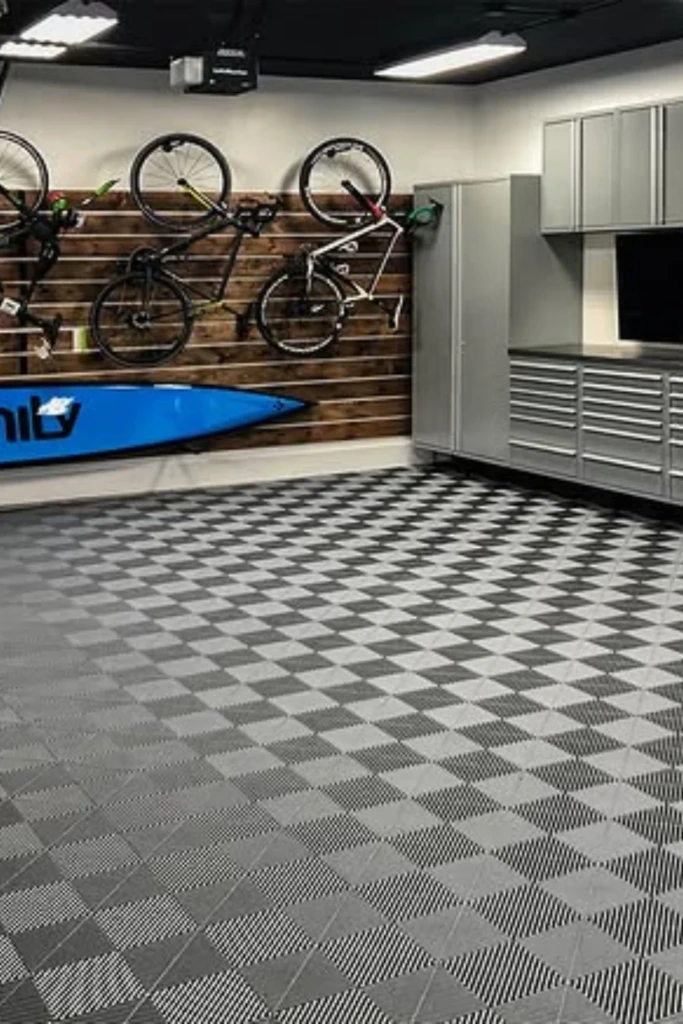
A wooden slat wall combines practical bicycle storage with a more finished appearance. It provides a defined mounting surface and can make an otherwise plain garage wall look intentional and coordinated.
To create this arrangement, install properly supported wooden slats or a suitable backing system, then attach bike hangers compatible with the bicycles you own. Arrange the mounts according to the bikes' lengths and handlebar widths so that the stored bicycles do not collide.
The same wall may accommodate other outdoor equipment, such as a paddleboard, if the mounting hardware and supporting structure are designed for its weight and dimensions.
Seal or finish the wood if desired to improve its appearance and make routine cleaning easier. Before loading the wall, verify that the slats, fasteners, and underlying supports can handle the intended loads.
5. Mix Wall Hooks with Overhead Shelves
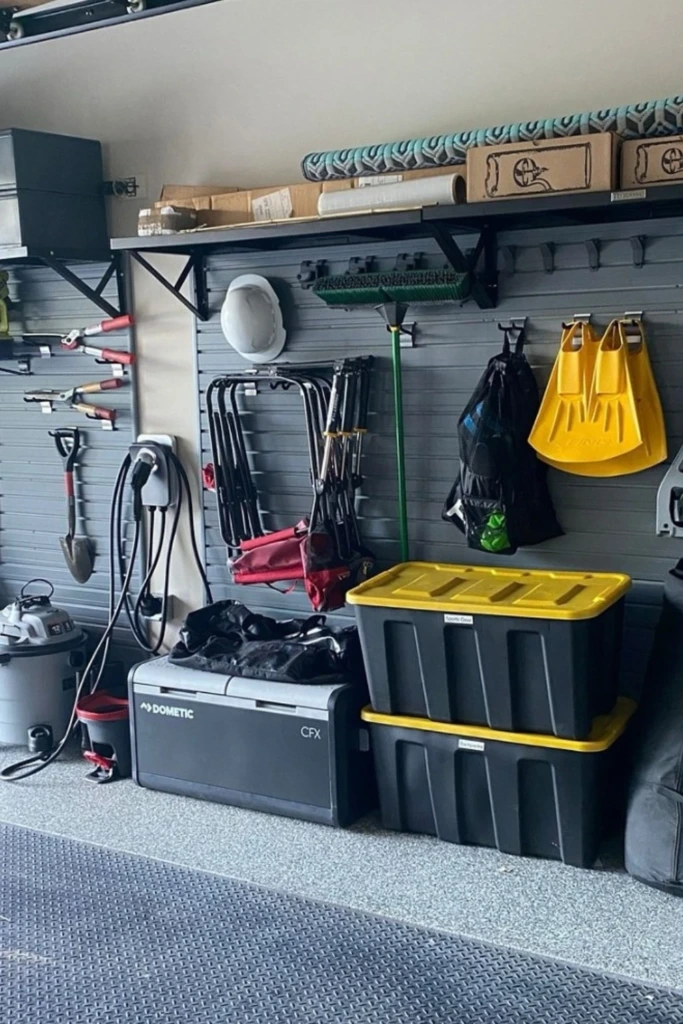
Combining wall hooks with elevated shelving allows you to use different parts of the garage for different types of belongings.
Hooks can hold lightweight folding chairs, garden tools, and other compatible equipment along the lower wall. Shelves above can accommodate labeled containers filled with camping accessories, seasonal decorations, or items you rarely need.
This layered arrangement keeps many objects off the floor while making frequently used equipment easier to reach. It is particularly useful in garages where floor space is limited but wall height is available.
Choose shelves and brackets rated for the intended load, and secure them to suitable structural supports. Store lighter items overhead rather than placing heavy objects above vehicles or frequently occupied areas. Keep ladders, long-handled tools, and other hanging equipment firmly secured to prevent accidental falls.
6. Stack Bins on Overhead Shelves
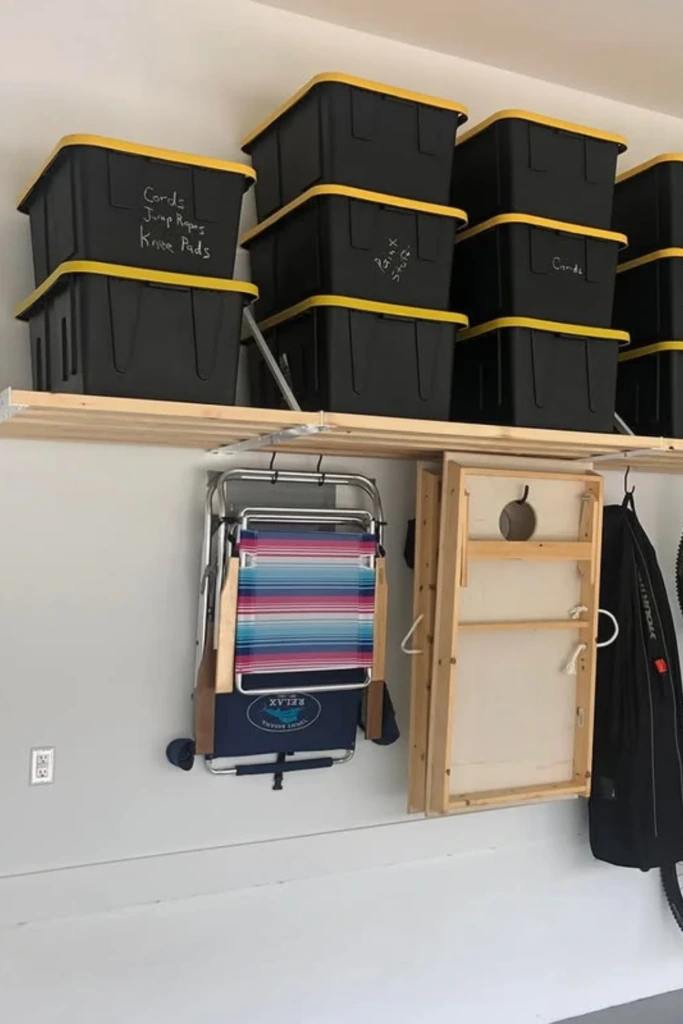
When the walls and floor are already busy, elevated shelving can provide another place for household storage. Well-positioned shelves allow you to store labeled bins above the main working area without obstructing the parking spaces.
Use matching containers where possible so they fit neatly on the shelves and are easy to identify. Store seasonal decorations, spare cables, and infrequently used accessories according to their weight and storage requirements.
The wall underneath the shelving can accommodate folding chairs, board games, or other flat items using appropriate hooks or holders. This creates a useful combination of overhead and wall-mounted storage.
Make sure the shelving is designed for garage conditions and securely installed. Avoid overloading it, and keep frequently needed or heavy containers at lower levels. Always consider the garage door's movement, ceiling height, lighting, and vehicle clearance before choosing an overhead location.
7. Build a Wall of Adjustable Shelves
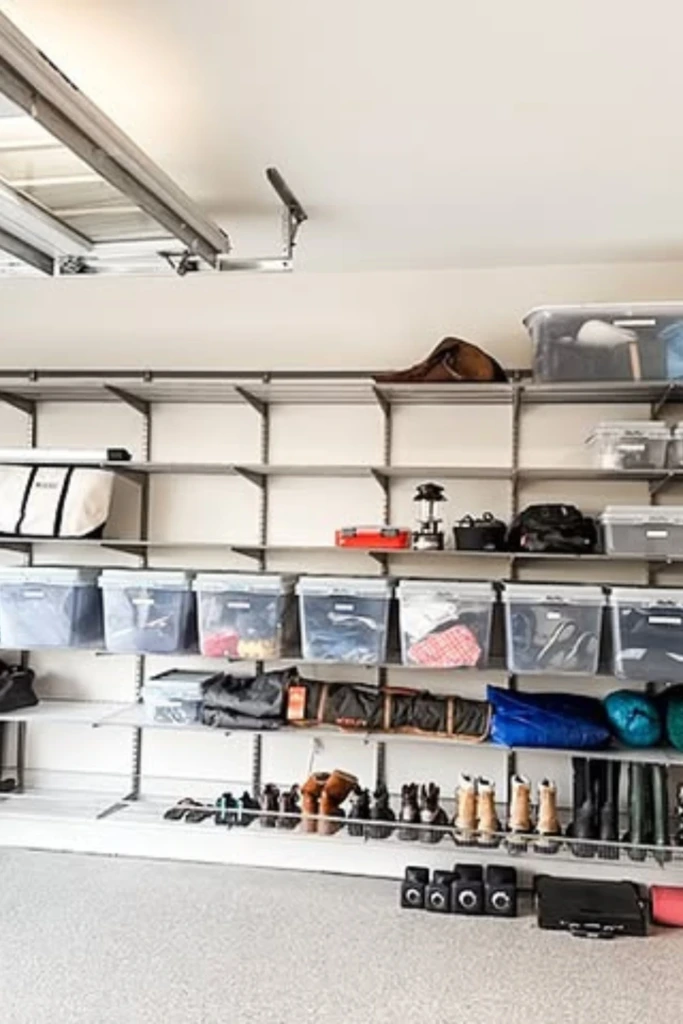
Storage needs rarely remain the same forever. You may acquire camping equipment, change hobbies, or need additional space for household supplies. Adjustable shelving makes it easier to accommodate those changes.
Track-based shelving systems use vertical wall tracks and movable brackets to support shelves at different heights. You can reposition the shelves as your collection of belongings changes, making this arrangement more flexible than fixed shelving.
Clear containers work well for smaller camping accessories, tools, and sports equipment. Lower shelves can hold outdoor footwear or other items that benefit from easy access, provided the shelves are rated for the weight.
Before installation, select a track system suitable for the wall material and expected loads. Follow the manufacturer's mounting instructions and ensure the brackets are properly engaged.
A well-planned adjustable shelving wall helps you make efficient use of vertical space without committing to a permanent arrangement that may not suit your future needs.
8. Use Wall-Mounted Wire Shelving
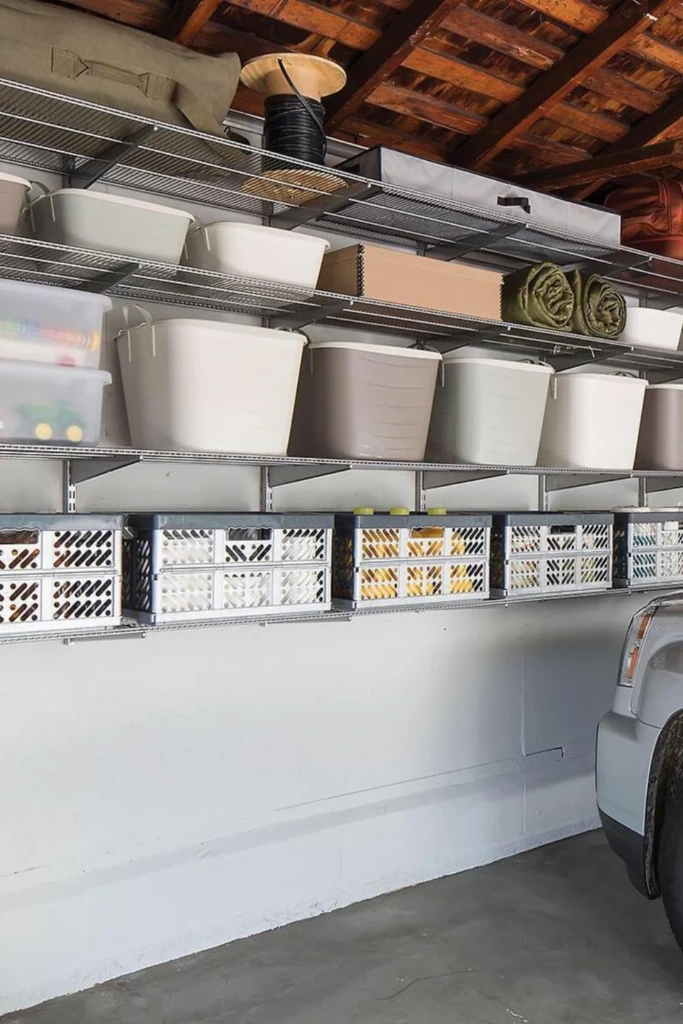
Wire shelving offers a practical way to store containers while keeping the arrangement visually open. Its design allows air to circulate around stored belongings and makes it easier to see what is placed on each shelf.
Use these shelves for camping bags, seasonal accessories, storage totes, and other items that can be safely kept in the garage. Smaller ventilated baskets can hold frequently used supplies, while larger containers can occupy the upper sections.
Because wire shelving comes in different depths and load capacities, select a system that fits your available wall space and storage requirements. Check that the brackets and fasteners are appropriate for the supporting wall.
Keep heavy items low and avoid allowing containers to extend into the path of a vehicle. This arrangement is especially useful when you want accessible storage without creating the closed-in appearance of large cabinets.
9. Create a Yard Tool Zone
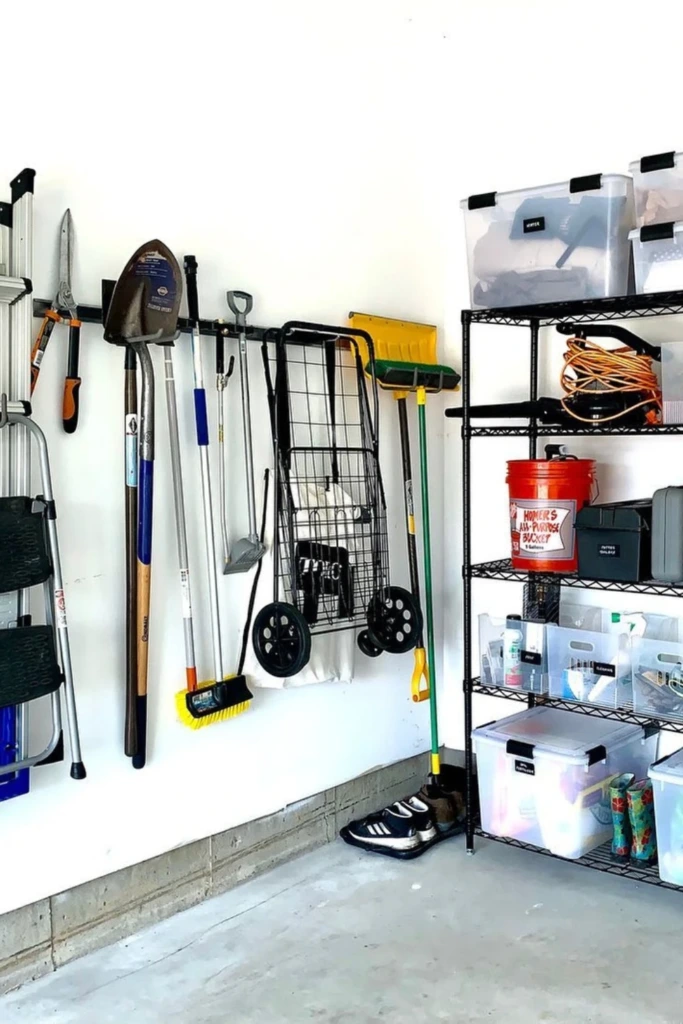
Rakes, shovels, brooms, pruning tools, and garden hoses are difficult to manage when they are left in a pile. Their long handles can also create tripping hazards or interfere with vehicle doors.
Designate one section of the garage for outdoor maintenance equipment. Install a wall-mounted rack with individual holders to keep suitable tools upright and separated. A dedicated location makes it easier to spot missing equipment and return everything after yard work.
Nearby shelving can hold gardening gloves, plant ties, cleaning products, and other small supplies in labeled containers. Keep sharp tools secured and position heavy equipment where it can be lifted safely.
A separate garden zone prevents outdoor equipment from spreading into the rest of the garage. It also makes seasonal maintenance more convenient because the items you need are stored together rather than scattered across several shelves.
10. Install Ceiling Racks for Seasonal Gear
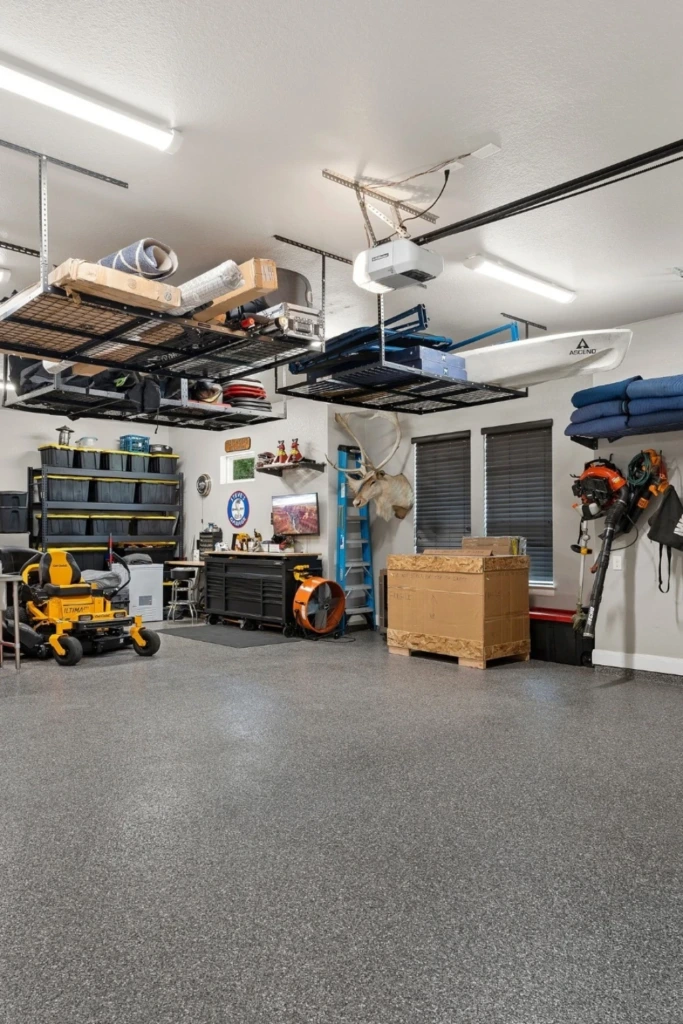
The ceiling can offer valuable storage capacity when the garage floor and walls are already occupied. Properly installed overhead racks are useful for items that you need only occasionally, such as holiday decorations, camping equipment, and selected outdoor accessories.
Choose a rack specifically designed for overhead garage storage, and confirm that the ceiling structure can safely support the complete load. Installation should follow the manufacturer's instructions, including requirements for joist attachment, fasteners, and weight limits.
Place belongings in sturdy containers that can be handled without excessive reaching or lifting. Label each container so you know what it holds before taking it down.
Large items, including kayaks, require equipment specifically rated for their dimensions and weight. Never assume an ordinary storage rack can support oversized recreational gear.
Keep the area above vehicles free of poorly secured objects, and account for the garage door tracks, opener, lighting, and ceiling height before installing any overhead system.
11. Line Walls with Open Shelving
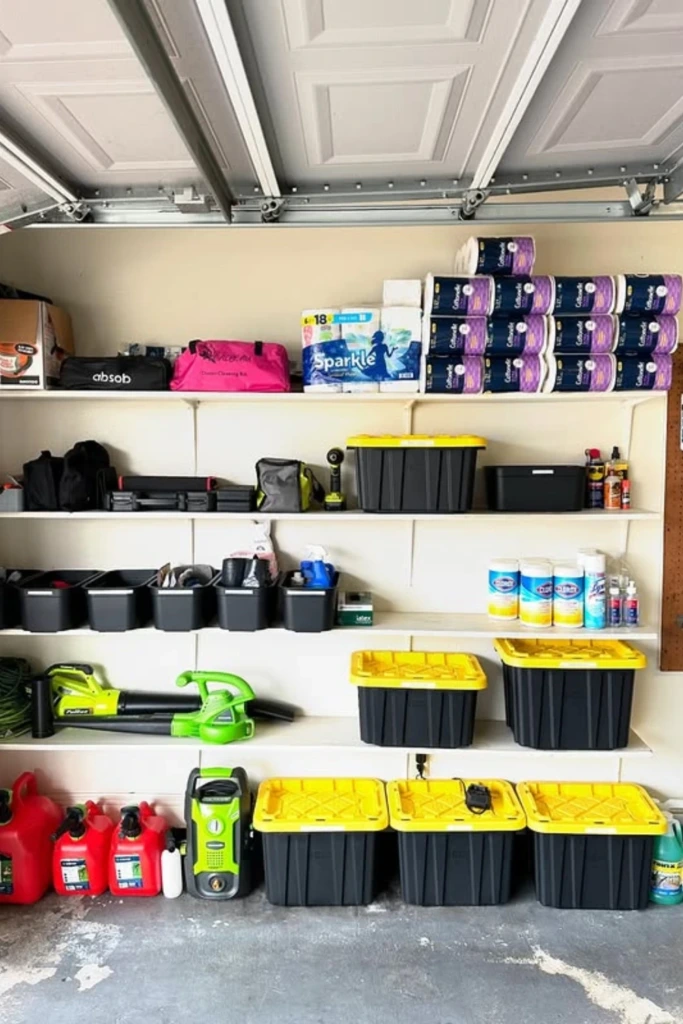
Open shelving provides accessible storage for supplies you use regularly. It works well for organizing cleaning products, automotive accessories, paper goods, toolboxes, and containers of household essentials.
Arrange the shelves by category instead of placing unrelated items wherever space happens to be available. For example, keep car-care supplies together and use a separate section for household backups.
A pegboard beside the shelving can accommodate compatible hand tools, making frequently used equipment visible and easy to return after a project. Small hooks, holders, and accessory bins help keep individual tools separated.
Choose shelf depths that provide adequate capacity without extending too far into parking or walking areas. Secure the shelving to suitable wall supports and distribute the load according to its rating.
For a cleaner appearance, group similar containers together and label their contents. Open shelving makes it easier to notice when supplies are running low and reduces the likelihood of forgotten items becoming buried at the back of a cabinet.
12. Build Custom Wood Shelving
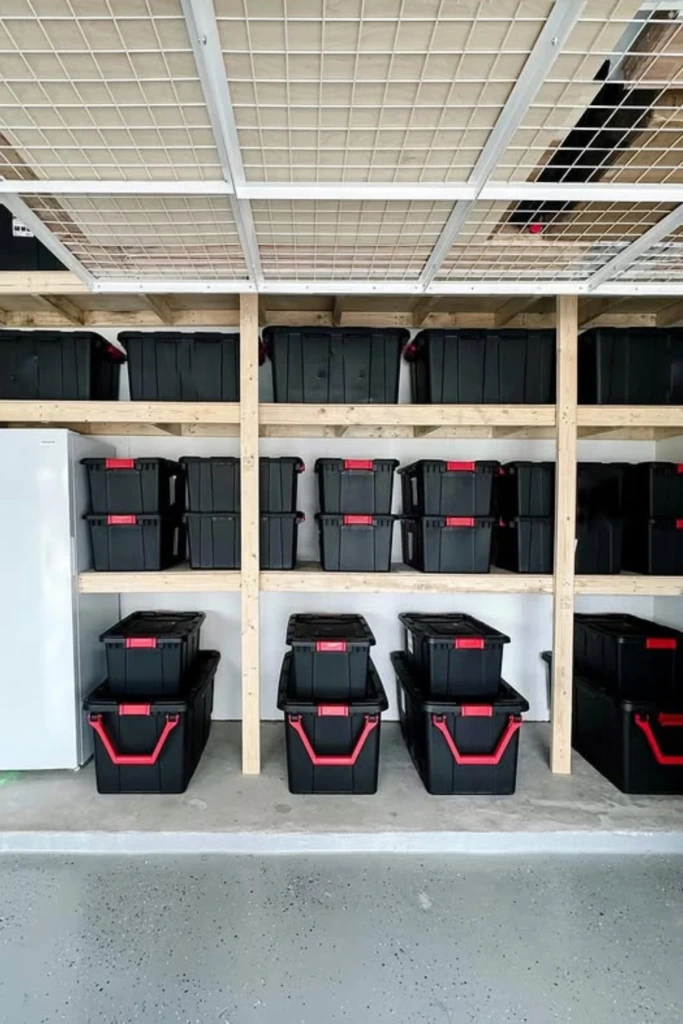
Sometimes standard storage units do not fit the dimensions of a two-car garage. An unusually shaped corner, narrow wall, or specific collection of containers may call for a custom shelving solution.
A wooden frame built from suitable lumber can be designed around your available space. For instance, a sturdy frame made with appropriately sized framing timber can support several rows of matching storage totes while creating a consistent appearance.
Measure the containers before determining shelf height and depth. Allow enough room to remove each bin without dragging it against neighboring items, and avoid building shelves so deep that belongings become difficult to reach.
The frame must be designed for the intended load, with adequate bracing and suitable connections. Use materials and fasteners appropriate for the garage environment, and secure the structure where necessary to prevent tipping or movement.
Keep heavier containers on lower levels and avoid placing items that are too heavy to lift safely on high shelves. A custom unit can provide excellent storage capacity, but its stability and load-bearing design should take priority over appearance.
13. Store Tires on Overhead Racks
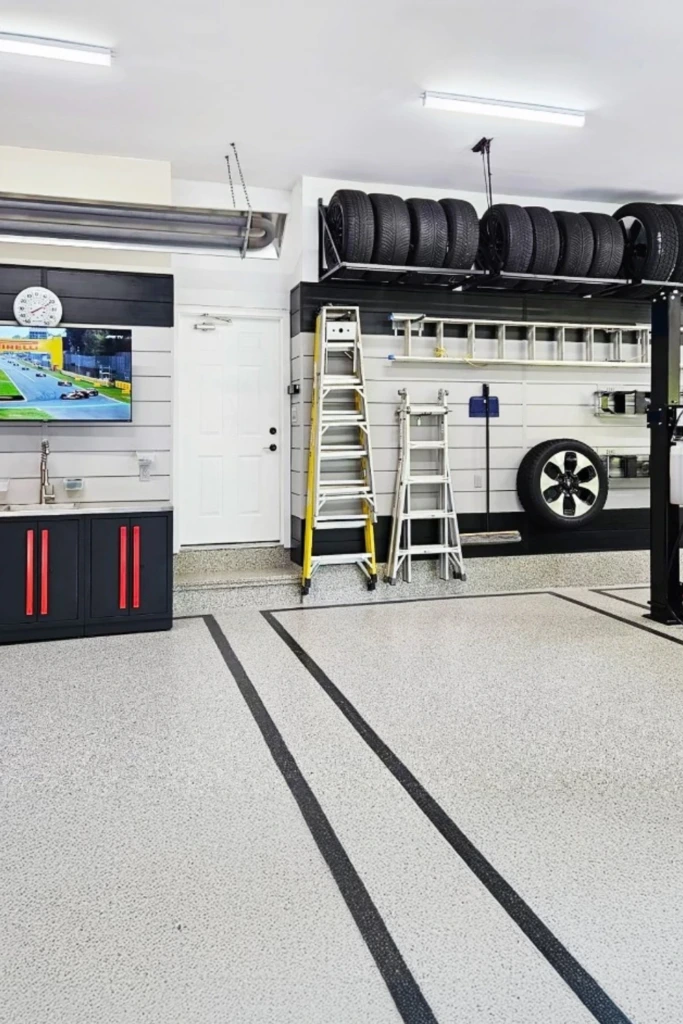
Spare tires and seasonal wheel sets can consume valuable floor space, particularly when several sets are stored in the garage. A purpose-built storage rack may help move suitable tires out of the way.
Before choosing an overhead system, determine whether your tires are stored with wheels attached and check the combined weight. Select a rack specifically designed for that configuration and confirm that its mounting system is suitable for the ceiling structure.
Follow the manufacturer's loading instructions carefully. Tire storage requirements can differ depending on whether the tires are mounted on rims, so use guidance appropriate to your equipment rather than assuming every set can be stored identically.
Once the tires are safely stored, the freed-up floor area can accommodate other equipment or improve vehicle access. Nearby wall hooks can hold compatible ladders, while smaller automotive accessories can be placed in designated cabinets.
Keep all stored items clear of garage door mechanisms, and never install heavy overhead storage without verifying the structure and the complete system's load rating.
14. Use Slatwall for Yard Tools and Gear
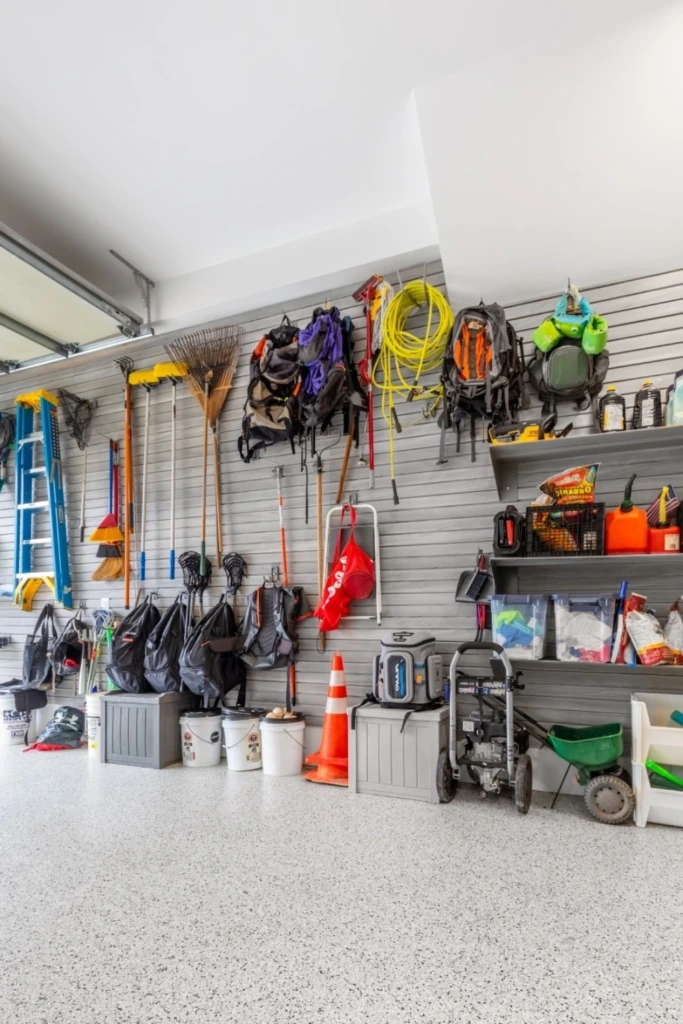
A slatwall system can turn a crowded garage wall into a flexible storage station for gardening and outdoor equipment. With the appropriate accessories, it can hold items such as brooms, rakes, extension cords, backpacks, and selected garden tools.
Arrange the hooks according to the shape and weight of each item. Long-handled tools can occupy one section, while smaller accessories can be grouped in baskets or compact holders. This makes the wall easier to navigate and reduces the need to search through a crowded storage container.
Small shelves can hold suitable gardening supplies, but chemicals, oils, and sprays should remain in their original containers and be stored according to their labels. Keep hazardous materials away from children, pets, ignition sources, and incompatible products.
For heavier items such as ladders or garden hoses, use accessories specifically rated for the load and verify that the panel and its mounting system can support the weight.
The main advantage of slatwall is its adaptability. As your equipment changes, you can rearrange compatible hooks and holders instead of redesigning the entire storage area.
15. Turn Slatwall Into a Multi-Zone Station
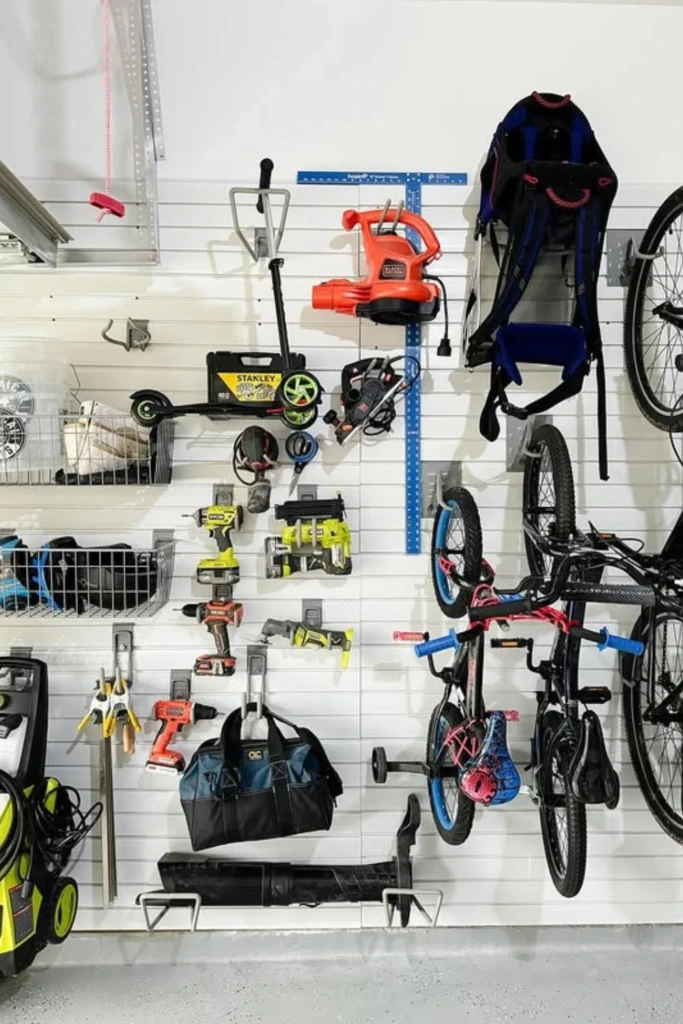
A well-designed slatwall can accommodate several categories of belongings on one wall, making it particularly useful for busy family garages.
Divide the panel into practical sections. One area might hold bicycles and scooters, another can accommodate hand tools, and a lower section can be reserved for children's outdoor equipment. This arrangement allows different family members to find their belongings without disturbing the rest of the storage system.
Small wire baskets can contain drill accessories, extension cords, and other loose items that would otherwise become tangled. Appropriately rated hooks can support compatible equipment such as leaf blowers and selected garden tools.
Keep frequently used items within comfortable reach and place equipment that children use at an appropriate height. Heavy or sharp tools should be secured in locations that prevent unsupervised access.
Check the load capacity of the panel, mounting hardware, and individual accessories before installing equipment. Grouping belongings by purpose makes the wall more efficient and helps maintain clear floor space for parking and everyday movement.
How much clearance do I need between two cars in a garage?
The amount of space needed between two vehicles depends on their widths, the garage dimensions, and how comfortably the occupants need to enter and exit. Around 30 to 36 inches between vehicles can be a useful planning target, although the ideal clearance varies with the layout.
Do not rely on the distance between the vehicles alone. Consider the room required to open doors, walk around the cars, access child safety seats, and reach nearby storage.
Measure both vehicles at their widest points, including mirrors where relevant, and mark their expected parking positions on the garage floor. Check the space between each vehicle and the walls, shelves, cabinets, and stored equipment as well.
If the garage is narrow, use shallower wall storage or relocate bulky belongings to another area rather than allowing shelving to interfere with vehicle access. The goal is to make parking and exiting comfortable without sacrificing essential storage.
What should I never store in a garage?
Some belongings can deteriorate in a garage because of temperature changes, humidity, dust, or exposure to pests. Others may create fire, poisoning, or other safety hazards if stored improperly.
Gasoline and other flammable fuels should be handled and stored only in approved containers and locations that comply with applicable fire and safety requirements. Propane cylinders also require specific storage precautions and should not automatically be treated as ordinary garage items.
Paints, solvents, pesticides, and automotive chemicals need particular attention. Follow each product's storage instructions, including temperature limits, ventilation requirements, and separation from incompatible materials.
Food and animal feed can attract rodents and insects, while fabrics, paper goods, and upholstered belongings may absorb moisture or develop mold in damp conditions. Sensitive electronics, photographs, and valuable items can also be damaged by extreme temperatures.
Whenever possible, store temperature-sensitive belongings indoors in a suitable environment. Keep chemicals in their original labeled containers, secure hazardous products away from children and pets, and avoid placing combustible materials near heaters, electrical equipment, or other ignition sources.
A clean, organized garage is easier to maintain when every item has an appropriate storage location. If a product's storage requirements are unclear, consult its label or safety data sheet before deciding where to keep it.