22 Purse Organization Ideas for 2026
A disorganized purse can turn simple tasks into frustrating searches for your keys, wallet, or favorite lip balm. The same problem happens at home when handbags are stacked together, straps become tangled, and smaller bags disappear behind larger ones.
The solution doesn't require a walk-in closet or expensive storage accessories. With a few practical changes, you can make your handbag collection easier to maintain, protect your favorite bags, and find the right one whenever you need it.
Whether you own a handful of everyday purses or collect bags in different styles and sizes, these purse organization ideas will help you create a storage system that works for your space and routine.
How to Organize Purses?
Start by gathering your handbags in one place and emptying anything left inside them. Check every pocket, remove receipts and unwanted items, and set aside accessories you want to keep in regular rotation.
Next, group your bags by size, style, or how frequently you use them. Everyday crossbody bags should be easy to reach, while occasional clutches and seasonal handbags can be stored in less accessible spaces.
Choose storage based on each bag's construction. Structured purses generally benefit from upright shelf storage, while soft totes can fit into baskets or suitable hanging organizers. Use dividers to keep bags from leaning against one another, and avoid stacking heavy handbags on delicate designs.
Don't forget about the items you carry inside your purse. Small pouches or a removable organizer insert can separate makeup, electronics, personal care products, and other essentials. Keeping frequently used belongings together also makes changing bags much quicker.
Finally, give every handbag a designated home. A simple system is easier to maintain when you can put everything back without rearranging the entire collection.
1. Hanging Compartment Purse Organizer
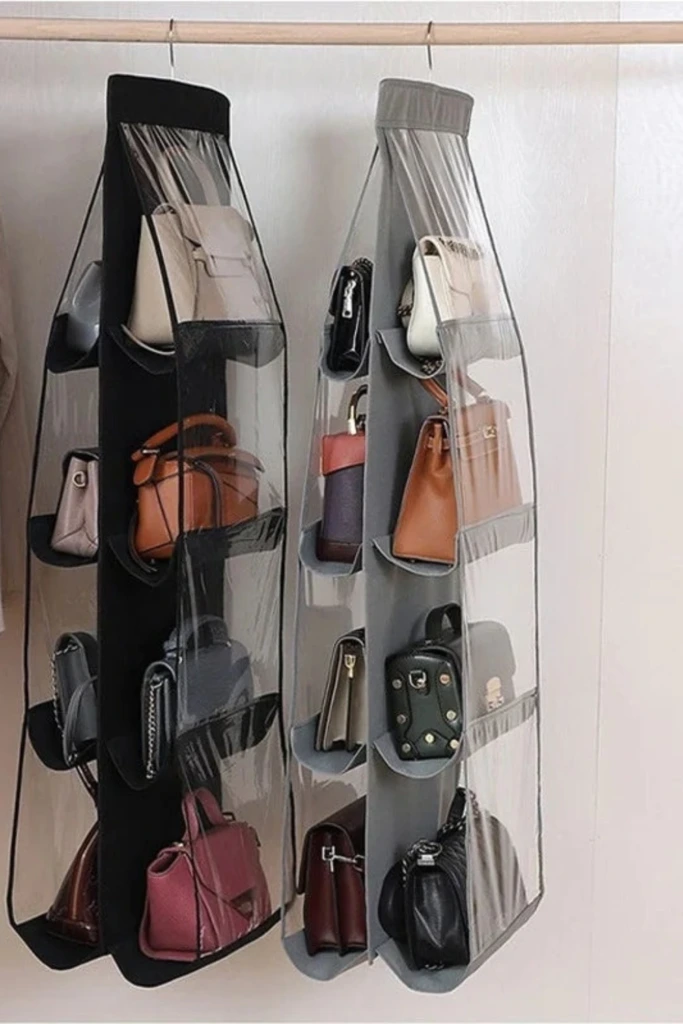
A hanging organizer is an excellent choice when closet shelves are limited but a sturdy clothing rod is available. Its individual compartments provide separate spaces for handbags, making it easier to see your collection without digging through a pile.
Choose compartments that comfortably accommodate your bags without squeezing their sides or folding the straps awkwardly. Arrange everyday purses at eye level and reserve higher or lower sections for bags you use less often.
This approach works especially well for lightweight handbags and soft totes. For heavier or delicate designer bags, check the organizer's weight capacity and consider more supportive storage.
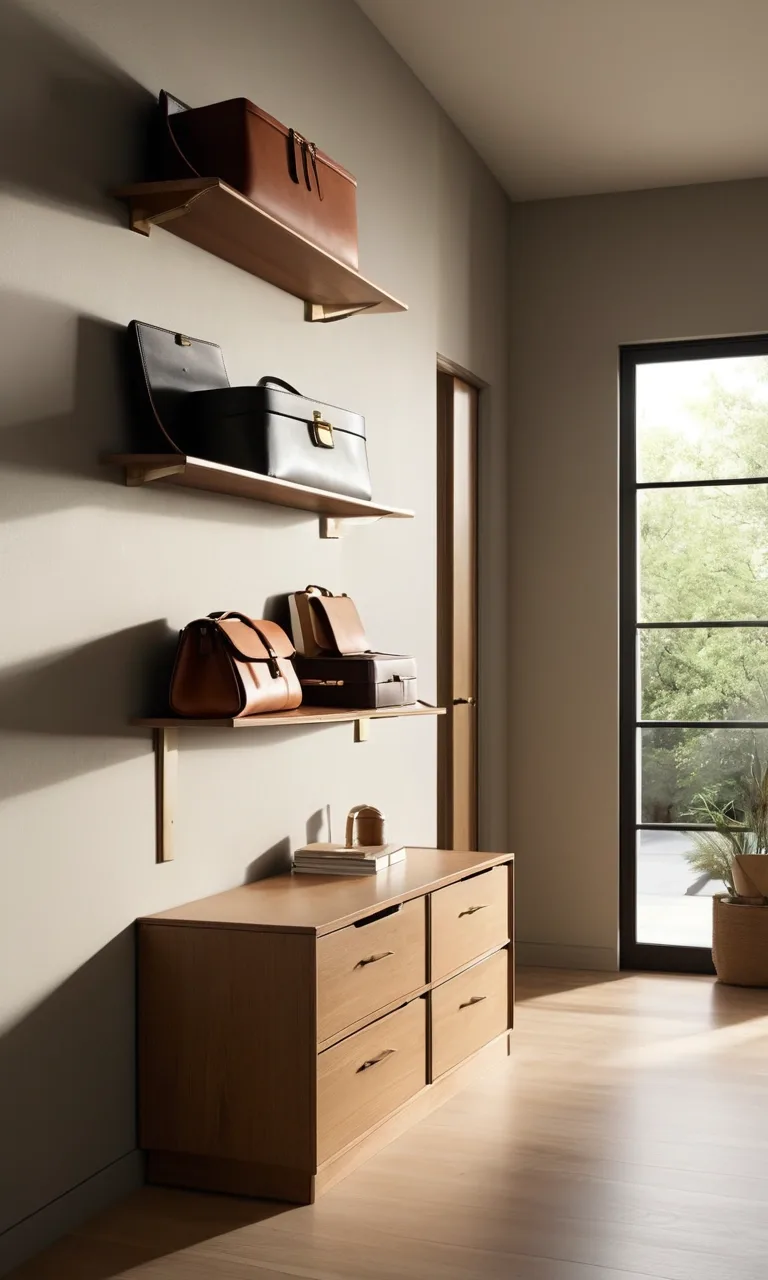
2. Open Shelf Purse Display
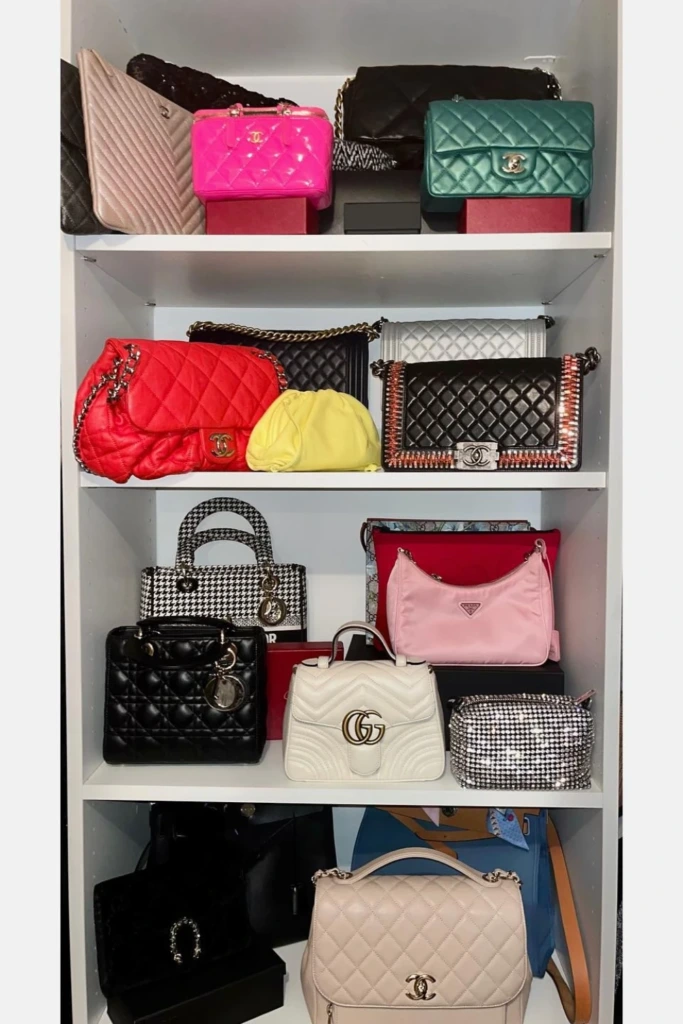
Open shelves turn handbag storage into an attractive part of your bedroom or dressing area. Because every bag remains visible, you can choose an accessory quickly while keeping the collection looking intentional.
Arrange purses with enough space between them to prevent crowding. You might group similar colors together, separate small evening bags from larger everyday styles, or place frequently used designs on the most accessible shelves.
Use sturdy shelving that can support the combined weight of your collection. Keep bags upright when possible, and avoid placing delicate materials where direct sunlight could cause fading.
If you want a more decorative finish, add subtle lighting nearby. The goal is to improve visibility without exposing leather, fabric, or other materials to excessive heat.
3. Acrylic Divider Purse Storage
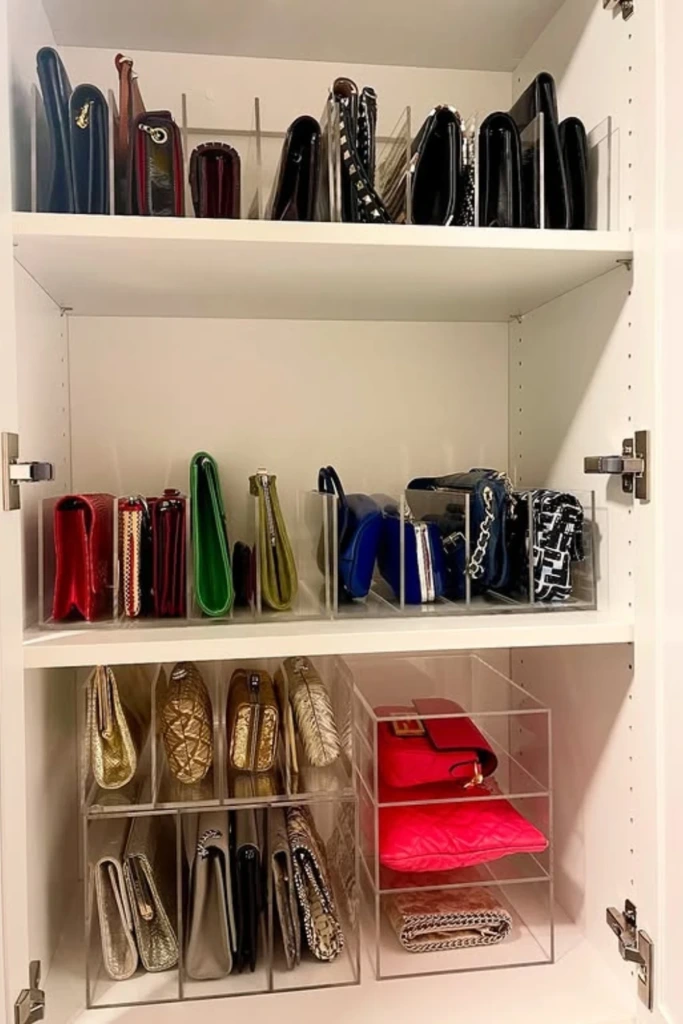
Clear acrylic dividers help handbags remain upright instead of tipping into one another. They're particularly useful on long closet shelves where bags tend to slide around whenever you remove one.
Position the dividers according to the width of your handbags. Wider compartments work well for structured totes, while narrower sections can accommodate smaller shoulder bags and medium-sized purses.
One advantage of transparent dividers is that they maintain an uncluttered appearance without hiding your collection. You can quickly identify each bag and return it to its designated position.
Before purchasing a set, measure the depth and height of your shelves. Smooth-edged dividers with a stable base are preferable because they are less likely to scratch nearby surfaces or shift during everyday use.
4. Hanging Tote & Basket Combo
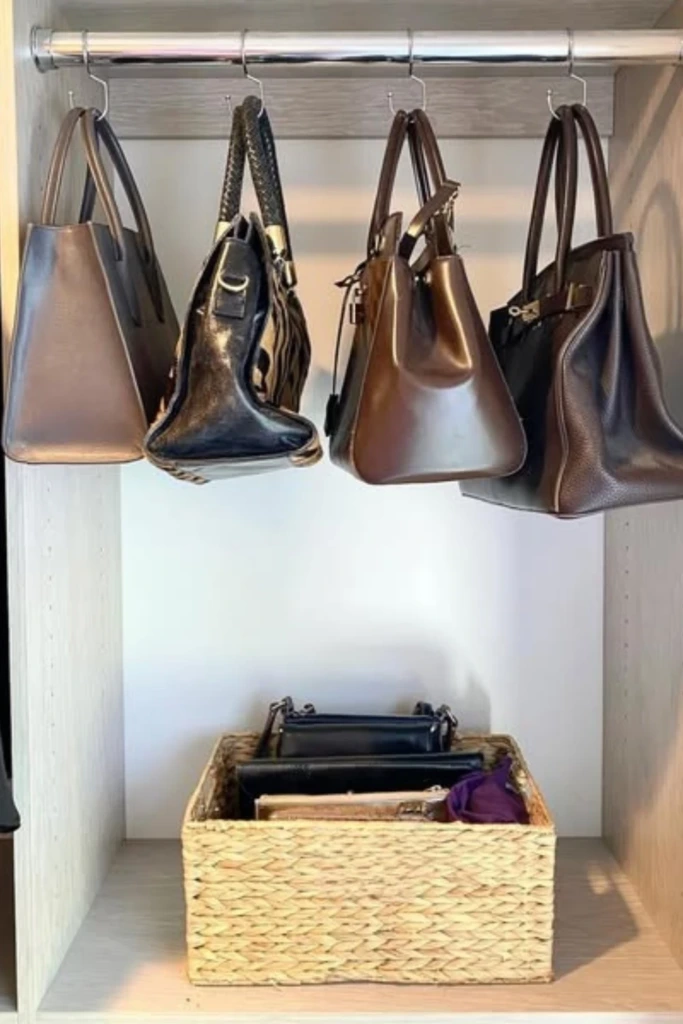
Combine wall or closet hanging space with a basket underneath to organize two types of handbags in one compact area. Larger totes can hang from a sturdy rod, while smaller purses or accessories occupy the basket.
This arrangement makes practical use of vertical space and keeps frequently used bags together. It is particularly helpful in a small bedroom, entry closet, or dressing area where installing additional shelving isn't convenient.
Choose a basket that provides enough room for the smaller bags without forcing them together. Fabric-lined or smooth-sided baskets can help reduce friction against delicate materials.
Use hooks designed to support the weight of the bags you plan to hang, and avoid leaving heavy handbags suspended by thin or fragile straps for extended periods.
5. Purse Pouch System
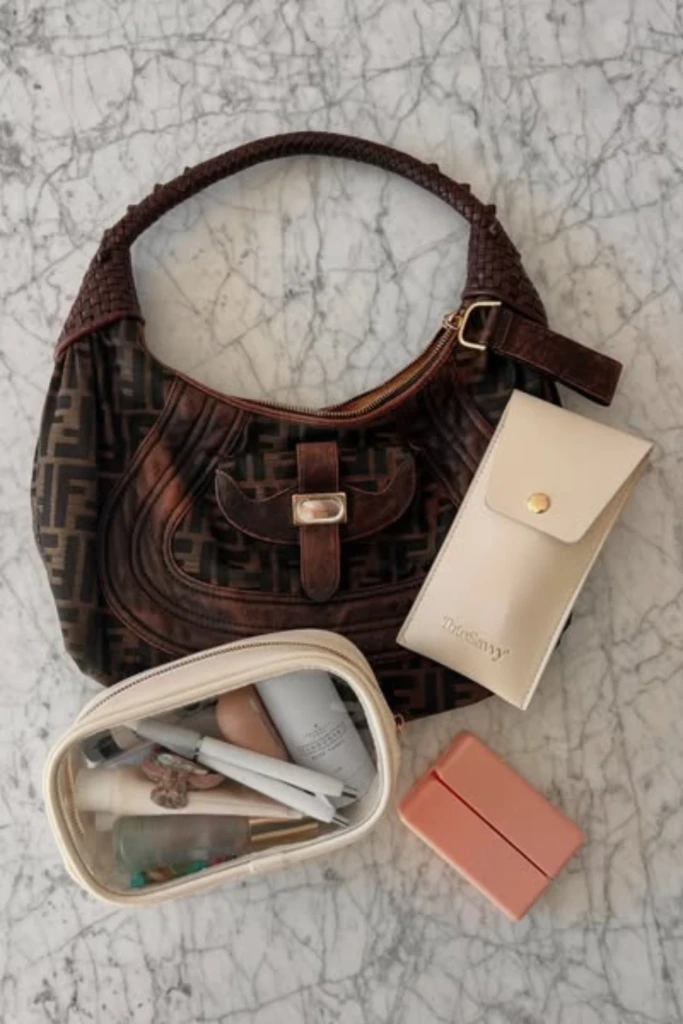
A pouch system organizes the contents of your handbag rather than just the bags themselves. Instead of letting small belongings collect at the bottom, assign separate pouches to different categories.
For example, one pouch can hold cosmetics, another can store charging cables and earbuds, and a third can contain personal care items. A small zippered wallet or card holder can keep essential documents and payment cards together.
Clear pouches make their contents easy to identify, while colored or labeled versions help distinguish categories at a glance.
This system is especially useful if you regularly switch between handbags. Simply transfer the pouches you need instead of emptying and repacking every individual item. Keep only the essentials in your daily setup to prevent unnecessary bulk.
6. Color-Coded Shelf Storage
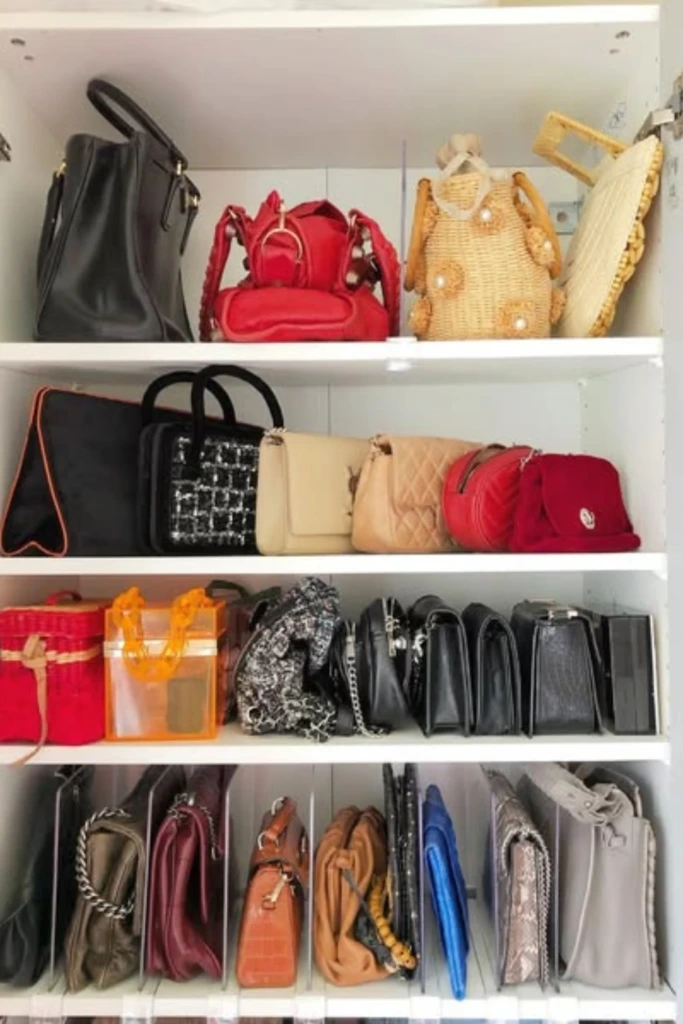
Organizing handbags by color creates a coordinated display and makes it easier to locate a particular style. You can arrange neutral bags together, group brighter shades separately, or create a gradient from light to dark.
For a more practical arrangement, combine color with size and frequency of use. Place the handbags you reach for most often at a comfortable height, and keep larger or sturdier designs on shelves that can support their weight.
Avoid overcrowding the display just to achieve a particular look. Each purse should have enough room to retain its shape and be removed without disturbing neighboring bags.
This method works especially well for people who own handbags in several colors and like matching accessories to different outfits.
7. Felt Insert Purse Organizer
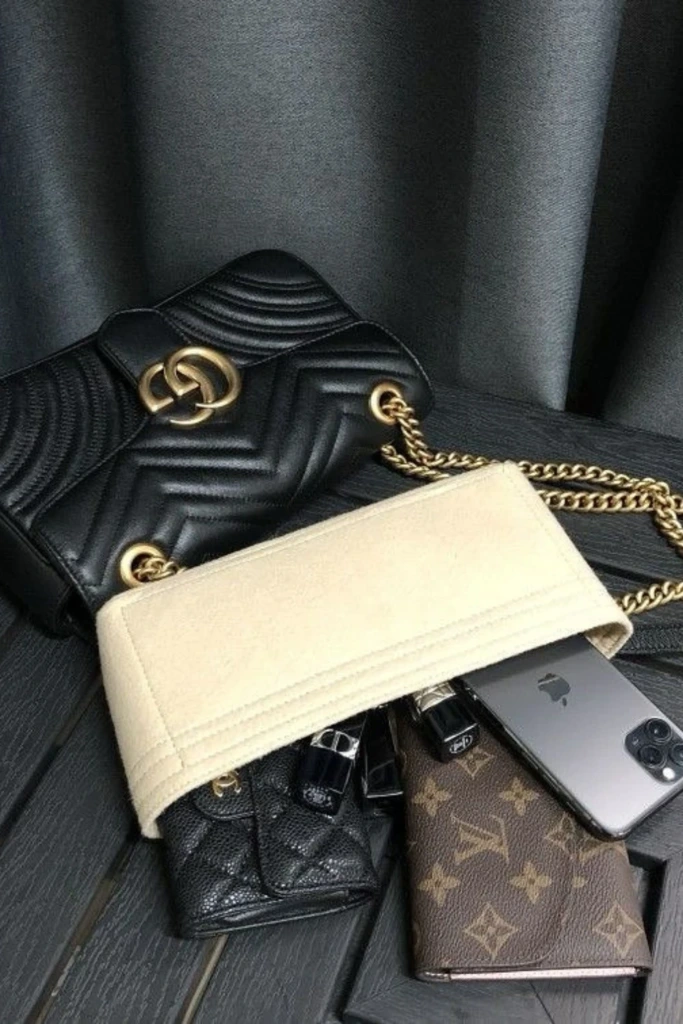
A felt insert creates individual compartments inside a handbag, helping small items stay separated throughout the day. Instead of searching beneath your wallet or sunglasses, you can keep frequently used belongings in designated pockets.
Depending on the design, an insert may provide sections for your phone, keys, cosmetics, cards, and other everyday necessities. Many versions can be transferred between bags, making them convenient for anyone who frequently changes purses.
Measure the interior of your handbag before choosing an insert. A model that is too large may stretch the sides or make the bag difficult to close, while one that is too small may shift around during use.
Felt can offer a soft barrier between belongings and the bag's lining. However, clean the insert regularly and check that its edges and seams won't snag delicate interior materials.
8. Drawer Organizer System
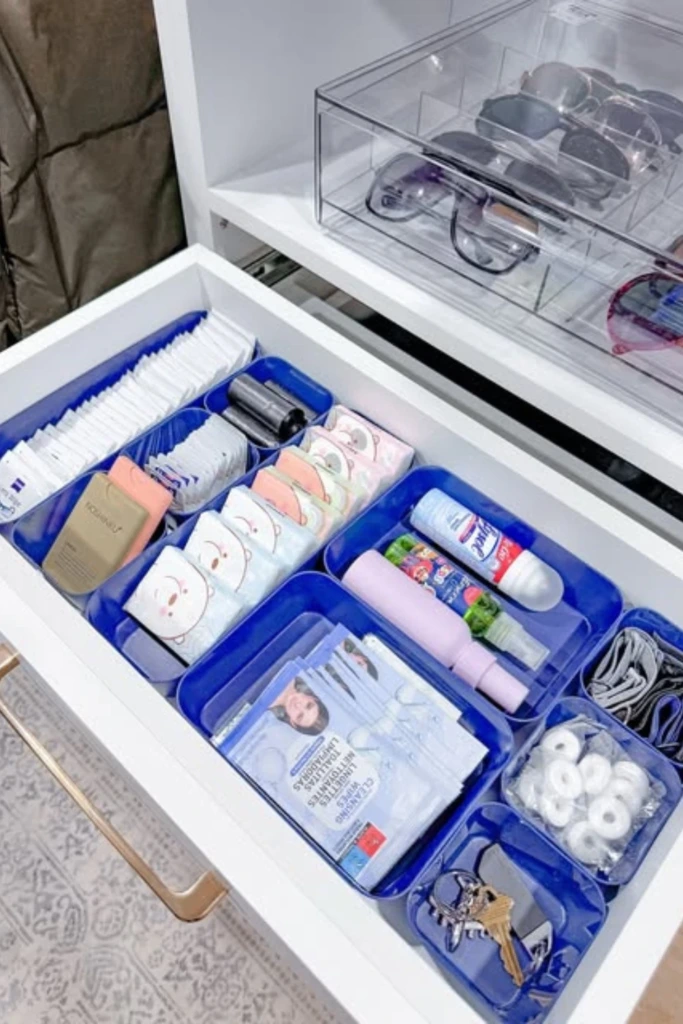
A dedicated drawer is a practical place to store small handbags, wallets, card holders, and accessories. Rather than scattering these items across different rooms, you can keep everything together in one convenient location.
Use shallow trays or adjustable compartments to separate categories. Small sections work well for card cases and compact purses, while larger areas can accommodate folded fabric bags or evening clutches.
If you're organizing accessories rather than the handbags themselves, reserve individual compartments for items such as spare straps, key rings, cosmetic pouches, and bag charms.
Choose a drawer close to your closet or dressing area so that your daily routine remains simple. Avoid cramming bags into a drawer that is too shallow, since excessive pressure can create creases or damage decorative details.
9. Hanging and Shelf Combo
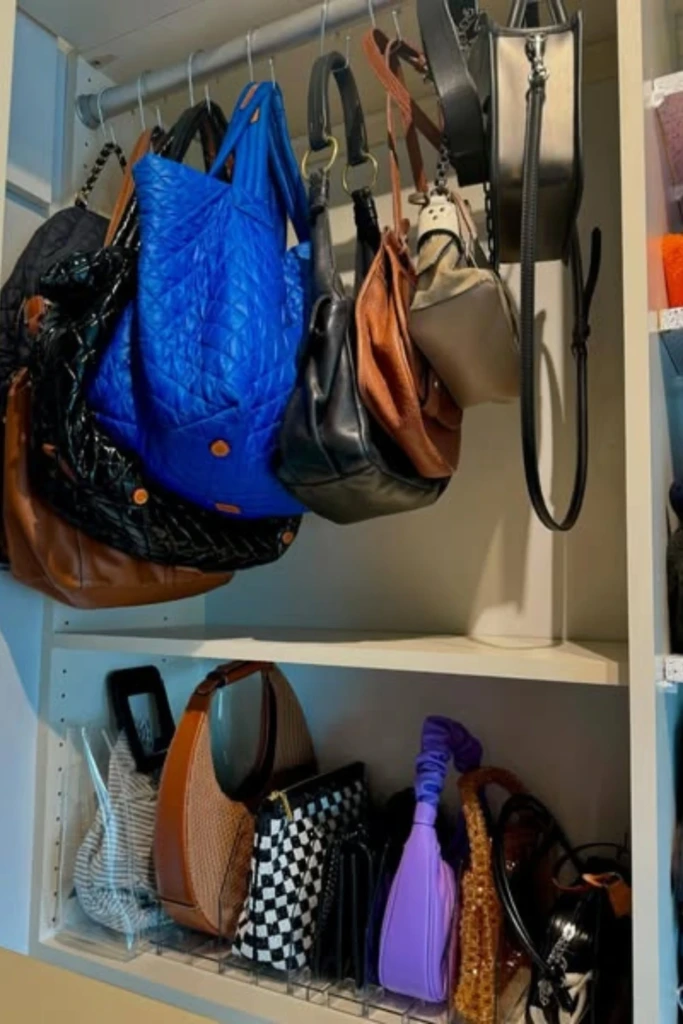
Combining hanging storage with shelves helps you accommodate handbags of different shapes without wasting closet space. Use a sturdy rod or suitable hooks for larger totes, and place structured handbags upright on the shelves below.
This arrangement keeps the collection accessible while separating bags that require different storage methods. It also helps prevent larger totes from covering smaller purses that might otherwise be difficult to find.
Arrange the most frequently used bags at a convenient height. Keep heavier items on strong, well-supported shelves and leave enough clearance beneath hanging bags so they don't become crushed against other belongings.
A combination system is especially useful when your collection includes oversized work bags, compact crossbodies, and occasional-use handbags.
10. Wall Hook Purse Display
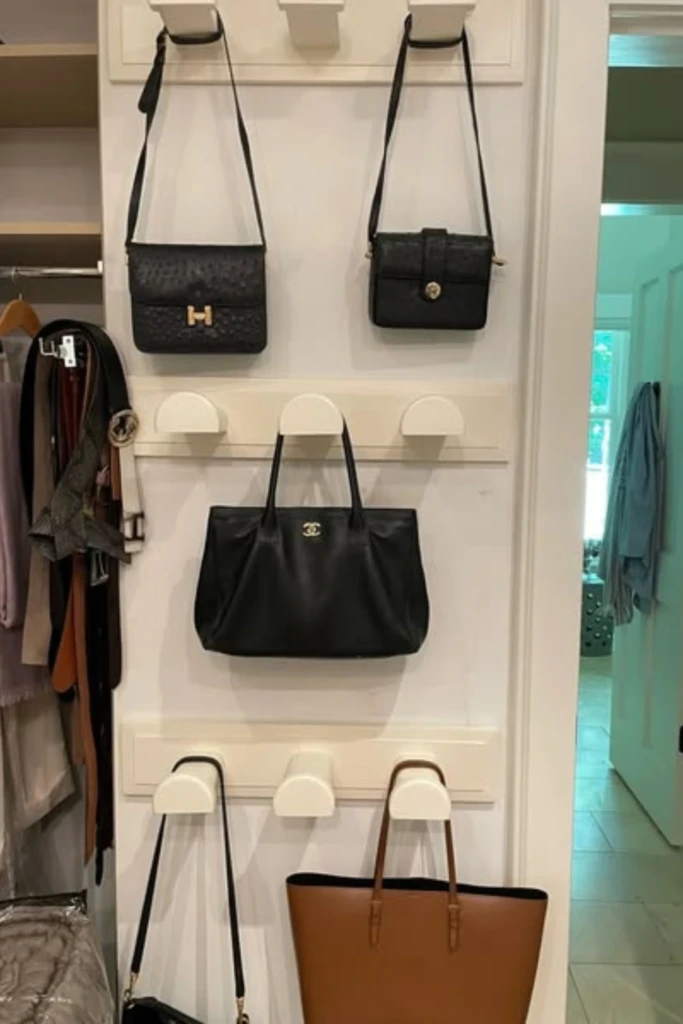
Wall hooks provide an accessible storage option when closet space is limited. They can be installed inside a wardrobe, behind a suitable door, or along an unused wall to keep handbags off the floor.
Space the hooks far enough apart to prevent straps from overlapping. Before installation, check the wall material and use appropriate anchors or mounting hardware to support the expected load.
Not every handbag should be stored by its strap. Heavy bags can stretch delicate handles or place unnecessary stress on the attachment points. Use hooks for suitable lightweight designs, and keep structured or particularly valuable bags on shelves when possible.
For a coordinated appearance, arrange handbags by size or color. A simple row of hooks can keep everyday accessories visible without taking up valuable floor space.
11. Glass Cabinet with Dust Bags
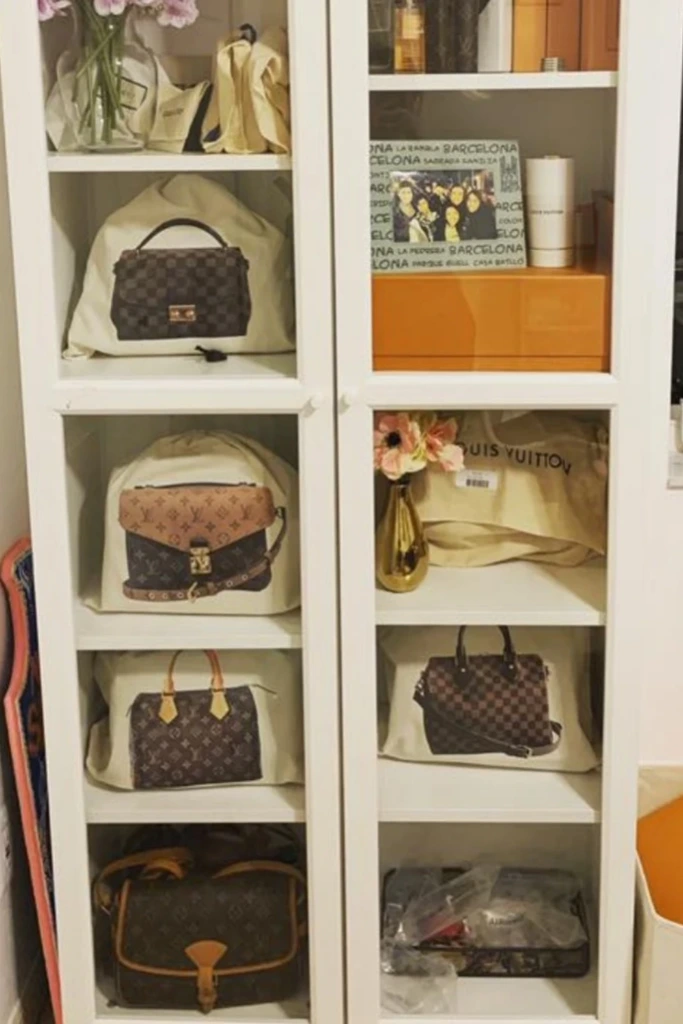
A glass-front cabinet is a useful option for displaying and protecting a collection of handbags. It allows you to see the bags while creating a barrier against some household dust and accidental contact.
For additional protection, use the original dust bags when appropriate, particularly for handbags that are not used frequently. Make sure each bag is clean and completely dry before putting it away.
Store handbags with enough clearance to prevent pressure on handles, embellishments, or delicate surfaces. Avoid packing too many items onto a single shelf, even when the cabinet has sufficient room.
A cabinet with adjustable shelves is particularly useful when your collection includes bags of different heights. Keep the interior dry and away from direct sunlight, and follow the care recommendations for each material.
12. Glass Display with Storage Drawers
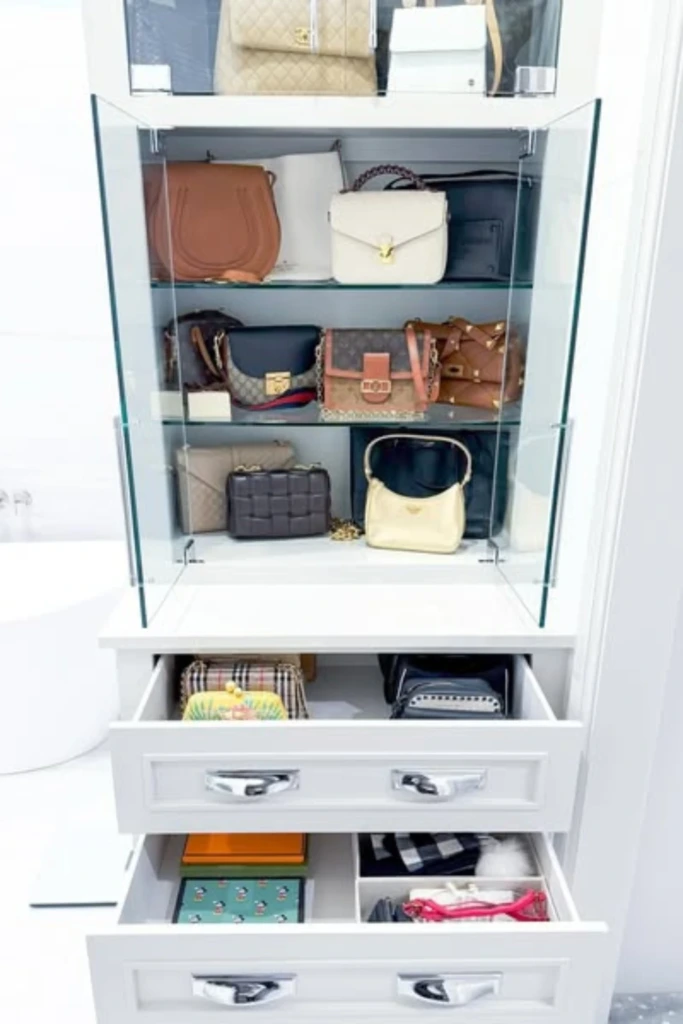
A display cabinet with glass shelves and drawers combines visible handbag storage with concealed accessory space. It allows you to showcase your favorite bags while keeping smaller belongings neatly tucked away.
Place handbags on shelves according to their dimensions, making sure each piece has adequate support. Use the drawers for wallets, detachable straps, bag charms, dust covers, and other accessories that are easy to misplace.
This arrangement can be particularly convenient for collectors who rotate their handbags regularly. Keeping accessories in the same cabinet makes it easier to find matching pieces when changing bags.
Choose a cabinet with stable shelves and drawers that open smoothly. If you add interior lighting, select a low-heat option and avoid prolonged direct illumination on sensitive materials.
13. Upright Shelf Bag Storage
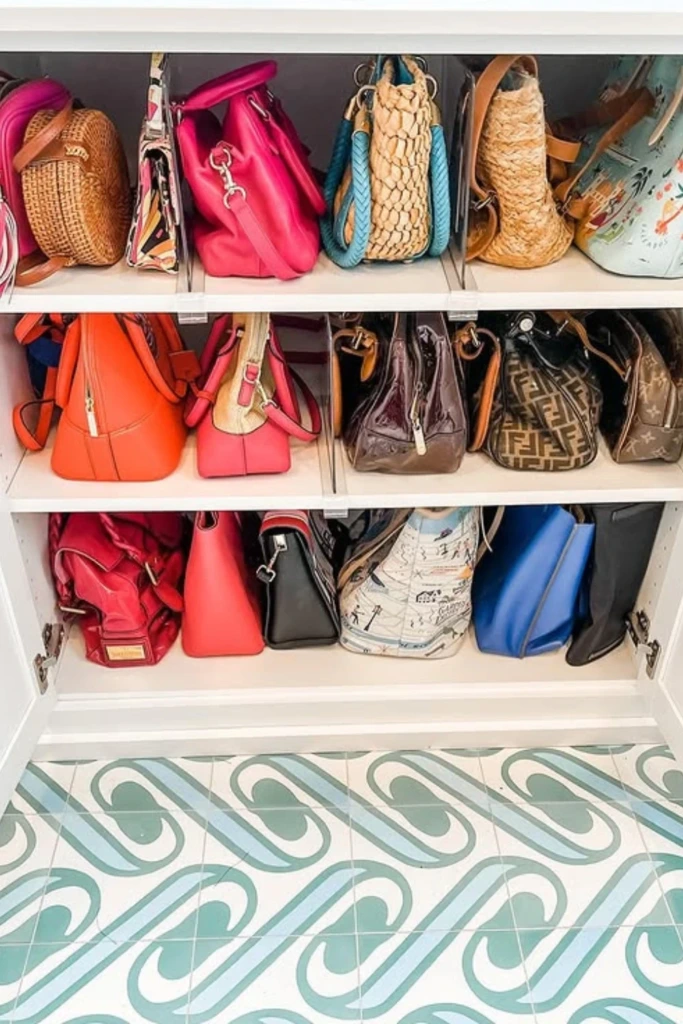
Storing handbags upright helps you make efficient use of shelf space while keeping individual pieces accessible. Instead of creating a tall stack, position suitable bags side by side so you can remove one without disturbing the others.
Shelf dividers can provide additional support, particularly for bags with soft sides that tend to collapse. You can also use clean, acid-free tissue or suitable bag inserts to help maintain the shape of structured designs.
Arrange the bags according to size, style, or how often you use them. Keep heavier pieces on strong lower shelves and avoid placing pressure on delicate handles or decorative elements.
Adjustable shelving is a useful choice if your collection changes over time. It allows you to accommodate larger totes today and smaller shoulder bags or clutches later without redesigning the entire storage area.
14. Purse Essentials Flat Lay
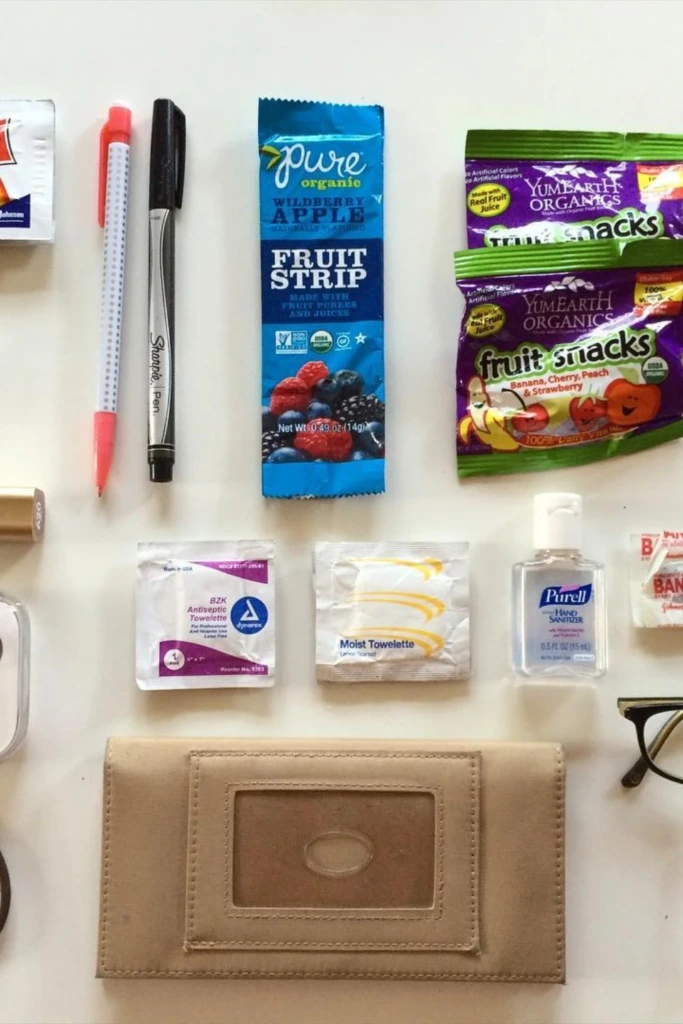
A purse essentials flat lay is a simple way to review what you actually carry every day. Place your regular belongings on a clean surface and group them according to their purpose before deciding what belongs in your daily handbag.
Your basic selection might include a wallet, keys, phone, lip balm, tissues, hand sanitizer, a pen, and any personal necessities you use regularly. The exact contents will depend on your routine, work requirements, and the size of your bag.
Remove expired products, old receipts, unnecessary duplicates, and anything you haven't needed for a long time. This helps reduce clutter and prevents your handbag from becoming unnecessarily heavy.
Once you've settled on your essentials, place smaller items in a compact pouch or organizer insert. Keeping a consistent core kit makes it easier to switch handbags without forgetting something important.
15. Wall Gallery Bag Display
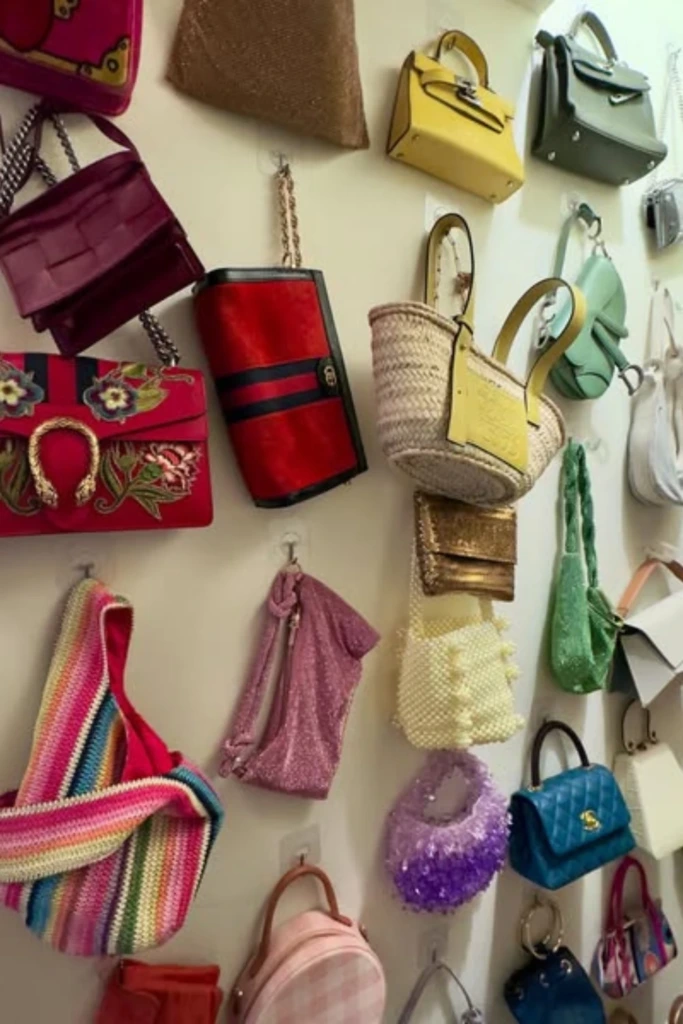
If you enjoy treating accessories as part of your room's decor, a wall gallery can turn your handbag collection into a visual feature. Arrange suitable bags along a wall using individual hooks or a purpose-built display system.
Consider the weight, shape, and material of each handbag before deciding how to mount it. Some designs are better suited to shelves because hanging them can stretch the handles or distort their shape.
For a balanced arrangement, leave consistent spacing between pieces and group similar colors or styles together. Avoid placing valuable bags in direct sunlight or near sources of heat and moisture.
A wall display works best when the collection is edited rather than overcrowded. Keeping only a selection on view allows each handbag to stand out while the rest remain safely stored elsewhere.
16. Open Shelf Collector Display
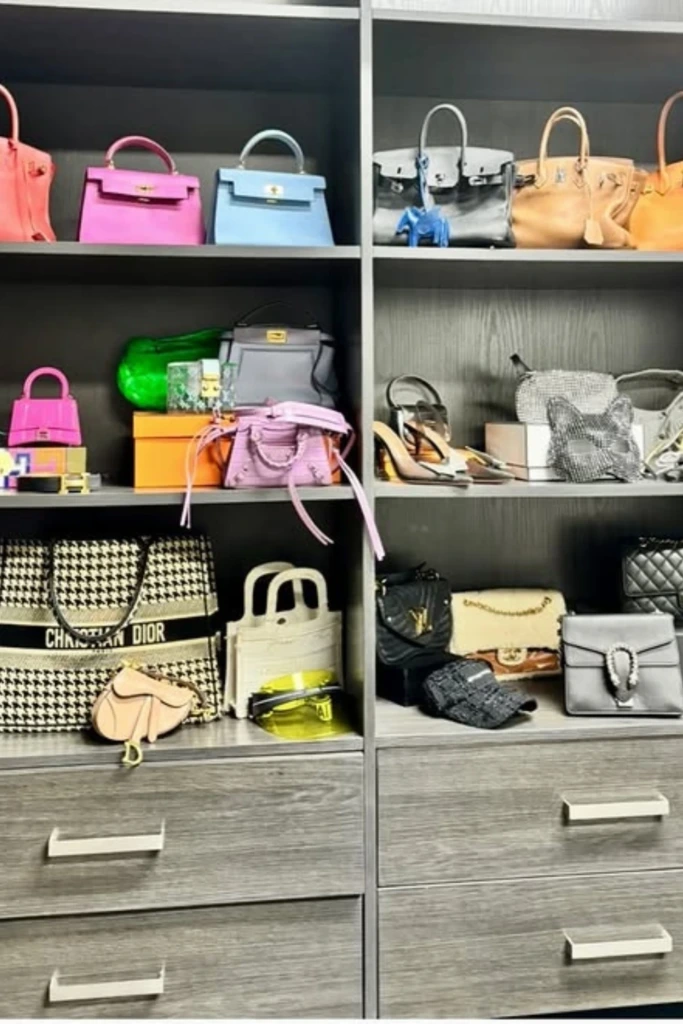
An open-shelf display is ideal for anyone who wants to see their handbag collection at a glance. It can make a closet feel more organized while turning favorite accessories into part of the room's design.
Use strong shelves with enough depth to support your largest bags. Arrange the collection by designer, color, size, or occasion, depending on the system that makes the most sense for you.
Keep structured handbags upright and give each piece enough room to avoid friction between materials. Small accessories can be grouped in trays or decorative containers without competing with the main display.
Although open shelves provide easy access, they also expose handbags to dust and light. Clean the area regularly, and consider protective dust covers for delicate or infrequently used pieces.
17. Vertical Bag Hanging
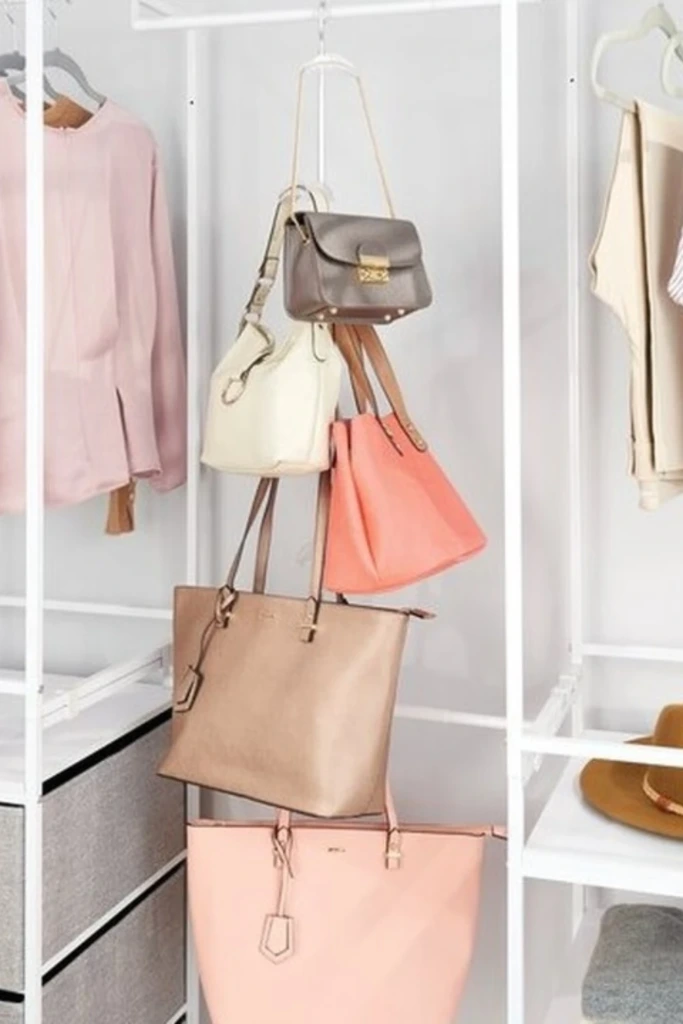
Vertical hanging makes use of unused height inside a closet. It can be especially helpful when you have limited shelf space but enough clearance to hang lightweight handbags.
Choose a suitable multi-hook hanger or vertical organizer designed for the weight of your bags. Distribute the load evenly rather than attaching several heavy purses to one weak point.
Arrange bags so that their straps do not become twisted or tangled. Check that the lowest handbag clears the floor and that removing one bag won't cause the others to fall.
This setup is most appropriate for durable everyday bags that can tolerate hanging. For expensive leather handbags or designs with delicate handles, upright shelf storage may provide better long-term support.
18. Inside Tote Compartment System
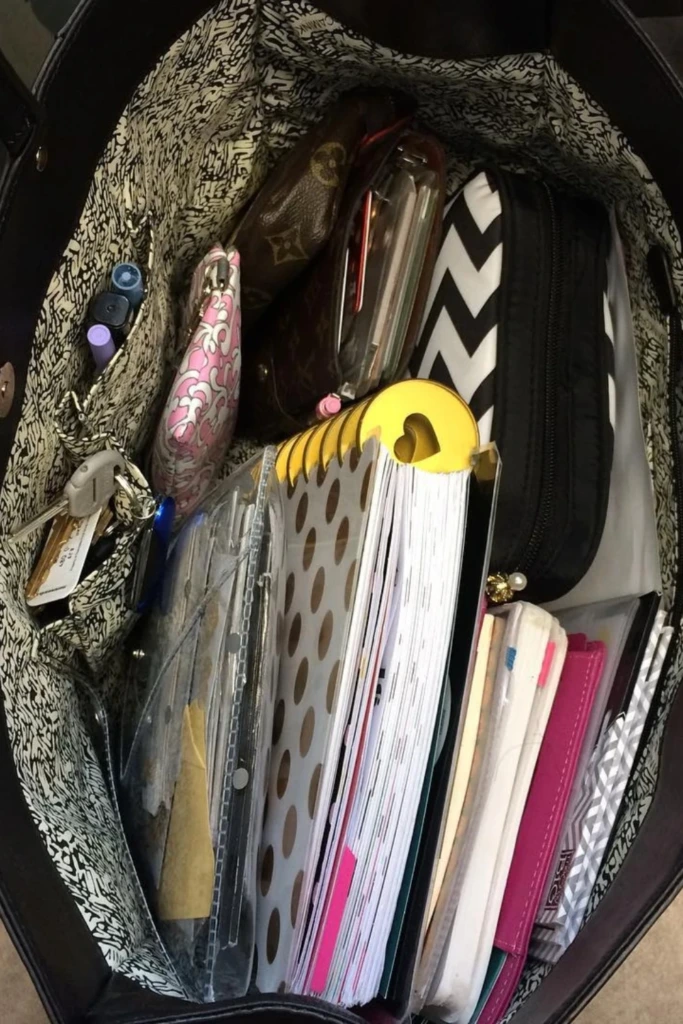
Large totes can quickly become cluttered because their spacious interiors encourage small items to collect at the bottom. A compartment system solves this problem by giving different belongings a designated place.
Use a removable organizer insert, small zippered pouches, or slim cases to separate electronics, cosmetics, documents, snacks, and personal care products. Keep frequently accessed items near the top or in easily reached pockets.
Choose an insert that fits the tote's interior without forcing the sides outward. If your bag has a soft structure, a lightweight organizer can improve usability while helping belongings stay in place.
Review the contents regularly to remove items you no longer need. A large handbag doesn't have to carry everything you own; a smaller, intentional selection is easier to manage and more comfortable to carry.
19. Acrylic File Divider for Clutches
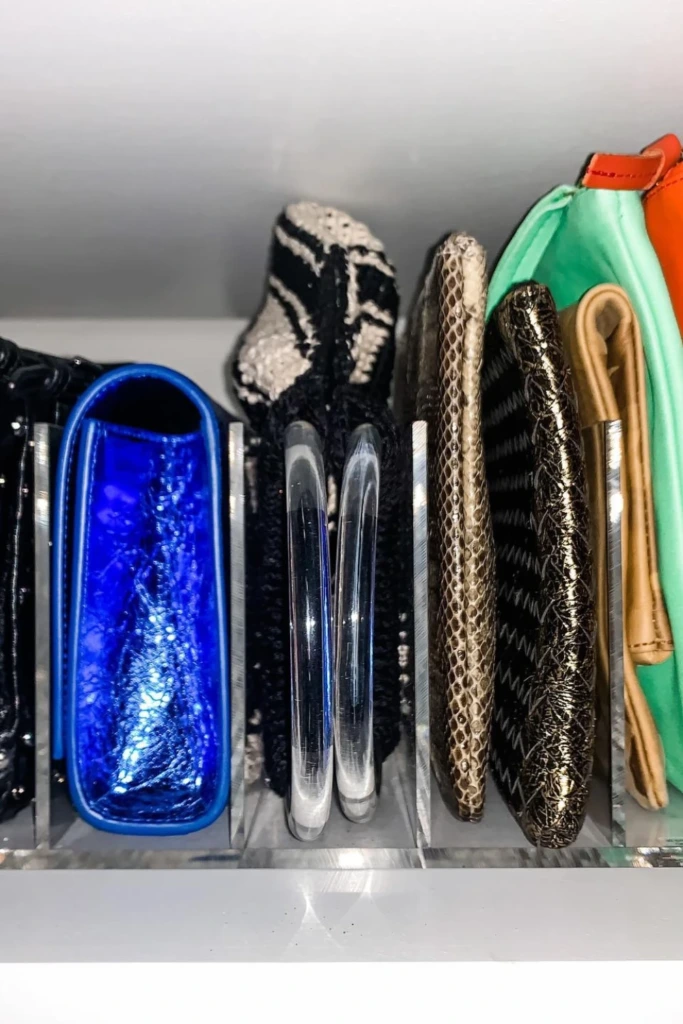
Clutches and slim evening bags can be difficult to store because stacking them makes individual pieces hard to reach. Acrylic file-style dividers provide separate slots that help suitable bags remain upright.
Place the dividers on a stable shelf or inside a closet cabinet. Arrange the clutches by size, color, or occasion so that you can find the right one without moving the entire collection.
Check that each compartment is wide enough to accommodate the bag without bending its edges or putting pressure on closures and embellishments. Padded or delicate clutches may be better stored in individual protective sleeves.
Clear dividers are particularly useful because they keep the storage area visually open. They also make it easier to identify bags when the shelf contains several similar designs.
20. Hanging Hooks for Heavy Bags
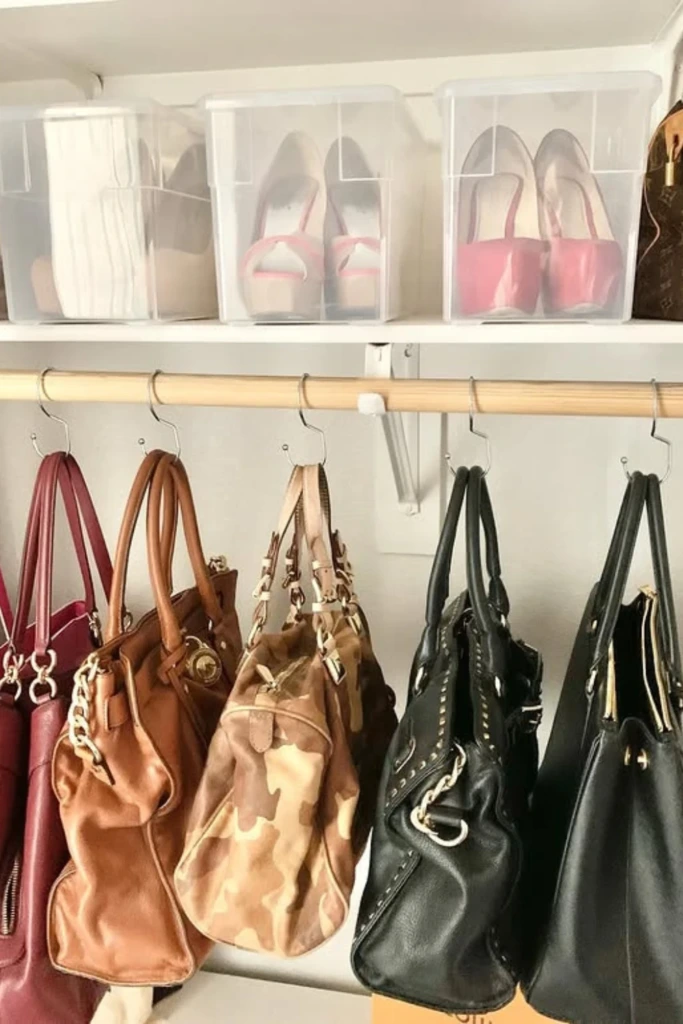
Heavy handbags require a little more attention when choosing hanging storage. A strong hook and secure mounting point can help organize durable bags, but the weight should never be concentrated on a fragile handle or thin strap.
Check the manufacturer's recommended load capacity for the hook, rail, or mounting hardware. If a bag is particularly heavy, has delicate handles, or is made from a material that may stretch, store it upright on a supportive shelf instead.
When hanging is appropriate, distribute the bags evenly along the rod and leave enough room between them to avoid tangling. Keep the arrangement at a comfortable height so you can lift bags down without straining.
Organizing by bag type or frequency of use can make the area easier to navigate. The most important consideration is preserving the condition of your handbags rather than simply fitting as many as possible into the available space.
21. Branded Shelf Organization
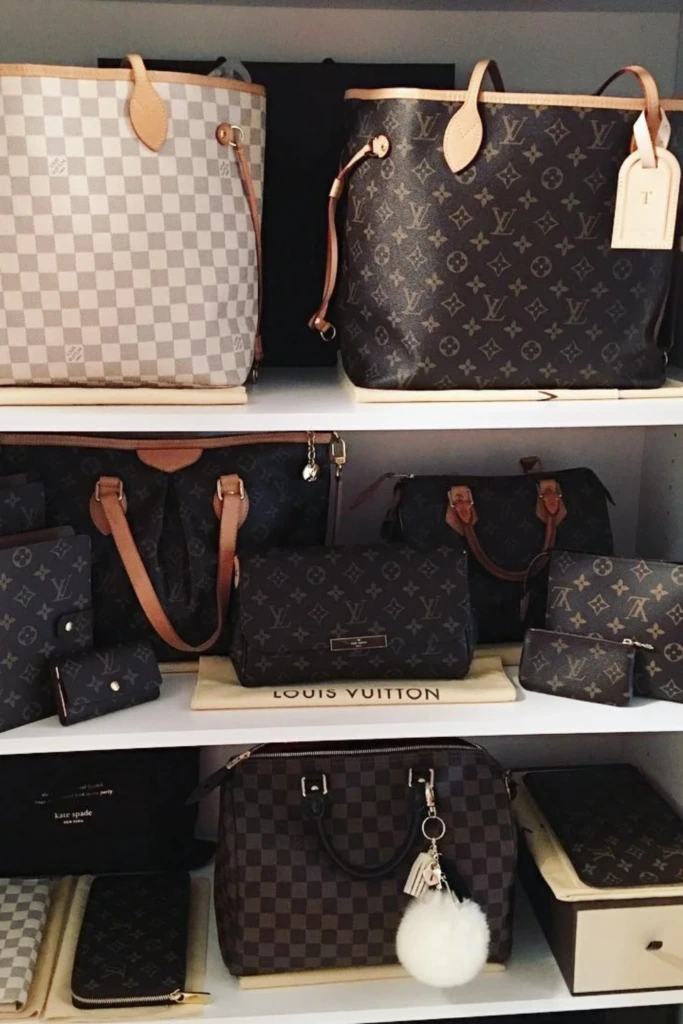
Arranging handbags by designer or brand creates a consistent display for collections that include several pieces from the same label. It can also help you keep matching accessories together and identify gaps in your collection.
Start by separating the bags into groups, then organize each group by size or frequency of use. Place similar pieces together while ensuring that every handbag remains easy to remove.
Use stable shelving with enough space to support the bags without squeezing them together. Structured designs should stand upright, and delicate finishes should be protected from rubbing against neighboring pieces.
You don't need matching furniture or expensive display equipment to achieve a polished result. Simple shelves, consistent spacing, and a clear arrangement can make even a modest collection look intentional and orderly.
22. Tote and Pouch Combo

A tote-and-pouch combination is a flexible solution for anyone who needs a spacious everyday bag but wants to keep smaller belongings organized. The tote provides room for larger items, while the pouches prevent everyday essentials from getting lost among them.
Assign each pouch a specific purpose. One might hold personal care products, another could store charging accessories, and a smaller one could keep keys or other frequently used items together.
Choose pouches that fit comfortably inside the tote without taking up all its available space. Lightweight designs are usually more practical because they add less bulk and make it easier to move your belongings between bags.
This arrangement is also easy to customize for different occasions. Keep a basic set of essentials ready for daily use, then add or remove pouches depending on whether you're heading to work, running errands, or going out for the evening.
What is the purse drawer method?
The purse drawer method involves keeping the small items you regularly carry in one organized drawer near your closet, dressing area, or entryway. Instead of searching through several rooms for everyday essentials, you store them together in clearly defined compartments.
Use drawer dividers or shallow trays to separate items such as wallets, pens, tissues, hand sanitizer, spare hair ties, and other frequently used accessories. You can also reserve a section for removable purse inserts or small pouches.
When you're ready to change handbags, check the drawer, transfer the items you need, and return anything that doesn't belong in your new bag. This makes repacking faster and helps prevent forgotten belongings.
The method works best when you keep the drawer limited to items you genuinely use. Review it periodically to remove duplicates, expired products, and unnecessary clutter.
How to properly carry a purse?
Carrying a purse comfortably starts with choosing an appropriate size and distributing its contents sensibly. An overloaded bag can place unnecessary strain on your shoulder, neck, and back, especially when you carry it for extended periods.
Follow these practical tips:
Keep the weight manageable: Carry only the items you need rather than filling every available pocket.
Adjust the strap: Set the length so the bag sits comfortably without pulling on your shoulder or swinging excessively.
Consider a crossbody style: A suitable crossbody strap can distribute the load more evenly across your body.
Change sides when appropriate: If you carry a shoulder bag, alternate shoulders periodically to avoid repeatedly loading the same side.
Use compartments: Keeping heavier items close to the center of the bag can help reduce shifting and improve balance.
Choose the right bag: A lighter design with comfortable straps may be preferable for long days or frequent travel.
Pay attention to discomfort, numbness, or persistent soreness. Reducing the load or changing how you carry the bag may help. Good carrying habits should make your handbag convenient without compromising comfort.