25 Laundry Closet Organization Ideas for 2026
I’ll keep the article focused on practical laundry closet organization ideas, with original wording, useful implementation tips, and a clear, reader-friendly structure.
A laundry closet can quickly become one of the most difficult areas of the home to keep tidy. Detergent bottles compete for shelf space, hampers block the machines, and cleaning tools often end up leaning against the door. When every inch matters, even simple laundry tasks can feel unnecessarily complicated.
The good news is that you don't need a large laundry room to create an organized, functional space. A thoughtful combination of vertical storage, compact organizers, practical shelving, and designated work areas can make a noticeable difference.
Whether you're working with a small apartment closet or a built-in laundry nook, these laundry closet organization ideas will help you make better use of your available space. From easy weekend updates to customized storage solutions, there are options for different budgets, layouts, and household needs.
What Are the Best Storage Solutions for a Narrow Laundry Closet?
The best storage solutions for a narrow laundry closet are those that keep essential supplies accessible without taking up valuable walking space. Instead of adding bulky furniture, look for opportunities to use the walls, the area above your appliances, and the inside of the closet door.
Wall-mounted shelves are useful for everyday products, while slim rolling carts can fill awkward gaps beside a washer or dryer. Hooks provide a convenient home for cleaning tools, and labeled baskets help prevent small items from becoming scattered across shelves.
It's also important to organize according to how often you use each item. Keep frequently needed detergent, stain removers, and laundry bags within easy reach. Store extra supplies higher up or inside closed cabinets, and reserve lower shelves for heavier items.
Before purchasing organizers, measure the closet carefully and account for appliance doors, ventilation requirements, hoses, and electrical connections. A storage system that fits the available space and supports your daily routine will be much more useful than one that simply looks attractive.
1. Vertical Pantry
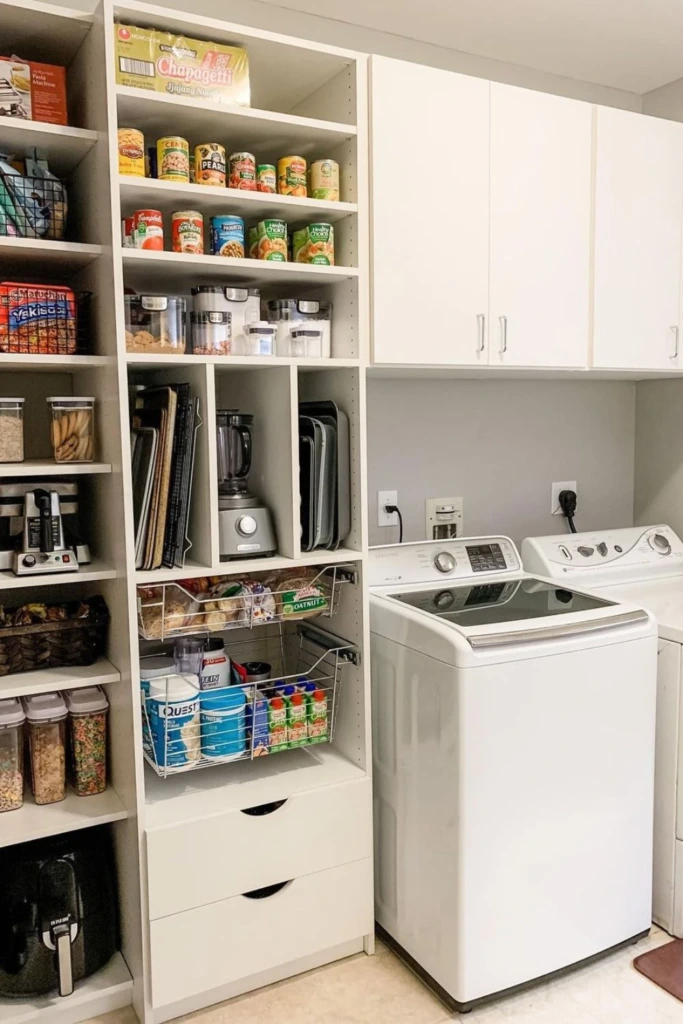
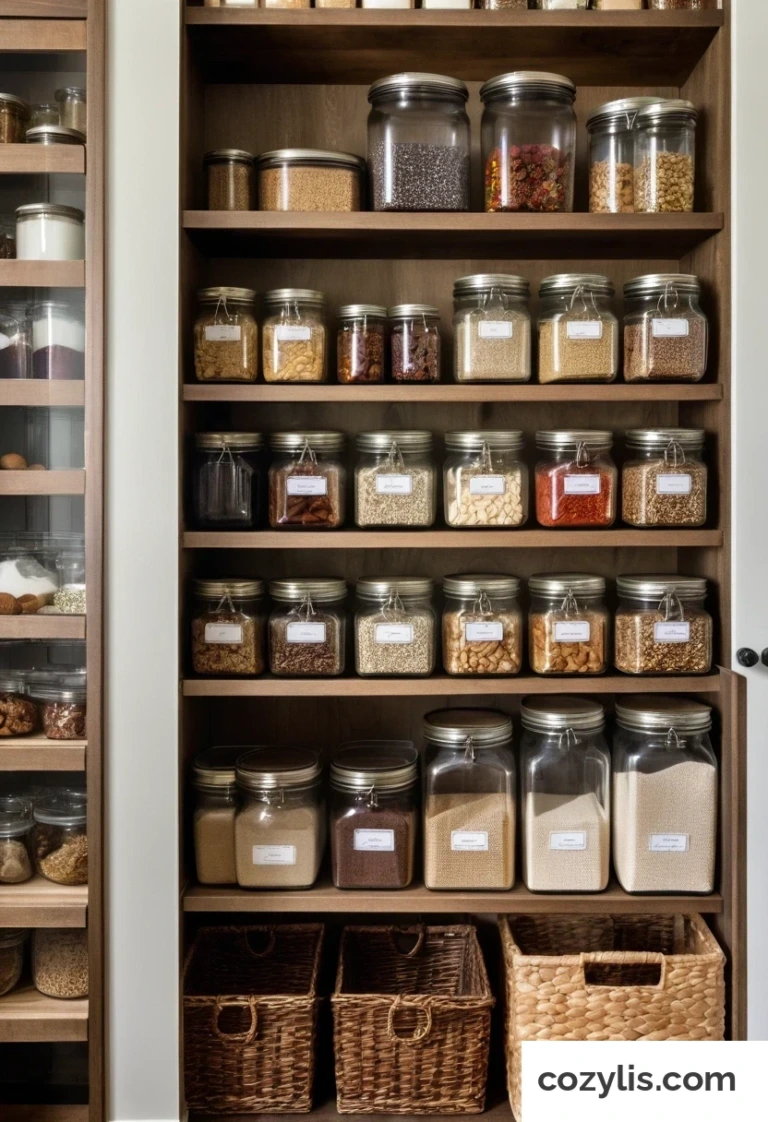
A tall shelving unit can transform an unused wall into a practical storage area for laundry essentials. Rather than spreading supplies across several small surfaces, you can arrange everything in one organized vertical section.
Use the middle shelves for detergent, fabric care products, and stain treatments that you reach for regularly. Higher shelves can hold backup supplies, spare linens, and other items you don't need every day. Reserve lower shelves for heavier containers and sturdy baskets.
Clear storage containers make it easier to see what you have, while matching bins give smaller accessories a designated place. Labels are especially helpful when several family members share the laundry space.
For a narrow closet, choose shelving that doesn't interfere with the washer or dryer doors. A carefully measured unit can provide substantial storage without making the room difficult to navigate.
2. Stacked Storage
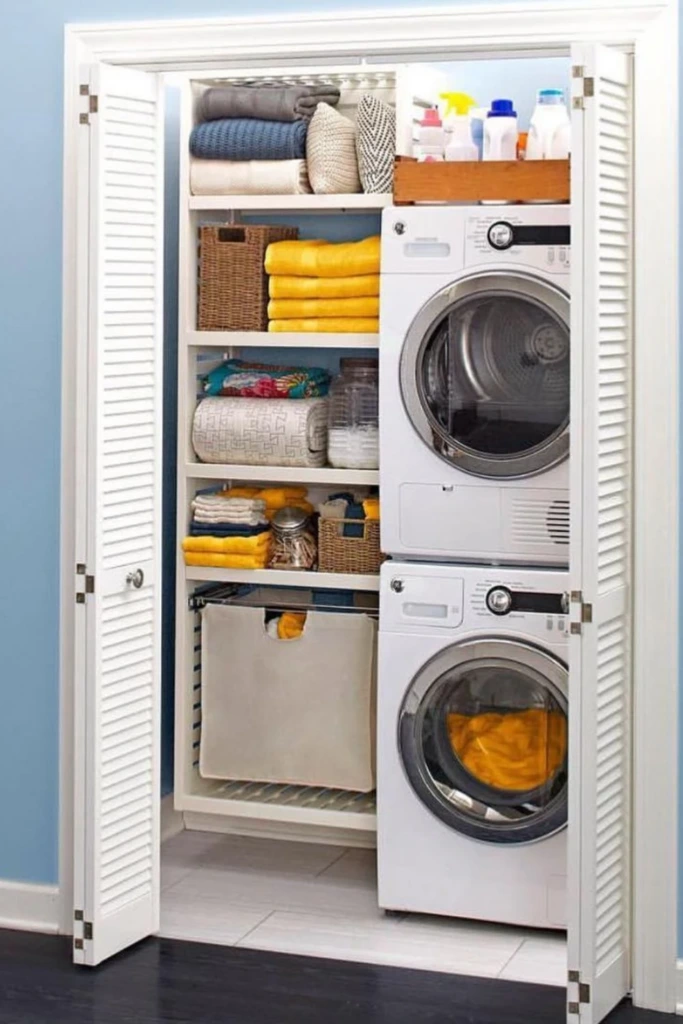
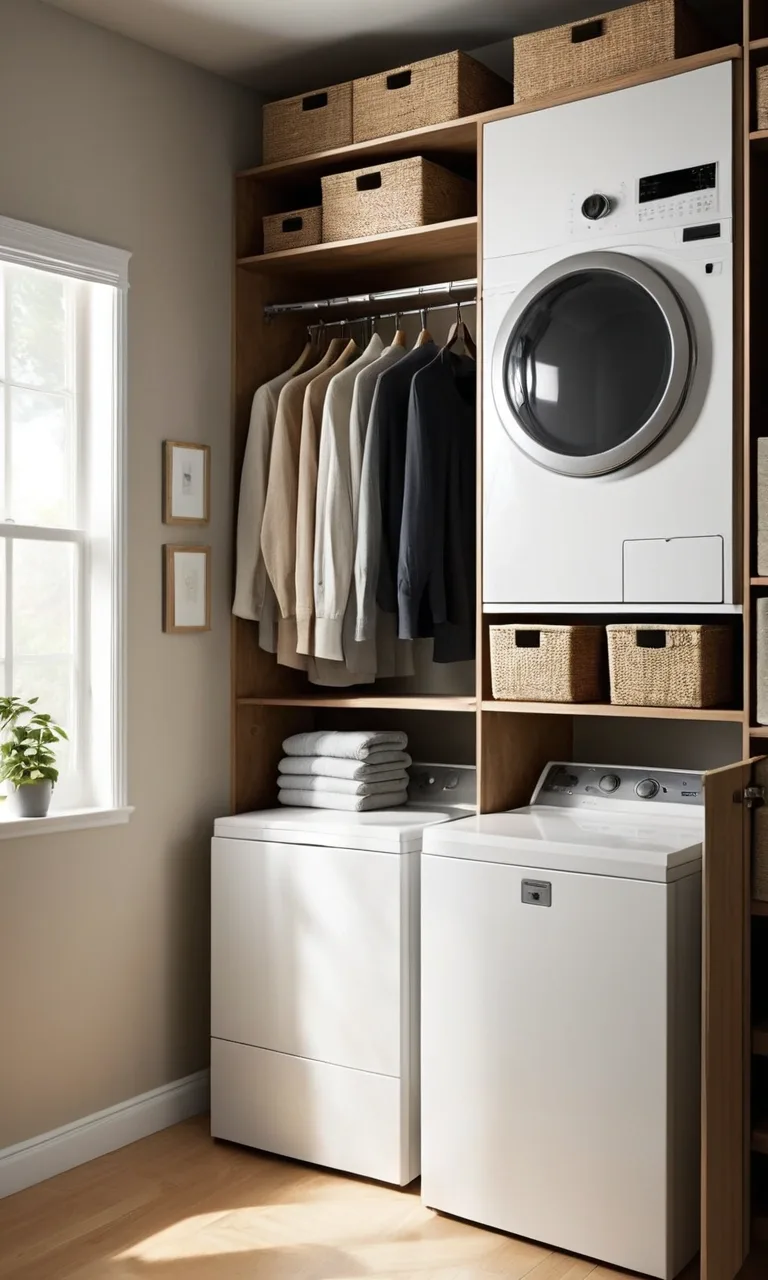
Stacking a compatible washer and dryer is one way to free up floor space in a compact laundry closet. The newly available area beside the appliances can then accommodate a narrow shelving unit, a small cabinet, or a pull-out hamper.
Use open shelves for frequently used products and neatly folded towels. Place smaller supplies in baskets so they don't spread across the shelves, and keep spare detergent or seasonal items in less accessible compartments.
A pull-out laundry basket can make the arrangement even more convenient. You can slide it forward when sorting clothes and tuck it away when the laundry is finished.
Always check the appliance manufacturer's stacking instructions before arranging machines vertically. Proper stacking hardware, adequate clearance, and access to connections are essential for a safe, functional setup.
3. Lit Shelves
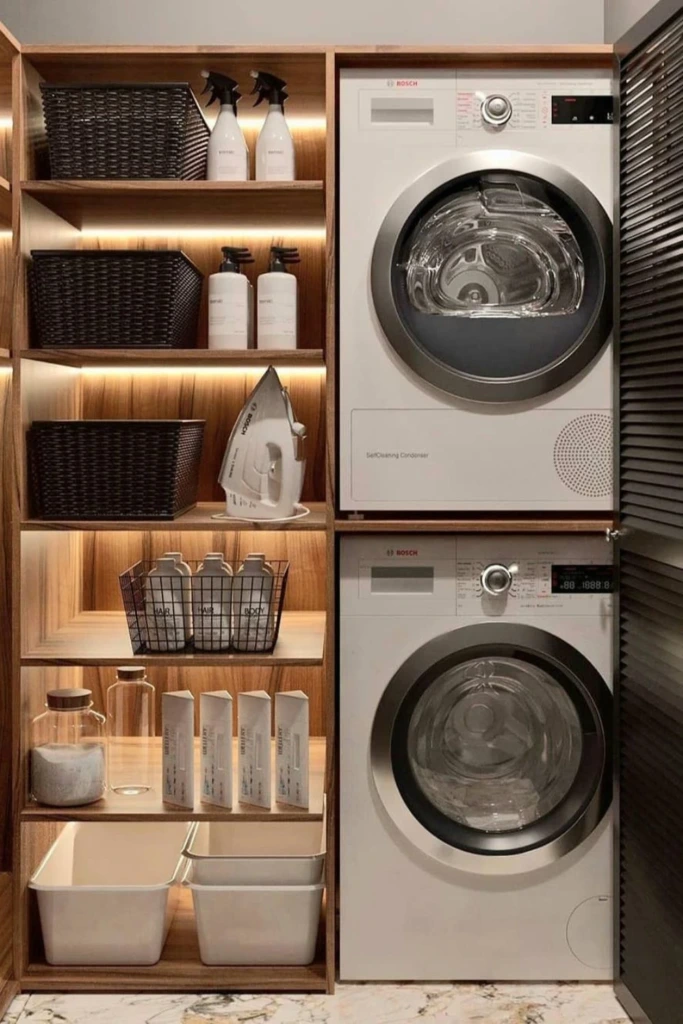
Poor lighting can make an already small laundry closet feel even more cramped. Adding suitable lighting beneath shelves helps you identify products quickly and makes the entire area easier to use.
LED strip lights or compact cabinet lights can illuminate darker corners where small bottles and accessories tend to disappear. Choose a lighting option designed for the installation location, and keep electrical components away from water, excessive heat, and areas where they could be damaged.
Pair illuminated shelves with baskets to create a balance between visibility and visual order. Larger containers can hold cleaning cloths and spare supplies, while smaller organizers keep stain removers, dryer accessories, and other essentials together.
You can also assign a separate shelf to items such as an iron or fabric steamer, provided the storage area offers sufficient space and the appliance is stored safely. Keeping everything in clearly defined zones makes it easier to maintain the arrangement over time.
4. Hanging Rod
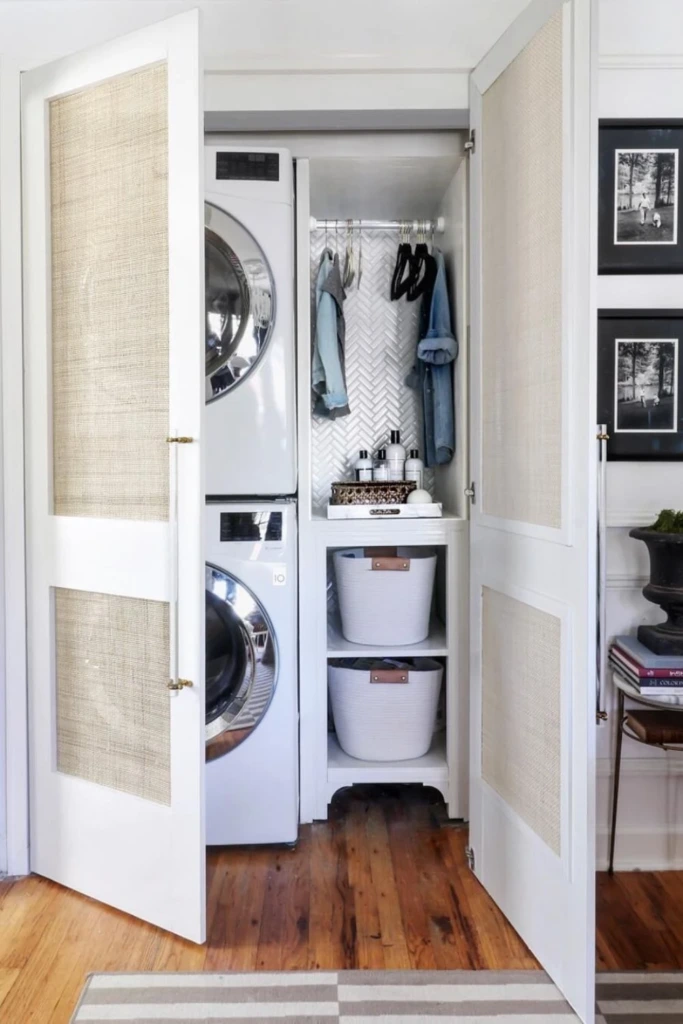
A hanging rod gives freshly washed clothes a convenient place to go before they wrinkle. It's particularly useful when your closet doesn't have enough room for a separate drying rack or folding station.
Install a suitable rod above or beside the machines, depending on the available clearance. Use it for shirts, blouses, lightweight garments, and other pieces that need to air-dry or be hung immediately after drying.
Slim hangers help maximize the number of garments the rod can accommodate. You can also keep a few empty hangers nearby so they're available whenever a load finishes.
If the rod sits above the appliances, make sure it doesn't obstruct access to controls, detergent dispensers, or maintenance panels. Store folded towels and laundry accessories on a separate shelf to keep the hanging area clear.
5. Floating Shelves
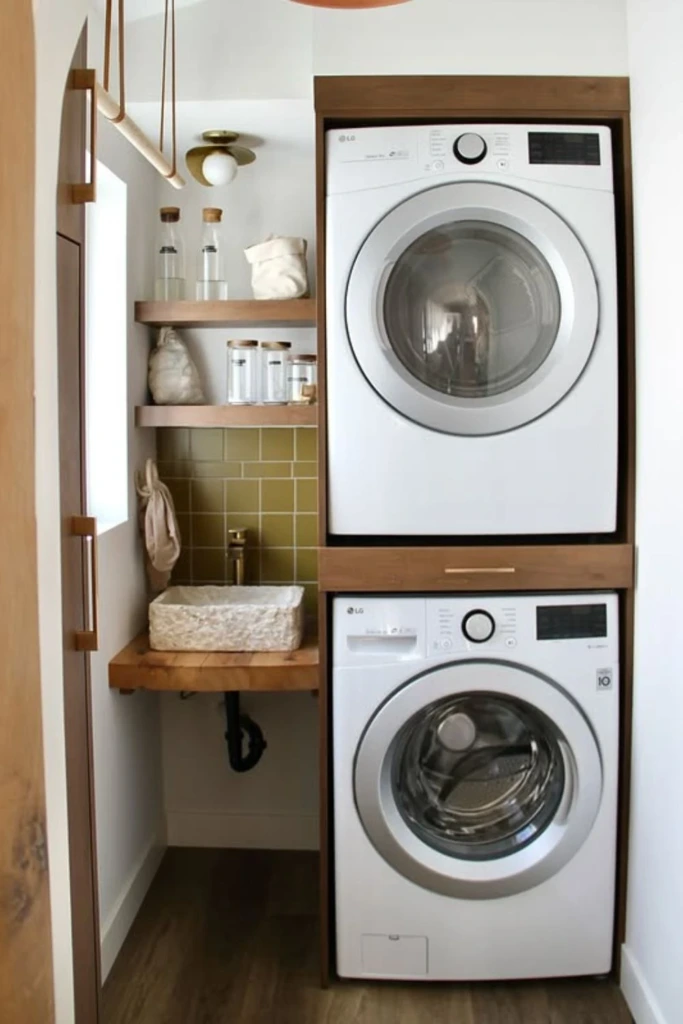
Floating shelves are a straightforward way to add storage without introducing bulky cabinets into a small laundry closet. They work particularly well on unused side walls or above the machines, where vertical space is often overlooked.
Arrange the shelves according to the size and weight of the items you plan to store. Frequently used detergent and stain-treatment products should be easy to reach, while lighter baskets and spare supplies can occupy higher levels.
Keep the arrangement simple by grouping similar products together. A small tray can hold frequently used items, and a basket can contain dryer sheets, clothespins, or laundry bags.
If your layout allows, combine the shelving with a compact folding surface nearby. This creates a useful work area without requiring a large piece of furniture.
Before installation, check the wall construction and use appropriate mounting hardware. Shelves must be securely supported, particularly when they will hold heavy bottles or multiple containers.
6. Basket System
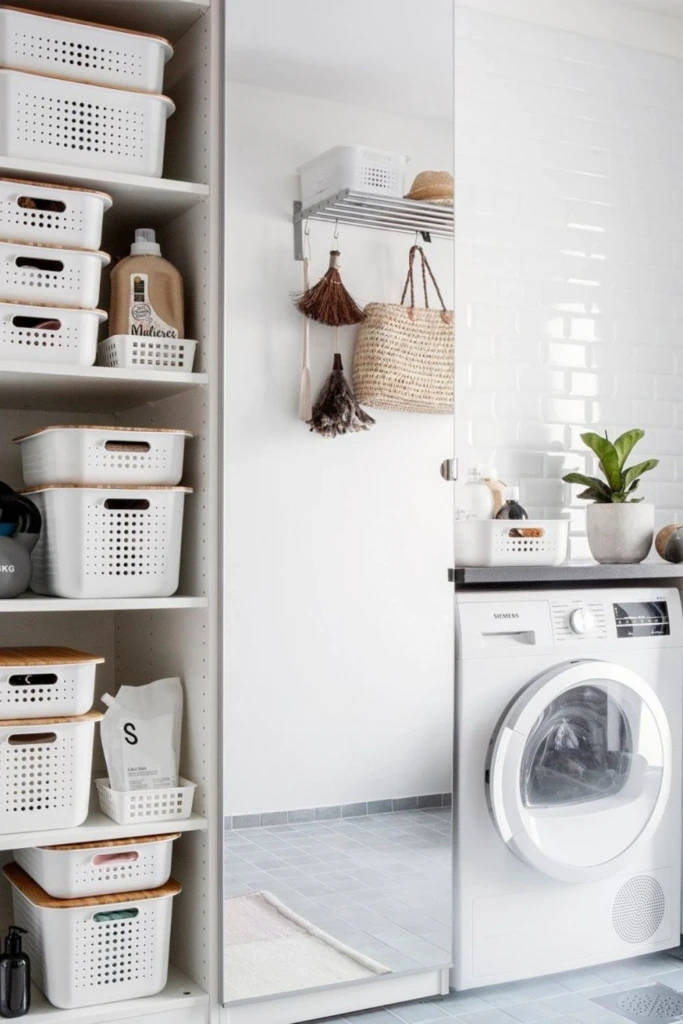
A basket system helps prevent the little items that accumulate during laundry day from taking over the entire closet. Instead of leaving dryer sheets, cleaning cloths, stain removers, and accessories scattered across shelves, give each category its own container.
Start with a few practical groups, such as washing supplies, fabric care, cleaning tools, and spare products. Choose baskets that fit the shelf dimensions and are easy to remove when you need something.
Matching containers create a consistent appearance, but function should come first. Handles make baskets easier to pull forward, while open-front bins can be useful for items you reach for frequently.
Avoid filling every basket to the top. Leaving some room makes it easier to return products to their proper places and notice when supplies need replenishing.
For a narrow closet, stackable baskets can provide extra capacity, provided the arrangement remains stable and the contents are easy to access. A simple system with a few clearly defined categories is often easier to maintain than dozens of small containers.
7. Sort Cubes
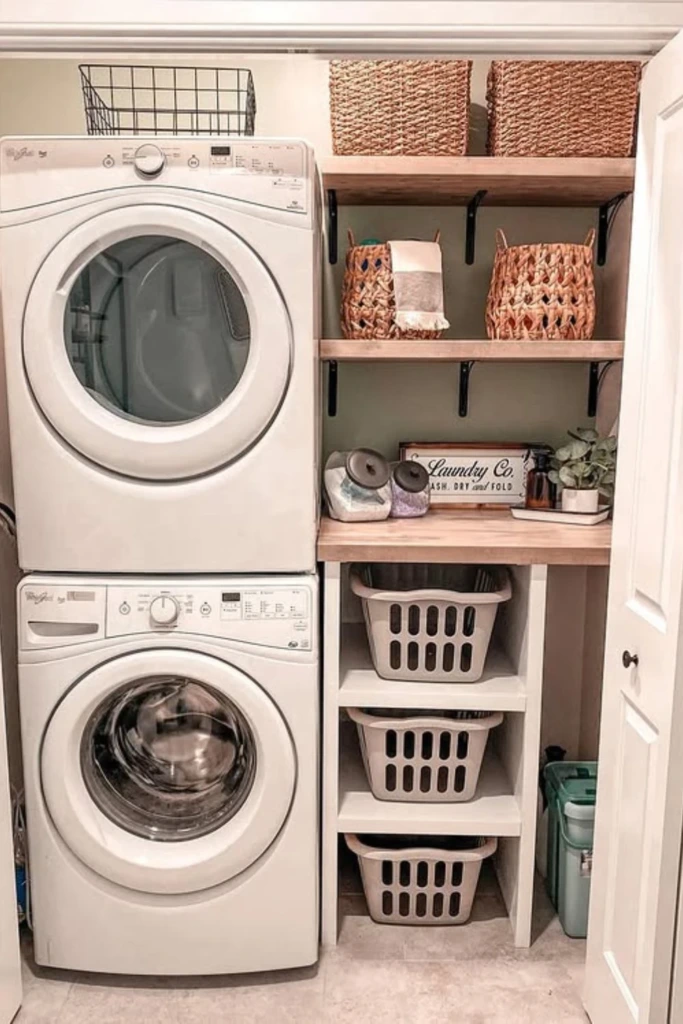
Sorting laundry before washing can save time, especially in busy households. A vertical cube organizer provides a dedicated place for different types of clothing without requiring several large hampers on the floor.
Assign individual cubes to categories that make sense for your routine. You might separate whites, dark colors, towels, delicate garments, or clothes that need special treatment.
Place removable laundry baskets inside the compartments so you can carry a full load directly to the washer. Open cubbies make it easy to see which category needs attention, while labels help everyone in the household follow the same system.
The upper portion of the organizer can hold folded linens or lightweight laundry accessories. If the closet is particularly narrow, measure both the organizer and the baskets before purchasing anything to ensure they fit comfortably.
For safety, secure a tall cube unit against the wall when recommended by the manufacturer. Keep heavier items in lower compartments and avoid overloading the shelves.
8. Folding Counter
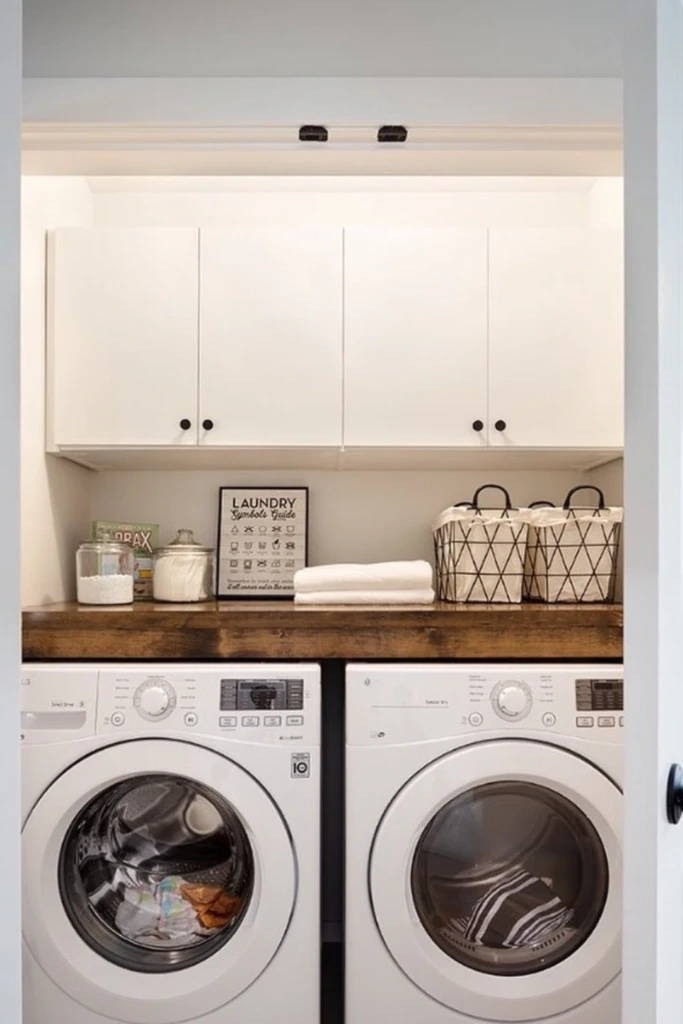
A folding counter gives clean laundry a dedicated landing place instead of allowing clothes to pile up on the machines, a bed, or another nearby surface.
If your washer and dryer sit side by side, a properly fitted countertop can create a continuous work area across both appliances. You can fold shirts, pair socks, sort small garments, or prepare clothes for storage as soon as a cycle finishes.
Choose a surface that suits the dimensions of your machines and can tolerate the conditions in the laundry area. It should remain stable without restricting appliance access or interfering with required clearances.
When space is limited, keep the countertop mostly clear. A small tray for everyday supplies or a basket for clean cloths is usually enough. Store less frequently used products in cabinets or on shelves above the work surface.
If the machines are stacked, a separate wall-mounted folding shelf or a compact fold-down table may be a better option than a permanent counter. The goal is to create a useful work area without sacrificing accessibility.
9. Built-In Storage
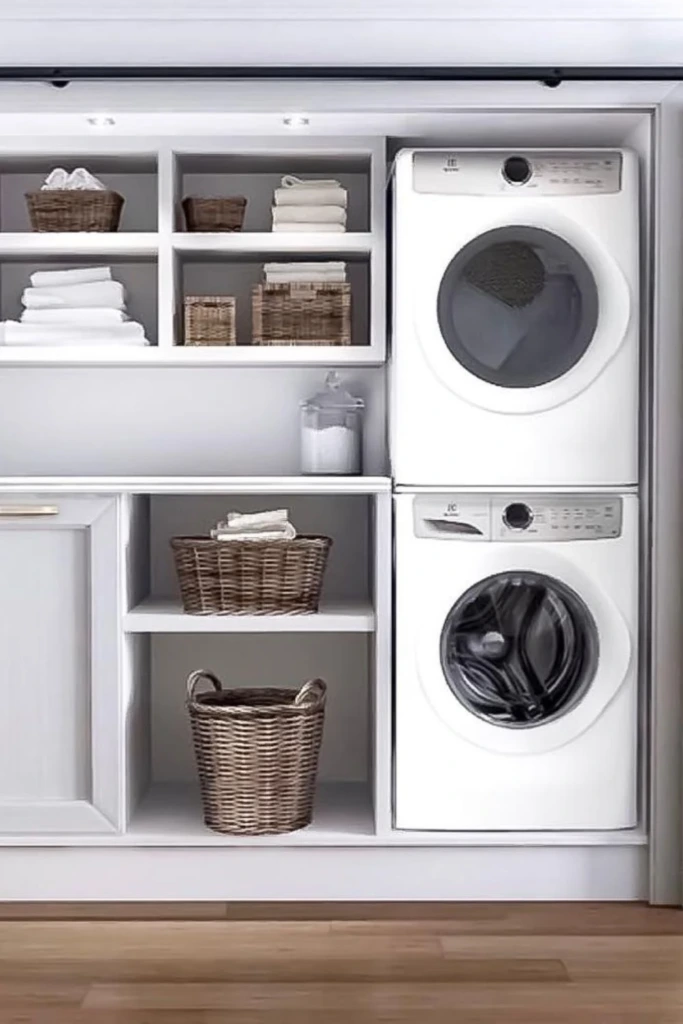
Built-in storage can make a laundry closet feel more cohesive by creating dedicated spaces around the washer and dryer. Instead of fitting several unrelated organizers into the room, you can design shelves, cabinets, and compartments to suit the available dimensions.
Upper cubbies can accommodate towels, linens, and lightweight baskets. Side shelves can hold detergents and everyday supplies, while lower compartments can provide space for hampers or cleaning accessories.
Closed cabinets are helpful for concealing extra products and reducing visual clutter. Open shelves, on the other hand, keep frequently used items visible and accessible.
A customized layout can also include a small hanging section for clothes that need attention immediately after drying. If there is enough room, a countertop or pull-out surface can provide space for folding and sorting.
Before committing to a built-in design, account for appliance dimensions, service access, ventilation, plumbing, and electrical requirements. Leaving room for maintenance is just as important as maximizing storage.
10. Hanging Shelf
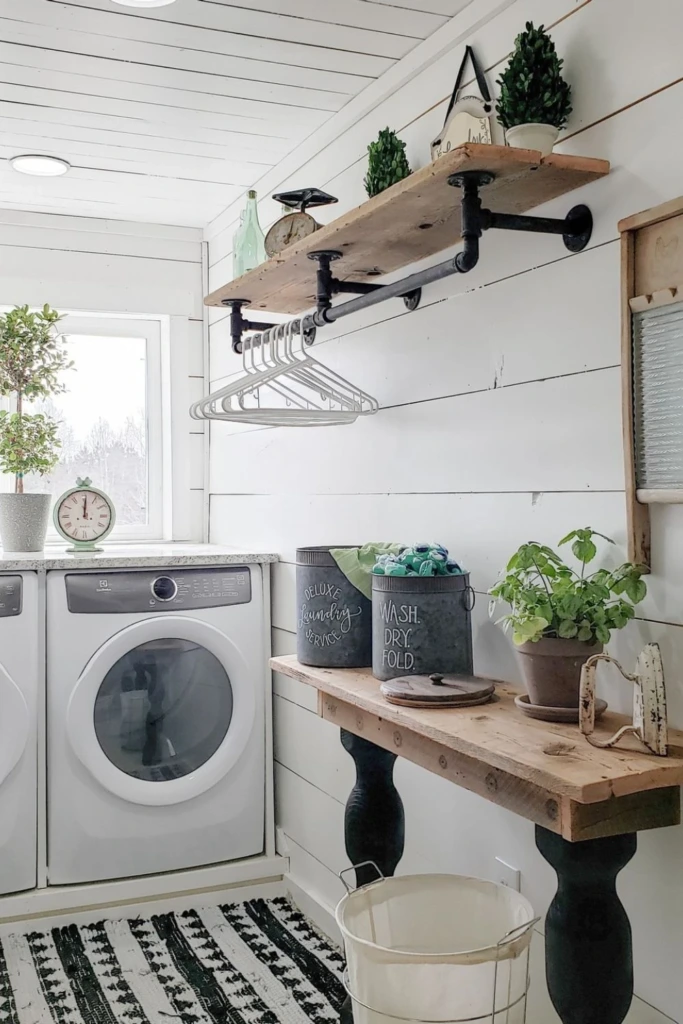
A hanging shelf combines two useful features in one compact installation: storage above and a place to hang clothes below.
The upper shelf can hold laundry baskets, spare linens, or products that don't need to be accessed constantly. A rod underneath provides room for freshly dried shirts, delicate garments, and clothing that should be hung rather than folded.
This arrangement is particularly useful when the closet has limited floor space. By using the wall above the appliances, you can keep garments organized without bringing in a freestanding rack.
For a tidy appearance, use matching hangers and reserve the rod for clothing that needs immediate attention. Avoid overcrowding it, since tightly packed garments are harder to retrieve and may not dry as effectively.
Make sure the shelf and rod are securely mounted and rated for the intended load. Keep hanging clothes away from hot appliance surfaces and avoid blocking ventilation or access panels.
11. Shelf Layers
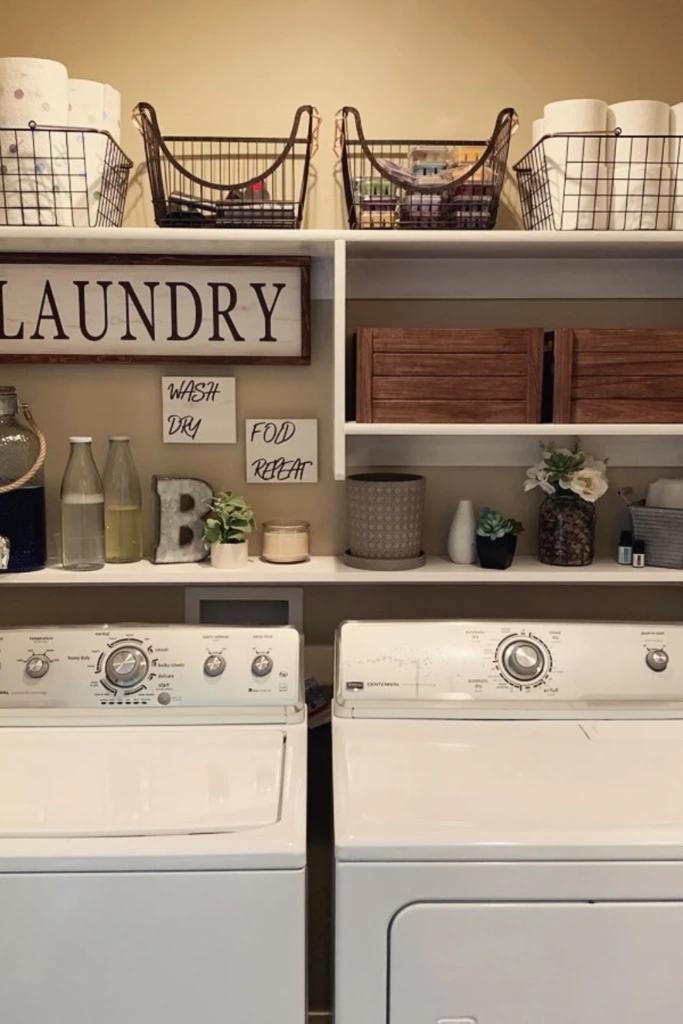
Multiple shelf levels allow you to separate laundry products by purpose instead of placing everything in one crowded row.
The lowest accessible shelf can hold everyday essentials, including detergent and fabric care products. Higher shelves can accommodate spare towels, backup supplies, and baskets containing less frequently used accessories.
Use smaller containers for items that tend to scatter, such as clothespins, dryer accessories, and cleaning brushes. Larger baskets can store paper products, laundry bags, or spare linens.
You can also use a narrow shelf near the side wall to take advantage of an awkward gap. Just make sure it doesn't obstruct the machine doors or reduce the space needed to move comfortably.
Keep the arrangement practical by leaving room to remove bottles and baskets without shifting everything around them. When every shelf has a clear purpose, the closet becomes easier to organize and restock.
12. Door Storage
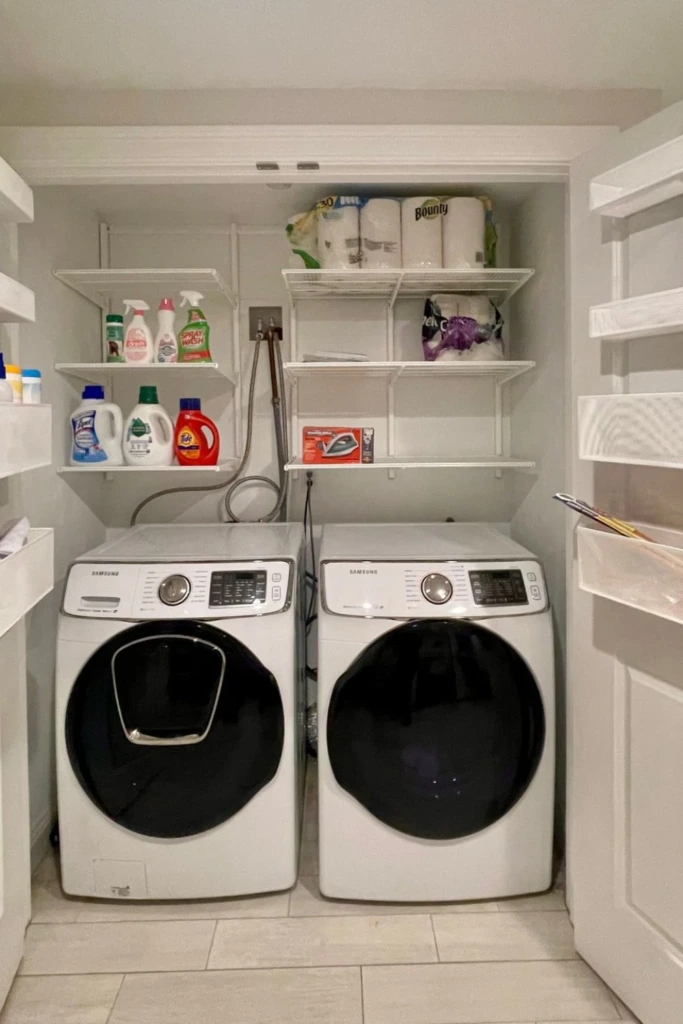
The inside of a laundry closet door can provide valuable storage when wall and floor space are limited. A suitable over-the-door organizer or mounted rack can hold smaller products without requiring another shelf or cabinet.
Use individual pockets or baskets for cleaning cloths, stain removers, laundry bags, and lightweight accessories. Arrange the items you use most often at a comfortable height so you can grab them quickly.
Before choosing an organizer, check the door's thickness, hinge clearance, and available space when it opens and closes. The added weight should not interfere with the door's movement or damage its surface.
Avoid placing heavy bottles in lightweight fabric pockets unless the organizer is specifically designed to support them. Keep chemicals in their original, properly labeled containers and store them securely away from children and pets.
A door organizer works best for smaller essentials. Bulky containers, heavy equipment, and backup supplies are better kept on sturdy shelves or inside cabinets.
13. Cabinet Wall
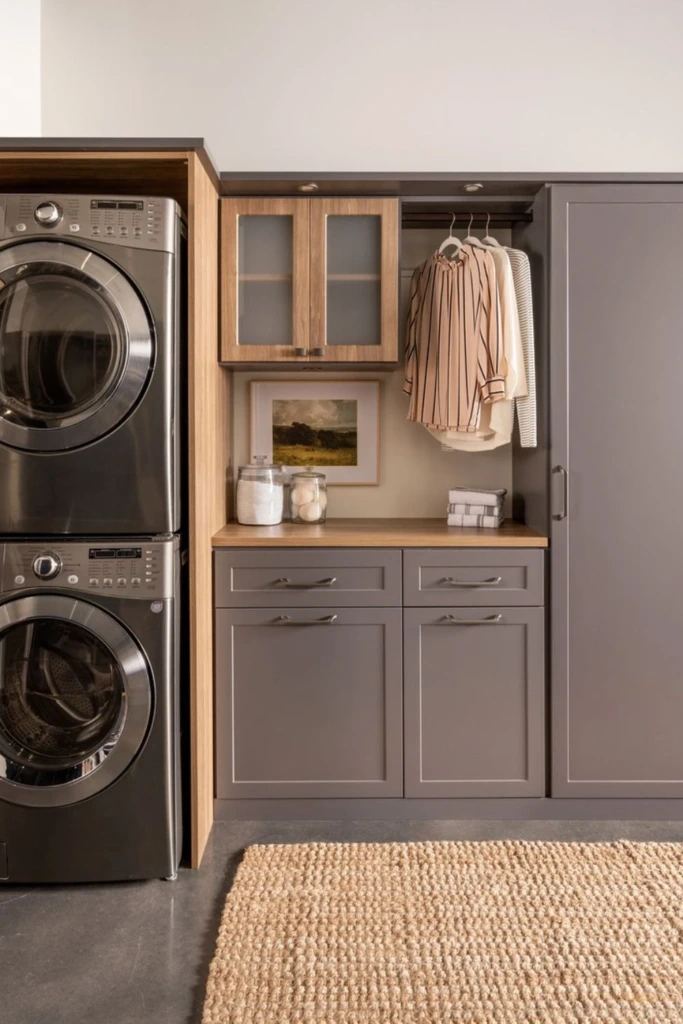
A cabinet wall brings multiple storage functions together in one coordinated layout. Instead of spreading supplies across different parts of the home, you can create a central location for washing, folding, and organizing clothes.
Upper cabinets provide concealed storage for detergents, spare linens, and products you don't use every day. Lower cabinets can hold hampers, cleaning accessories, and larger supplies, while drawers are useful for smaller items.
If the layout includes a countertop, use it as a dedicated folding station. A short hanging rail above the counter can accommodate garments that need to stay wrinkle-free while you finish the rest of the load.
Choose cabinet depths carefully so doors and drawers can open fully without blocking the laundry appliances. If your closet is especially narrow, shallow cabinets may provide sufficient storage without making the work area feel enclosed.
This arrangement is ideal for homeowners planning a more permanent upgrade. Even so, the design should prioritize easy access and adequate appliance clearances over decorative details.
14. Slim Shelves
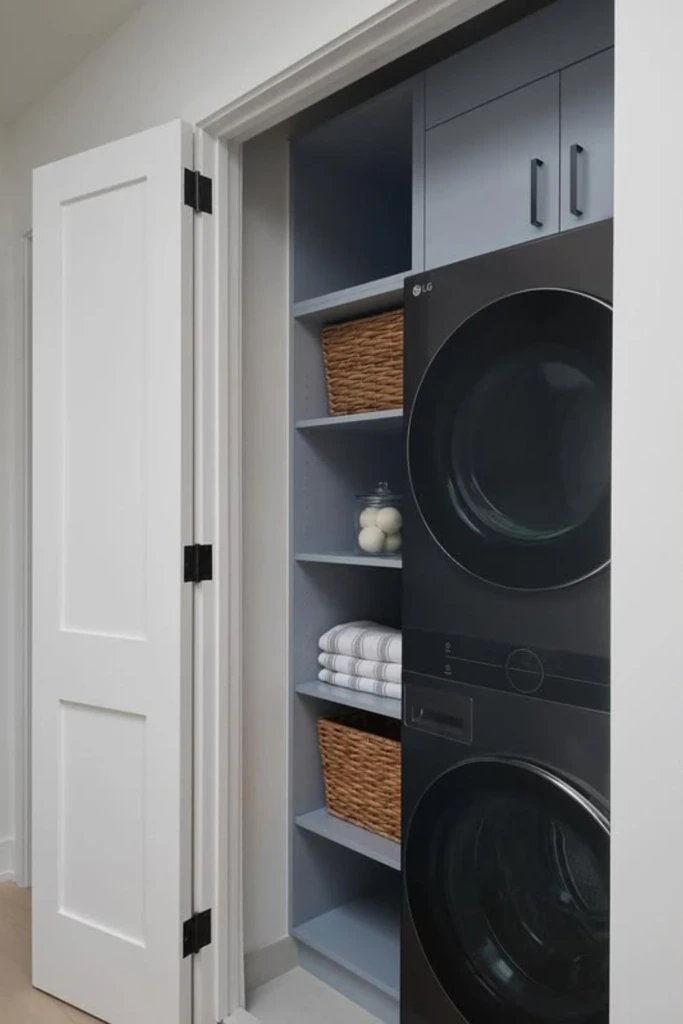
A slim shelving unit can turn a narrow gap beside the washer or dryer into useful storage. It's an especially practical choice when a full-size cabinet would make the closet difficult to access.
Use the shelves for detergent bottles, fabric care products, cleaning cloths, and other everyday essentials. Small baskets can keep loose accessories together, while folded towels can occupy a wider shelf if the unit provides enough depth.
A combination of open and closed storage offers flexibility. Open shelves make frequently used supplies easy to see, while a small cabinet above or beside them can hide less attractive packaging and backup products.
Measure the gap carefully before buying a unit. Check the width at several points, account for baseboards and hoses, and confirm that the shelves won't interfere with machine movement or ventilation.
For rolling units, choose a stable design with suitable wheels and brakes if needed. Avoid overloading a narrow shelf tower, and place heavier containers on the lowest level.
15. Hidden Cabinets
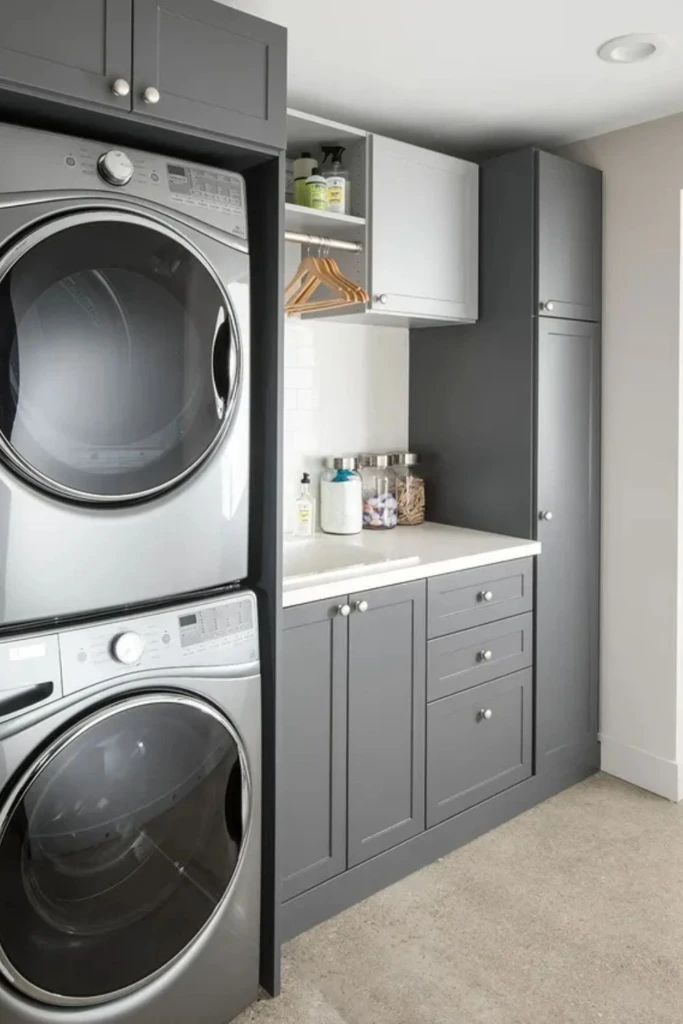
Closed cabinets are an excellent option when you want a laundry closet to look neat even when it contains plenty of supplies.
Behind cabinet doors, you can store detergent refills, cleaning products, laundry bags, spare towels, and other items that would otherwise occupy every visible surface. Adjustable shelves help accommodate containers of different heights.
Drawers provide additional organization for smaller accessories, including clothespins, lint brushes, and fabric-care tools. If the closet has enough room, a compact hanging section can keep freshly dried clothes from becoming wrinkled while you finish sorting.
To make the most of concealed storage, avoid treating cabinets as places to hide miscellaneous clutter. Assign each shelf or drawer a specific purpose and use small bins to separate related products.
Store heavier items on lower shelves and keep frequently used supplies within easy reach. If you are adding cabinets around stacked appliances, make sure the installation preserves the clearances and access required by the appliance manufacturer.
16. Vertical Compartments
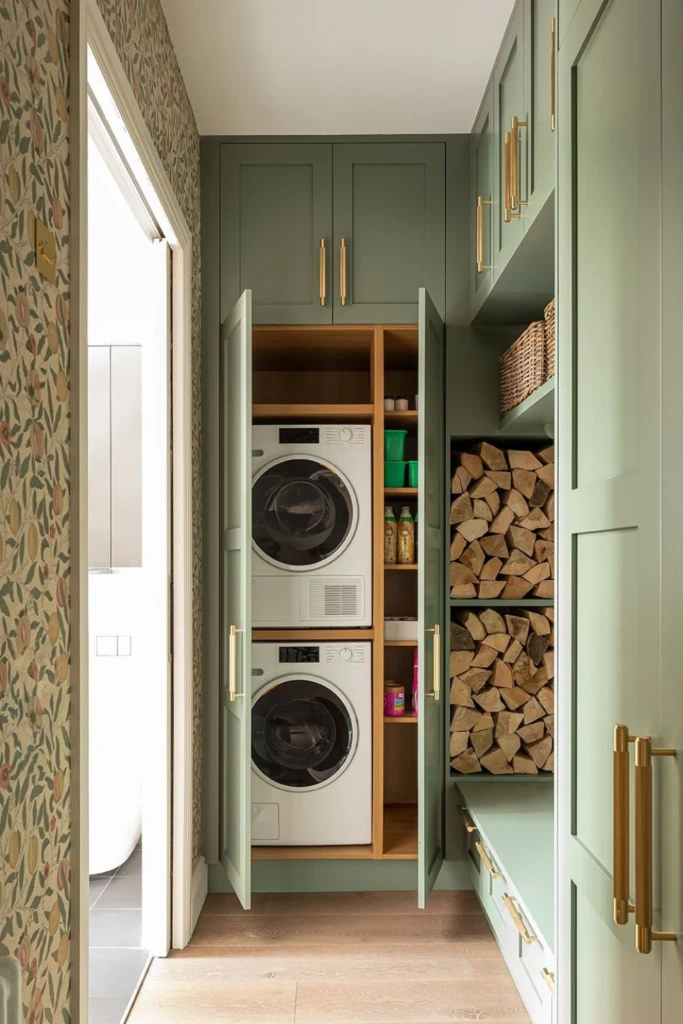
Vertical compartments help organize a laundry closet when there is more height than width available.
A tall cabinet divided into separate sections can accommodate different categories of supplies without requiring several pieces of furniture. Narrow compartments are suitable for bottles, cleaning brushes, and small accessories, while wider sections can hold baskets and folded linens.
Keep everyday items in the middle of the cabinet where they are easy to reach. Reserve upper compartments for lightweight backup supplies, and use lower sections for heavier products or laundry baskets.
Adjustable shelves are particularly useful because detergent containers and cleaning products vary in height. You can change the spacing as your storage needs evolve instead of replacing the entire unit.
A well-divided cabinet also makes it easier to notice when something is running low. Give each section a clear purpose, and resist the temptation to fill every available space with products you rarely use.
17. Storage Wall
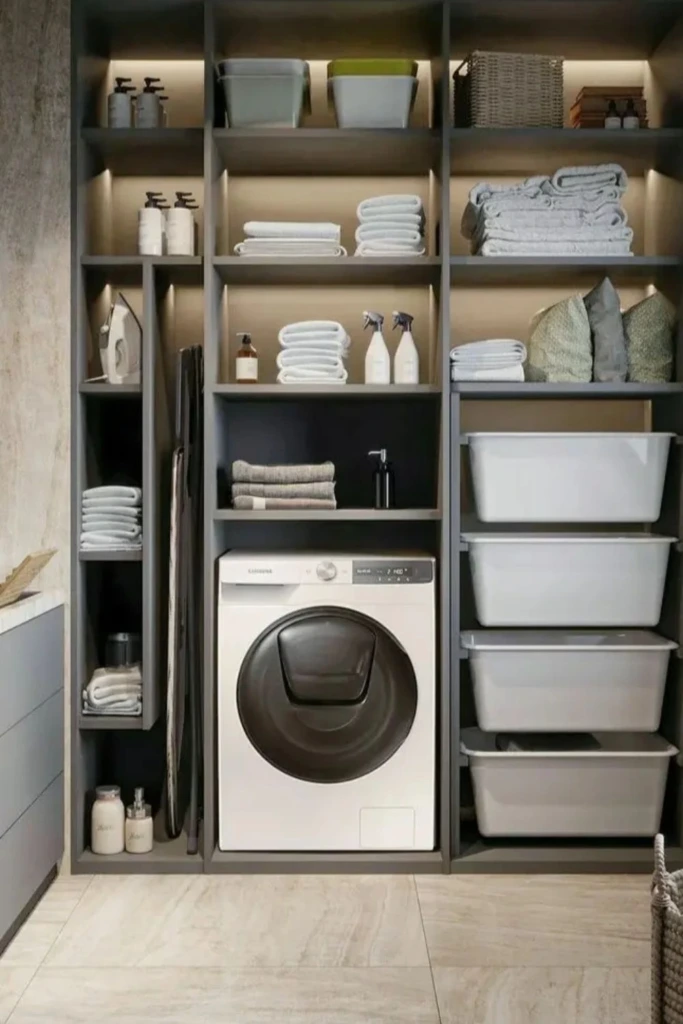
A dedicated storage wall can provide an organized home for nearly everything associated with laundry day. It works especially well when the closet has an unused wall behind or beside the appliances.
Start by dividing the wall into functional zones. Upper shelves can hold backup supplies and spare linens, middle shelves can store everyday products, and lower compartments can accommodate hampers or heavier containers.
If you have enough space, include a separate section for cleaning tools such as a broom, duster, or ironing board. Hooks and narrow vertical compartments can keep these items off the floor while leaving them accessible.
Pull-out laundry bins can make sorting easier by giving different clothing categories their own containers. When the bins are full, they can be removed for washing without disturbing the rest of the storage system.
Before installing a full wall of shelving, consider how you will reach the highest compartments and remove bulky baskets. A useful storage wall should make everyday tasks easier, not simply provide the maximum possible number of shelves.
18. Glass Cabinets
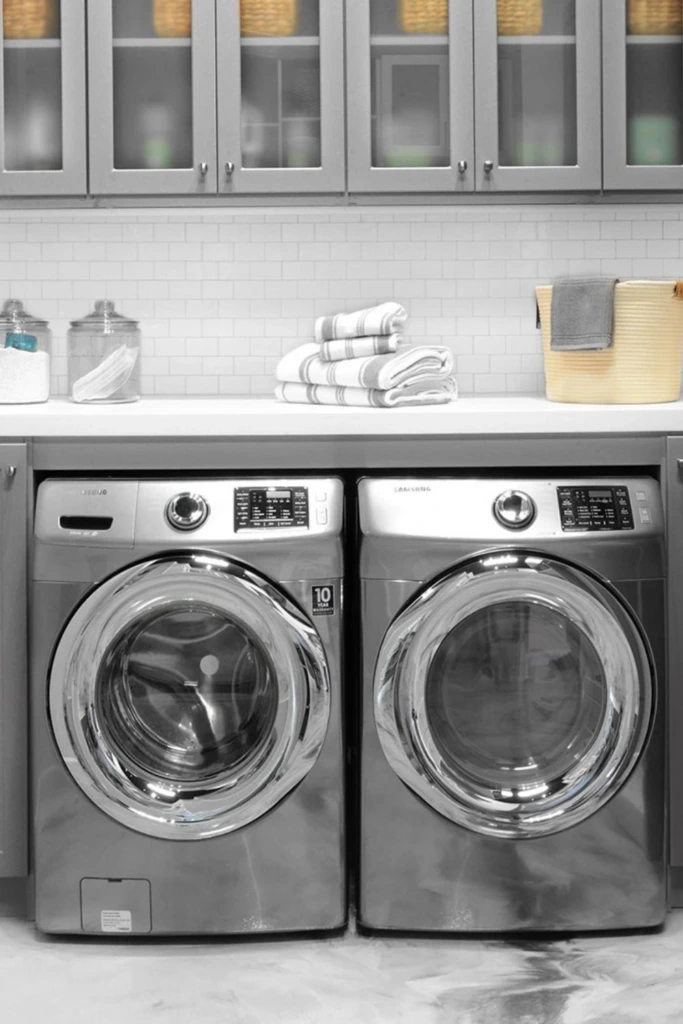
Glass-front cabinets offer a middle ground between completely open shelving and fully concealed storage. They allow you to see where items are kept while giving the laundry closet a more finished appearance.
Use them for neatly arranged towels, matching baskets, labeled containers, and frequently used laundry supplies. Group similar items together so the shelves remain easy to scan.
If the cabinets are positioned above a folding surface, you can create a convenient work zone with storage directly overhead. The countertop can hold a laundry basket temporarily, provide space for folding clothes, or serve as a place to sort garments.
Keep decorative containers to a minimum on the work surface. A few practical accessories are helpful, but too many jars and baskets can reduce the space available for actual laundry tasks.
Glass doors show the contents more clearly than solid cabinets, so consistent organization makes a difference. Choose sturdy cabinet construction, secure the doors properly, and avoid placing heavy items where they could fall if a shelf or door is disturbed.
19. Labeled Baskets
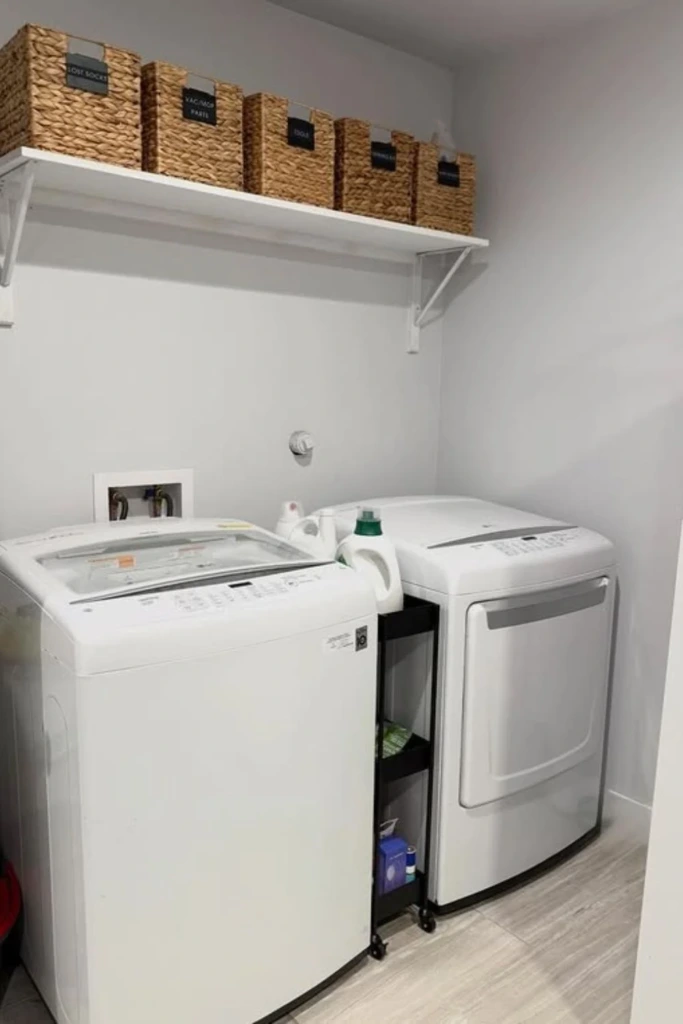
Labeled baskets make it easier to find supplies and return them to the right place after use. They are especially useful when several people share the laundry closet or when products tend to accumulate over time.
Create categories based on your household's needs. One basket might hold dryer accessories, another can store cleaning cloths, and a third can contain spare detergent or fabric-care products.
Choose containers that fit the shelves and are easy to pull forward. Labels should be simple and specific, such as "Stain Care," "Laundry Bags," or "Extra Supplies."
If you keep baskets above the machines, place lighter items in higher positions and avoid storing heavy containers where they would be difficult to retrieve safely.
A narrow rolling cart can complement the basket system by holding products you use throughout the week. Keep the cart stocked with a small selection of essentials rather than duplicating every item in the closet.
Review the baskets occasionally to remove empty packaging, discard unusable items, and replenish supplies. This small habit prevents the system from becoming another source of clutter.
20. Wall Organizer
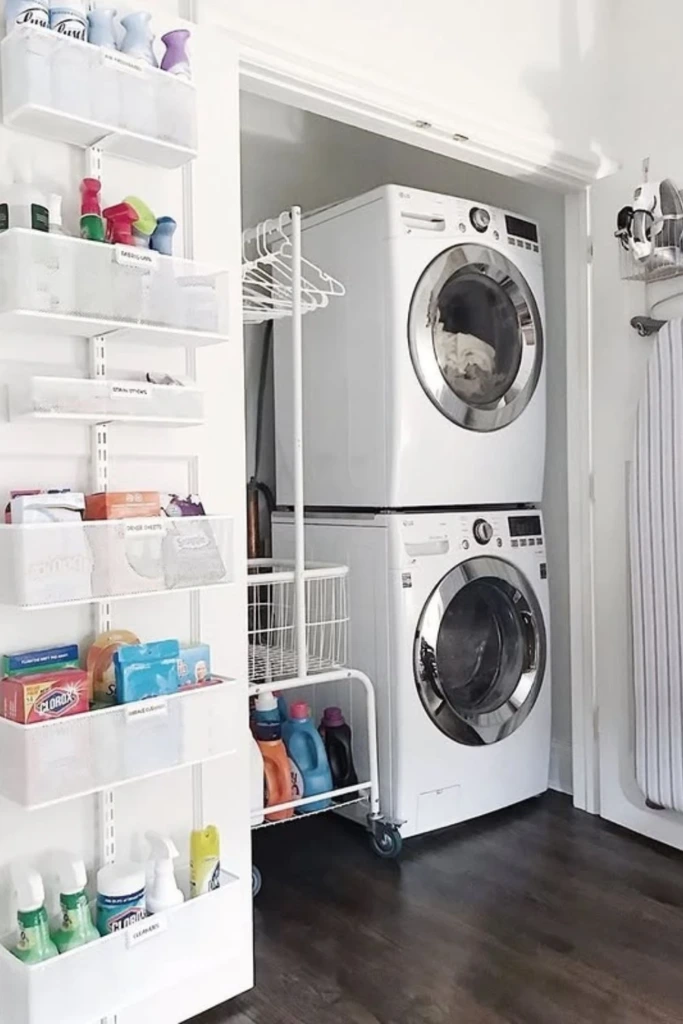
A wall organizer provides flexible storage for a laundry closet that lacks enough room for additional furniture. Depending on the design, it can include shallow shelves, hooks, small bins, or adjustable rails.
Use the organizer to keep frequently needed products visible and separated. Stain treatments, laundry bags, cleaning cloths, and small accessories can each have a designated location.
Shallow shelves are often more practical than deep ones in narrow spaces because items remain visible and are less likely to disappear behind other products. A few sturdy hooks can hold lightweight cleaning tools or reusable laundry bags.
If you need additional capacity, pair the wall organizer with a slim rolling cart. The cart can hold heavier products and slide out when needed, leaving the main walkway clear.
Always check the wall material and choose suitable mounting hardware. Keep products securely positioned, avoid placing heavy items above areas where people stand or work, and make sure the organizer doesn't interfere with doors or appliance access.
21. Counter Cabinets
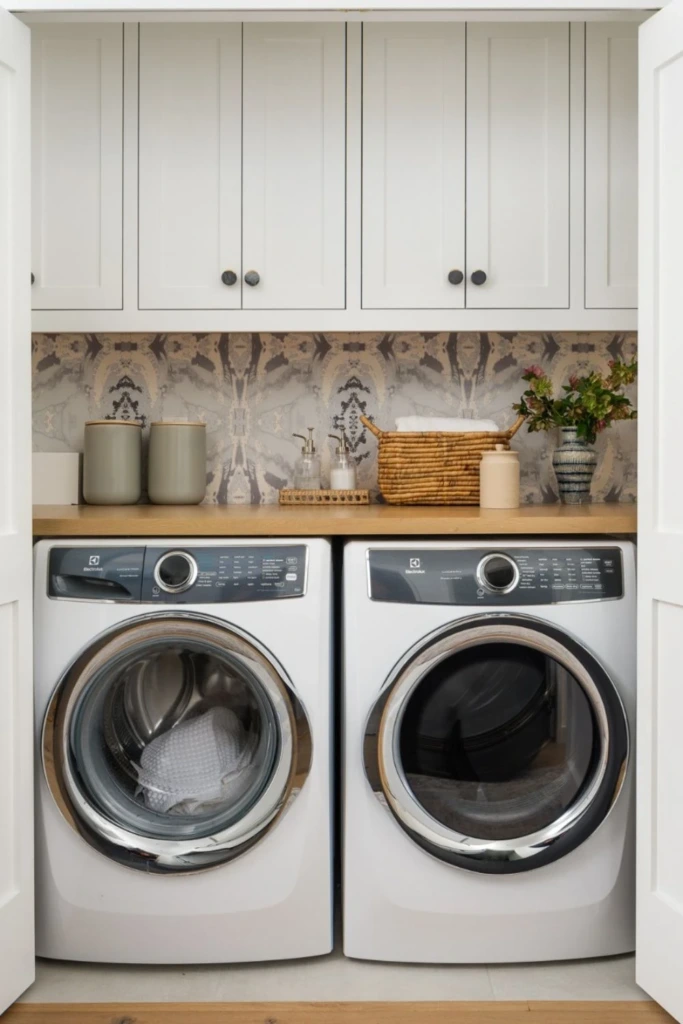
Combining a countertop with cabinets above or below creates a practical arrangement for laundry tasks. The counter provides working space, while the cabinets give supplies a designated home.
A surface above side-by-side machines can be used for folding clothes, sorting smaller garments, or placing a basket while transferring a load. Cabinets above the counter can hold products and linens that you want to keep out of sight.
If lower cabinets are possible, use them for heavier supplies and laundry accessories. Drawers can separate smaller items so they remain easy to find.
Keep the countertop clear enough to serve its main purpose. Store spare products behind cabinet doors, and use a small tray for any everyday items that genuinely need to remain within reach.
If your machines are stacked, consider a separate wall-mounted counter or fold-down work surface instead. The right solution depends on the available wall space and the clearances required by your appliances.
22. Hook Station
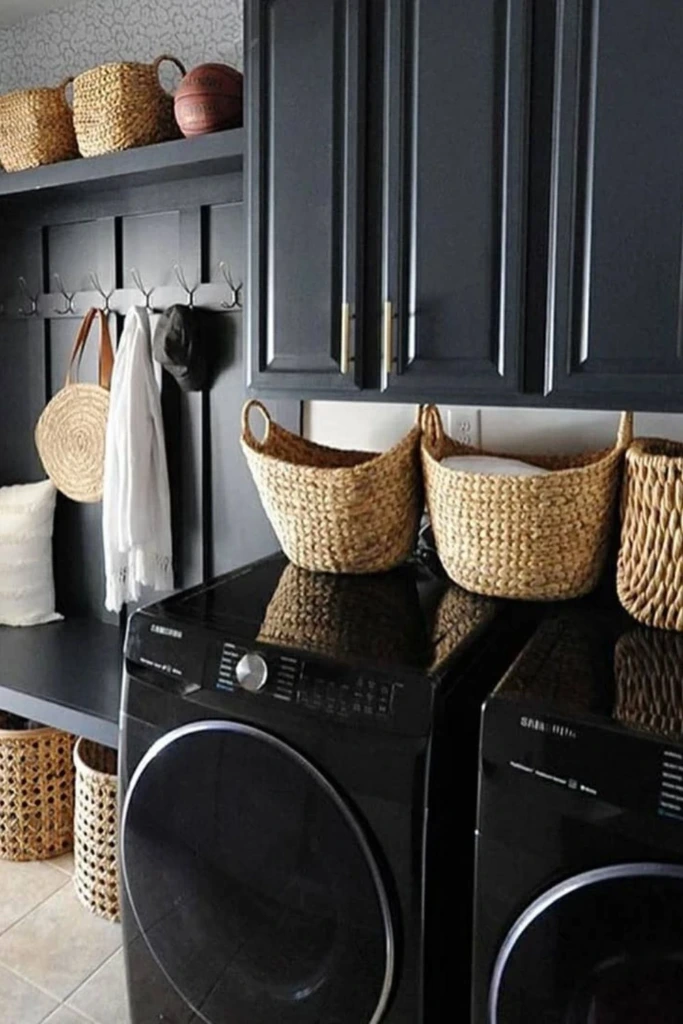
A hook station is a simple way to use an empty wall for items that are awkward to store on shelves. It can hold reusable laundry bags, lightweight cleaning tools, dusters, and other accessories that you need regularly.
Install a row of hooks at a convenient height, leaving enough space between them for each item to hang freely. A short rail with multiple hooks can be more practical than several individual fittings.
If the wall has room above the hooks, add a shelf for lightweight baskets containing spare cloths or laundry accessories. This creates two levels of storage without taking up floor space.
Choose hooks according to the weight and shape of the items you intend to hang. Secure them properly, and avoid placing sharp or heavy tools where they could fall into the walkway.
The most effective hook station is simple and uncluttered. Keep only the items you regularly use in this area, and store seasonal or rarely needed equipment elsewhere.
23. Supply Tower
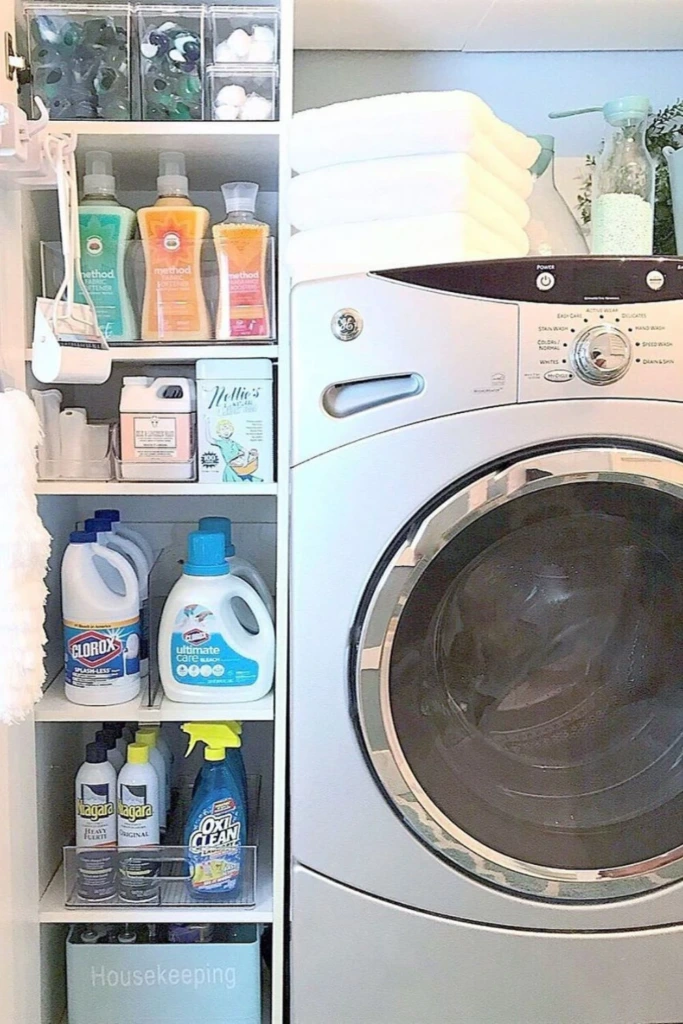
A supply tower is a narrow, upright storage unit designed to keep laundry and cleaning products together in one compact location.
Arrange the shelves according to product type. Detergent and fabric-care products can occupy one section, stain treatments another, and smaller cleaning accessories a separate bin. This makes it easier to locate what you need without moving several bottles around.
Choose a tower with shelves deep enough to support your containers securely. Raised edges or fitted baskets can help prevent items from shifting when the unit is moved.
If space permits, use hooks on an adjacent wall for lightweight brushes, dusters, or reusable bags. Keeping these tools off the floor makes the closet easier to clean.
A supply tower can be especially useful beside stacked appliances, where a narrow strip of space might otherwise go unused. Measure the available gap before purchasing, and make sure the unit doesn't block vents, hoses, electrical connections, or appliance doors.
Store cleaning products in their original labeled packaging and follow their storage instructions. Keep them out of reach of children and pets, particularly if the tower is open.
24. Appliance Nook
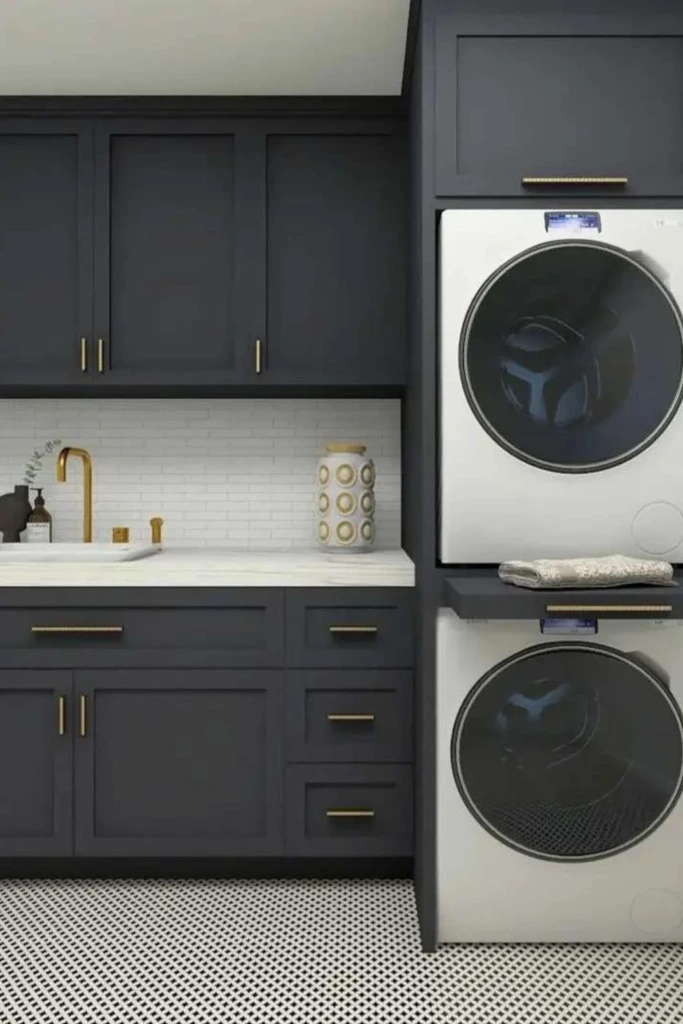
An appliance nook creates a defined area for the washer and dryer, often using surrounding cabinetry or shelving to make the machines look integrated with the rest of the closet.
When the layout permits, stacked machines can free up wall space for storage. Cabinets above the appliances can hold lightweight laundry supplies, while side shelves or drawers provide room for smaller accessories.
A nearby countertop creates a convenient place to fold clothes and organize clean laundry. Even a small landing surface can make it easier to move garments from the dryer without carrying them to another room.
Design the nook around the exact appliance dimensions, including the clearance needed for doors, hoses, ventilation, and servicing. Some machines require specific spacing around their sides and backs, so don't assume that a tight enclosure is suitable for every model.
If you're planning a renovation, consider where detergent dispensers, electrical outlets, water shutoffs, and drainage connections are located. These practical details can determine how much cabinetry can be added safely.
The finished nook should make the machines easier to use and maintain rather than simply concealing them.
25. Hanging Rail
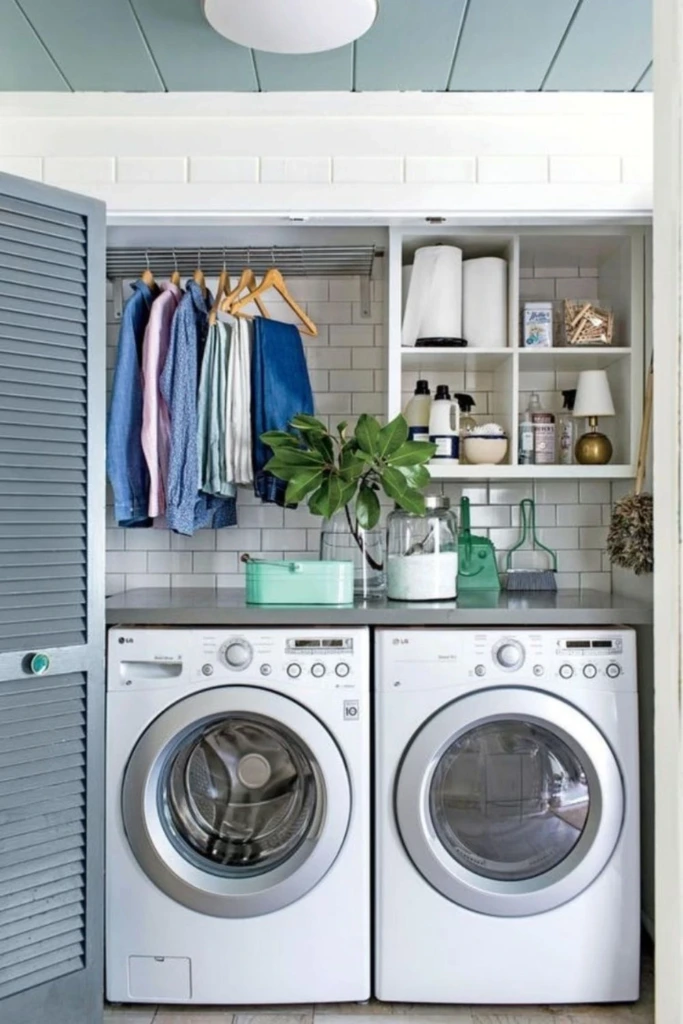
A hanging rail gives clothes a convenient place to go immediately after drying. It is especially helpful for garments that wrinkle easily or need to finish drying on a hanger.
Mount the rail beneath a shelf or cabinet if the layout provides enough clearance. The upper storage can hold laundry products, folded towels, or small baskets, while the lower rail keeps clothing organized and off the floor.
Use suitable hangers and leave enough space between garments for easy access. Avoid overcrowding the rail, and make sure longer items won't drag against the appliances or block the walkway.
A nearby folding counter can make the setup even more useful. Fold everyday clothing on the counter and hang pieces that need to remain smooth before putting them away.
If you regularly air-dry delicate fabrics, make sure the surrounding area has suitable airflow and that garments can dry without contacting hot surfaces. Choose a rail and mounting system strong enough to support the expected weight of wet clothing.
Can a narrow laundry closet still have a folding space?
Yes. A narrow laundry closet can often accommodate a small folding area if you make effective use of the available wall and appliance space.
For side-by-side machines, a properly fitted countertop can create a continuous surface for folding shirts, sorting socks, and organizing clean laundry. If the appliances are stacked, a wall-mounted folding shelf or fold-down table may be a better option.
You can also use a nearby utility surface or a compact portable table that can be moved out of the way when not needed. The important thing is to create a designated place for clean clothes so they don't accumulate on top of the machines or spill into other rooms.
Before adding a counter or shelf, check appliance clearances and ensure the installation doesn't obstruct maintenance access, ventilation, or door movement.
What is the easiest way to add storage without remodeling a laundry closet?
The easiest approach is to improve the storage you already have before investing in permanent cabinetry. Start by removing unused items and grouping the remaining supplies into practical categories.
Then look for underused areas. A shelf above the machines can hold baskets or backup supplies, while an over-the-door organizer can accommodate lightweight accessories. Wall hooks can keep cleaning tools off the floor, and a slim rolling cart may fit into a narrow gap beside an appliance.
Use labeled baskets to contain small products and make it easier to return items to their proper places. Keep frequently used supplies within reach and move extra stock to higher shelves or closed storage.
These changes can make a noticeable difference without major construction. Measure before buying anything, and prioritize organizers that fit your actual routine rather than adding storage simply because space is available.