22 Clothing Organization Ideas for 2026
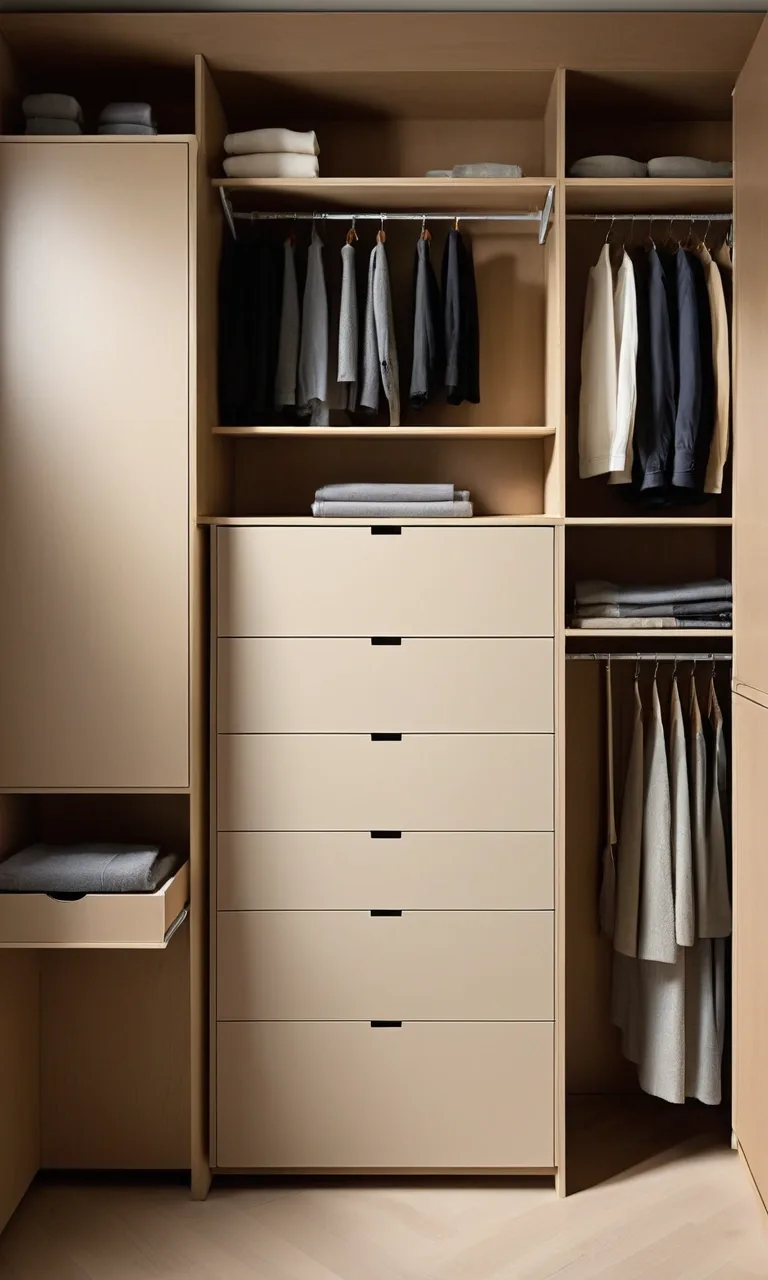
Keeping your clothes organized can make everyday life feel much simpler. When shirts are buried under sweaters, hangers are crowded together, and drawers are overflowing, even choosing an outfit can become frustrating. The good news is that you can create a more functional wardrobe without renovating your closet or buying expensive furniture.
A few thoughtful changes can help you use available space more efficiently, protect your favorite garments, and make your bedroom look tidier. Whether you have a spacious walk-in closet, a small wardrobe, or an open clothing rack, the right storage methods can make a noticeable difference.
From practical shelf dividers to flexible rolling racks, these clothing organization ideas offer ways to store everything from everyday basics to bulky seasonal pieces. Choose the solutions that fit your space, budget, and daily routine.
What Are Smart Storage Solutions for Clothes in Small Spaces?
Smart clothing storage focuses on making the most of the space you already have. Instead of allowing garments to pile up on shelves or disappear into crowded drawers, create designated places for different clothing categories.
Vertical organizers, hanging accessories, stackable containers, and compartmentalized shelves can help you use overlooked areas. Storing frequently worn clothes within easy reach while moving occasional and seasonal items elsewhere also makes a small closet more manageable.
Start by sorting your wardrobe, removing pieces you no longer wear, and measuring your available storage space. Then choose organizers that address your biggest challenges rather than purchasing containers you may not need.
1. Door Shelves
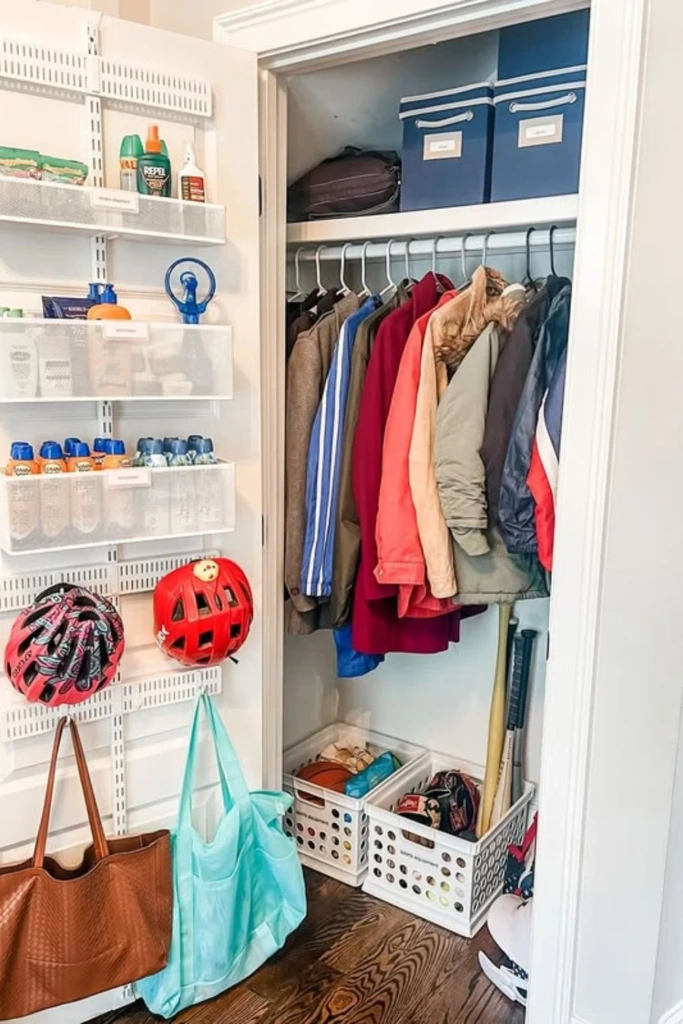
The inside of a closet door can provide valuable storage without occupying additional floor or shelf space. Over-the-door organizers, narrow racks, and lightweight hanging baskets are useful options for making this overlooked area more functional.
Use separate compartments for accessories, scarves, gloves, belts, or other small items that tend to get lost. Clear pockets make contents easy to identify, while labeled baskets help family members return everything to its proper place.
Keep heavier belongings on sturdy, appropriately mounted organizers and avoid overcrowding the door. This arrangement works particularly well when your closet has limited shelving but plenty of unused vertical space.
2. Shelf Sections
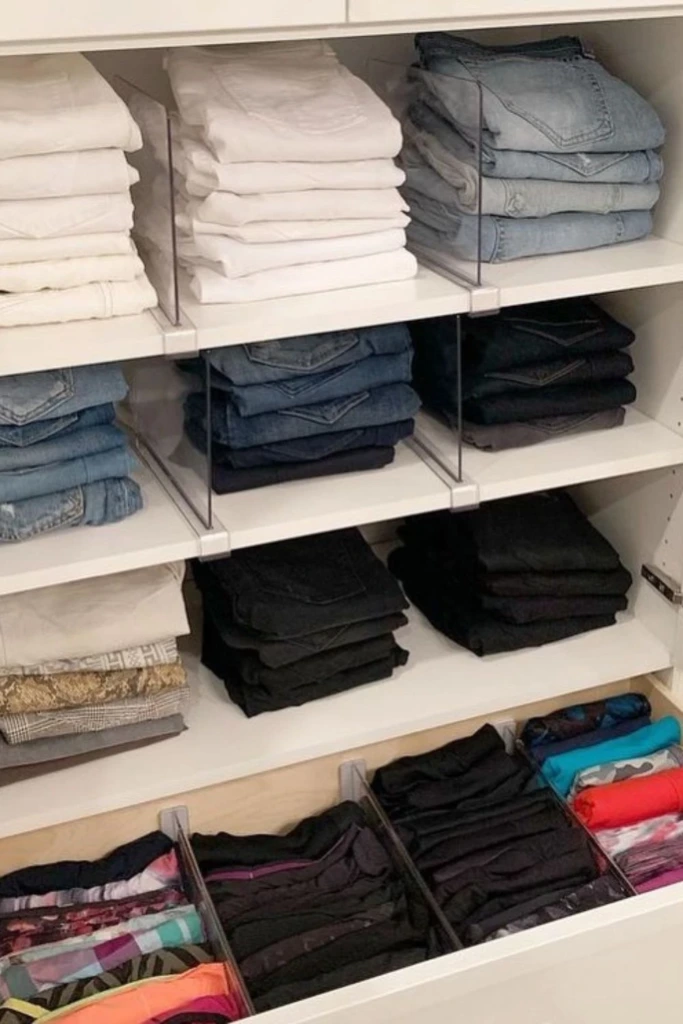
Folded clothing can quickly become untidy when several stacks share one wide shelf. Shelf dividers create individual sections that prevent garments from sliding into neighboring piles.
Use these dividers to separate jeans, T-shirts, sweaters, and other folded pieces. Acrylic dividers offer a discreet appearance, while wire options provide a lightweight alternative.
Before purchasing a set, measure the depth and thickness of your shelves to ensure a proper fit. Organizing each section by clothing category also makes it easier to return freshly washed garments without disturbing everything else.
3. Color Folding
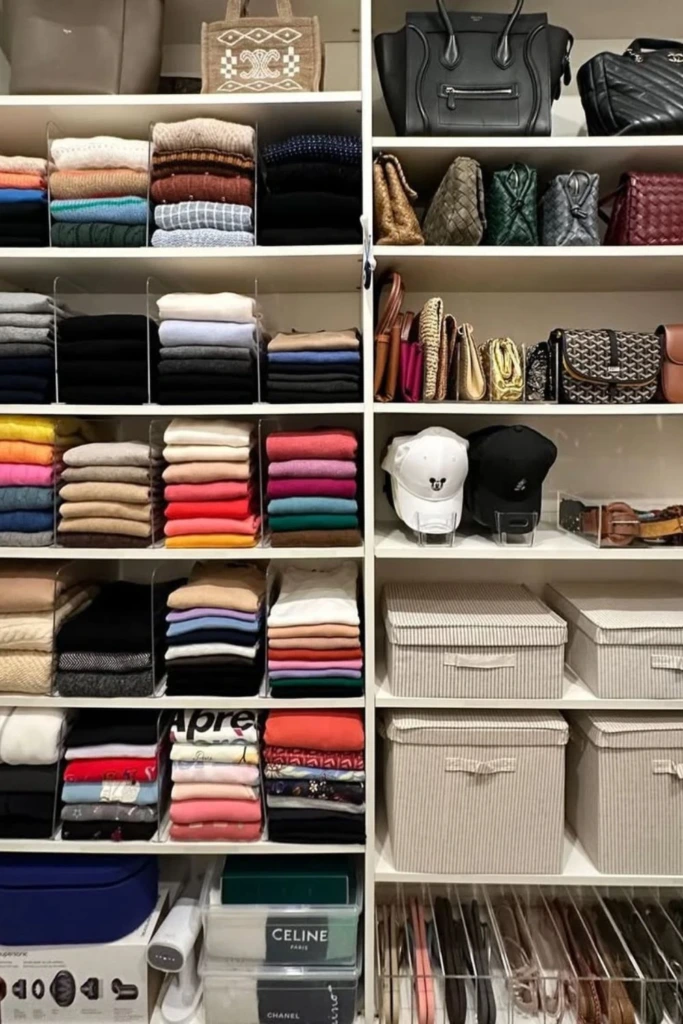
Arranging folded clothes by color creates a wardrobe that looks coordinated and is easier to navigate. Instead of searching through several stacks, you can quickly identify the shades you want to wear.
Begin by separating garments into categories, such as tops, knitwear, trousers, and casual clothing. Within each category, arrange pieces from light to dark or group similar colors together.
Keep frequently worn items near the front of shelves and use dividers to maintain separate stacks. Although color coordination is not essential for every wardrobe, it can be especially helpful when you own many similar garments or enjoy planning outfits.
4. Open Wardrobe
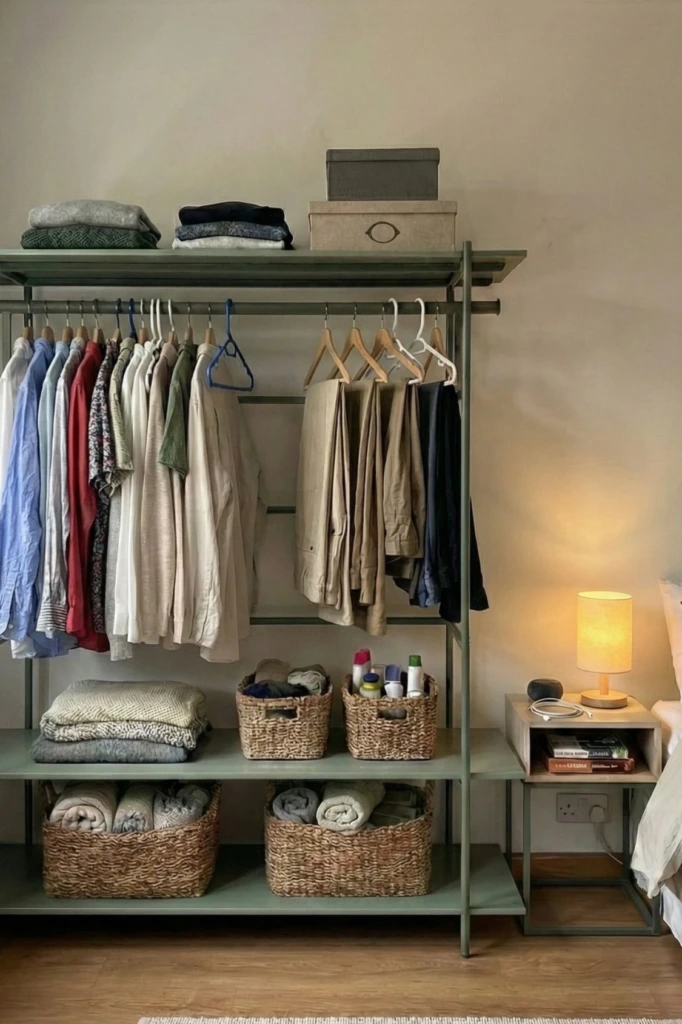
An open wardrobe offers a practical alternative when a bedroom lacks a built-in closet. A freestanding clothing rack, combined with shelves and baskets, can provide hanging and folded storage in one accessible arrangement.
Reserve the hanging rail for dresses, shirts, jackets, and other garments that benefit from being kept on hangers. Place folded clothing on shelves and use small containers for socks, belts, scarves, and accessories.
Store less frequently worn items in covered boxes on higher shelves. Since an open wardrobe remains visible, keeping hangers consistent and grouping clothes by type can help the setup look intentional rather than cluttered.
5. Shoe Shelf
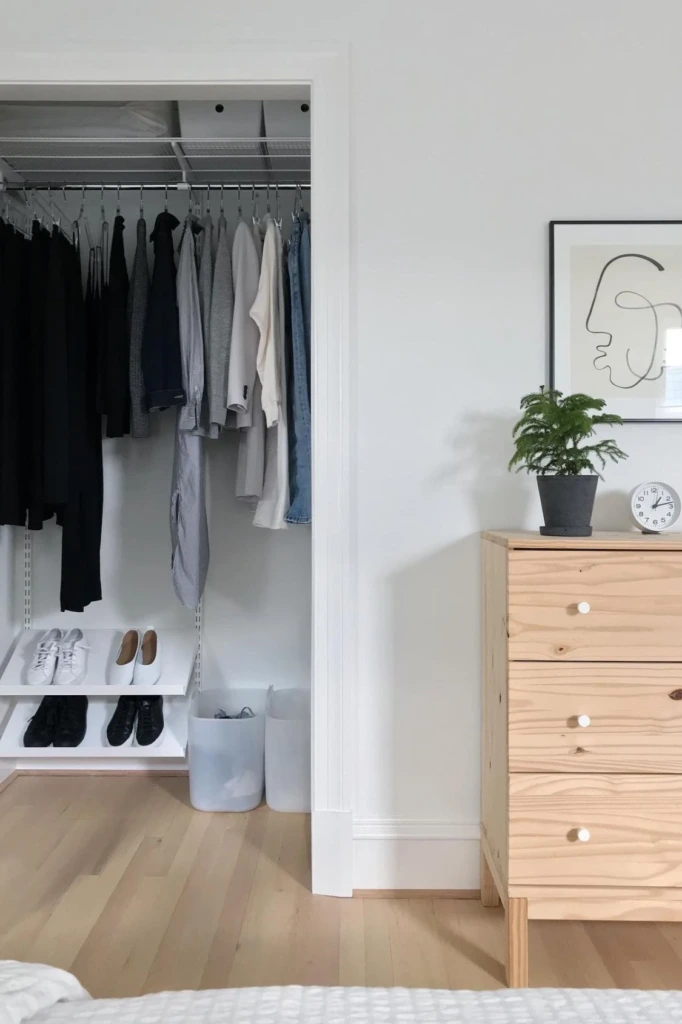
Shoes often occupy valuable closet floor space when they are left in scattered piles. A dedicated shoe shelf gives each pair a defined location and makes everyday footwear easier to reach.
An angled shoe rack can improve visibility, while a simple low shelf may be enough for a small collection. Arrange frequently worn sneakers, flats, and sandals near the front, reserving less accessible areas for occasional footwear.
Clean shoes before returning them to storage, and allow damp footwear to dry completely. Keeping shoes together in one designated area also leaves more room for clothing and storage containers elsewhere in the closet.
6. Garment Covers
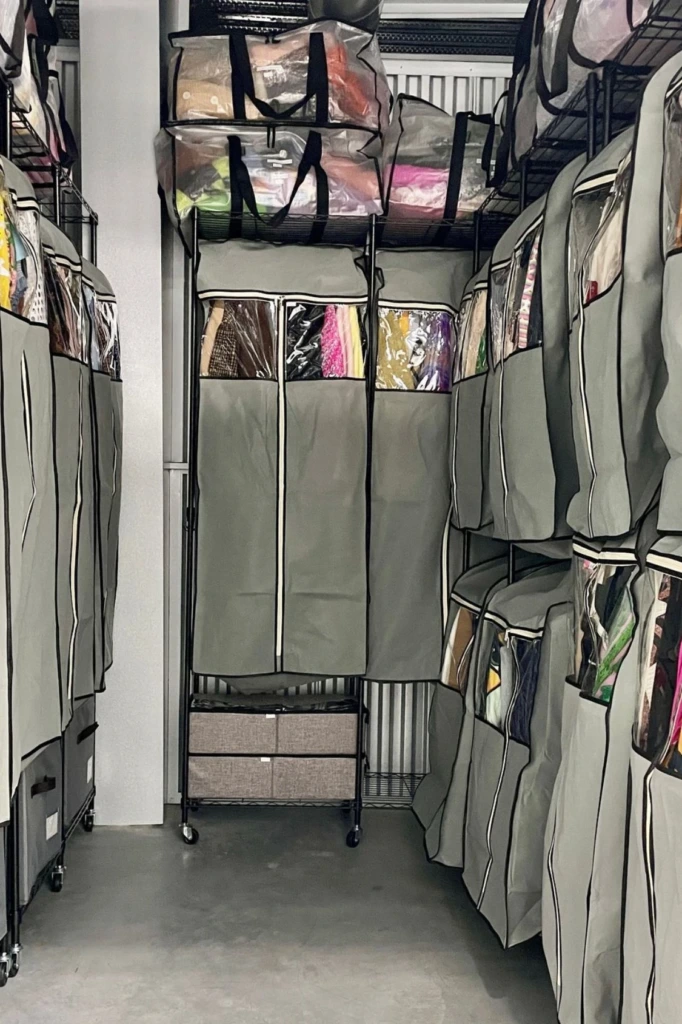
Garment covers help protect special-occasion outfits, coats, dresses, and delicate clothing from dust and accidental snags. They are particularly useful when some pieces remain unworn for extended periods.
Choose a cover that suits the garment's length and material. Breathable fabric covers are generally a sensible option for longer-term storage, while clear panels make it easier to identify individual pieces.
Label each cover with the garment type or occasion to simplify outfit planning. Before storing anything, make sure it is clean and completely dry. Avoid compressing delicate fabrics into tight covers, as this can contribute to wrinkles and damage.
7. Pull Bins
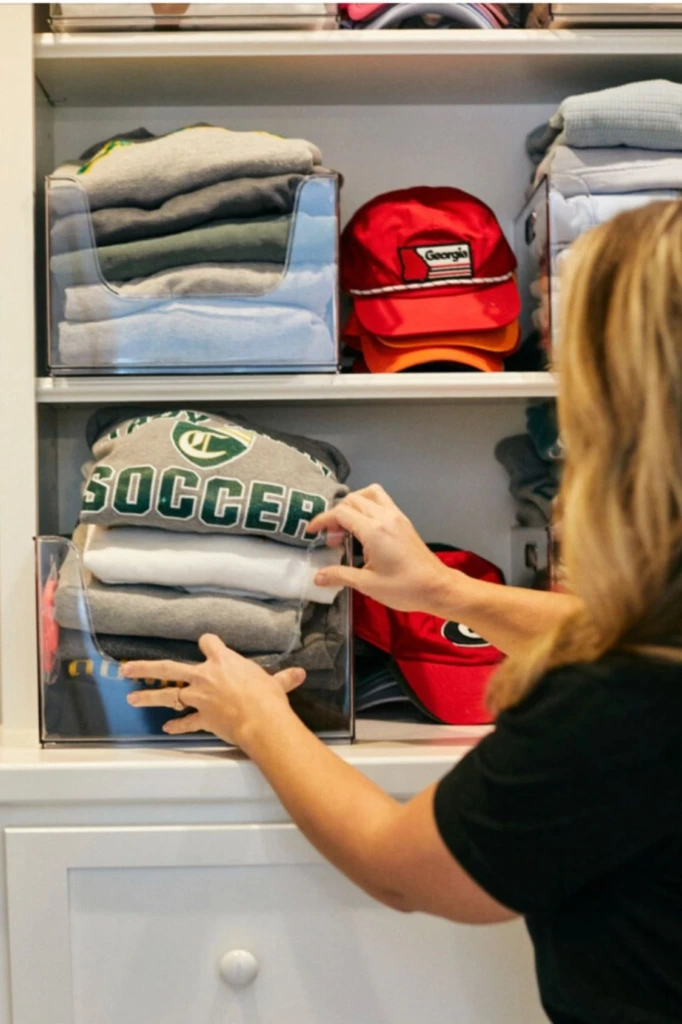
Deep shelves can make clothing difficult to access, especially when items at the back are hidden behind other stacks. Pull-out bins help turn these spaces into more convenient storage areas.
Place folded T-shirts, workout clothes, hoodies, or casual trousers inside individual containers. Clear bins let you see the contents quickly, while fabric bins offer a softer appearance that works well in bedrooms.
Assign each bin a specific category and use the handles to pull it forward when needed. Measure the shelf depth and available clearance before buying containers, particularly if you plan to use sliding organizers.
8. Wardrobe Zones
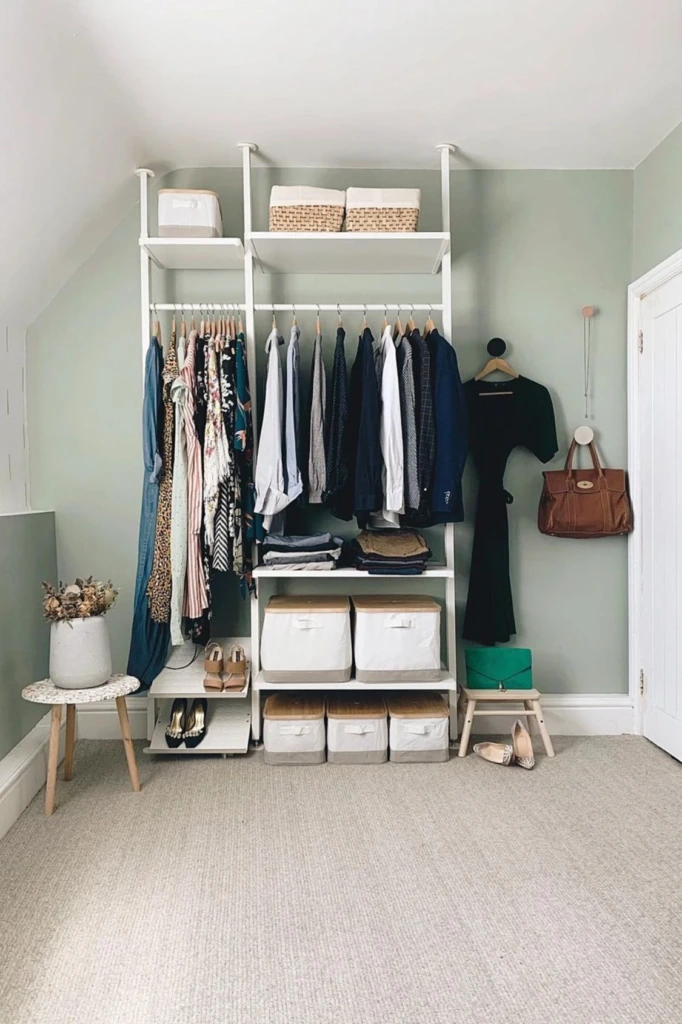
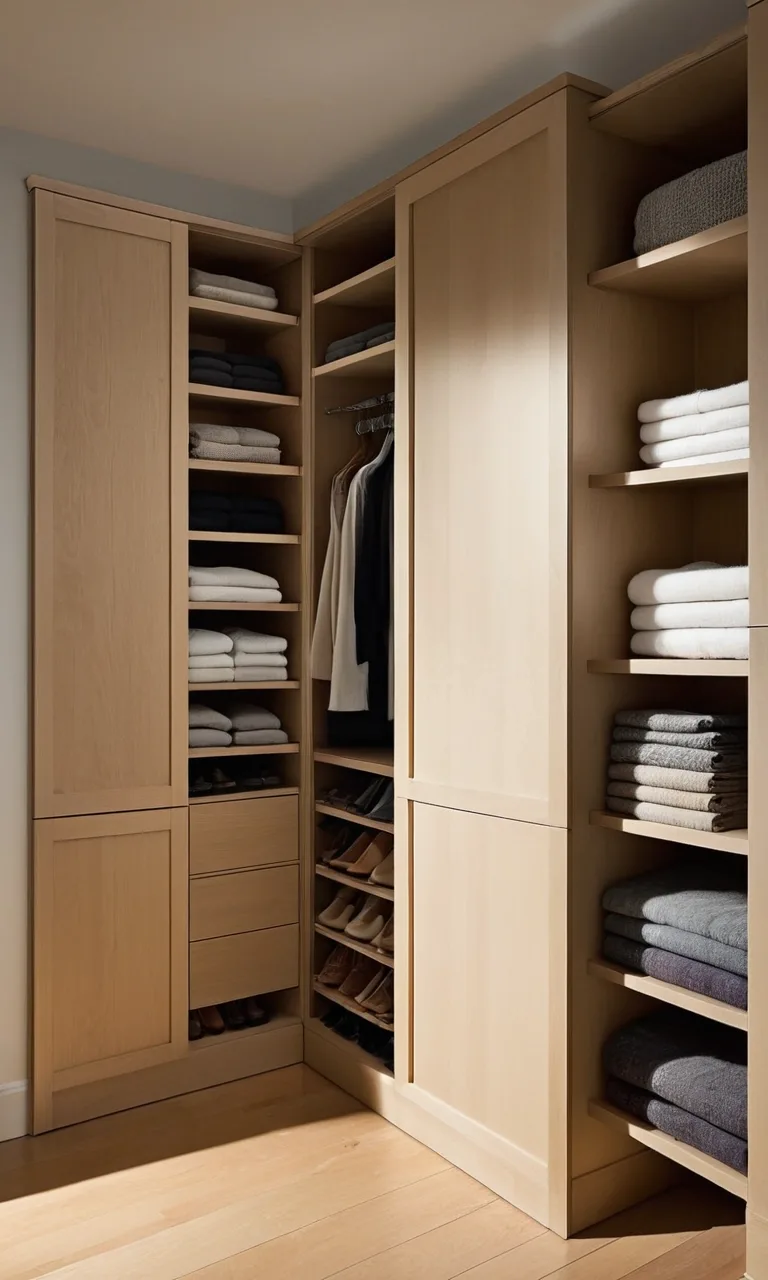
Dividing your wardrobe into functional zones makes it easier to maintain an organized clothing collection. Each section serves a particular purpose, so you spend less time searching and have a clearer idea of where everything belongs.
Use hanging rails for shirts, dresses, and jackets. Reserve shelves for folded garments, baskets for accessories, and lower compartments for shoes or frequently used storage boxes.
Place seasonal clothing and occasional outfits in less accessible areas, keeping everyday essentials at a comfortable height. This method works in both built-in closets and freestanding wardrobes because it relies on organization rather than the size of the furniture.
9. Fabric Bins
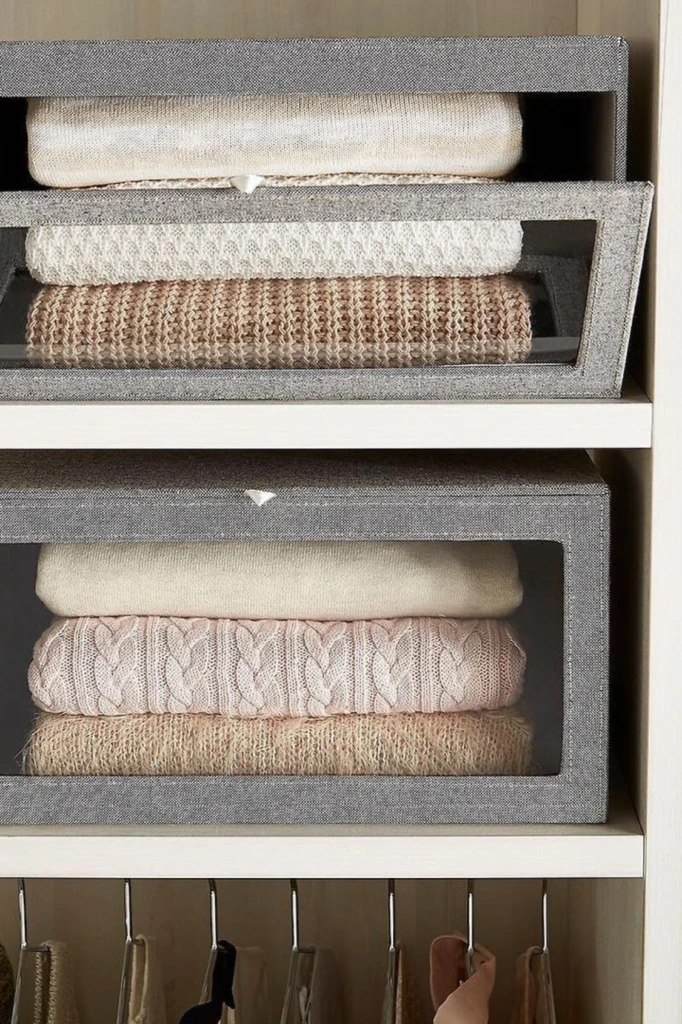
Fabric bins are useful for containing folded garments that would otherwise spread across deep or open shelves. Their flexible construction also makes them convenient for lightweight clothing and accessories.
Choose separate bins for sweaters, workout clothing, sleepwear, or seasonal items. Containers with handles are easier to remove, while designs with transparent windows or label holders help identify what is inside.
Avoid packing garments too tightly, especially knitwear that needs to retain its shape. Store heavier pieces toward the bottom of the wardrobe and place lighter items above them to make the overall arrangement easier to manage.
10. Clear Boxes
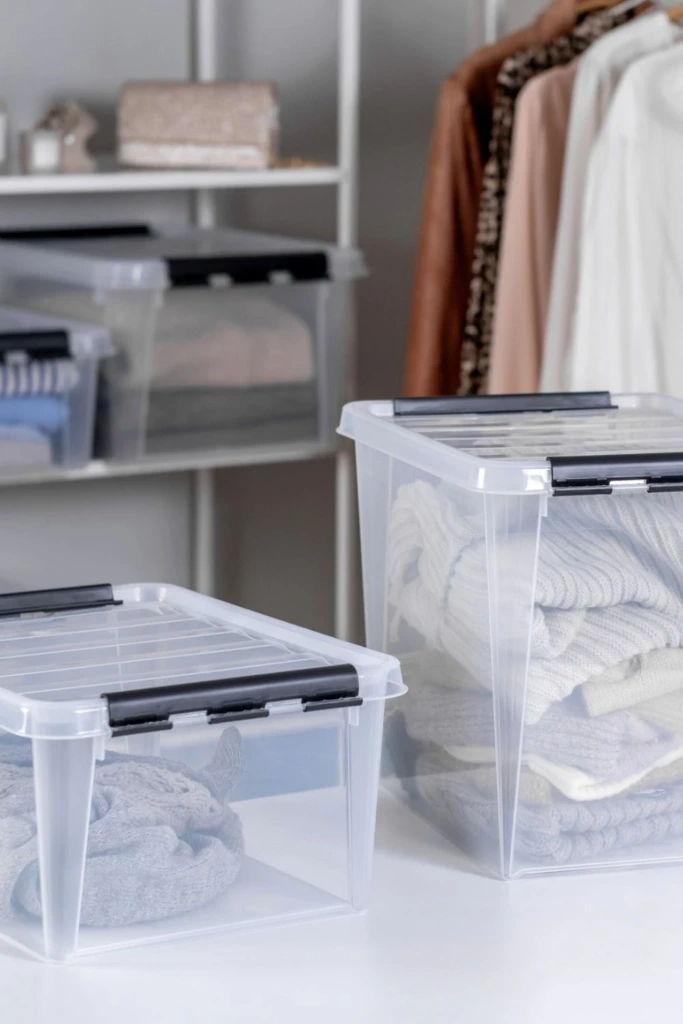
Transparent storage boxes provide a simple way to separate clothing without losing sight of what you own. They are particularly useful for seasonal garments, spare basics, and items that do not need to remain within daily reach.
Fold sweaters, scarves, and other suitable garments before placing them in appropriately sized containers. Add labels if you have several boxes containing similar clothing categories.
Lidded boxes help limit dust exposure, while compact containers can fit beneath a bed or on a high closet shelf. For long-term storage, make sure clothing is clean and dry, and choose breathable alternatives when the fabric requires additional ventilation.
11. Coat Row
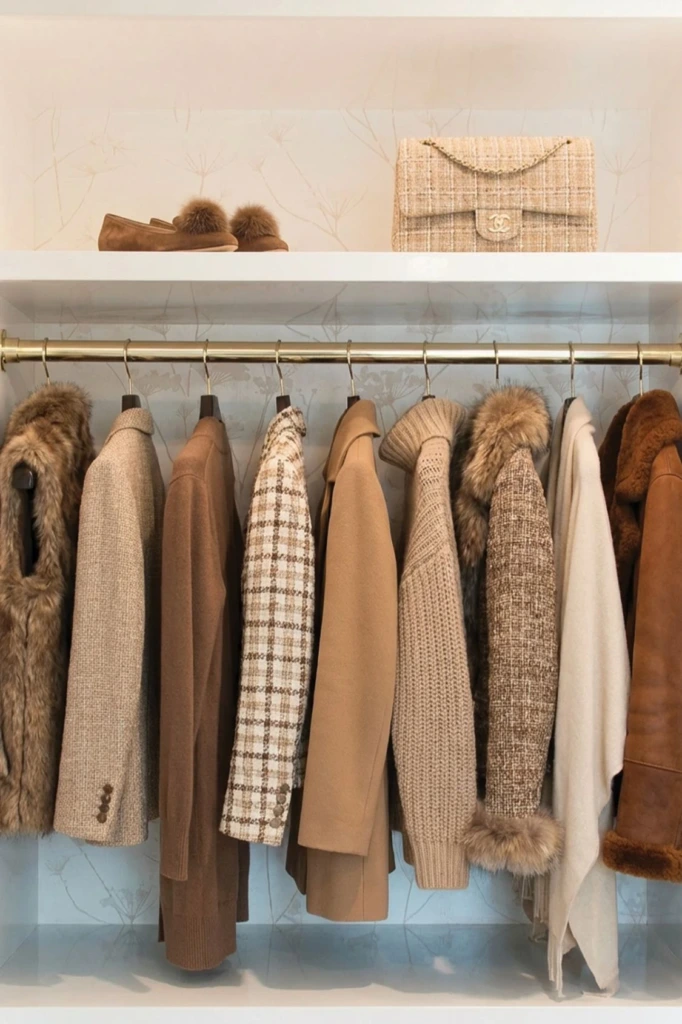
Coats and jackets can take up considerable room when mixed with lighter everyday clothing. Creating a dedicated hanging section keeps outerwear together and makes choosing the right layer more convenient.
Use a sturdy rail with hangers designed to support the weight of your coats. Arrange heavier pieces with enough space between them to prevent excessive compression and make individual garments easier to remove.
If the wardrobe has an upper shelf, use it for hats, gloves, and seasonal accessories. Keeping frequently worn outerwear near the entrance or at the front of the closet can also make leaving home quicker and less stressful.
12. Shelf Dividers
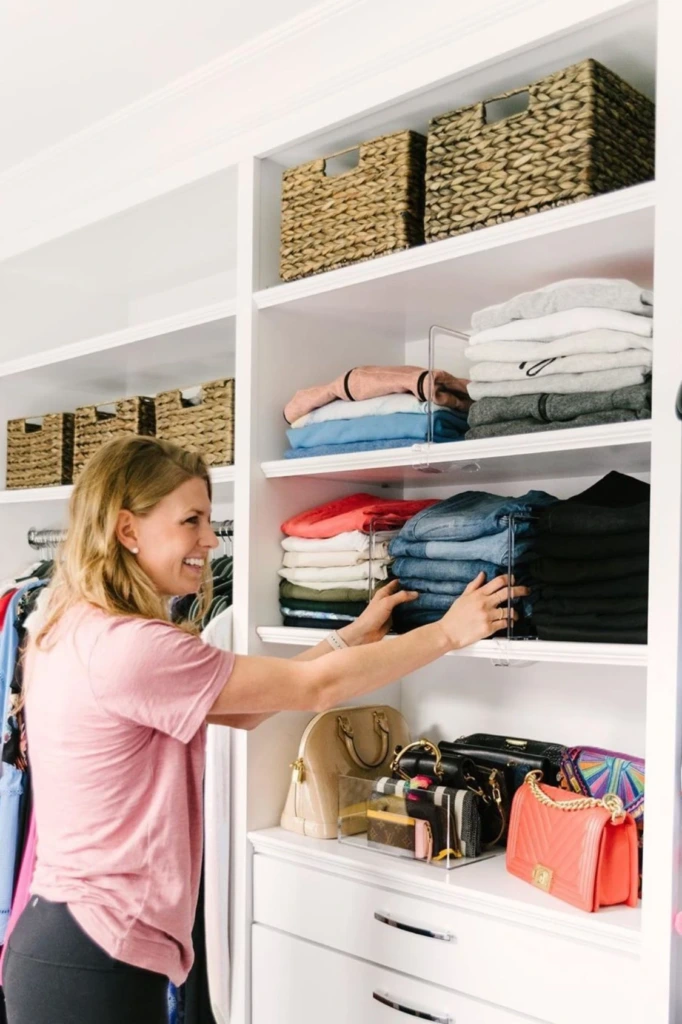
Shelf dividers help maintain orderly stacks by creating physical boundaries between clothing categories. They are especially helpful when a wardrobe has wide shelves but very few drawers.
Use separate sections for denim, sweaters, folded shirts, and casual trousers. You can also arrange garments by color within each section if that makes your wardrobe easier to navigate.
Choose dividers that fit the shelf securely without damaging its surface. Keep stacks at a manageable height so you can remove individual items without causing the surrounding clothes to topple.
13. Pant Hangers
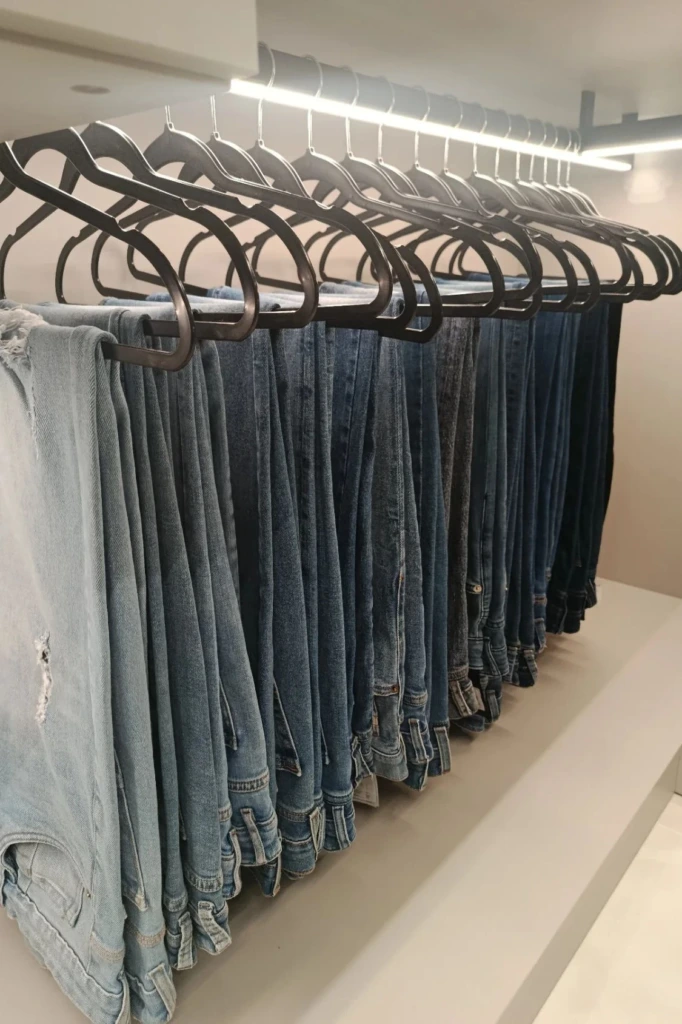
Jeans and trousers can occupy a surprising amount of shelf space when folded into large piles. Hanging suitable garments offers another way to make your closet more accessible.
Use individual trouser hangers or sturdy hangers designed to hold multiple pairs. Arrange pants by style, color, or frequency of use so you can compare options without digging through a stack.
Make sure the hanging rail can support the combined weight of your clothing. Some delicate or easily stretched fabrics may be better stored folded, so choose the method that suits each garment rather than hanging everything automatically.
14. Storage Trunks
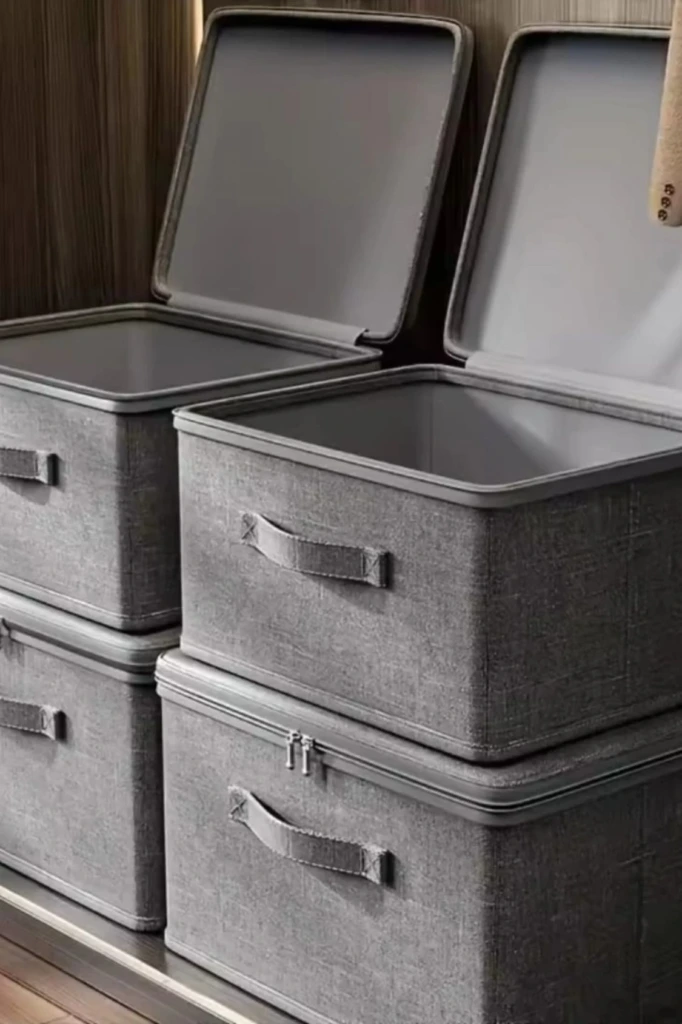
Storage trunks provide a contained place for bulky garments that you do not need throughout the year. They can be particularly useful for winter coats, thick sweaters, and other pieces that occupy too much room in a daily-use wardrobe.
Choose a trunk with enough space to store clothing without forcing it into tight bundles. Lidded designs help keep dust away, while fabric-sided versions can be lightweight and easy to move.
Position the trunk beneath a bed, at the bottom of a closet, or in an unused bedroom corner. Label it according to its contents so you can locate seasonal clothing without opening every container.
15. Modular Closet
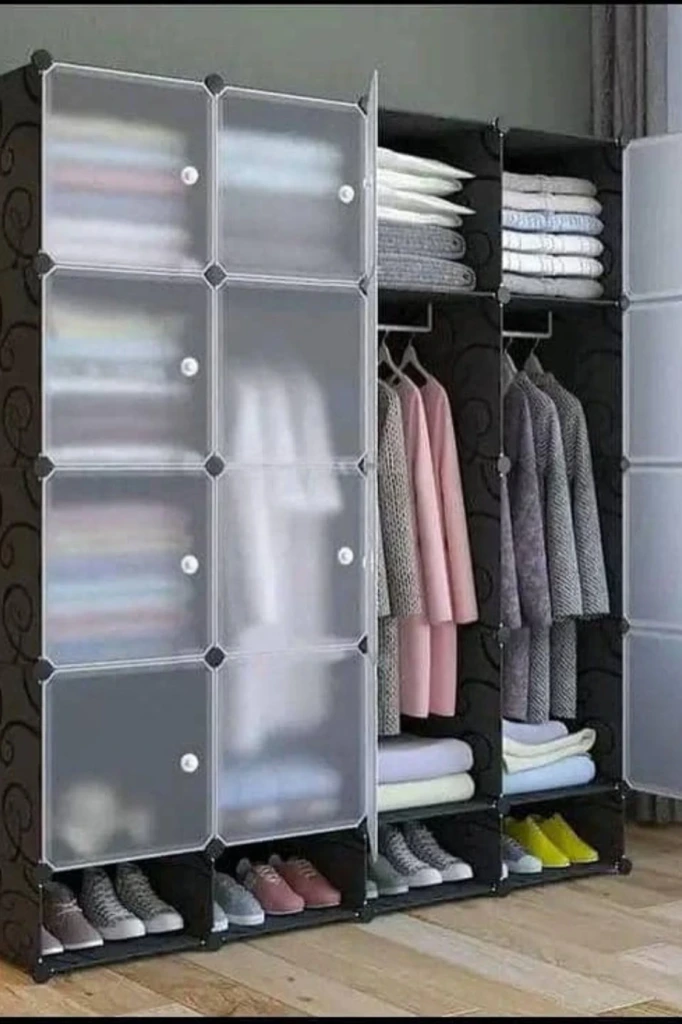
A modular closet can create a customized wardrobe in bedrooms that lack built-in storage. These systems typically combine interchangeable shelves, hanging sections, and compartments that can be arranged according to your needs.
Use hanging sections for shirts and jackets, shelves for folded clothing, and lower compartments for shoes or baskets. Some configurations also accommodate accessories and small storage boxes.
The main advantage is flexibility: you can adjust the layout as your clothing collection changes. Before buying a modular system, measure your wall and ceiling height, check the weight limits, and make sure the structure is safely assembled and secured where required.
16. Locker Wardrobe
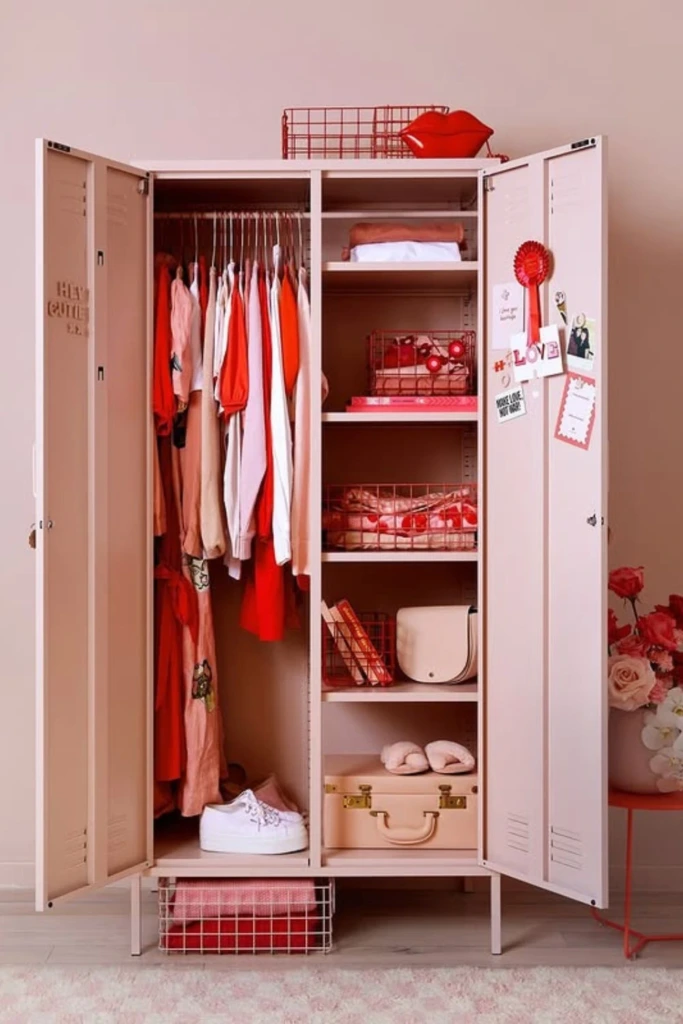
A locker-style wardrobe provides multiple storage levels within a tall, relatively compact unit. Its combination of hanging space, open shelves, and enclosed compartments can be useful when a bedroom has limited room for furniture.
Dedicate one section to hanging garments and another to folded clothing, handbags, or accessories. Small baskets can contain socks and other essentials, while the bottom area can accommodate shoes or suitable storage containers.
This arrangement is especially helpful in shared bedrooms, dorm rooms, and apartments where every section needs a clear purpose. Keep commonly used items accessible and reserve upper shelves for belongings you need less frequently.
17. Wire Baskets
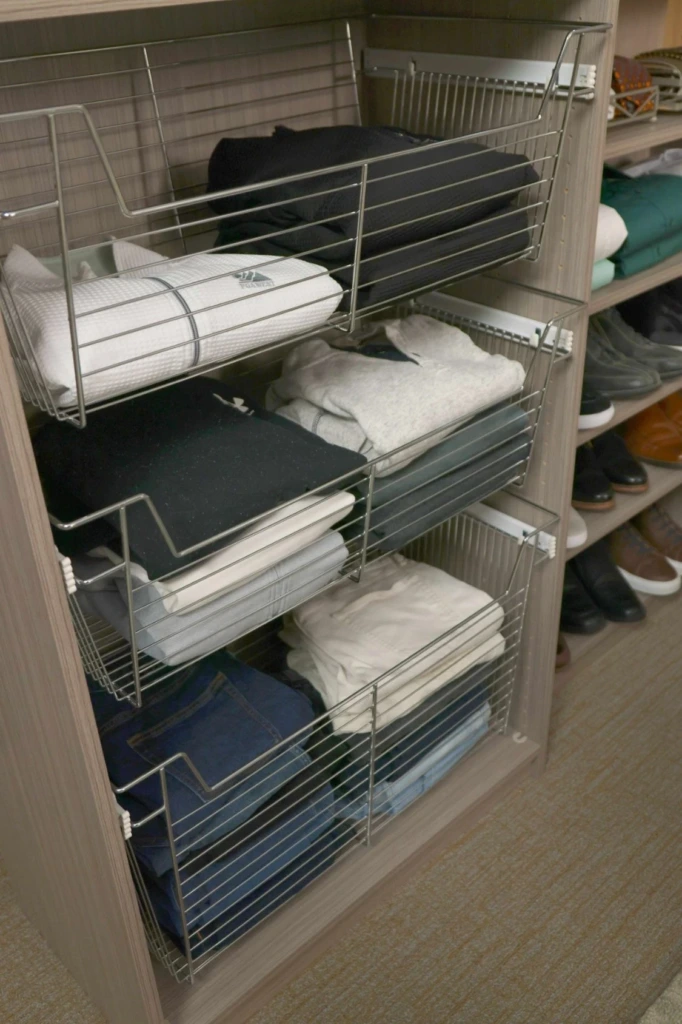
Wire baskets provide a practical alternative to traditional drawers, particularly in wardrobes with deep shelving. Pull-out versions allow you to bring stored garments forward instead of reaching into the back of a crowded shelf.
Use separate baskets for T-shirts, jeans, exercise clothing, or everyday basics. Their open construction makes contents easy to view and allows air to circulate more freely than in solid-sided containers.
Add labels to distinguish similar categories, and avoid overfilling baskets so garments remain easy to remove. If you are installing a sliding basket system, check that the rails fit your wardrobe and can support the intended load.
18. Shirt Bins
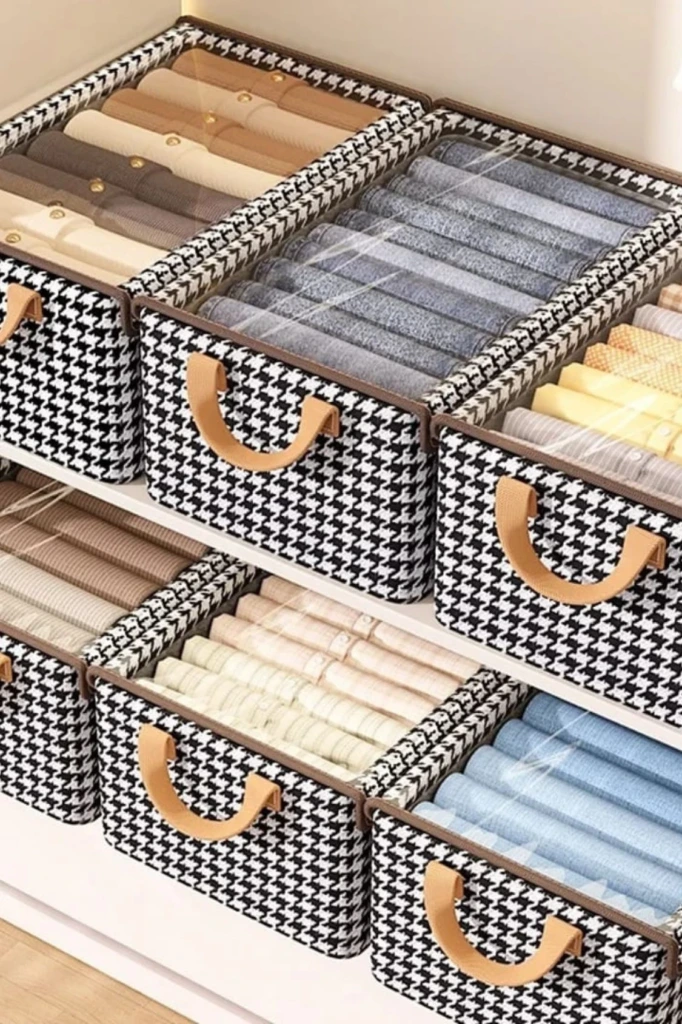
Shirt bins help prevent folded tops from becoming disorganized every time you take one out. Rather than stacking garments in tall piles, arrange them vertically so individual pieces remain visible.
Fold or roll shirts according to the available space and place them side by side inside a suitably sized container. You can create separate bins for casual tops, work shirts, tank tops, and seasonal clothing.
Containers with handles make it easier to remove an entire category when needed. Choose bins that fit the shelf comfortably, allowing enough room to return clean shirts without crushing the garments.
19. Cube Storage
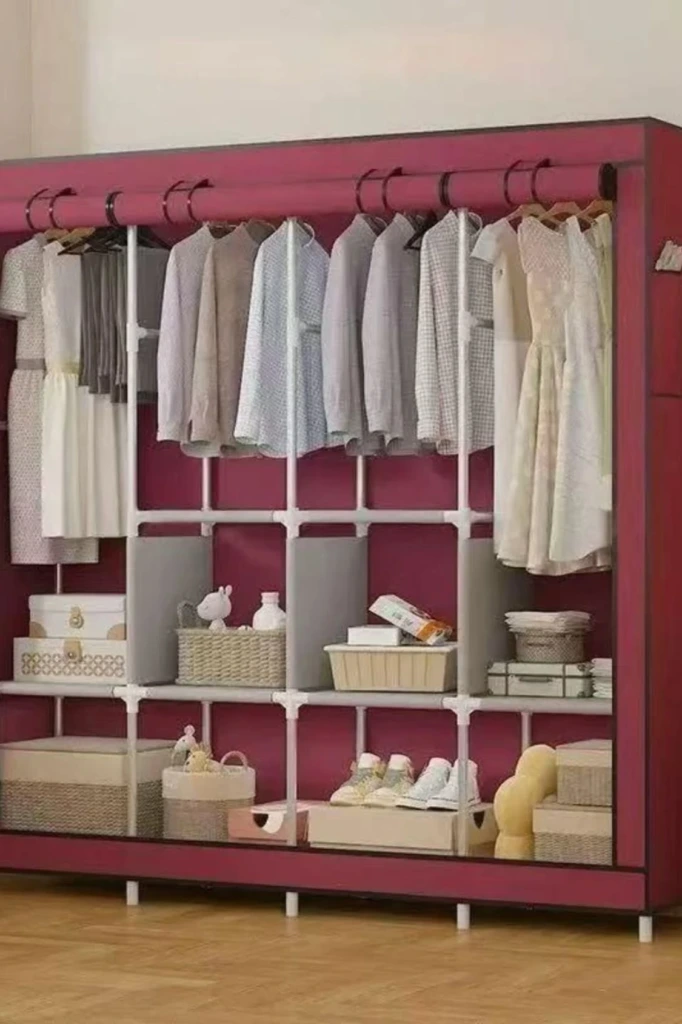
Cube shelving divides a wardrobe into small compartments that can be assigned to specific clothing categories. This makes it easier to separate folded garments, shoes, accessories, and storage baskets within one piece of furniture.
Use larger cubes for folded sweaters or trousers and smaller baskets for socks, underwear, and accessories. If the unit supports a compatible hanging attachment, reserve that section for garments that need to hang.
Cube storage works well in children's rooms, shared spaces, and bedrooms without traditional closets. Give each compartment a clear purpose and avoid filling every cube to capacity, which can make the entire unit difficult to use.
20. Rolling Rack
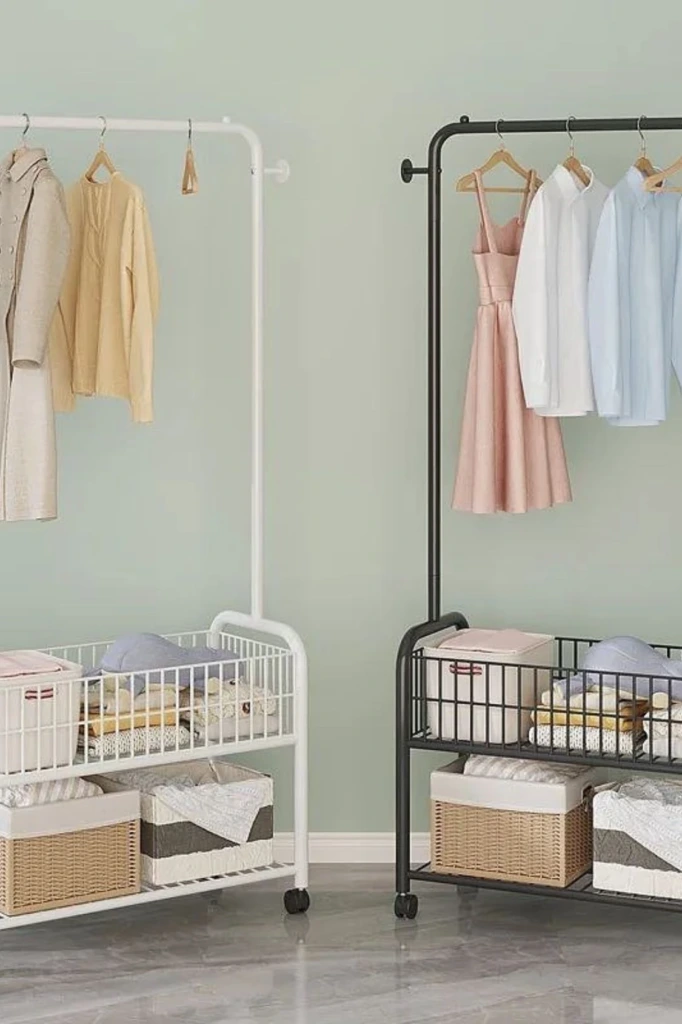
A rolling clothing rack provides additional hanging space without requiring permanent installation. It can be moved around a bedroom, laundry area, or guest room whenever your storage needs change.
Use the top rail for frequently worn shirts, dresses, or jackets. If the rack includes a lower shelf or basket, reserve it for folded clothing, accessories, or laundry-related supplies.
A rolling rack can also serve as temporary storage while reorganizing a closet or preparing outfits for the week. Check the weight capacity before loading it, distribute heavier garments evenly, and lock the wheels when the rack is in position.
21. Wall Organizer
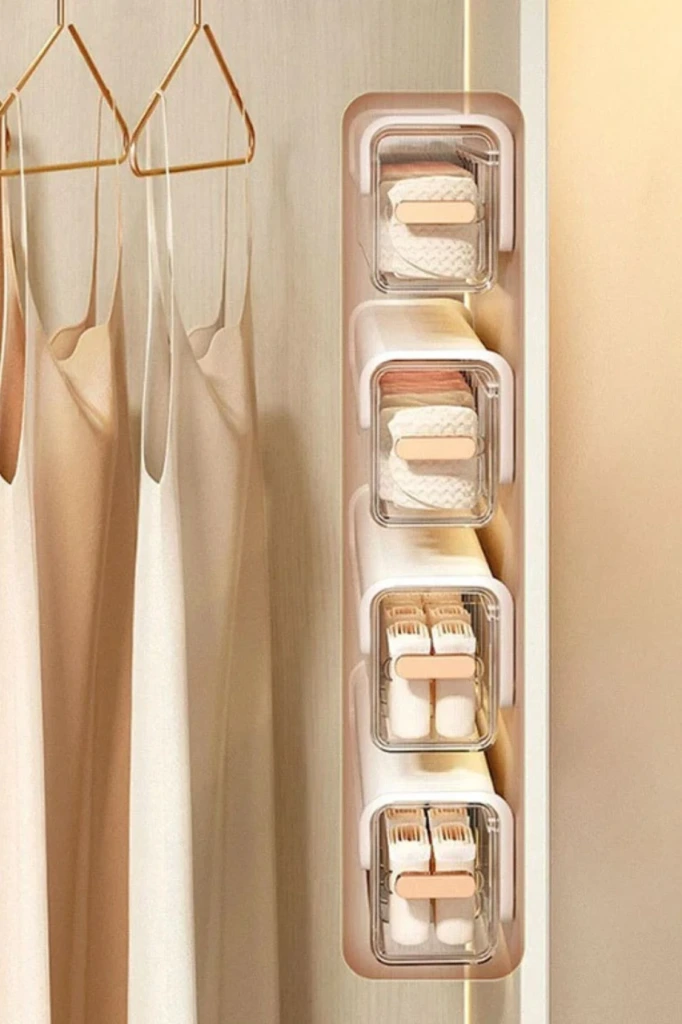
Wall-mounted organizers help use vertical surfaces that would otherwise remain empty. Slim pockets, small compartments, and narrow racks can provide convenient storage for accessories and lightweight clothing.
Use the compartments for socks, underwear, belts, scarves, or other small items that frequently get lost in drawers. Transparent pockets make it easier to identify contents, while labeled sections can help keep similar belongings together.
Choose a mounting method appropriate for your wall and the weight of the items being stored. Keeping these smaller belongings off shelves and drawer surfaces can free up room for bulkier garments.
22. Double Rack
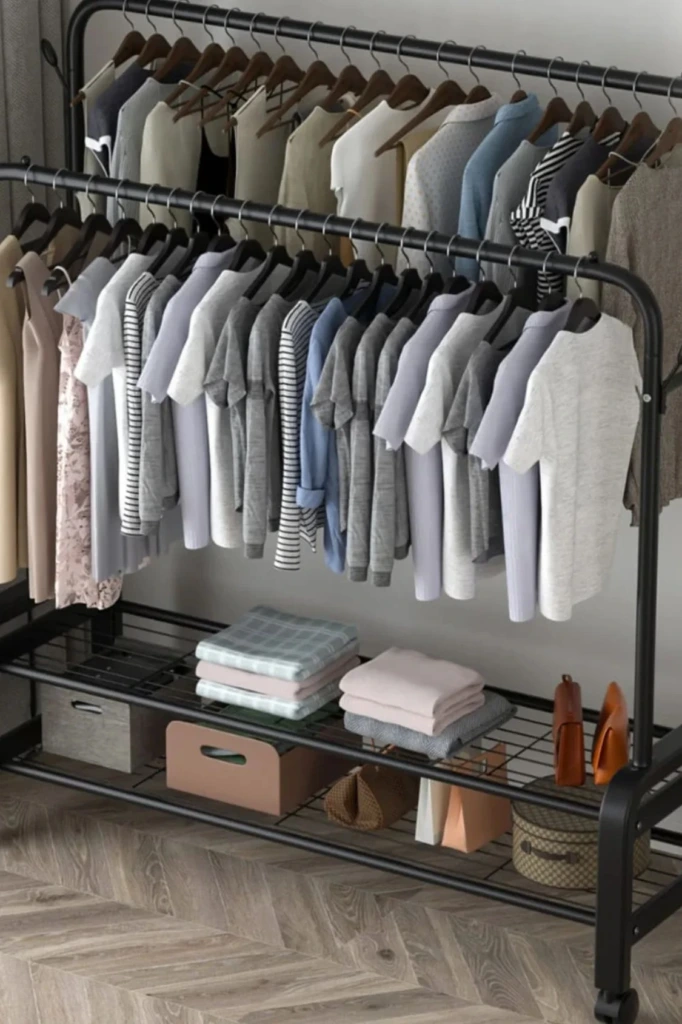
A double clothing rack adds a second hanging level, increasing storage capacity without requiring a wider wardrobe. It is particularly effective when you own many shorter garments that do not need the full height of a single rail.
Place shirts, blouses, and shorter jackets on the upper or lower rail according to what is easiest to reach. Keep longer dresses and coats in a separate full-height section so they do not drag against the floor.
If the rack includes lower shelves, use them for shoes, folded clothing, or storage baskets. Choose a stable model with an appropriate weight rating and leave enough clearance between the two rails for garments to hang without becoming crowded.
How do you organize clothes in a small closet without adding furniture?
You can improve a small closet by rearranging the existing storage before purchasing anything new. Start by removing clothing you no longer wear and grouping the remaining pieces by category.
Use vertical folding methods in drawers, divide wide shelves with inexpensive organizers, and arrange hangers so frequently worn garments are easy to reach. Over-the-door pockets can hold small accessories, while existing high shelves can accommodate seasonal clothing in labeled containers.
If your closet has enough vertical clearance, a second hanging rod may create additional room for shirts and trousers. The best solution is to make better use of existing surfaces rather than adding unnecessary storage products.
What is the best way to store seasonal clothes in a small space?
Store seasonal clothing separately from the garments you wear regularly. Before packing anything away, wash or clean it according to the care label and allow it to dry completely.
Fold suitable items into labeled fabric bins or clean storage boxes. Keep heavy sweaters and other bulky garments in containers that do not compress them excessively, and use garment covers for appropriate hanging pieces.
Under-bed storage, high closet shelves, and unused wardrobe compartments can all work well for seasonal items. Avoid damp locations and inspect stored garments periodically for moisture or pest damage. When the season changes, rotate the containers so the clothing you need becomes accessible without reorganizing the entire closet.