22 Gym Organization Ideas for 2026
A well-organized home gym makes exercise more enjoyable, efficient, and safe. When dumbbells are scattered across the floor, resistance bands are tangled together, and accessories are difficult to find, even a simple workout can become frustrating. Fortunately, you don't need a large room or an expensive renovation to create a functional fitness space.
The key is to give every piece of equipment a designated place. Wall-mounted storage, sturdy shelving, compact racks, and multipurpose furniture can help you make better use of your available space while keeping your workout essentials within easy reach.
Whether you've converted a spare bedroom into a fitness studio or set up a few weights in your garage, these gym organization ideas can help you build a cleaner, more practical workout area.
How Do You Store Weights and Dumbbells Safely and Neatly?
Proper weight storage starts with choosing equipment designed to support the size and weight of your collection. Leaving dumbbells, kettlebells, and weight plates on the floor can create tripping hazards, restrict movement, and make your workout area harder to maintain.
Begin by sorting your weights according to type and size. Place dumbbells on a stable rack, store weight plates on a suitable plate tree, and keep kettlebells in a dedicated section. Heavier equipment generally belongs on lower shelves to reduce the risk of items falling and make lifting them more manageable.
Keep frequently used weights close to your bench or training station, but leave enough clearance to move safely during exercises. For smaller accessories, use baskets, hooks, or labeled containers.
Before installing wall-mounted holders or loading a rack, verify its weight capacity and secure it according to the manufacturer's instructions. A little planning makes your gym safer, tidier, and easier to use.
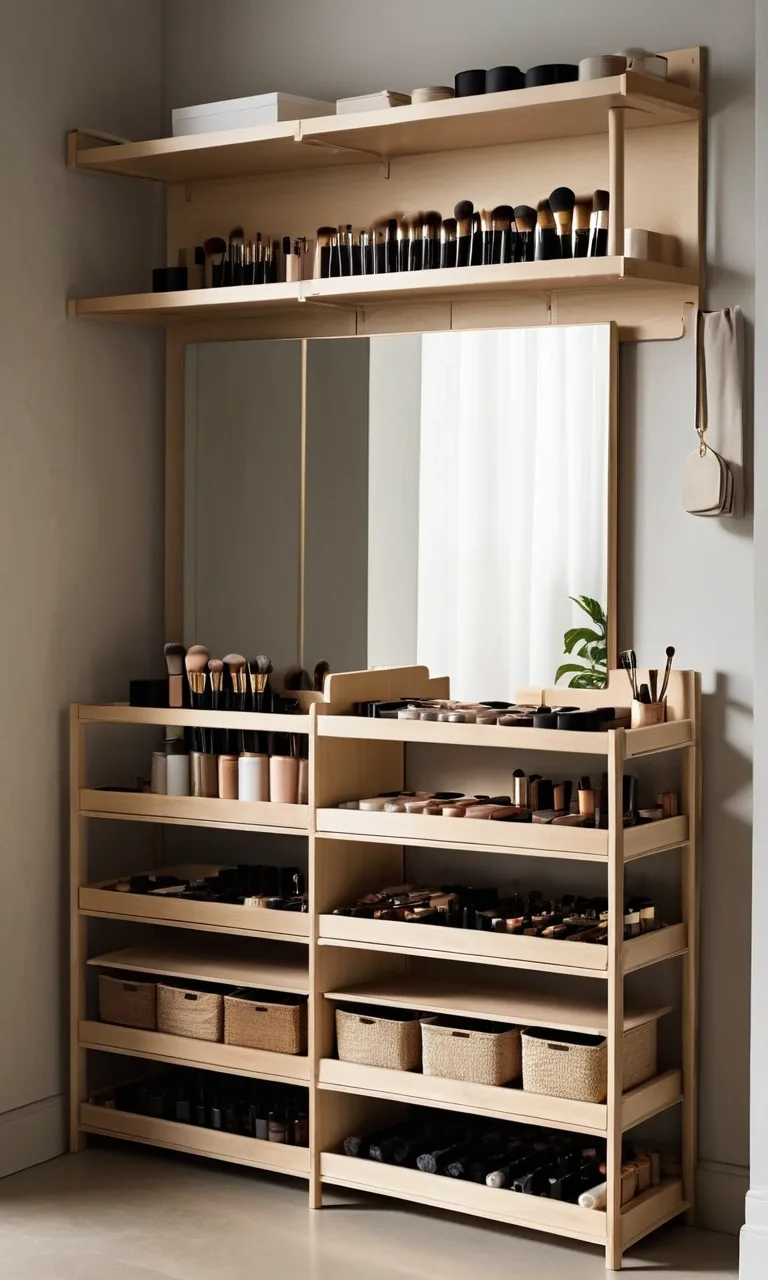
1. Rolling Rack
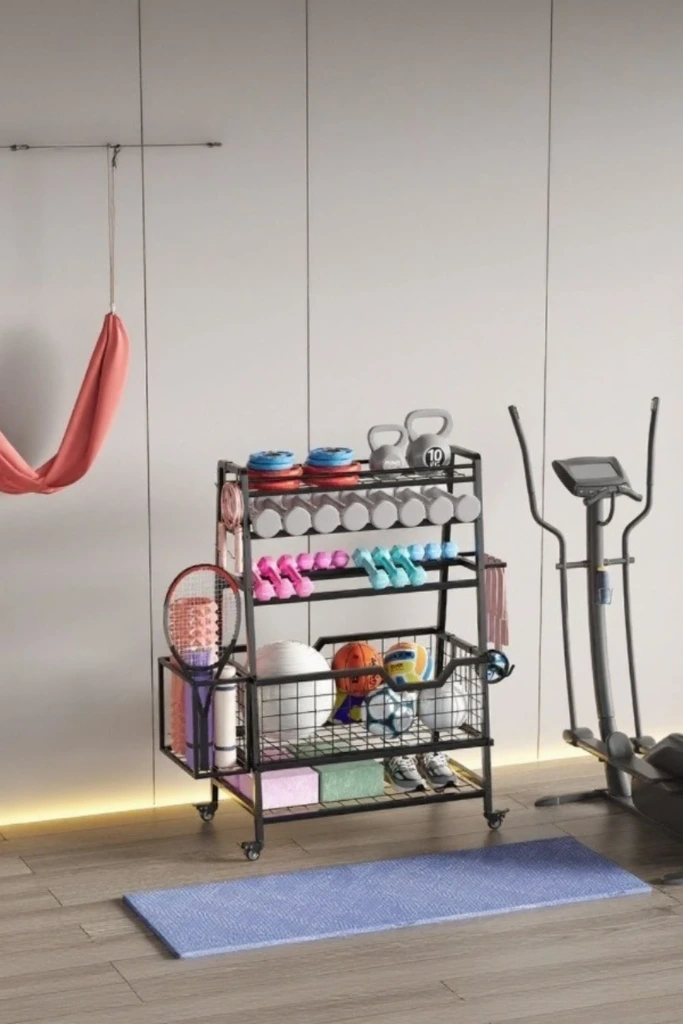
A rolling rack is a practical option if your workout space serves more than one purpose. Instead of spreading equipment across the room, you can keep your most-used accessories together on a movable storage unit.
Choose a rack with separate compartments for dumbbells, kettlebells, resistance bands, yoga blocks, and other small essentials. Open shelves make it easy to identify what you need, while baskets prevent lightweight accessories from getting lost.
The wheels let you move the unit closer to your workout area when necessary and return it to a designated parking spot afterward. Locking casters are especially useful because they help keep the rack stationary during use.
Check the rack's load rating before adding heavy weights, and avoid overloading its upper shelves. This solution works particularly well in garages, spare bedrooms, and compact multipurpose gyms.
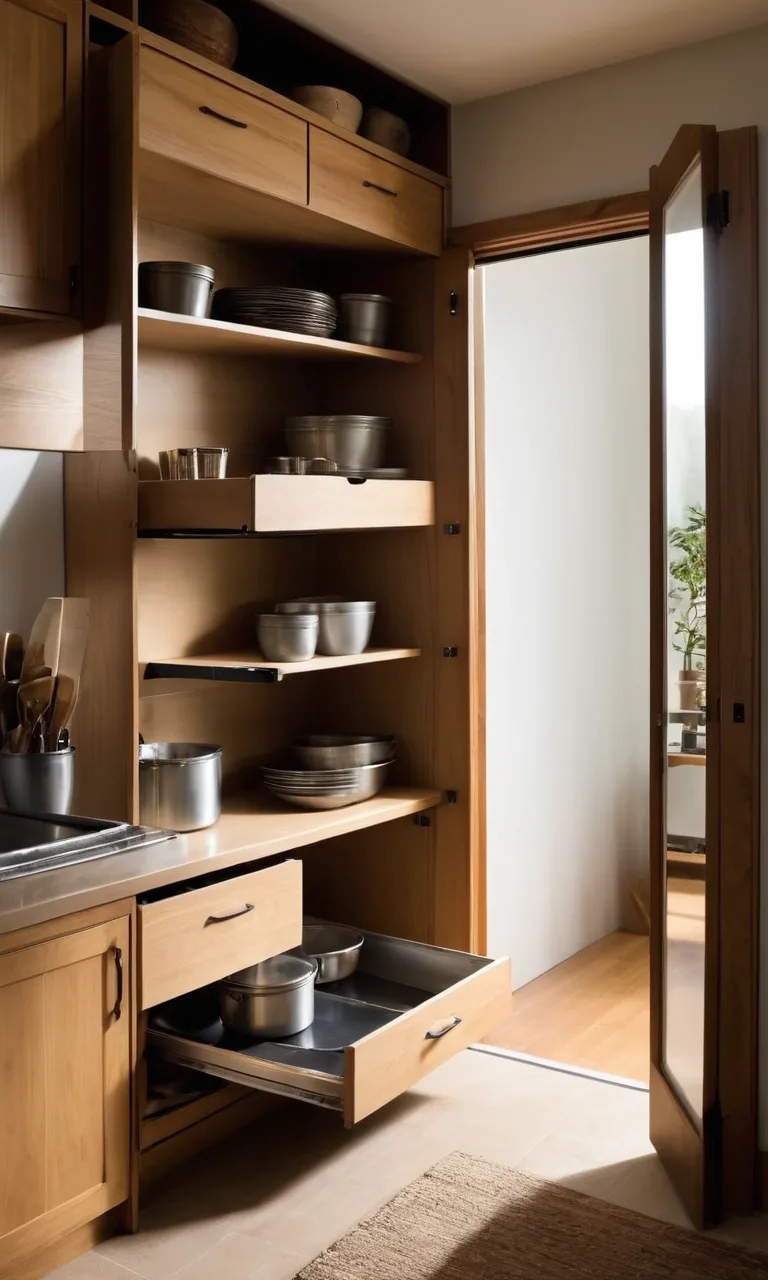
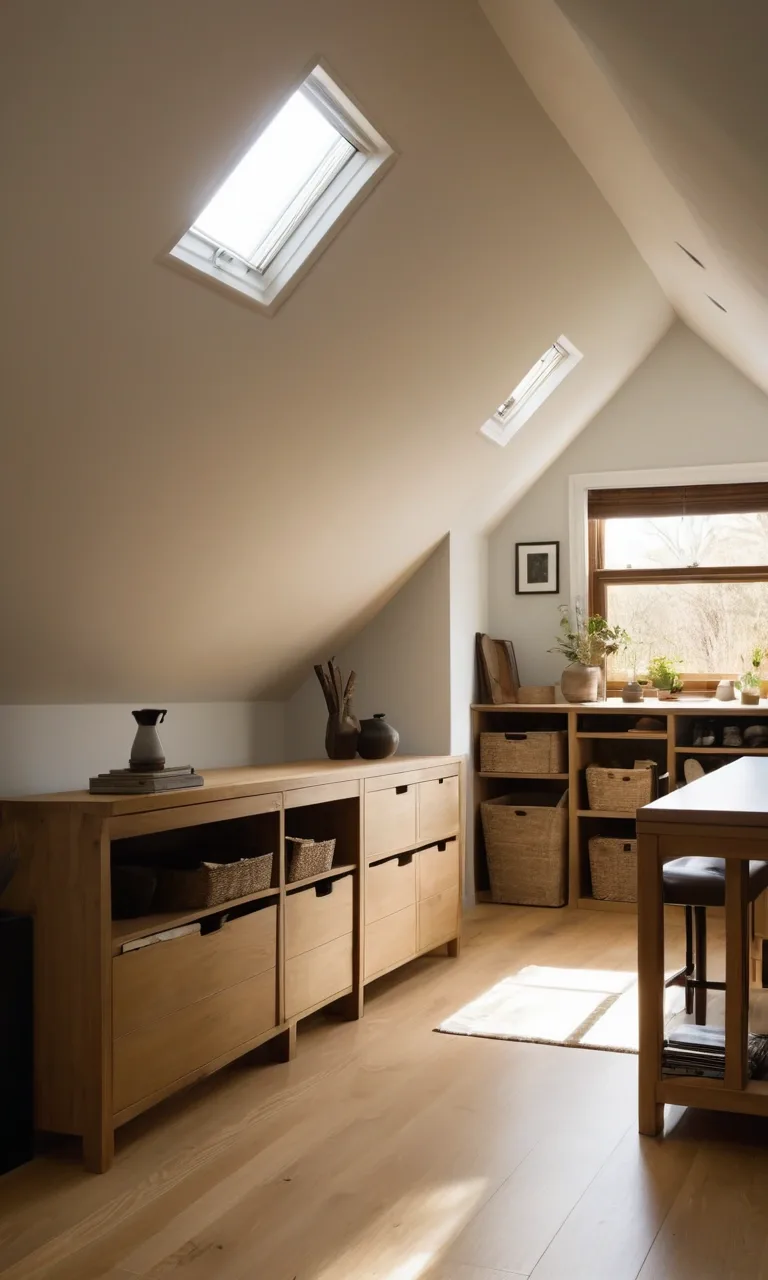
2. Built Storage
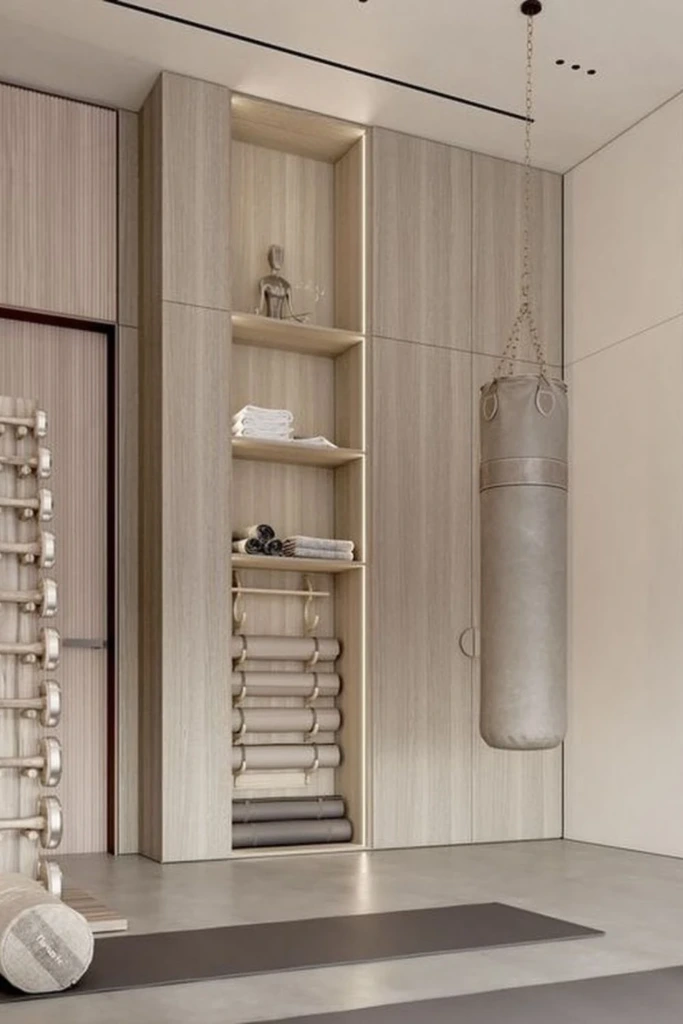
Built-in storage creates a streamlined look by incorporating shelves and equipment compartments directly into the room's design. It is an excellent choice for homeowners who want their gym to feel like a permanent part of the house rather than a temporary collection of fitness equipment.
You can design the storage around your specific needs, with lower compartments for weights, open shelves for frequently used accessories, and enclosed cabinets for towels or miscellaneous supplies.
A built-in bench with storage underneath can provide another useful surface without requiring additional furniture. If you're working with a small room, consider using the full height of one wall instead of spreading cabinets across several areas.
Make sure shelves and supports are engineered for their intended loads. Heavy dumbbells need appropriately rated storage rather than ordinary decorative shelving. With thoughtful planning, built-in storage can improve both the appearance and functionality of your workout room.
3. Cube Shelves
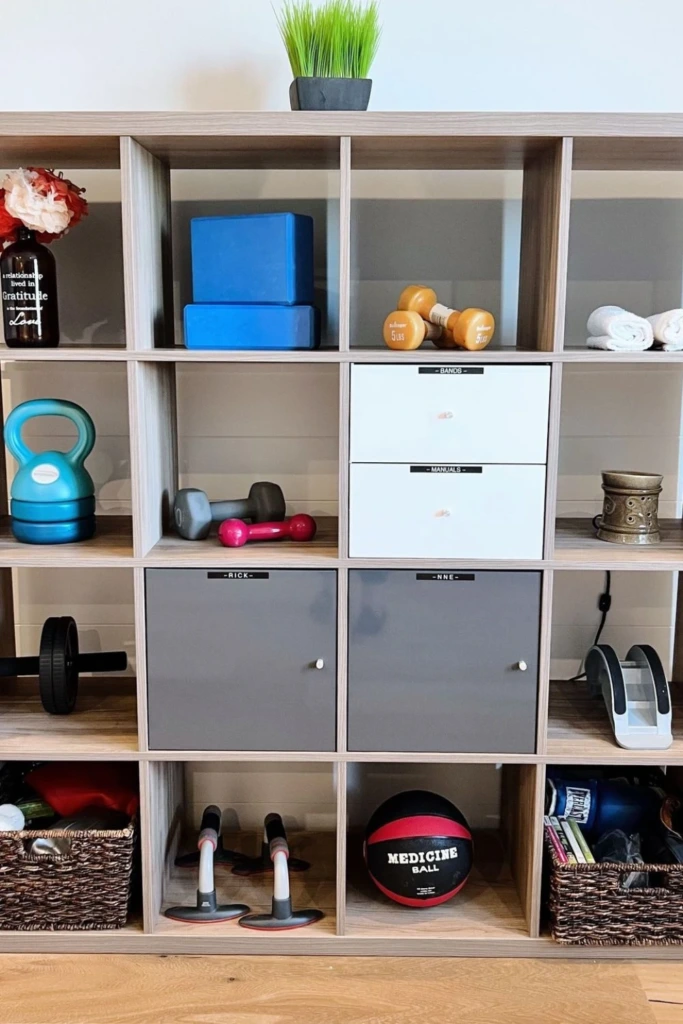
Cube shelving offers a simple way to separate workout equipment into manageable categories. Each compartment can serve a different purpose, making it easier to find accessories without searching through a crowded box.
Use open cubes for lightweight items such as yoga blocks, towels, foam rollers, and stretching straps. Add baskets to contain resistance bands, gloves, lifting wraps, and other small accessories that can otherwise become scattered.
If you want a more coordinated appearance, choose matching baskets and label them according to their contents. You might dedicate one cube to warm-up equipment, another to recovery tools, and a third to exercise accessories.
Position the shelf against a wall near your workout mat so that everything remains accessible without occupying the center of the room.
One important consideration is weight capacity. Standard decorative cube units may not be designed for heavy dumbbells, so use purpose-built weight storage or reinforced shelving when necessary.
4. Wall Grid
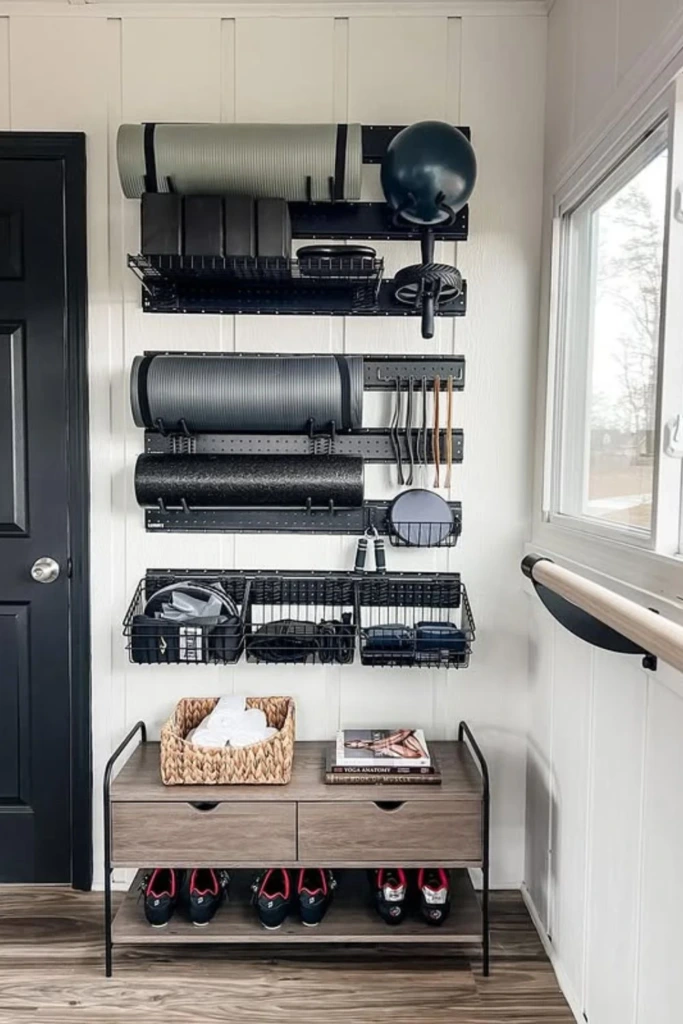
A wall grid is a space-saving solution for gyms where floor area is limited. It uses vertical space to organize accessories that would otherwise occupy benches, shelves, or corners.
Depending on the system, you can attach compatible hooks, small shelves, baskets, and holders to create a customized arrangement. Hang resistance bands from suitable hooks, place stretching straps in baskets, and use designated holders for rolled yoga mats or foam rollers.
The biggest advantage is flexibility. As your collection changes, you can reposition the accessories instead of purchasing an entirely new storage unit.
Arrange frequently used items at a comfortable height and reserve upper sections for lightweight equipment you don't need as often. Keep heavier accessories on appropriately rated supports, and confirm that the grid is securely attached to the wall.
This setup works especially well above a stretching station or along an otherwise unused garage wall.
5. Pegboard Wall
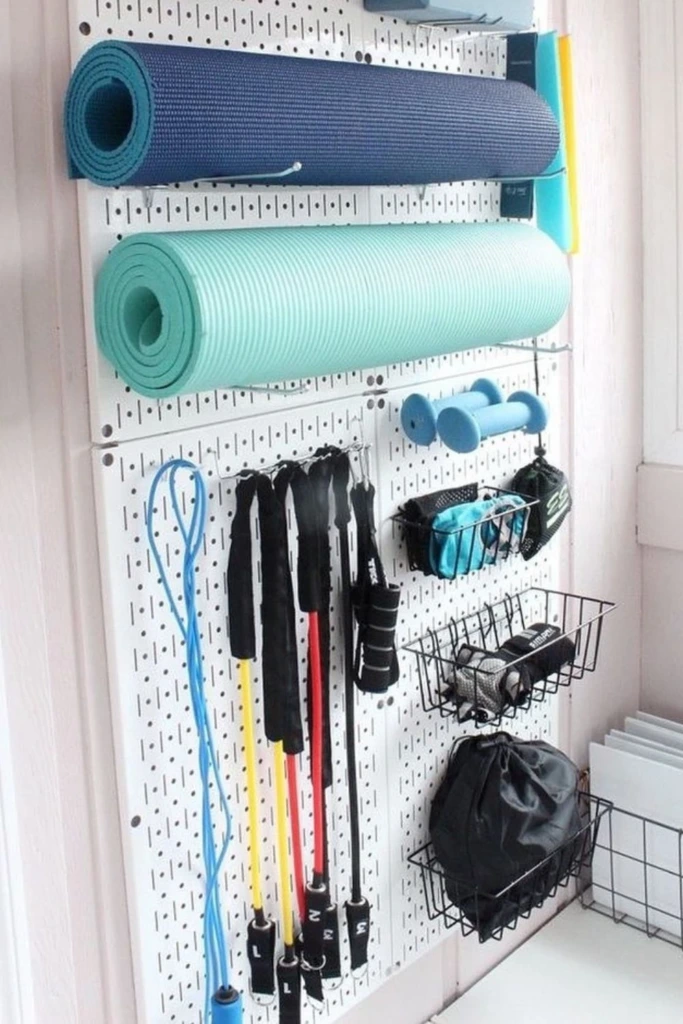
A pegboard turns an empty wall into a customizable home for everyday workout essentials. Its arrangement can be adapted to accommodate different accessories, making it useful for beginners and experienced fitness enthusiasts alike.
Use hooks to hang resistance bands, jump ropes, lifting belts, and stretching straps. Small baskets can hold gloves, wrist wraps, towels, and other loose items, while compatible shelves provide space for lightweight accessories.
Keeping equipment visible helps you remember where everything belongs and makes it easier to return items after exercising.
For a more efficient layout, group equipment according to how you use it. Place warm-up accessories together, keep mobility tools in another section, and position frequently used items within easy reach.
Choose a pegboard and mounting system appropriate for the intended load. Ordinary decorative pegboards are not suitable for supporting heavy dumbbells unless specifically designed and installed for that purpose.
6. Slatwall Storage
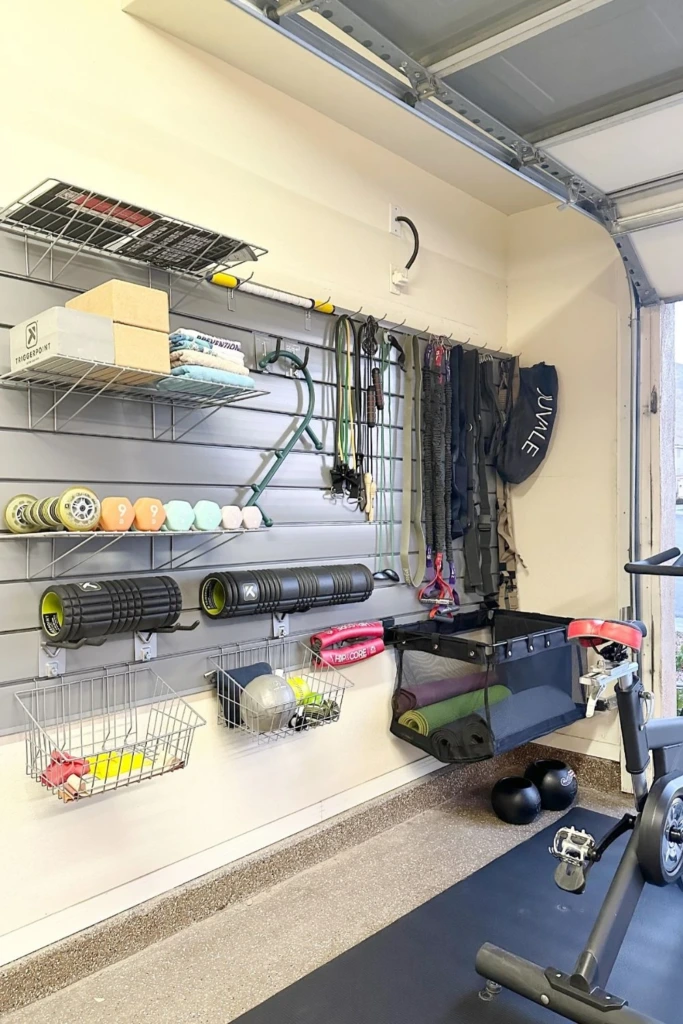
Slatwall storage is a versatile option for garage gyms and dedicated fitness rooms. The horizontal grooves accept compatible accessories, allowing you to arrange hooks, shelves, baskets, and equipment holders wherever they are most useful.
Use longer hooks for suspension straps and resistance bands, smaller baskets for lifting accessories, and dedicated mounts for foam rollers or mobility tools. Shelves can accommodate towels, bottles, and lightweight supplies.
Unlike a fixed collection of shelves, a slatwall system can be rearranged as your workout routine or equipment collection evolves. You can create separate sections for strength training, stretching, and recovery without adding more furniture.
For the best results, plan the arrangement before installing the system. Confirm that the panels, fasteners, and wall structure can support the intended load, particularly when storing heavier equipment.
A well-planned slatwall keeps accessories organized while leaving the floor open for movement and exercise.
7. Mobile Station
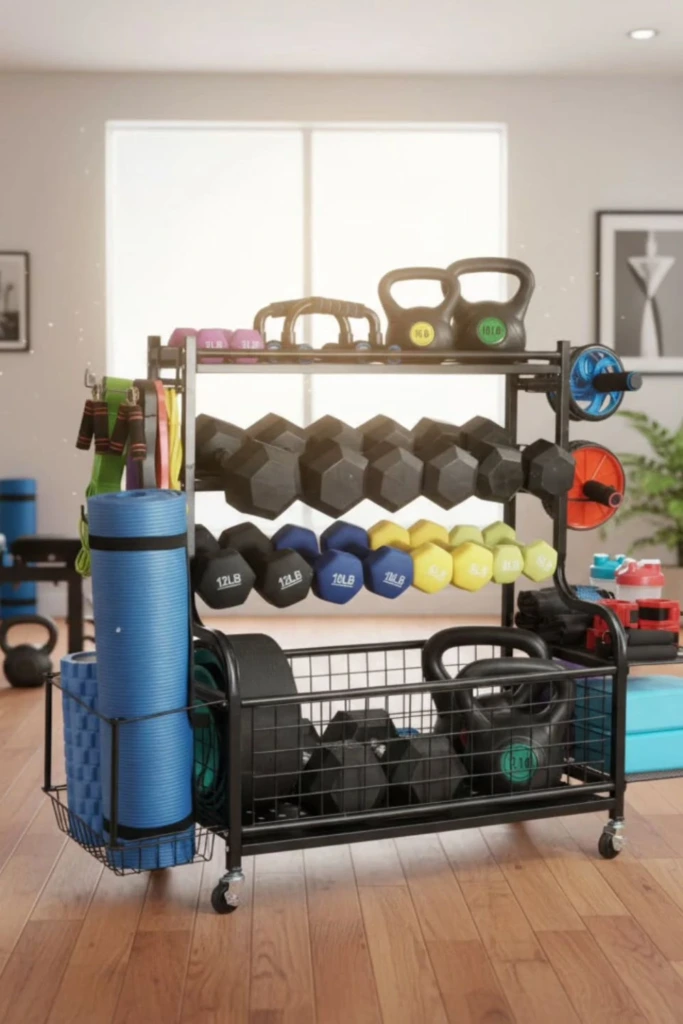
A mobile station brings different types of workout equipment into one convenient location. It is particularly helpful when your gym contains accessories for strength training, stretching, and cardio workouts.
Look for a unit with several storage levels, side hooks, and compartments suited to your equipment. Smaller accessories can go in baskets, while suitable shelves can hold lightweight dumbbells and kettlebells. Vertical holders may provide space for yoga mats or other compatible equipment.
You can move the station closer to your training area when needed and roll it back against a wall afterward. This arrangement helps maintain an open workout zone without permanently dedicating a large section of the room to storage.
For safety, select a model with an appropriate weight rating and stable construction. Lock the wheels before accessing equipment, and avoid placing heavy objects high above the base.
A mobile station is most useful when its contents are carefully selected rather than filled with every item in the gym.
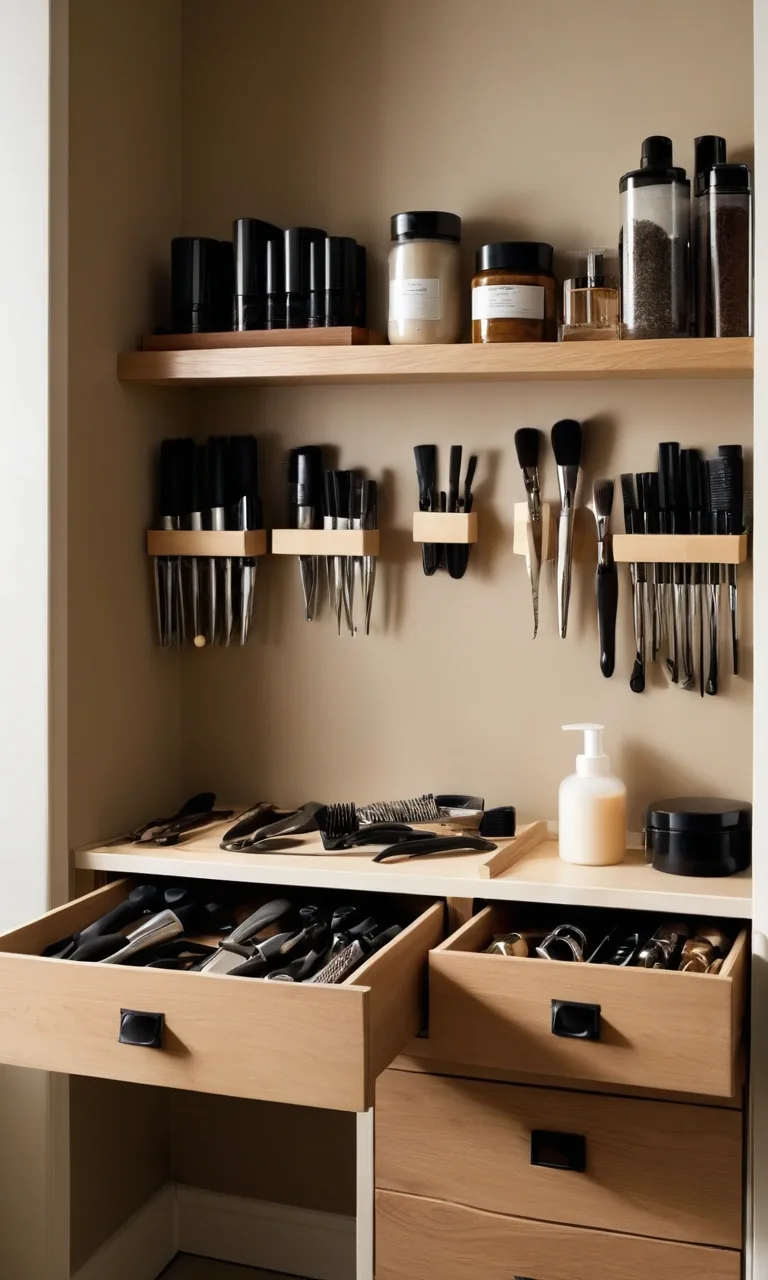
8. Panel Board
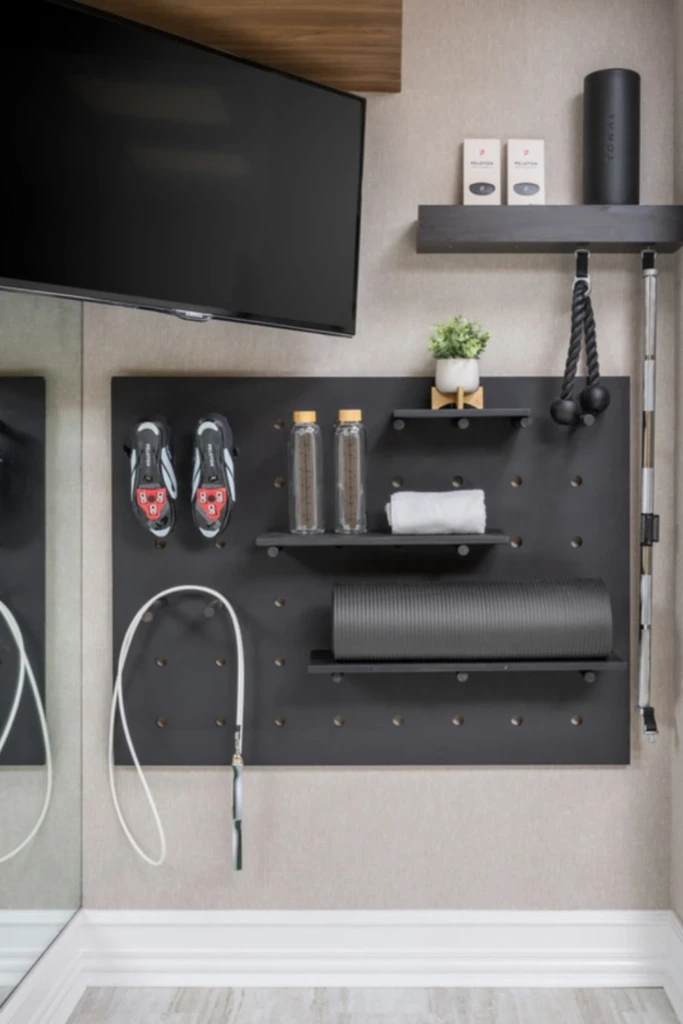
A panel board provides a compact storage area for the smaller items that often disappear into drawers or gym bags. It can be especially useful in a workout corner where a full shelving unit would take up too much space.
Install compatible hooks for jump ropes, resistance bands, and straps. A narrow shelf can hold towels, a timer, or other lightweight essentials, while vertical holders can accommodate suitable training sticks or bars.
The main benefit is that every accessory has a visible, designated location. Instead of searching through several containers before exercising, you can quickly check the board and grab what you need.
Arrange the most frequently used items in the center of the panel, with less frequently used accessories toward the edges or higher up. Keep the layout simple enough that putting everything away takes only a few seconds.
A sturdy, properly installed panel board can make a small home gym feel considerably more organized.
9. Fitness Pegboard
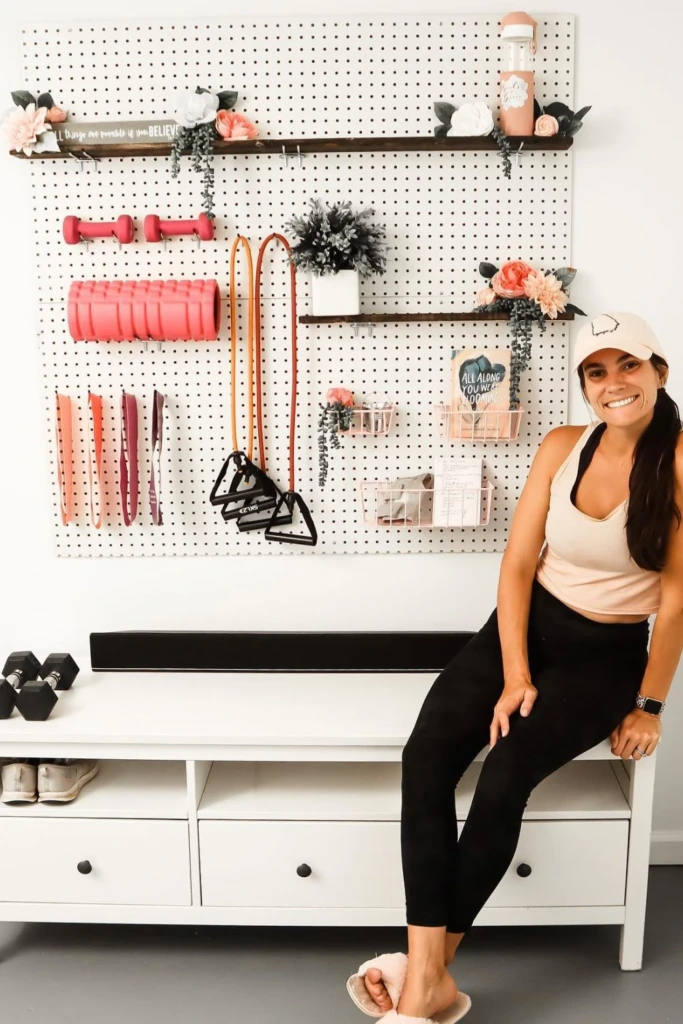
A fitness pegboard combines practical storage with an opportunity to personalize your workout space. Wooden finishes can create a warmer appearance, while metal or neutral-colored boards suit a more industrial gym design.
Arrange adjustable hooks for resistance bands, lifting straps, and jump ropes. Add small baskets for gloves and other accessories, and use suitable shelves for water bottles or lightweight recovery tools.
You can also include a small display area for workout notes, training schedules, or fitness goals. This makes the board useful beyond simply storing equipment.
For a balanced arrangement, leave enough space between hanging items so that they can be removed without disturbing neighboring accessories. Avoid crowding the board with unnecessary decorations that make equipment harder to reach.
Choose a mounting system that matches the weight of the items being stored. A fitness pegboard is best suited to accessories unless it has specifically rated supports for heavier equipment.
10. Peg Panels
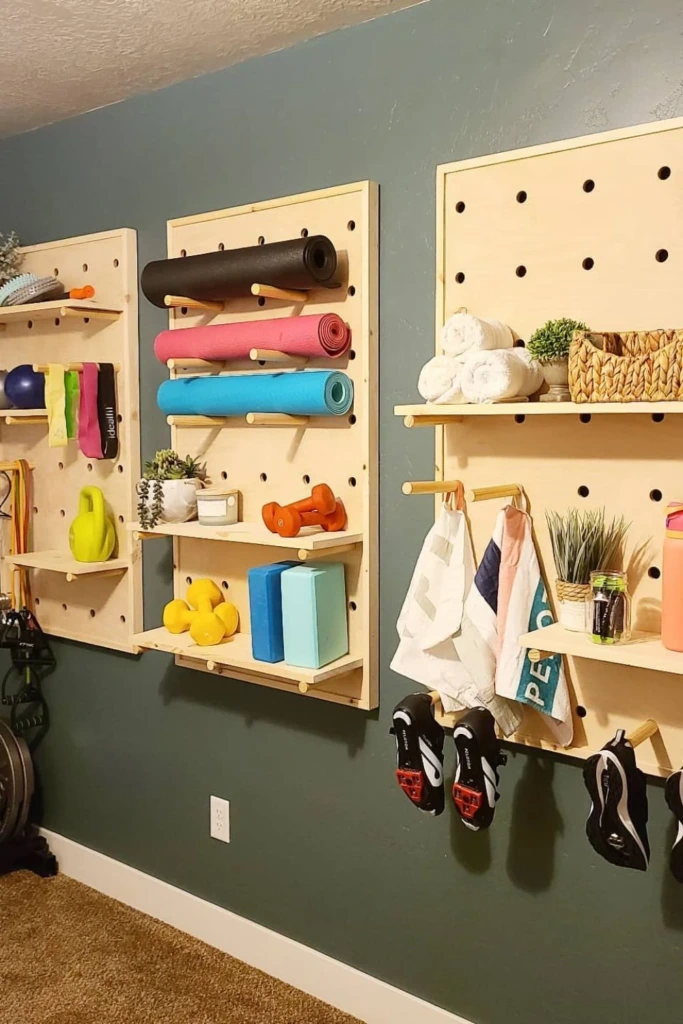
Peg panels offer a clean, adaptable way to store workout essentials vertically. Their adjustable pegs and compatible accessories make it possible to change the arrangement without installing a completely new storage system.
Use suitable pegs or holders for rolled yoga mats, stretching straps, and lightweight mobility equipment. Small shelves can accommodate yoga blocks, towels, and compact accessories, while lower hooks can keep resistance bands off the floor.
This arrangement is particularly useful in narrow rooms because it uses wall space rather than requiring a deep cabinet.
Before choosing the panel, consider the size and weight of your equipment. A panel intended for light accessories should not be used to support heavy weights or bulky equipment without verified load ratings.
For a tidy appearance, group similar items together and leave a little empty space between categories. The result is a flexible storage system that can grow alongside your home gym.
11. Display Wall
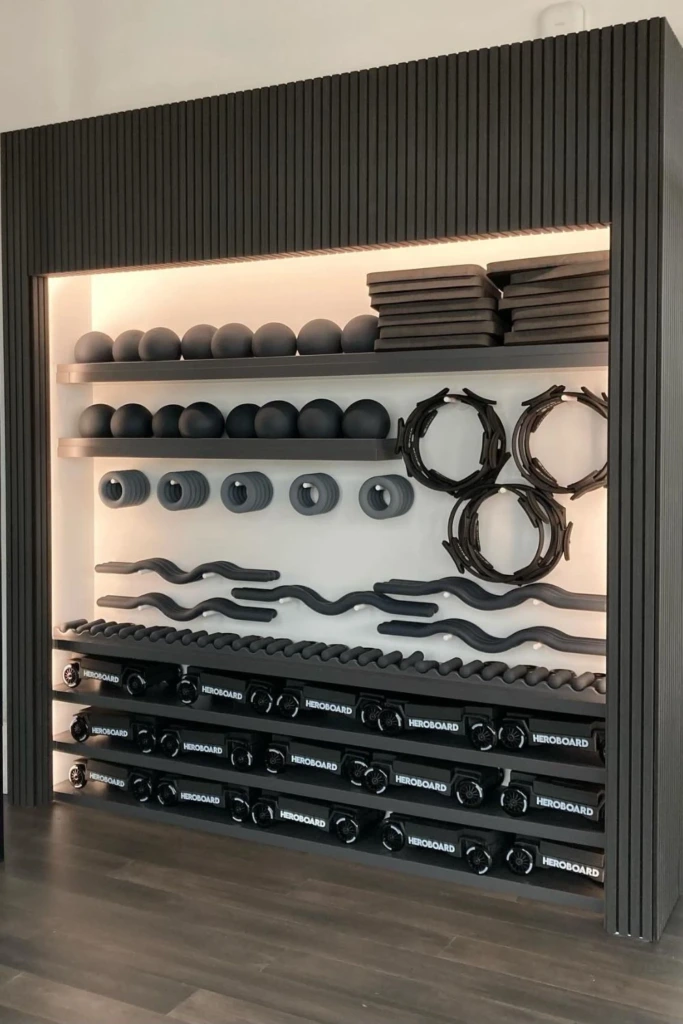
A dedicated display wall can make a home gym look polished while keeping equipment organized and accessible. Rather than leaving weights and accessories scattered throughout the room, this design gives them a clearly defined storage area.
Create separate sections for dumbbells, medicine balls, weight plates, and specialty bars. Use appropriate racks for heavier equipment and shelves designed to accommodate the dimensions of larger accessories.
A recessed wall or custom storage installation can create a particularly seamless appearance, although a well-arranged freestanding system can achieve a similar effect without major construction.
Think about accessibility when planning the layout. Frequently used weights should be easy to retrieve, and equipment should never obstruct walking paths or exercise movements.
A display wall is especially attractive in a dedicated fitness room where appearance matters alongside functionality. Just remember that heavy equipment requires secure, load-rated supports rather than ordinary decorative shelves.
12. Mat Hooks
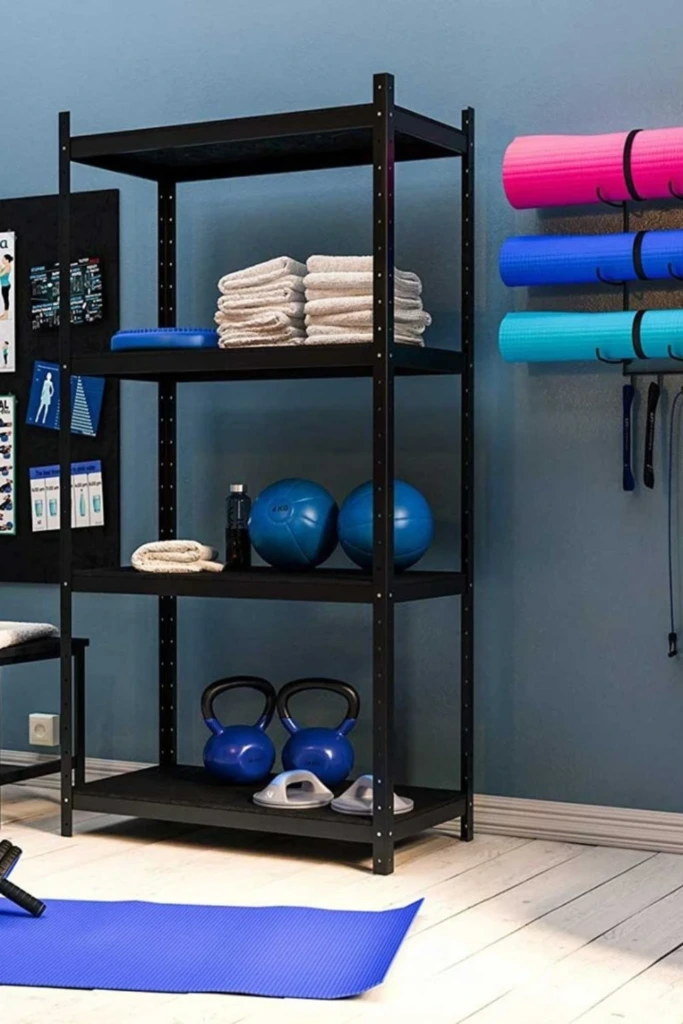
Yoga mats can quickly create clutter when they are left leaning against walls or rolled into corners. Wall-mounted mat hooks provide a straightforward way to keep them together while freeing up valuable floor space.
Choose hooks or holders that are compatible with your mats and install them at a convenient height. Depending on the design, you may be able to store several rolled mats side by side without allowing them to slide onto the floor.
Additional hooks nearby can hold resistance bands, stretching straps, or other lightweight accessories. If space permits, place a small shelf underneath for towels and yoga blocks.
Allow mats to dry after sweaty workouts before storing them, and follow the manufacturer's care instructions to prevent trapped moisture and unpleasant odors.
This solution works particularly well beside a stretching area, in a spare bedroom gym, or along a wall that would otherwise remain unused.
13. Closet Gym
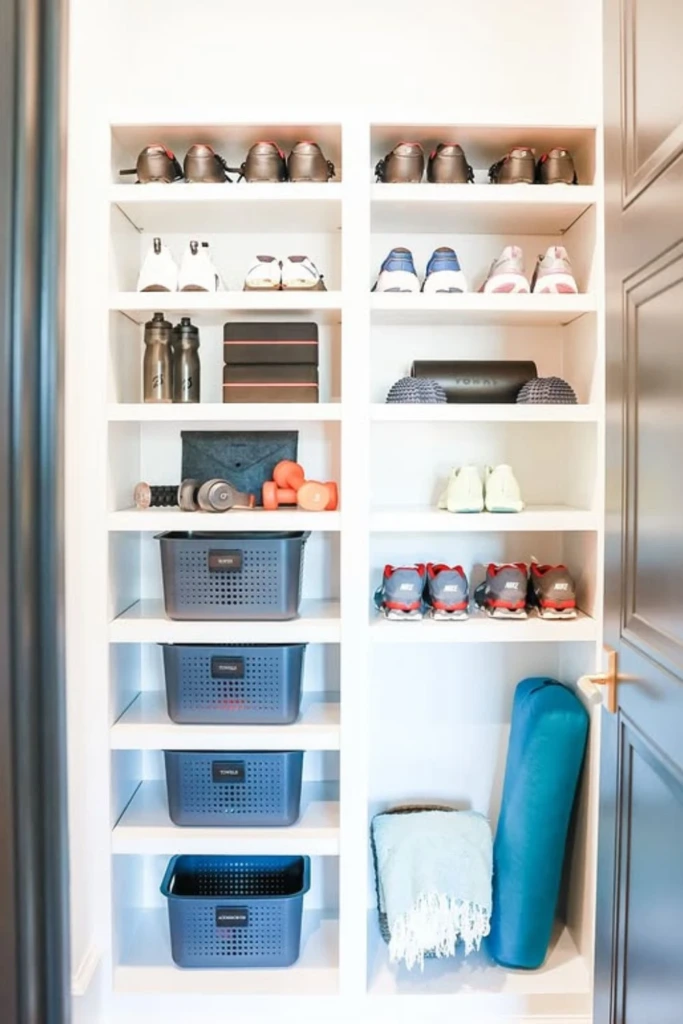
Turning an existing closet into a gym storage area is an effective way to keep fitness equipment out of sight when it isn't being used. This is particularly helpful when your workout space shares a room with a bedroom, office, or living area.
Start by measuring the closet and sorting your equipment according to size and frequency of use. Reserve easy-to-reach shelves for shoes, yoga blocks, towels, and lightweight accessories. Use labeled bins for resistance bands, wraps, and smaller training tools.
If you own dumbbells or kettlebells, make sure the shelving or floor supports are rated for their weight. Heavy equipment should never be placed on ordinary closet shelves that might bend or collapse.
Keep ventilation in mind, especially when storing damp towels or sweaty workout clothing. Allow reusable equipment to dry before putting it away.
By assigning a specific shelf or container to each category, you can maintain a neat space without turning your entire room into a visible gym.
14. Wall Cabinets
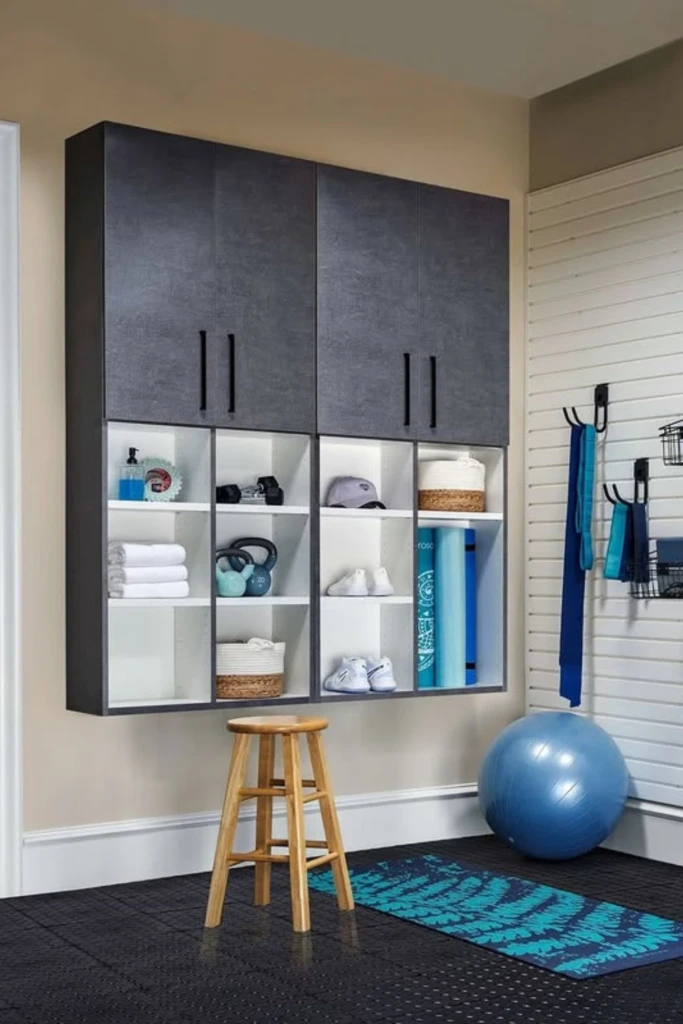
Wall cabinets combine concealed storage with open compartments, giving you the flexibility to display frequently used items while hiding less attractive clutter.
Open cubbies are convenient for towels, yoga blocks, shoes, and lightweight accessories that you reach for during most workouts. Closed cabinets can store spare supplies, cleaning products, and items you don't need every day.
A mixture of cabinet sizes helps accommodate equipment with different shapes. However, heavy dumbbells and kettlebells should only be placed in compartments designed and rated for their loads.
Install wall cabinets into appropriate structural supports and keep the area beneath them clear enough to retrieve equipment safely.
For a coordinated appearance, use matching containers inside the cabinets and label them according to their contents. This reduces the chance of small accessories becoming mixed together.
Wall cabinets work especially well in finished home gyms where you want practical storage without making the room look like a commercial fitness facility.
15. Rack System
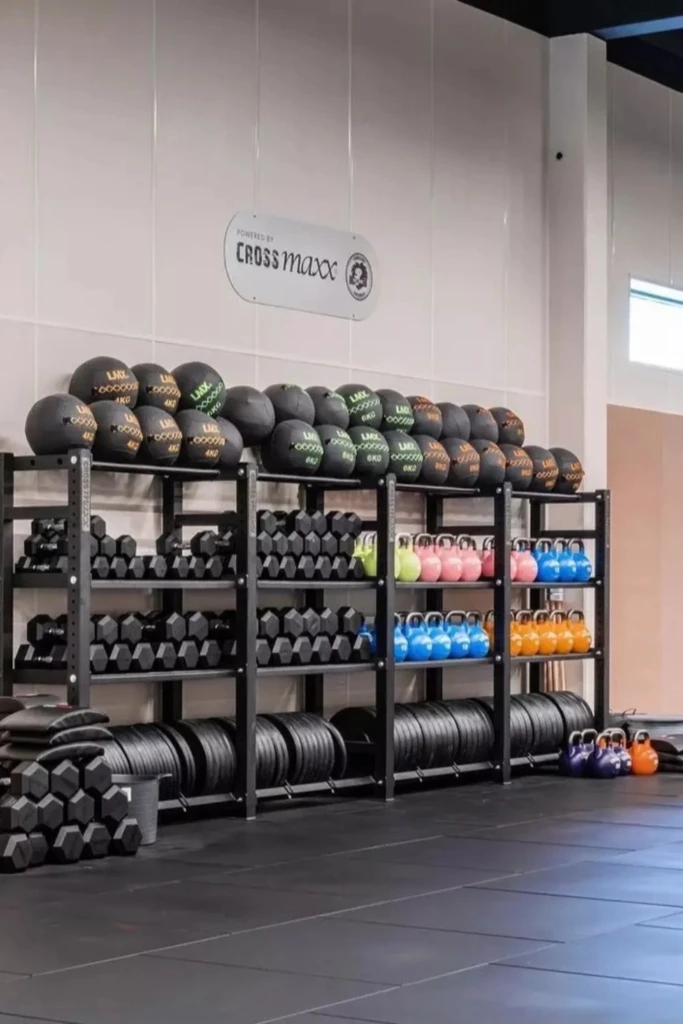
A dedicated rack system is one of the most effective ways to organize a collection of strength-training equipment. It provides separate storage positions for different weights and helps keep the workout floor clear.
Choose a rack that matches the equipment you own. Dumbbell racks typically have tiered shelves, while plate trees and barbell storage units are designed for different types of weight equipment. Some purpose-built systems combine several storage functions.
Arrange dumbbells by weight so you can identify the correct pair quickly. Store plates on compatible pegs and place kettlebells where their handles remain easy to grasp.
Heavier equipment is generally best stored on lower levels, provided the rack's design allows it. Check the manufacturer's load limits and distribute weight as instructed.
A rack system is especially useful for people who train regularly with free weights. It creates a consistent routine: take the equipment you need, complete your session, and return everything to its assigned place.
16. Ball Shelves
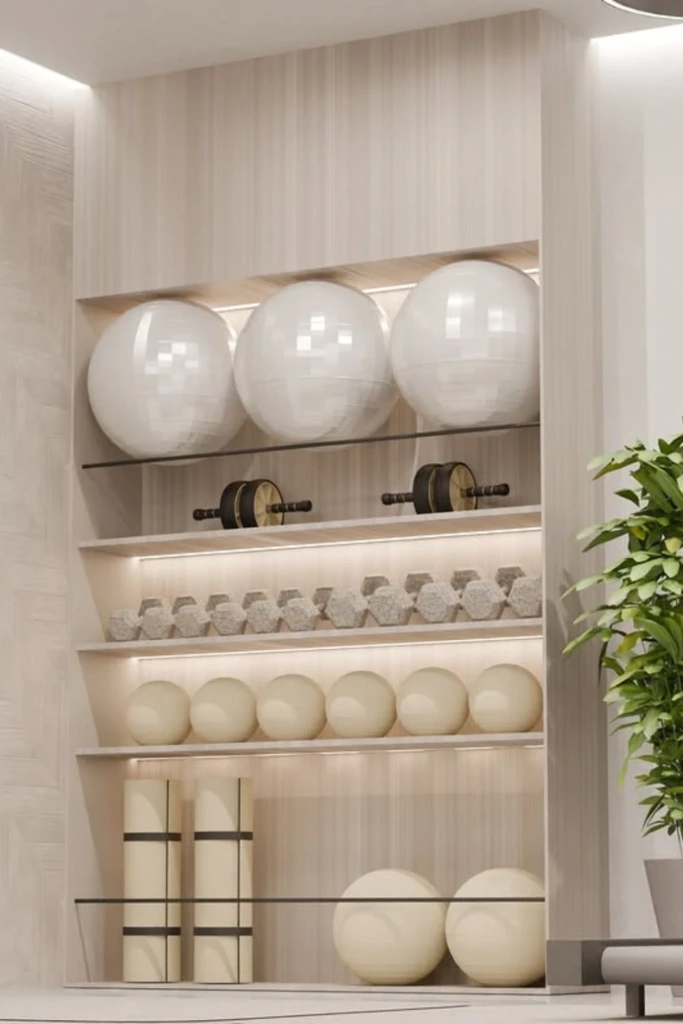
Exercise balls can occupy a surprising amount of space, especially when several sizes are used for stability exercises, core training, or rehabilitation-style workouts.
A dedicated ball rack or appropriately designed shelving unit keeps these items from rolling around the room. Wider compartments can accommodate large stability balls, while smaller sections may hold medicine balls and other compact exercise equipment.
If you also use yoga mats, resistance bands, or light dumbbells, choose a storage unit that includes separate compartments for those items. Keeping everything in one designated zone can make equipment checks and cleanup easier.
Measure your largest ball before purchasing a rack, and allow enough clearance to remove it without pulling other equipment out of place.
Make sure the rack is stable and designed for the type of balls you own. A secure, properly sized storage solution keeps the area more orderly and makes it easier to move freely between exercises.
17. Stair Storage
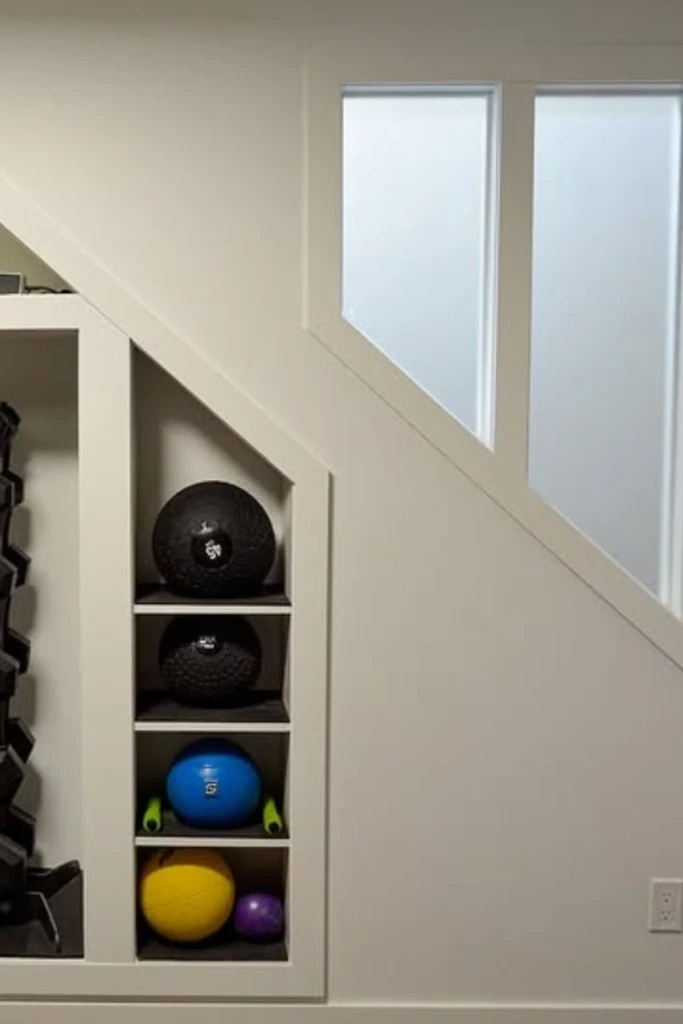
The space beneath a staircase can become valuable storage in a home gym, particularly when there isn't enough room for a separate equipment closet.
Custom shelving can follow the angle of the stairs, making use of an area that might otherwise collect miscellaneous household items. Lower compartments can hold suitable weight equipment, while upper shelves are useful for lighter accessories, towels, and yoga blocks.
If you plan to store dumbbells or kettlebells here, ensure the shelves and supporting structure are designed to handle their weight. Keep heavy objects in stable, accessible positions rather than placing them high above your head.
You can also use labeled bins to separate training accessories from household supplies if the space serves more than one purpose.
Under-stair storage works best when the area remains well lit and equipment can be retrieved without awkward bending or squeezing into narrow spaces. A carefully planned layout can turn an overlooked corner into a functional part of your gym.
18. Medal Display
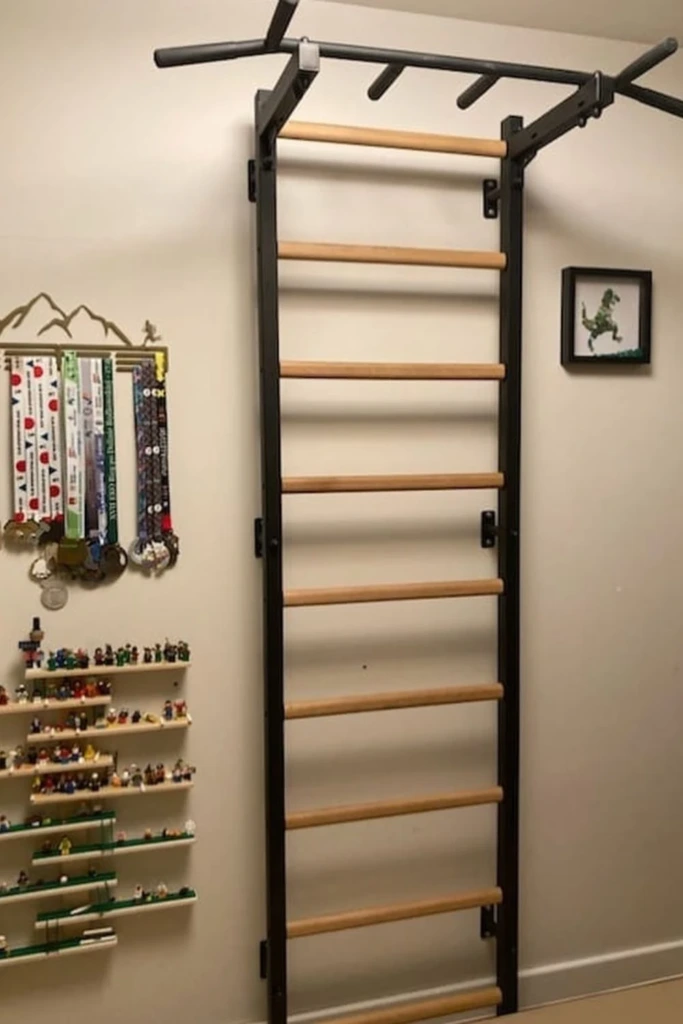
A medal display adds a personal touch to your workout room while giving race medals and other fitness achievements a dedicated home.
Install a medal rack on an available wall near your training area, provided it doesn't interfere with equipment or movement. Individual hooks keep ribbons separated and make it easier to add new medals as you reach future milestones.
You can arrange medals chronologically, group them by event, or dedicate different sections to running, cycling, and other activities.
For a more complete display, combine the rack with a framed race photograph or a small board showing your personal goals. Keep the arrangement simple enough that it remains a source of encouragement rather than another cluttered surface.
Use appropriate wall anchors and place the display away from areas where weights or other equipment could strike it.
Although a medal rack doesn't provide substantial equipment storage, it helps make your gym feel more personal and celebrates the consistency behind your progress.
19. Band Hooks
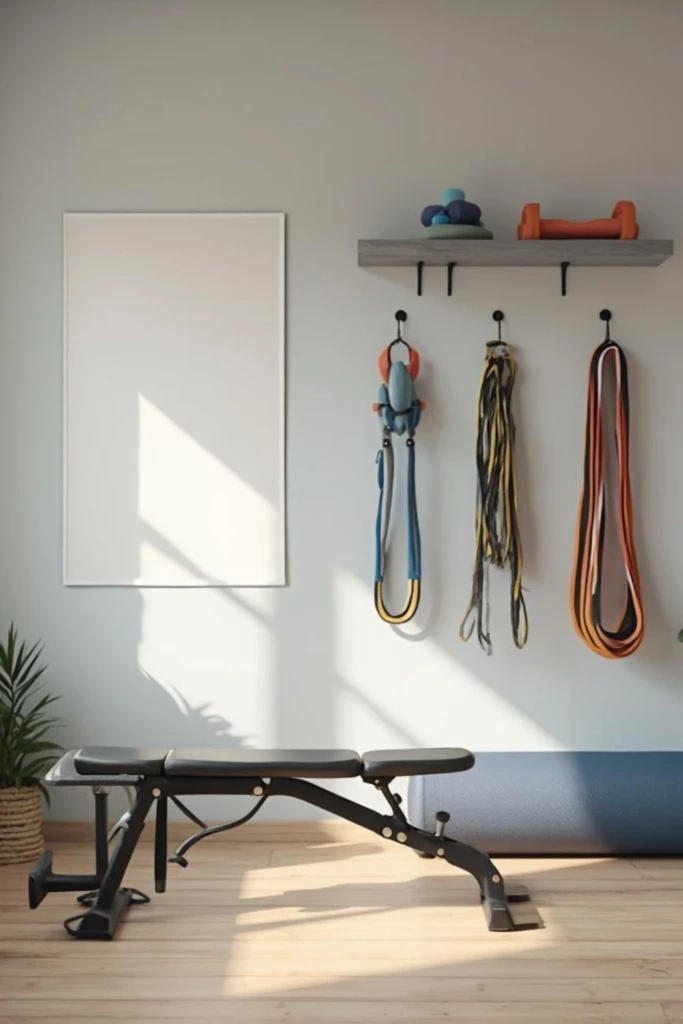
Resistance bands are versatile training tools, but they can become tangled when stored loosely in drawers or bags. A dedicated wall-mounted hook system keeps them separated and easy to access.
Install several suitable hooks with enough space between them for different band sizes. Longer bands can hang individually, while compatible holders can accommodate smaller loop bands and stretching straps.
You might arrange the bands by resistance level, color, or intended use. This makes it easier to select the appropriate band during warm-ups and strength exercises.
Inspect the bands regularly for cracks, tears, or other signs of wear. Follow the manufacturer's storage guidance, and avoid placing bands near sharp edges, excessive heat, or direct sunlight when these conditions could damage the material.
A small shelf above the hooks can provide space for lightweight accessories such as timers or workout notes.
This setup requires very little room and works well beside an exercise mat, bench, or stretching station.
20. Vertical Rack
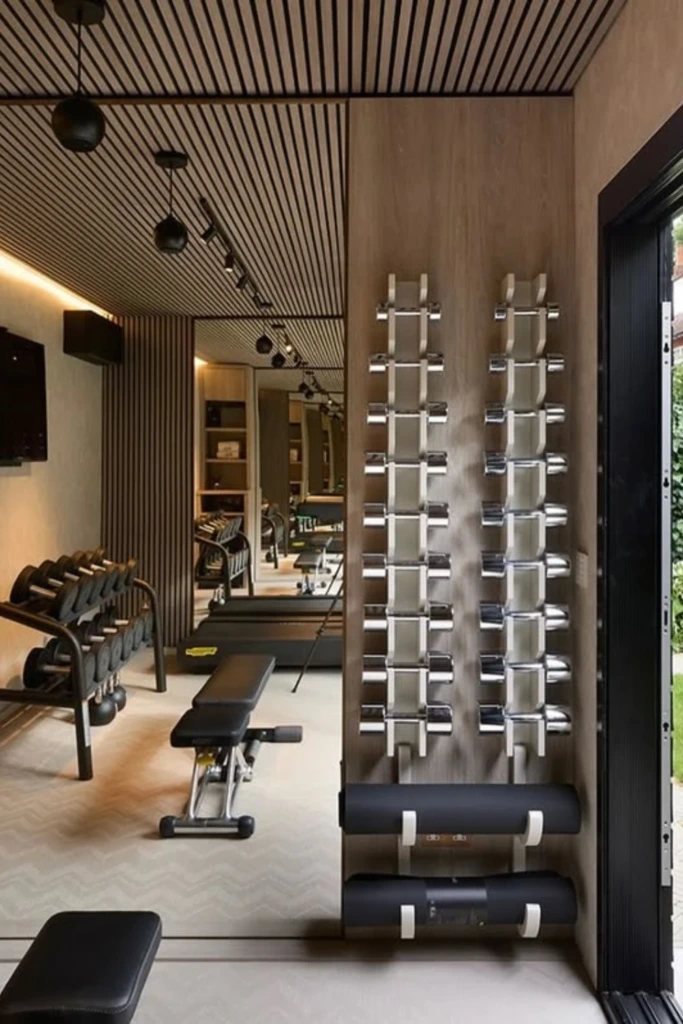
A vertical dumbbell rack can help maximize floor space in a small home gym. Instead of spreading several pairs across a long rack, this design stores compatible weights in a compact arrangement.
Look for a rack specifically designed for your dumbbell type and weight range. Each pair should sit securely in its designated position without rolling, shifting, or contacting neighboring weights in a way that makes retrieval difficult.
Place the rack near your strength-training area, but leave enough space to pick up and return weights without interfering with your bench or other equipment.
Vertical storage can be especially helpful in apartments, converted bedrooms, and narrow workout spaces. However, stability matters: the rack should stand securely on a level surface and be used according to its load specifications.
If your dumbbells are unusually shaped or particularly heavy, verify compatibility before purchasing. A compact rack is useful only when the equipment fits safely and remains easy to handle.
21. Corner Panel
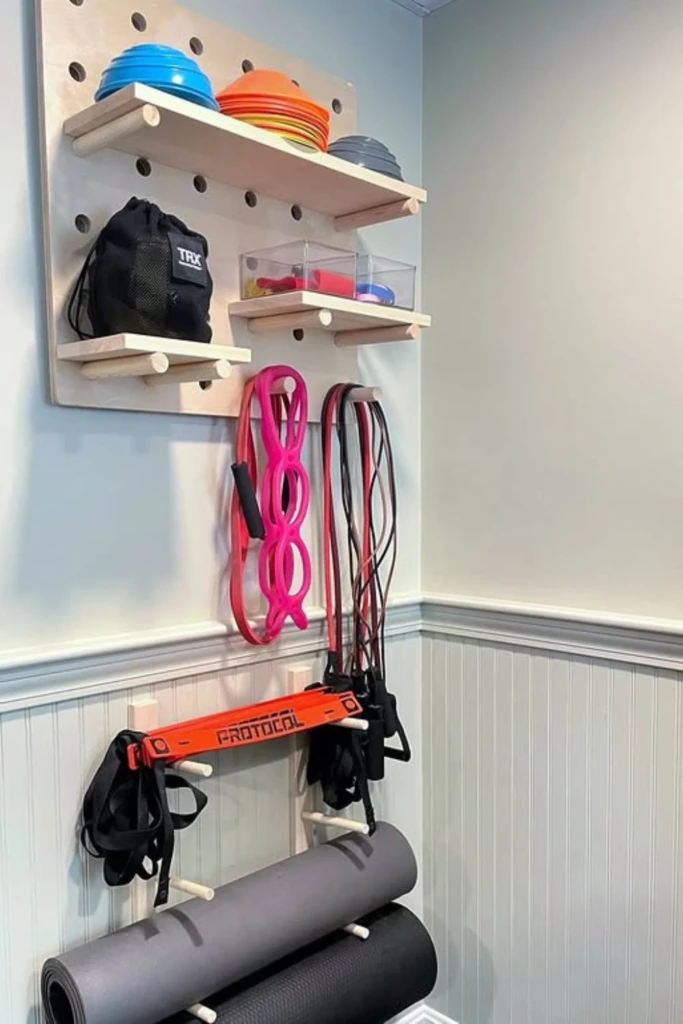
Corners often become convenient dumping spots for exercise accessories simply because they are out of the way. A corner panel gives that space a more deliberate purpose without requiring a large storage cabinet.
Install a suitable panel on one wall or across two adjoining walls, depending on the available space. Add compatible hooks for resistance bands and stretching straps, along with small shelves for lightweight training accessories.
Lower holders can keep yoga mats and mobility pads off the floor, while upper sections can accommodate items you use less frequently.
A corner arrangement is particularly useful when your gym occupies only part of a bedroom or garage. It keeps equipment grouped together and leaves the main exercise area open.
Avoid placing shelves where they interfere with doorways, moving equipment, or normal walking paths. As with any wall-mounted storage, use appropriate fixings and respect the load limits of the panel and its accessories.
22. Plate Wall
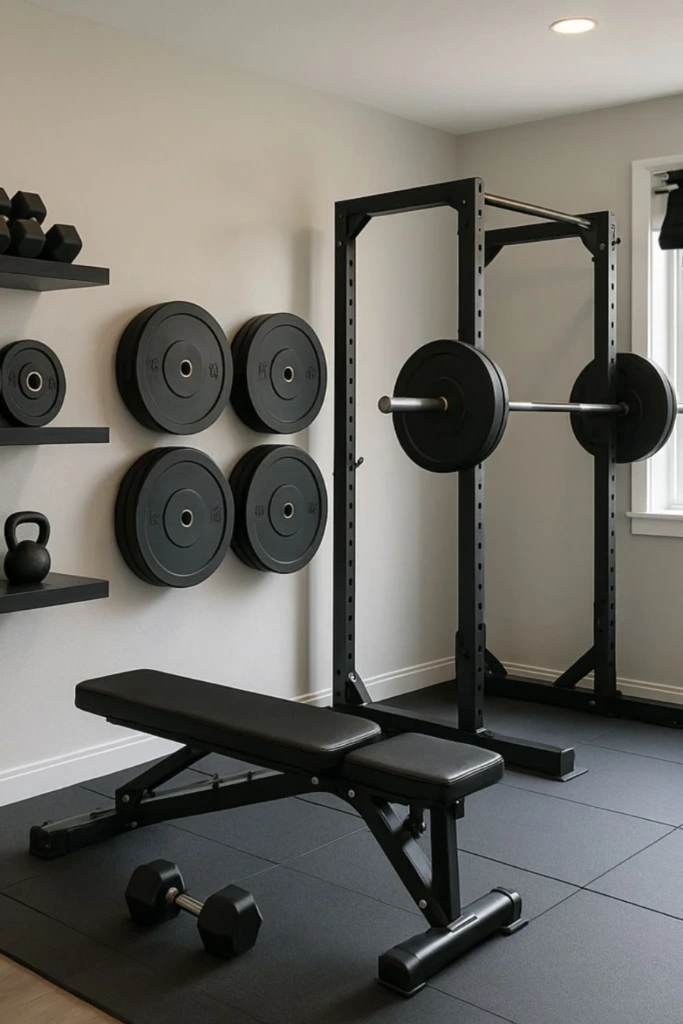
Weight plates can create clutter when they are stacked randomly or leaned against walls. A dedicated plate storage system keeps them organized and makes it easier to select the correct weight during strength training.
Wall-mounted plate holders can work well in suitable gyms, particularly where floor space is limited. Choose a system designed for the plate sizes and total load you intend to store, and make sure the wall and mounting hardware can support that weight.
Arrange plates by size or weight so that the ones you use most frequently are easy to identify. Avoid placing heavy plates at awkward heights that make lifting them difficult.
If wall mounting isn't practical, a freestanding plate tree or rack may be a better option. Either way, secure storage helps prevent plates from rolling into walking paths and keeps your training area more predictable.
You can place compatible dumbbell or kettlebell storage nearby to create a dedicated strength-training station, provided the combined arrangement leaves sufficient room for safe movement.
What is the safest way to store heavy weights in a home gym?
The safest approach is to use a stable, purpose-built rack or a mounting system specifically rated for the equipment's weight. Store dumbbells, kettlebells, and weight plates in their designated holders rather than leaving them scattered across the floor.
Whenever possible, keep heavier items on lower shelves to reduce the risk of falling objects and make lifting more manageable. Position racks on a level surface, follow the manufacturer's assembly instructions, and check that all fasteners remain secure.
For wall-mounted storage, confirm that the mounting hardware and supporting wall structure can handle the intended load. Avoid using ordinary decorative shelves for heavy weights unless their capacity has been verified.
Finally, leave enough clearance around the rack to pick up and return equipment without twisting awkwardly or obstructing other exercises. Good storage should make your workout safer, not simply make the room look tidy.
How can you keep a small home gym organized without taking up too much space?
Start by making use of your walls. Pegboards, hooks, vertical racks, and suitable wall-mounted shelves can store many lightweight accessories without occupying valuable floor space.
Next, group similar equipment together. Keep dumbbells and kettlebells in a designated weight-storage area, place resistance bands on hooks, and store yoga blocks or stretching straps in labeled baskets.
Choose furniture that serves more than one purpose when practical. A compact storage bench or a rolling organizer can provide useful storage without permanently occupying a large part of the room.
Avoid buying organizers before measuring your space and identifying what actually needs to be stored. A simple system that accommodates your existing equipment is usually more useful than adding multiple containers.
Most importantly, make putting equipment away part of your post-workout routine. Returning each item to the same location keeps walkways clear, reduces cleanup time, and helps your small gym remain ready for the next session.