25 Utility Closet Organization Ideas for 2026
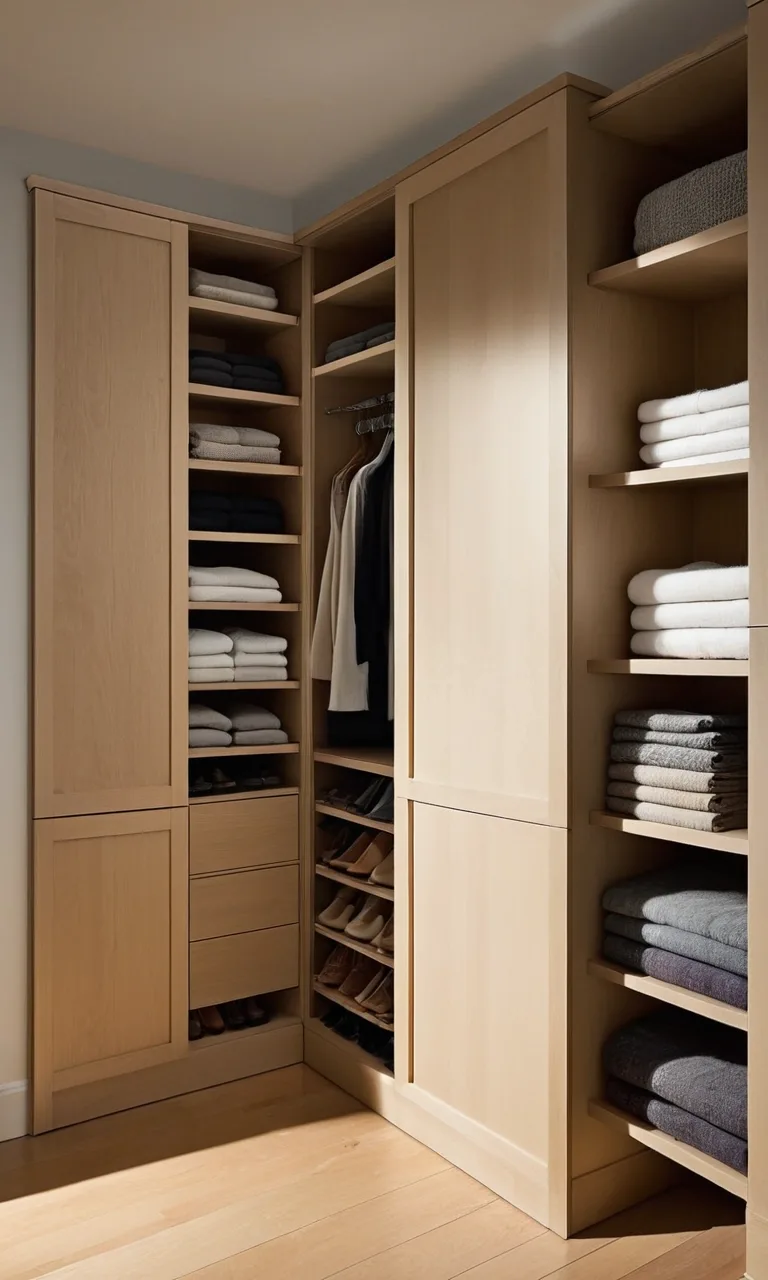
A utility closet can become cluttered surprisingly quickly. Cleaning products accumulate, long-handled tools fall against each other, and everyday essentials disappear behind bulkier items. Without a practical storage system, even a reasonably sized closet can feel cramped and frustrating to use.
The secret to a functional utility closet is making every inch count. With thoughtful shelf placement, wall-mounted organizers, and containers for smaller supplies, you can create a space that looks tidy and works efficiently without investing in an expensive renovation.
Whether you store household cleaners, laundry essentials, repair tools, or your vacuum in this area, the right arrangement can make daily chores much easier.
These 25 utility closet organization ideas offer practical ways to improve storage, reduce clutter, and make better use of the space you already have.
How Do You Organize a Small Utility Closet Without Wasting Space?
Start by removing everything from the closet so you can see how much room is available. Check expiration dates on cleaning products, discard empty packaging, and set aside items that belong elsewhere.
Next, group your belongings by purpose. Keep cleaning supplies together, place repair tools in a separate category, and collect paper products and spare household essentials in their own sections.
Look for unused vertical space before purchasing additional furniture. Wall hooks, narrow shelves, and over-the-door racks can provide valuable storage without taking up much floor area. Use bins to contain small accessories and make frequently used products easy to reach.
Keep heavier items on lower shelves, reserve upper levels for lightweight extras, and leave enough room for larger equipment. If your closet contains electrical panels, water heaters, plumbing, or ventilation equipment, maintain the access and clearance required for safe operation.
A simple arrangement that gives every item a designated home will make the closet easier to maintain over time.
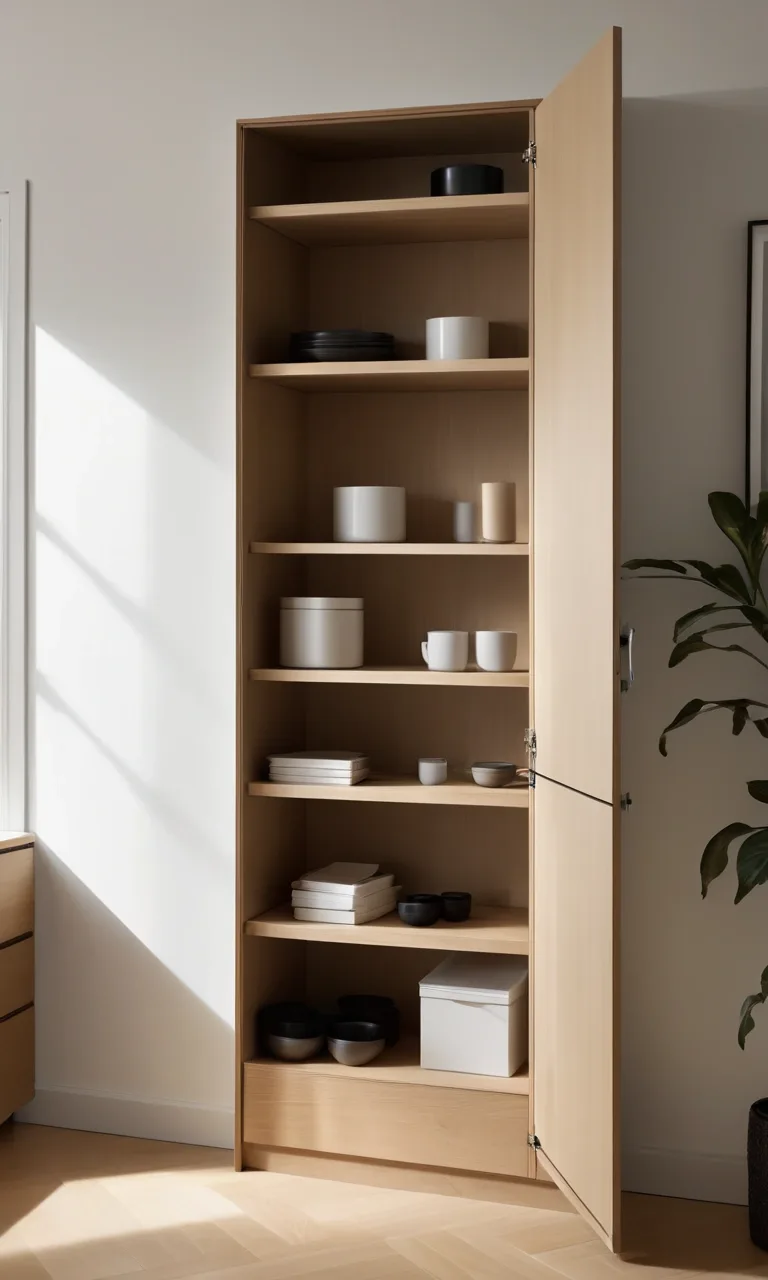
1. Zoned Shelving
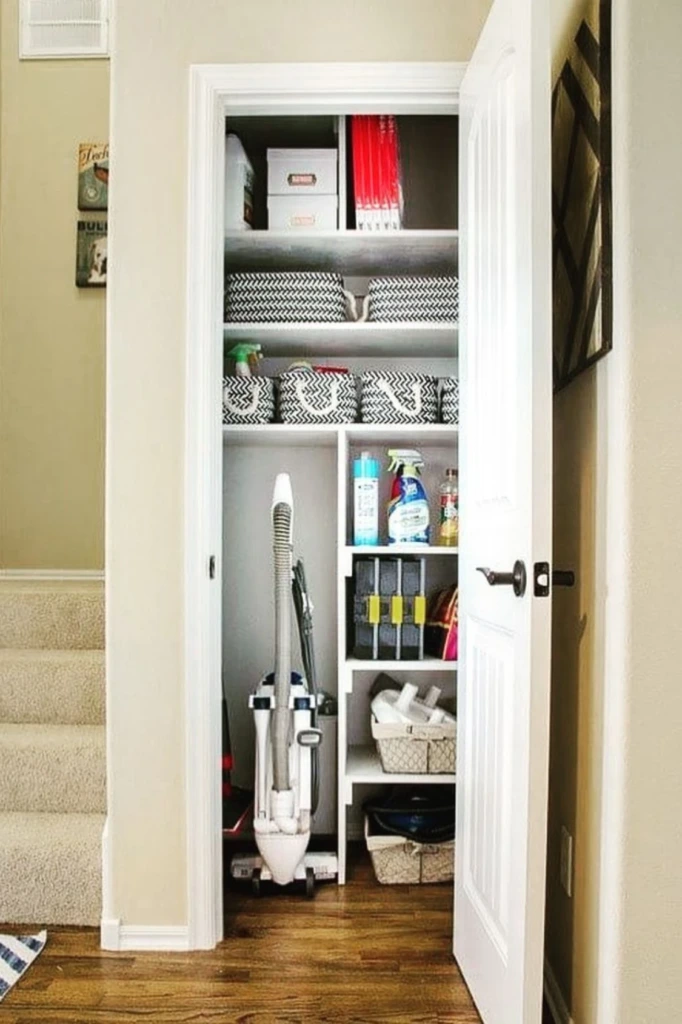
Give each shelf a specific purpose instead of spreading supplies randomly throughout the closet. This makes it easier to locate products and return them to the right place after use.
The highest shelves can hold lightweight backup supplies, extra paper towels, and infrequently used household items. Keep everyday cleaning products at a comfortable height, while heavier containers belong on sturdy lower shelves.
Small bins can hold sponges, scrub brushes, microfiber cloths, and other accessories that tend to become scattered. If space allows, add a narrow shelf section for smaller bottles without sacrificing the main area needed for a vacuum or bucket.
The most effective arrangement combines accessible shelves with an open vertical section for bulky equipment.
2. Tall Sections
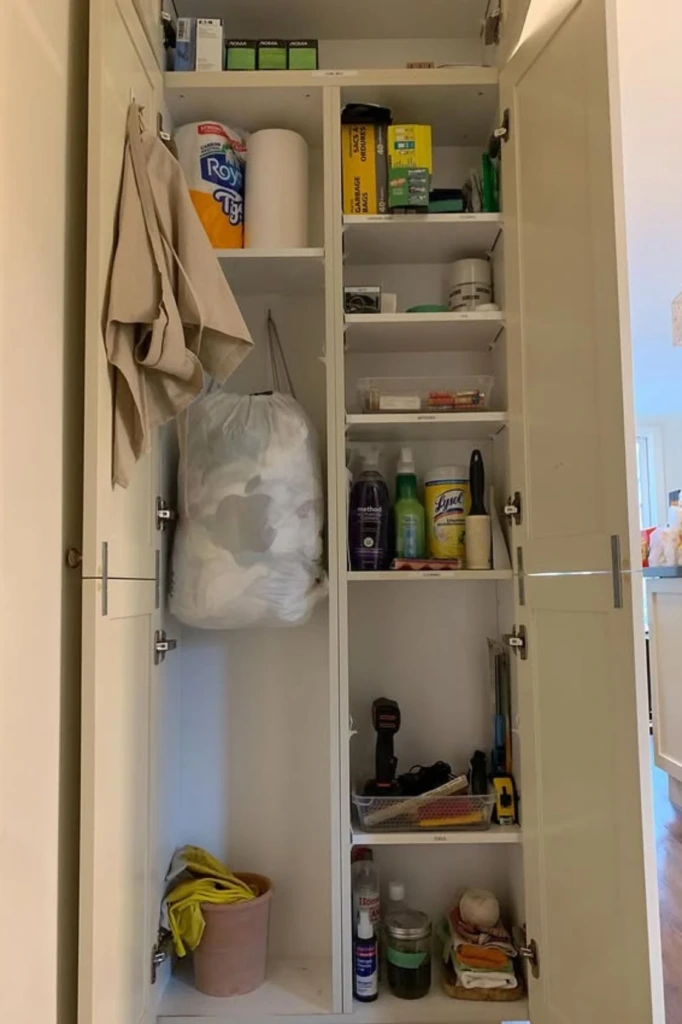
Long-handled tools need more height than ordinary household supplies. Creating a dedicated tall section prevents brooms, mops, dusters, and similar equipment from competing with boxes and bottles for shelf space.
Install a slim shelving unit along one side of the closet and leave an adjacent vertical area open. Hooks can hold reusable shopping bags, cleaning aprons, or lightweight accessories.
Use the shelves for smaller products such as wipes, sprays, cloths, and refill containers. The floor can then accommodate a bucket or another large item without becoming overcrowded.
This layout is especially useful in narrow closets where conventional shelving leaves little room for taller equipment.
3. Door Storage
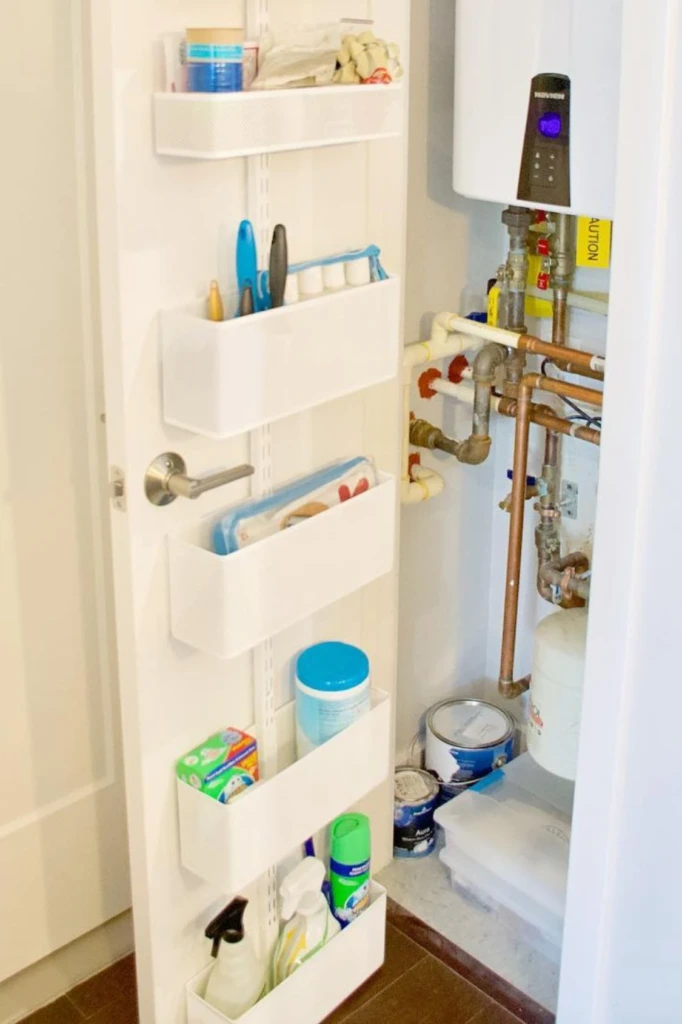
The inside of a closet door offers valuable storage space that often goes unused. A suitable over-the-door rack or mounted organizer can hold lightweight cleaning accessories while freeing the main shelves for larger supplies.
Use individual baskets for gloves, sponges, cloths, and frequently used products. Arrange everyday essentials at an accessible height so you can grab them without moving other items.
Before installing anything, check the door's construction, available clearance, and the weight capacity of the organizer. Make sure the door closes properly and that stored items cannot interfere with nearby pipes, wiring, or equipment.
Door storage is particularly helpful when the closet has limited shelving or a small footprint.
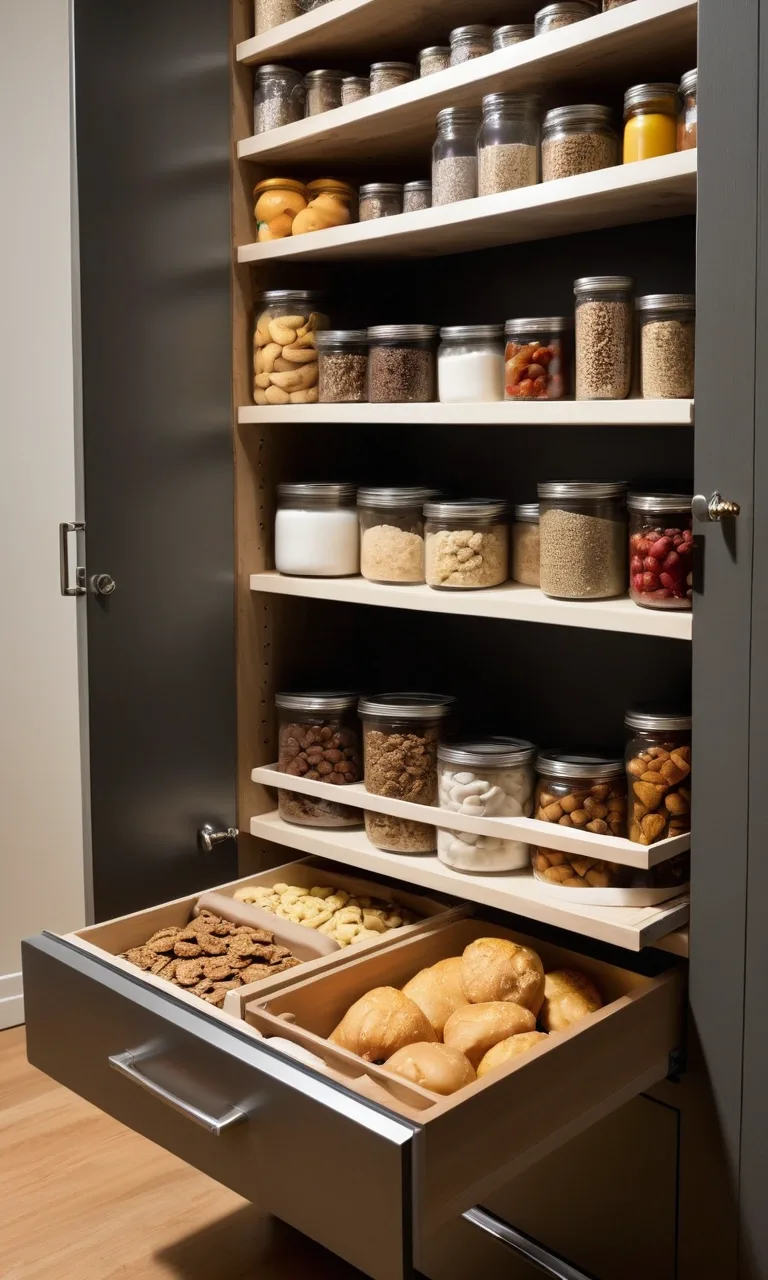
4. Clear Containers
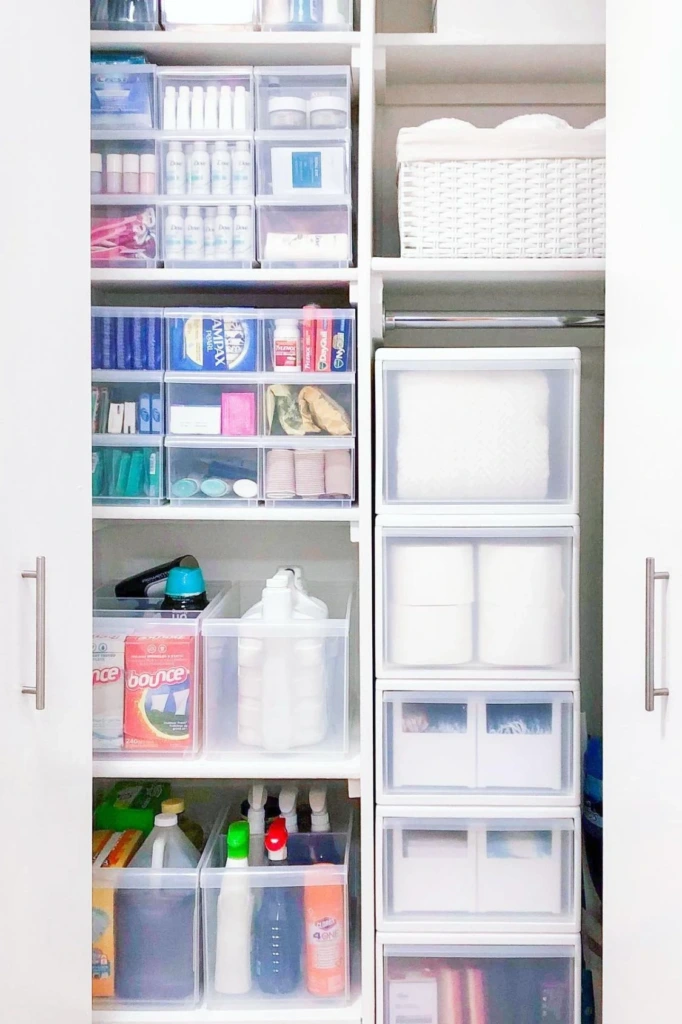
Transparent containers make it easier to identify supplies without opening every box or searching behind other products. They also create a consistent appearance when several small items need to share one shelf.
Assign each container a category, such as cleaning cloths, scrubbers, laundry accessories, or spare household essentials. Choose taller bins for large bottles and shallow containers for small objects that might otherwise disappear at the back.
Drawer-style organizers can work well for compact supplies because their contents remain accessible even when the organizer sits on a deeper shelf.
Avoid overcrowding the bins, and keep cleaning chemicals in their original labeled containers. Clear storage should improve visibility without compromising product safety.
5. Wire Shelves
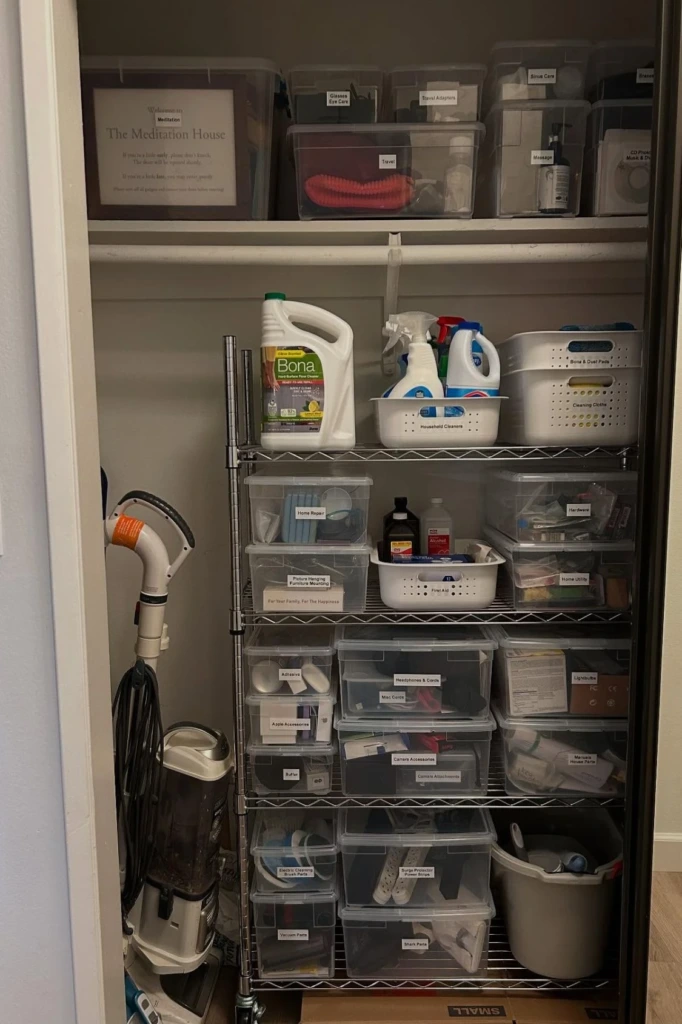
A freestanding wire shelving unit can add multiple storage levels without requiring a complete closet renovation. It is a practical option for renters or homeowners who need additional organization but want to avoid permanent cabinetry.
Use the shelves to separate everyday cleaners, backup products, paper goods, and smaller accessories. Clear bins help prevent lightweight items from falling through the wire gaps, while labels make each category easy to identify.
Choose a unit that fits the closet's width and depth, leaving sufficient space for the door to open and larger equipment to be removed.
Check the shelf's load rating and stability before placing heavy supplies on it. If the closet contains plumbing or a water heater, select a layout that preserves necessary service access.
6. Tool Hooks
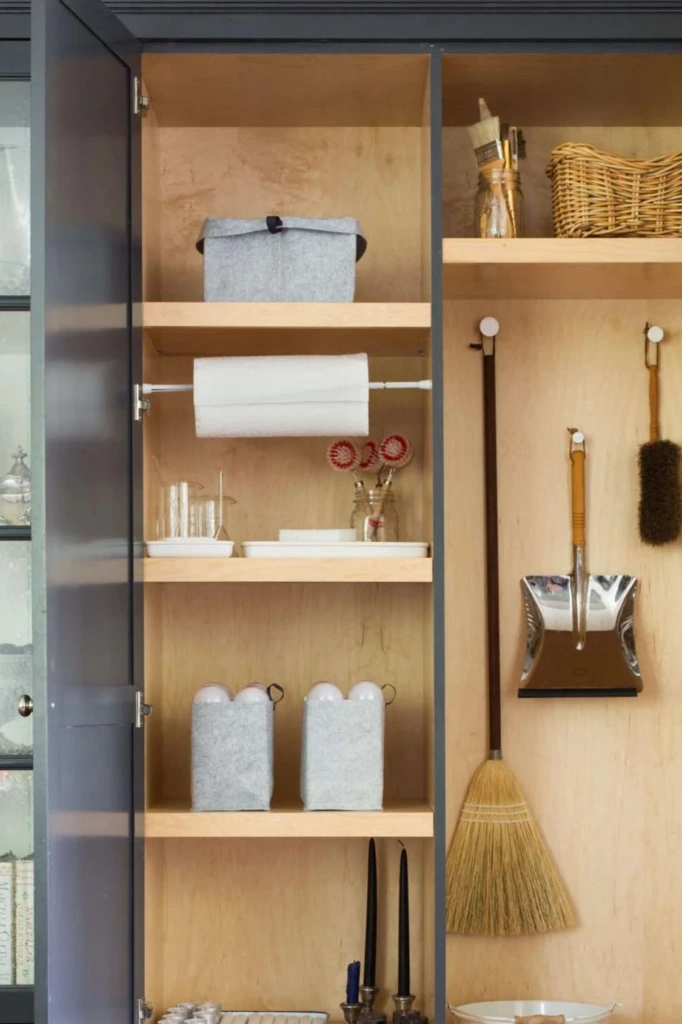
Brooms, dustpans, and brushes can take up more floor space than expected when they are left leaning against a wall. Strong hooks provide a straightforward way to keep these tools upright and easy to retrieve.
Position the hooks along an unused wall, allowing enough separation for each handle to hang securely. A small dustpan or handheld brush can share the same area if the hooks are appropriately sized.
Keep buckets and larger cleaning equipment below the hanging tools, and use nearby shelves for bottles and smaller accessories.
Choose hooks designed for the wall material and the weight of the equipment. A well-planned hanging system makes the closet safer to navigate and prevents tools from repeatedly falling over.
7. Wall Rails
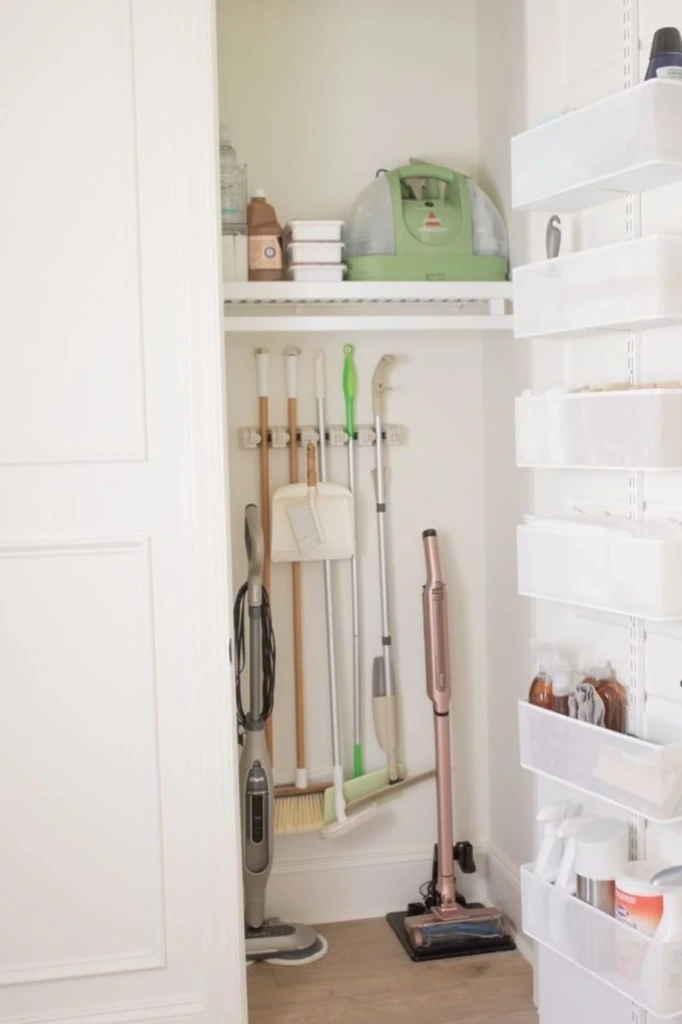
A wall rail with adjustable grips provides a more flexible alternative to installing individual hooks. It creates one organized location for brooms, mops, dusters, and other long-handled tools.
Arrange the equipment according to how frequently you use it. Daily cleaning tools should be easy to reach, while occasional-use items can occupy the ends of the rail.
Keeping handles secured against the wall frees the floor for a vacuum, bucket, or storage container. You can also add a separate shelf above the rail for lightweight supplies.
Measure the available wall space before purchasing a system, and confirm that its mounting hardware is suitable for the surface. Adjustable rails are especially useful if your collection of cleaning tools changes over time.
8. Pocket Organizer
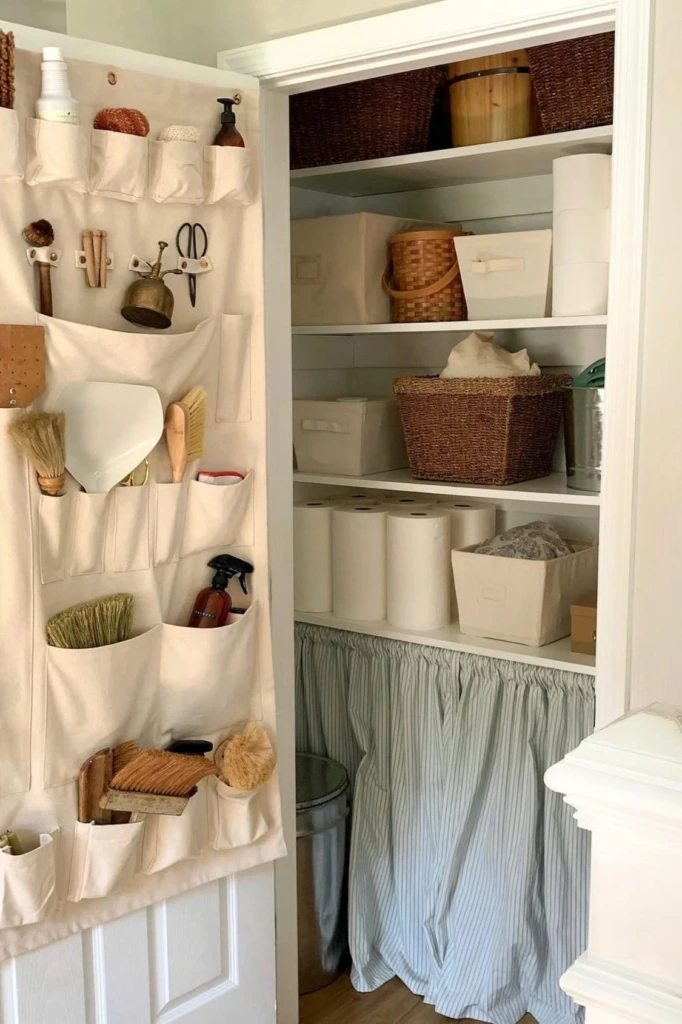
A hanging pocket organizer can turn an otherwise unused door into a compact storage station. Its individual compartments work well for small accessories that tend to become mixed together in larger bins.
Store gloves, cloths, scrub brushes, dusting attachments, and other lightweight items in separate pockets. Transparent pockets or clearly labeled sections make it easier to see what you have available.
Keep larger containers, paper products, and bulky equipment on the main shelves instead. This division allows the door to handle smaller belongings while the closet itself remains available for items that need more room.
Choose a sturdy organizer that fits the door and does not prevent it from closing. Avoid placing heavy bottles in fabric pockets unless the product is specifically designed to support their weight.
9. Labeled Bins
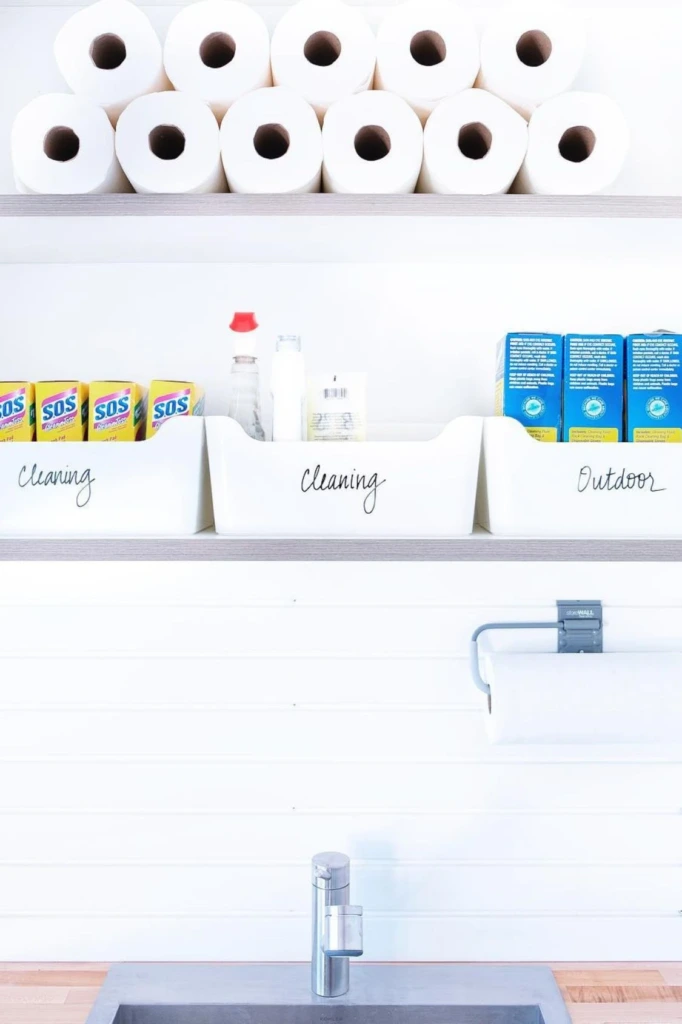
Labeled bins make a shared utility closet easier for everyone in the household to use. Instead of guessing where an item belongs, family members can quickly identify its designated container.
Create categories that reflect your actual needs, such as floor care, bathroom cleaning, dusting supplies, and replacement accessories. Keep each category together and use labels that are easy to read from the front.
Store frequently used bins on accessible shelves and place occasional-use supplies higher up. Large paper products can occupy a separate shelf, while a small holder underneath can keep an extra roll within reach.
Choose durable containers that fit the shelves without wasting too much space. Consistent labeling also makes it easier to notice when supplies are running low.
10. Category Bins
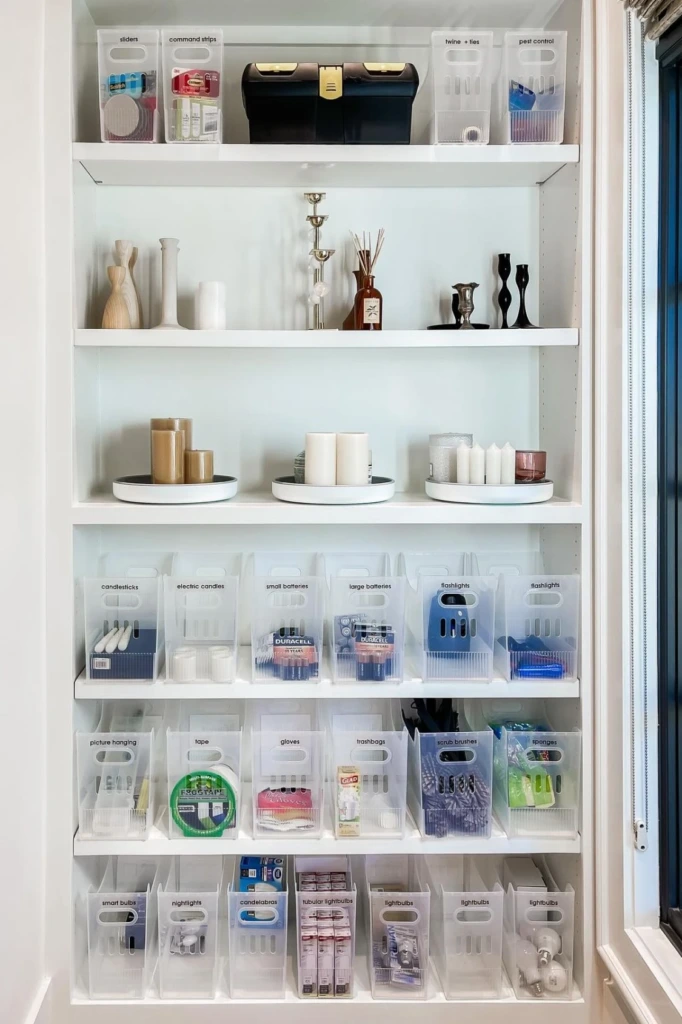
Utility closets often hold more than cleaning products. Spare batteries, light bulbs, picture hooks, screws, extension accessories, and small repair supplies can quickly become mixed together.
Separate these belongings into functional categories and give each group its own container. Small divided boxes are useful for hardware, while larger bins can accommodate electrical accessories or replacement household parts.
Keep frequently needed items on accessible shelves, and place occasional-use supplies farther back or higher up when appropriate.
Pay attention to battery storage and electrical safety. Keep batteries in suitable containers, protect their terminals where needed, and store them away from moisture and loose metal objects.
Organizing by function makes it easier to find small essentials when something around the house needs attention.
11. Multi Storage
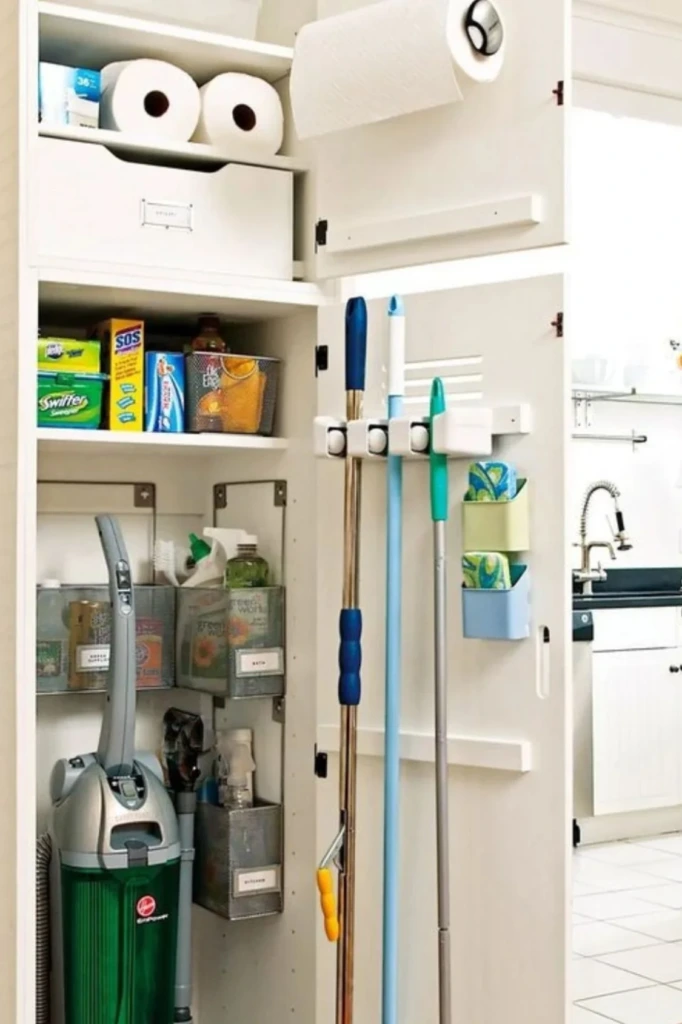
A small closet becomes more efficient when several storage methods work together rather than relying on shelves alone. Combining vertical holders, door organizers, and stackable bins allows each type of item to occupy the space that suits it best.
Use wall clips for brooms and mops, place smaller accessories in labeled baskets, and reserve sturdy shelves for cleaning products and household refills.
If the closet is narrow, keep the central floor area as open as possible so larger equipment can be removed without rearranging everything else.
The key is to avoid adding organizers simply because they look useful. Choose a combination that fits your belongings, leaves enough room to move items in and out, and keeps essential equipment accessible.
12. Labeled Baskets
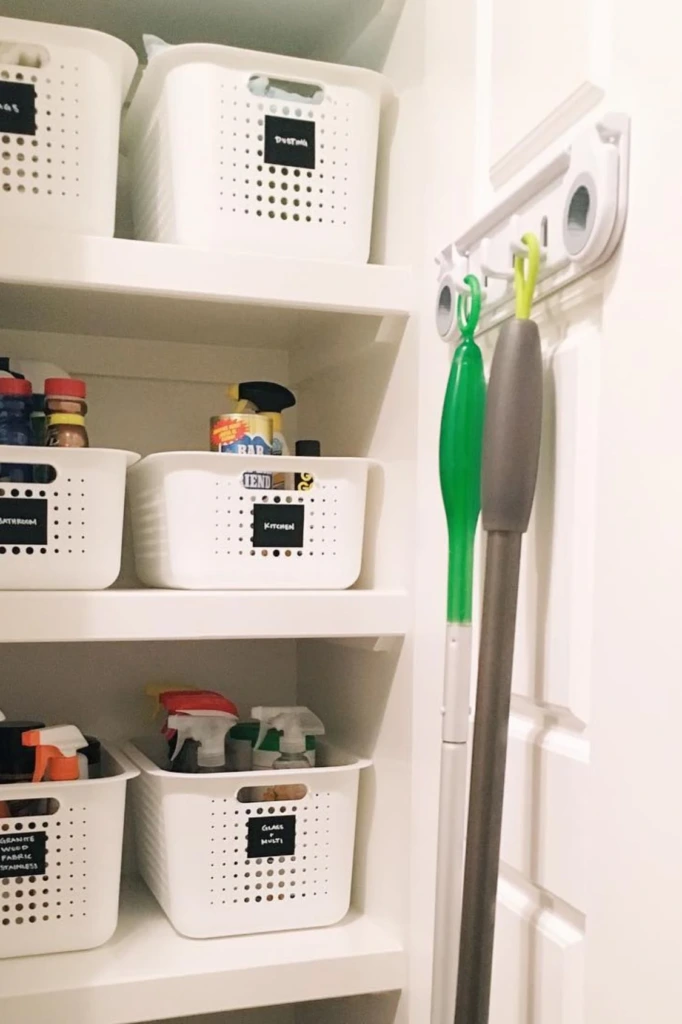
Open baskets provide an easy way to group products that are frequently used together. Instead of picking through a crowded shelf, you can pull out one basket containing everything needed for a particular cleaning task.
Create separate groups for bathroom products, kitchen cleaners, dusting supplies, and cleaning cloths. Small labels help distinguish the baskets, especially when several containers look alike.
Perforated baskets can make contents easier to see, while solid-sided versions are useful for containing loose accessories.
Store chemicals upright in their original packaging, and avoid combining incompatible products in a shared container where leaks could create a hazard. Keeping categories separate improves both accessibility and organization.
13. Double Walls
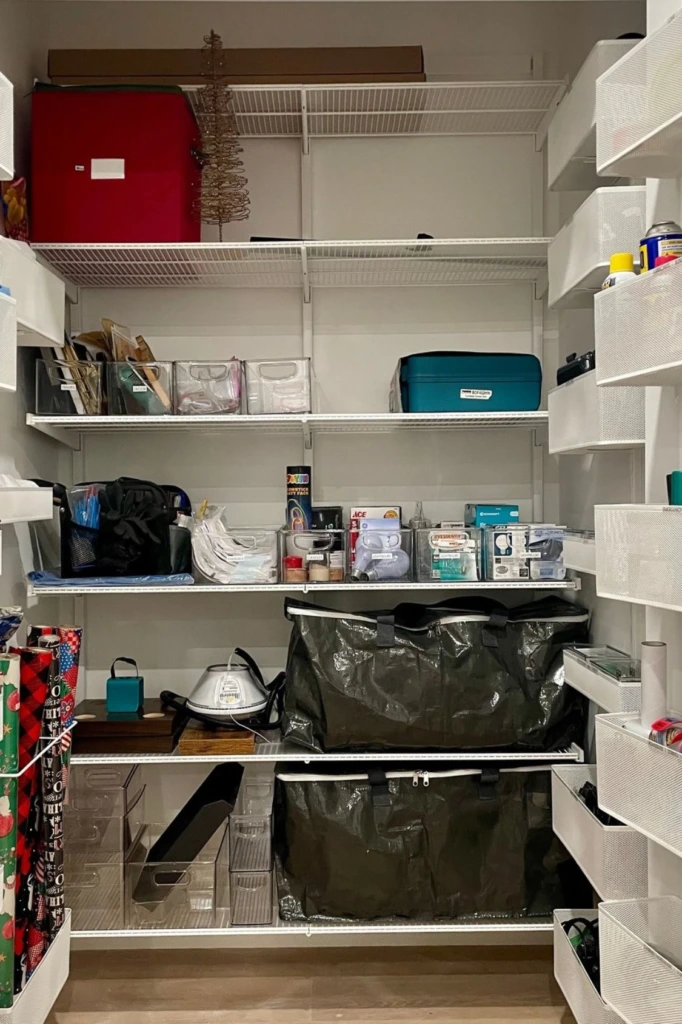
If your utility closet has enough width, consider using both side walls for additional storage. Narrow wall-mounted baskets can hold smaller supplies without consuming the central shelf area needed for larger items.
Use the side baskets for sponges, gloves, refill packs, and other compact belongings. Keep bulk supplies and heavier containers on properly supported shelves in the main section.
This approach is most effective when the closet has sufficient clearance for your hands and equipment. Avoid installing baskets where they obstruct the doorway, plumbing, electrical panels, or access to appliances.
Measure both walls before purchasing organizers, and account for how far the baskets extend into the available space.
14. Rolling Rack
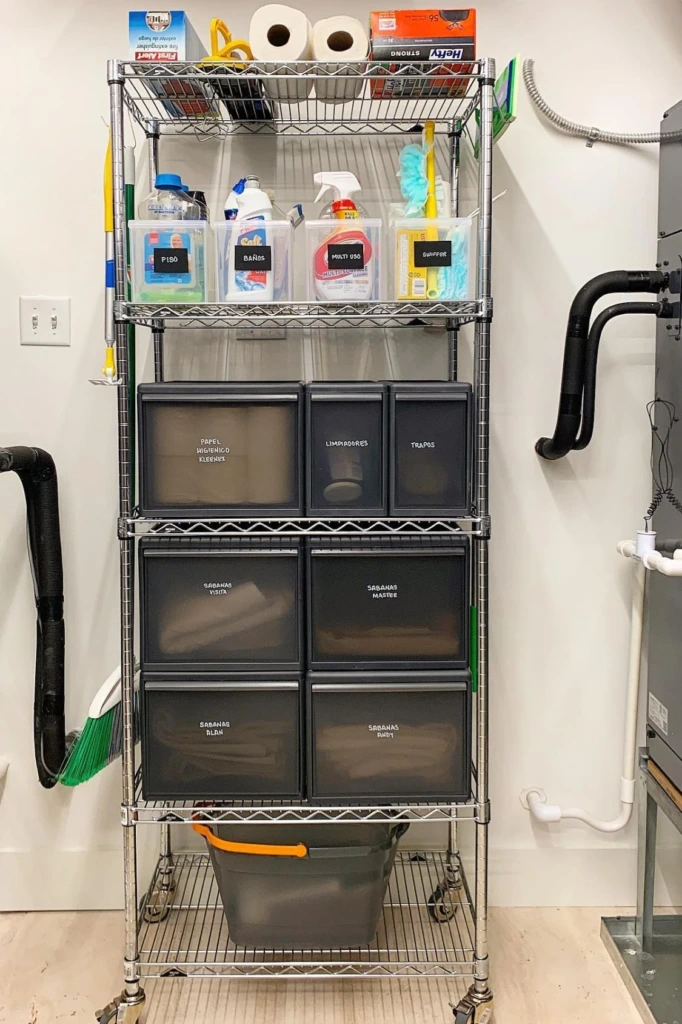
A rolling rack can make a difficult closet easier to use, particularly when supplies are stored deep inside. Instead of reaching around bottles and boxes, you can pull the rack forward to access its contents.
Use the upper levels for lightweight items, middle shelves for everyday products, and lower shelves for heavier supplies within the rack's rated capacity. Small bins keep brushes, gloves, cloths, and refill packs together.
Locking wheels can help keep the rack in place when it is not being moved. Measure the doorway and interior clearance to ensure the unit can roll out smoothly.
If the closet contains a water heater or other serviceable equipment, keep the required access area unobstructed. A movable rack should improve convenience without interfering with maintenance.
15. Door Pegboard
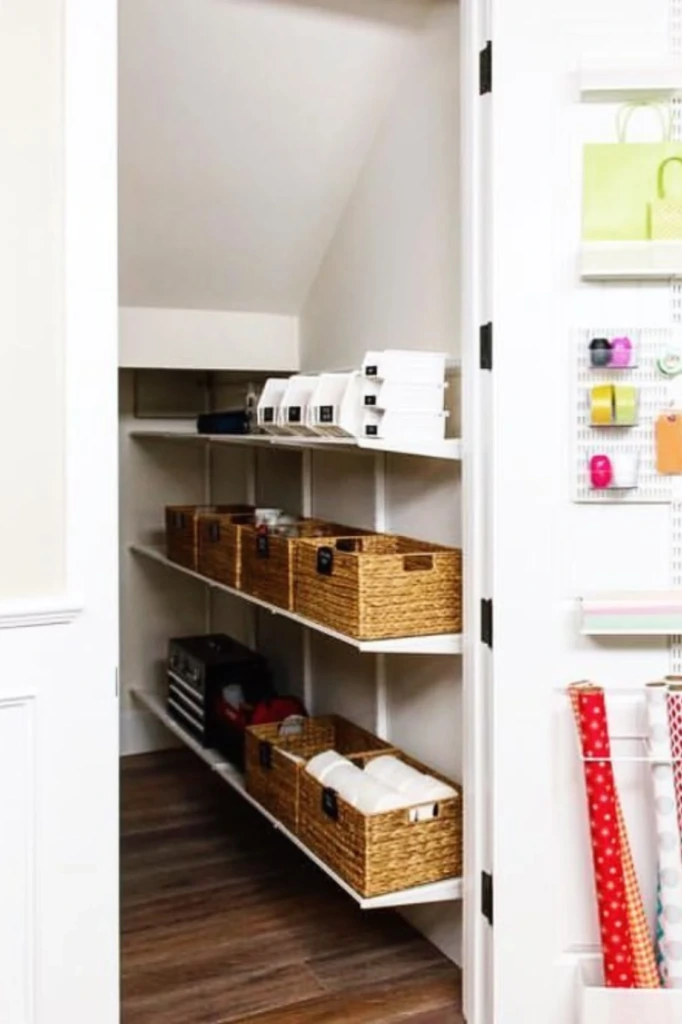
Pegboard offers flexible storage for small tools and accessories that do not fit neatly into ordinary bins. Hooks, clips, and small baskets can be rearranged whenever your storage needs change.
Use it for lightweight items such as measuring tapes, scissors, dusting attachments, and small household tools. Group related accessories together so you can quickly locate what you need.
The main shelves can then hold larger containers, paper products, and cleaning equipment without becoming crowded with loose objects.
Select a pegboard and mounting system suited to the door material and intended load. Make sure the installed panel does not interfere with hinges, the latch, or the door's ability to close properly.
16. Rail System
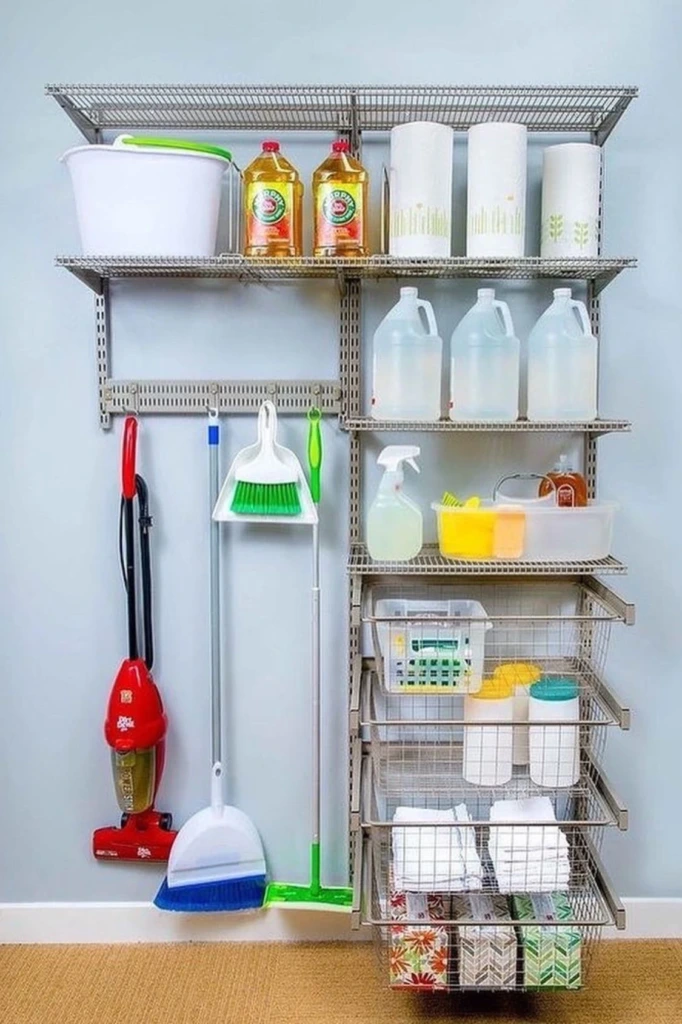
A rail-based storage system offers flexibility when you need to accommodate several types of household equipment. Depending on the design, you can add hooks, shelves, baskets, or holders in different positions.
Use the rail for long-handled tools and reserve the shelves for cleaning products, cloths, and paper supplies. Sliding baskets are useful for smaller items that would otherwise get pushed toward the back of a deep shelf.
Adjustable components make it easier to adapt the arrangement as your collection of supplies changes.
Before installation, confirm the rail's weight capacity and use suitable mounting hardware. Keep the layout simple enough that frequently used tools can be removed without disturbing everything around them.
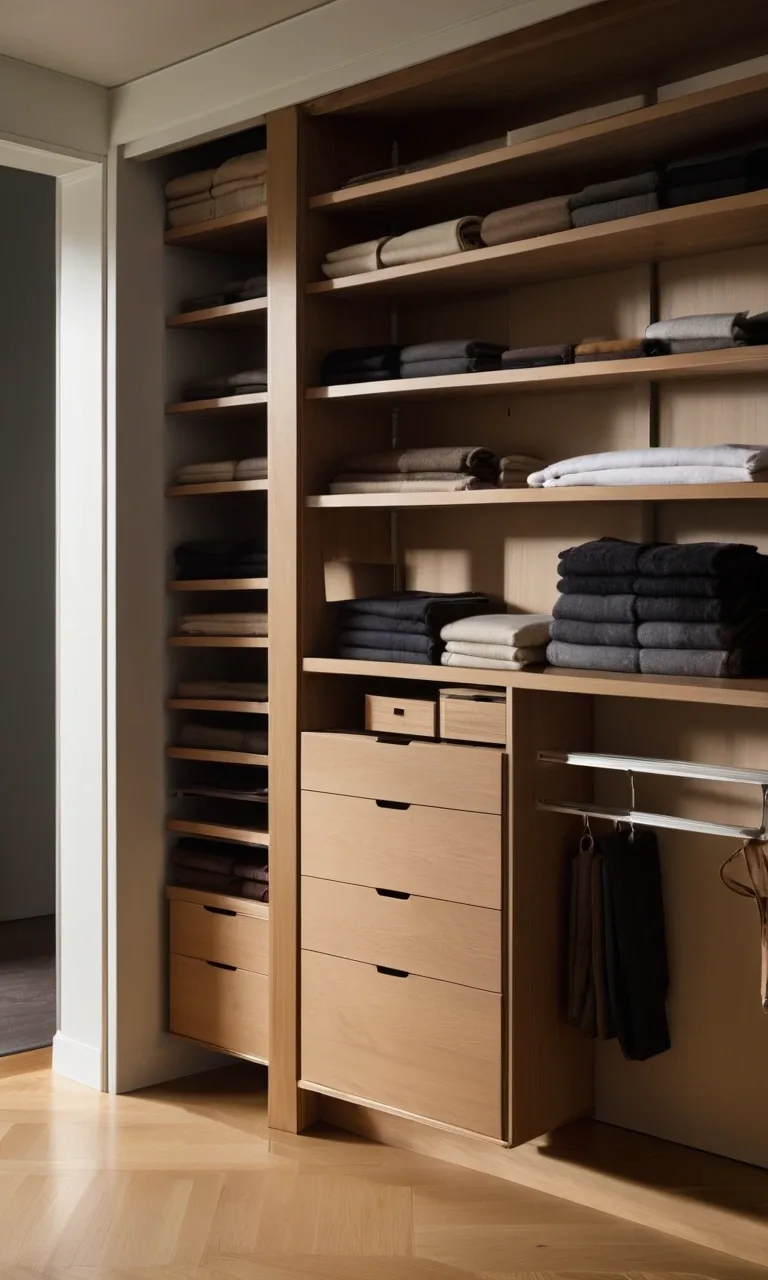
17. Divided Storage
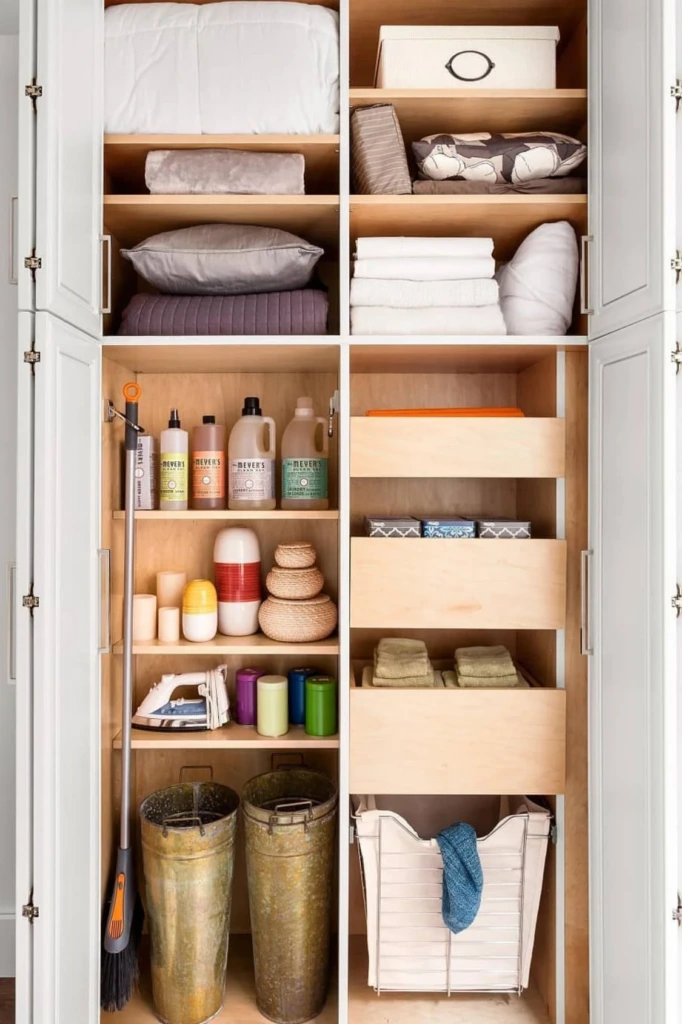
Dividing a utility closet into distinct sections can make a mixed collection of household supplies much easier to manage. Each area serves a specific purpose, reducing the likelihood that small items will become mixed with larger equipment.
One section might hold long-handled tools, another can accommodate cleaning products, and a third can store cloths, replacement parts, or household refills.
Shallow drawers or pull-out baskets work well for small accessories, while open shelves keep everyday bottles visible. Position heavier objects on stable lower shelves and lightweight extras above.
This arrangement is particularly useful for tall closets that have enough room for several vertical storage zones. Plan the sections around your belongings rather than forcing everything into identical compartments.
18. Hanging Rod
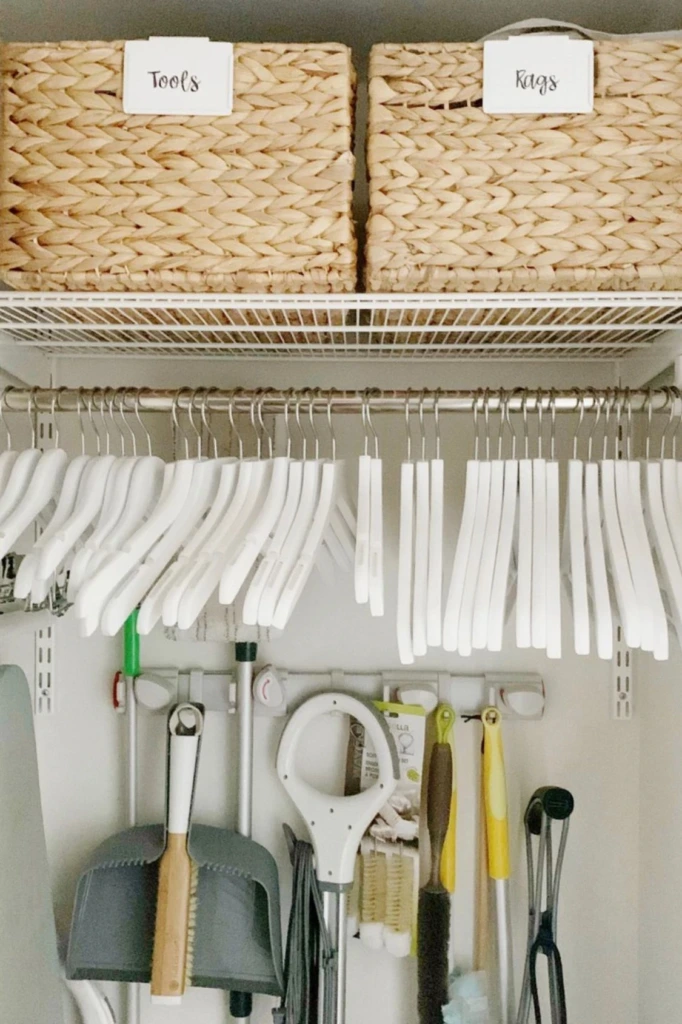
A hanging rod can make use of vertical space that would otherwise remain empty. When installed beneath an existing shelf, it creates a convenient place for lightweight bags, aprons, and other items that can be hung securely.
Add suitable hooks for small cleaning accessories, or use hangers to keep reusable bags neatly together. This prevents flexible items from becoming tangled in bins or scattered across shelves.
The shelf above can hold lightweight backup supplies, while the lower area remains available for equipment and containers.
Check that the rod has enough clearance for the closet door and anything stored underneath it. Avoid overloading the rod, and keep hanging items away from hot surfaces, electrical equipment, and plumbing components.
19. Center Column
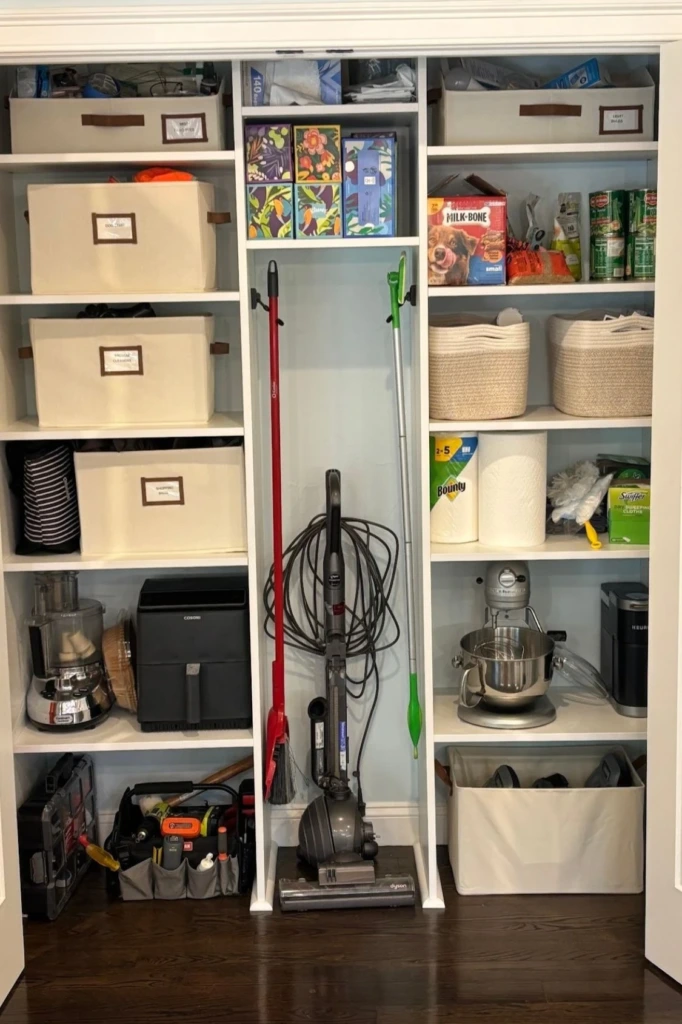
A dedicated central section can be useful in a wider utility closet where long equipment needs a clear place to stand. Instead of squeezing vacuums and mops between boxes, leave one vertical area open specifically for these items.
Build shelves or storage compartments along the sides to accommodate smaller products, cloths, refill bottles, and paper goods.
This arrangement creates a natural division between bulky equipment and everyday household supplies. It also makes it easier to remove the vacuum or mop without moving several other belongings first.
The layout works best when the closet opening is wide enough to accommodate larger equipment. Measure your tallest and widest items before deciding how much room the central section needs.
20. Clip Rack
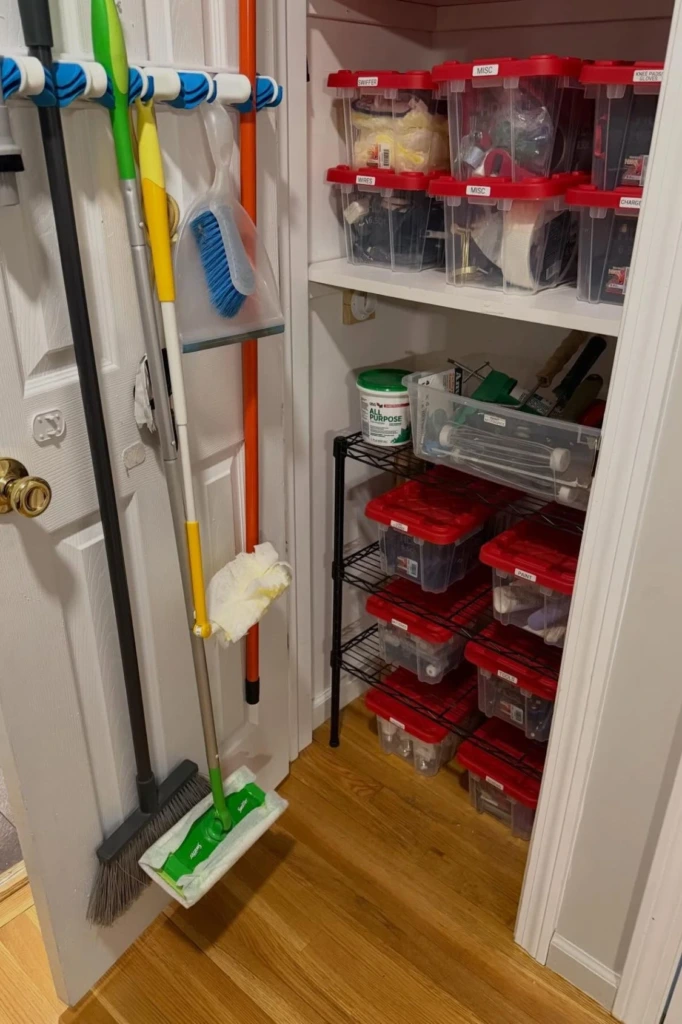
A clip rack is a practical solution for keeping long-handled cleaning tools secured against the wall. Its gripping holders prevent handles from slipping and reduce the clutter created by leaning several tools together.
Arrange brooms, mops, dusters, and sweepers in separate clips so each can be removed independently. Keep the tools you use most often near the front of the closet.
Use the remaining shelf space for small accessories, cleaning cloths, and replacement supplies. A compact storage rack can provide another level for lightweight bins if the closet has enough room.
Choose clips that fit the diameter of your tool handles, and mount them securely. Keeping equipment off the floor makes cleaning the closet itself much simpler.
21. Vertical Divide
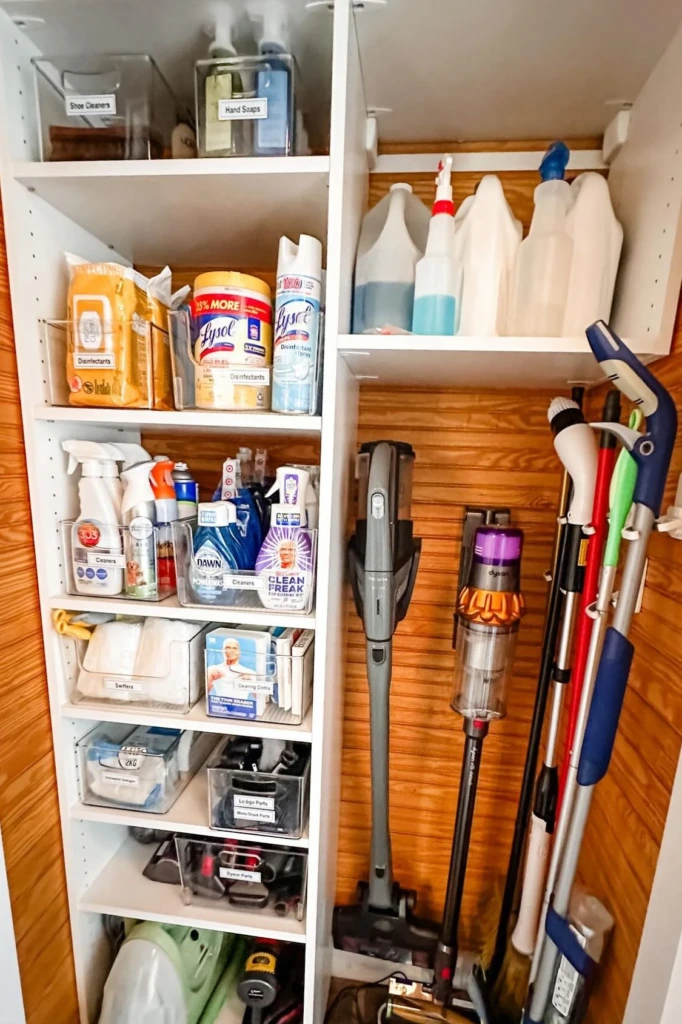
When a closet holds both tall tools and small supplies, a vertical divider can help prevent the two groups from competing for space.
Dedicate one side to a vacuum, mop, broom, or other long equipment. Use the opposite side for shelves and containers holding sprays, cloths, brushes, and refill products.
The divider does not need to be elaborate. A narrow shelving unit or purpose-built partition may be enough to establish separate zones, provided it fits safely within the closet.
Keep bottles upright and avoid stacking supplies so high that they become difficult to reach. A clear division between tall equipment and smaller products helps the closet stay organized even as new supplies are added.
22. Charging Station
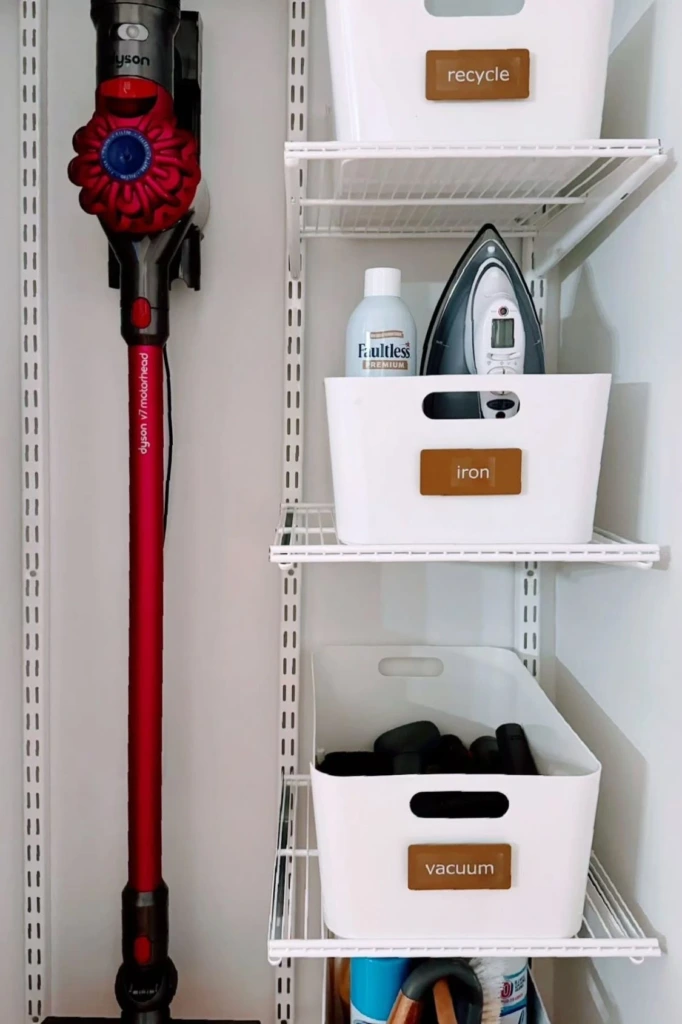
Cordless cleaning equipment can take up valuable floor space when it is left standing against a wall. A suitable wall-mounted dock can keep a cordless vacuum upright while providing a designated place for its charging equipment.
Place compatible attachments nearby in a labeled bin or dedicated holder. Keep other cleaning supplies on adjacent shelves so that the vacuum can be removed and returned without disturbing them.
Follow the manufacturer's instructions for mounting, ventilation, battery charging, and electrical connections. Use a suitable outlet and avoid charging equipment near water, excessive heat, or stored chemicals that could create a hazard.
If the closet contains a water heater or electrical service equipment, confirm that the proposed charging area is appropriate and does not obstruct required access.
23. Side Baskets
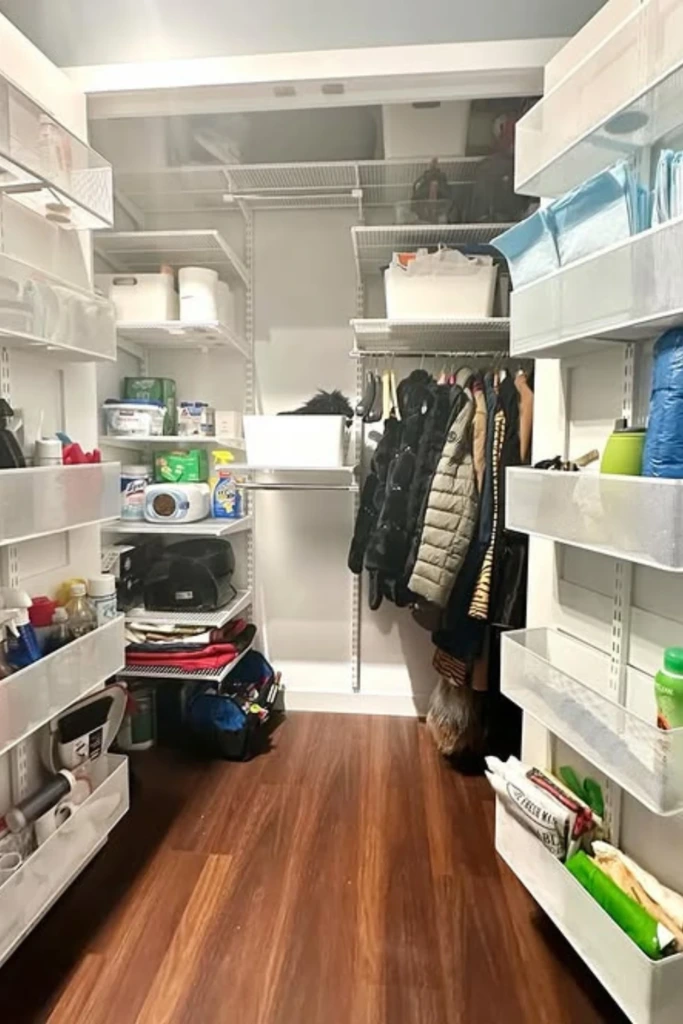
Slim baskets mounted along the sides of a utility closet can turn narrow strips of unused space into useful storage. They are especially effective for small bottles, gloves, sponges, and accessories that tend to disappear behind larger containers.
Arrange the baskets vertically, grouping similar items together. Keep the main shelves available for bulk products, larger bins, and equipment that needs a wider footprint.
This arrangement works best when there is sufficient room between the side baskets and the central storage area. Avoid creating a passage so narrow that it becomes difficult to remove supplies or open drawers.
Choose baskets with appropriate depth and load capacity, and make sure the mounting system is secure enough for the intended contents.
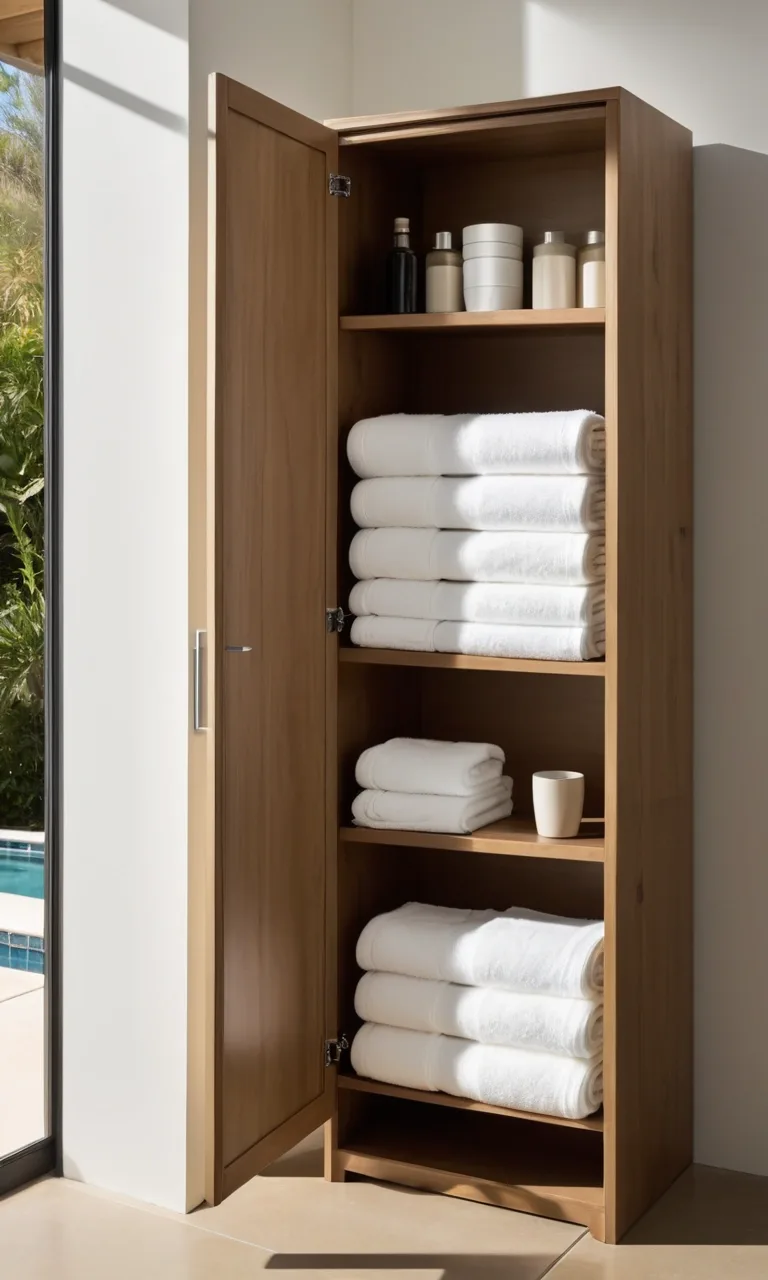
24. Cabinet Tower
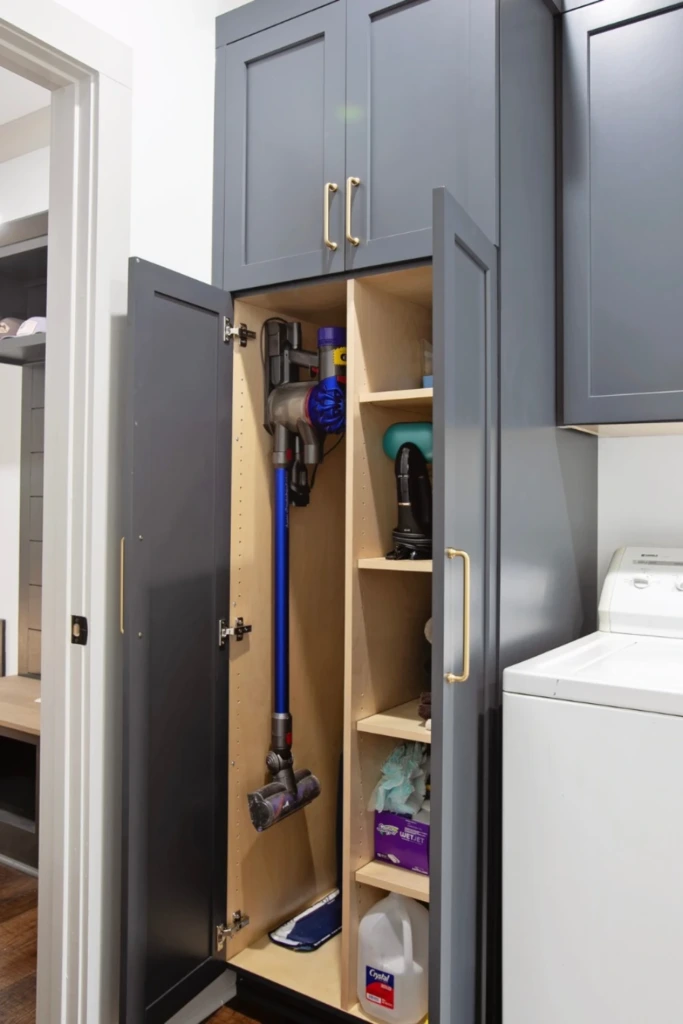
A tall cabinet tower can provide a more finished appearance while separating bulky equipment from smaller household supplies. Look for a design that includes a vertical compartment for a vacuum, broom, or mop alongside adjustable shelves.
The open or enclosed tall section keeps long tools from leaning against other belongings. Smaller shelves can accommodate cloths, refill containers, and accessories, while upper compartments hold lightweight items used less frequently.
Choose a cabinet that fits the closet dimensions and allows the doors to open fully. Secure tall furniture according to the manufacturer's instructions, particularly if children may access the area.
This setup can be especially useful in a laundry room where household cleaning products and equipment need a dedicated home.
25. Shelf Labels
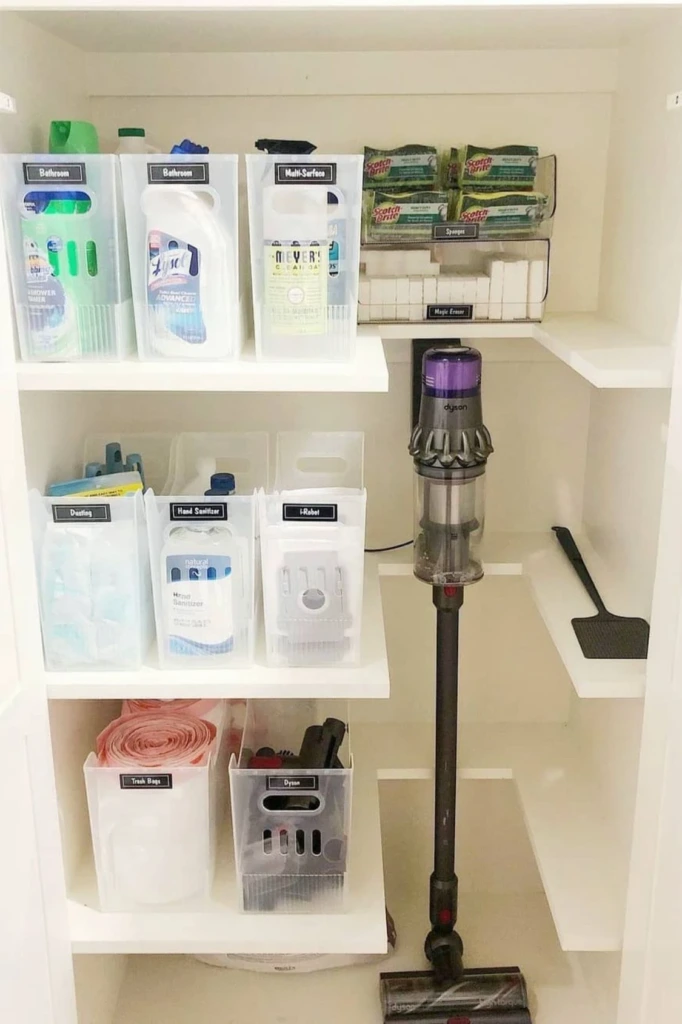
Shelf labels make an organized closet easier to maintain because every category has a clearly identified location. They are especially helpful when several types of cleaning products look similar.
Label containers according to their purpose, such as bathroom care, floor cleaning, dusting, laundry accessories, or replacement supplies. Place frequently used categories at comfortable heights and keep occasional-use products in less accessible areas.
Small trays can contain sponges, scrub pads, and other loose accessories, while a separate space can be reserved for the vacuum and its attachments.
Remember that labels on storage bins should supplement, not replace, the original labels on chemical products. Keeping product names and safety information visible helps prevent confusion when selecting a cleaner.
What should you keep in a utility closet to keep it organized?
A utility closet generally works best when it contains household essentials that you use regularly or need occasionally for cleaning and maintenance.
Common items include:
Cleaning sprays and suitable household disinfectants
Sponges, scrub brushes, microfiber cloths, and dusters
Brooms, mops, dustpans, and vacuum cleaners
Garbage bags, paper towels, and spare cleaning supplies
Laundry accessories and household refill products
Basic repair tools, replacement light bulbs, and small hardware
Vacuum attachments and other equipment accessories
The right contents depend on the space available and the storage facilities elsewhere in your home. Avoid turning the closet into a dumping ground for unrelated belongings.
Group items by function, use labeled containers for small accessories, and keep frequently needed products accessible. Store chemicals in their original containers, follow their safety instructions, and keep hazardous products away from children and pets.
How often should you reorganize a utility closet?
A quick monthly check is a practical starting point for most households. Use this opportunity to return misplaced items, wipe down shelves, remove empty packaging, and check which supplies need replacing.
You do not need to empty the entire closet every month. Instead, inspect each section and address small problems before they spread.
A more thorough review every few months can help you identify products you no longer use, reorganize seasonal supplies, and adjust storage as your needs change.
If the closet is used heavily, a short weekly reset may be helpful. The goal is to maintain the system with small, manageable tasks rather than repeatedly undertaking a major decluttering project.
Once each item has a designated location, keeping the closet orderly becomes a straightforward part of your regular household routine.