25 Linen Closet Organization Hallway Ideas for 2026
A hallway linen closet can easily become a catch-all for towels, bedding, toiletries, and household extras. Even when everything looks tidy after laundry day, a few busy mornings can leave shelves disorganized and essentials difficult to find.
The key to maintaining an orderly closet isn't having more space. It's making the most of the shelves, doors, drawers, and corners you already have. With a practical storage plan, even a slim hallway closet can accommodate everyday linens without feeling overcrowded.
From simple folding techniques to clever storage accessories, these ideas can help you create a system that looks attractive and works for your household.
What Storage Solutions Work Best for Hallway Linen Closets?
The most effective hallway linen closet combines accessible shelving with clearly defined storage areas. Begin by separating towels, bedding, toiletries, cleaning supplies, and seasonal items into individual categories.
Use baskets to contain loose products, shelf dividers to support folded stacks, and transparent bins for supplies you want to identify quickly. If the shelves are deep, choose containers that slide forward easily rather than placing frequently used items out of reach.
Keep daily essentials around eye level, reserve higher shelves for occasional-use items, and avoid filling every available inch. Leaving some breathing room makes it easier to remove and replace linens without disrupting the entire closet.
1. Smart Zones
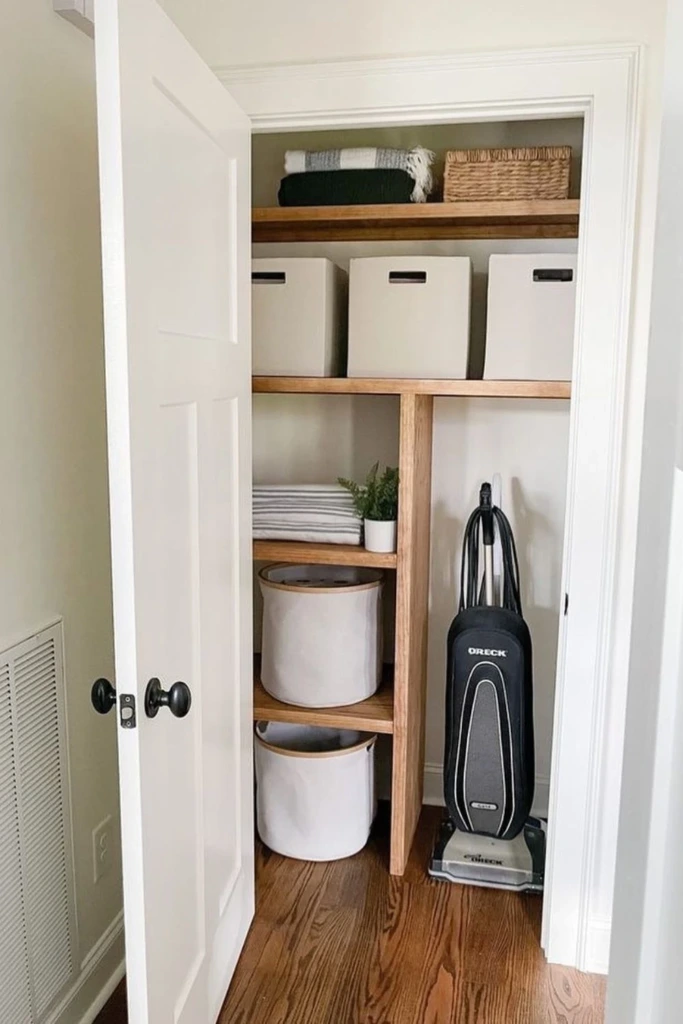
A well-planned storage layout can make a narrow hallway closet function like a much larger one. Divide the available space according to the items you need to store rather than arranging everything wherever it fits.
For example, dedicate one section to folded towels and sheets, another to toiletries, and a separate area to bulky household equipment if the closet has enough room. A sturdy vertical divider or freestanding shelving unit can help distinguish these zones.
Place everyday linens on accessible shelves and move spare blankets or seasonal bedding higher up. If you store a vacuum or mop in the same closet, make sure the arrangement leaves enough room to remove equipment without disturbing the linens.
2. Label System
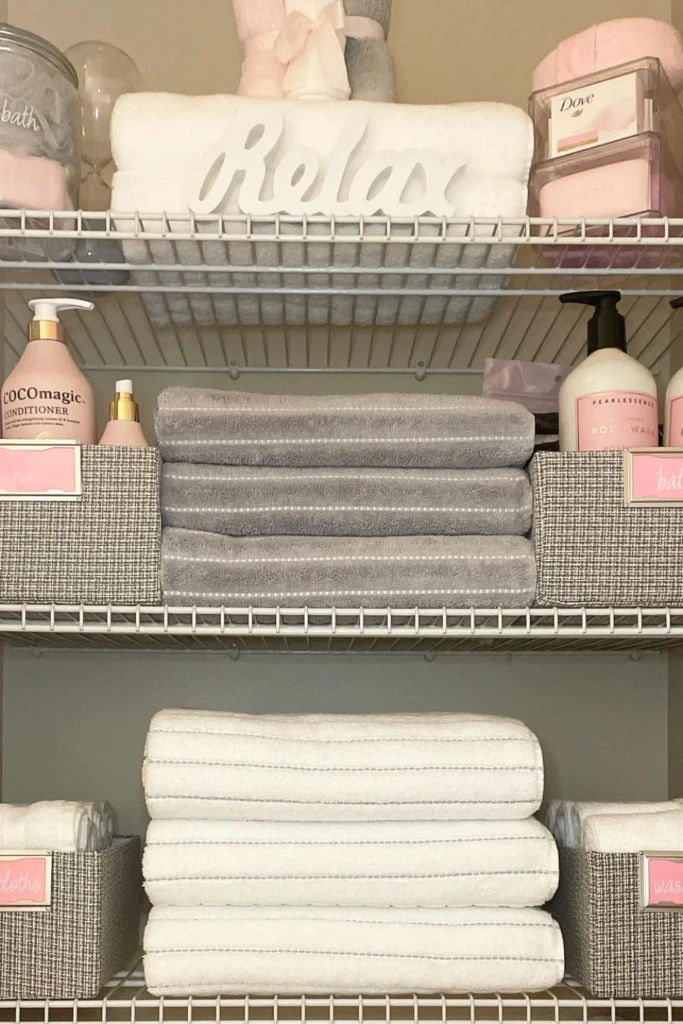
Labels make it easier for everyone in the household to follow the same organization system. Instead of opening several containers to locate a particular item, you can identify the correct basket at a glance.
Assign separate bins to categories such as washcloths, bath products, spare toiletries, and guest towels. Position labels where they remain visible when containers sit side by side.
Choose a consistent labeling style to give the closet a coordinated appearance. Waterproof labels can be especially useful for containers holding bathroom products, while simple printed tags work well for fabric baskets.
3. Door Storage
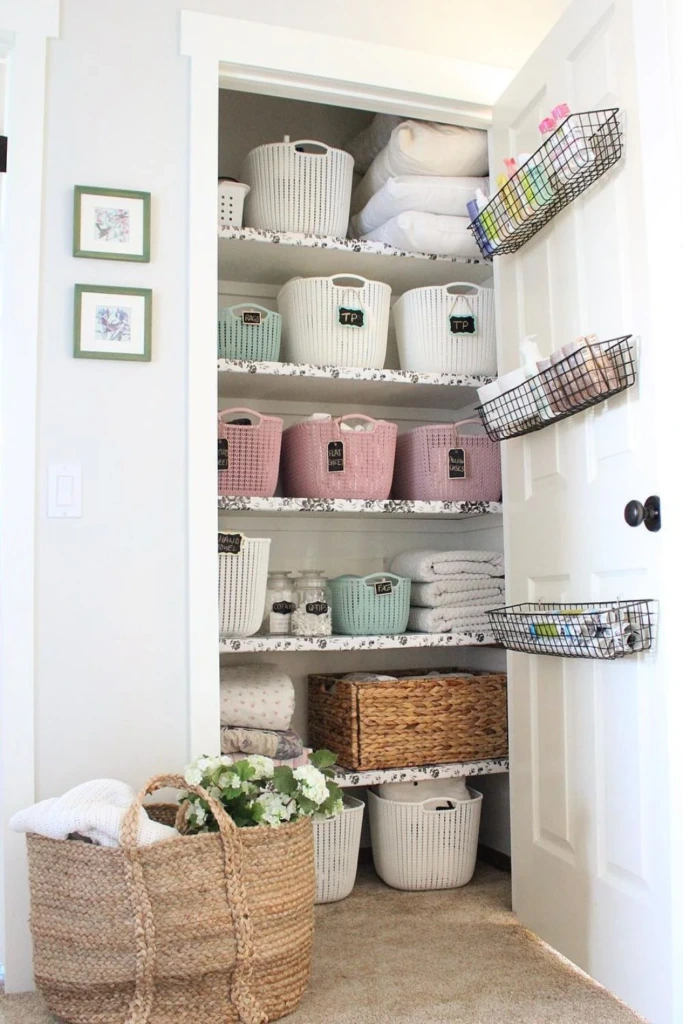
The inside of a hallway closet door offers valuable storage space that often goes unused. Slim hanging organizers or shallow wall-mounted baskets can accommodate small bathroom essentials without taking up room on the main shelves.
Use these compartments for travel-size toiletries, spare toothpaste, hair accessories, or other lightweight products. Keeping small items together prevents them from disappearing behind large towel stacks.
Before installing an organizer, check the door clearance and make sure the shelves won't collide with the frame or nearby walls. Choose a lightweight design that allows the door to close properly, particularly in narrow hallways.
4. Shelf Dividers
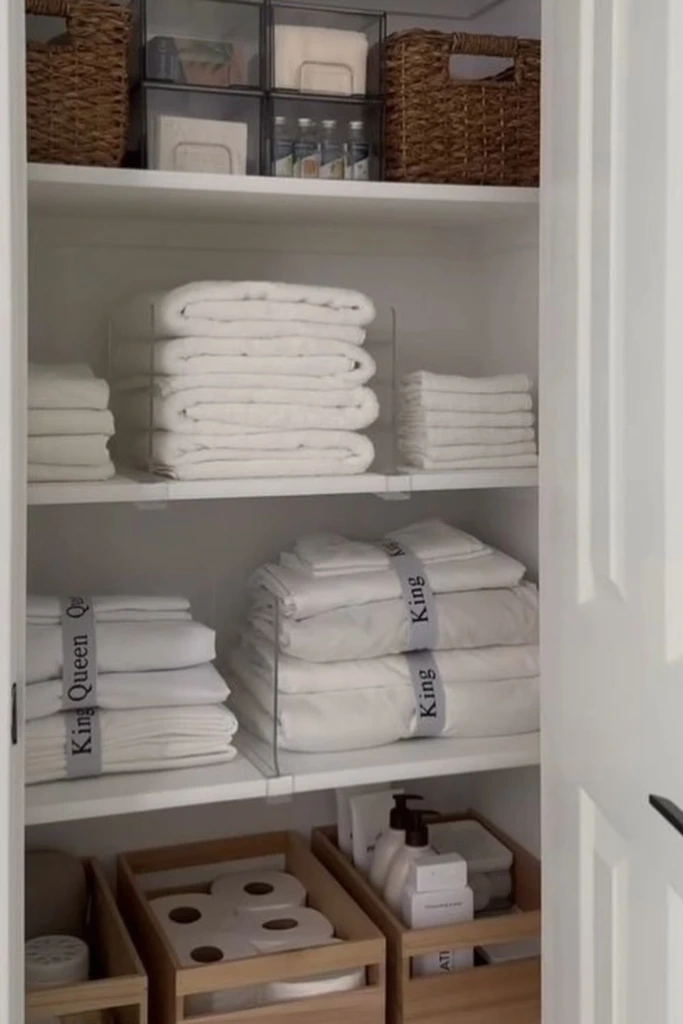
Shelf dividers help folded towels and bedding stay in their assigned positions. They're particularly useful on wide shelves where stacks tend to spread sideways or collapse whenever someone removes an item.
Install dividers between bath towels, hand towels, washcloths, and different bedding sets. Clear acrylic options offer a discreet appearance, while wire or wooden versions can complement other closet accessories.
Arrange each category in its own section and keep the most frequently used items within easy reach. This simple adjustment reduces the chance of one uneven stack disrupting everything around it.
5. Fabric Bins
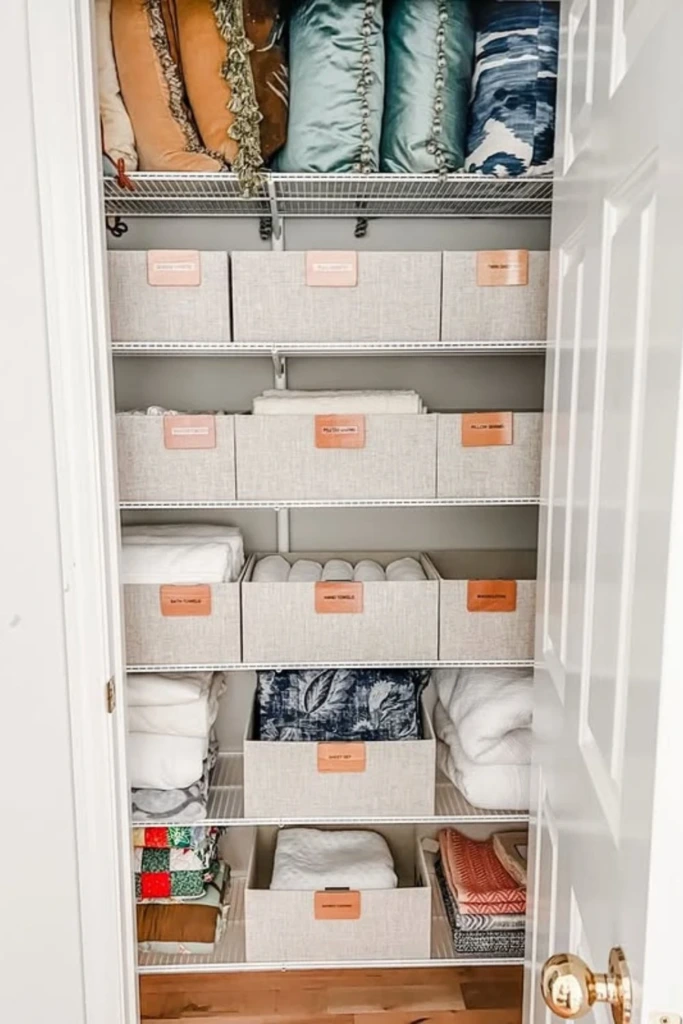
Fabric bins provide a soft, flexible way to organize extra linens and contain items that don't stack neatly. They work well for pillowcases, guest bedding, lightweight blankets, and spare hand towels.
Assign one container to each category and add a label to the front. Structured bins are especially helpful on open wire shelving because they prevent smaller items from slipping through the gaps.
Place heavier contents on lower shelves and lighter bedding higher up. If you choose fabric containers, make sure the linens are completely dry before storing them to prevent musty odors and moisture buildup.
6. Clear Bins
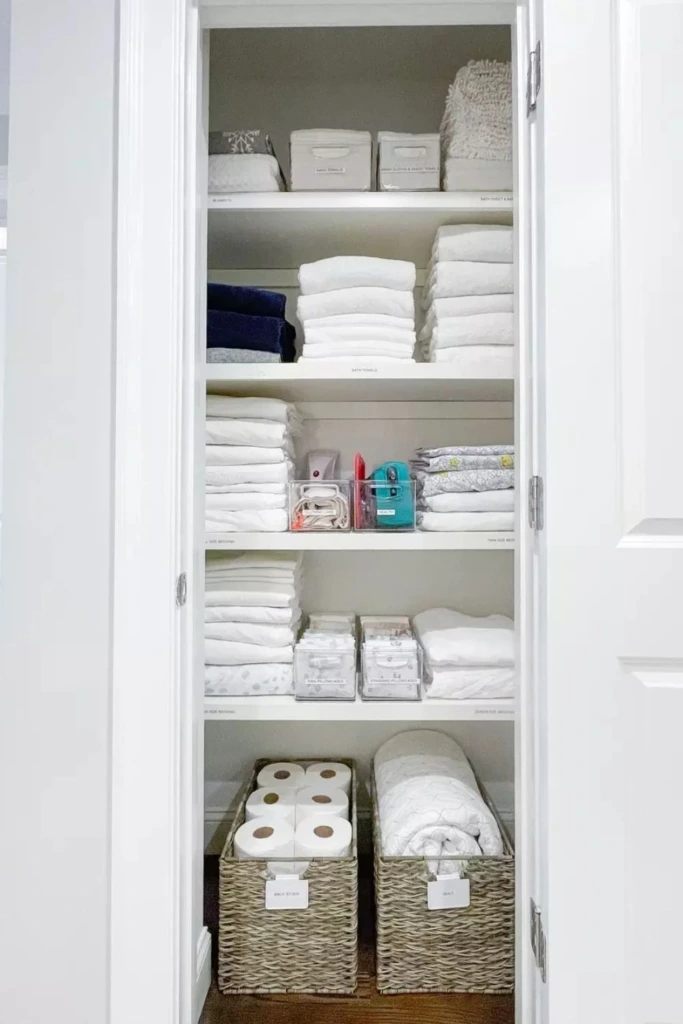
Transparent containers are ideal for supplies that are difficult to identify when hidden inside opaque baskets. A quick glance reveals what's available, making restocking simpler and reducing unnecessary searching.
Use clear bins for travel toiletries, cotton pads, unopened hygiene products, and other small essentials. Group similar items together instead of combining unrelated products in one container.
Choose containers that fit the shelf depth and are easy to lift or pull forward. You can reserve the lower shelves for bulkier supplies and use the middle shelves for items you reach for regularly.
7. Layered Storage
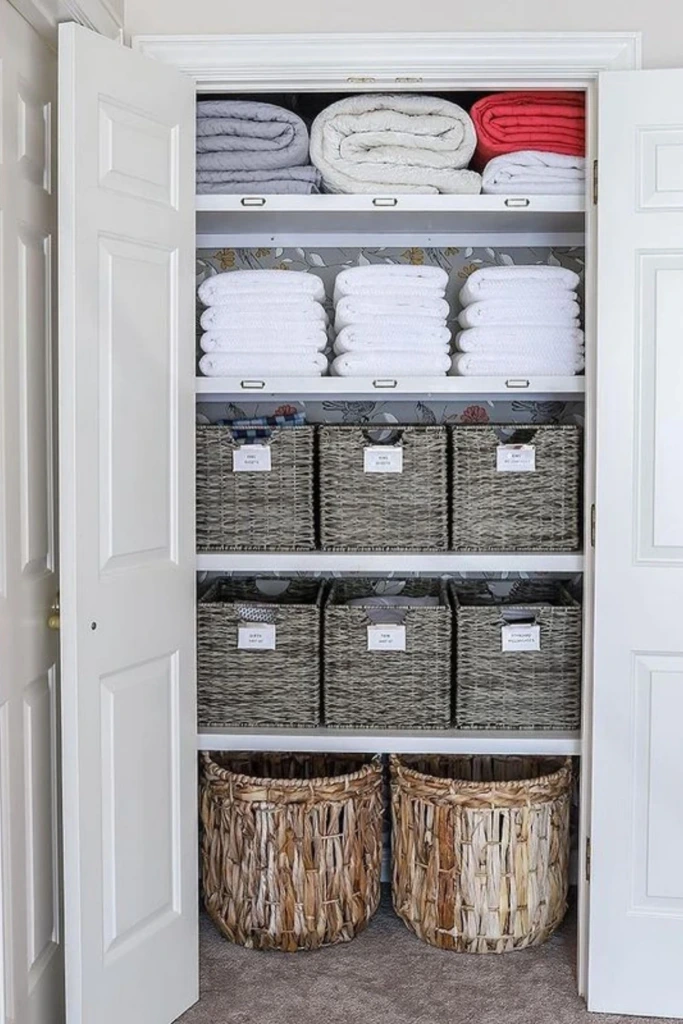
Organizing shelves according to height and frequency of use makes the entire closet easier to navigate. Each level should have a specific role, allowing everyday items to remain accessible while less frequently used belongings stay out of the way.
Store spare comforters, seasonal blankets, and extra bedding on upper shelves when they're safe to reach. Use the middle section for bath towels, hand towels, and regular sheet sets.
Lower shelves can accommodate heavier baskets, backup toiletries, and additional linens. Keep frequently handled containers light enough to move comfortably, and avoid placing heavy objects above shoulder height where retrieving them could be difficult.
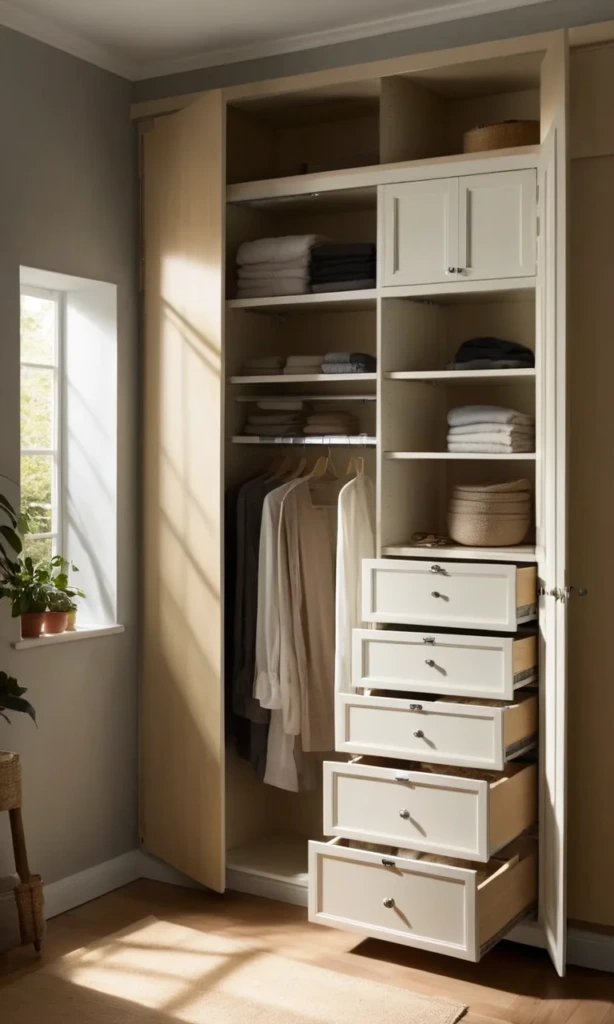
8. Drawer Storage
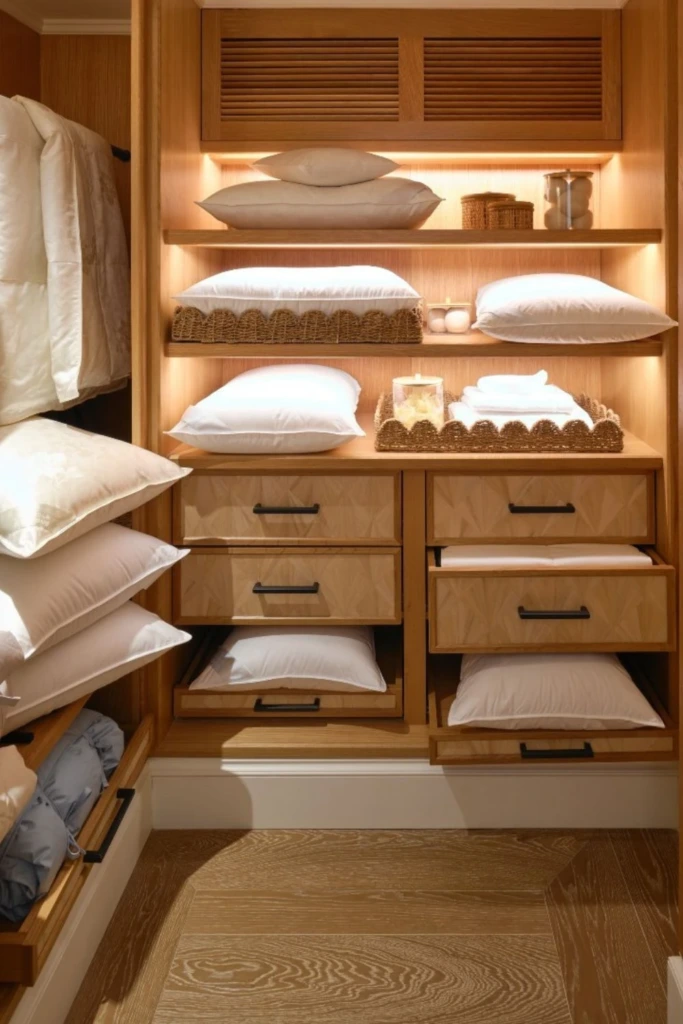
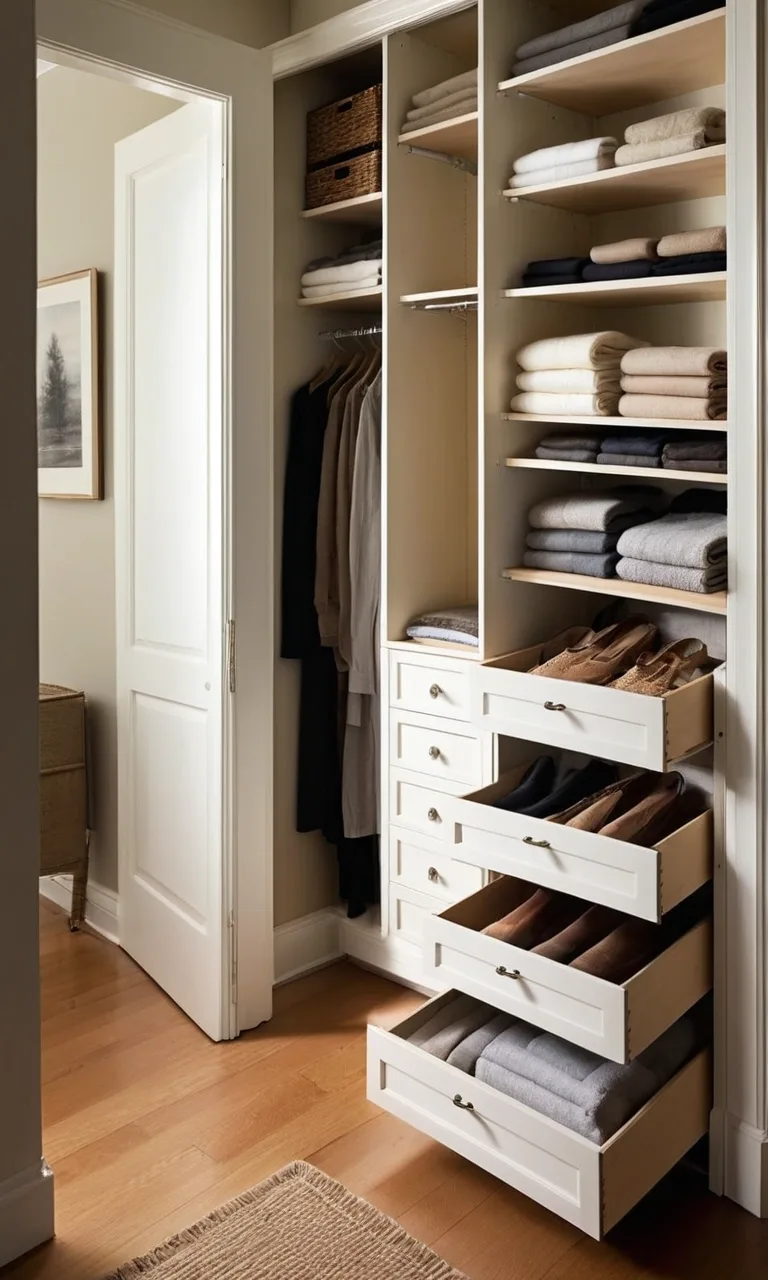
Adding drawers to a linen closet creates enclosed compartments for smaller items that tend to become scattered across open shelves. Pull-out drawers are especially useful when the closet is deep or has several narrow sections.
Use separate drawers for pillowcases, fitted sheets, washcloths, and spare bedding accessories. Folding each set into a compact bundle makes it easier to keep related pieces together.
You can combine drawers with open shelving to get the benefits of both storage styles. Keep towels and blankets on accessible shelves while using drawers for smaller linens that would otherwise form untidy piles.
Before purchasing a drawer unit, measure the closet carefully and allow sufficient clearance for the drawers to open fully.
9. Rolled Towels
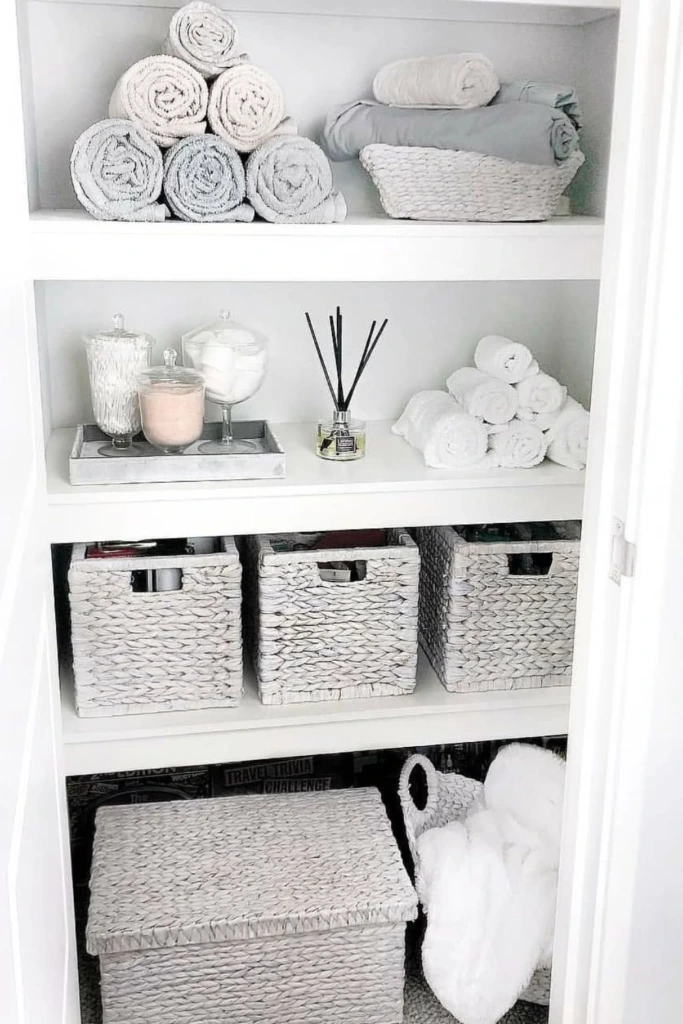
Rolling towels is a practical alternative to traditional folding, particularly when shelf space is limited. Compact rolls can fit neatly into baskets, narrow compartments, or small open shelves.
Roll towels of similar sizes together and arrange them in rows so the contents remain easy to see. You can separate bath towels, hand towels, and washcloths into different groups for quicker access.
This approach also works well for guest bathrooms, where rolled towels create a tidy, welcoming display. Keep spare toiletries in a nearby container to maintain a clear distinction between linens and bathroom supplies.
10. Labeled Baskets
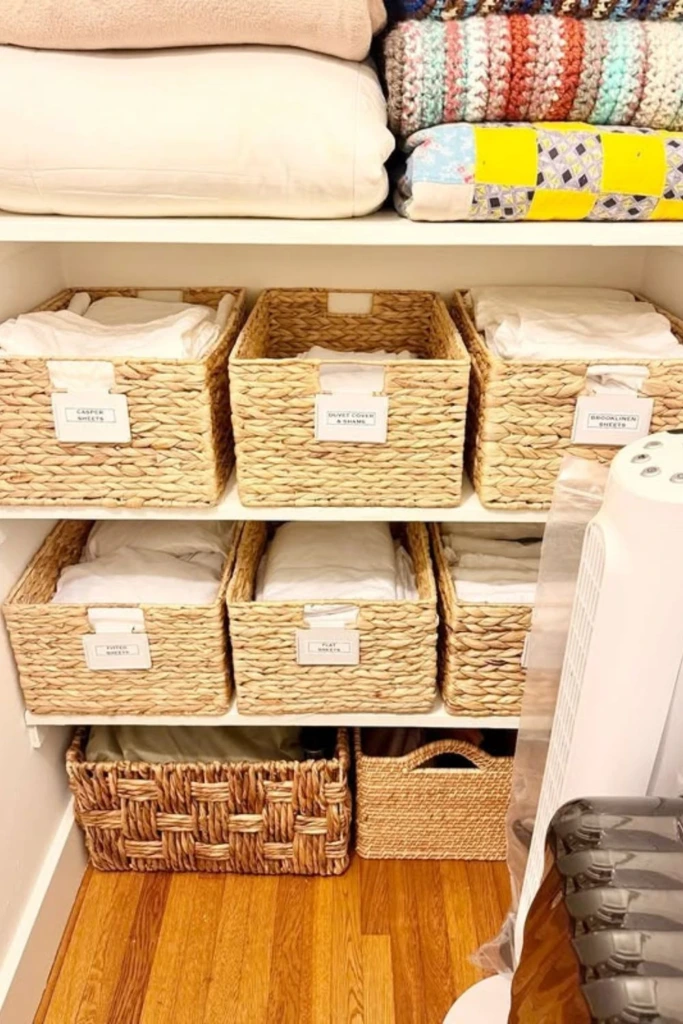
Woven or structured baskets make a hallway linen closet look coordinated while keeping different types of bedding separate. They also conceal small imperfections in folding and prevent loose linens from spreading across the shelves.
Create individual baskets for guest sheets, duvet covers, extra pillowcases, and lightweight blankets. Labels on the front help everyone identify the contents without removing the entire container.
Place frequently used bedding on middle shelves and reserve higher spaces for bulky or occasional-use items. Choose baskets with handles if you need to pull them forward regularly, and check their dimensions before buying a matching set.
11. Vertical Stacks
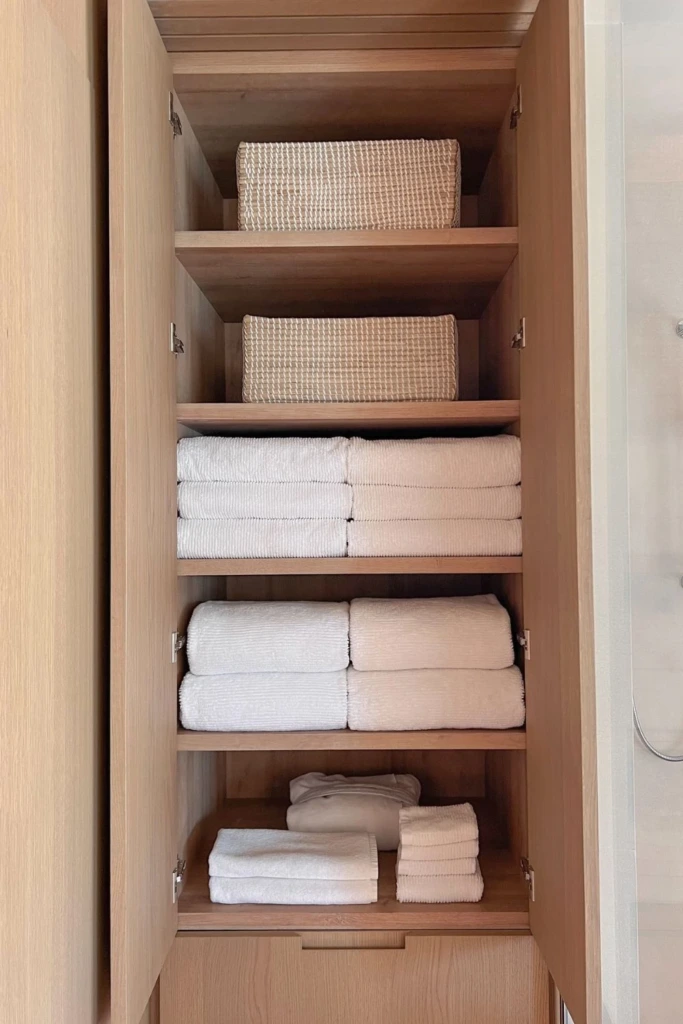
Tall, narrow closets benefit from carefully arranged stacks that make good use of the available shelf height. Folding towels into similarly sized rectangles creates a consistent appearance and helps prevent piles from leaning.
Keep bath towels together, separate smaller hand towels, and place washcloths in a dedicated section or shallow basket. If the shelves are particularly deep, arrange the stacks so you can see what's available without moving everything in front.
Avoid building piles so high that removing the bottom towel becomes difficult. Several moderate stacks are often more practical than one tall, unstable pile.
12. Uniform Folding
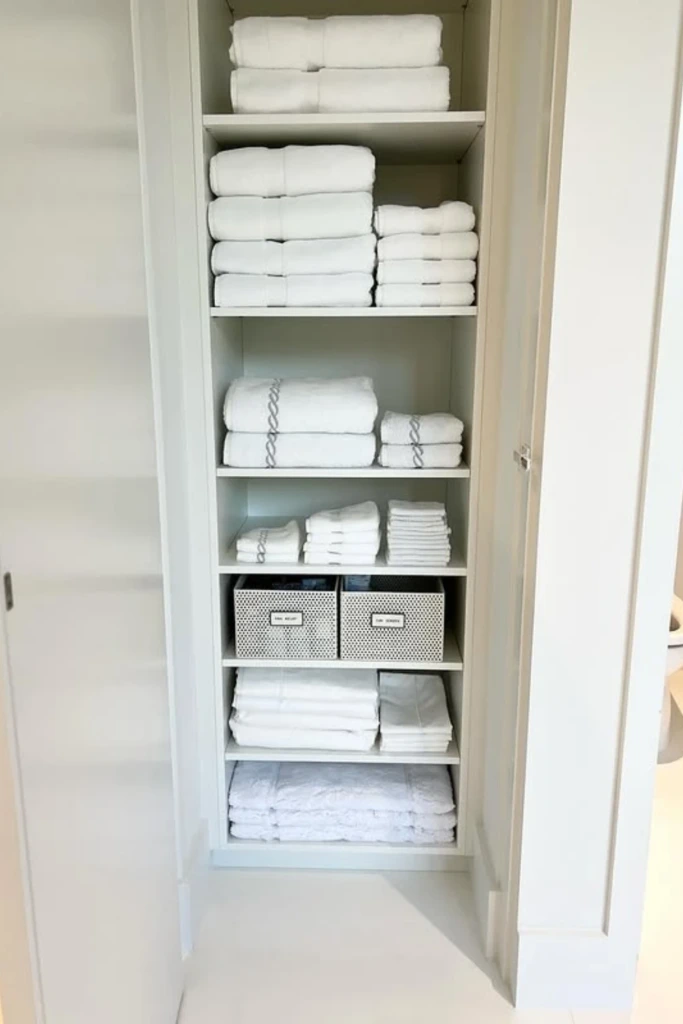
Consistent folding can make a linen closet look noticeably tidier without requiring additional storage products. When towels have similar dimensions, they're easier to stack and fit more predictably on shelves.
Choose one folding method for bath towels and repeat it throughout the closet. Fold hand towels and washcloths separately, keeping each size in its own group.
You don't need to make every stack look perfect. The goal is to create a repeatable routine that makes it easy to put clean laundry away. Place decorative or spare bedding in baskets if you prefer to keep the visible shelves reserved for everyday linens.
13. Sheet Bundles
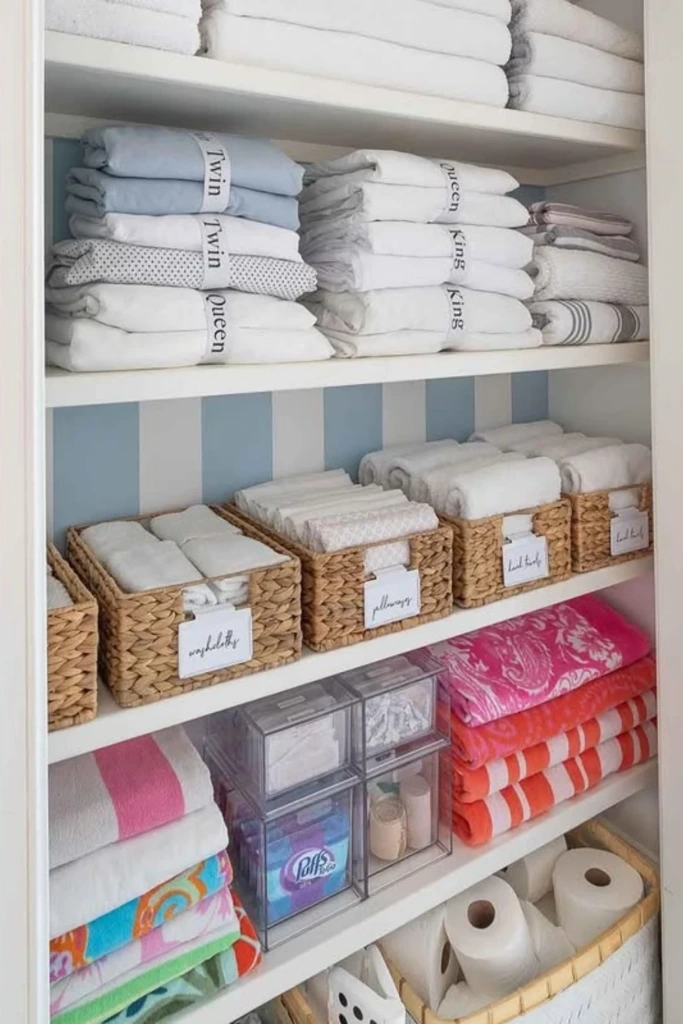
Keeping complete sheet sets together eliminates the frustration of searching for matching pillowcases or fitted sheets. A simple bundling method makes changing the bedding quicker and keeps different sets from becoming mixed.
Fold the fitted sheet, flat sheet, and matching pillowcases into a compact package. Slide the folded pieces into one of their own pillowcases or secure them with a soft fabric strap.
Sort the bundles by bed size, such as twin, queen, or king, and label them when necessary. Place the sets you use most often on an accessible shelf and store guest or seasonal bedding elsewhere.
This method works especially well in households with multiple beds because each bundle contains everything needed for a complete change.
14. Shelf Sections
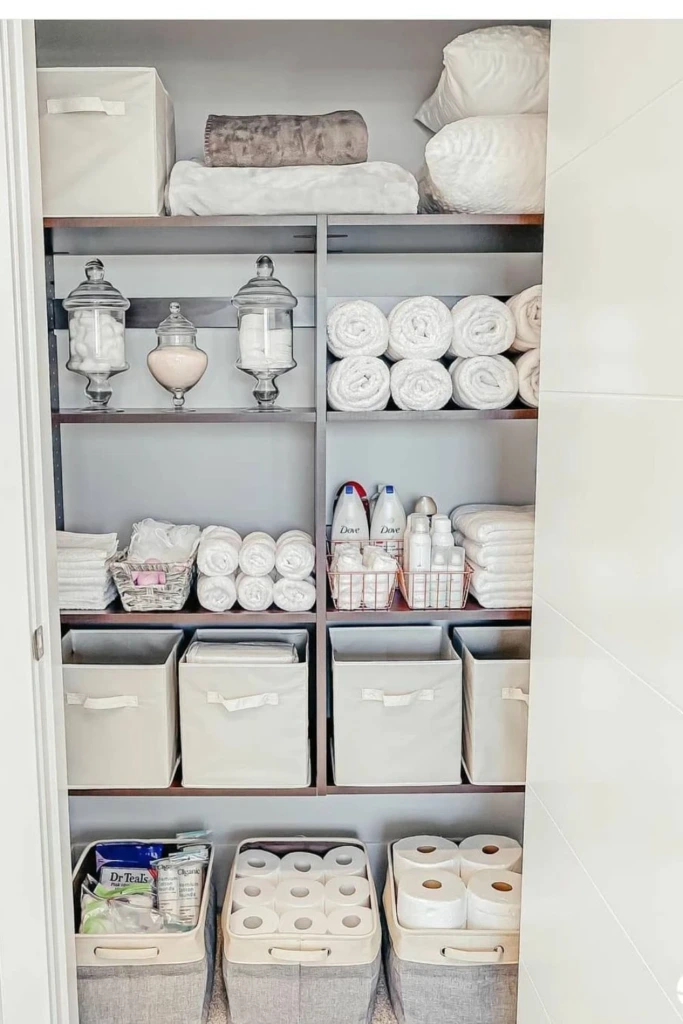
Dividing a large shelf into smaller sections helps prevent unrelated items from blending into one cluttered space. Even a basic organizer or a few baskets can create useful boundaries without requiring a closet renovation.
For example, one section can hold folded bath towels, another can store hand towels, and a third can accommodate toiletries. Small trays or bins keep bottles upright and prevent them from spreading across the shelf.
Use larger containers on lower shelves for extra toilet paper, cleaning cloths, or backup supplies. The important thing is to give each section a clear purpose and return items to their designated locations after use.
15. Shelf Layers
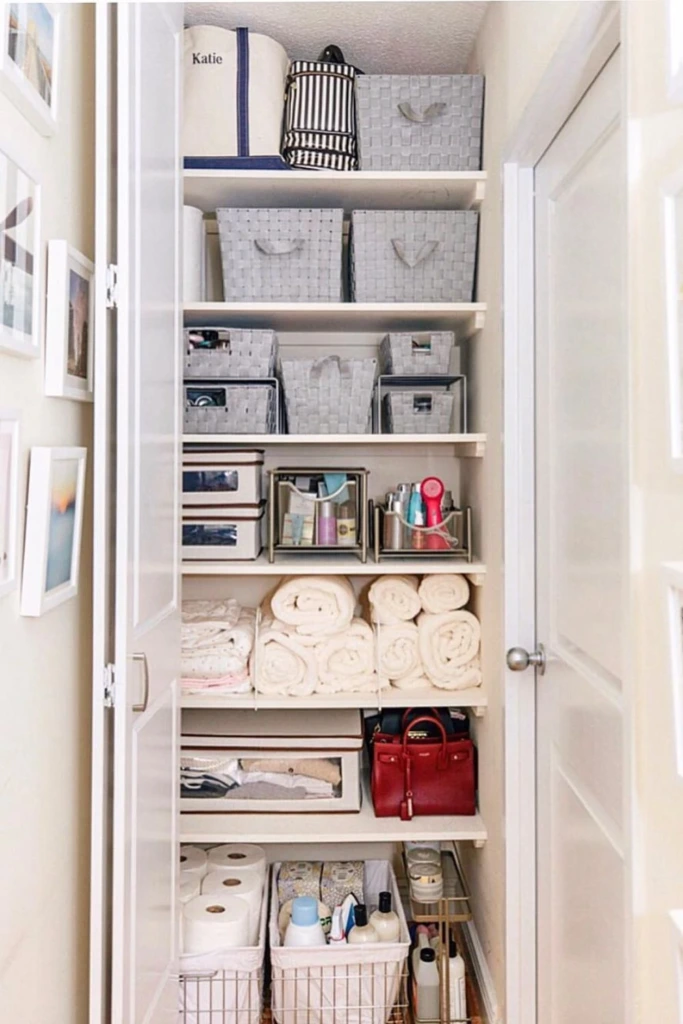
Assigning a different function to each shelf makes a compact linen closet much easier to maintain. Rather than mixing everything together, arrange items according to how often you use them and how much space they require.
Upper shelves are suitable for spare bedding, seasonal blankets, and backup supplies that you don't need every day. Keep regular towels and sheet sets in the middle section, where they're easier to reach.
Lower shelves can hold pull-out baskets for toiletries, washcloths, or household essentials. If you store cleaning products in the same closet, keep them securely contained and separated from linens and personal-care items.
This arrangement creates a predictable storage system that remains practical even when several people share the closet.
16. Size Sorting
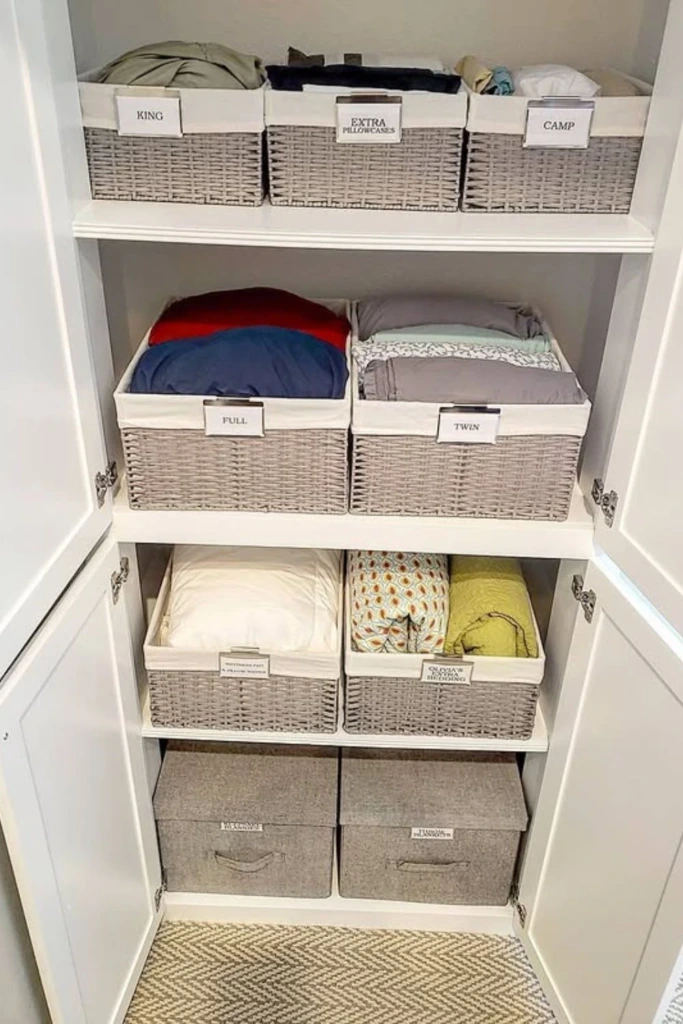
Sorting bedding by size prevents you from unfolding several sheet sets just to find the right one. This is especially useful when a household has multiple beds or frequently changes guest-room linens.
Use separate baskets or shelf sections for twin, queen, and king bedding. Keep extra pillowcases in their own container, or place matching cases inside each sheet bundle.
Add clear labels to the front of the containers so the sizes are easy to identify. Fold each set compactly before storing it to make the most of the available shelf space.
When every size has a designated location, changing beds becomes quicker and returning clean laundry to the closet is much less confusing.
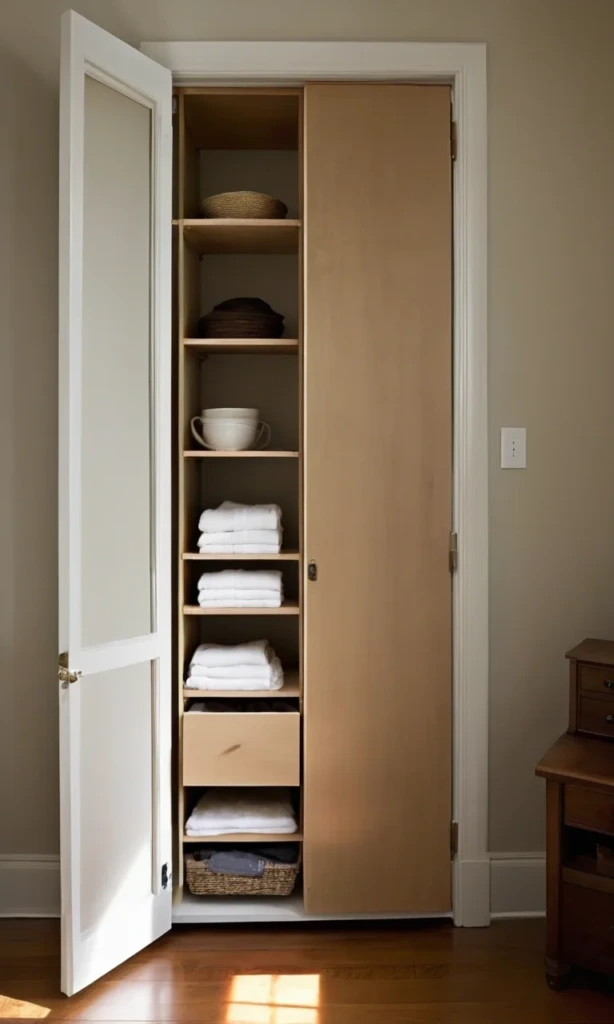
17. Glass Cabinets
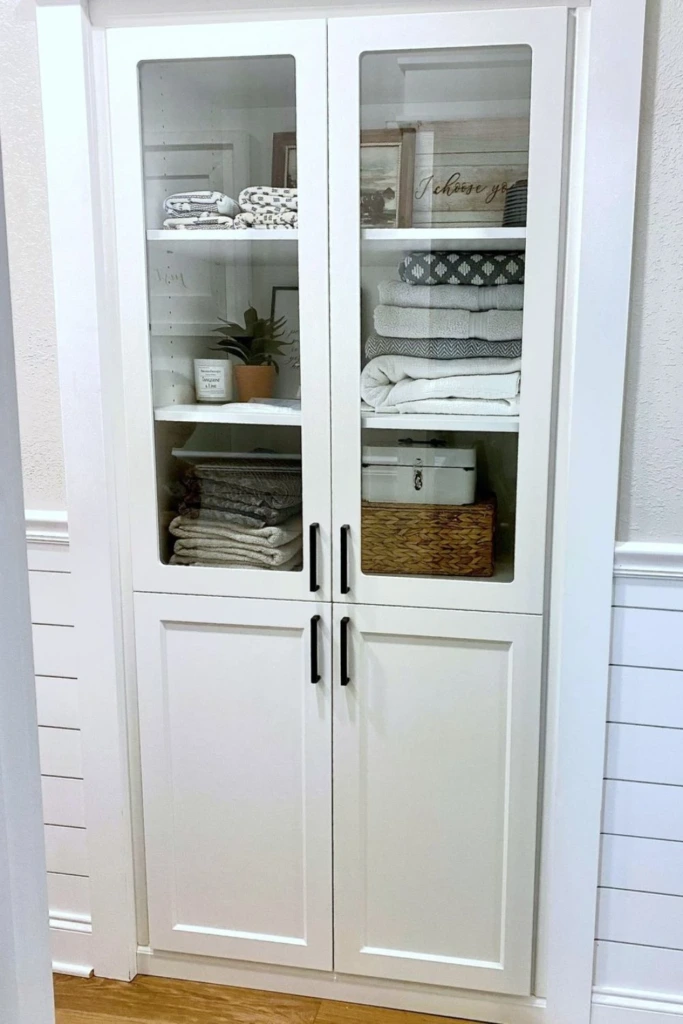
Glass-front cabinets combine enclosed storage with the convenience of seeing what's inside. They can be a good option when you want a hallway linen closet to look like part of the home's interior rather than a purely functional cupboard.
Arrange folded towels and bedding in consistent stacks, keeping similar colors or sizes together for a coordinated appearance. Decorative boxes can conceal smaller supplies that would otherwise make the shelves look busy.
Use the most visible shelves for neatly arranged linens and place less attractive backup supplies in closed containers. If the cabinet sits in a high-traffic hallway, choose sturdy glass and secure the unit appropriately.
Glass doors offer visibility, but they don't eliminate the need to keep the shelves organized.
18. Wire Shelves
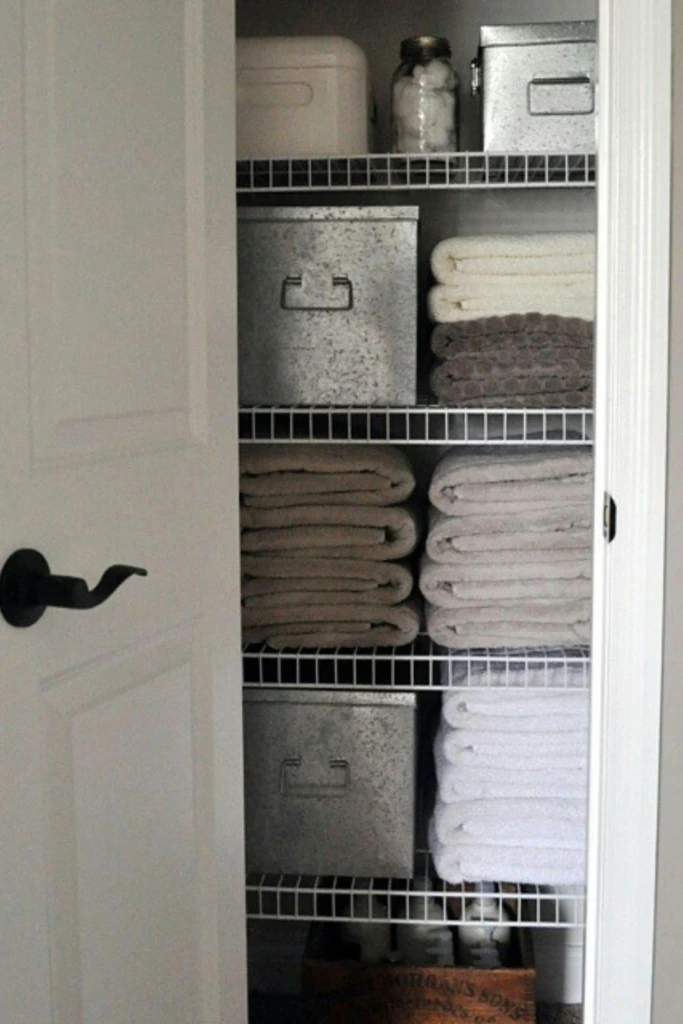
Wire shelving is a flexible choice for hallway linen closets because the shelves can often be adjusted as storage needs change. Its open construction also allows air to circulate around stored items.
Fold towels into compact stacks and group bedding by type to use the available shelf width efficiently. Add shelf liners where appropriate or use fabric bins to prevent small products from tipping or slipping through the gaps.
Keep everyday towels at a convenient height and move spare blankets or extra sheet sets to the upper shelves. If the wire shelves are widely spaced, baskets can help create a more stable surface for smaller belongings.
Check the shelving system's weight limits before storing heavy supplies, and make sure linens are completely dry before putting them away.
19. Shelf Labels
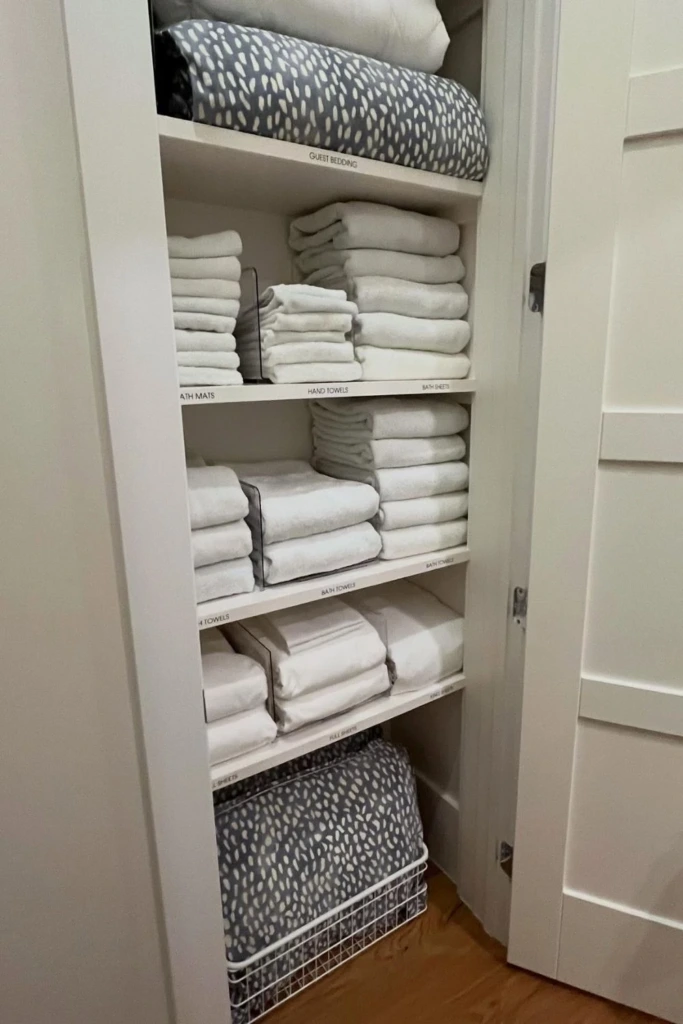
Shelf labels make it clear where each type of linen belongs, reducing confusion during busy laundry days. They're particularly helpful when several household members use the same closet.
Label shelves or sections for bath sheets, hand towels, washcloths, bath mats, and spare bedding. Keep the wording simple and consistent so everyone can understand the categories quickly.
Combine labels with uniform folding and moderate stack heights to make returning clean items easier. You can also label baskets for guest linens or seasonal blankets stored on higher shelves.
A well-labeled closet doesn't need to look overly technical. Small, discreet tags can provide practical guidance while preserving a clean, understated appearance.
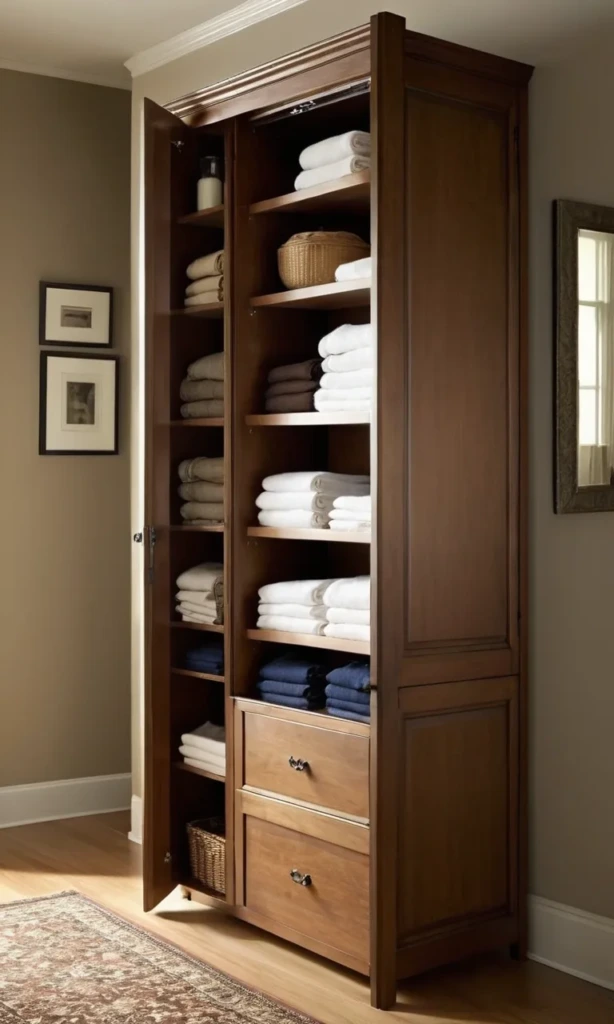
20. Built-In Storage
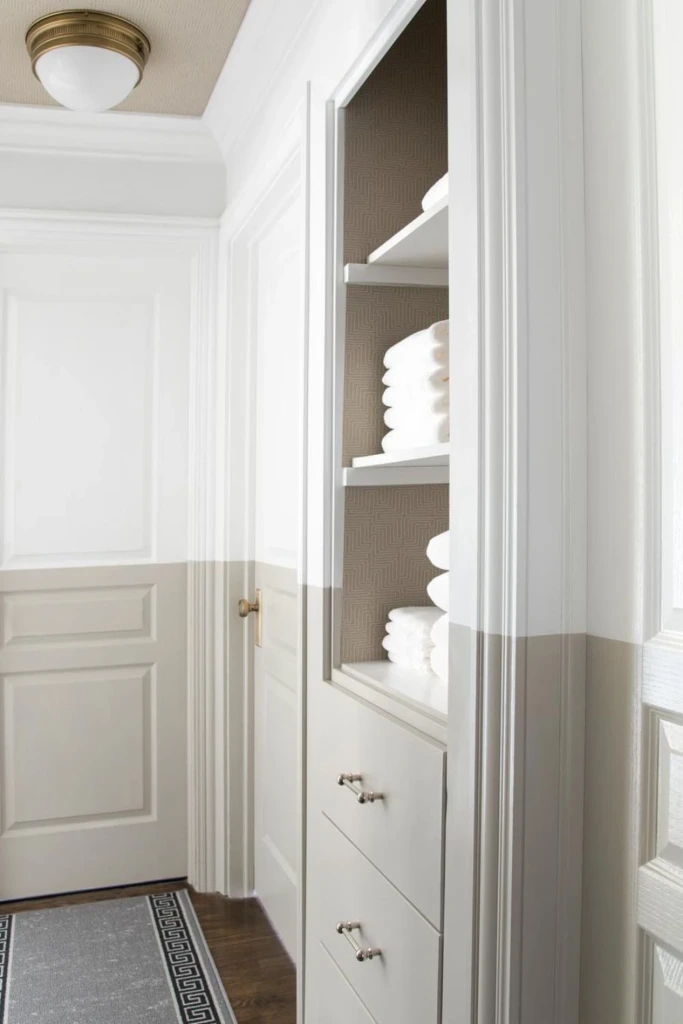
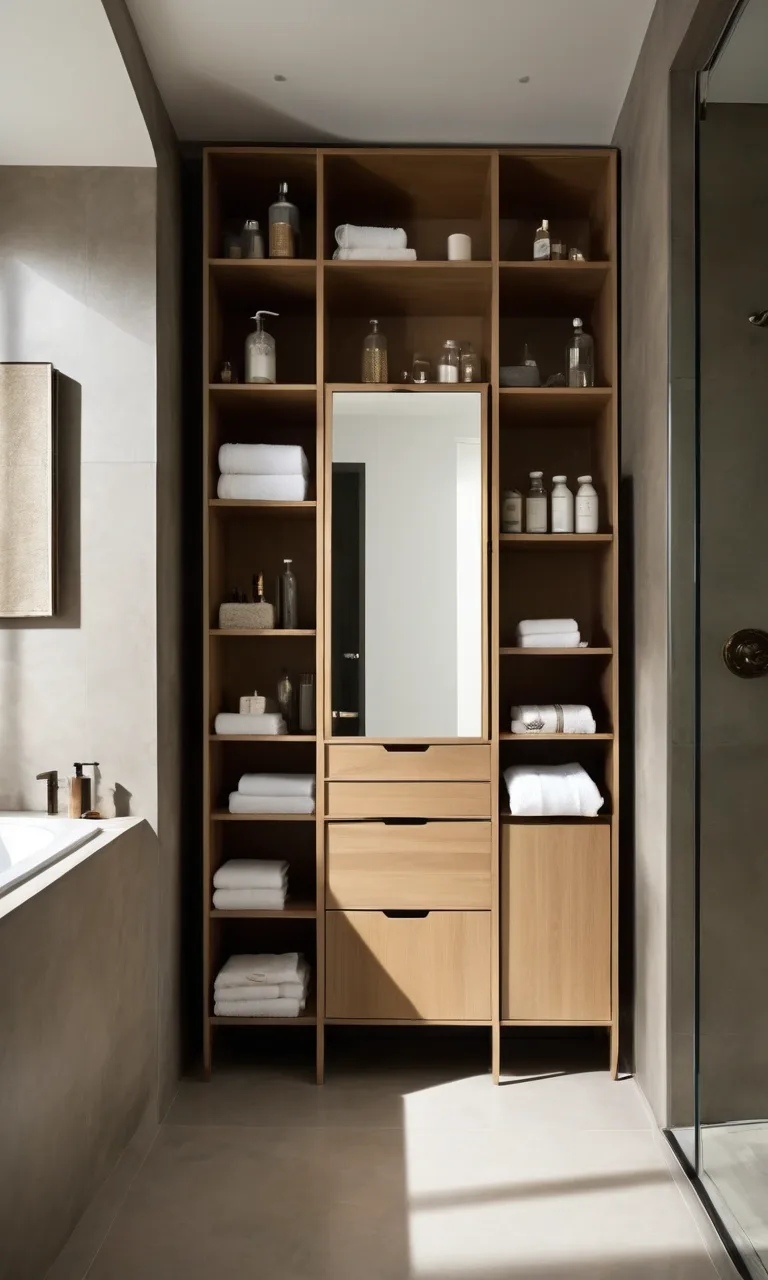
A built-in linen cabinet can turn an otherwise unused hallway wall into valuable storage. It's an option worth considering when a home lacks a dedicated linen closet or needs additional space near the bathroom.
Narrow shelves can accommodate folded towels and sheet sets, while drawers below provide concealed storage for smaller items. A tall cabinet can also use vertical space without occupying as much floor area as a wide freestanding unit.
For a cohesive look, match the cabinet finish and hardware to nearby doors, trim, or wall colors. Before installing a built-in, check the wall structure, available depth, and door clearance to ensure the design suits the hallway.
If renovation isn't practical, a slim freestanding linen cabinet can provide similar benefits with less commitment.
21. Modular Storage
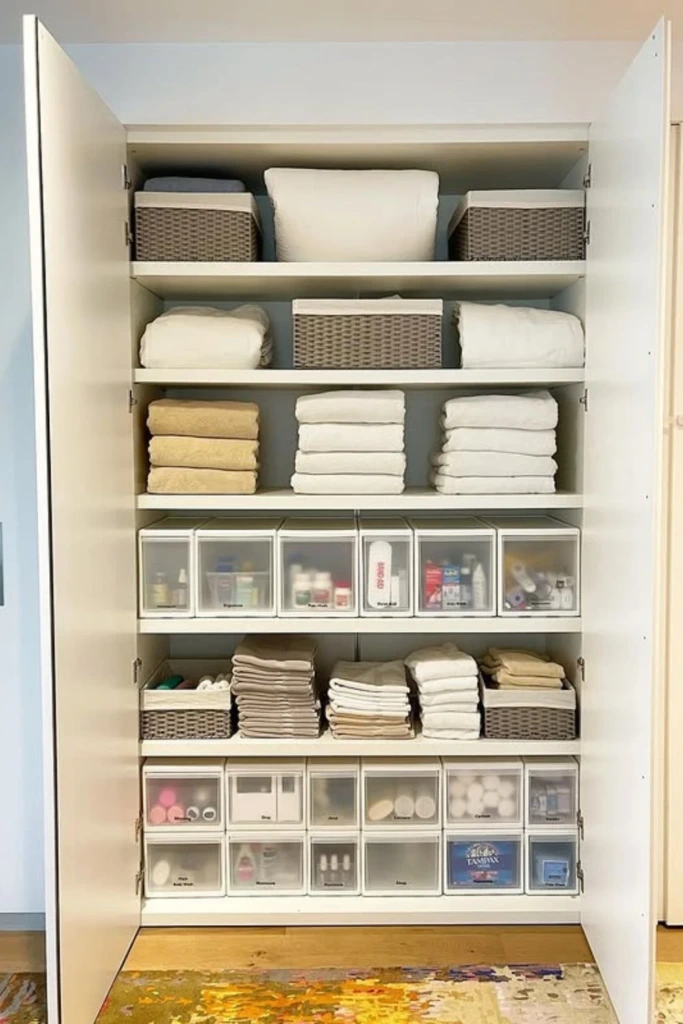
Modular organizers allow you to combine shelves, drawers, and baskets according to the needs of your household. This makes them useful for closets that must accommodate more than towels and bedding.
Open shelves can hold frequently used linens, while small drawers keep cotton pads, travel toiletries, and other compact products organized. Larger baskets can store spare blankets or extra bedding on upper shelves.
The advantage of a modular arrangement is its flexibility. If your storage needs change, you can reposition containers or replace one component without redesigning the entire closet.
Measure the available space first and choose pieces that fit together comfortably, leaving enough room to open drawers and remove baskets.
22. Supply Zones
Small bathroom and household supplies are easier to manage when each category has its own container. Without clear boundaries, bottles, tubes, and packets can quickly spread across the shelves or disappear behind larger items.
Create separate zones for toiletries, personal-care products, first-aid supplies, and unopened refills. Label the containers so their contents are easy to identify, and place frequently used products at a convenient height.
Keep medicines in their original packaging and follow their storage instructions, especially when temperature, moisture, or child access is a concern. Cleaning chemicals should remain separate from towels, toiletries, and other personal-care items.
A dedicated supply zone makes it easier to see what needs replacing and prevents small products from taking over the closet.
How do you keep a hallway linen closet from getting messy again?
Start by assigning a permanent location to each category of item. Store towels together, keep complete sheet sets in separate bundles, and use labeled containers for smaller supplies.
Return clean linens to their designated shelves after laundry day rather than creating temporary piles. Avoid overfilling baskets and leaving enough space to remove items without disturbing nearby stacks.
A quick weekly check can help you straighten uneven piles, remove empty packaging, and identify supplies that need restocking. The simpler the system, the easier it is to maintain consistently.
What should you store in a hallway linen closet?
A hallway linen closet is ideal for household textiles and frequently needed essentials used in bathrooms and bedrooms. Depending on the available space, you can store:
Bath towels, hand towels, and washcloths.
Bath mats and spare pillowcases.
Complete sheet sets organized by bed size.
Guest bedding, lightweight blankets, and extra comforters.
Toiletries, unopened hygiene products, and travel-size supplies.
Toilet paper and other household necessities.
Use baskets and labeled containers to separate smaller items from linens. Keep everything clean and completely dry before storage, and avoid mixing towels with cleaning chemicals or products that could leak.
23. Love this idea? Save it for later.
Save your favorite linen closet organization ideas so you can refer to them when you're ready to reorganize your hallway storage. Keeping a few practical solutions on hand makes it easier to plan your layout, choose suitable organizers, and create a closet that works for your everyday routine.
24. Hi, I’m Jenny
I share practical ideas for making everyday spaces more organized, comfortable, and enjoyable. From simple home storage improvements to creative DIY projects, the goal is to make daily routines easier with solutions that are both useful and attractive.
Found something useful?
Save this article to Pinterest so you can revisit the ideas when you're ready to refresh your hallway linen closet. Whether you're adding baskets, rearranging shelves, or creating a new storage system, a little planning can make a big difference in how the space functions.
25. More from Organization
A well-organized home often starts with small improvements to everyday storage. Explore other organization topics for additional ways to make better use of cabinets, closets, shelves, and frequently used household spaces.