23 Paper Organization Ideas for 2026
Paper clutter can build up faster than expected. Mail lands on the kitchen counter, receipts disappear into drawers, school assignments collect on the dining table, and important documents become difficult to locate when you need them.
The solution isn't necessarily an expensive filing cabinet or a dedicated office. A practical paper organization system can work just as well with baskets, folders, shelves, and a few minutes of regular maintenance.
Whether you're managing household records, children's schoolwork, craft supplies, or everyday correspondence, the right storage method can make your space easier to use. These 23 paper organization ideas offer practical ways to sort documents, maximize available space, and keep frequently used papers within reach.
What Is the Best Way to Organize Paperwork Without a Filing Cabinet?
You can organize paperwork without a filing cabinet by combining labeled folders, storage containers, and a simple sorting routine. Start by collecting loose papers from throughout your home so you can assess what needs attention.
Divide everything into three groups: documents that require action, records worth keeping, and papers that can be recycled or securely shredded. Separate the important documents into categories such as finances, household information, education, medical records, and personal paperwork.
Choose storage that suits your available space. Magazine holders, portable file boxes, binders, and accordion folders can all provide an effective alternative to traditional filing furniture.
Create an inbox for newly arriving mail and paperwork so nothing gets scattered across different surfaces. Review that inbox weekly, complete outstanding tasks, and return important records to their designated locations.
The most effective system is one that's easy to maintain. You don't need elaborate supplies; you need a consistent place for every category of paper.
1. Cube Shelves
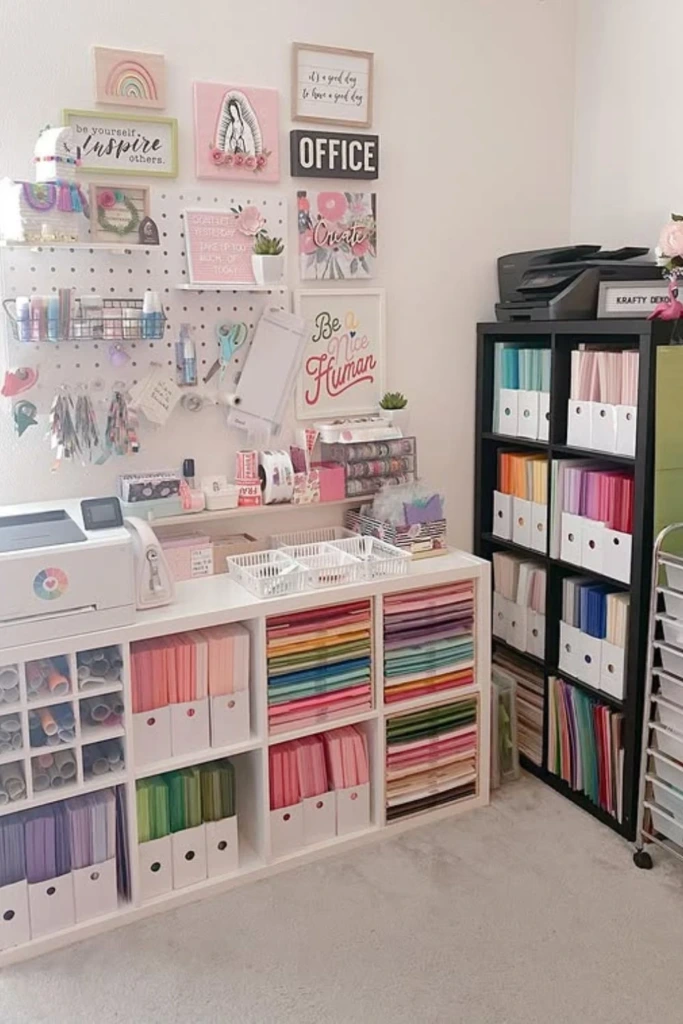
Cube shelving offers a convenient way to divide paperwork into separate categories without filling an entire room with storage furniture. Each compartment can accommodate a different type of document, making it easier to maintain order in a home office, study area, or craft room.
Use fabric bins, magazine holders, or compact file boxes inside the cubes. Assign a purpose to each compartment, such as household bills, school assignments, creative projects, or reference documents. Matching labels make the arrangement easier for everyone to understand.
For an especially practical setup, position frequently used papers in the most accessible cubes and reserve higher compartments for records you consult less often. If you prefer a visual system, choose different folder colors for different categories.
Cube shelves work particularly well when you have several types of paperwork but want everything visible and accessible rather than hidden inside drawers.
2. Paper Trays
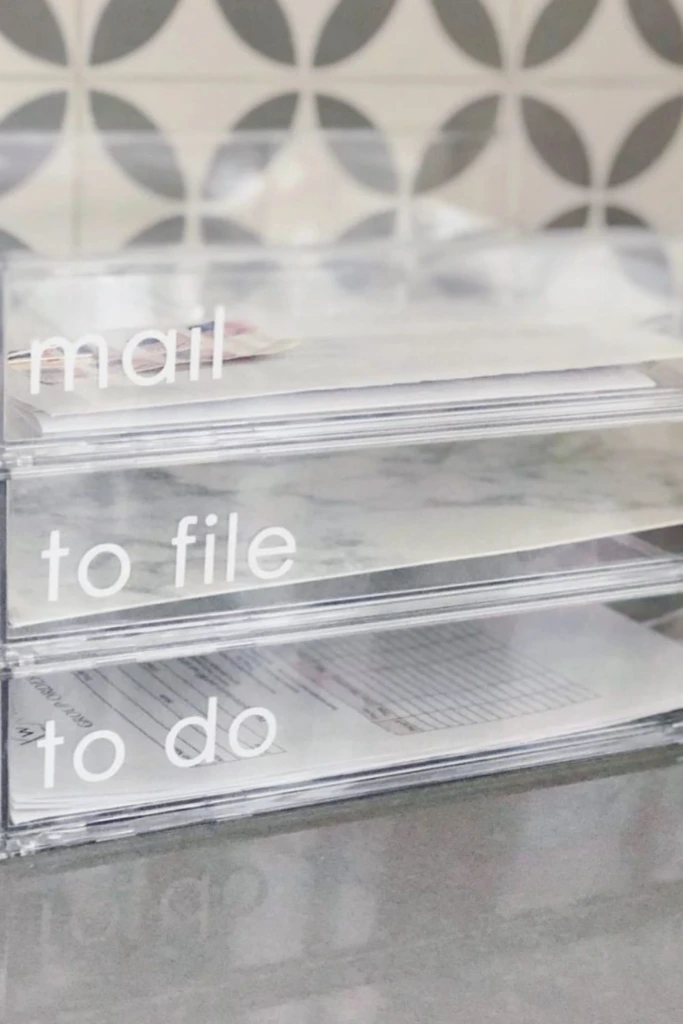
Stackable paper trays are useful when documents arrive throughout the day and need different kinds of attention. Instead of allowing mail and loose sheets to accumulate on your desk, give each tray a specific purpose.
A simple arrangement might include an inbox for new paperwork, a tray for items requiring action, and another for documents ready to be filed. Transparent trays are helpful because their contents remain visible.
Place the organizer near your usual mail-opening spot, whether that's a desk, kitchen counter, or entryway table. Keeping it in a convenient location encourages you to sort documents as soon as they arrive.
Set a regular time to review the trays. Pay bills, complete forms, respond to correspondence, and transfer finished paperwork into permanent storage. This small routine prevents temporary piles from becoming permanent clutter.
3. Paper Slots
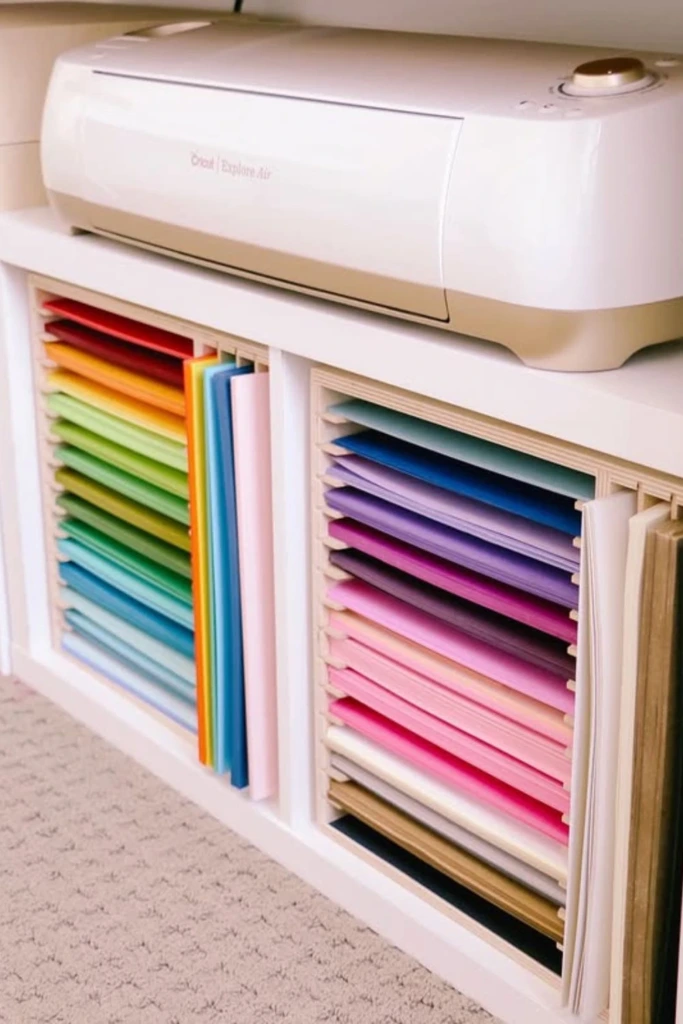
Paper slots provide individual spaces for sheets that need to remain flat and easy to retrieve. They're especially useful for craft paper, printed worksheets, school assignments, and documents that become damaged when squeezed into crowded piles.
Use a multi-compartment paper organizer, magazine files, or shelf dividers to create separate sections. You can sort materials by size, color, project, or purpose, depending on what you handle most frequently.
For example, a craft workspace might have separate slots for cardstock, patterned paper, printable templates, and unfinished projects. A family study area could use different compartments for each child or subject.
Position the organizer beneath a desk, beside a worktable, or on an accessible shelf. Keeping related materials together reduces searching time and makes it easier to return papers to their proper places after use.
4. Label Boxes
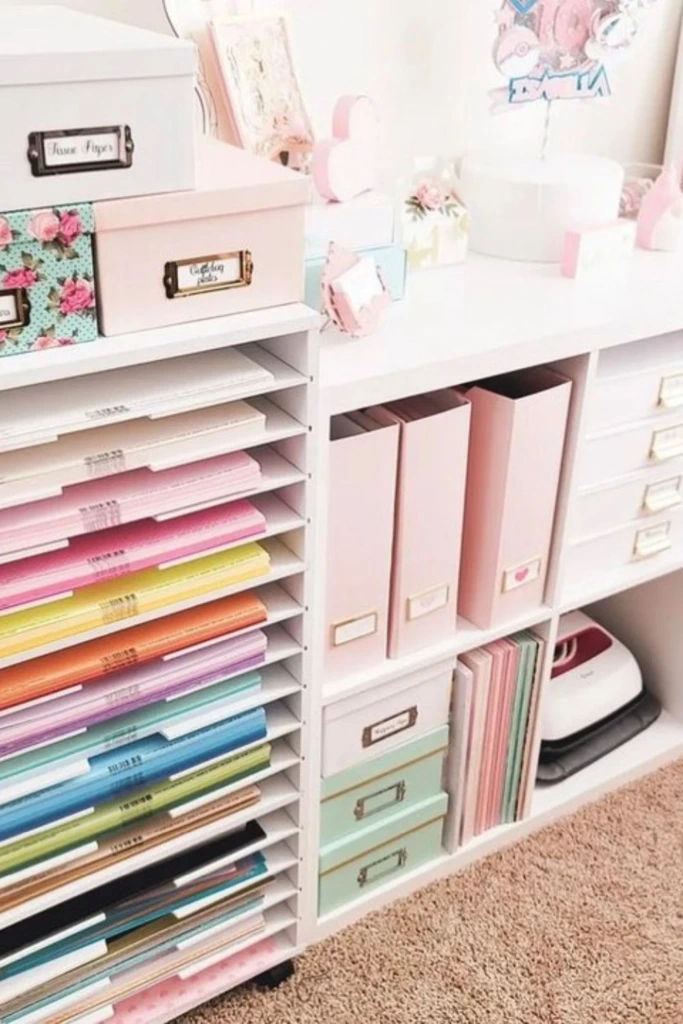
Storage boxes transform scattered paperwork into clearly defined collections. They are particularly useful for documents you need to retain but don't necessarily access every day.
Choose boxes large enough to hold your papers without folding them excessively. Assign each box a specific category, such as tax documents, appliance warranties, insurance records, receipts, or personal certificates.
Add labels to the front or side so you can identify the contents without opening every container. If several boxes look alike, use different label colors or include the relevant year on each one.
Store the boxes on a closet shelf, bookcase, or cabinet where they remain protected from everyday activity. Keep frequently needed records at a comfortable height and place long-term archives in less accessible locations.
For important original documents, choose sturdy storage and keep the containers away from moisture, direct sunlight, and other conditions that could cause damage. Sensitive records should also be stored securely rather than left in open boxes.
5. Color Bins
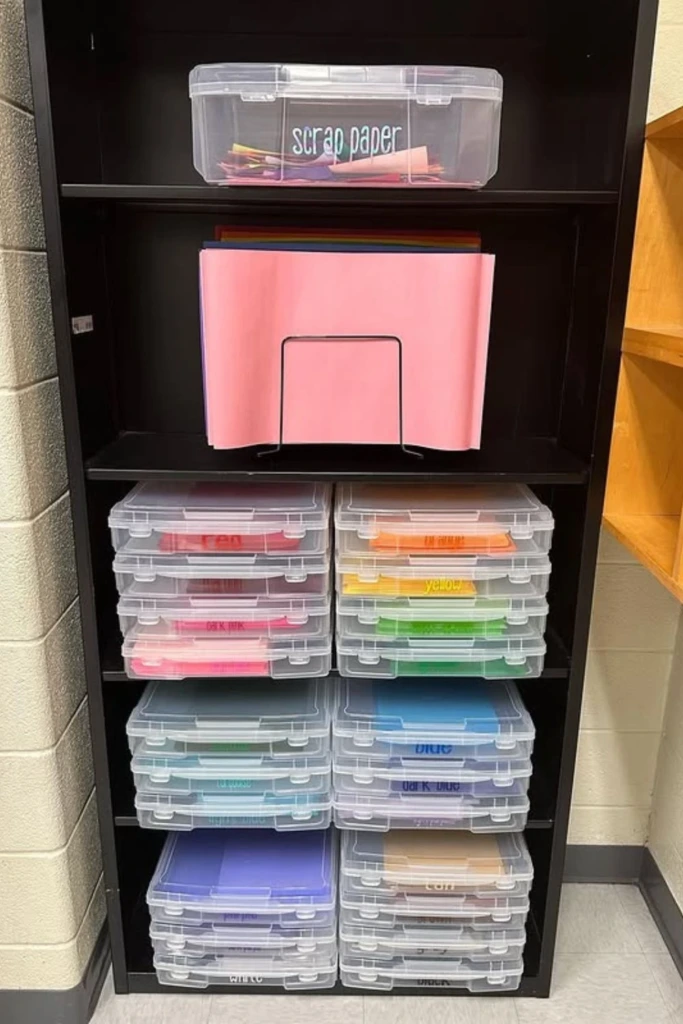
Color-coded bins make a paper organization system easier to understand at a glance. Instead of reading every label, you can associate a particular color with a specific type of paperwork.
For example, blue might represent household administration, green could hold financial records, yellow could be used for school materials, and another color could identify creative projects. Choose whichever combination makes sense for your household and use it consistently.
Clear containers offer an additional advantage because you can see their contents without opening them. Labels remain useful, especially when multiple people share the storage area or when similar-looking papers are stored together.
Place the bins on a shelf, inside a cupboard, or beneath a desk. Select containers that accommodate your documents comfortably, and avoid packing them so tightly that papers become difficult to remove.
This method works well for families, home offices, teachers, and anyone managing several distinct categories of paperwork.
6. Rolling Cart
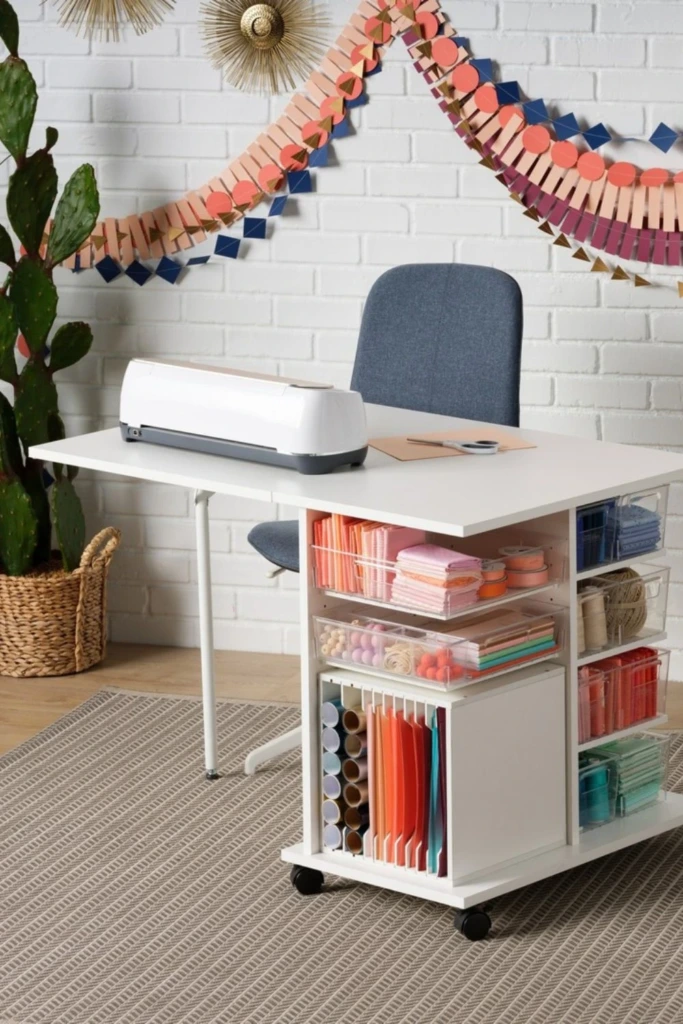
A rolling storage cart provides flexible paper organization for spaces that serve more than one purpose. It can hold documents, folders, envelopes, stationery, and small office supplies while remaining easy to move.
Choose a cart with several shelves or compartments. Use vertical file holders for folders and upright documents, while small containers can keep clips, labels, sticky notes, and other accessories together.
Give each level a defined function. One shelf might contain active paperwork, another could hold reference folders, and the bottom level could store supplies or materials for ongoing projects.
The wheels allow you to position the cart beside your desk when working and move it elsewhere when you need additional floor space. A slim model is particularly useful in small apartments, shared workspaces, and craft rooms.
Before purchasing a cart, measure the available space and check that its compartments accommodate the paper sizes you use most often.
7. Cabinet Door
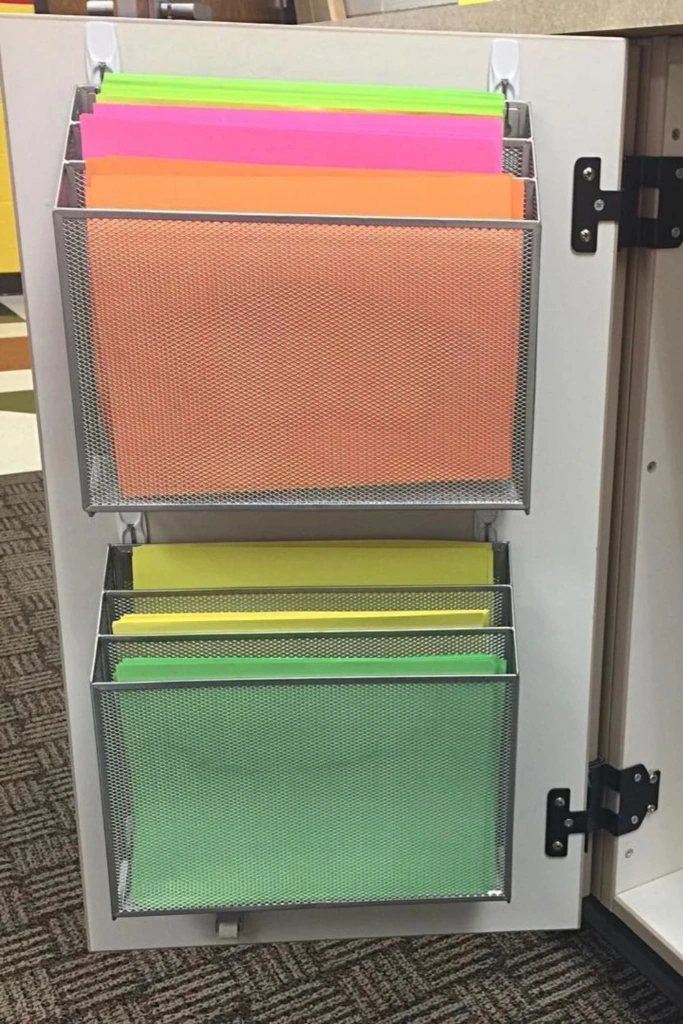
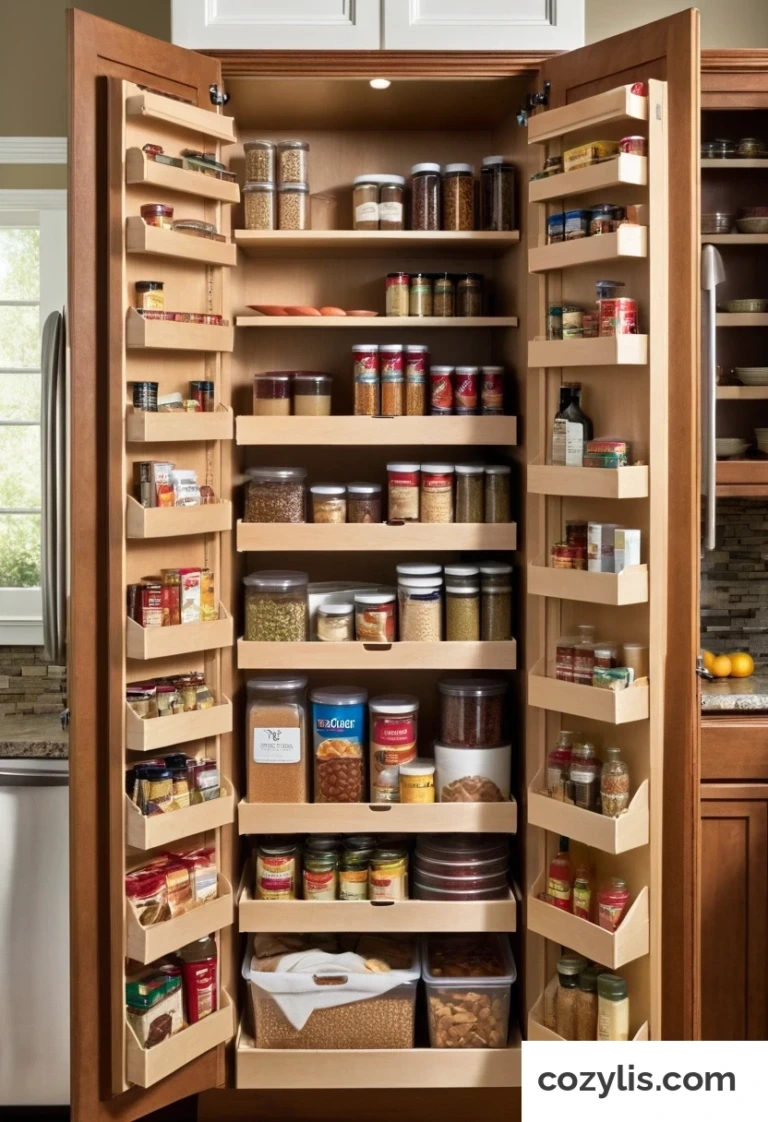
The inside of a cabinet door can provide valuable storage space without occupying another section of your desk. Slim hanging organizers or wall-file pockets turn an otherwise unused surface into a convenient place for paperwork.
Install suitable holders for school notices, frequently used forms, household reminders, or documents that need attention soon. Keeping these items upright makes them easier to identify than when they're buried beneath other papers.
Depending on the cabinet material and the weight involved, you may be able to use adhesive-mounted organizers, hooks, or screw-mounted holders. Follow the manufacturer's installation guidance and check that the door can close without crushing the contents.
This arrangement is especially practical in compact home offices, kitchens, classrooms, and study areas where horizontal space is limited.
Reserve the most accessible pockets for documents you use regularly. For private financial or personal records, choose a more secure storage location rather than a visible cabinet door.
8. Shelf Trays
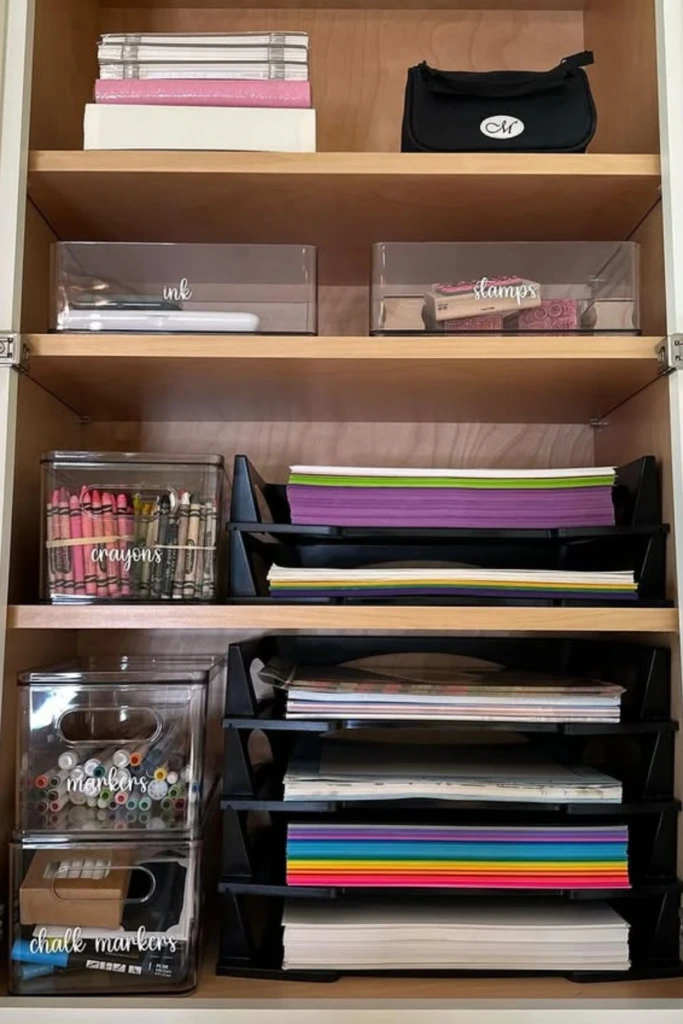
Shelf trays help organize documents when a bookcase or cupboard already provides storage but lacks individual compartments. By adding several trays, you can divide one shelf into smaller, clearly defined sections.
Use separate trays for current assignments, printed reference materials, project paperwork, household forms, or documents awaiting review. Label each tray so its purpose remains obvious.
Stackable designs can make efficient use of vertical space, while open-front trays allow you to slide papers in and out without removing the entire container.
Choose trays that fit your shelving depth and provide enough room for the paper sizes you handle. If the shelf will carry several loaded trays, make sure it is stable and rated for the weight.
This method works well in family command centers, home offices, classrooms, and creative workspaces where paperwork needs to remain accessible throughout the day.
9. Folder Basket
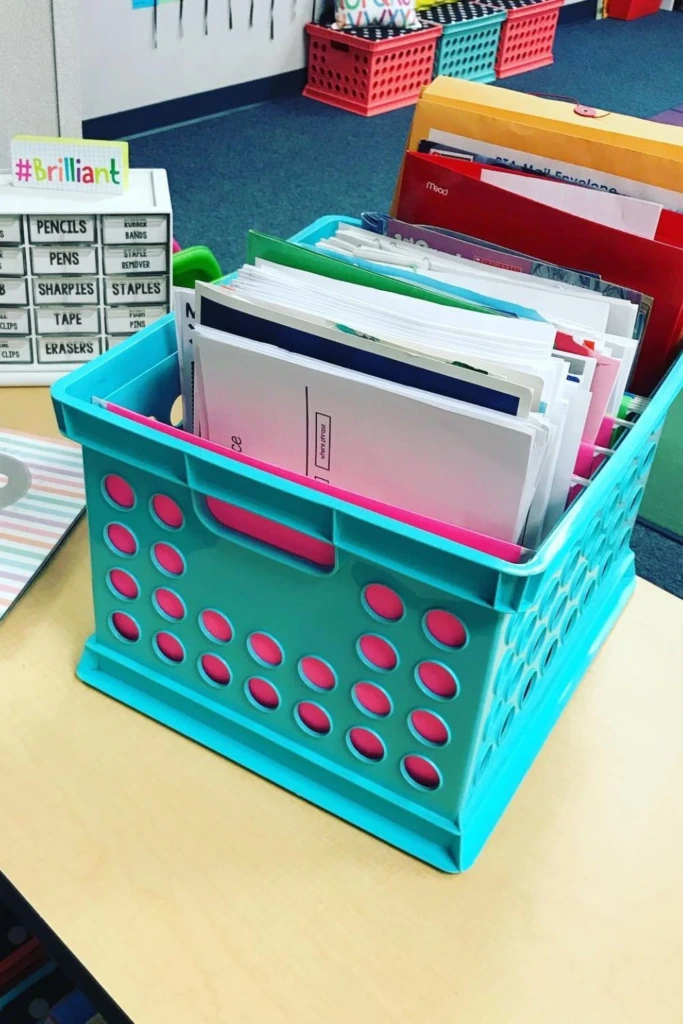
A basket filled with upright folders is an easy alternative to a traditional filing drawer. It gathers loose papers into one portable location while allowing you to separate documents into manageable groups.
Start with a sturdy basket or plastic bin that can hold folders without allowing them to collapse. Add labeled folders for categories such as bills to pay, forms to complete, school notices, current projects, and documents awaiting filing.
Arrange the folders vertically so you can flip through them quickly. If the basket contains many categories, use hanging folders or dividers to keep everything separated.
Place it somewhere you naturally handle paperwork, such as a home office desk, entryway table, or family workspace. A convenient location makes it easier to file new documents immediately.
This setup is ideal for active paperwork rather than permanent archives. Important records that need long-term protection should be transferred to a more suitable storage system.
10. File Bin
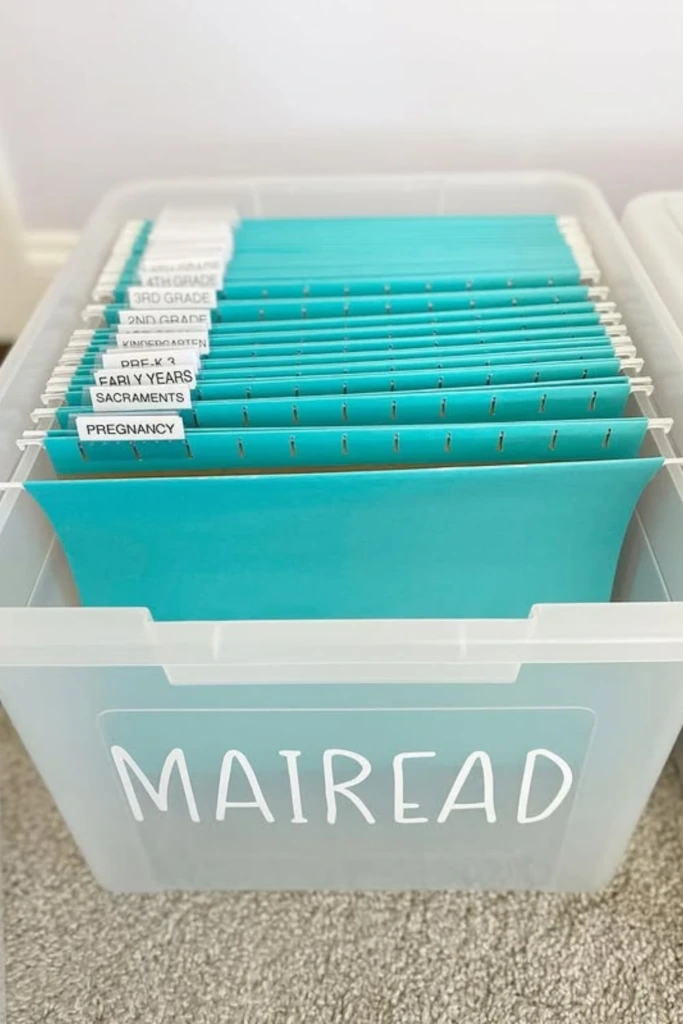
A file bin provides many of the benefits of a filing cabinet in a smaller, more affordable format. It can hold hanging folders, making it easy to arrange important documents without dedicating space to a full-sized piece of furniture.
Choose a container that accommodates standard hanging folders and provides enough depth for your papers. Add labeled tabs for categories such as education, insurance, medical information, household records, and financial documents.
For additional clarity, separate records by person or year when that makes retrieval easier. Keep current documents toward the front and less frequently used files toward the back.
The bin can sit beneath a desk, inside a closet, or on a sturdy shelf. A portable design is convenient if you occasionally need to move paperwork between rooms.
For long-term storage, avoid overfilling the folders and keep the container in a dry location. Use a secure, access-controlled place for confidential information rather than leaving sensitive documents in an open shared area.
11. Paper Basket
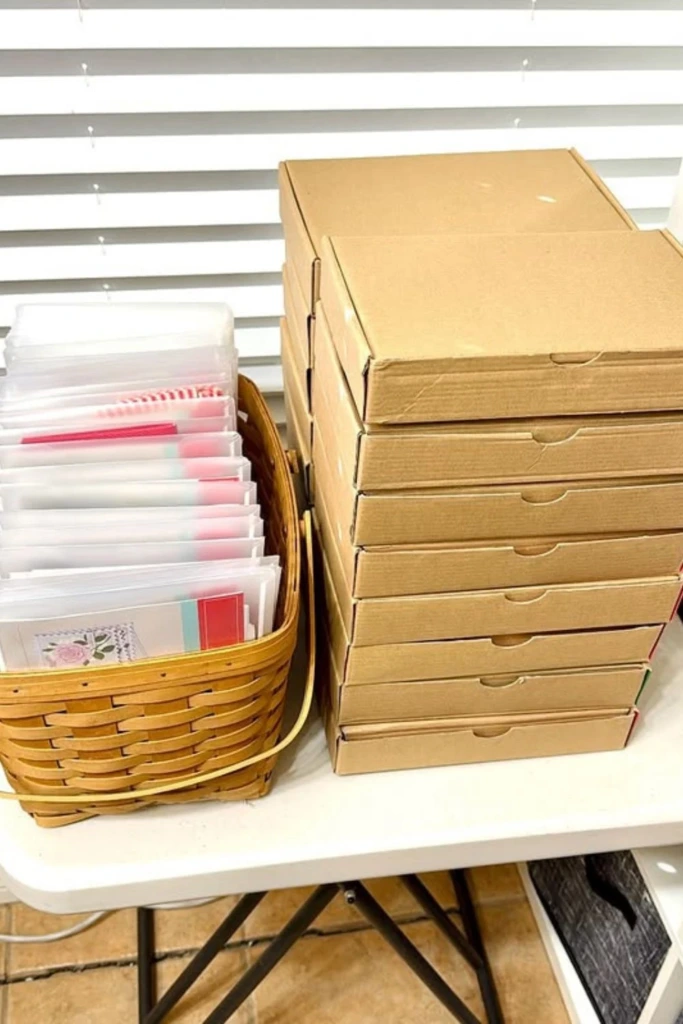
A paper basket offers a flexible home for documents that move between different activities. Unlike a permanent filing cabinet, it can be placed directly beside the workspace where you need your papers.
Choose a basket with enough room to hold folders, document sleeves, or small paper collections. You might use it for current craft projects, frequently accessed worksheets, printed recipes, or paperwork that needs regular updating.
Clear sleeves are useful when you want to protect individual sheets while keeping their contents visible. Folders can separate unrelated documents and prevent them from becoming mixed together.
Keep the basket on a desk, craft table, or nearby shelf where it remains within easy reach. Avoid allowing unrelated items to accumulate in the same container, since that defeats the purpose of organizing the papers.
A basket is best for documents you use regularly. Once a project is finished, move its essential records into permanent storage and recycle or shred anything you no longer need.
12. Clear Bins
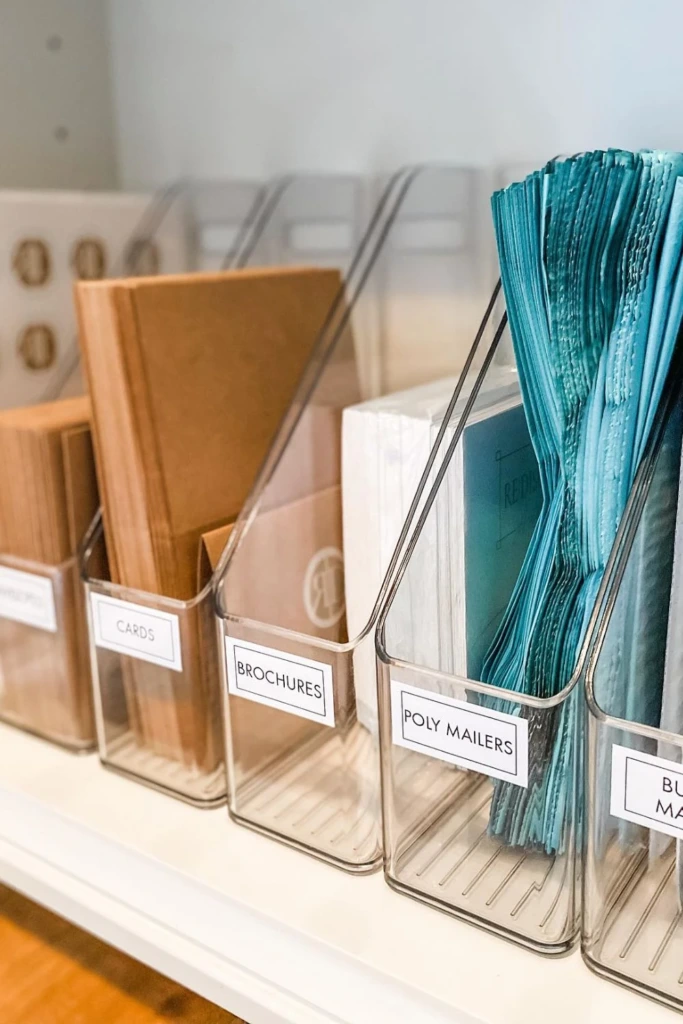
Transparent bins make it easier to organize smaller paper supplies without losing track of what's stored. They're useful for envelopes, greeting cards, brochures, stationery, printed templates, and other materials that can become scattered across shelves or drawers.
Choose containers that suit the size of your supplies. Narrow bins work well for envelopes and cards, while wider containers can accommodate booklets or larger sheets.
Group similar items together and attach a label to the front of each bin. Clear walls provide a quick visual reference, but labels help maintain order when several containers hold similar-looking materials.
Arrange the bins on an open shelf or inside a cupboard. If you use them for papers that need to remain flat, avoid stacking heavy items on top.
This approach suits home offices, small businesses, craft rooms, and shared family workspaces. It is particularly effective for supplies that you access frequently but don't want scattered across your work surface.
13. Divider Shelves
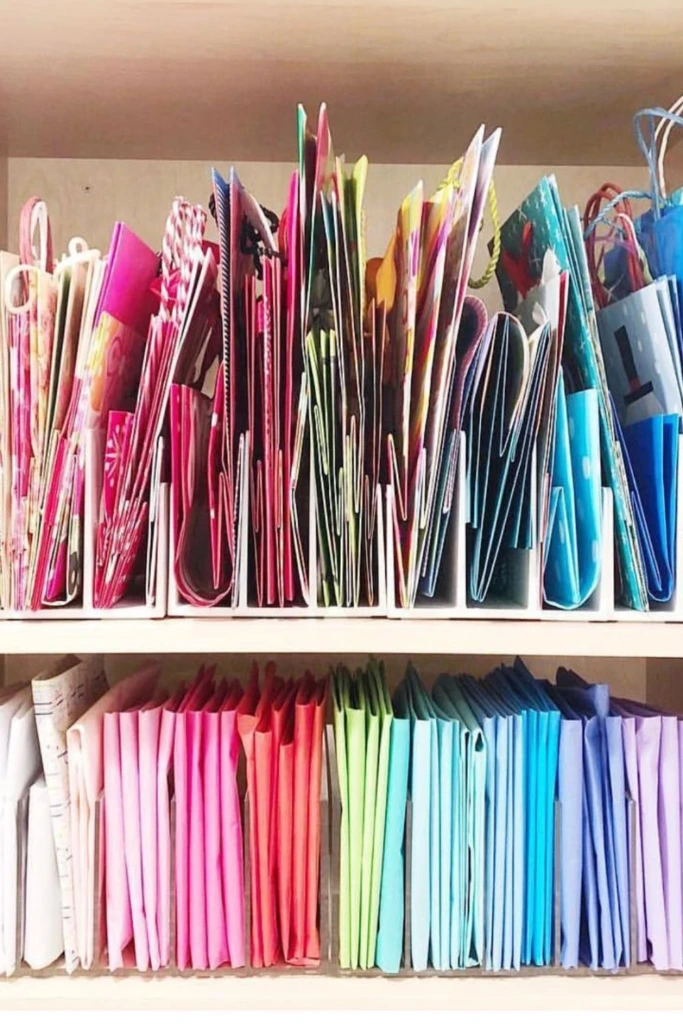
Shelf dividers turn a large, open storage area into smaller sections for different paper categories. They help prevent folders and loose sheets from leaning together or becoming mixed into a single disorganized pile.
Place vertical dividers along a bookshelf, inside a cupboard, or within a cube organizer. Use each section for a distinct category, such as schoolwork, craft materials, active projects, notebooks, or reference documents.
Magazine holders can provide similar separation when you want removable compartments. For a more adaptable arrangement, choose adjustable dividers that can accommodate changing collections.
Color-coded folders and clear labels make the sections easier to identify. Keep frequently used documents toward the front and avoid filling each compartment beyond its comfortable capacity.
Divider shelves are especially useful for people who manage multiple projects at once. They provide a simple way to keep documents separate while making efficient use of storage you already own.
14. Vertical Rack
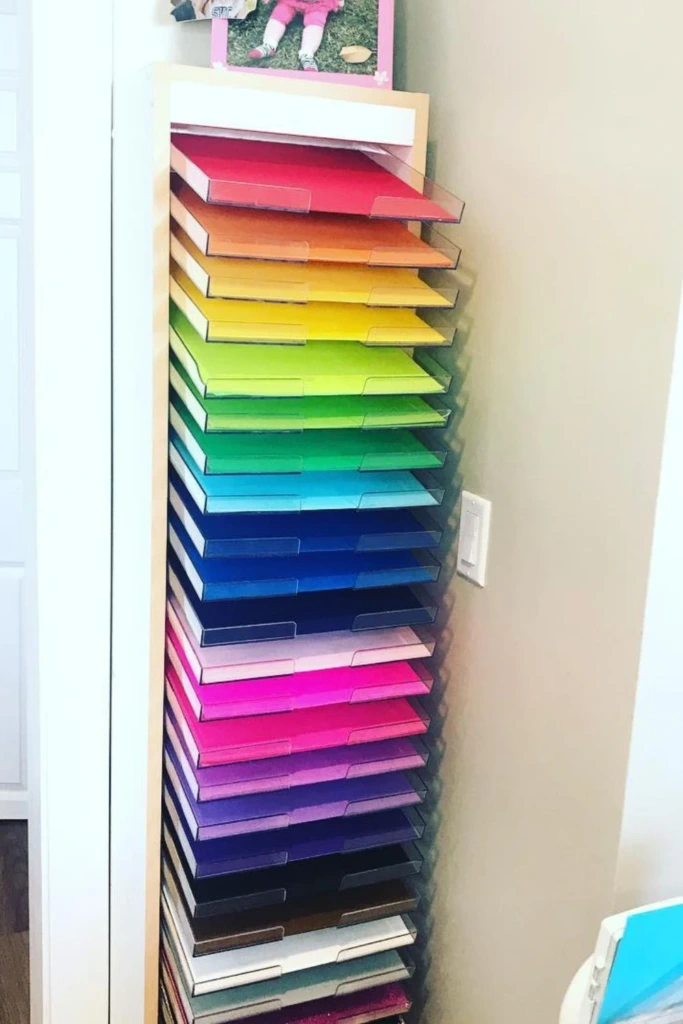
A vertical paper rack is a practical option when you have many sheets but limited room for storage. Its compartments keep paper collections separate without requiring a large tabletop or multiple wide shelves.
Choose a rack designed for the dimensions of your materials. Some models accommodate standard office paper, while others are better suited to large craft sheets, cardstock, or scrapbook paper.
Assign each compartment a category, color, or project. This allows you to retrieve the correct material without repeatedly lifting and sorting through a stack.
Place the rack beside a desk, under a worktable, or near your printer or crafting station. A narrow design can make good use of unused vertical space.
For delicate or oversized sheets, check that the compartments provide adequate support and that the papers do not extend beyond the edges. Properly sized sections help reduce curling, bent corners, and accidental damage.
This storage style is particularly valuable for artists, teachers, scrapbookers, and anyone who keeps a large selection of paper materials.
15. Tier Files
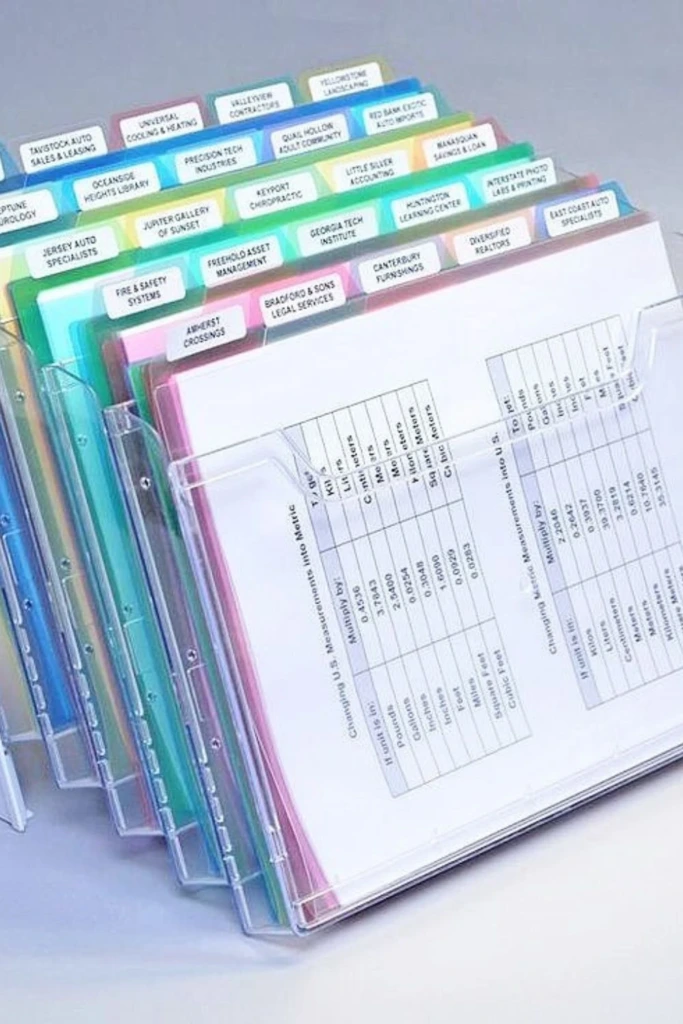
Tiered file organizers make frequently accessed documents easier to see and retrieve. Their stepped or slanted compartments keep folders visible rather than hiding everything beneath the top item in a stack.
Use each section for a different category, such as bills, contracts, household forms, school documents, or paperwork awaiting review. Labeling the compartments helps prevent similar-looking folders from being confused.
A desktop organizer is convenient when you regularly handle several types of documents. Larger versions can also sit on shelves or inside suitable cabinets.
For the clearest system, keep current paperwork separate from records that have already been completed. For example, one compartment might contain forms requiring signatures, while another holds documents ready for filing.
Tiered organizers are best for papers that need frequent attention. Avoid using them as long-term storage for confidential records, and move completed paperwork into a more appropriate filing system.
16. Paper Tower
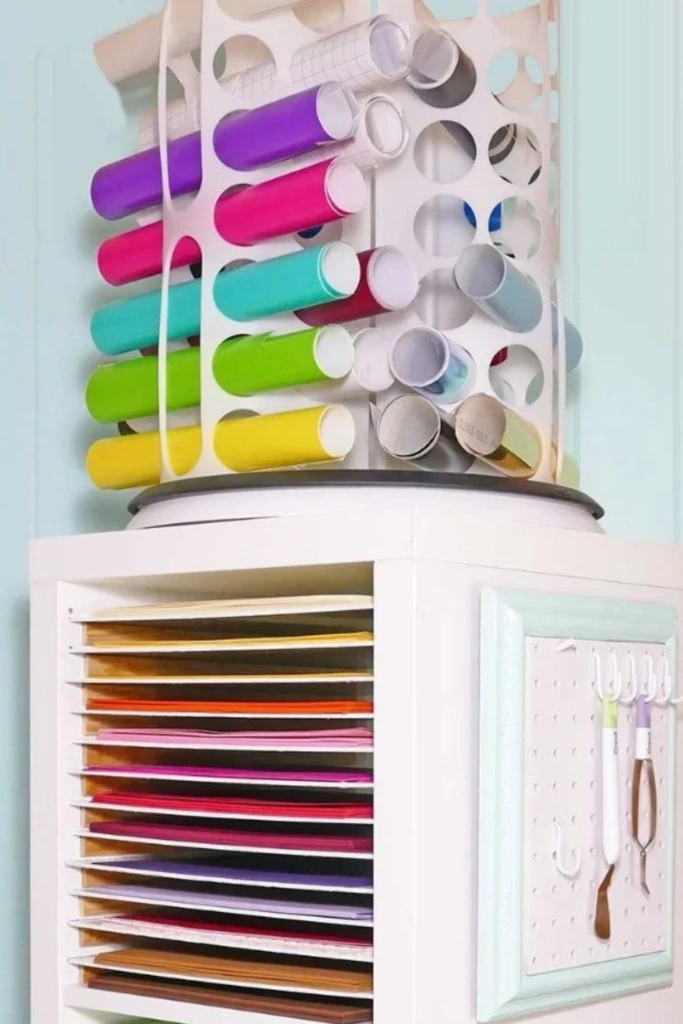
A paper tower uses vertical storage to accommodate a substantial collection of sheets in a relatively compact area. It is particularly useful for craft rooms, print studios, and home offices where different paper types need to remain separate.
Look for a tower with horizontal compartments that support the sheets evenly. Each level can hold a different color, paper weight, size, or project category.
If you regularly work with specialty paper, organize the compartments according to how you use the materials. For example, keep everyday printer paper separate from cardstock, decorative sheets, and specialty printing supplies.
Place the tower near the work surface where you use the paper most often. Before choosing a model, check its overall dimensions and the capacity of each compartment.
This system helps you maintain a larger paper collection without spreading it across several desks or shelves. Keeping the compartments organized also makes it easier to identify low supplies and restock the materials you use most frequently.
17. Label Drawers
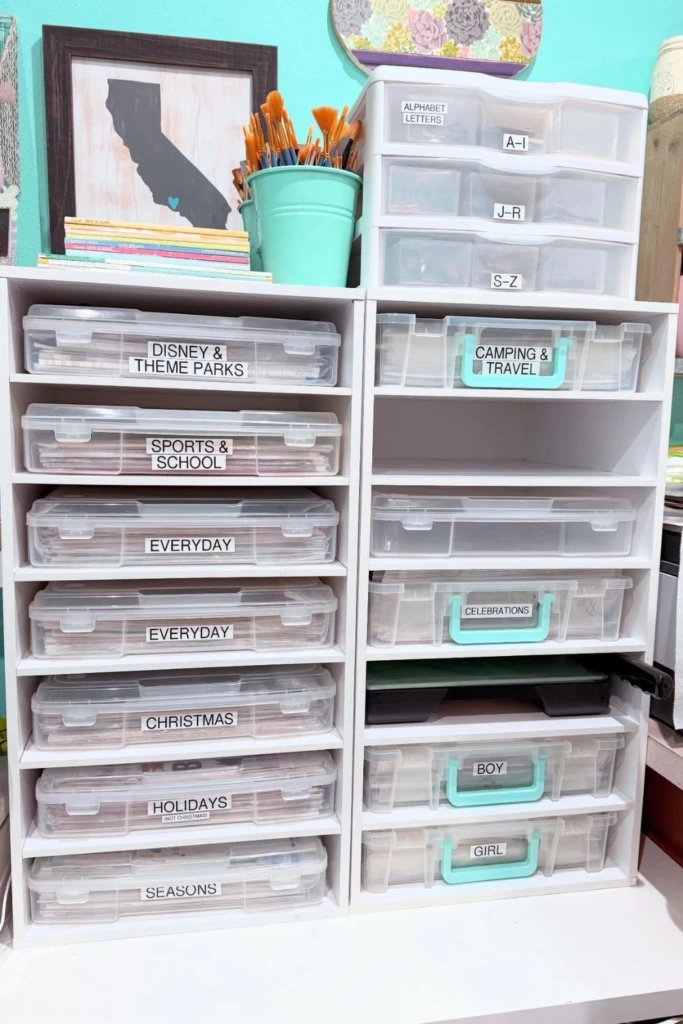
Labeled drawers are useful for storing paper collections that need protection from dust or shouldn't remain on open shelves. A compact drawer unit can hold worksheets, printed materials, greeting cards, forms, and documents organized by subject or purpose.
Use clear or shallow drawers when possible so you can quickly identify their contents. Add labels to the drawer fronts and group related papers together rather than mixing unrelated items.
For a home office, you might dedicate individual drawers to household paperwork, current projects, reference documents, and stationery. In a craft room, separate drawers could hold seasonal printables, card-making materials, and decorative paper.
Drawer inserts can provide additional compartments for small documents and accessories. Measure the inside dimensions before buying organizers to ensure they fit properly.
Keep frequently used materials in the upper drawers and reserve lower drawers for less commonly accessed items. Review the contents periodically to remove duplicates and relocate papers that no longer belong in an active collection.
18. Drawer Dividers
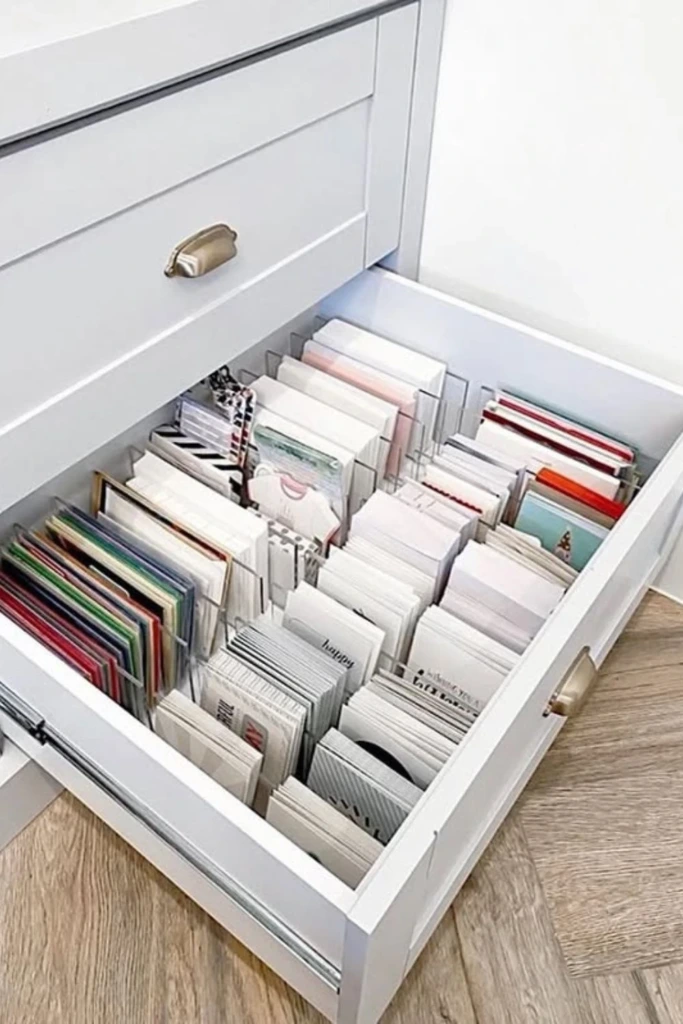
A large drawer can quickly become difficult to manage when loose papers, envelopes, cards, and stationery share the same space. Drawer dividers create separate compartments so each type of item has a defined location.
Use adjustable dividers, small trays, or clear acrylic organizers to fit the dimensions of your drawer. Assign sections to categories such as receipts, greeting cards, instruction sheets, envelopes, and everyday stationery.
Where space permits, store suitable documents upright rather than stacking everything horizontally. This makes it easier to see individual items and retrieve them without disturbing the rest.
Measure the drawer before purchasing inserts, and leave enough room to open and close it smoothly. Avoid forcing oversized papers into small compartments, as bent edges and damaged sheets can result.
This method works well in office desks, console tables, craft furniture, and household cabinets. It is particularly helpful when you want to keep paperwork accessible while maintaining a clean, uncluttered surface.
19. Pegboard Station
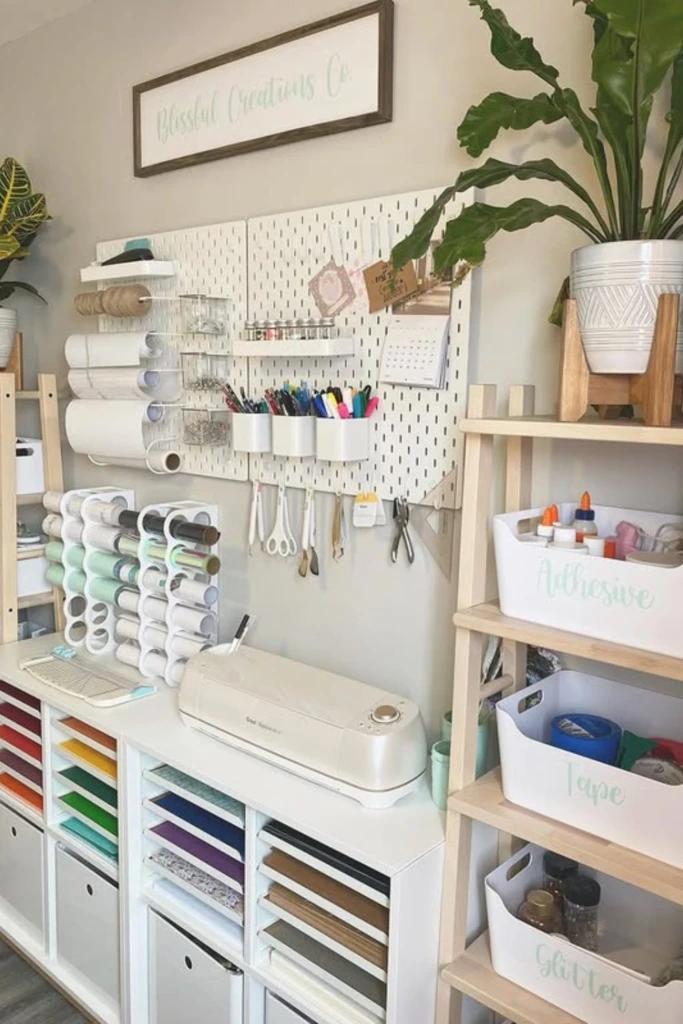
A pegboard station turns unused wall space into a flexible organizing area for paper supplies and everyday tools. It works particularly well above a craft table, printing station, or home office desk.
Install a pegboard suitable for your wall and the weight of the items you plan to store. Add hooks, small shelves, hanging baskets, or containers to accommodate scissors, pens, envelopes, paper rolls, and other frequently used accessories.
Arrange the supplies according to your workflow. Keep the items you reach for most often within easy reach and place less frequently used materials farther away.
You can also designate a small section for active project documents or instructions, provided the holder supports the paper securely.
One of the main advantages of a pegboard is flexibility. Hooks and containers can be rearranged as your needs change, so the station doesn't have to remain fixed to its original layout.
This approach is especially useful in small creative spaces where freeing up desk and shelf space makes a noticeable difference.
20. File Cubes
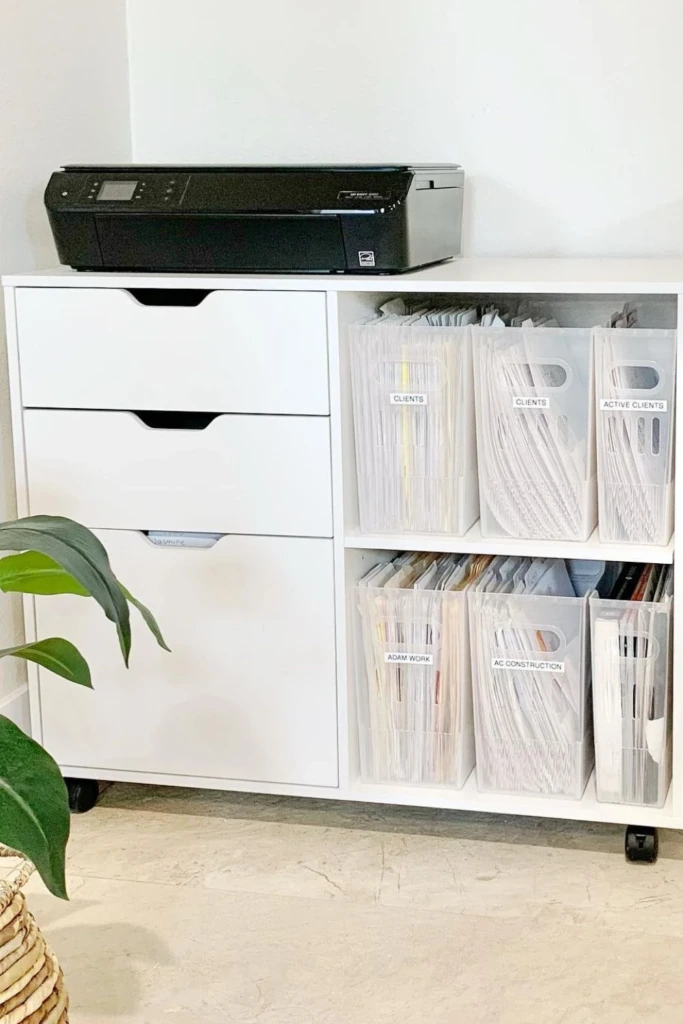
File cubes combine open shelving with individual file containers to create a compact paper management system. They're a good choice when you want separate storage areas for different household members, clients, or projects.
Start with a cube shelf that fits your available space, then select file bins or magazine holders that fit securely inside the compartments. Use upright folders to keep documents visible and easy to retrieve.
Label each container clearly. You could dedicate separate cubes to family records, school paperwork, business administration, reference documents, and current projects.
Place the unit near your desk, printer, or central paperwork station so new documents can be filed without unnecessary movement. Frequently used files should remain within easy reach.
File cubes are particularly useful for people who handle several categories of paperwork but don't have room for traditional filing furniture. For sensitive information, choose containers and locations that provide appropriate privacy and security.
21. Action Drawer
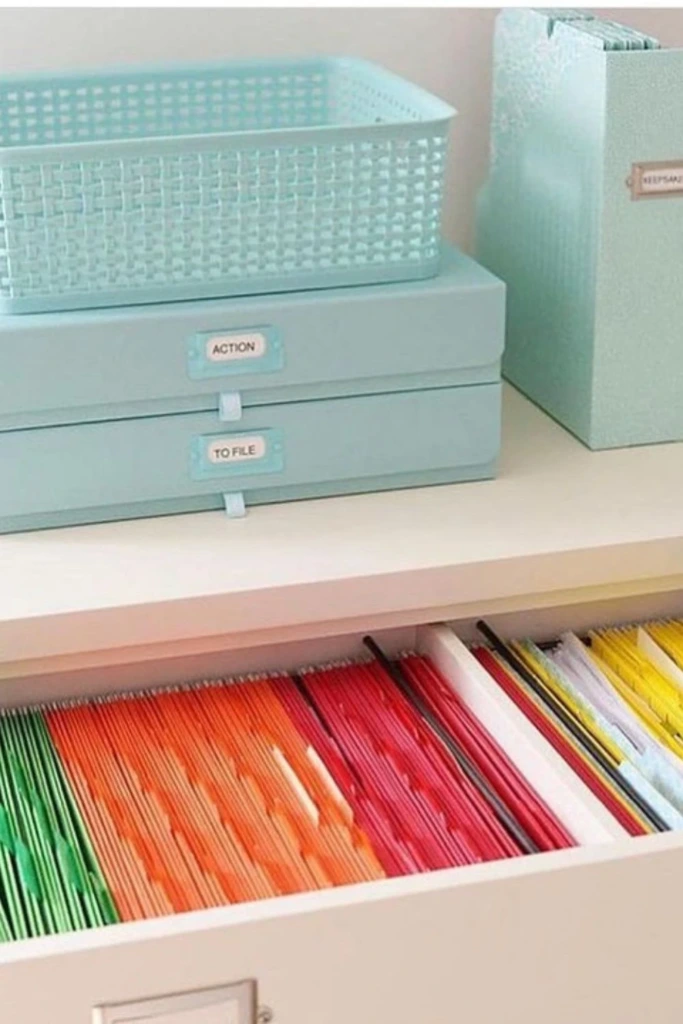
An action drawer helps prevent important paperwork from being forgotten by separating unfinished tasks from completed records. Rather than storing every document together, it gives each paper a clear next step.
Create a designated space for items requiring attention, such as invoices, permission forms, letters to answer, and documents awaiting signatures. Add a separate section for paperwork that is ready to be filed.
Once a task is completed, move the document out of the action area and into its permanent category. This keeps unfinished work visible without allowing it to mix with records that no longer need attention.
You can create the system with a shallow drawer, hanging folders, small labeled containers, or a combination of these supplies. A simple desktop organizer also works if drawer space is limited.
Review the action section at a regular time each week. Prioritize documents with deadlines and remove anything that no longer requires action.
This method is especially helpful for managing household administration, school forms, bills, and routine office tasks without relying on a full filing cabinet.
22. Envelope Folders
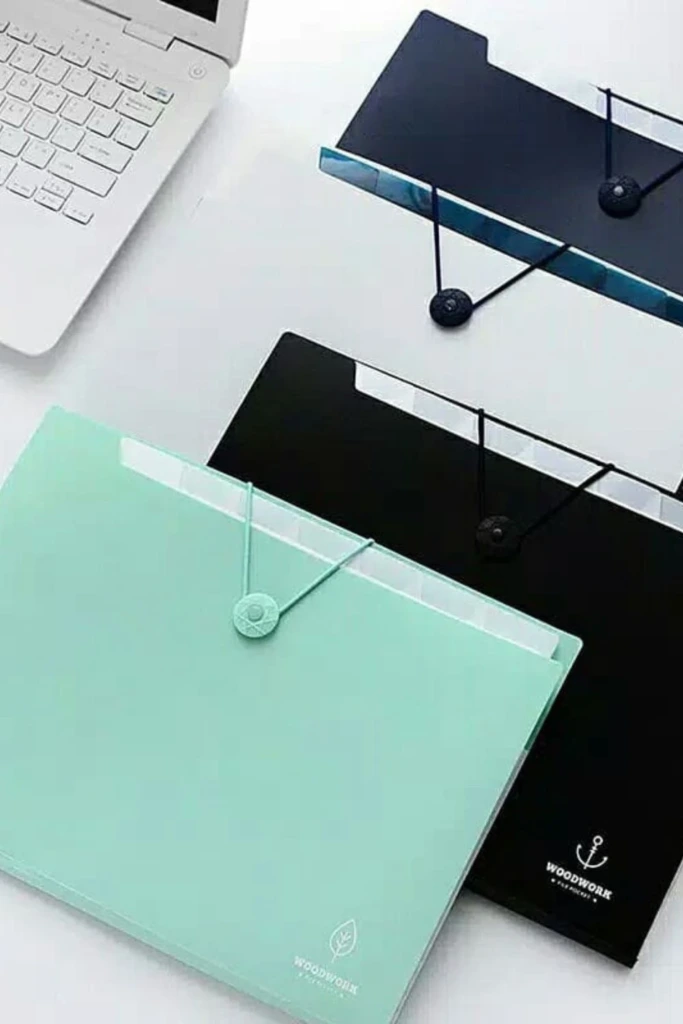
Envelope folders offer portable storage for papers that need to travel between home, school, work, or appointments. Their enclosed design helps protect documents from getting bent, separated, or misplaced in a bag.
Choose folders with secure closures and enough capacity for the papers you intend to carry. Assign each folder a purpose, such as medical appointment documents, school forms, receipts, meeting notes, or current project materials.
Labels on the front make it easier to distinguish folders when several are stored together. For documents that must remain in a particular order, arrange the pages before placing them inside.
Keep frequently used folders in a desk drawer, work bag, or designated household storage area. After an appointment or meeting, return completed paperwork to its proper permanent location rather than allowing it to accumulate in the folder indefinitely.
Envelope folders are convenient for active documents, but they aren't a substitute for secure long-term storage of important original records.
23. Shelf Bins
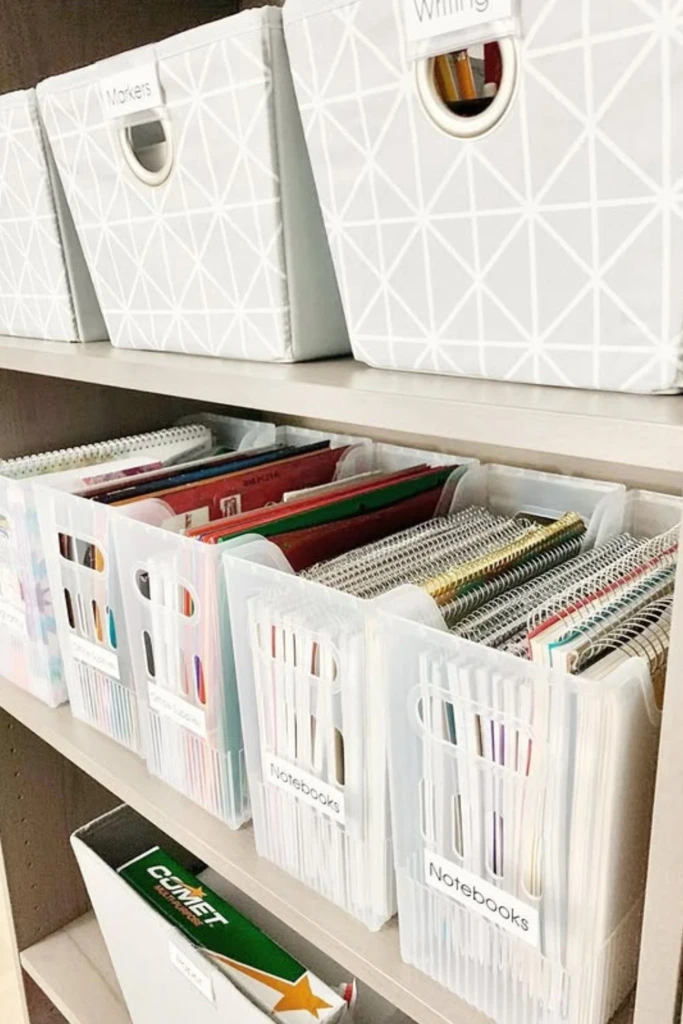
Shelf bins make it easier to organize notebooks, folders, loose papers, and other document-related supplies without leaving everything in open piles. They divide a large shelf into manageable sections and help maintain a consistent arrangement.
Select bins that fit the shelf depth and provide enough height to support the items inside. Upright storage works well for folders and notebooks because their contents remain easy to browse.
Give each bin a defined category, such as school materials, household records, work projects, reference notebooks, or craft paperwork. Front-facing labels help everyone return items to the correct container.
Open bins provide quick access to frequently used materials, while lidded options offer additional protection from dust. Choose the style according to how often you need to reach the contents.
This approach is useful in family offices, study areas, craft rooms, and shared workspaces. Regularly remove unnecessary papers so the bins remain functional instead of becoming another place where clutter collects.
How do you keep paperwork organized long-term without it piling up again?
The key to maintaining an organized paper system is to deal with incoming documents regularly rather than waiting until the piles become overwhelming.
Set up an inbox for new mail and paperwork, then review it at least once a week. Sort documents into actionable items, records to retain, and papers that can be discarded. Complete outstanding tasks promptly and return important documents to their designated folders or containers.
Use a consistent labeling system so you can find records without creating new piles during your search. Scan documents when a digital copy is sufficient, but retain original paperwork whenever it's legally, financially, or practically necessary.
Schedule occasional reviews of your stored documents. Remove expired or unnecessary materials when appropriate, while following applicable record-retention requirements.
Most importantly, make filing part of your routine. A few minutes of maintenance each week is generally easier than reorganizing months of accumulated paperwork.
What papers should you actually keep when organizing documents?
The documents worth keeping depend on your personal circumstances, financial responsibilities, and local record-retention requirements. In general, prioritize paperwork that proves ownership, records important transactions, supports legal obligations, or may be needed for future reference.
Common examples include:
Personal records: Birth certificates, marriage certificates, identification-related records, and other important civil documents.
Financial paperwork: Tax records, selected bank statements, loan documents, and records supporting major financial transactions.
Insurance documents: Current policies, claims correspondence, and relevant proof of coverage.
Medical records: Important test results, treatment summaries, vaccination records, and other information you may need for future care.
Property and ownership records: Deeds, purchase agreements, vehicle ownership documents, and major home improvement records.
Warranties and receipts: Proof of purchase and warranty information for valuable items that may require repair or replacement.
Education and employment records: Diplomas, certificates, contracts, and other documents with continuing practical value.
You generally don't need to retain every advertisement, duplicate receipt, expired promotional flyer, or piece of junk mail. Recycle ordinary unwanted paper when appropriate, and securely shred documents containing sensitive personal or financial information.
Before discarding tax, legal, insurance, or financial records, check the applicable retention requirements. Some documents should be kept for a specified number of years, while certain original records may need to be retained indefinitely.
A well-organized system should make essential paperwork easy to locate while preventing unnecessary documents from occupying valuable space.