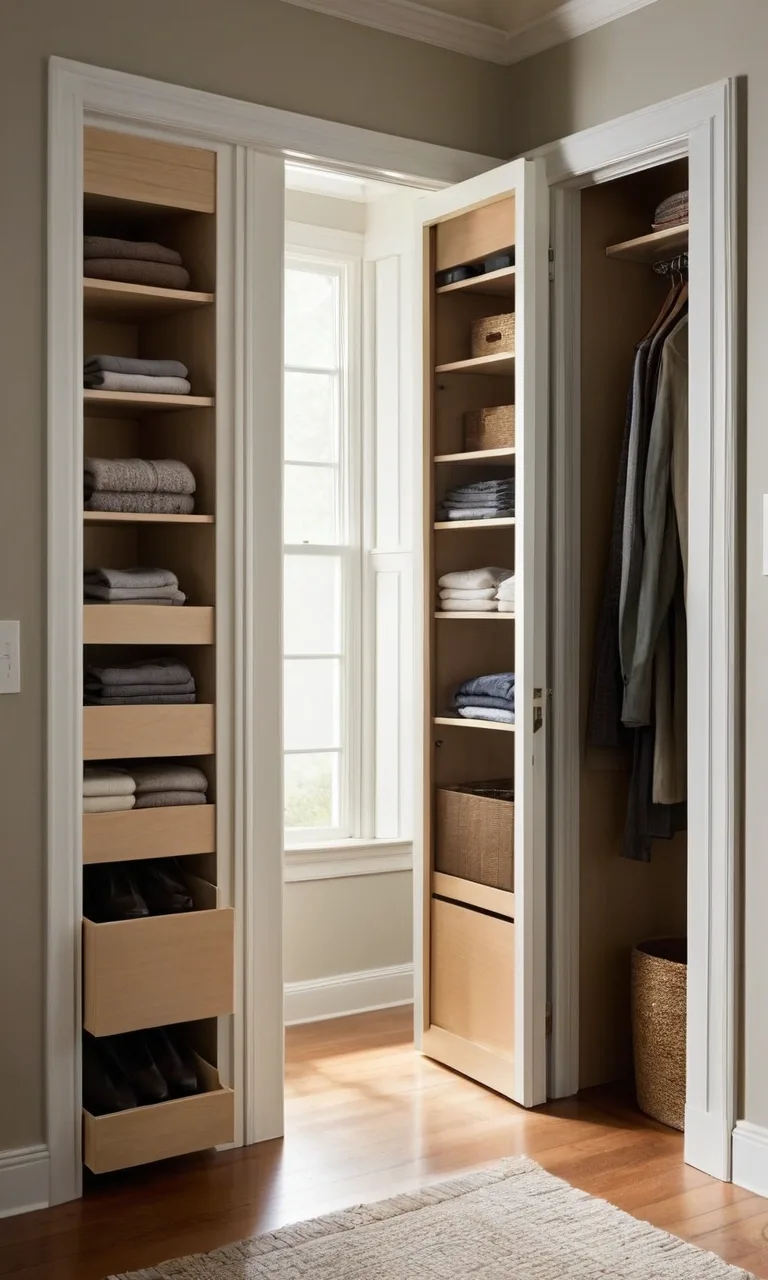
25 Coat Closet Organization Ideas for 2026
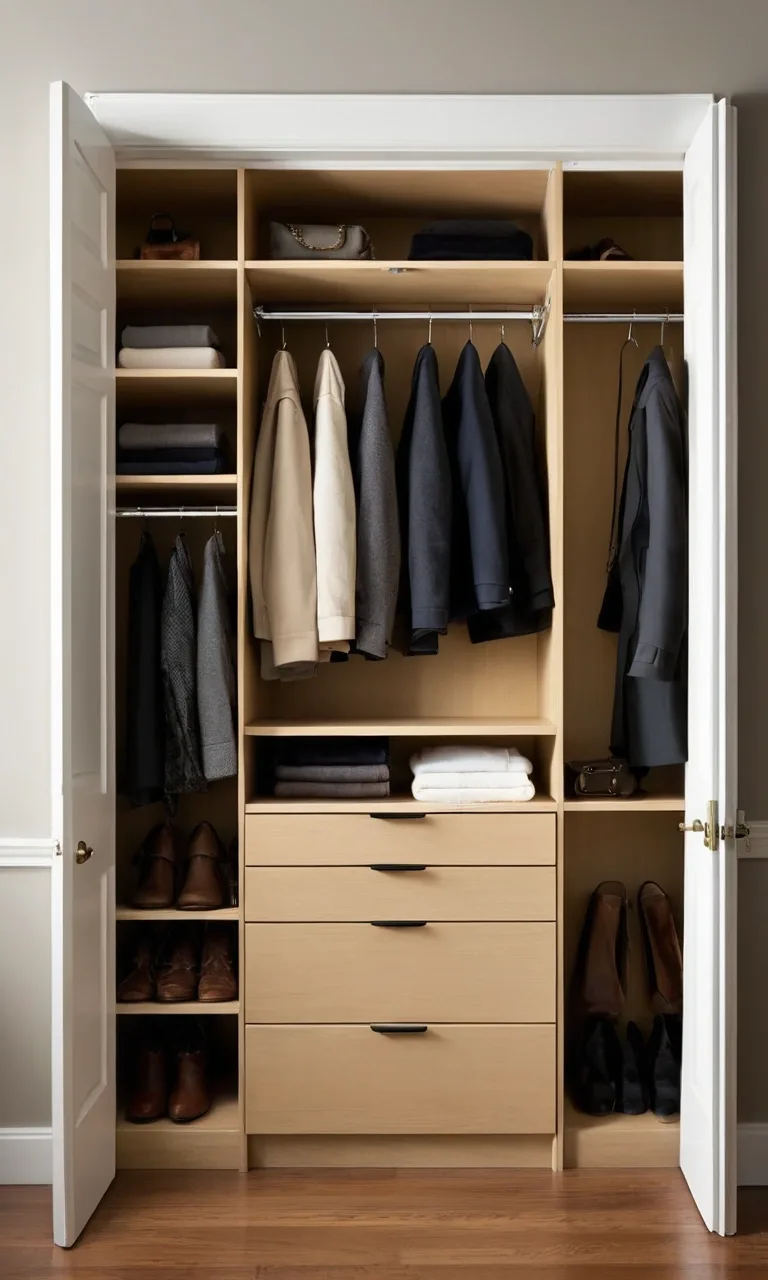
A coat closet can become overcrowded surprisingly quickly. Jackets compete for hanging space, shoes gather near the bottom, and smaller essentials like gloves, hats, and scarves often end up buried beneath everything else.
The solution isn't necessarily a bigger closet. With a thoughtful arrangement, the space you already have can accommodate outerwear, footwear, bags, and everyday accessories without feeling cramped.
The key is to make use of vertical space, separate belongings into practical categories, and choose storage that fits your closet's dimensions. Even a small entryway closet can become easier to navigate with a few well-planned changes.
In this guide, you'll discover 25 coat closet organization ideas designed to improve storage, reduce clutter, and make getting ready to leave home less stressful.
Let's get started!
What Are The Best Storage Solutions For A Narrow Coat Closet?
A narrow coat closet requires a different approach from a spacious walk-in wardrobe. Every shelf, hook, and hanging section needs to serve a purpose without blocking access to other belongings.
Start by identifying the items you reach for most often. Everyday jackets should remain accessible, shoes need a defined place, and smaller accessories benefit from containers that prevent them from becoming scattered.
Look beyond the floor and hanging rod, too. The upper shelves, inside of the door, and side walls may offer useful storage opportunities. Combining these areas can create separate zones for different belongings while keeping the closet practical.
1. Open Shelving
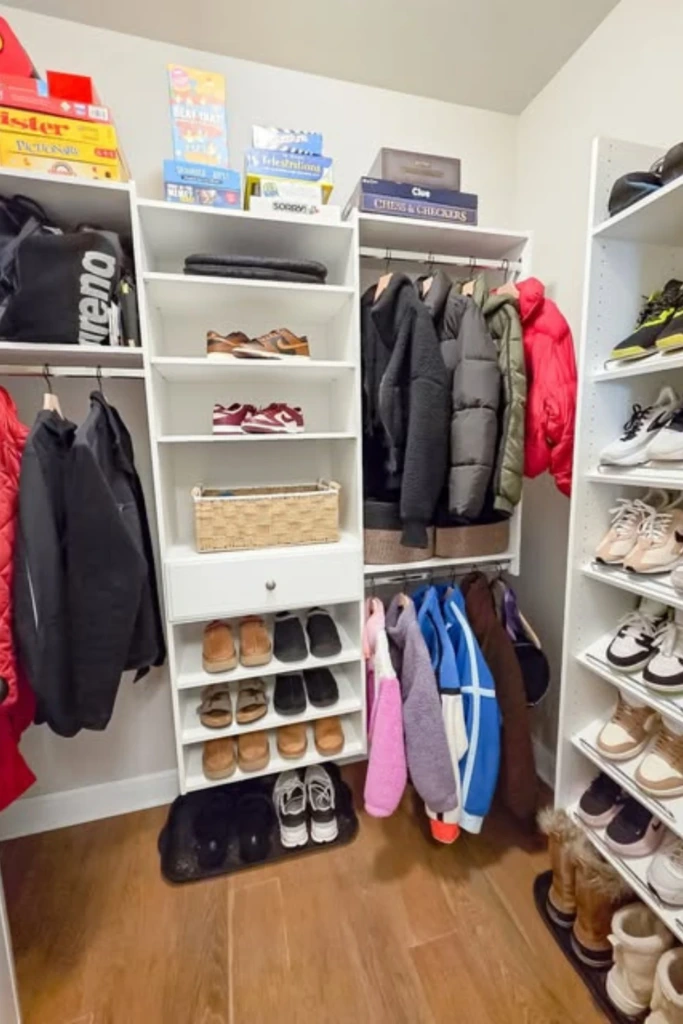
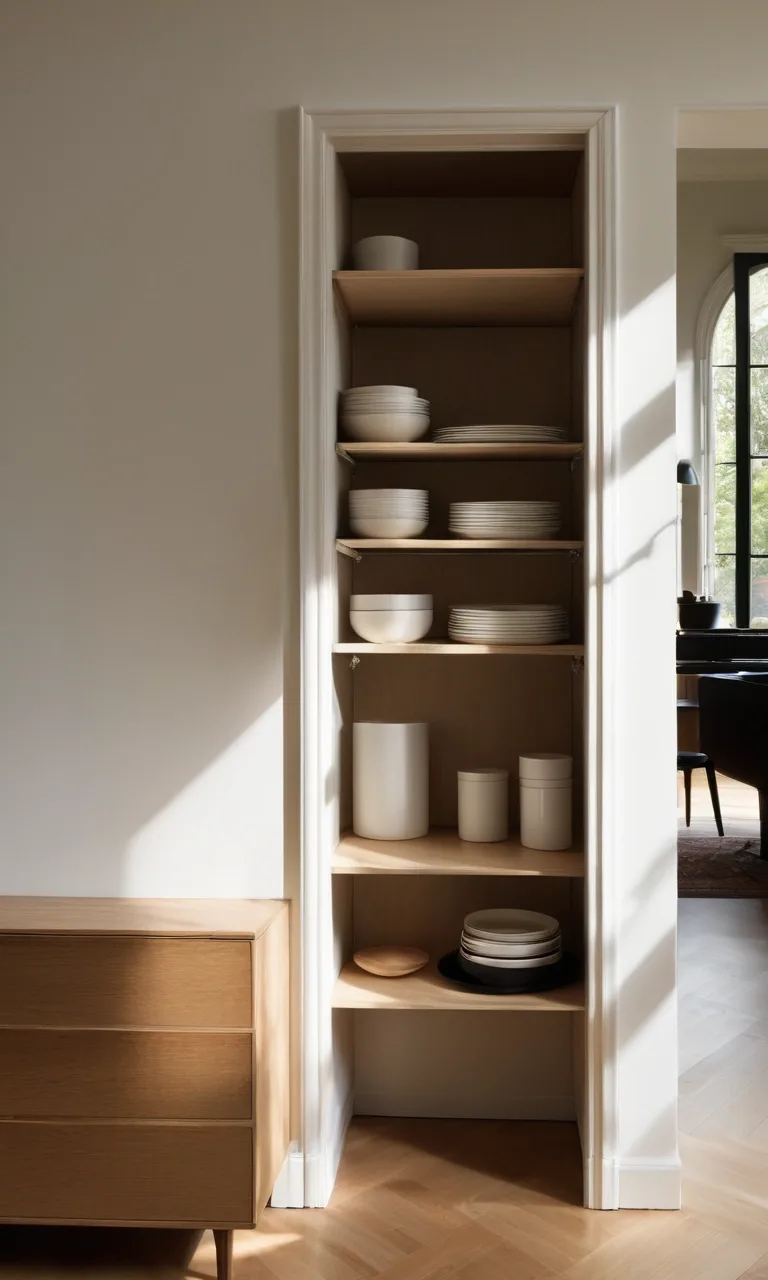
Open shelves provide a straightforward way to organize a coat closet without hiding everything inside bulky containers. A narrow shelving unit can accommodate footwear, folded accessories, handbags, and small storage baskets.
Keep frequently worn shoes on the lower shelves so they're easy to grab when leaving home. Use the middle levels for gloves, hats, and scarves, while reserving the highest shelves for seasonal accessories or items you rarely need.
Choose shelving that fits comfortably inside the closet without interfering with the door or hanging garments. Assigning one category to each shelf makes it easier to maintain order and locate belongings quickly.
2. Double Rods
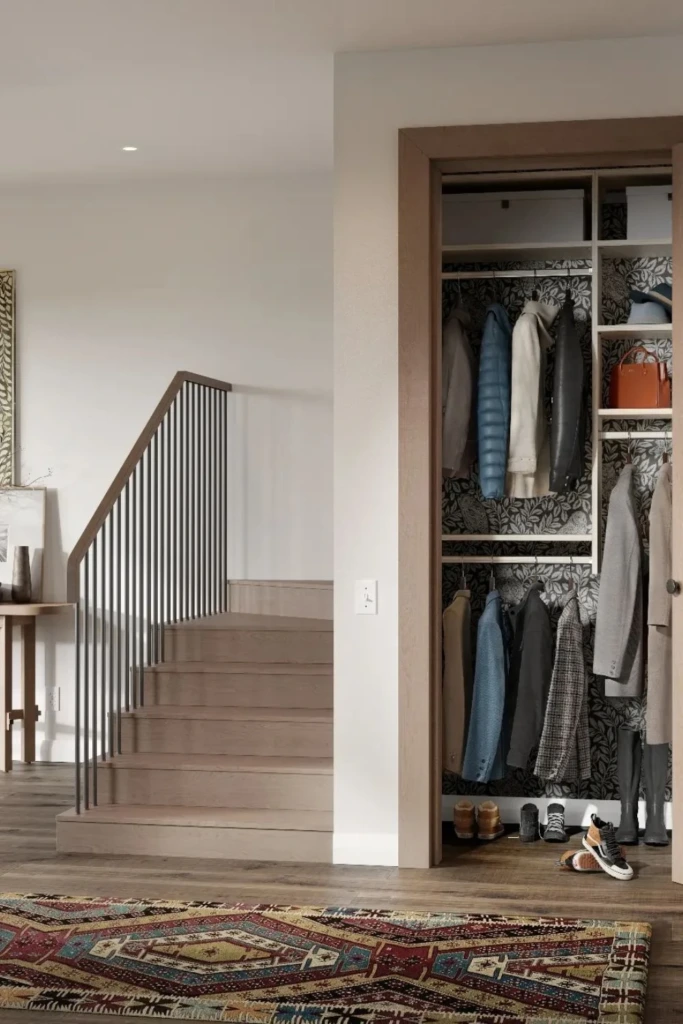
A second hanging rod can make a tall closet considerably more useful. Instead of leaving the entire vertical space above and below one rail unused, you can create separate hanging areas for shorter garments.
For example, the upper rod might hold lightweight jackets, while the lower rod accommodates children's coats or shorter everyday layers. Alternatively, you can organize the two levels by family member.
Before installing another rod, measure the available height and account for the length of your garments. Long coats may require a separate section, and the lower rail should leave enough room for shoes or other storage underneath.
This arrangement works particularly well when several people share a compact closet and need more hanging space.
3. Shelf Baskets
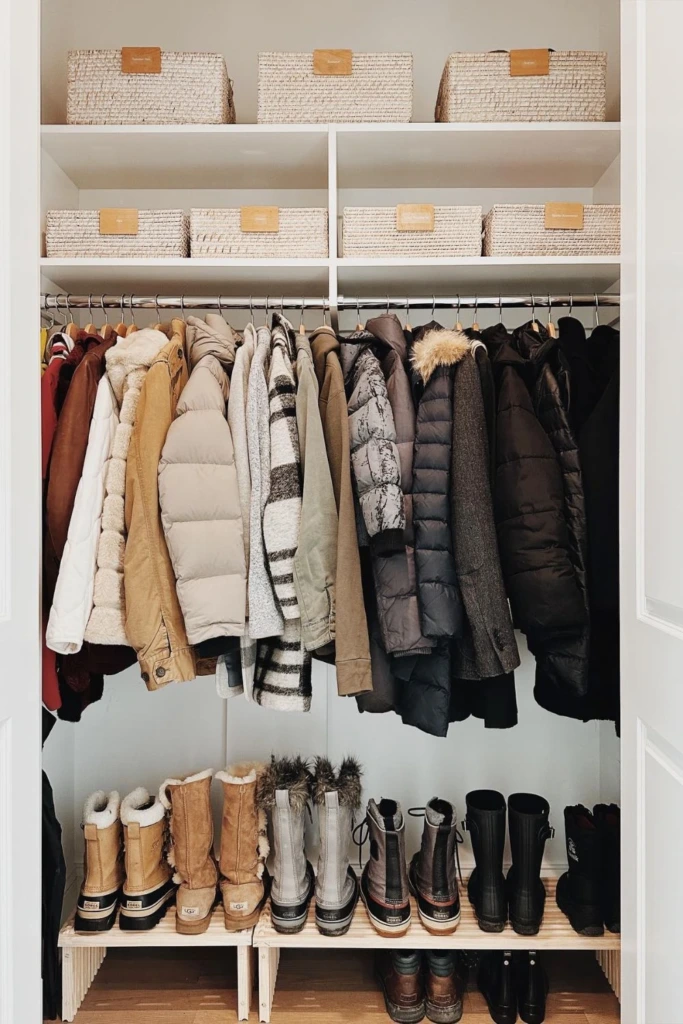
Storage baskets turn an untidy shelf into a collection of manageable categories. Instead of letting scarves, gloves, and hats accumulate in one pile, place each group in its own basket.
Woven baskets can introduce warmth to an entryway, while fabric or plastic versions may be easier to clean. Choose a size that fits the shelf and can be pulled forward without disturbing neighboring containers.
Labels are especially helpful when several family members use the same closet. You might dedicate separate baskets to winter accessories, rain gear, pet leashes, or children's hats.
Keep lightweight, frequently used accessories within comfortable reach. Larger or seasonal collections can occupy higher shelves, provided the containers remain safe to lift down.
4. Bin Dividers
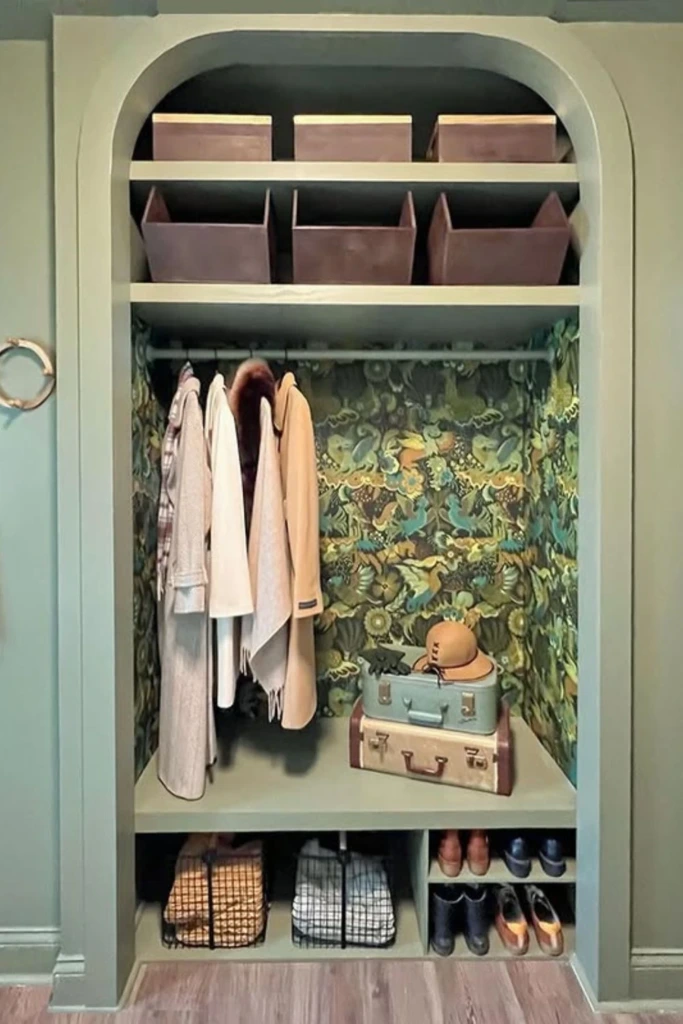
When several types of accessories share one shelf, dividers help prevent them from blending together. Divided bins create individual compartments for items such as beanies, gloves, neck warmers, and small umbrellas.
This system is particularly useful for families who own similar accessories in different sizes or colors. Each compartment provides a clear destination, making it easier to put belongings away after use.
Choose open-top bins when you want quick access, or removable compartment inserts if you already have a suitable storage box.
You can also use one divided container per family member. That approach keeps personal items together and reduces the time spent searching for matching gloves or a particular hat.
5. Door Hooks
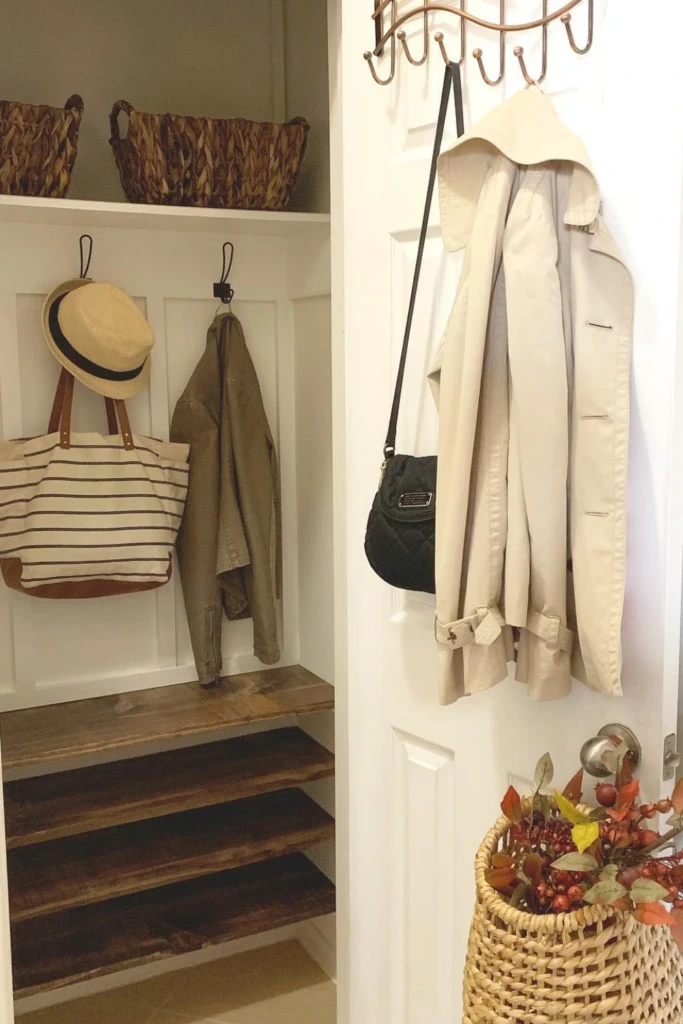
The inside of a coat closet door can provide extra hanging space without occupying another section of the main rail.
Install a suitable hook rack for lightweight bags, umbrellas, reusable shopping totes, or accessories you reach for regularly. Keeping these items on the door frees the main hanging area for coats and jackets.
Over-the-door racks are convenient because many can be installed without drilling. However, check the door's thickness, available clearance, and the manufacturer's weight limits before choosing one.
If you prefer a permanently mounted hook strip, make sure the door material and fixing method can support the intended load.
Avoid placing too many bulky items behind the door. The goal is to create useful storage while ensuring that the door opens and closes freely.
6. Rod Sections
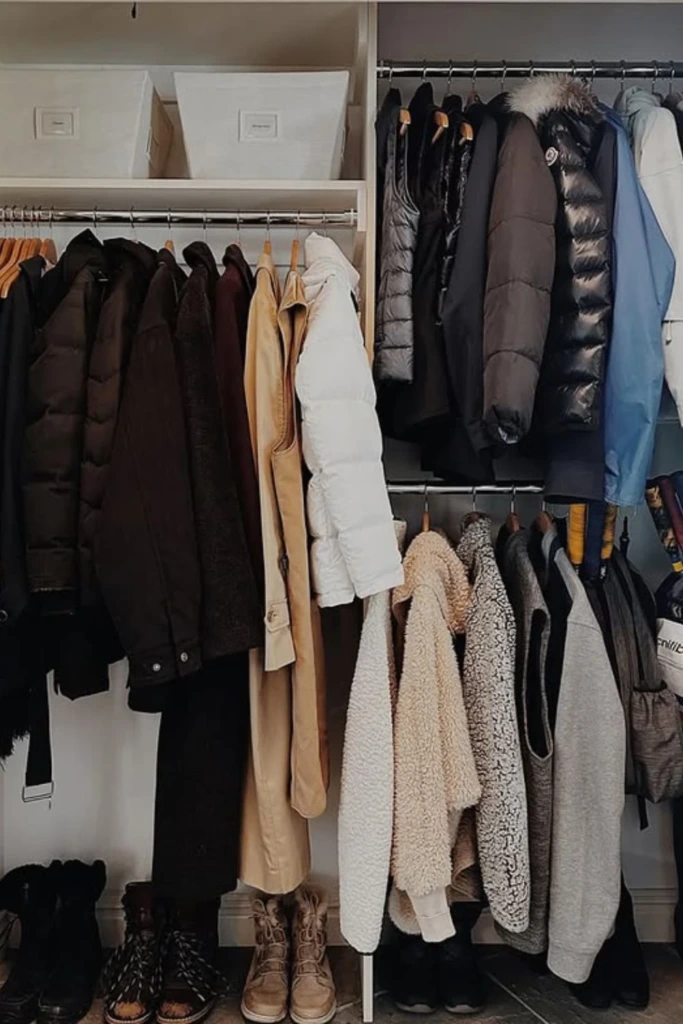
Dividing the hanging rod into clear categories makes a crowded closet easier to navigate. Rather than hanging every garment wherever space happens to be available, establish a consistent arrangement.
You could group heavy winter coats on one side and lightweight jackets on the other. Another option is to separate adult outerwear from children's clothing or arrange garments by how frequently they are worn.
Simple sliding rod dividers can help mark different sections without requiring major changes to the closet.
Keep enough space between garments to remove them comfortably. A well-organized rail should make it easy to find a particular jacket without pulling several others out of the way.
7. Rack Station
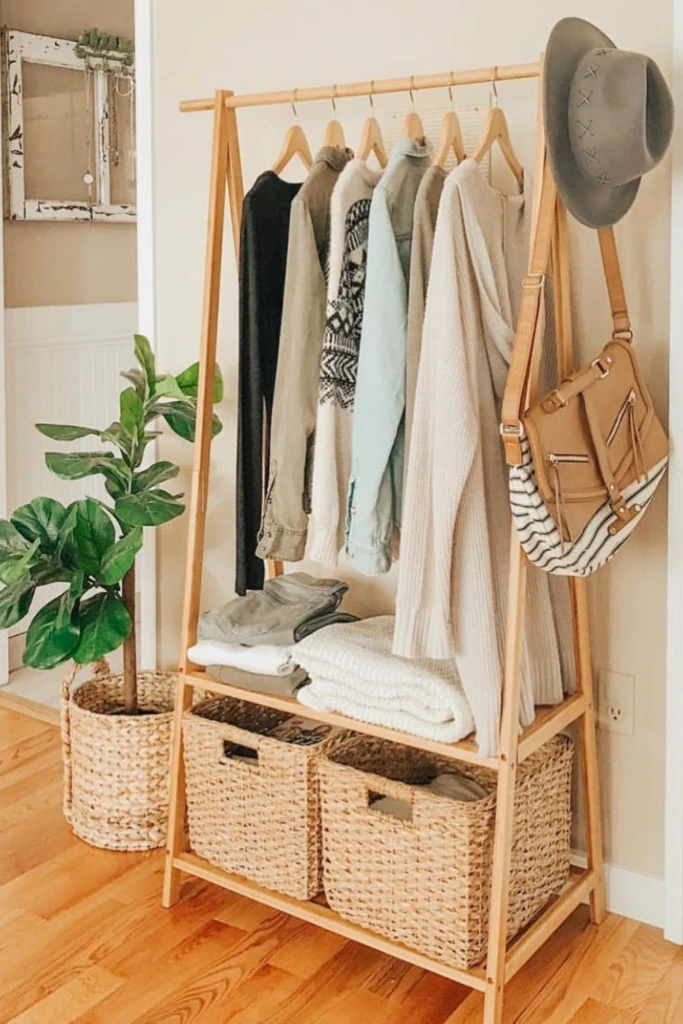
If your entryway lacks a built-in coat closet, a freestanding rack can create a practical alternative. Look for a slim design that combines hanging space with a shelf or lower storage area.
Use the rail for everyday jackets and the lower section for shoes, baskets, or folded accessories. Some models also include hooks for bags and hats, allowing several categories of belongings to share one compact footprint.
Position the rack near the entrance so that coats naturally return to the same place after each outing.
For a small home, a narrow frame with a stable base is usually more practical than an oversized unit. Check the available floor area before purchasing, and avoid placing the rack where it obstructs a walkway or door.
8. Vertical Cubby
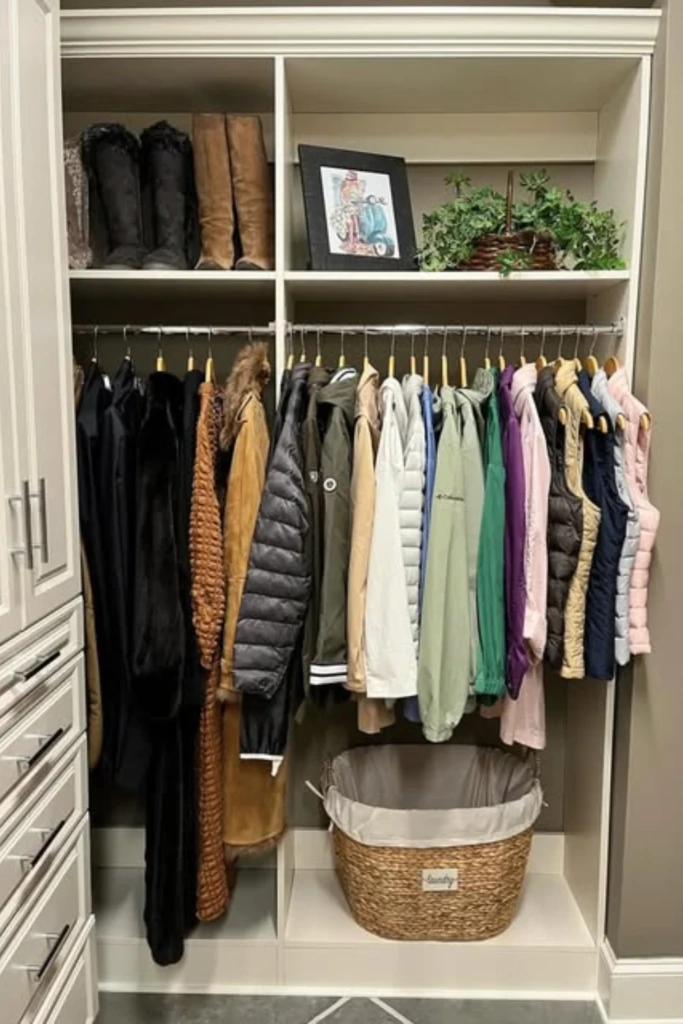
Tall cubbies are useful when boots and shoes occupy too much of the closet floor. A vertical shoe organizer gives footwear individual compartments instead of allowing pairs to spread beneath hanging garments.
Use taller openings for rain boots or winter footwear and shorter compartments for sneakers, flats, or everyday shoes. This arrangement also helps keep different pairs together.
If you have a particularly narrow closet, measure the width and depth carefully before adding a cubby unit. The organizer should fit beside the hanging section without pressing against coats or restricting access.
Allow damp shoes to dry before placing them in enclosed compartments. A little ventilation and regular cleaning will help prevent odors and moisture from building up.
9. Door Organizer
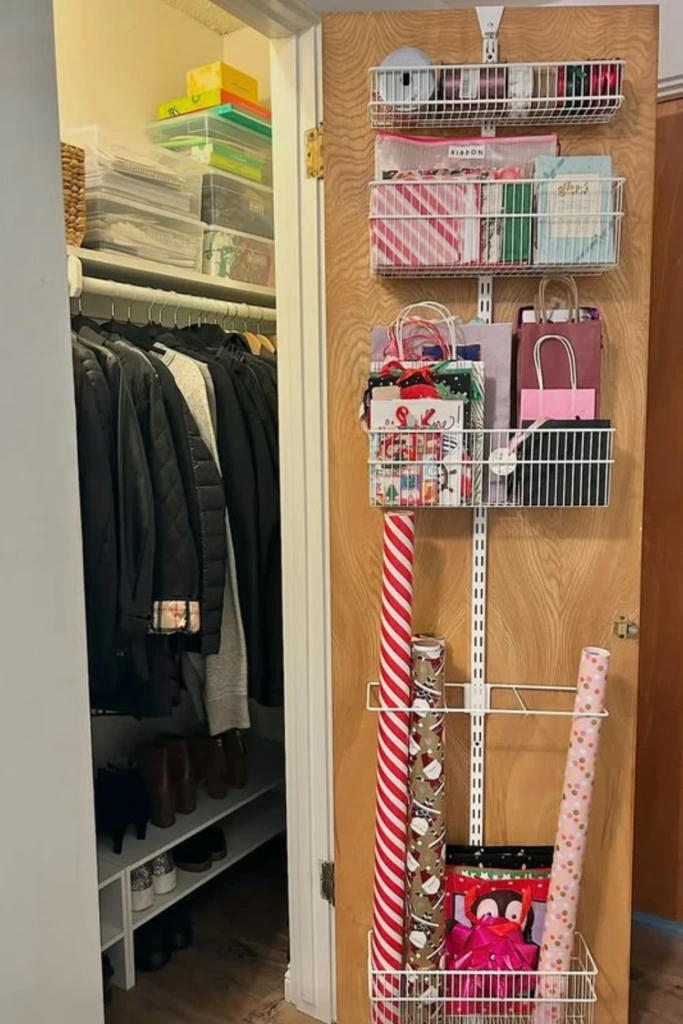
A vertical organizer mounted on the inside of the closet door can hold small belongings that would otherwise crowd the shelves.
Depending on its design, it may accommodate gift bags, folded shopping totes, lightweight accessories, cleaning cloths, or seasonal supplies. Multiple compartments make it easier to keep these items separated.
Choose an organizer that matches the type of belongings you plan to store. Fabric pockets are suitable for lightweight items, while a sturdier rack may be better for heavier containers if the door can support it.
Check that the organizer doesn't interfere with the door frame, hinges, or nearby shelves. Keeping the heaviest belongings elsewhere will make the door easier to use and reduce unnecessary strain.
10. Labeled Bins
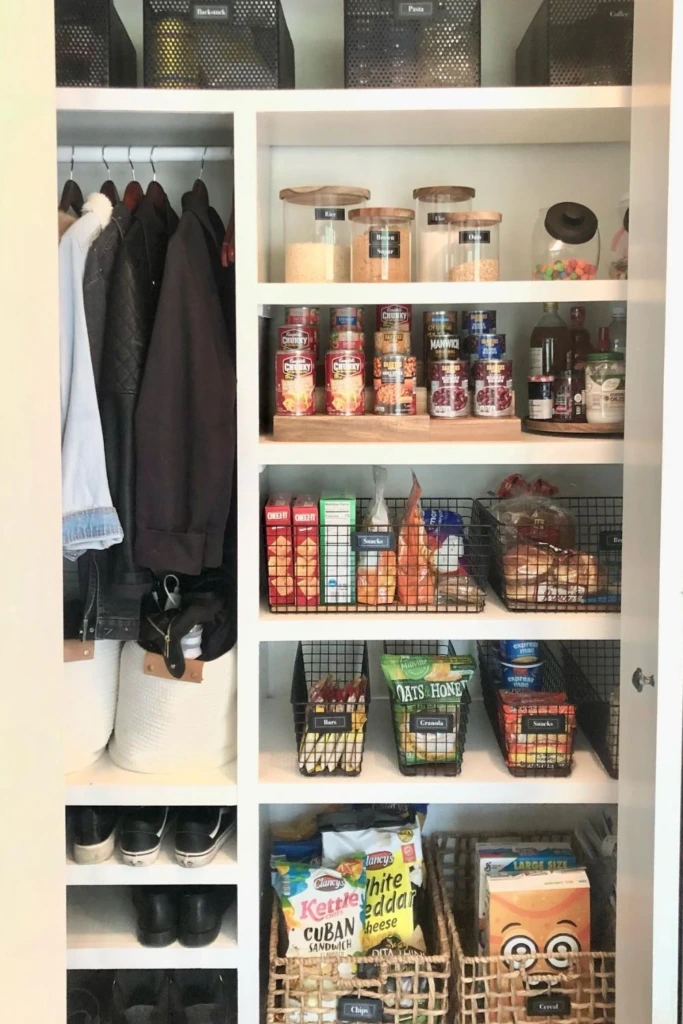
Labels make shared storage systems easier to understand. Instead of opening several containers to find a scarf or pair of gloves, you can go directly to the appropriate bin.
Create categories that reflect your household's needs, such as winter accessories, rain gear, children's belongings, pet supplies, and reusable bags.
Clear containers allow you to see their contents, while opaque bins offer a more uniform appearance. Either option works well when the label is easy to read and the contents remain consistent.
Place frequently used bins on middle shelves and reserve upper storage for items you access less often. Avoid filling containers so tightly that they become difficult to remove.
A simple labeling system encourages everyone in the household to return items to their proper places.
11. Peg Board
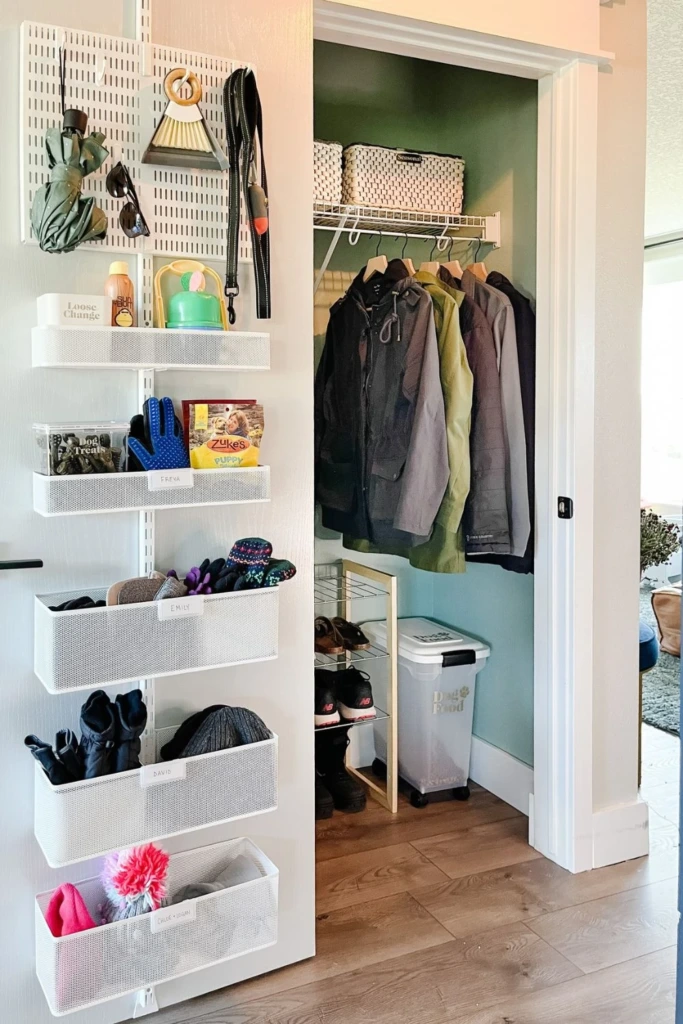
A pegboard creates flexible storage on an unused wall near the coat closet. By combining movable hooks with small shelves or baskets, you can arrange everyday essentials according to your routine.
Use hooks for caps, lightweight bags, dog leashes, and umbrellas. Small containers can hold keys, sunglasses, or other accessories that frequently get misplaced near the entrance.
One advantage of a pegboard is that its layout can change as your needs evolve. You can reposition hooks or add compartments without redesigning the entire storage area.
Choose a board and mounting method suitable for the wall surface and the weight of the items you intend to hang. Keep frequently used belongings at a comfortable height, especially in busy family entryways.
12. Tall Cubbies
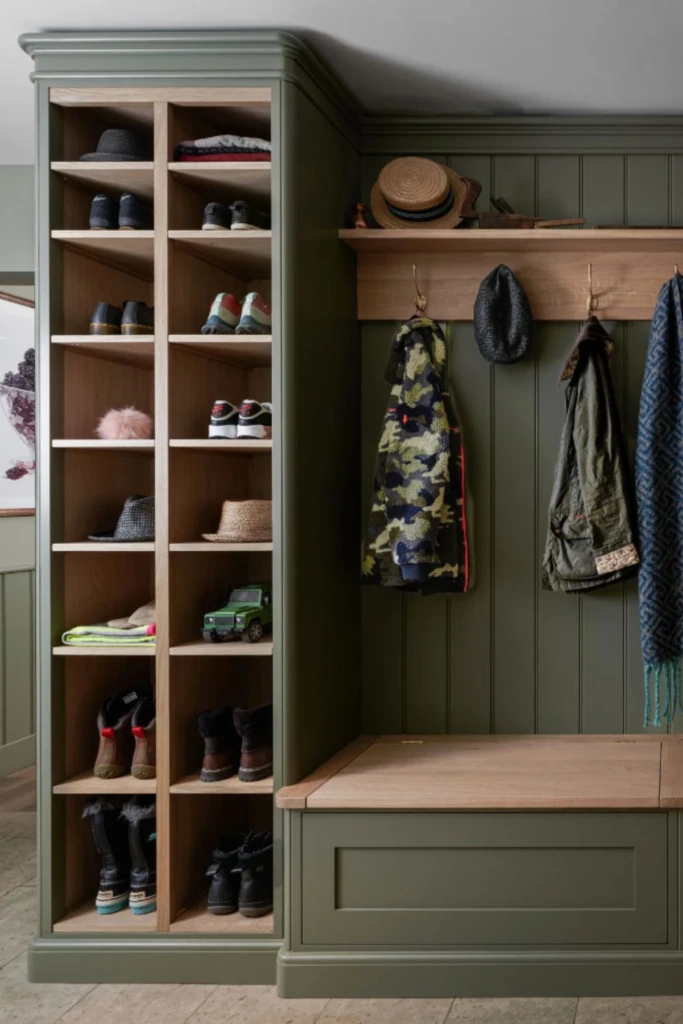
Tall cubbies make it possible to organize several categories of belongings in a compact footprint. Rather than stacking everything on one broad shelf, you create individual spaces for shoes, folded accessories, bags, or small containers.
A vertical unit can work particularly well beside a coat rail, leaving the central hanging area available for outerwear.
Place heavier shoes and frequently used belongings on the lower levels. Use higher compartments for lightweight accessories or items that are needed less often.
You can also assign each cubby a specific purpose, such as everyday footwear, children's accessories, or spare gloves. The clearer the categories, the easier the arrangement becomes to maintain.
Before choosing a unit, make sure it fits the closet's depth and leaves enough room to reach the hanging garments comfortably.
13. Family Zones
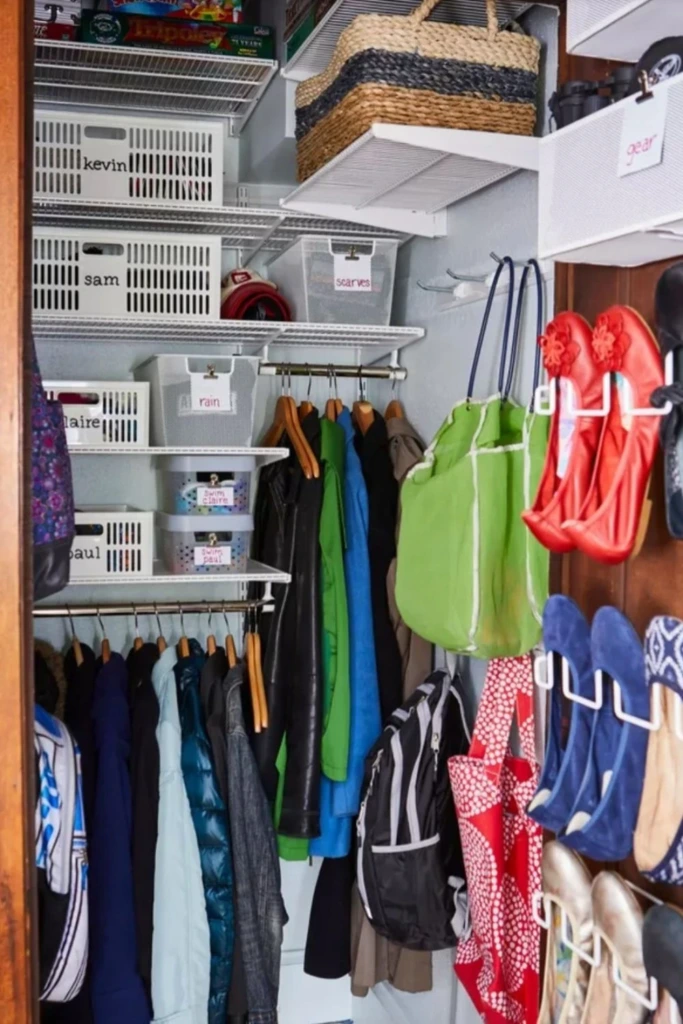
When several people share one coat closet, assigning each person a designated area can prevent everyday clutter from spreading.
Give each family member a specific section of the hanging rod, a labeled basket, or a few hooks. Children's belongings can go lower down so they can reach their coats independently, while adult items occupy higher sections.
If the closet is particularly small, you don't need to create entirely separate storage units. A simple arrangement of labeled bins and consistent hanging sections can accomplish the same goal.
Encourage everyone to return their belongings to the assigned area after coming home. This small habit helps prevent jackets, bags, and accessories from accumulating on the floor.
Family zones are especially useful during busy mornings because each person can find what they need without searching through someone else's belongings.
14. Clear Boxes
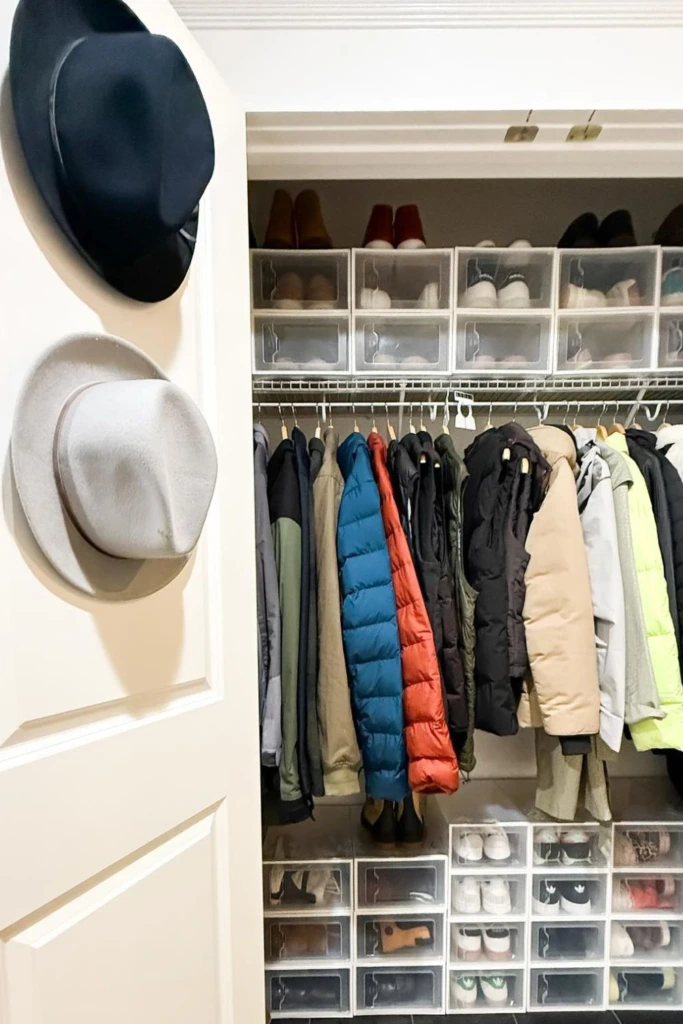
Transparent storage boxes make it easier to identify footwear and accessories without opening every container.
They work well on upper shelves for shoes that aren't worn daily, seasonal accessories, or small items that need protection from dust. Stackable designs help use vertical space while keeping the arrangement orderly.
For shoes, consider boxes with front-opening panels so you can retrieve a pair without removing the containers above it. If you prefer traditional lidded boxes, label the front with the contents.
Choose boxes that are appropriately sized for the items inside. Oversized containers can become heavy and awkward to move, particularly when stored above shoulder height.
Before storing footwear for an extended period, clean and dry it thoroughly. This helps keep the contents in better condition and prevents dirt from transferring to other belongings.
15. Bag Hooks
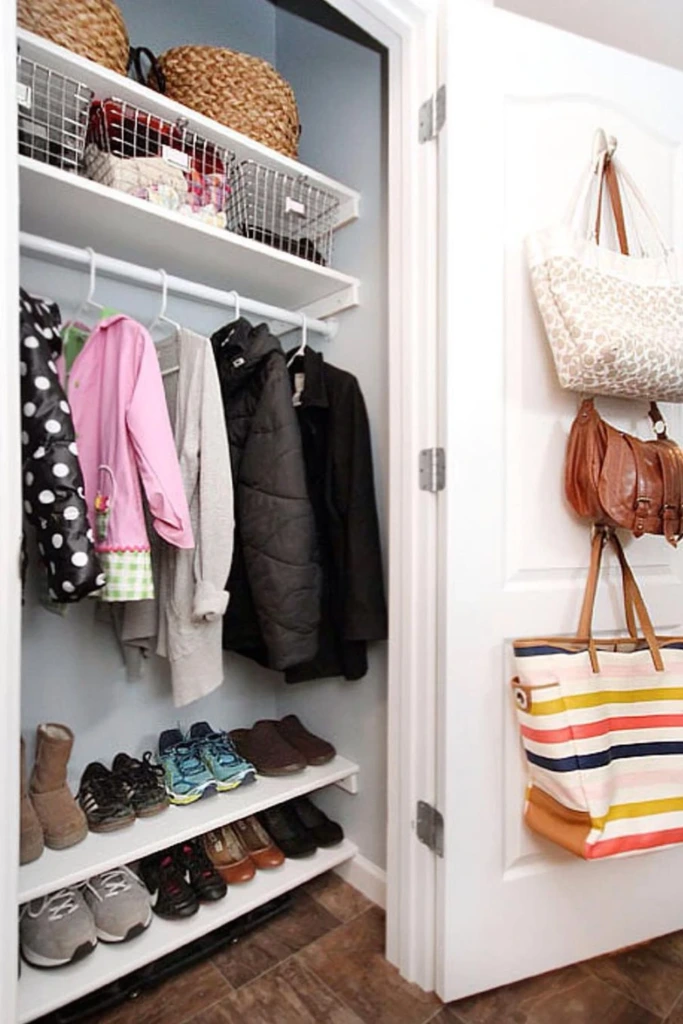
Handbags, backpacks, and shopping totes can consume valuable shelf space when they're stacked together. Hooks provide an alternative that keeps bags visible and accessible.
Mount several hooks on a suitable side wall or the inside of the door. Position them at different heights when necessary so that straps don't overlap or interfere with neighboring bags.
Reserve the most accessible hooks for bags you use regularly. Less frequently used totes can occupy higher positions, provided they're easy and safe to reach.
For heavier bags, use hooks and fixings designed to support their weight. Avoid hanging too many bags from a single weak attachment.
This arrangement keeps bags separate from coats, prevents straps from becoming tangled, and makes it easier to grab the right bag before leaving home.
16. Shoe Shelves
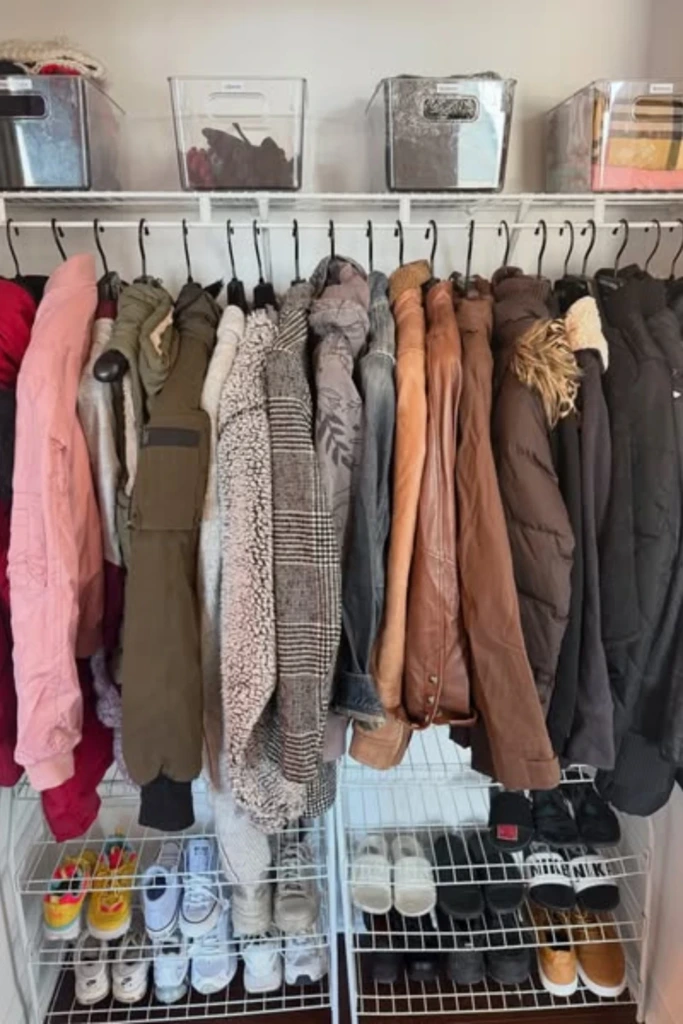
Shoes often take over the bottom of a coat closet because they lack a dedicated storage area. A compact shoe shelf creates separate levels for different pairs and helps keep the floor clear.
Place everyday footwear on the lowest shelf for convenient access. Use higher levels for dress shoes, children's shoes, or pairs worn only occasionally.
Open or ventilated shelving is a practical choice for shoes that may retain moisture after outdoor use. It also makes it easier to spot dirt and clean the storage area.
Measure the space beneath your hanging garments before choosing a rack. You need enough room for shoes while ensuring that long coats don't drag across them.
Keeping footwear on designated shelves makes the closet easier to clean and reduces the chance of shoes becoming scattered throughout the entryway.
17. Wall Rails
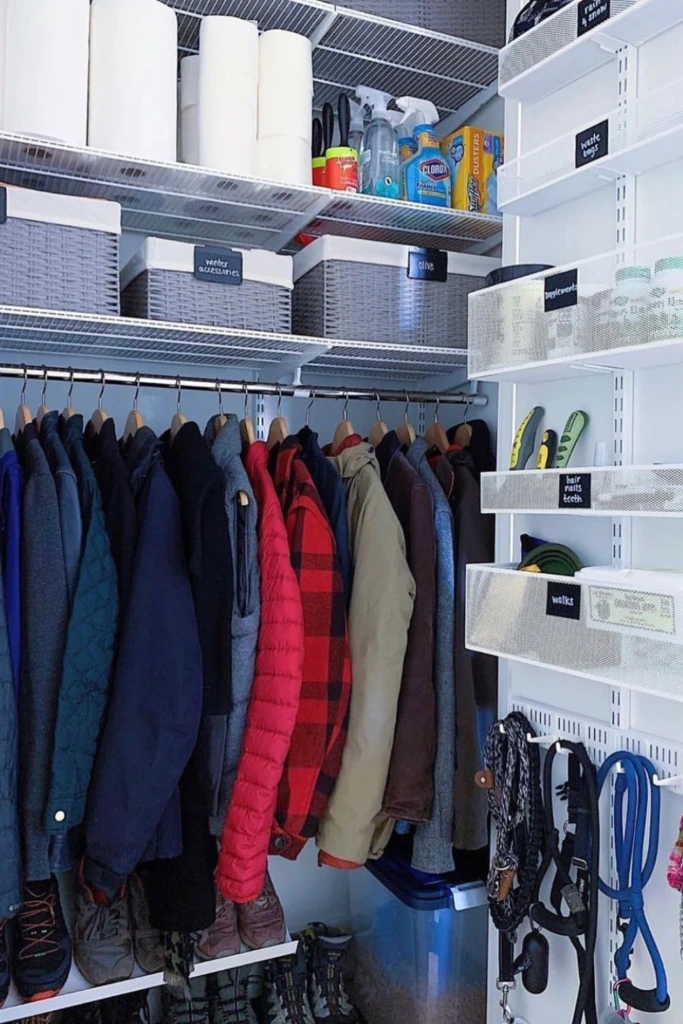
Adjustable wall rails make use of vertical surfaces that might otherwise remain empty. These systems can support movable hooks, baskets, and small shelves, depending on the design.
Use the rails for reusable shopping bags, pet accessories, umbrellas, or other lightweight essentials. Movable components allow you to change the arrangement when your storage needs shift.
This option is especially useful when a traditional shelving unit would make a narrow closet feel too crowded.
Install the rails using fixings suitable for the wall material and intended load. Check the available clearance around the hanging rod and door before mounting anything.
By moving small belongings to the side wall, you can keep the main shelves available for shoes, baskets, and other items that need a larger surface.
18. Box Shelves
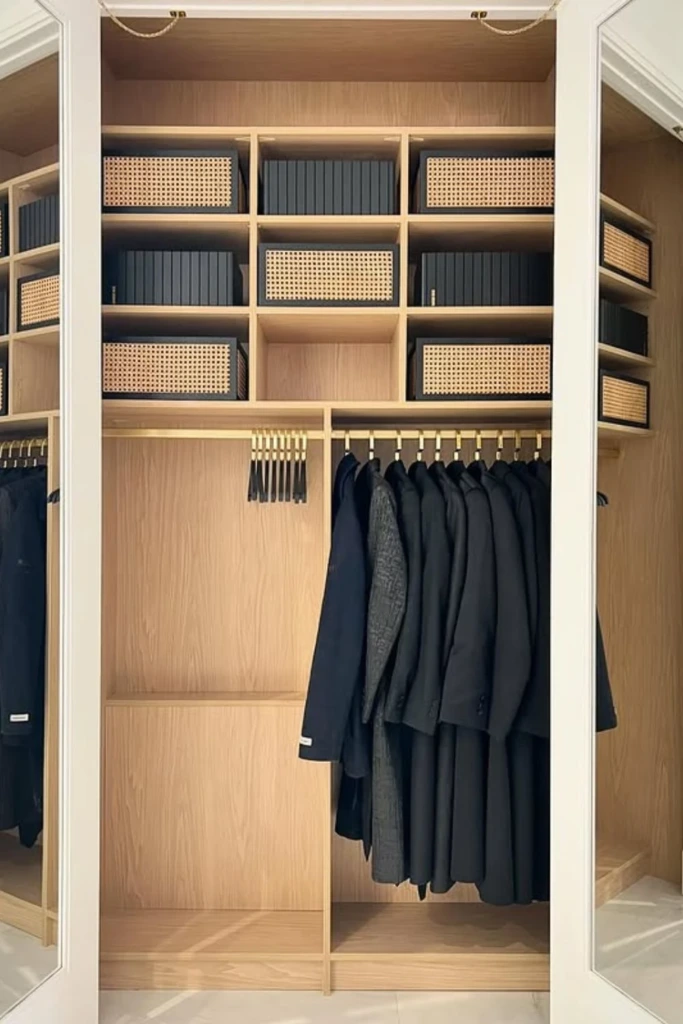
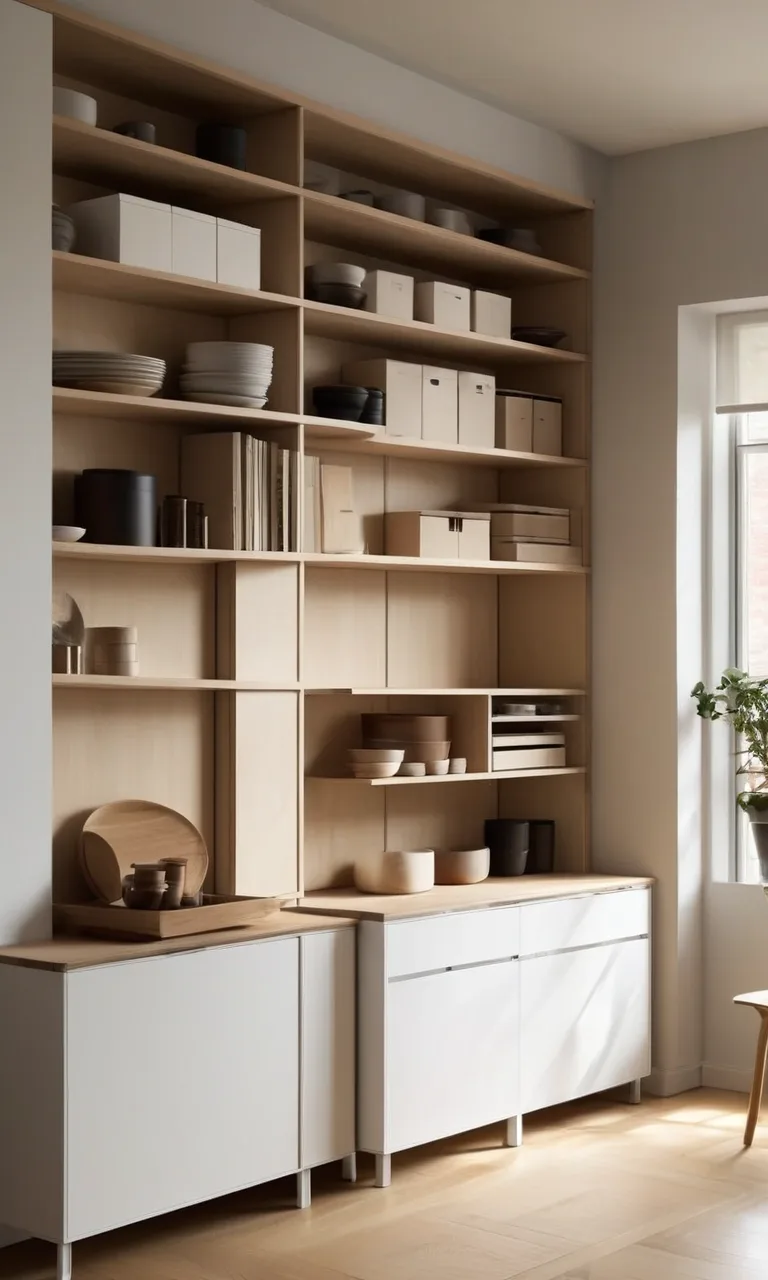
Box shelves divide a large storage area into smaller compartments. They can be particularly helpful above a coat rod, where miscellaneous items often accumulate in an untidy pile.
Use individual compartments for seasonal accessories, folded scarves, compact bags, or labeled storage boxes. Keeping similar containers together gives the upper section a more consistent appearance.
If you frequently need certain items, leave them in an accessible compartment rather than placing them behind several boxes.
Box shelves work best when the closet has enough height to accommodate them without making hanging garments difficult to reach.
Measure the available space before installing the shelves, and ensure that the mounting system can safely support the intended weight. Store lighter belongings overhead and keep heavier items at lower levels.
19. Drawer Tower
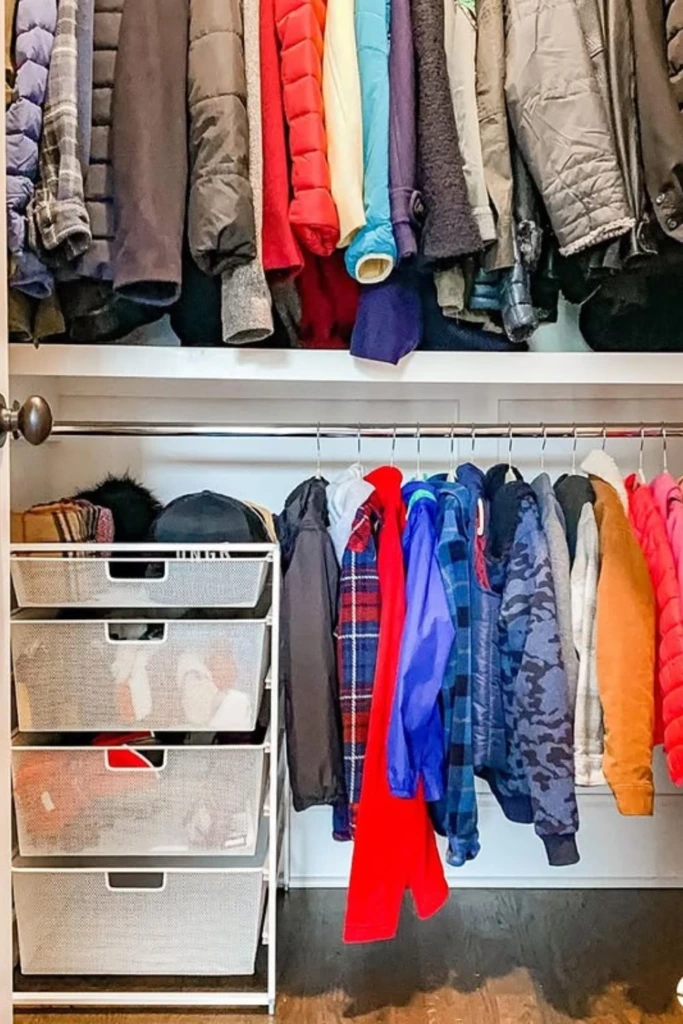
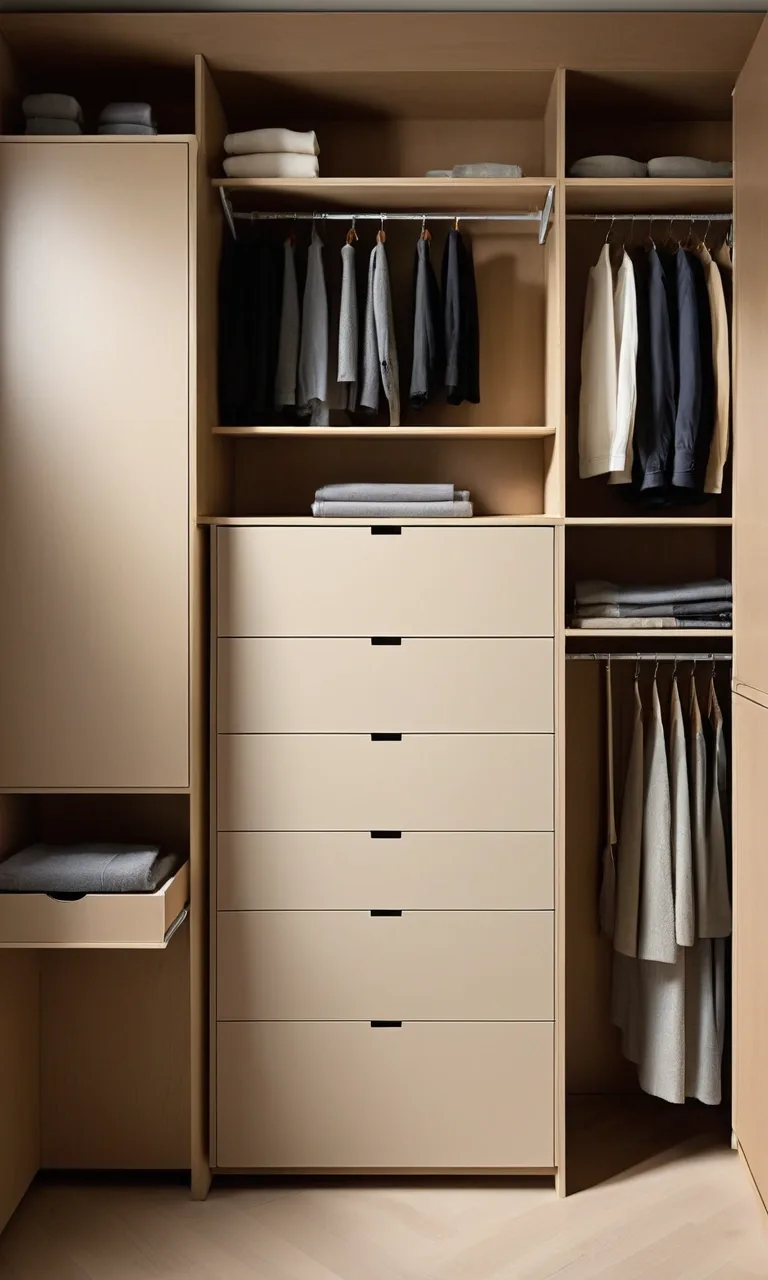
A slim drawer tower offers enclosed storage for accessories that are easily misplaced. Gloves, hats, scarves, and other small belongings can be divided among separate drawers instead of gathering on shelves.
Choose a unit that fits beside the hanging area without making the closet difficult to navigate. Narrow drawers can be especially useful in an unused corner.
You might assign one drawer to winter accessories, another to children's items, and a third to small everyday essentials.
Transparent drawers make the contents visible, while opaque versions create a cleaner, less busy appearance. Simple labels can make either style easier to use.
Avoid overfilling the drawers, since crowded compartments quickly become difficult to maintain. A little unused space also makes it easier to return items after use.
20. Side Towers
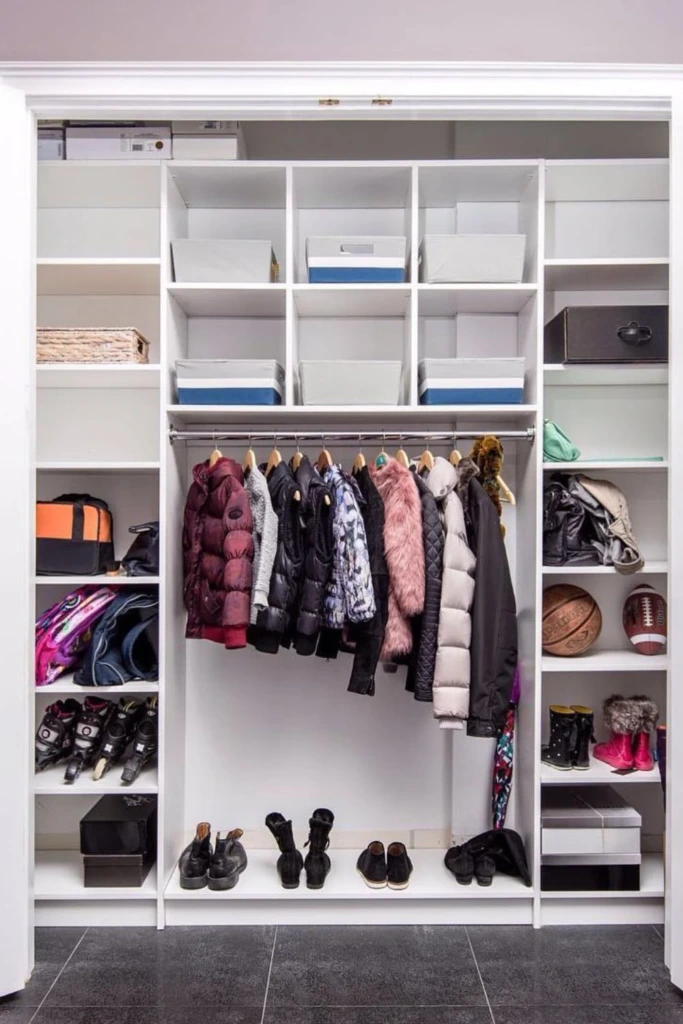
Side towers provide additional shelving while preserving the central area for hanging coats. A tall, narrow storage unit can make good use of space beside the main rail.
Arrange belongings according to size and frequency of use. Shoes and boots generally work well on lower shelves, while bags and everyday accessories can occupy the middle levels. Seasonal containers can go higher up.
If the closet is narrow, choose a unit with a depth that doesn't interfere with the door or hanging garments.
You don't necessarily need a custom-built tower. A freestanding shelving unit can work if it fits securely and leaves sufficient clearance.
This layout creates a clear division between outerwear and other belongings, helping the closet feel more structured without requiring additional floor space.
21. Basket Cubbies
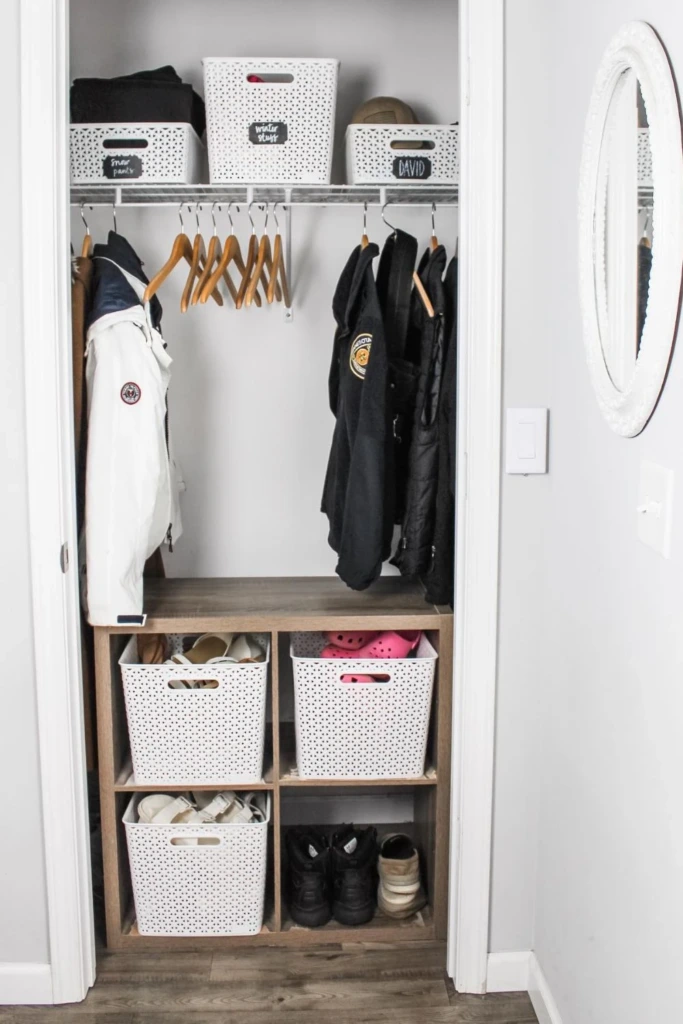
Basket cubbies combine the structure of shelving with the convenience of removable containers. Each compartment becomes a designated place for a particular group of items.
Use baskets for gloves, scarves, children's accessories, small bags, or everyday footwear. Matching containers can create a consistent look, while different colors may help family members identify their belongings.
Keep frequently used baskets on lower or middle shelves so they can be removed easily. Less frequently used accessories can occupy higher compartments.
Choose baskets that fit the cubbies without becoming wedged inside. Handles are useful when you need to carry accessories to another room or empty the contents for cleaning.
The main benefit is flexibility: you can remove a basket when necessary while keeping the rest of the storage arrangement intact.
22. Top Baskets
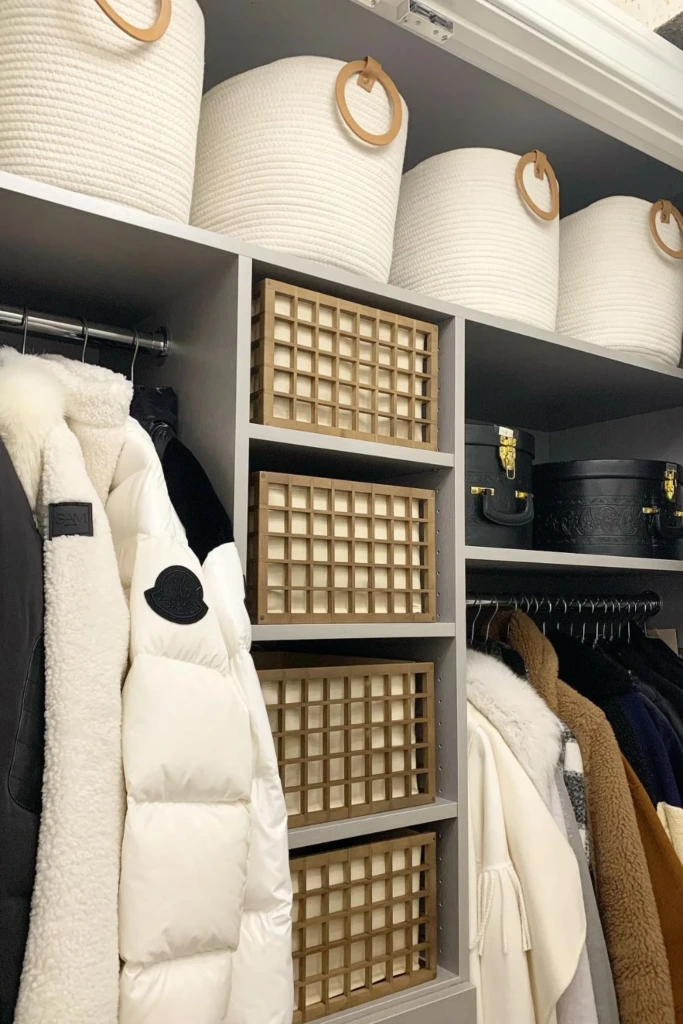
The upper shelf is a useful place for items that don't need to be accessed every day. Instead of stacking loose belongings there, use baskets to group them into manageable collections.
Possible contents include seasonal scarves, spare gloves, winter accessories, lightweight bags, and other infrequently used essentials.
Fabric baskets are convenient for lighter items, while sturdy containers may be preferable for belongings that need more protection. Choose sizes that fit the shelf and remain easy to lift down.
Labels help distinguish similar baskets, particularly when they're stored above eye level.
Keep heavy objects off high shelves, and avoid placing containers where you must stretch or climb unsafely to retrieve them. Frequently used items should remain within comfortable reach.
23. Split Levels
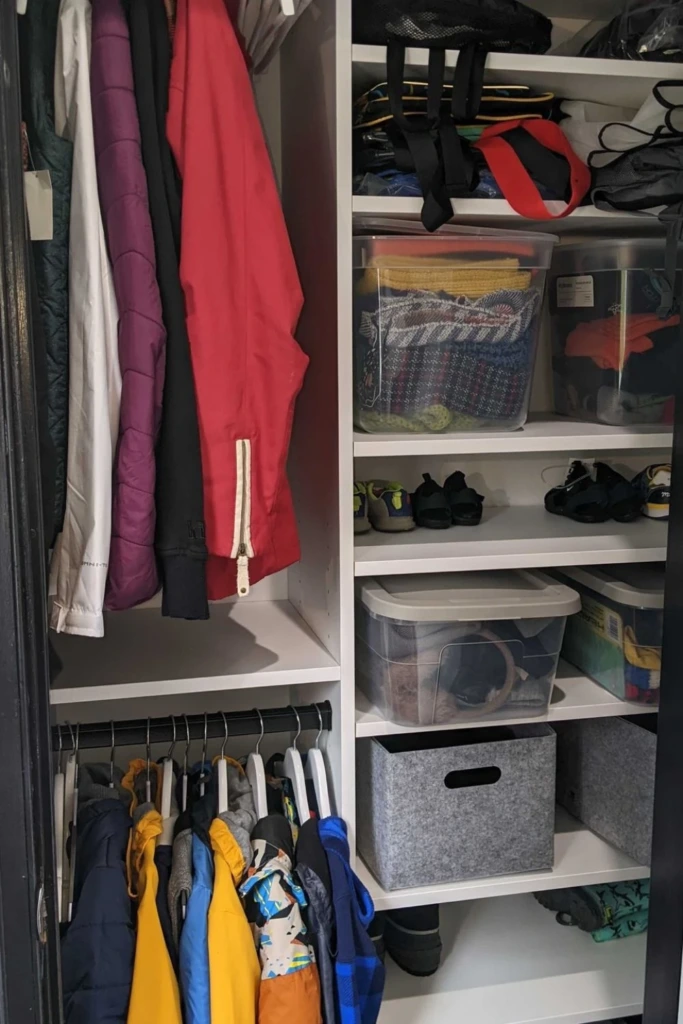
A split-level hanging arrangement separates garments according to their length or intended use. Instead of relying on one continuous rod, the closet has distinct hanging sections at different heights.
A lower rod can accommodate children's jackets, cropped coats, and shorter layers, while another section provides room for longer or bulkier outerwear.
The exact configuration depends on the garments you own. Long coats need sufficient vertical clearance, so they shouldn't be forced into a space designed for shorter jackets.
You can combine split hanging areas with shelves or baskets along the sides to store gloves, hats, and other accessories.
Before adding another rod, measure the closet's height and width carefully. The goal is to improve capacity without making clothes difficult to remove or causing them to brush against shoes and stored belongings.
24. Shoe Tiers
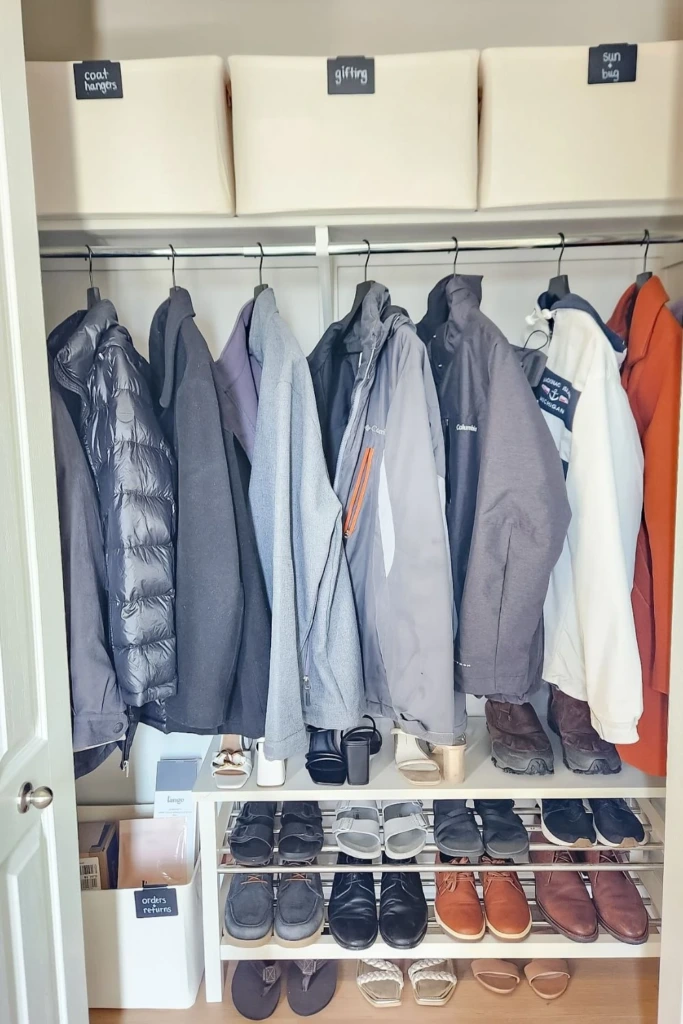
Tiered shoe racks provide multiple levels of footwear storage within a relatively small area. They're useful when several pairs need to fit beneath a coat rail.
Keep everyday shoes on the easiest level to reach, and use the remaining tiers for occasional footwear or seasonal pairs.
Adjustable racks can accommodate different shoe sizes, while open designs make it easier to identify pairs and clean away dirt.
Check the height of the rack before purchasing it. There should be enough clearance above the top tier for hanging garments, and the unit shouldn't block access to other storage.
For homes where shoes are frequently wet or muddy, allow them to dry before returning them to the rack. Regular cleaning will help keep the closet fresher and prevent dirt from spreading.
25. Shoe Tower
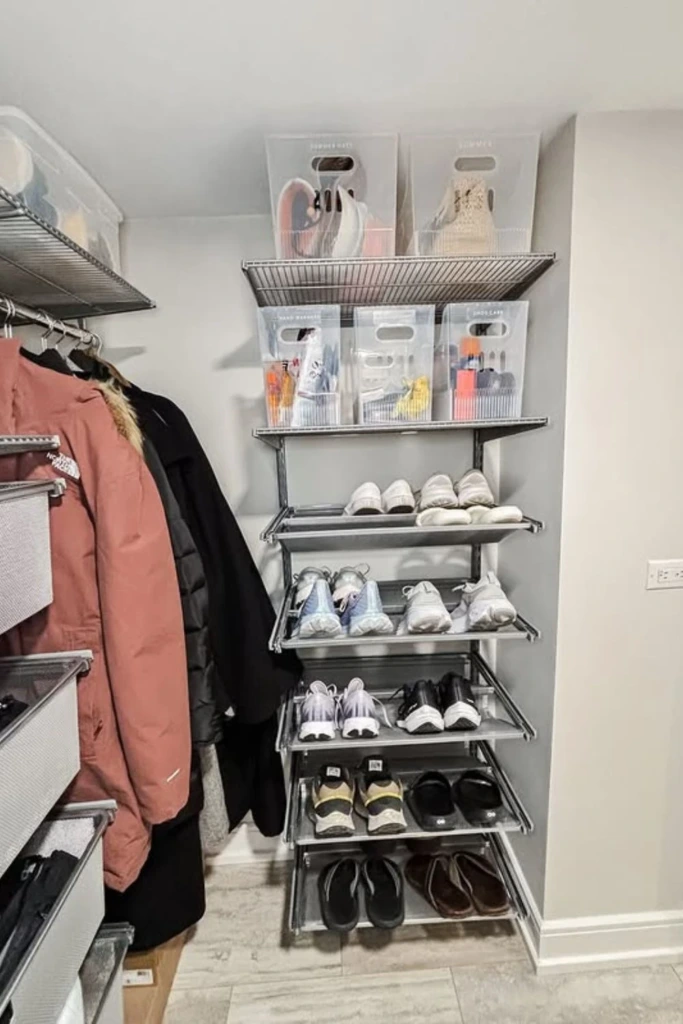
A vertical shoe tower is another option when the closet floor is limited but the room has unused height.
Unlike a wide shoe rack, a tower stacks multiple shelves upward, creating individual spaces for footwear while preserving more horizontal room for other belongings.
Use the most accessible levels for frequently worn sneakers, flats, or everyday shoes. Store occasional footwear on higher or lower shelves, depending on how easy the unit is to reach.
Some towers feature angled shelves that make pairs easier to see, while others use flat compartments that accommodate different styles.
Measure the available footprint and height before selecting a tower. A stable unit that fits neatly against a side wall is generally more practical than one that crowds the hanging area.
Keep the shoe storage proportionate to your collection so the closet remains functional rather than simply becoming a place to accumulate more belongings.
How do you organize a narrow coat closet without making it feel crowded?
The best approach is to give every category of belongings a designated place while avoiding unnecessary storage furniture.
Start by removing items that no longer fit, are rarely used, or belong elsewhere in the home. Then organize the remaining belongings into groups, such as coats, shoes, bags, and smaller accessories.
Use the upper shelves for lightweight seasonal items, add a slim shoe rack near the bottom, and consider door hooks or wall-mounted storage for accessories. If the closet is tall enough, a second hanging rod may create additional room for shorter garments.
Choose organizers that match the closet's actual dimensions rather than filling every available gap with containers. Leaving a little breathing room makes it easier to remove coats, access shelves, and return belongings to their proper places.
Finally, keep everyday essentials within easy reach and review the arrangement whenever the season changes. A simple system that suits your routine is more sustainable than one that looks organized but is difficult to use.
What should you store in a coat closet besides jackets?
A coat closet can accommodate several everyday essentials as long as they have enough room and a clear storage location.
Common options include:
Footwear: Sneakers, flats, boots, and other shoes used when leaving home.
Accessories: Hats, gloves, scarves, and cold-weather essentials.
Bags: Backpacks, handbags, reusable shopping totes, and compact travel bags.
Rain gear: Umbrellas, lightweight raincoats, and waterproof accessories.
Pet supplies: Leashes, harnesses, and small walking accessories.
Seasonal belongings: Off-season hats, spare gloves, and lightweight weather-related gear.
Use baskets, hooks, drawers, or labeled containers to keep these categories separate. Store frequently used items at accessible heights and reserve upper shelves for belongings you need less often.
Avoid overcrowding the closet with unrelated household supplies. Damp shoes and wet outerwear should be allowed to dry, and cleaning products should be stored securely away from children and pets.
When each item has a clear purpose and a consistent place, your coat closet can function as a convenient entryway storage area rather than becoming another source of clutter.