25 Brain Games for Dogs for 2026
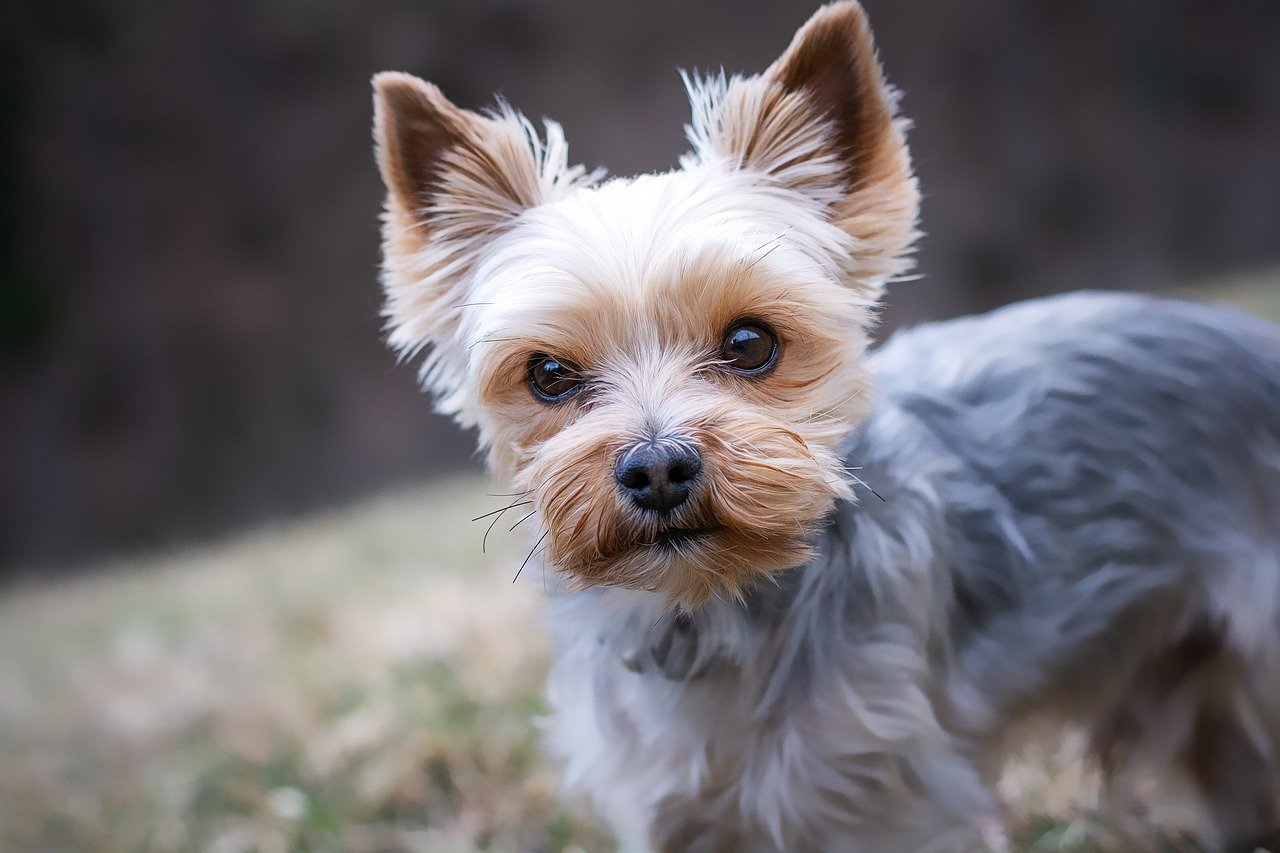
Dogs need more than physical exercise to stay happy and engaged. Mental challenges give them opportunities to sniff, investigate, remember, solve problems, and communicate with their owners. A short thinking session can also add variety to days when long outdoor activities aren't practical.
The best brain games don't need to be complicated or expensive. Many can be created with treats, toys, towels, cardboard, or simple training exercises. Always match the difficulty to your dog's age, confidence, mobility, and experience, and supervise activities involving small objects or homemade materials.
25 Brain Games for Dogs
These 25 activities offer different ways to exercise your dog's mind. Some focus on scent, others encourage problem-solving or self-control, and several combine mental work with physical movement. Start easy so your dog understands the goal, then gradually make each challenge more interesting.
1. Hide and Seek
Hide and seek turns an ordinary household game into an exciting search challenge. Ask your dog to stay while you hide somewhere nearby, then call their name and encourage them to find you.
Begin with obvious hiding places, such as behind a doorway or around a corner. Once your dog understands the game, choose more difficult locations. Praise or reward them when they discover you so the search remains positive and enjoyable.
2. The Shell Game
Place a treat beneath one of three lightweight cups while your dog watches. Move the cups around slowly and encourage your dog to identify which one contains the reward.
For beginners, make only one or two simple movements. Increase the challenge after your dog consistently succeeds. Use sturdy cups that are large enough that your dog cannot accidentally swallow or break them.
3. Puzzle Toys
Puzzle toys encourage dogs to work out how to reach hidden food or treats. Depending on the design, a dog might need to slide a panel, move a piece, rotate a section, or push an object.
Choose a beginner-friendly puzzle first rather than immediately giving your dog a difficult one. Successful problem-solving builds confidence, while a puzzle that's too challenging may simply cause frustration.
4. Name Game
Dogs can learn that different words refer to different objects. Start with one favorite toy and repeatedly use its name during short play sessions.
Once your dog reliably responds to that toy's name, introduce another object with a clearly different word. Eventually, you can place several toys together and ask for a specific one. This creates a useful exercise in listening, memory, and object discrimination.
5. Towel Roll
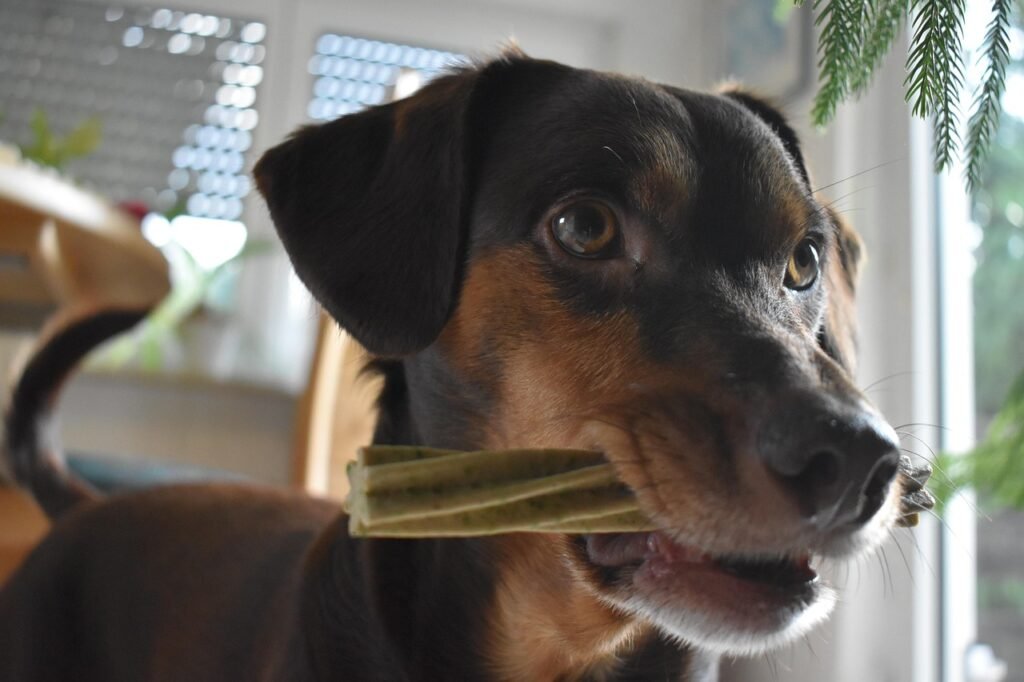
Spread an old towel on the floor and scatter several pieces of kibble or treats across it. Loosely roll or fold the towel so your dog has to investigate with their nose and paws to uncover the food.
Keep the first attempt very easy. As your dog becomes more experienced, you can create additional folds. Supervise closely, particularly if your dog tends to chew or swallow fabric.
6. Which Hand?
Place a small treat in one hand without letting your dog clearly see which hand you chose. Close both fists and present them at a comfortable height.
Allow your dog to sniff and indicate their choice. Open the correct hand when they identify it. This simple scent-based game requires almost no equipment and can be played in short sessions anywhere.
7. Hot and Cold Game
Choose a behavior or object you want your dog to discover. As your dog moves closer to the desired action, use a consistent encouraging marker. When they move away from it, simply withhold the marker and let them try something different.
Reward progress toward the goal. This style of game encourages experimentation and independent thinking rather than physically guiding the dog through every step.
8. Teach New Tricks
Learning new behaviors provides structured mental stimulation while strengthening communication between dog and owner. Tricks can be practical, playful, or both.
Try skills such as spinning, touching your hand with their nose, backing up, going to a mat, putting paws on a platform, or closing a lightweight door. Break complicated tricks into small steps and reward each successful stage.
9. Dog Parkour
Dog parkour uses safe features in the environment as opportunities for controlled movement. A dog might step onto a low platform, walk around an object, place their front paws on a stable surface, or carefully move beneath an obstacle.
Safety should come before difficulty. Avoid high jumps, slippery surfaces, unstable objects, and movements that are unsuitable for your dog's age or physical condition.
10. Fetch with a Twist
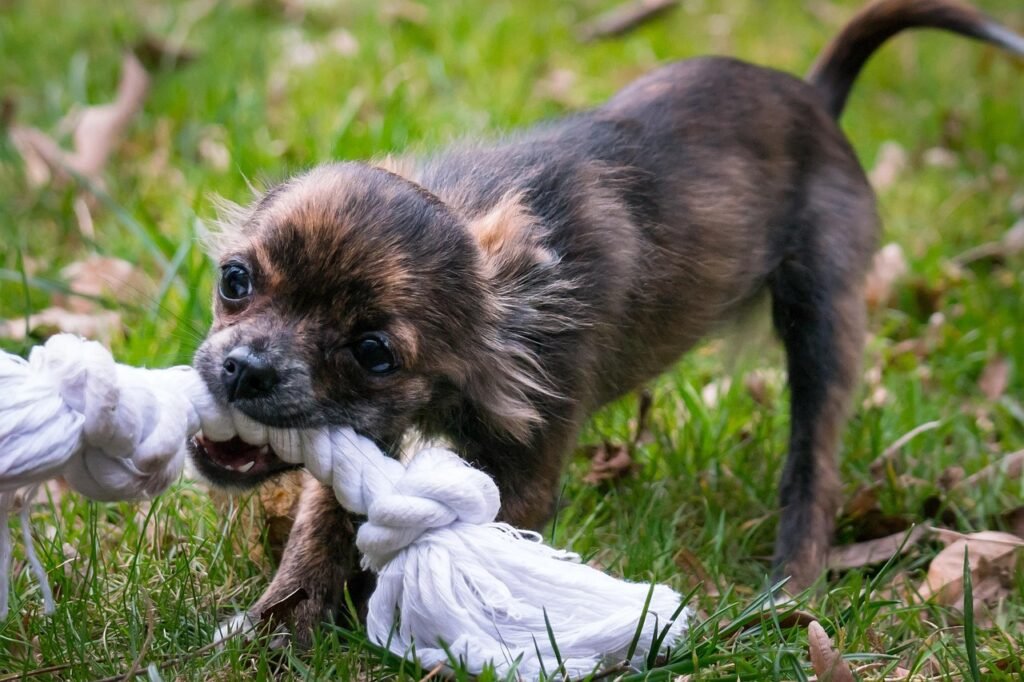
Traditional fetch can become more mentally demanding by changing the rules. Instead of throwing the same ball repeatedly, ask your dog to wait before retrieving, choose a named toy, or perform a simple cue before the throw.
You can also hide the toy nearby and ask your dog to search for it. Combining retrieval with listening and problem-solving keeps a familiar activity fresh.
11. Snuffle Mat
A snuffle mat hides pieces of food among strips or folds of fabric, encouraging a dog to locate them primarily through scent.
Scatter part of your dog's regular meal through the mat and allow them to search at their own pace. The activity can be especially useful when you want a calm indoor enrichment session rather than high-energy exercise.
12. Interactive Feeding
A food bowl is convenient, but occasionally turning mealtime into an activity gives your dog additional mental work. Food can be offered through suitable puzzle feeders, slow feeders, treat-dispensing toys, or supervised searching games.
Adjust the challenge so your dog can actually access the food. If you're using treats in addition to meals, account for those calories as part of the dog's overall diet.
13. Toy Pick-Up
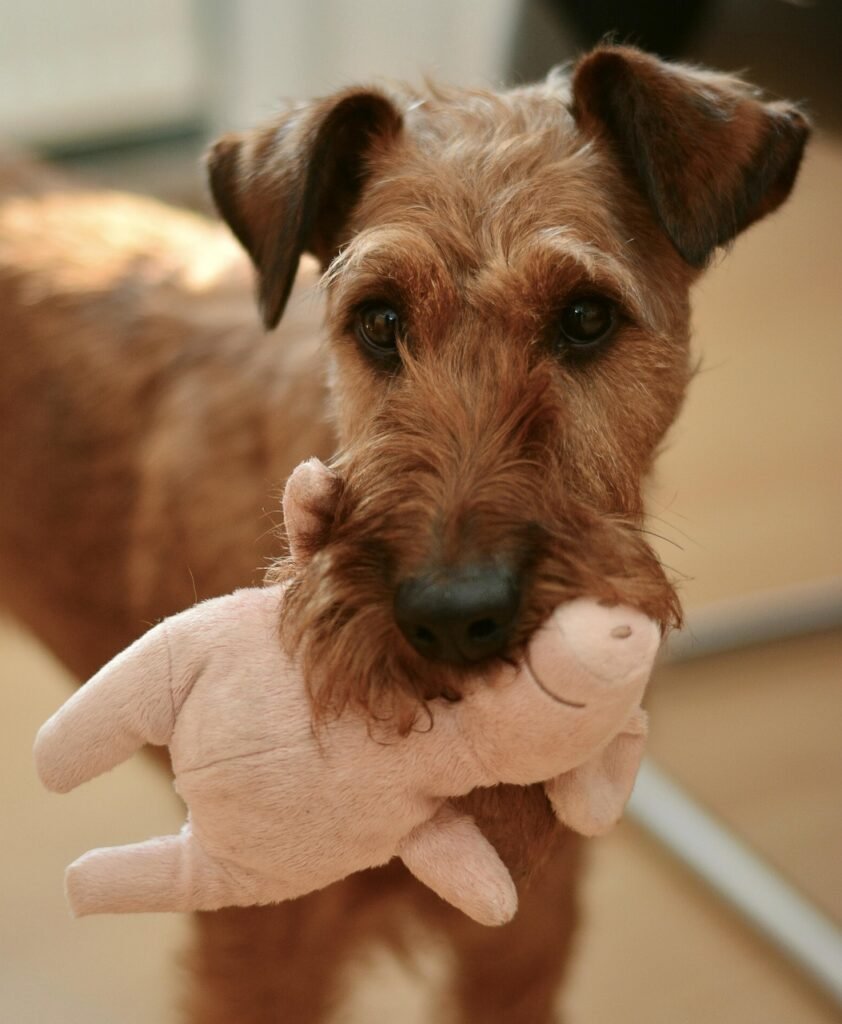
Teaching a dog to put toys away combines several learned behaviors into one useful task. Begin by rewarding your dog for picking up a toy and releasing it on cue.
Next, introduce a basket and reward drops that happen near or inside it. Gradually require greater accuracy until your dog understands that toys belong in the container.
14. Switch Up Walks
Walking the exact same route every day can become predictable. Occasionally choosing a different safe route gives your dog new smells, surfaces, sounds, and surroundings to investigate.
You don't necessarily need to walk farther. Allowing appropriate sniffing and exploration can make an ordinary outing mentally richer. Keep your dog securely controlled and respect local leash requirements.
15. Obstacle Course
Create a simple course using safe household objects. Your dog might walk around cones, step over low poles, pass through an open cardboard tunnel, pause on a mat, or weave between objects.
Introduce each obstacle individually before combining them. Make sure everything is stable and non-slip, with enough space for your dog to move comfortably.
16. DIY Agility Course
A homemade agility-inspired course can introduce dogs to directional cues and coordinated movement without requiring professional equipment. Low markers, tunnels, weave-style pathways, and ground-level poles can all become part of the course.
Keep jumps low or skip them entirely when appropriate. Puppies, senior dogs, and dogs with mobility concerns may benefit more from slow, controlled obstacles than repetitive jumping.
17. Learn to Make Eye Contact
Voluntary eye contact can help improve communication and attention during training. Start in a quiet environment with minimal distractions.
When your dog naturally looks toward your face, mark the moment and reward them. Gradually build the duration before adding distractions. Never force your dog's head into position; the goal is relaxed, willing attention.
18. Interactive Tug-of-War
Tug can involve much more than pulling. It can become a structured game where your dog practices starting, stopping, releasing, waiting, and re-engaging on cue.
Choose a durable toy appropriate for your dog's size and play with controlled movements rather than aggressively jerking the toy. Teaching a reliable release cue makes the activity easier to manage.
19. Treat Under Tennis Balls
Place treats in some compartments of a muffin tin and cover the compartments with appropriately sized tennis balls. Your dog must investigate and move the balls to uncover the hidden rewards.
Make sure the balls and tray are safe for your dog's size and supervise the entire activity. Dogs that destroy or swallow pieces of toys should use a different enrichment game.
20. Scent Work
A dog's sense of smell makes scent-based games a natural form of enrichment. Begin by hiding a favorite treat somewhere easy while your dog watches, then encourage them to find it.
As their skills improve, hide rewards out of sight or use several possible locations. Give your dog time to work independently instead of immediately pointing out the answer.
21. Follow the Leader
Walk through a safe area while changing direction, speed, and movement pattern. Reward your dog for noticing your movements and choosing to follow.
You can circle furniture, make gentle turns, stop unexpectedly, or weave around safe objects. The game encourages attention to body movement while providing light physical activity.
22. Hand Signals
Teaching visual cues gives dogs another way to understand familiar behaviors. Choose clear, consistent hand signals for commands your dog already knows, such as sit, down, stay, or come.
Initially, pair the visual signal with the familiar verbal cue. Over time, practice the hand movement before saying the word and reward correct responses. Consistency is important so each gesture has a distinct meaning.
23. Teach Your Dog to Read
Dogs don't read words in the human sense, but they can learn to distinguish visual cards and associate specific symbols or printed words with trained behaviors.
For example, one card can consistently represent "sit" while another represents "down." Begin with one visual cue and reward the corresponding behavior. Add additional cards only after the first association is reliable, and keep the cards visually distinct.
24. DIY Treat Dispenser
A simple homemade food dispenser can turn snack time into a problem-solving activity. Use a clean, dog-safe container that releases kibble when moved or manipulated.
Avoid materials with sharp edges, loose tape, staples, strings, or small detachable pieces. Supervise the game and remove the dispenser if your dog begins destroying or eating the container rather than working for the food.
25. Treasure Hunt
A treasure hunt combines scent, memory, exploration, and problem-solving. Hide small treats or favorite toys around a safe room and encourage your dog to search for them.
Start with rewards that are partly visible before progressing to harder hiding spots. You can eventually create searches across several rooms or an enclosed outdoor space. Keep hiding places accessible and free from hazards so your dog can investigate safely.
Related Ideas You Might Love
Brain games can make everyday life more interesting for dogs while creating additional opportunities for training and interaction. Rotate activities rather than using the same challenge every day, and increase difficulty gradually as your dog gains confidence.
The goal isn't to make every puzzle difficult. A successful enrichment routine balances challenge with achievable rewards, giving your dog plenty of chances to sniff, think, learn, and enjoy spending time with you.