
30 Escape Room Ideas for Kids in 2026
Escape rooms turn ordinary spaces into exciting adventures where kids become detectives, explorers, and problem-solvers. Whether you're planning a birthday party, classroom activity, or family game night, a homemade escape room can keep children entertained while encouraging teamwork, creativity, and logical thinking.
The best part is that you don't need expensive equipment or complicated decorations. With everyday household items, clever clues, and a little imagination, you can create an unforgettable experience. These 30 escape room ideas for kids in 2026 offer fun challenges for different ages and skill levels.
30 Escape Room Puzzle Games Ideas
A successful kids' escape room combines discovery, problem-solving, and a rewarding final challenge. You can use individual puzzles or connect several activities into one adventure, with each completed task revealing the next clue.
1. Mirror Message
A mirror message adds mystery to an escape room by making children decode writing that looks unusual at first glance. Write a short clue backward on paper so it becomes readable when reflected in a mirror.
Place a small mirror nearby or let players discover one through an earlier challenge. Once they recognize the trick, they can read the hidden instructions and continue their adventure.
For younger children, use simple words such as "LOOK UNDER TABLE." Older players can decode longer messages containing numbers or secret locations.
2. Riddle Clues
Riddles encourage children to think creatively while searching for familiar objects around the room. Each answer should point toward something that contains the next piece of information.
For example, use the riddle: "I have hands but cannot clap. What am I?" The answer is a clock, so players must investigate a nearby clock to discover their next clue.
Choose straightforward riddles for younger participants and more challenging wordplay for older children. A connected series of riddles can guide players through the entire escape room.
3. Math Problems
Math puzzles transform everyday calculations into entertaining challenges. Hide several arithmetic questions around the room and assign each answer a position in a secret code.
For example, three cards might display 6 + 2, 12 – 7, and 3 × 3. Solving them in the correct order produces the combination 8-5-9.
Adjust the difficulty according to the children's abilities. Younger kids can practice addition and subtraction, while older participants can solve multiplication, fractions, or number sequences.
4. Science Experiments
Simple science activities introduce hands-on discovery to an escape room. Children must complete an experiment or observe a scientific result to uncover the next instruction.
One idea involves placing a waterproof clue beneath a transparent container filled with colored water. Players can use a flashlight or follow instructions to examine the hidden message.
Another option is a floating-and-sinking challenge where children predict which objects will float. Correct predictions reveal letters that form a password.
Choose safe, age-appropriate experiments using household materials, and provide adult supervision whenever liquids or special equipment are involved.
5. High Clue Hunt
A high clue hunt encourages players to inspect their surroundings from different perspectives. Instead of hiding every clue at eye level, position some above the usual searching area.
Attach a paper clue to the upper section of a bookshelf, a wall decoration, or a hanging cardboard star. Provide a picture hint that directs children to look upward.
Keep all clues visible and reachable from the floor. Children should never need to climb furniture or stretch toward unsafe areas.
This activity works particularly well in rooms filled with decorations, where important details can blend into the background.
6. Color-Coded Clues
Color-coded puzzles combine observation with sequencing. Prepare several colored envelopes containing numbers, symbols, or letters.
Give players an instruction card showing the correct color order, such as blue, yellow, green, and red. Children must locate the matching envelopes and arrange their contents accordingly.
For example, four envelopes containing the numbers 4, 7, 2, and 9 can reveal a four-digit combination when placed in the correct sequence.
You can increase the challenge by hiding the color order inside a painting, rainbow illustration, or decorative pattern.
7. Talking Animals
Animal characters make escape rooms especially appealing to younger children. Place stuffed animals or printed animal pictures around the room, with each character providing part of a mystery.
Attach short messages to the animals, such as "The next clue belongs to an animal that loves carrots." Children must identify the rabbit and examine it for further instructions.
For a more interactive experience, record animal voices or ask an adult to read character messages aloud.
This puzzle fits beautifully into jungle adventures, farm mysteries, and magical forest escape rooms.
8. Jigsaw Puzzle
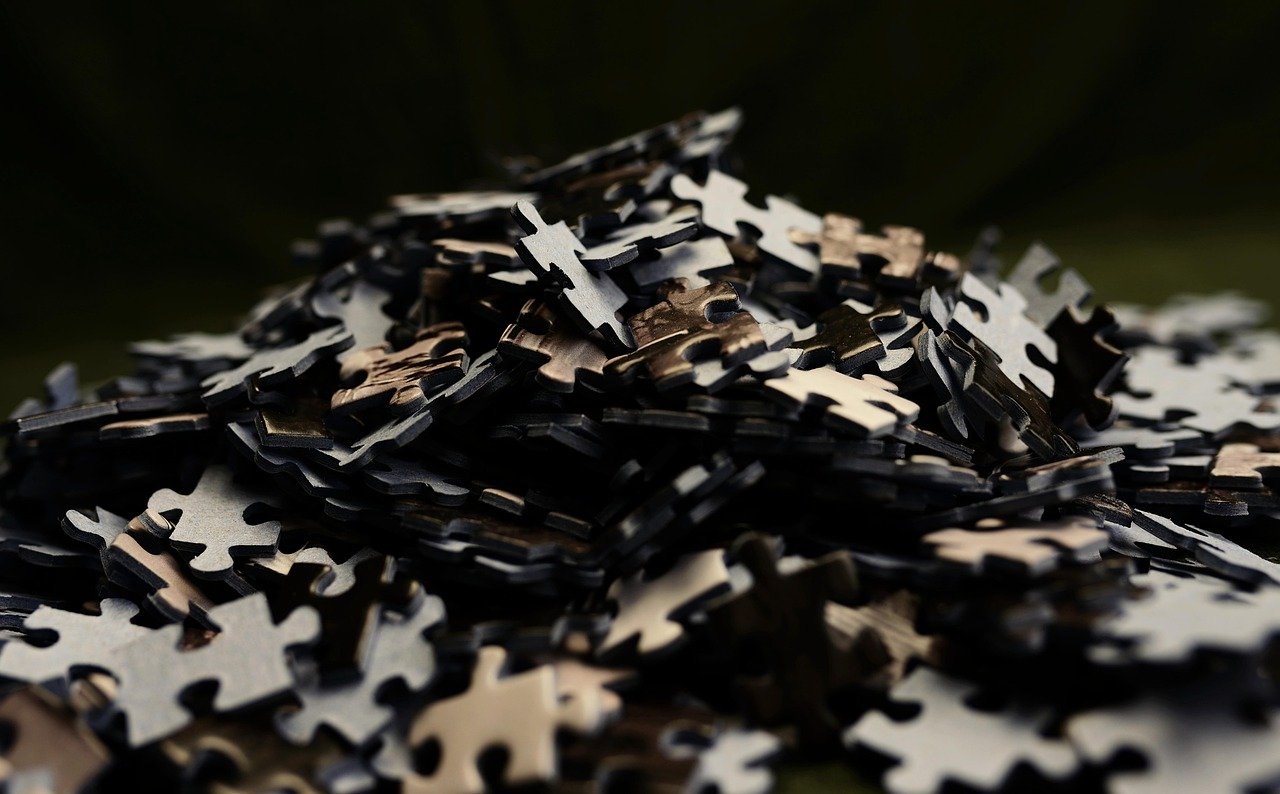
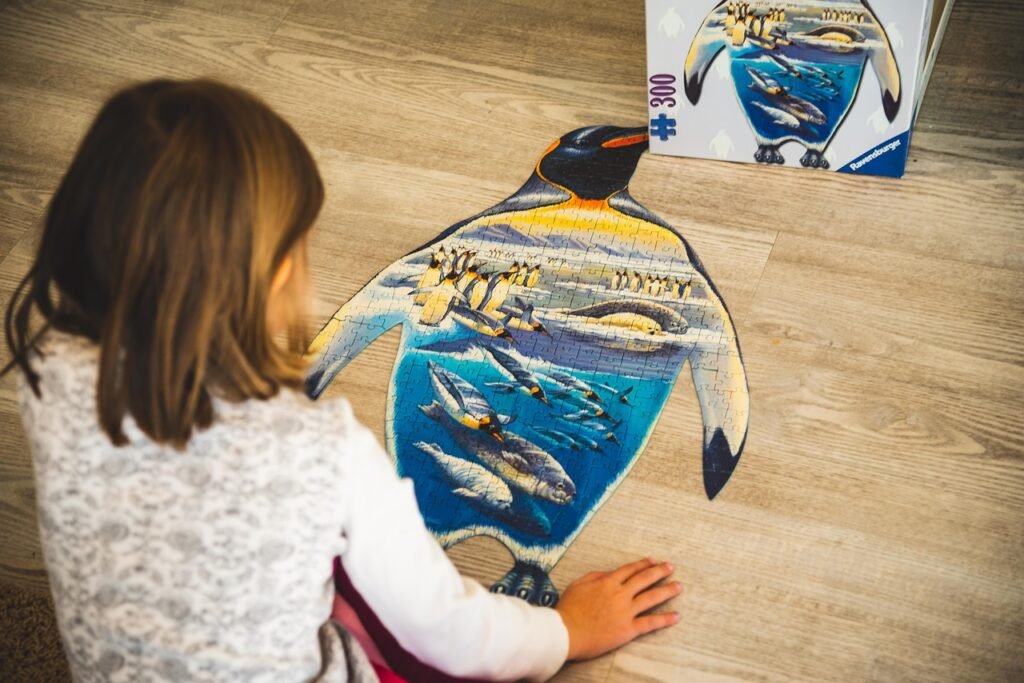
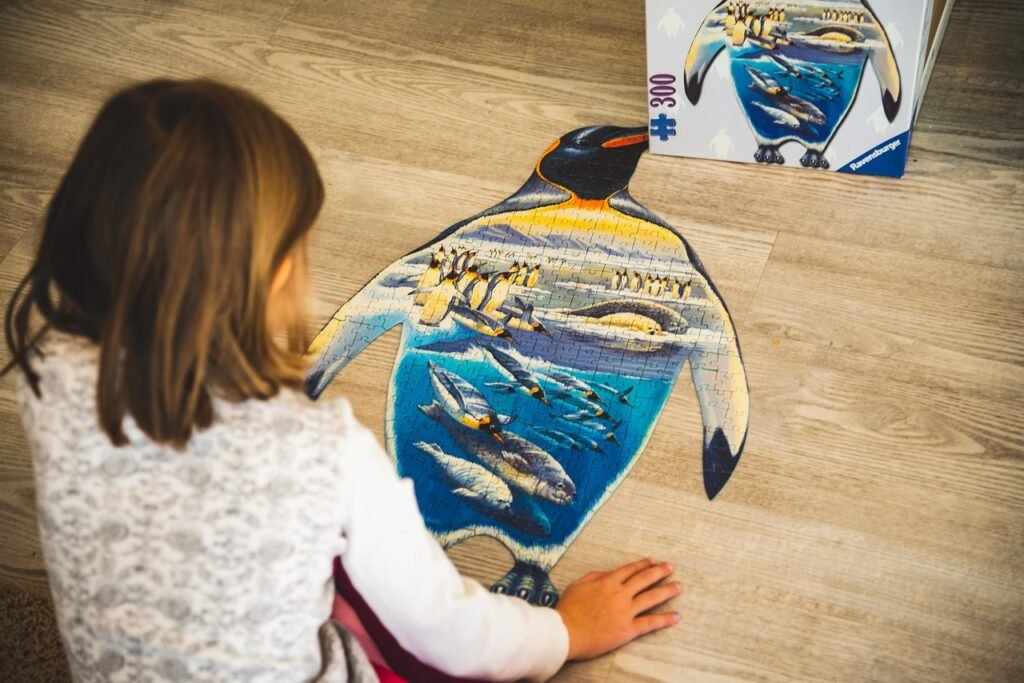
A jigsaw puzzle adds a satisfying visual challenge to an escape room. Print a picture containing a hidden word, number, or location, then cut it into several pieces.
Scatter the pieces around the room so children must collect them before assembling the complete image.
The finished picture might reveal a treasure chest, a particular bookshelf, or a combination written across the illustration.
For younger kids, use six to ten large pieces. Older participants can work with more detailed images and smaller pieces.
9. Treasure Box
A treasure box creates an exciting goal for children to work toward. Decorate a small box with pirate symbols, mysterious markings, or colorful wrapping paper.
Secure it with a child-friendly combination lock, or use a simple latch and make opening it dependent on solving a clue.
Hide the combination across several challenges so every completed puzzle brings players closer to unlocking the box.
Fill it with stickers, small toys, certificates, or other age-appropriate rewards. Avoid tiny prizes for children who may put objects in their mouths.
10. Scratch-Off Clue
Scratch-off clues bring an element of surprise to the game. Players must reveal a hidden message beneath a removable covering to discover their next destination.
You can purchase ready-made scratch-off stickers and place them over numbers or short instructions printed on cards.
Another option is to prepare homemade scratch-off cards using a clear protective layer and suitable scratch-off paint.
Create several cards, but make only one reveal the correct answer. Children must solve an earlier puzzle to determine which card to scratch.
11. Lock and Key Pairs
Matching locks and keys gives children a practical puzzle with a clear objective. Gather several small locks and their corresponding keys, then mark each pair with a matching symbol.
Hide the keys in different places and provide clues that help players identify the correct matches.
For example, a lock decorated with a moon might correspond to a key discovered inside a box featuring stars.
Use the locks only on boxes or game props, never on room doors or anything that could trap participants. Every player should be free to leave the room at any time.
12. Storybook Puzzle
A storybook puzzle combines reading with exploration. Choose a familiar children's book and create clues based on its characters, illustrations, or events.
For example, a clue might say, "Find the page where the hero discovers the golden crown." Children must locate the correct page and identify a hidden number or symbol.
You can also mark selected words throughout the story. When arranged in order, these words form a secret instruction.
This activity is especially effective for classroom escape rooms because it encourages careful reading and comprehension.
13. Shape and Color Sorting
Shape and color sorting is an excellent puzzle for preschoolers and early elementary students. Prepare colorful paper shapes, including circles, triangles, squares, and stars.
Give children a sorting board with specific spaces for each shape or color. Once the pieces are correctly arranged, they reveal a pattern or hidden message.
For example, the number printed behind each correctly positioned shape can form a code.
Older children can tackle more complicated rules, such as arranging shapes by size, number of sides, and color simultaneously.
14. Mirror Image Challenge
A mirror image challenge tests children's ability to recognize symmetry and visual differences. Provide a picture containing several objects alongside a second image that appears to be its reflection.
Ask players to identify which details are incorrect in the mirrored version.
Each mistake can correspond to a letter or number, helping children uncover a password.
Another variation involves completing half of a symmetrical drawing. Once the image is finished, the resulting design reveals the location of the next clue.
15. Sound Puzzle
Sound puzzles introduce listening skills into the escape room experience. Record several recognizable sounds, such as a ringing bell, barking dog, flowing water, or ticking clock.
Play the sounds in a particular sequence and ask children to identify them.
Each sound can correspond to a picture card with a hidden number. Arranging the cards in the correct listening order reveals the combination.
For younger children, choose familiar noises. Older players can identify musical instruments, repeated rhythms, or more subtle environmental sounds.
16. Egyptian-Themed Room
An Egyptian-themed escape room turns children into archaeologists exploring an ancient tomb. Decorate the space with paper pyramids, hieroglyph-inspired symbols, and cardboard artifacts.
Create a story in which players must recover a missing golden amulet before their expedition ends.
Hide clues inside pretend scrolls, cardboard treasure chests, and illustrated maps. A symbol-decoding chart can help children translate a secret message.
For the final challenge, players might arrange pyramid pictures in order of height to reveal the location of the missing treasure.
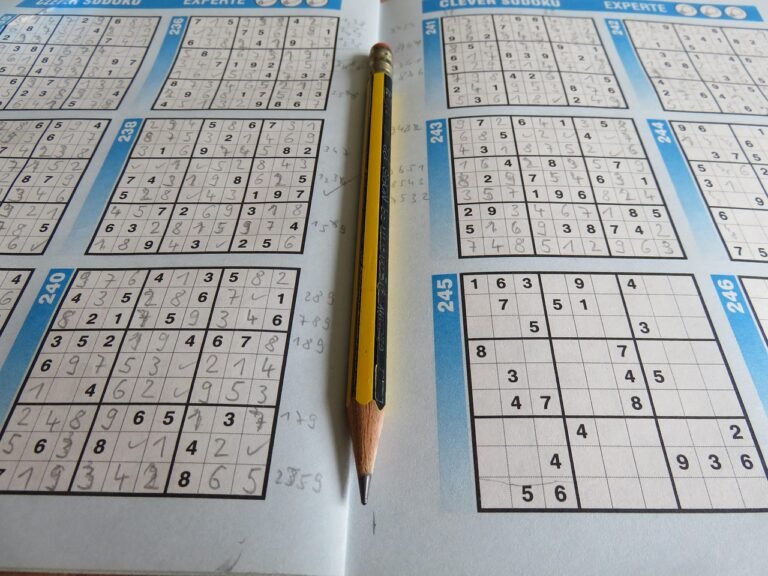
17. Sudoku Puzzle
Sudoku introduces logical reasoning through a structured number puzzle. Give children a partially completed grid and explain that each row, column, and smaller section must contain the required numbers without repetition.
For beginners, use a 4×4 Sudoku grid with numbers 1 through 4. More experienced children can try a traditional 9×9 puzzle.
Mark several special squares with small stars. After completing the grid, players read the numbers in those squares to obtain their next combination.
This approach makes Sudoku feel like an important part of the adventure rather than a separate worksheet.
18. Jigsaw Puzzle Lock
A jigsaw puzzle lock combines picture assembly with code-breaking. Prepare a custom puzzle containing a combination hidden within the completed design.
Instead of displaying the code directly, place small numbers along the edges of selected puzzle pieces.
When children assemble the image correctly, the numbers line up in the order needed to open a lock.
You can also draw a path through the finished picture that connects specific digits.
This challenge works best when the puzzle pieces fit together clearly and the final combination has only one possible interpretation.
19. Message in a Bottle
A message in a bottle creates an adventurous atmosphere, especially for pirate or ocean-themed escape rooms.
Roll a paper clue into a scroll and place it inside a clean, transparent plastic bottle. Hide the bottle among beach decorations, toy sea creatures, or blue fabric representing water.
The message might contain a treasure map, a riddle, or coordinates leading to the next location.
For an extra challenge, divide the message into several pieces and place them inside different bottles. Players must collect and combine the fragments to read the complete instruction.
20. Domino Chain Reaction
A domino chain reaction adds movement and anticipation to an escape room. Arrange dominoes along a marked path, leaving several gaps that children must complete.
Provide enough dominoes for players to build the missing sections correctly.
Once the arrangement is finished, an adult or designated player gently tips the first domino to start the chain reaction.
Place a lightweight paper marker at the end of the path to indicate the next clue.
Alternatively, write letters on selected dominoes so the completed arrangement reveals a word before the chain is activated.
21. Chemical Reaction Puzzle
A chemical reaction puzzle gives children an opportunity to experience science through a simple supervised activity.
Place a small amount of baking soda in a transparent container and provide vinegar in a separate cup. Children follow a clue that instructs them to combine the materials.
The resulting fizz can represent a magical potion activating or a laboratory experiment succeeding.
Once the reaction is complete, an adult hands over the next clue, or players read a waterproof message attached to the outside of the container.
Use small quantities, protect the work surface, and keep the reaction in an open container. Never seal the mixture inside a bottle or locked vessel.
22. Pattern Lock Puzzle
Pattern locks challenge children to recognize sequences and reproduce them accurately.
Create a grid of nine dots on paper, similar to the pattern used on some smartphones. Give players a series of directional instructions or numbered positions.
For example, the clue might direct them to connect the upper-left dot to the center and then to the lower-right dot.
The completed line pattern can form a recognizable letter or symbol.
Another version uses colored beads, tiles, or blocks that must be arranged according to a repeating pattern.
23. Mirror Maze
A mirror maze creates a fascinating visual challenge using reflections. Set up a tabletop activity with small unbreakable mirrors positioned around a simple maze drawn on cardboard.
Children must adjust the mirrors to see a hidden symbol or message that is not visible from their starting position.
You can also create a paper-based version featuring a maze with reflective pathways and directional arrows.
For younger players, use only two or three mirrors and provide clear hints. Older children can experiment with more complicated arrangements.
Avoid glass mirrors with sharp edges, and ensure the activity remains stable during play.
24. Number Maze
A number maze combines basic mathematics with navigation. Draw a maze on a large sheet of paper and fill its pathways with numbers.
Give children a rule for finding the correct route, such as following only even numbers or moving through numbers that increase by three.
When players reach the exit, they discover a secret word or number combination.
You can also create a maze in which each correct turn corresponds to a digit.
For a more active challenge, place numbered cards on the floor and ask children to walk through the correct sequence.
25. Image Escape Room
An image escape room relies on pictures rather than lengthy written instructions. This makes it particularly useful for younger children and visual learners.
Prepare a series of illustrations featuring hidden objects, unusual details, or symbols that players must identify.
For example, a picture of a busy kitchen might contain three tiny stars, two keys, and one clock. Counting these objects in the correct order produces the code 3-2-1.
Another approach involves giving players several pictures and asking them to arrange the scenes into a logical story.
Each solved image reveals information needed to complete the next challenge.
26. Codes in Balloons

Balloons can conceal secret messages and make clue discovery more exciting. Before inflating them, insert small folded paper clues into several balloons.
Use different balloon colors to indicate the order in which the clues should be collected.
For example, a red balloon might contain the first number, a blue balloon the second, and a yellow balloon the third.
For a quieter, reusable alternative, attach clue envelopes to the outside of inflated balloons instead of popping them.
If balloons are popped, adult supervision is essential, and broken pieces should be removed immediately. Avoid this activity for children under eight because of choking hazards.
27. Invisible Ink
Invisible ink gives children the feeling of discovering a secret spy message. Write a clue using a UV-reactive invisible ink pen and allow it to dry according to the product instructions.
Hide the paper somewhere in the room and provide a small UV flashlight as part of an earlier puzzle.
When children shine the light over the paper, the hidden writing becomes visible.
The message might reveal a password, a location, or instructions for opening the final treasure box.
Use child-safe materials, and remind players not to shine UV lights into anyone's eyes.
28. Treasure Hunt
A treasure hunt can serve as the main storyline for an entire escape room. Begin with a map or mysterious letter explaining that a valuable treasure has disappeared.
Create several stations around the room, each containing a puzzle that leads to the next destination.
For example, the first clue might direct players toward a bookshelf, where they find a riddle pointing to a toy chest.
The final clue reveals the location of the hidden treasure.
To encourage cooperation, divide responsibilities among participants. One child can read clues, another can search for objects, and others can help solve puzzles.
29. Sound Codes
Sound codes require children to interpret audio patterns as secret information. Unlike a simple sound-identification activity, this puzzle uses sounds to represent specific letters or numbers.
Create a code chart where one clap means 1, two claps mean 2, and three claps mean 3.
Play or perform a sequence of claps with short pauses between groups. Children must translate the sounds into a numerical combination.
For older participants, introduce a simplified Morse code challenge using short and long beeps.
Provide a decoding guide so the puzzle rewards careful listening and reasoning rather than guessing.
30. Magnetic Clue Retrieval
Magnetic clue retrieval turns an ordinary search activity into a hands-on mission. Place a small steel washer attached to a paper clue inside a narrow cardboard tube or lightweight container.
Give children a magnet wand and challenge them to retrieve the clue without tipping the container over.
As they move the magnet along the outside, the metal piece follows until they can guide it toward the opening.
Another variation involves placing magnetic tokens inside a shallow sensory bin and asking players to retrieve only the pieces marked with specific symbols.
Use large, securely enclosed magnets and age-appropriate materials. Keep loose or high-powered magnets away from young children because swallowed magnets can cause serious injuries.
Once the correct clue is retrieved, it can reveal the final password or lead players to their escape room reward.
Related Ideas You Might Love
Creating an escape room for kids doesn't require elaborate equipment or a large budget. The most memorable experiences come from imaginative stories, well-connected clues, and challenges that allow every child to contribute.
Start with four to six puzzles for a shorter game, test each solution before participants arrive, and provide hints when needed. With the right balance of mystery, teamwork, and discovery, these escape room ideas for kids can transform a birthday celebration, classroom lesson, or ordinary afternoon into an adventure worth remembering.

One Comment