
20 Youth Group Games for 2026
Youth group games are a fantastic way to bring young people together, encourage teamwork, and create unforgettable memories. Whether you're organizing a church youth gathering, school event, summer camp, or weekend retreat, the right activities can turn an ordinary meeting into an exciting experience.
From energetic outdoor competitions to creative indoor challenges, youth group games help participants develop communication skills, build confidence, and strengthen friendships. The best activities are easy to organize, inclusive, and flexible enough to accommodate different ages and group sizes.
These 20 youth group games for 2026 offer a combination of physical challenges, problem-solving activities, and entertaining competitions that keep everyone involved.
What is the Meaning of Youth Games?
Youth games are organized recreational activities designed to encourage social interaction, teamwork, creativity, and personal development among children, teenagers, and young adults. They can include sports, group challenges, puzzles, cooperative exercises, and friendly competitions.
Unlike activities focused entirely on winning, youth group games often emphasize participation, communication, leadership, and mutual respect. They provide opportunities for young people to connect with others while developing valuable everyday skills.
Youth games can take place indoors or outdoors and require anything from basic household supplies to specialized sports equipment. A successful game matches the participants' ages, abilities, interests, and available space.
Indoor Board Game Challenge
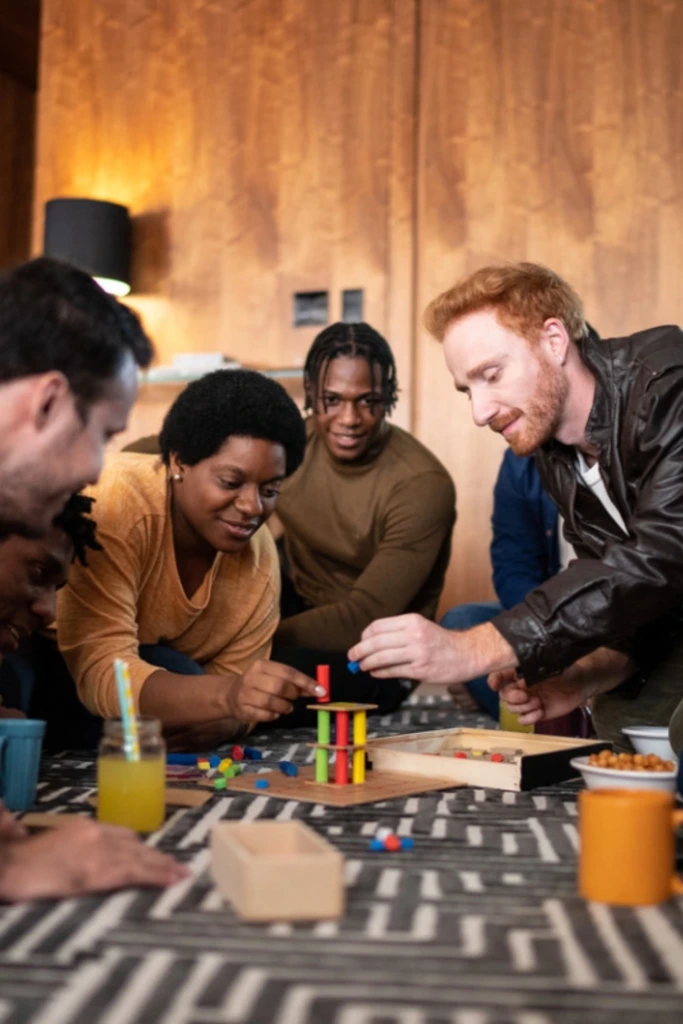
An indoor board game challenge is an excellent choice for youth groups looking for entertainment that combines friendly competition with strategic thinking. It works particularly well during rainy days, evening gatherings, or meetings with limited space.
Arrange several tables with popular games such as Uno, Jenga, Connect Four, chess, or cooperative board games. Divide participants into small teams and allow them to rotate between stations after each round.
Award points for completing challenges, demonstrating teamwork, or winning individual matches. Groups can compete for an overall championship while enjoying different types of games.
To keep the activity inclusive, select games with straightforward instructions and short playing times. Mixing experienced players with beginners encourages cooperation and helps everyone feel comfortable participating.
Outdoor Tug-of-War Challenge
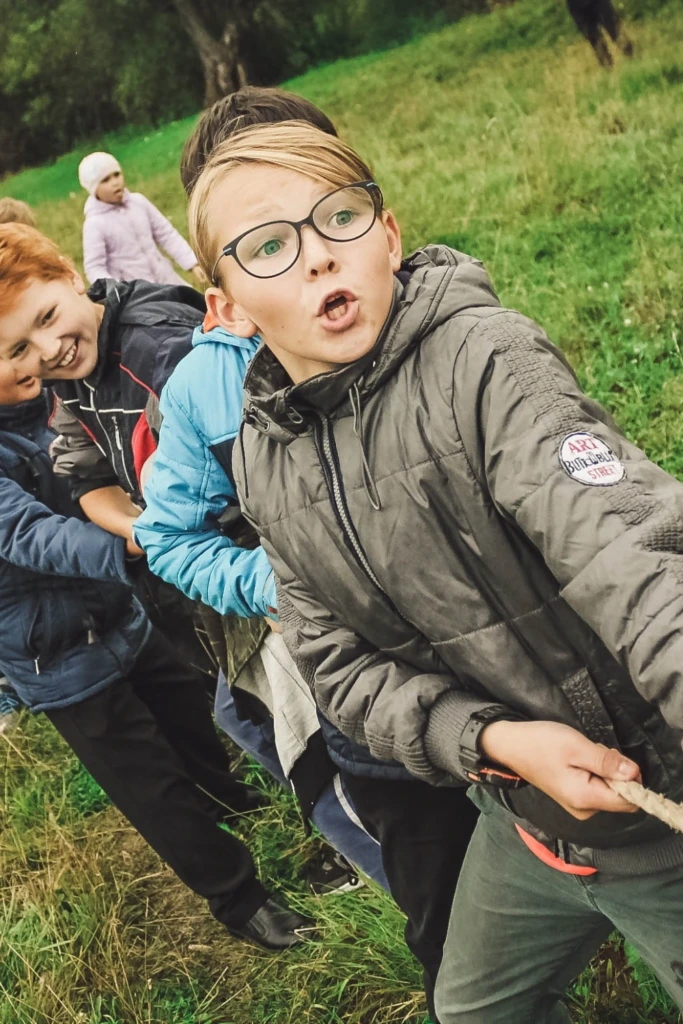
Tug-of-war is a classic outdoor youth group game that encourages teamwork, coordination, and determination. It requires minimal equipment and works well for large gatherings with enough open space.
Divide participants into two balanced teams and provide a sturdy rope designed for tug-of-war. Mark a center line on the ground and place additional markers on either side.
Each team pulls the rope toward its designated direction, attempting to move the opposing team's marker across the center line. The first team to accomplish this wins the round.
Organizers can arrange multiple matches, allowing teams to rotate players and develop different strategies.
Choose level ground, avoid wrapping the rope around hands or bodies, and establish clear rules against sudden releases or dangerous pulling techniques. Proper supervision helps keep the competition enjoyable.
Indoor Dodgeball Rush
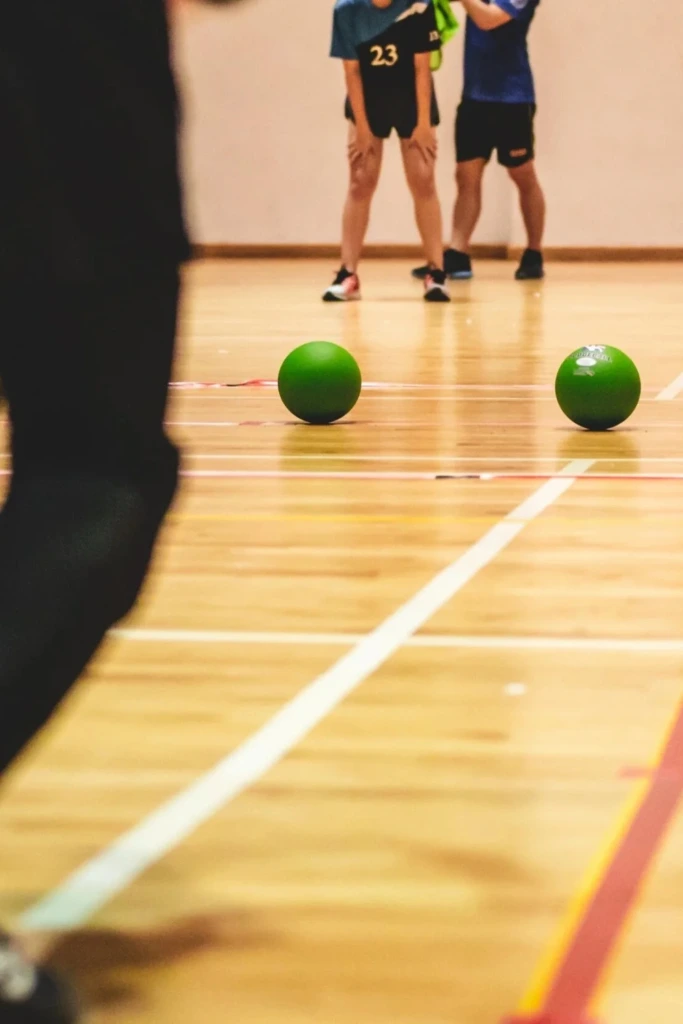
Indoor Dodgeball Rush transforms a familiar playground activity into a fast-moving team competition. It encourages agility, quick decisions, and cooperation while providing an exciting outlet for energy.
Use lightweight foam balls and divide the playing area into two equal sections. Participants form teams and attempt to tag opponents below the shoulders using gentle throws.
Players who are tagged can move to a designated waiting area and return when a teammate completes a special challenge, such as catching a ball or successfully passing to another player.
This variation keeps participants engaged instead of leaving eliminated players sitting on the sidelines.
For safety, prohibit headshots, aggressive throws, and physical contact. A spacious gymnasium with clear boundaries is ideal for this activity.
Outdoor Juggling Circle
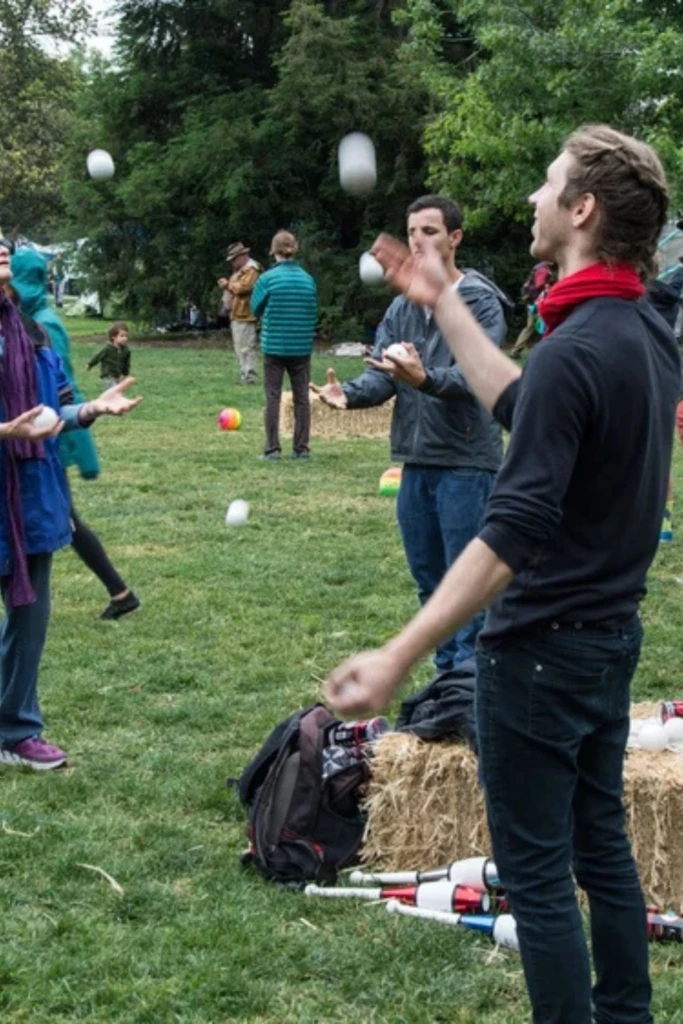
The Outdoor Juggling Circle is a cooperative game that challenges participants to improve their concentration, timing, and communication. Despite its name, no advanced juggling experience is necessary.
Ask everyone to stand in a large circle. Give one participant a soft ball and have them gently toss it to another person while calling that person's name.
Continue until every participant has received the ball once, establishing a repeating passing sequence.
Once the group becomes comfortable, introduce additional balls at regular intervals. Participants must remember the passing order while keeping multiple objects moving.
The challenge becomes increasingly entertaining as the number of balls grows.
For younger participants, use large, soft objects that are easy to catch. The main goal is to maintain cooperation rather than criticize mistakes.
Mud Run Challenge
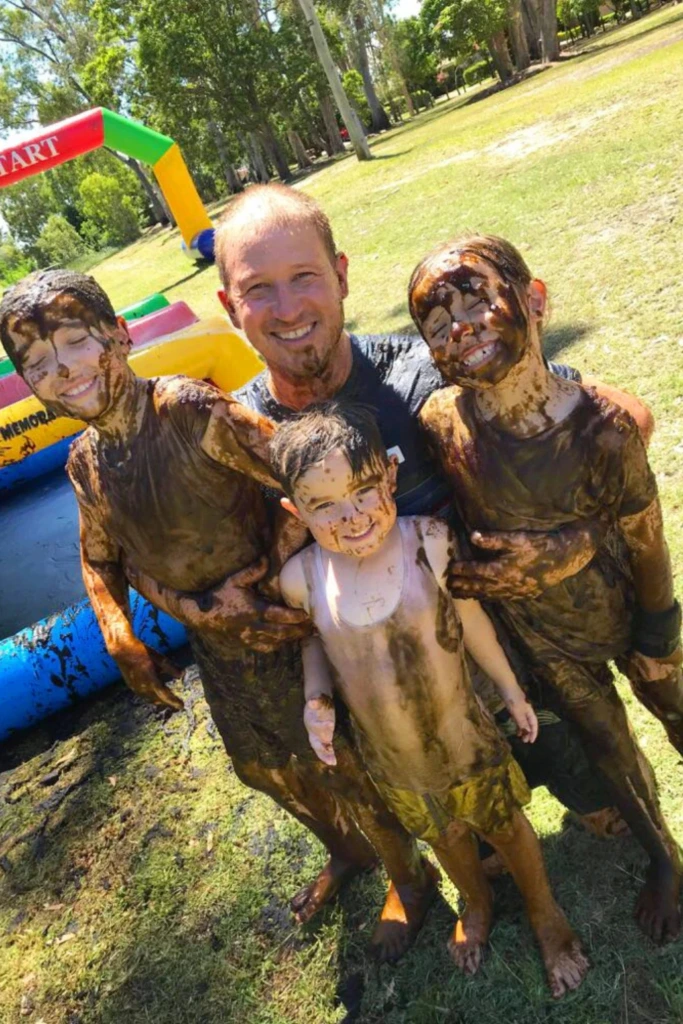
A Mud Run Challenge brings adventure and excitement to outdoor youth gatherings, particularly during summer camps and recreational events.
Create a short obstacle course featuring muddy pathways, low barriers, crawling sections, and designated running lanes. Participants can complete the course individually or as part of relay teams.
Each team attempts to finish the obstacles while encouraging its members and following the established course rules.
Include activities such as carrying a lightweight object, stepping through marked areas, or crawling beneath securely positioned obstacles.
Choose a location free from sharp objects, hidden holes, and slippery slopes. Provide clean water for washing afterward, and offer a dry alternative for participants who prefer not to get muddy.
The experience emphasizes perseverance, teamwork, and enjoyment rather than athletic ability alone.
Poisonous Stump Game
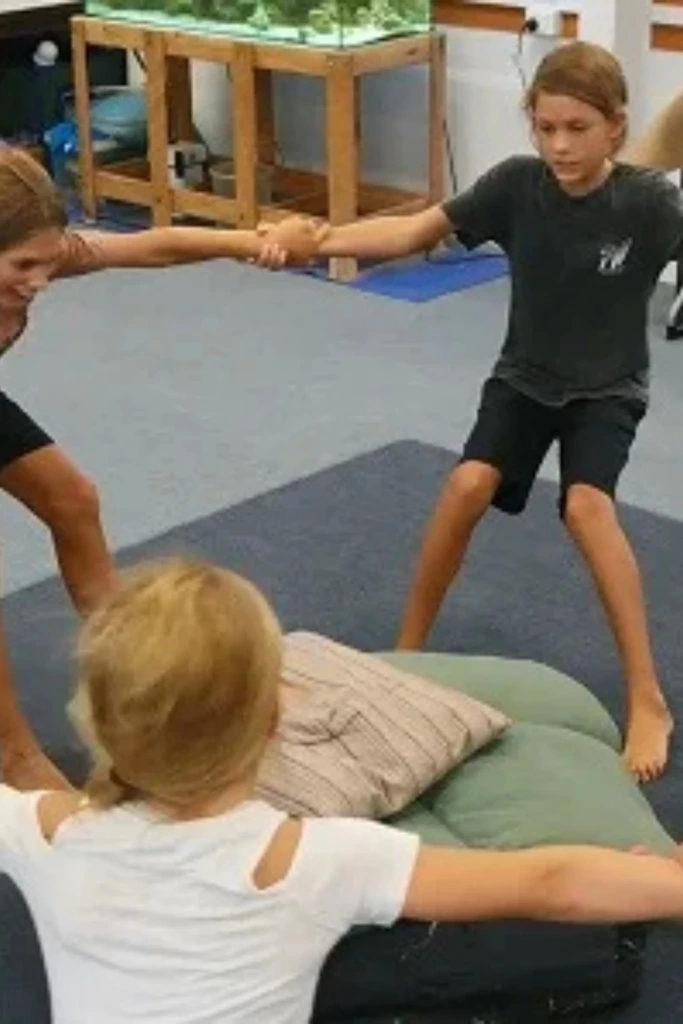
The Poisonous Stump Game is a lively outdoor circle activity that tests balance, coordination, and quick reactions.
Place a clearly marked object, such as a foam cylinder or soft cone, in the center of an open playing area. This object represents the poisonous stump.
Participants stand around it in a wide circle, keeping their hands free and maintaining enough space to move safely.
When the leader signals the start, players move around the stump while trying to avoid touching it. The leader can call out movement instructions, such as stepping backward, changing direction, or freezing in place.
Anyone who touches the stump completes a simple, entertaining task before returning to the game.
Avoid versions that require participants to push or drag one another toward the center. A no-contact format preserves the challenge without unnecessary injury risks.
Gaga Ball Game
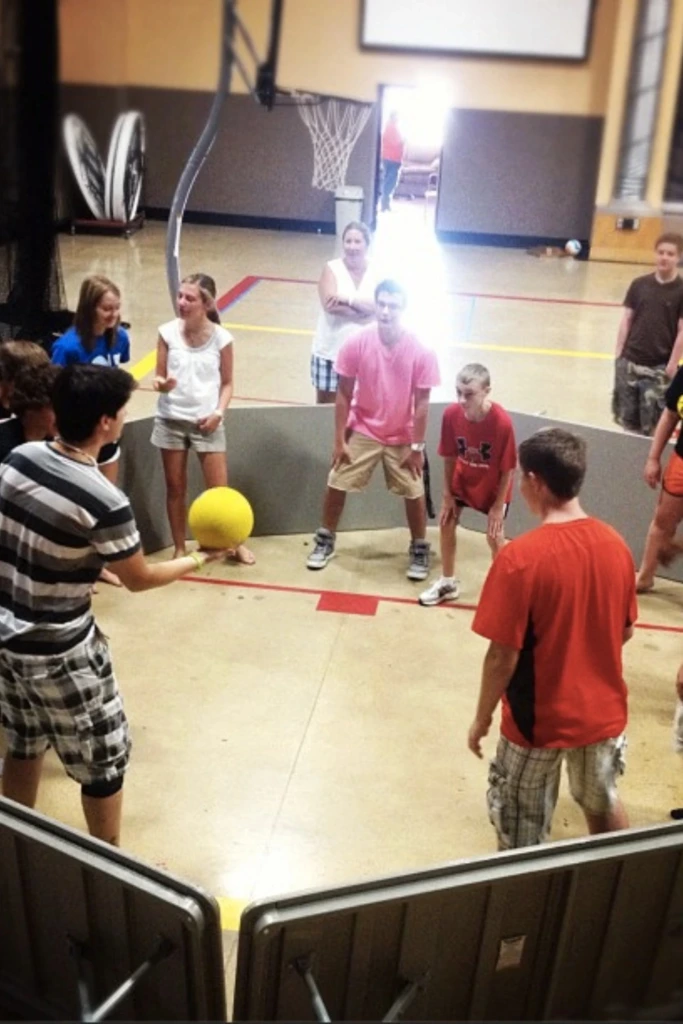
Gaga Ball is a popular youth group activity that combines movement, reflexes, and friendly competition. It is particularly suitable for camps, recreational centers, and groups with access to a Gaga Ball pit.
Players stand inside a low-walled playing enclosure while a lightweight ball is introduced into the center.
After the opening bounces, participants strike the ball with an open hand, attempting to hit another player's legs below the knees.
A player who is legally struck leaves the playing area until the next round. The final remaining participant wins.
Players cannot hold or throw the ball, and physical contact between participants is not allowed.
For larger groups, organize short matches so everyone gets frequent opportunities to participate. Gaga Ball works especially well because rounds are usually quick and the rules are easy to learn.
Chase Tag Game
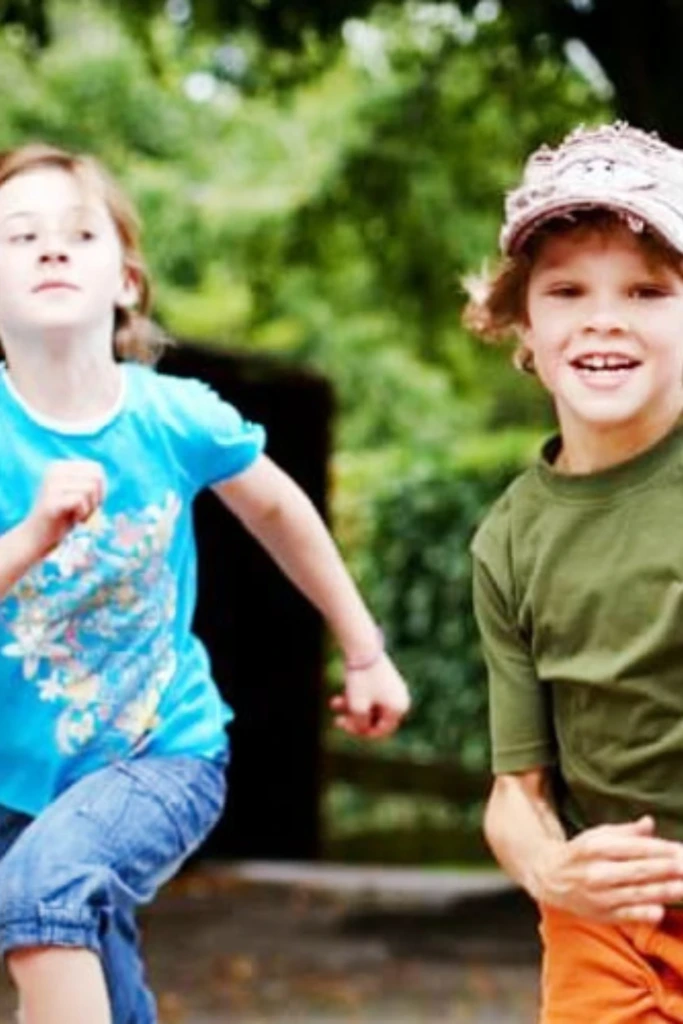
Chase Tag is an energetic youth group game that develops speed, awareness, and strategic movement. It can be adapted for outdoor fields, playgrounds, or spacious indoor facilities.
Begin by selecting two or three participants as taggers. Everyone else spreads out within clearly marked boundaries.
When the game starts, taggers attempt to touch other players gently on the shoulder or upper arm.
Tagged participants can become additional taggers or move to a temporary freeze position until another player frees them.
To add variety, establish safe zones where participants may remain for a maximum of five seconds before returning to the game.
Organizers can also introduce themed rounds, such as partner tag or team rescue tag.
Set firm rules against pushing, grabbing clothing, and running outside the designated area. A clear playing surface helps prevent collisions.
Team Strategy Grid Game

The Team Strategy Grid Game combines problem-solving, communication, and teamwork in an interactive challenge.
Create a large grid on the floor using tape, chalk, or numbered paper squares. Design a secret route through the grid that only the game leader knows.
Divide participants into teams and ask them to discover the correct pathway from one side to the other.
One player steps onto a square while the leader indicates whether the move is correct. If the square is incorrect, the participant returns to the starting position and another teammate takes a turn.
Team members must remember successful moves and communicate their observations to solve the route.
For an additional challenge, introduce a round in which players may communicate only through gestures.
This game is especially effective for developing leadership, memory, and collaborative decision-making.
Hula Hoop Pass
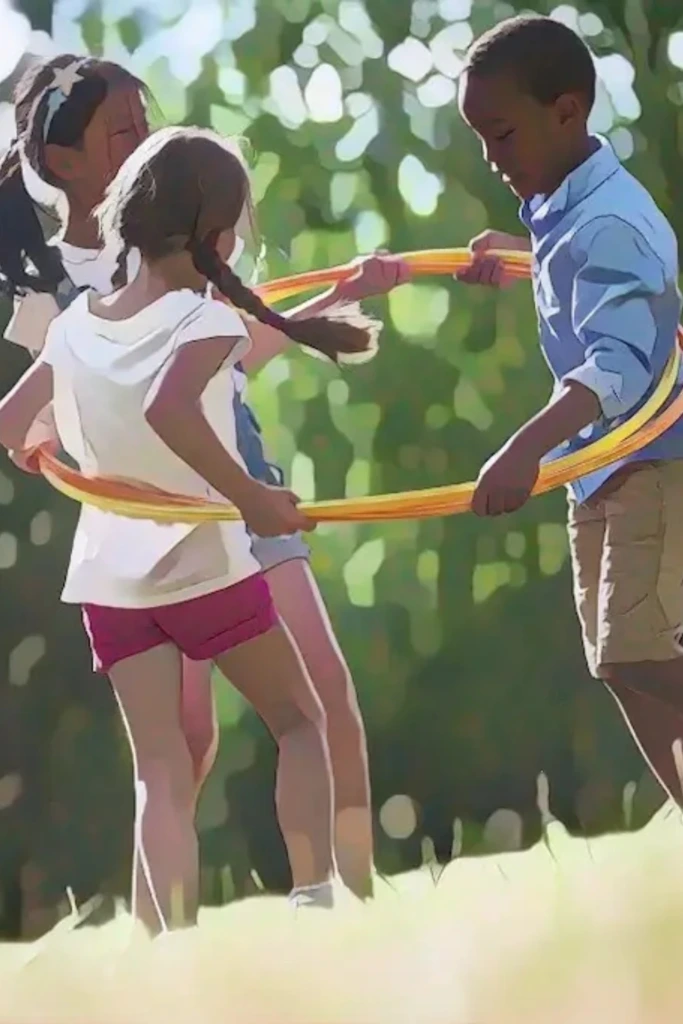
Hula Hoop Pass is a simple yet entertaining team-building game that requires cooperation and creative movement.
Ask participants to stand in a circle and hold hands. Place a hula hoop over the joined hands of two neighboring players before closing the circle.
The objective is to move the hoop around the entire circle without anyone releasing their hands.
Each participant must carefully step through or maneuver their body around the hoop while helping the next person complete the movement.
For larger gatherings, divide participants into teams and organize a timed competition.
Groups can attempt to beat their previous records or compete against another circle.
Select hoops large enough for comfortable movement and allow participants to use alternative methods if flexibility or mobility is limited.
Blindfold Target Game
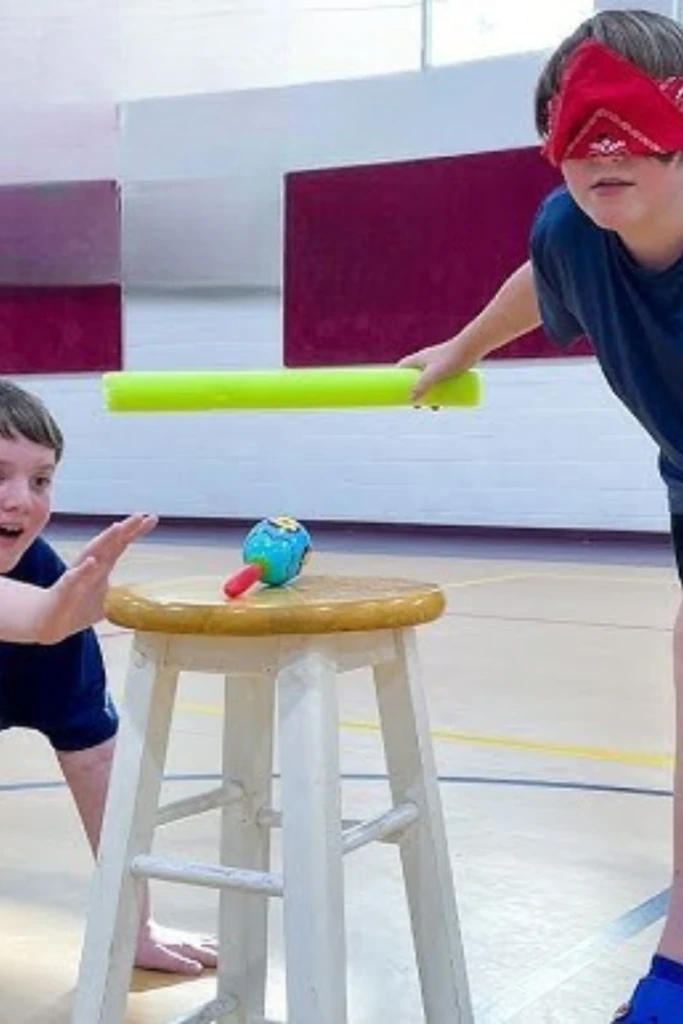
The Blindfold Target Game encourages listening, trust, and clear communication among youth group members.
Create a safe playing area with a large target on a wall or floor. Use a soft beanbag, Velcro ball, or lightweight object for the challenge.
Divide participants into pairs. One person wears a comfortable blindfold while the other provides verbal directions.
The blindfolded participant must follow the instructions to reach a marked throwing position and aim at the target.
Points are awarded according to how accurately the object reaches the designated scoring zones.
After each attempt, partners exchange roles so both participants experience giving and receiving instructions.
Keep the pathway free of obstacles and position a supervisor nearby. Participants should never be pressured to wear a blindfold if they feel uncomfortable.
Cereal Face Dunk Race
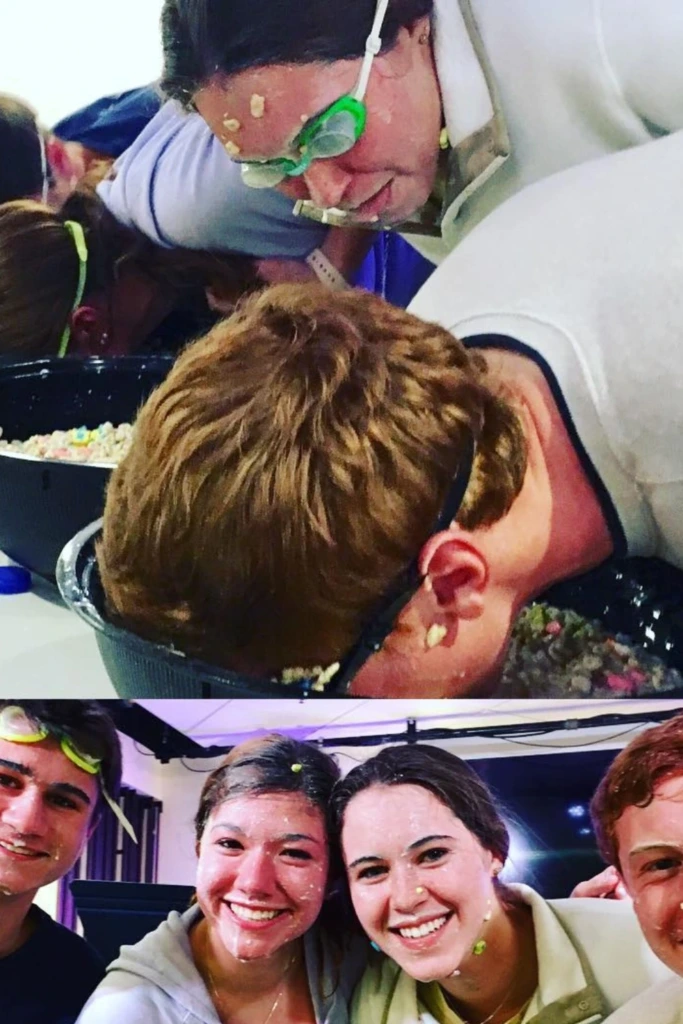
The Cereal Face Dunk Race is a humorous party challenge that adds excitement to casual youth gatherings.
Instead of requiring participants to submerge their faces in food or liquid, create a cleaner version using cereal pieces, shallow trays, and simple collection tasks.
Place a small quantity of dry cereal on individual trays. Each participant receives a spoon and must transfer cereal pieces into a separate container while keeping one hand behind their back.
For a more entertaining variation, participants can balance a cereal piece on a spoon held in their mouth and carefully carry it to the finish line.
The first player to complete the assigned number of transfers wins.
Use individual food portions, avoid shared mouth-contact equipment, and check for allergies before beginning.
This version maintains the playful spirit of the original challenge while reducing hygiene and choking concerns.
Cup Stacking Relay
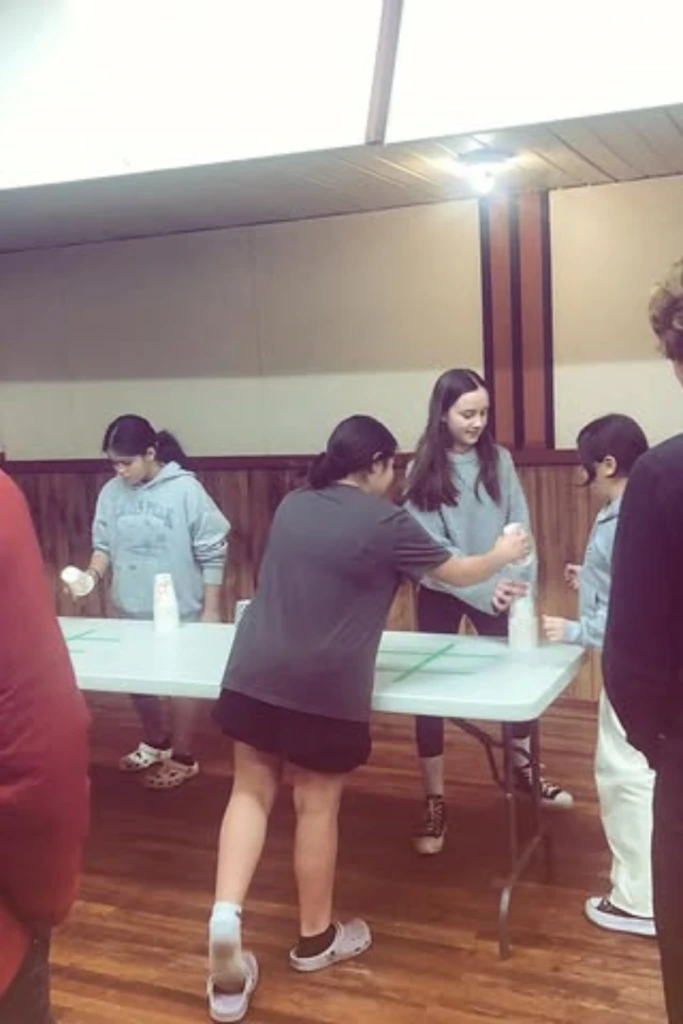
Cup Stacking Relay is an inexpensive indoor game that combines speed, coordination, and concentration.
Provide each team with an identical set of lightweight plastic or reusable stacking cups. Arrange the teams behind separate starting lines.
When the leader signals the beginning, the first participant runs to a table and stacks the cups into a designated pyramid.
After completing the structure, the player dismantles it into a single stack and returns to tag the next teammate.
The relay continues until every team member has completed the task.
To increase difficulty, introduce larger pyramids or require players to follow a specific stacking pattern.
This activity works well for mixed-age groups because it rewards careful movement and focus rather than physical strength.
Mystery Drink Challenge
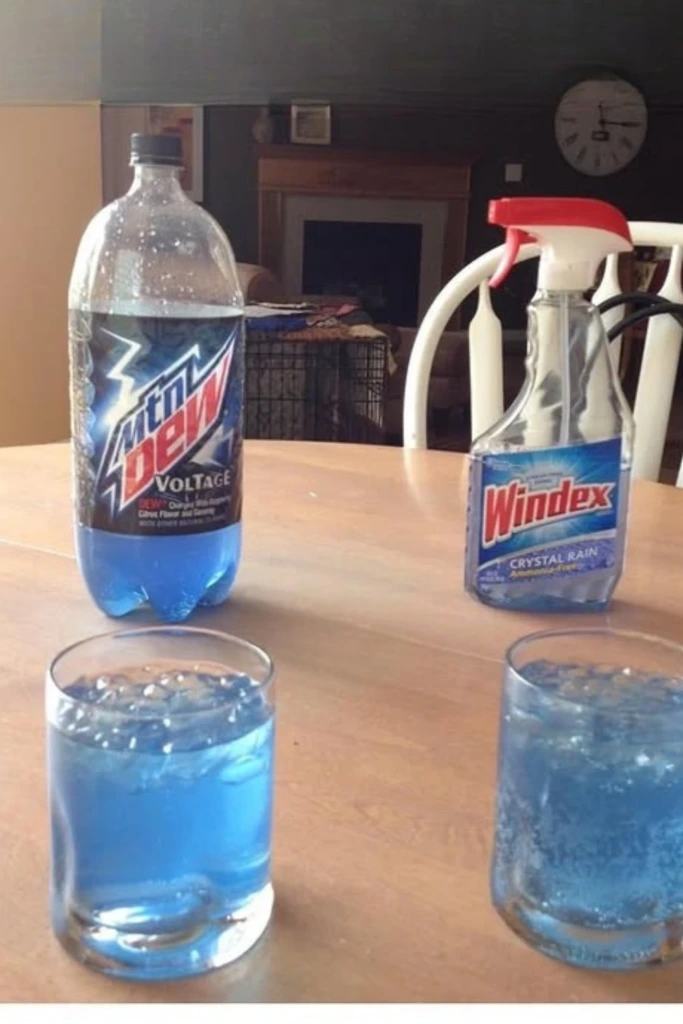
The Mystery Drink Challenge introduces a fun guessing activity that tests participants' sense of taste and observation.
Prepare several familiar, nonalcoholic beverages in clearly numbered, individual cups. Suitable choices include diluted fruit juices, flavored water, and caffeine-free drinks.
Participants taste small samples and attempt to identify the flavors without seeing the original containers.
Award points for correct answers, with an optional bonus for identifying the main ingredients.
For a team variation, participants discuss their guesses before submitting one final answer.
Organizers should disclose ingredients and check dietary restrictions and allergies before anyone participates. Avoid excessively spicy, sour, or unfamiliar substances.
A smell-only version can be offered for anyone who prefers not to taste the drinks.
Night Circle Game
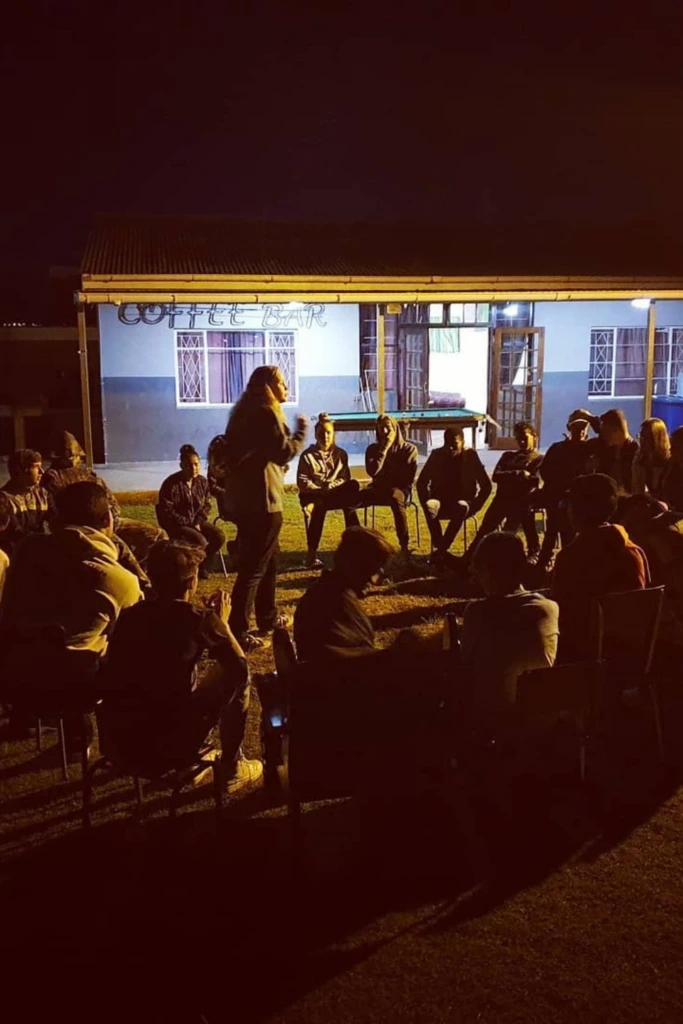
The Night Circle Game creates a memorable group experience during evening camps, retreats, and supervised outdoor gatherings.
Arrange participants in a circle with adequate lighting and comfortable seating. A battery-powered lantern can serve as the centerpiece.
Begin with a storytelling challenge in which the first person contributes one sentence to an imaginary adventure.
Each participant adds another sentence, gradually creating a surprising and entertaining group story.
For a more reflective variation, invite participants to share a positive experience, a personal achievement, or something they appreciated during the day.
The activity can also include simple guessing games or lighthearted questions.
Ensure the gathering area is properly supervised, easily accessible, and free from hazards. Allow anyone who does not wish to speak to pass without pressure.
Indoor Ropes Course Adventure
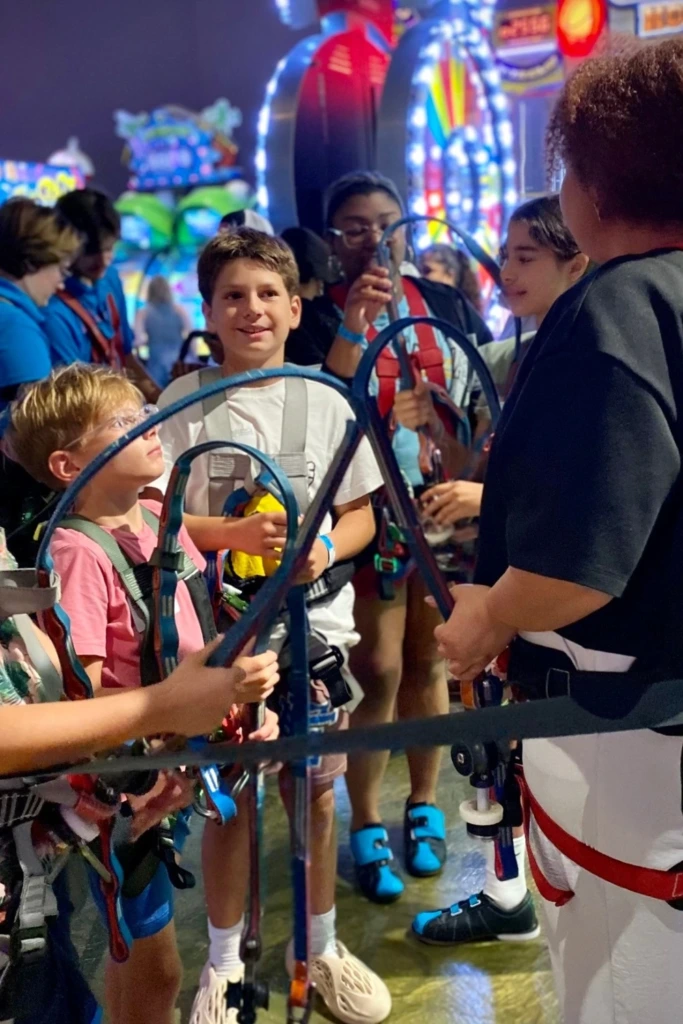
An Indoor Ropes Course Adventure brings elements of an obstacle challenge into a controlled indoor environment.
For an accessible version, create a floor-level course using ropes laid flat on the ground, balance markers, foam stepping blocks, and low obstacles.
Participants follow a designated route while completing tasks such as walking along a rope pathway, stepping between marked stations, and carrying a lightweight object.
Divide the group into teams and encourage members to support one another throughout the course.
Additional stations can include simple puzzles or communication challenges that must be completed before moving forward.
Avoid suspended ropes, climbing structures, or elevated obstacles unless the facility has professionally installed equipment and qualified supervision.
A well-designed floor-level course can provide an engaging adventure without requiring specialized climbing skills.
Blindfold Puzzle Challenge
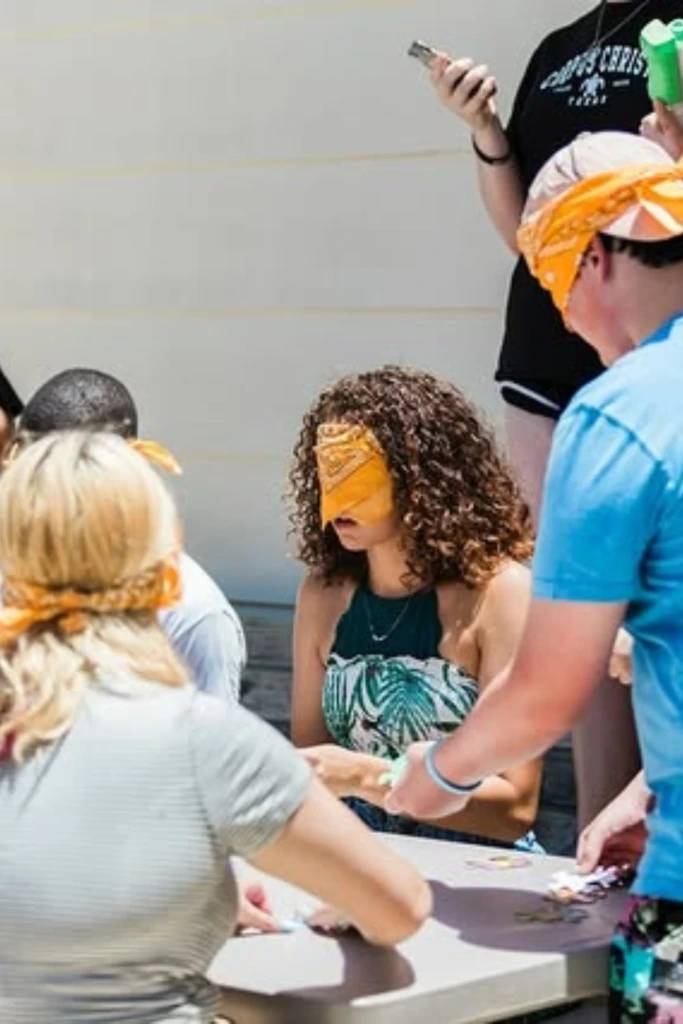
The Blindfold Puzzle Challenge is a cooperative activity that encourages patience, communication, and problem-solving.
Divide participants into pairs or small teams and provide each group with a simple puzzle made from large, easy-to-handle pieces.
One participant wears a blindfold while teammates provide verbal instructions for positioning the pieces.
The blindfolded player must rely on the descriptions to assemble the puzzle without looking at the completed image.
After a short period, participants switch roles so everyone has an opportunity to practice communication skills.
For beginners, use puzzles containing fewer pieces and recognizable shapes.
The challenge demonstrates how precise instructions, active listening, and encouragement can improve group performance.
Head–Shoulders Grab Game
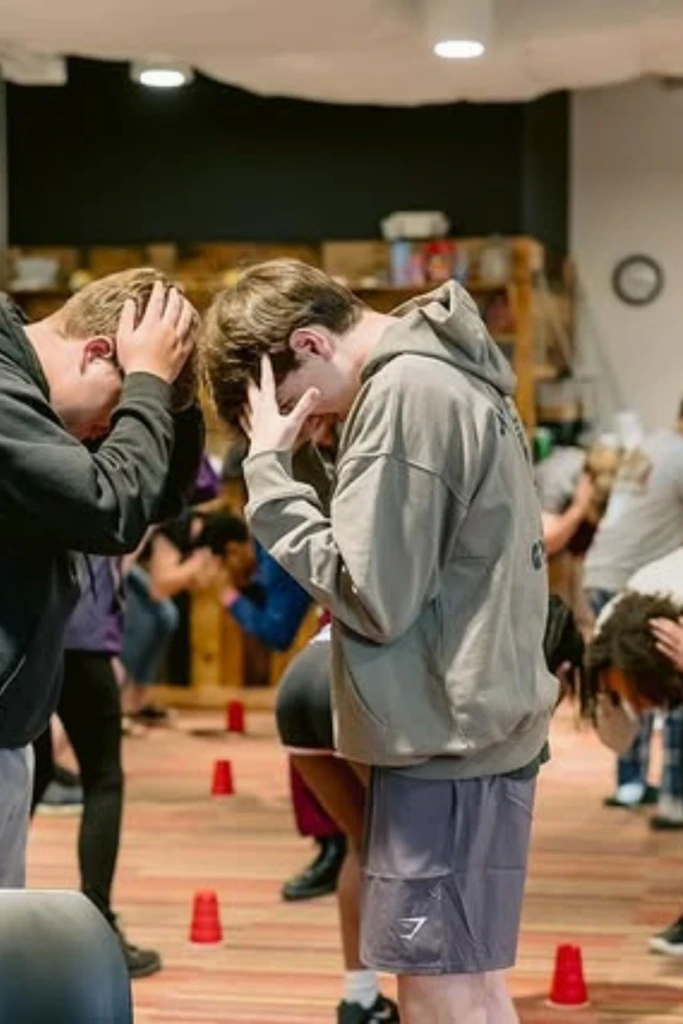
The Head-Shoulders Grab Game is a fast-paced reaction activity that works particularly well as a short icebreaker.
Arrange participants in pairs, facing one another across a table or a marked floor space. Place a soft object, such as a foam ball or beanbag, between them.
The leader calls out different body parts, including head, shoulders, knees, and toes.
Participants must immediately touch the corresponding body part with their hands.
When the leader suddenly calls "Grab!" both players attempt to pick up the object.
The first participant to collect it earns a point.
Rotate partners after several rounds to encourage interaction among different group members.
Use soft objects and establish rules against grabbing hands or making physical contact with opponents.
Outdoor Circle Discussion Game
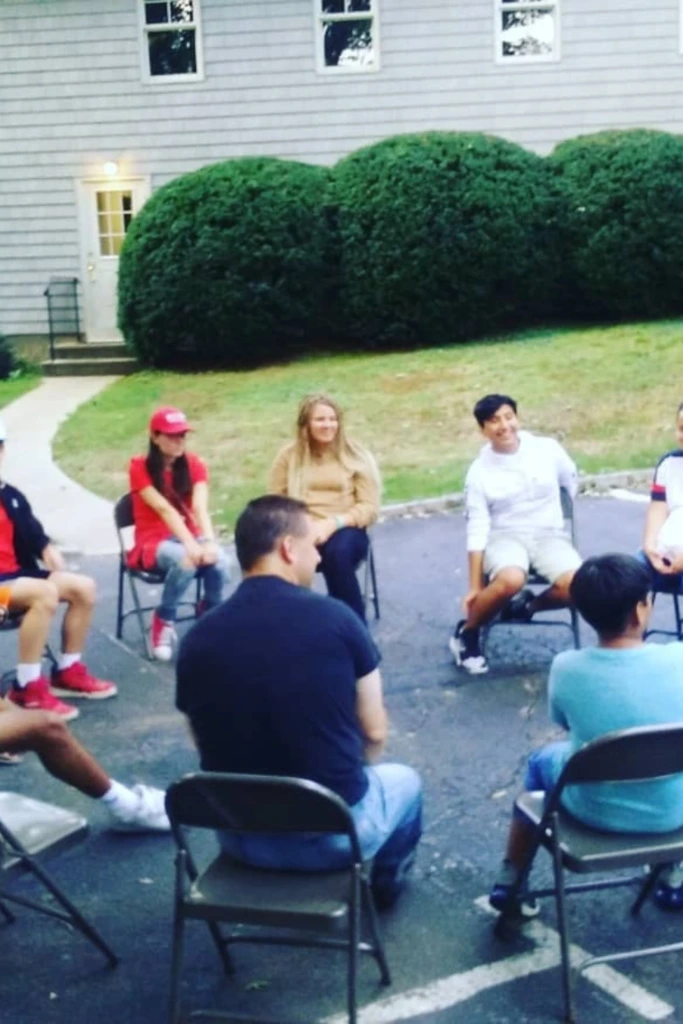
The Outdoor Circle Discussion Game offers a relaxed way for youth group members to develop friendships and learn more about one another.
Arrange chairs or sitting spots in a large circle outdoors. Prepare a collection of interesting questions that encourage conversation.
Questions might include favorite childhood memories, dream travel destinations, unusual talents, or activities participants would like to try.
Pass a soft ball around the circle while music plays. When the music stops, the person holding the ball receives a question.
Participants can answer individually or invite others to contribute their thoughts.
For larger groups, divide the circle into smaller discussion teams to give everyone more opportunities to speak.
Keep questions respectful and age-appropriate, and allow participants to skip anything they would rather not discuss.
This activity works especially well for new youth groups where building trust and familiarity is an important goal.
Marshmallow Stuffing Challenge
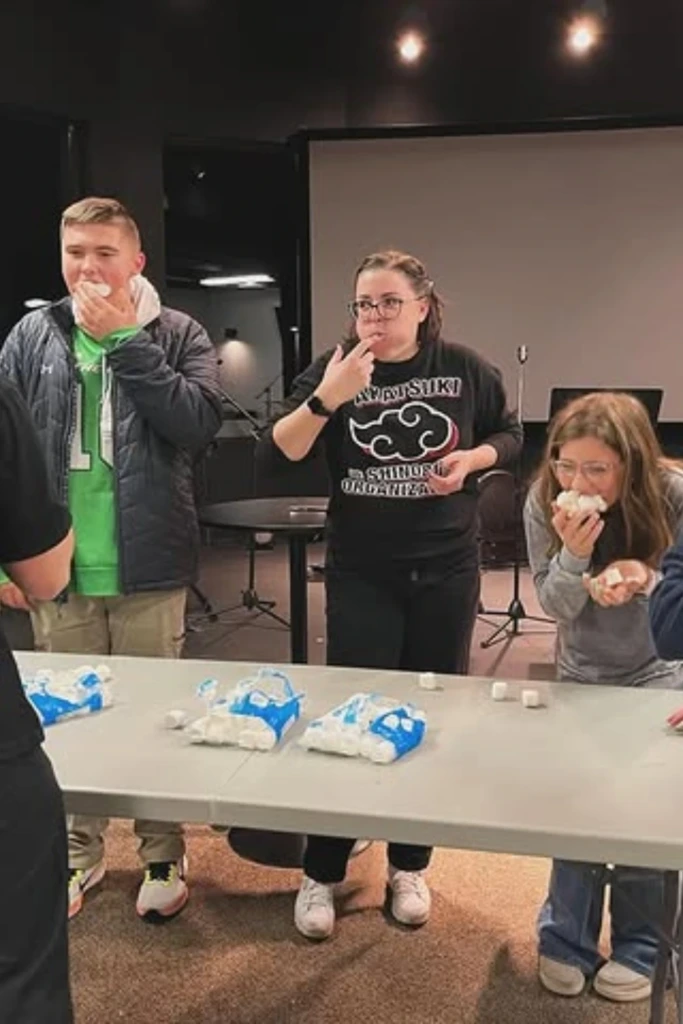
The Marshmallow Stuffing Challenge is often associated with funny party competitions, but placing multiple marshmallows in the mouth can create a serious choking hazard.
A safer alternative is to turn the activity into a marshmallow packing and stacking competition.
Provide each team with a bowl of marshmallows, a small container, and a pair of clean kitchen tongs.
Participants race to transfer as many marshmallows as possible into the container within a fixed time limit, without crushing them or using their hands.
Another variation involves building the tallest freestanding marshmallow tower using dry spaghetti sticks as supports.
Teams must balance their structures carefully while working against the clock.
Award points for successful transfers, creative designs, or structures that remain standing for a designated period.
This approach preserves the laughter, excitement, and competitive atmosphere without encouraging dangerous eating behavior.
FAQs
What are national youth games?
National youth games are organized sporting competitions that bring together young athletes from different regions, schools, clubs, or communities within a country.
These events often include sports such as athletics, football, basketball, swimming, badminton, and other competitive activities.
Their main objectives are to encourage physical fitness, identify emerging athletic talent, promote sportsmanship, and provide opportunities for young people to participate in organized competitions.
The structure and eligibility requirements vary by country. Some national youth events focus on school-age athletes, while others include older teenagers and young adults.
How can I make my youth group more fun?
Making a youth group more enjoyable starts with understanding the interests, personalities, and abilities of its members.
Introduce a combination of energetic competitions, creative challenges, team-building exercises, and relaxed social activities. Rotating between different types of games helps prevent meetings from becoming repetitive.
Encourage participants to suggest activities and take turns leading games. Giving young people a voice in planning can increase enthusiasm and strengthen their sense of belonging.
Friendly competitions, themed events, outdoor adventures, and small team challenges can also make gatherings more memorable.
Related Ideas You Might Love
Most importantly, create a welcoming atmosphere where everyone feels respected and included. A youth group becomes more enjoyable when members feel comfortable participating, forming friendships, and expressing themselves.
A successful youth group doesn't need expensive equipment or elaborate entertainment. Consistent opportunities for connection, laughter, teamwork, and shared experiences can make every gathering something participants look forward to.






One Comment