21 School Carnival Games Ideas for 2026

School carnivals bring students, teachers, and families together for an exciting day filled with laughter, friendly competition, and memorable activities. The right games can transform an ordinary school playground into a lively celebration where children of different ages have something enjoyable to do.
Planning school carnival games in 2026 doesn't require expensive equipment or complicated setups. From traditional tossing challenges to oversized outdoor activities, there are plenty of creative ways to keep everyone entertained. These 21 ideas offer a combination of teamwork, physical movement, skill-based challenges, and simple carnival attractions that can suit different school budgets and available spaces.
Which Carnival Games Attract the Most Participation From Both Kids and Parents?
The most popular school carnival activities are usually those that are easy to understand, quick to play, and enjoyable for different age groups. Games that allow parents to compete alongside their children often attract larger crowds because they encourage shared experiences rather than individual participation.
A successful carnival also benefits from variety. Combining active outdoor competitions with tabletop challenges, colorful booths, and cooperative games gives everyone an opportunity to participate comfortably.
Giant Block Challenge
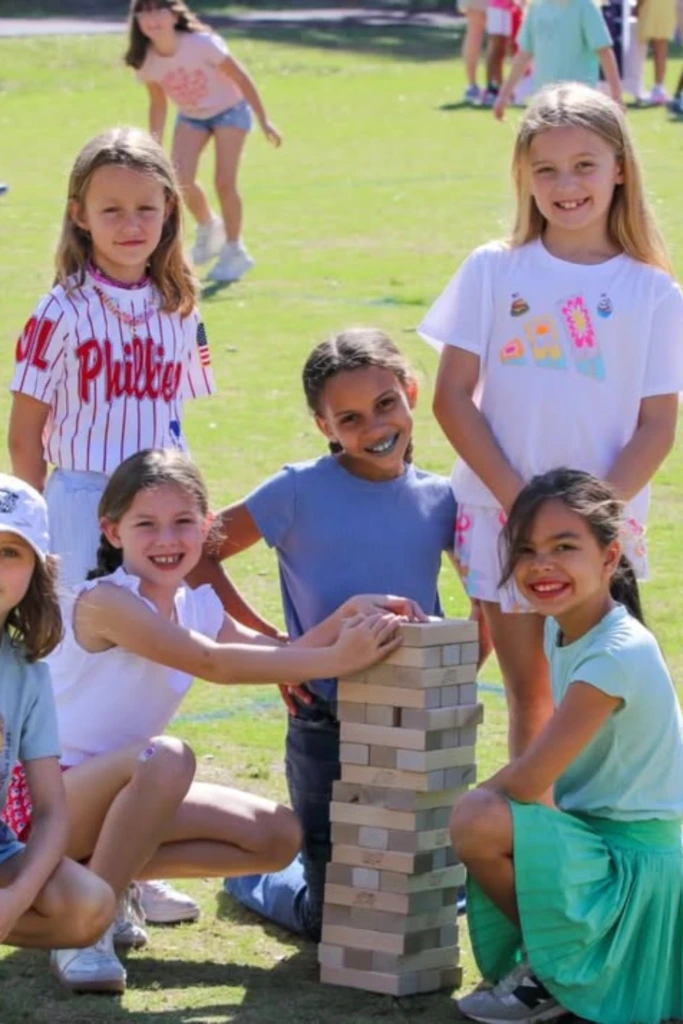
An oversized block-stacking game creates an exciting combination of patience, concentration, and suspense. Players take turns removing wooden blocks from a tall tower and carefully placing them on top without causing the structure to collapse.
This activity works particularly well for families because children and adults can compete using the same basic rules. The growing tower naturally attracts spectators who enjoy watching each increasingly difficult move.
For a school-friendly setup, use lightweight, smooth-edged blocks and position the game on a flat surface away from crowded walkways. Younger students can play with smaller towers, while older participants can attempt more challenging arrangements.
Hula Hoop Race
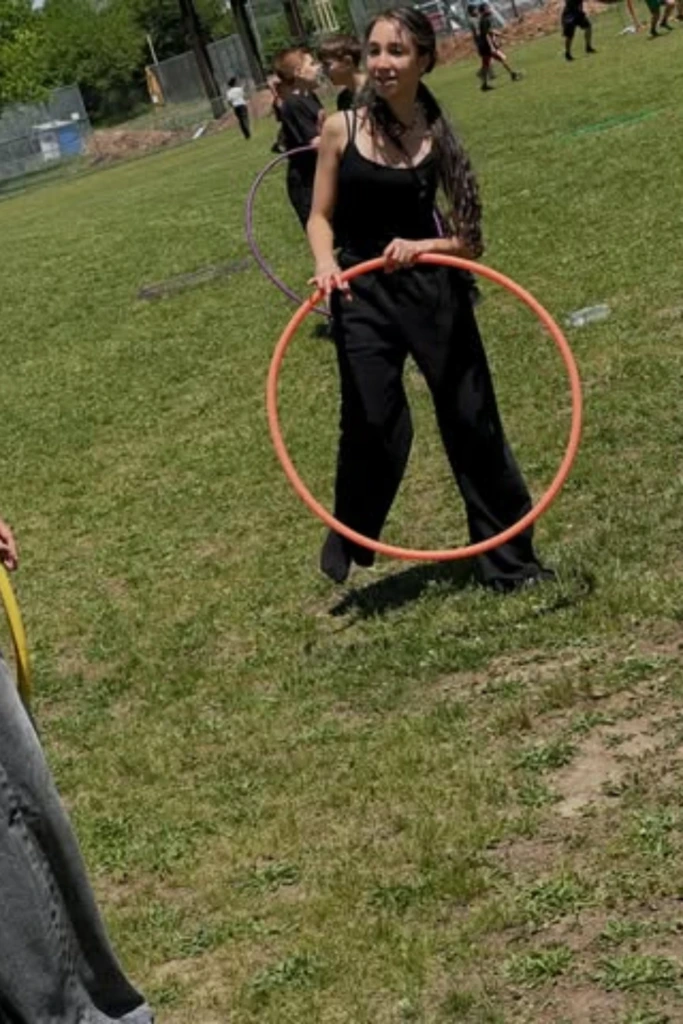
A hula hoop race adds energetic movement and cheerful competition to an outdoor carnival. Participants can race while spinning hoops around their waists or roll them toward a designated finish line.
Another entertaining variation involves teams standing in a circle while holding hands. Each group must pass a hula hoop around the circle without breaking the connection, encouraging communication and cooperation.
This activity requires relatively inexpensive equipment and can accommodate multiple players throughout the event. Separate lanes, clear boundaries, and age-appropriate distances help maintain an organized competition.
Giant Ball Race
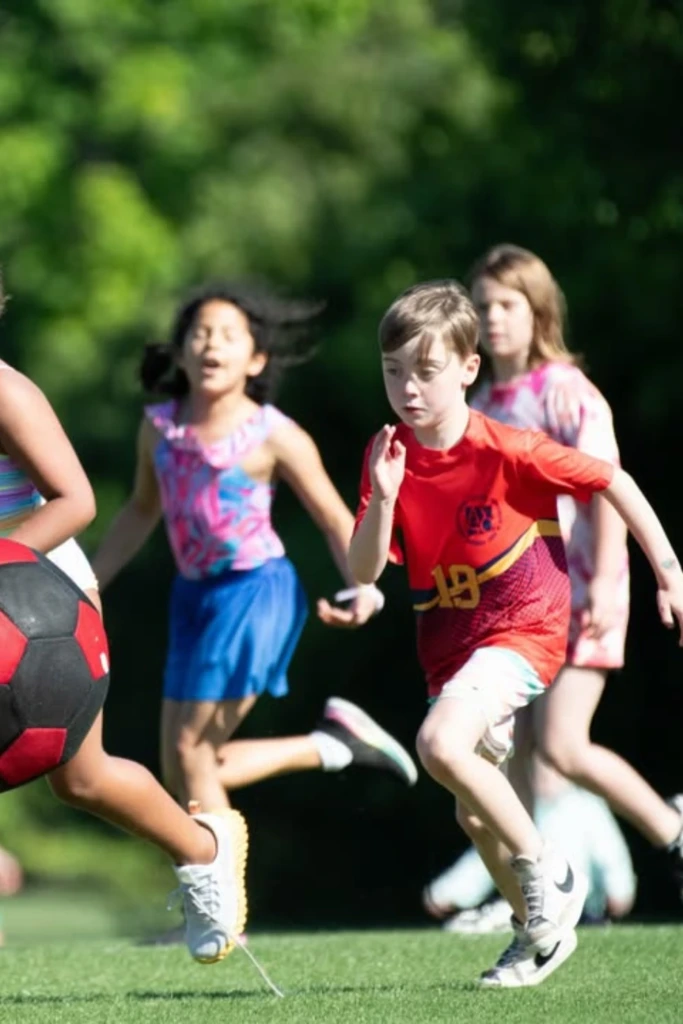
Large inflatable exercise balls can turn a simple racing activity into one of the most entertaining attractions at a school carnival. Participants guide oversized balls through a marked course, navigating turns and obstacles before reaching the finish line.
Teams can compete by passing the ball between members or pushing it through a series of cones. The unpredictable movement of the large balls creates amusing moments that often attract enthusiastic spectators.
Choose lightweight inflatable balls and establish rules that prevent pushing other participants. A grassy playground or spacious activity field provides a suitable environment for this game.
Sack Race Challenge
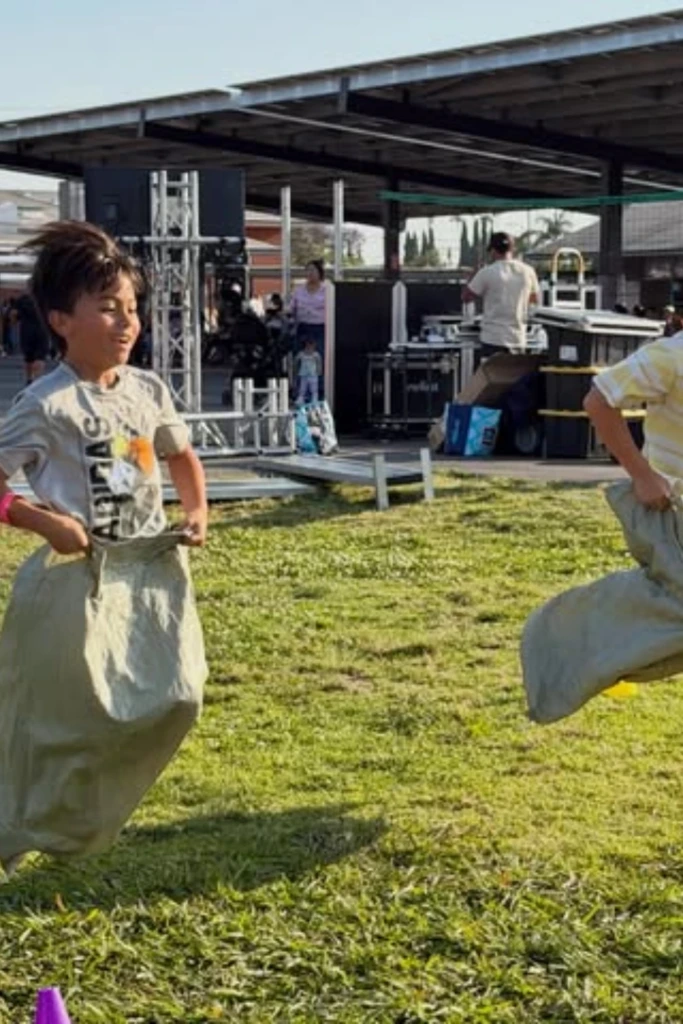
Sack races remain a favorite school carnival tradition because they combine physical activity with lighthearted competition. Players step into sturdy sacks, hold the upper edges, and hop toward a clearly marked finish line.
For added excitement, organizers can introduce parent-child races, classroom competitions, or short relay events. These variations make the activity more inclusive and encourage friendly interaction between different groups.
Durable fabric sacks work better than thin plastic alternatives. Keep racing distances manageable and select a level, obstacle-free surface to reduce the chance of falls.
Carnival Booth Mix
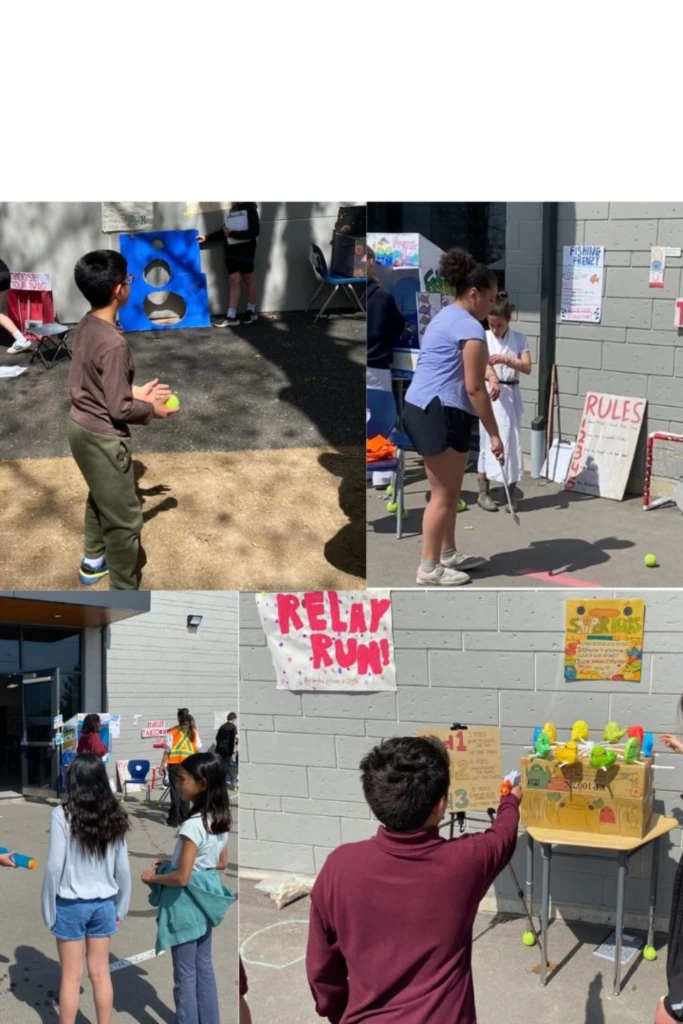
A collection of small carnival booths gives visitors the freedom to explore different activities without waiting for one major attraction. Each booth can feature a distinct challenge, such as tossing beanbags, matching colors, guessing quantities, or aiming soft balls at targets.
Decorating the stations with bright banners, handmade signs, and themed table coverings creates a festive atmosphere. Students can help design the booths as part of classroom art projects before the event.
A simple ticket system can keep participation organized, while clearly displayed instructions allow families to understand each game quickly. Offering a mixture of easy and challenging activities ensures that younger children remain engaged.
Cup Toss Game
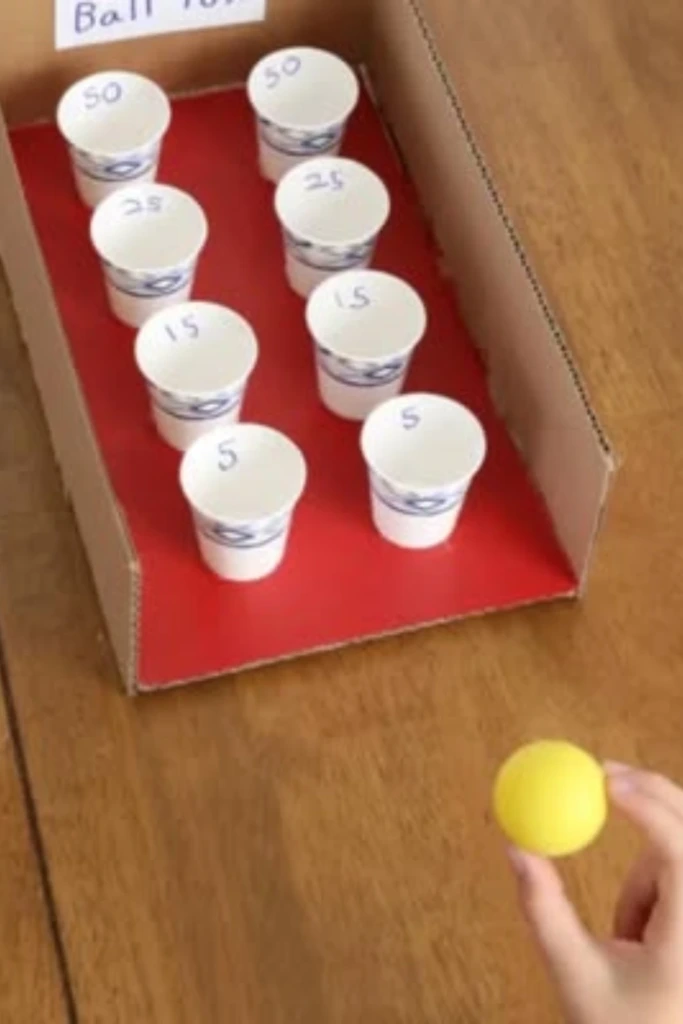
The cup toss game is an affordable carnival attraction that tests accuracy and hand-eye coordination. Arrange colorful plastic or reusable cups on a table, then invite participants to toss lightweight balls or beanbags into them from a marked distance.
Different cups can represent different point values, encouraging players to aim carefully rather than simply throwing as quickly as possible.
For younger students, use larger cups and shorter throwing distances. Older children can compete with smaller targets or additional obstacles. Adding colorful decorations and a simple scoreboard makes this inexpensive activity feel like a traditional fairground game.
Balance Beam Fun
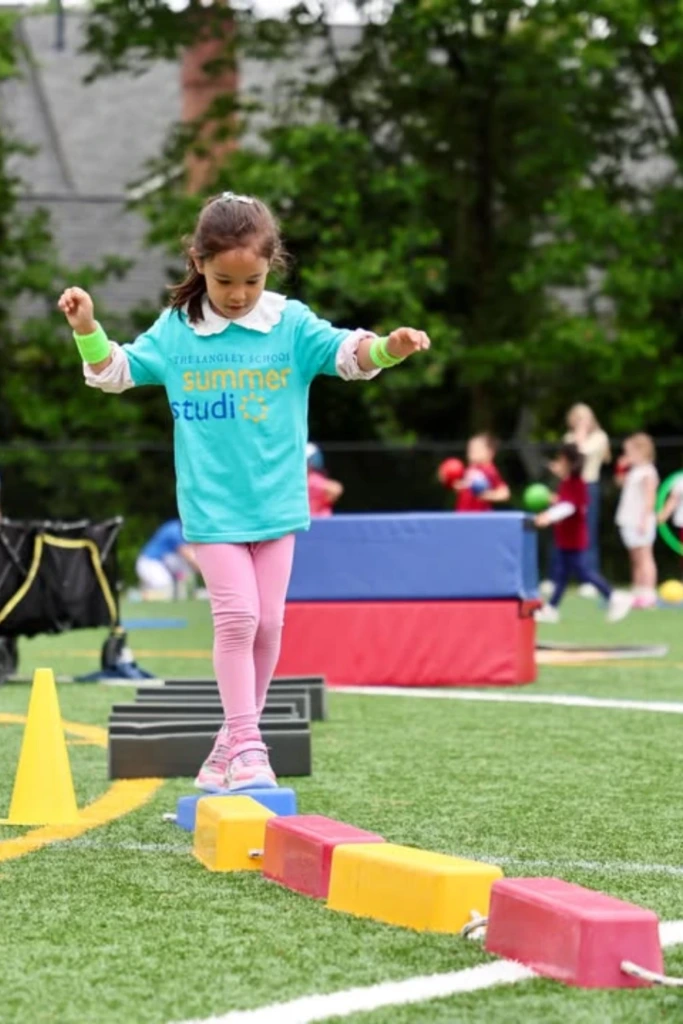
A low balance beam challenge offers an enjoyable way for children to practice coordination and body control. Participants attempt to walk across a short, stable beam or a marked pathway without stepping outside its boundaries.
The course can include simple variations, such as carrying a beanbag, pausing at designated points, or walking around soft obstacles.
For elementary school students, a flat tape line or ground-level foam beam is often more appropriate than an elevated structure. Place the activity on a non-slip surface and provide supervision throughout the event.
This station works especially well for children who prefer individual challenges over competitive team races.
Classic Booth Games
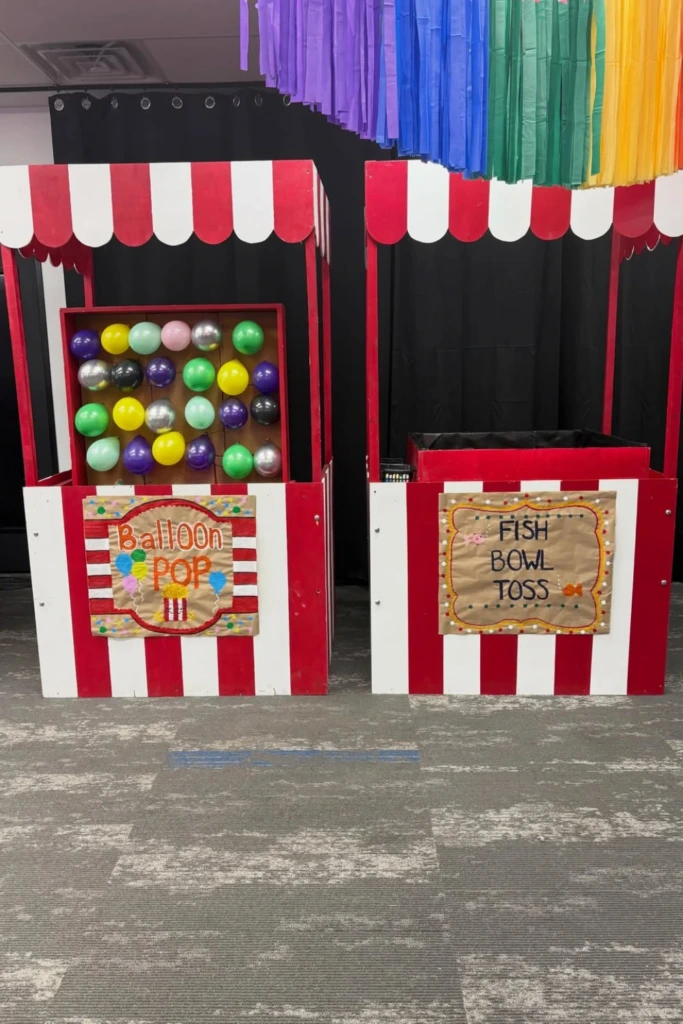
Traditional carnival booths create a familiar fairground atmosphere that appeals to students and parents alike. Popular choices include beanbag toss, ring toss, knock-down cans, and target throwing.
These activities are easy to customize using classroom materials, recycled containers, and colorful handmade displays. A themed backdrop can turn even a basic game into an attractive carnival station.
Consider awarding points based on successful attempts rather than making every game dependent on winning a prize. This encourages repeated participation while helping organizers control costs.
Classic booth games are also convenient for volunteers because they typically require minimal explanation and can operate continuously during the event.
Team Tug Match
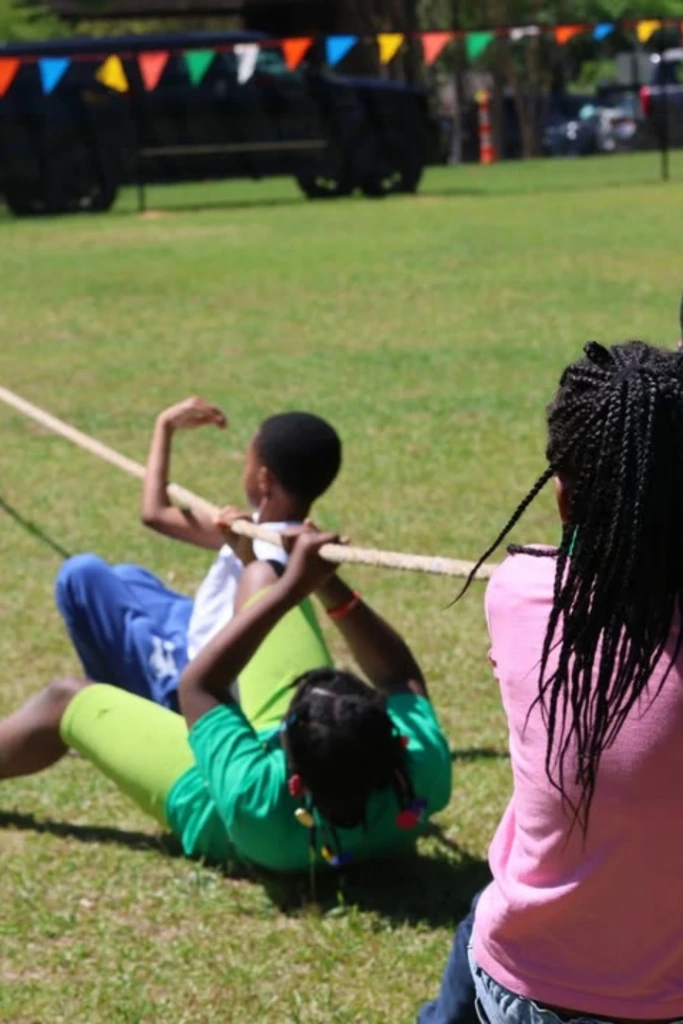
A supervised tug-of-war competition brings teamwork and excitement to a school carnival. Two evenly matched groups hold opposite ends of a suitable rope and attempt to pull the opposing team across a marked center line.
Classroom teams, family groups, and teacher-versus-parent matches can create entertaining moments for spectators.
Safety should guide the setup. Use a soft, level playing surface, select a rope designed for the activity, and establish rules against wrapping rope around hands or bodies. Avoid sudden jerking, limit team sizes, and have an adult referee supervise every round.
For younger children, a cooperative rope-pulling challenge may be a better alternative to direct competition.
Carnival Bowling Fun
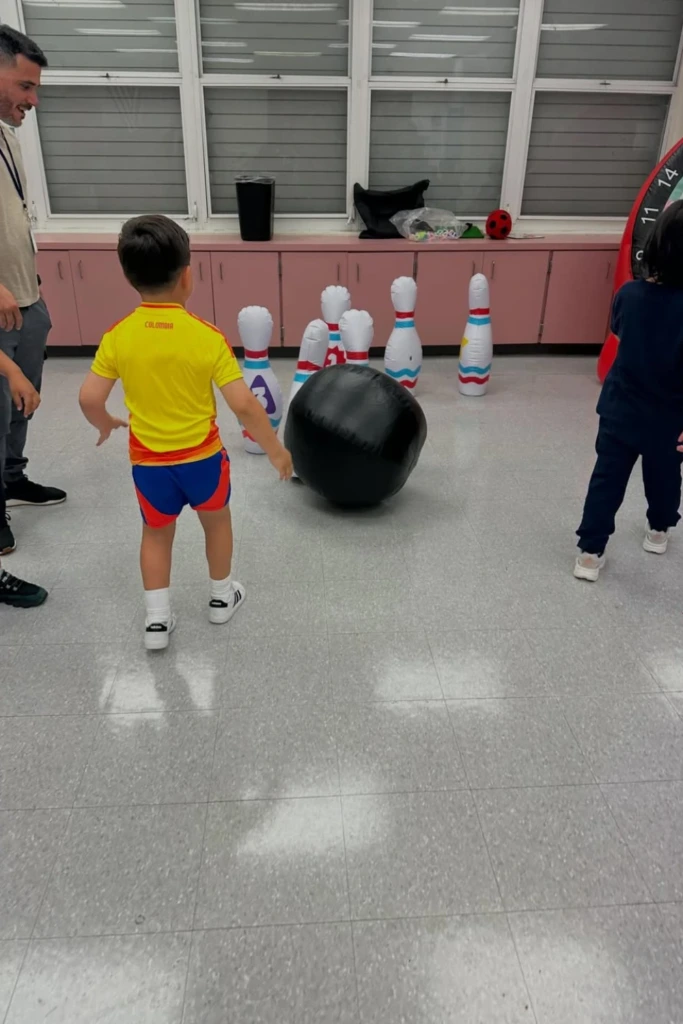
Carnival bowling transforms a familiar indoor game into a colorful outdoor attraction. Set up lightweight pins or decorated plastic bottles and allow participants to roll a soft ball toward them.
A themed bowling lane can feature painted cardboard decorations, colorful number markers, or school mascot designs. Students can earn points according to the number of pins they knock down.
The activity can be adjusted for different ages by changing the distance between the throwing line and the pins.
Because each turn takes relatively little time, carnival bowling is a practical choice for events expecting a steady flow of visitors.
Hoop Jump Challenge
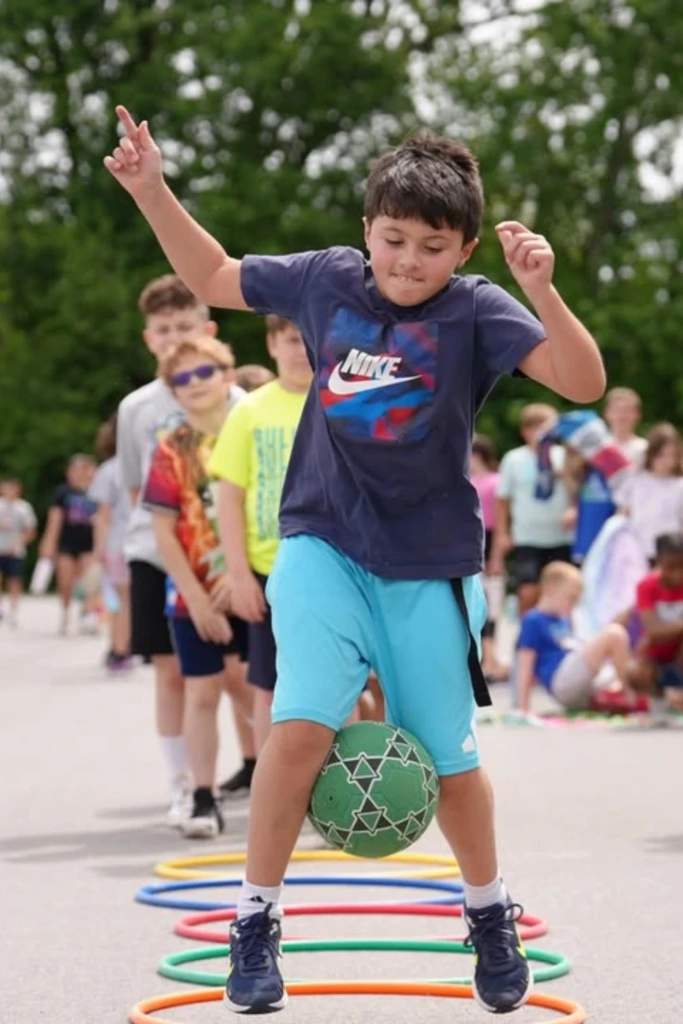
The hoop jump challenge combines movement, coordination, and playful competition. Arrange hula hoops flat on the ground in a sequence and ask participants to jump from one hoop to another without landing outside the designated spaces.
Organizers can create different patterns, including straight lines, zigzags, and alternating colors. Players may be asked to follow a particular color sequence or complete the course within a comfortable time limit.
Use non-slip hoops or ground markings that stay securely in place. Adjust the spacing to suit younger children and participants with different mobility needs.
This game works well as an independent station or as part of a larger carnival obstacle course.
Cup Stack Relay
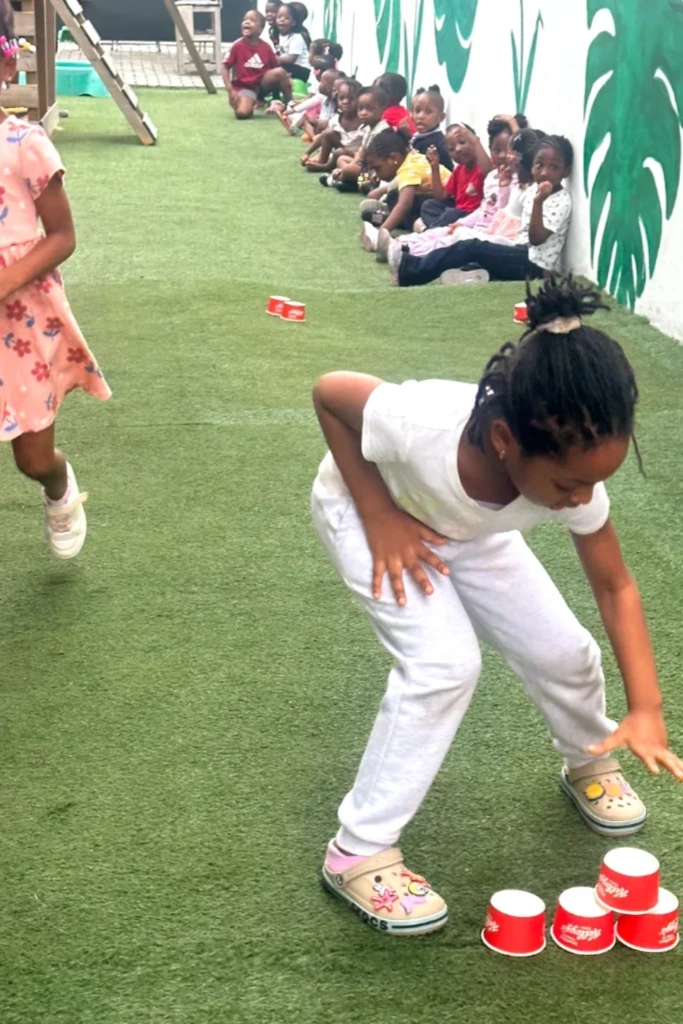
A cup stack relay is a fast-paced activity that encourages concentration, coordination, and teamwork. Players race to build a pyramid from plastic cups, then return the cups to their original stack before the next teammate begins.
For a standard challenge, participants can create a pyramid with three cups on the bottom, two in the middle, and one on top.
Teams may compete for the fastest completed relay, while individual players can attempt to improve their own times.
The equipment is inexpensive, easy to store, and suitable for indoor or outdoor carnival settings. Stable tables and reusable cups help keep the activity organized throughout the day.
Fire Ring Crawl
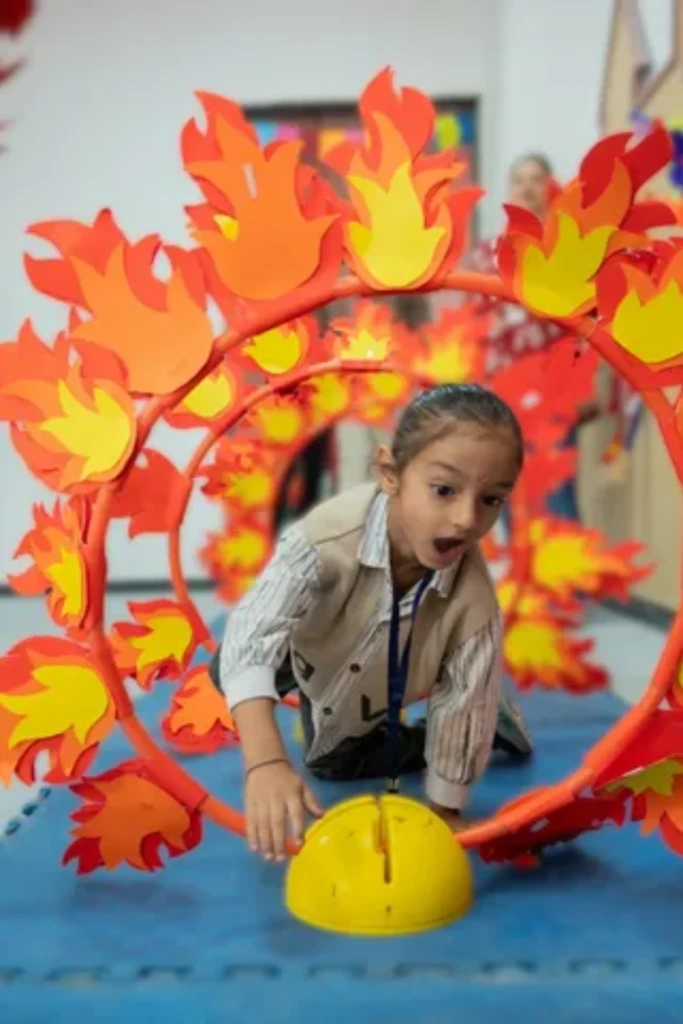
A fire ring crawl creates the excitement of a circus-inspired obstacle course without using actual flames. Decorate a large lightweight hoop with red, orange, and yellow paper streamers to resemble a ring of fire.
Children crawl through the hoop as part of a themed adventure course, perhaps pretending to be circus performers or explorers completing a special mission.
Secure the hoop at a safe height and ensure that decorative materials do not obstruct visibility or movement. Use flame-free decorations only, and avoid sharp frames or loose attachments.
Pairing the ring with foam stepping stones and short tunnels can create a memorable obstacle course for younger students.
Foosball Fun Zone
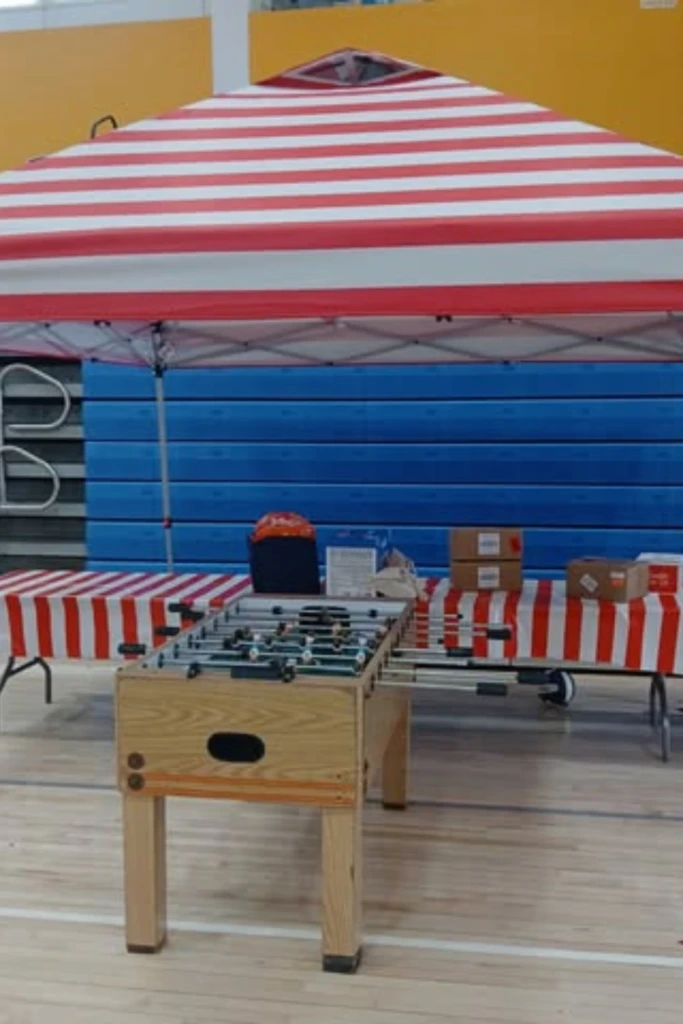
A foosball station provides an engaging alternative for students who enjoy tabletop competition. Players control miniature figures attached to rotating rods and attempt to score goals against their opponents.
Short matches allow more visitors to participate, making the station suitable for busy school carnivals. Organizers can arrange friendly tournaments or simple one-on-one games.
For a creative variation, students can construct a tabletop soccer game using a cardboard box, lightweight ball, and carefully secured craft materials.
Position the station under a shaded canopy or inside a classroom to keep the equipment comfortable to use. Clearly defined match lengths help prevent long waiting lines.
Mini Game Corner
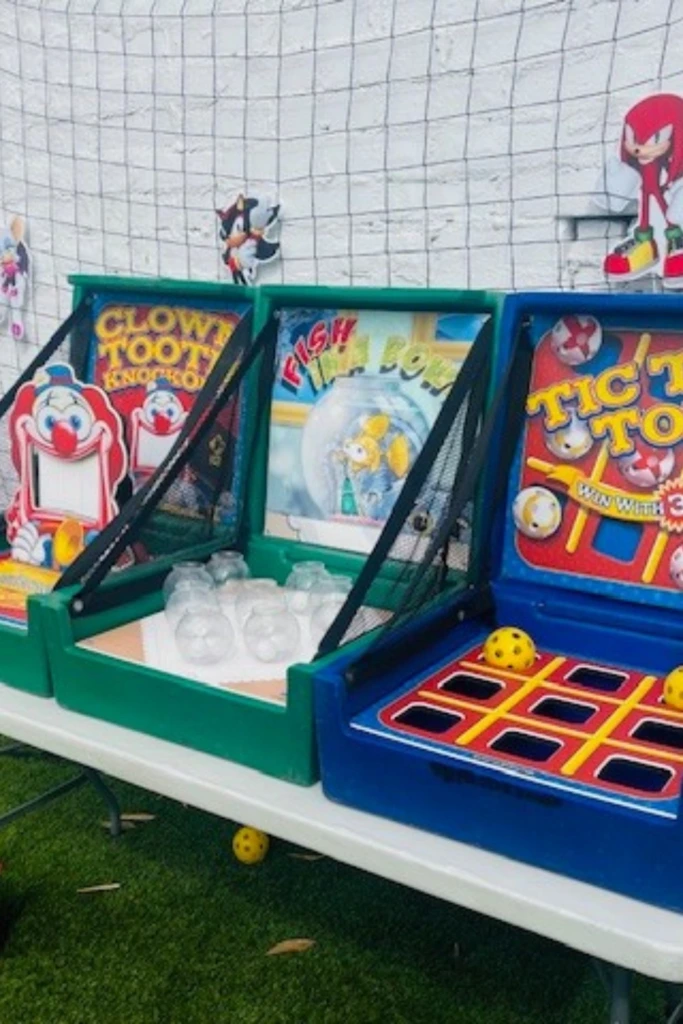
A mini game corner is ideal for younger students who may find larger carnival activities overwhelming. This dedicated area can feature short, simple challenges that require little physical effort or explanation.
Possible activities include matching picture cards, tossing soft beanbags into baskets, stacking foam blocks, and identifying objects by color.
Arrange the games at child-friendly heights and use soft materials wherever possible. Bright signs and cheerful decorations can make the corner inviting without creating unnecessary clutter.
Having a quieter section also gives families a comfortable place to enjoy the carnival at a slower pace.
Giant Tic Challenge
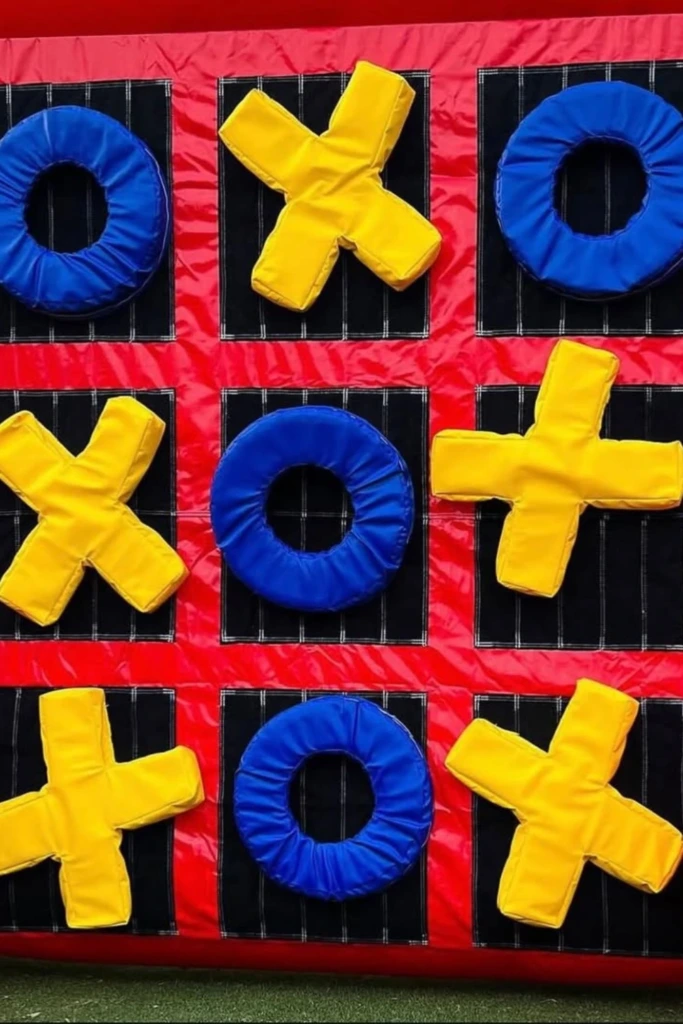
An oversized tic-tac-toe game turns a classic pencil-and-paper activity into an interactive carnival attraction. Create a large three-by-three grid using outdoor tape, rope, or a washable ground marking.
Players place oversized X and O pieces into the squares, attempting to complete a horizontal, vertical, or diagonal row.
For an active version, teammates can take turns running to the board and placing their markers. A slower tabletop version works well for younger children and visitors who prefer less physical movement.
The game is easy to understand, requires minimal supplies, and encourages strategic thinking. Large foam or cardboard markers make the activity colorful and easy to handle.
DIY Ball Drop
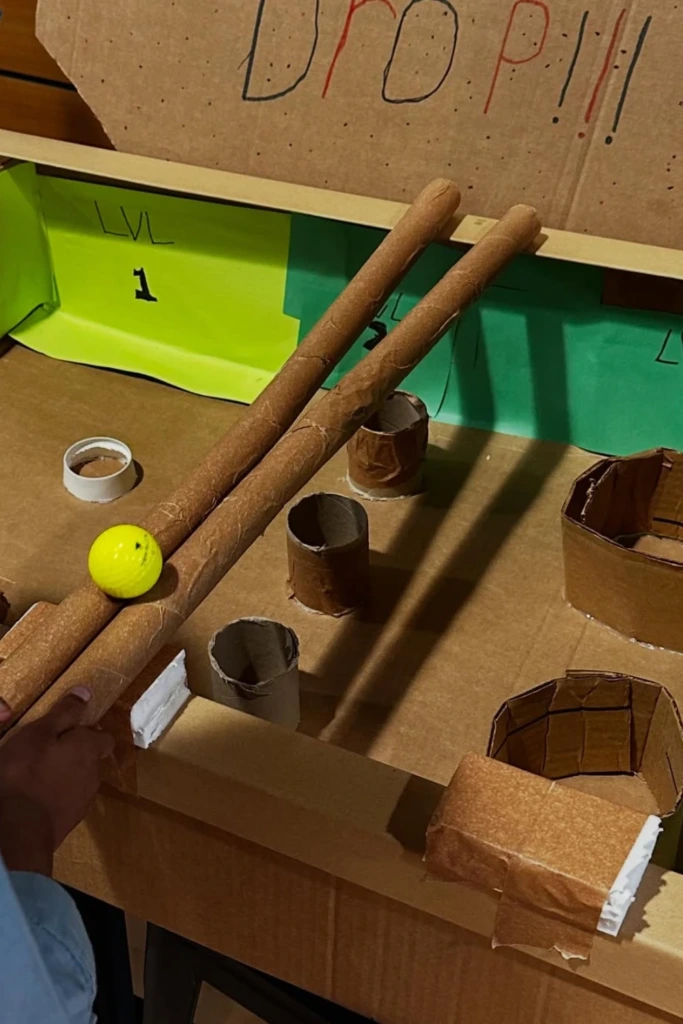
A homemade ball drop game offers a creative way to introduce chance and anticipation into a school carnival. Build a vertical board with staggered pegs or obstacles that cause a small ball to bounce unpredictably as it falls.
At the bottom, divide the board into labeled scoring sections. Participants release a ball from the top and watch where it lands.
A transparent front panel or enclosed design can help keep balls contained. Ensure all materials are securely attached and use balls large enough to avoid choking hazards for younger children.
This activity can also support classroom learning by introducing simple ideas about probability and outcomes in an entertaining setting.
Carnival Game Tent
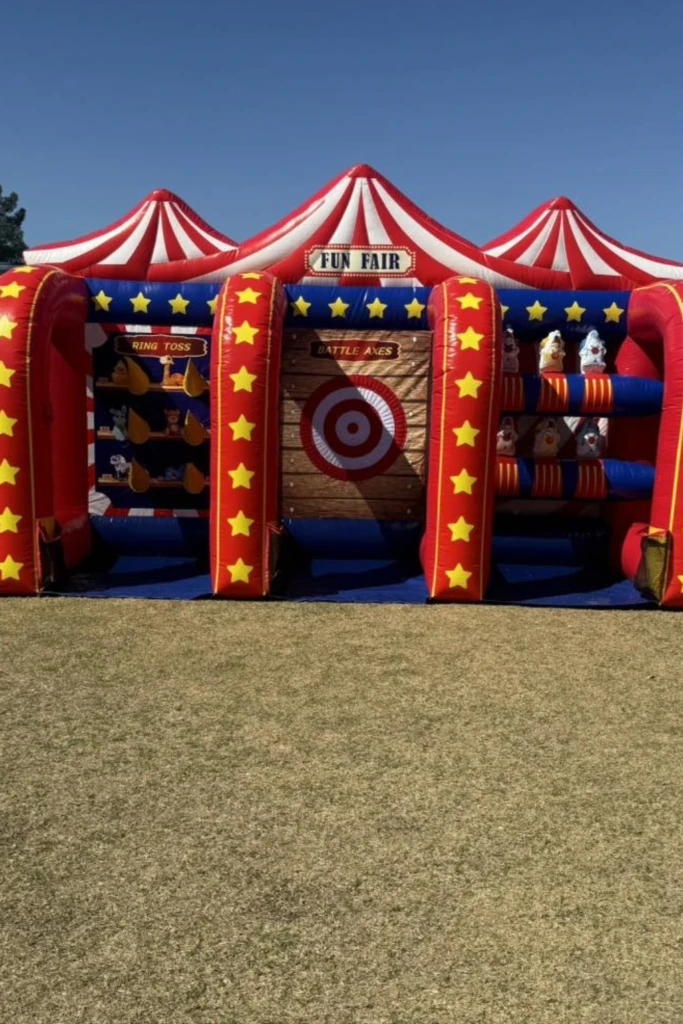
A dedicated carnival game tent creates an organized space where several small activities can operate together. Colorful fabric decorations, hanging signs, and themed table displays help give the area a traditional fairground appearance.
Inside the tent, organizers can arrange compact stations such as ring toss, cup stacking, guessing games, and soft target challenges.
A tent is particularly useful for providing shade and protecting lightweight equipment from mild weather. However, it should be securely anchored and positioned away from vehicle routes and emergency exits.
Clear entrance and exit paths help families move between activities without overcrowding.
Colorful Ring Toss
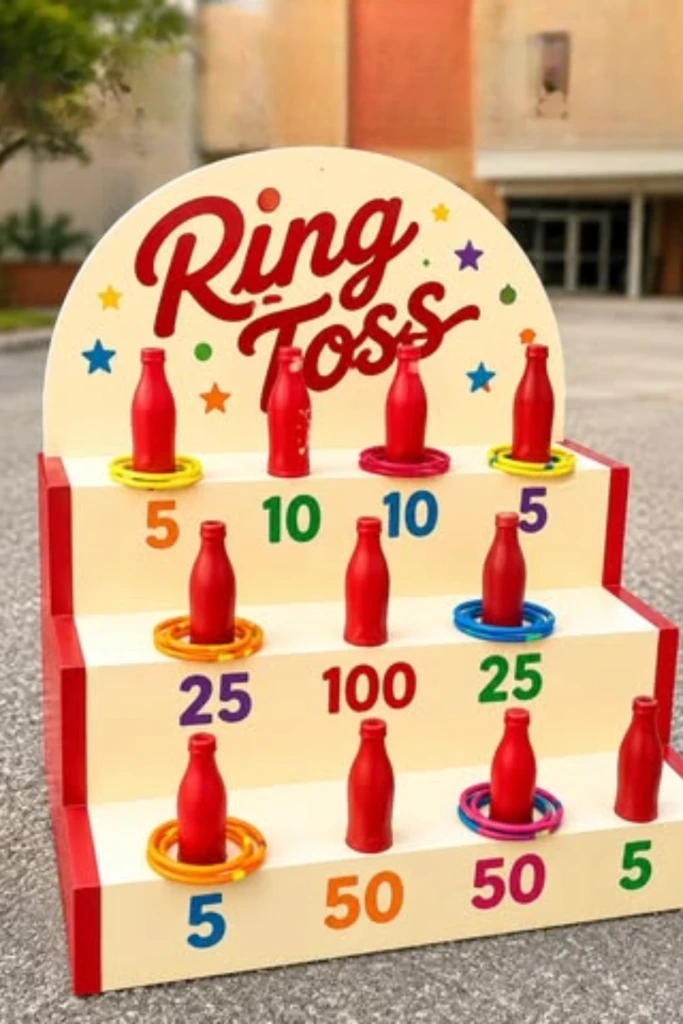
Ring toss is a simple carnival game that can be customized to match almost any school event theme. Arrange sturdy bottles, pegs, or upright targets in rows and invite participants to throw rings around them.
Different colors can represent different point values, allowing children to choose between easy and challenging targets.
For a visually appealing setup, paint the targets in bright shades or decorate them with school colors. Use lightweight rings with smooth edges and keep the throwing area separate from pedestrian traffic.
This game is especially practical for large crowds because rounds are short, equipment is reusable, and volunteers can reset the station quickly.
Prize Punch Board
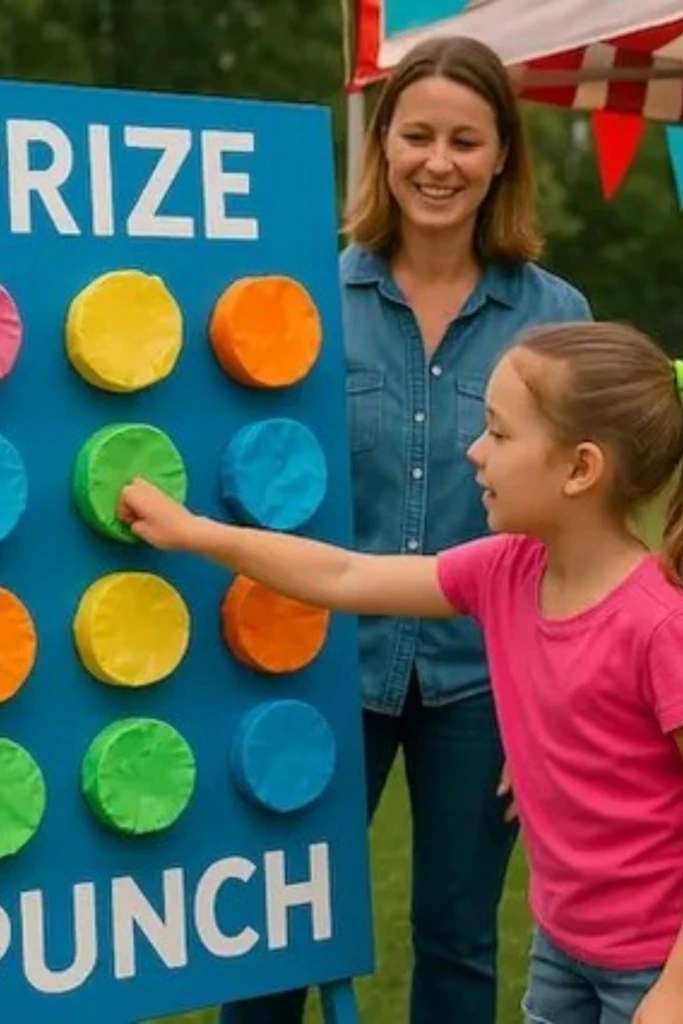
A prize punch board adds surprise and anticipation to the carnival experience. Construct a sturdy display with individual openings covered by thin tissue paper. Behind each opening, place a small prize or reward ticket.
Participants choose a covered opening and gently punch through the paper to discover their reward.
Prizes can include stickers, pencils, erasers, small activity cards, or school-themed items. Reward tickets can also be redeemed at a separate prize counter.
Ensure the openings have smooth edges and enough space for a child's hand. Avoid sharp materials and select age-appropriate prizes.
Preparing a balanced selection of rewards helps keep the game enjoyable while allowing organizers to manage expenses.
Creative Carnival Mix
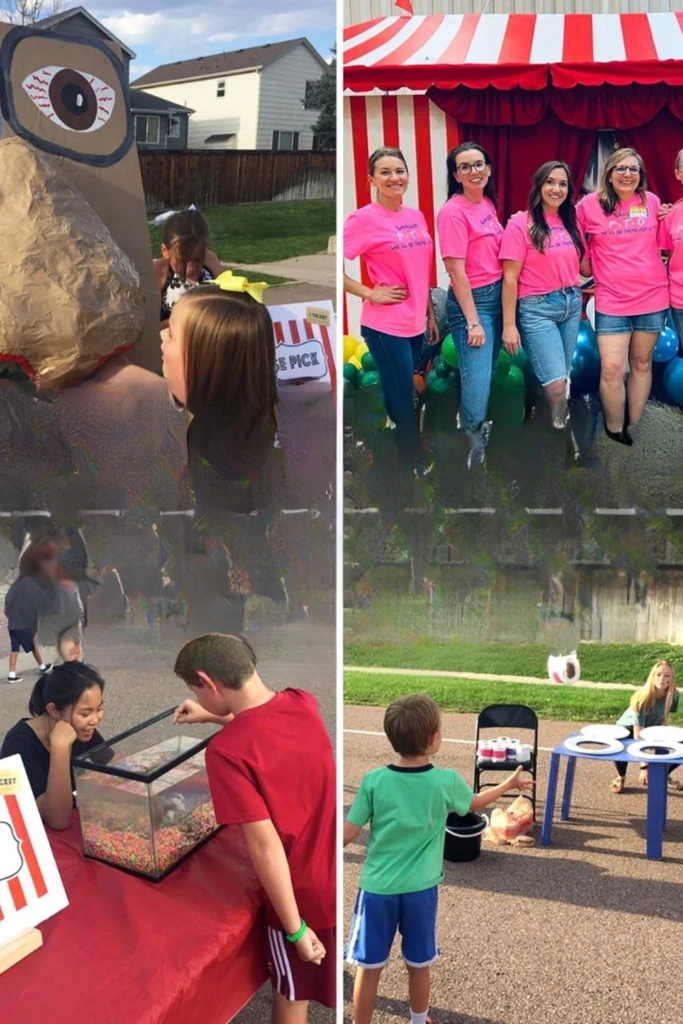
A creative carnival mix combines several imaginative activities into one flexible entertainment area. Instead of focusing on a single game, this station can rotate between artistic challenges, movement activities, and quick skill-based competitions.
Students might decorate paper crowns, complete a mystery object challenge, build miniature structures, or participate in themed scavenger hunts.
The activities can follow a central theme, such as an adventure festival, jungle exploration, space mission, or school spirit celebration.
Allowing students to contribute ideas during the planning stage can make the carnival feel more personal and encourage greater participation.
A rotating activity schedule also helps keep the area interesting for families who spend several hours at the event.
FAQs
How Do I Keep School Carnival Games Fair for Different Age Groups?
Fairness begins with designing games that accommodate different ages, abilities, and experience levels. Rather than expecting every participant to complete identical challenges, organizers can introduce simple adjustments that maintain the fun without creating unnecessary disadvantages.
For example, younger children can stand closer to targets during throwing games, while older students use longer distances. Racing activities can have separate age categories, and teamwork games can use balanced groups.
Clear instructions should be displayed at every station, and volunteers should apply the same rules consistently within each category.
Participation rewards can also encourage children who are less confident in competitive environments. Offering cooperative games alongside individual competitions ensures that the carnival celebrates enjoyment, effort, and inclusion rather than focusing entirely on winning.
What Are the Best Low-Cost School Carnival Games for Big Crowds?
The most budget-friendly carnival games are those that use reusable materials, require limited preparation, and allow participants to complete turns quickly.
Ring toss, beanbag toss, cup stacking, carnival bowling, and giant tic-tac-toe are excellent examples. Many of these activities can be created using cardboard, plastic cups, empty bottles, foam pieces, and other readily available supplies.
For large crowds, organizers should prioritize games that are easy to reset and do not require lengthy explanations. Setting up duplicate stations for popular activities can also reduce waiting times.
Related Ideas You Might Love
Schools can further control expenses by requesting donated materials, reusing decorations from previous events, and offering inexpensive participation prizes.
The most successful school carnivals focus on accessibility, variety, and shared enjoyment rather than expensive attractions. With thoughtful planning, simple games can create an exciting experience that students and families look forward to year after year.