25 Activities for an 8-Month-Old Baby
At eight months old, babies are becoming more curious about everything around them. They may be sitting independently, reaching for toys, transferring objects between their hands, babbling more often, and beginning to crawl or pull themselves up. This stage is an excellent opportunity to encourage their developing skills through simple, playful experiences.
You don't need expensive toys or complicated setups to keep your little one engaged. Everyday household items, colorful objects, music, and plenty of interaction can provide hours of age-appropriate entertainment. Here are 25 enjoyable activities for an 8-month-old baby that support sensory exploration, movement, communication, and early learning.
1. Playing with Building Blocks
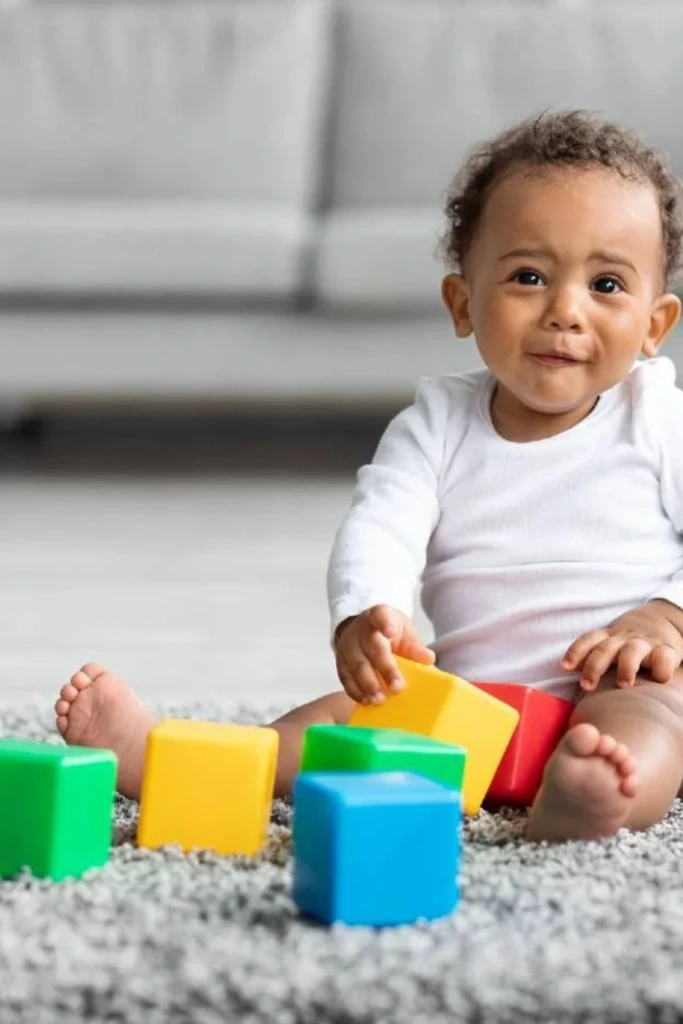
Soft, lightweight building blocks are excellent toys for introducing an eight-month-old to cause and effect. Babies can grasp the blocks, turn them around, bang two together, and watch as a small tower tumbles down. These simple actions help develop hand-eye coordination, grip strength, and an understanding of how objects interact.
Sit on the floor with your baby and build a short tower within their reach. Encourage them to knock it over or hand you a block to add to the stack. Use large, age-appropriate blocks that cannot fit into your baby's mouth, and supervise the activity closely to prevent choking.
2. Peek-a-Boo
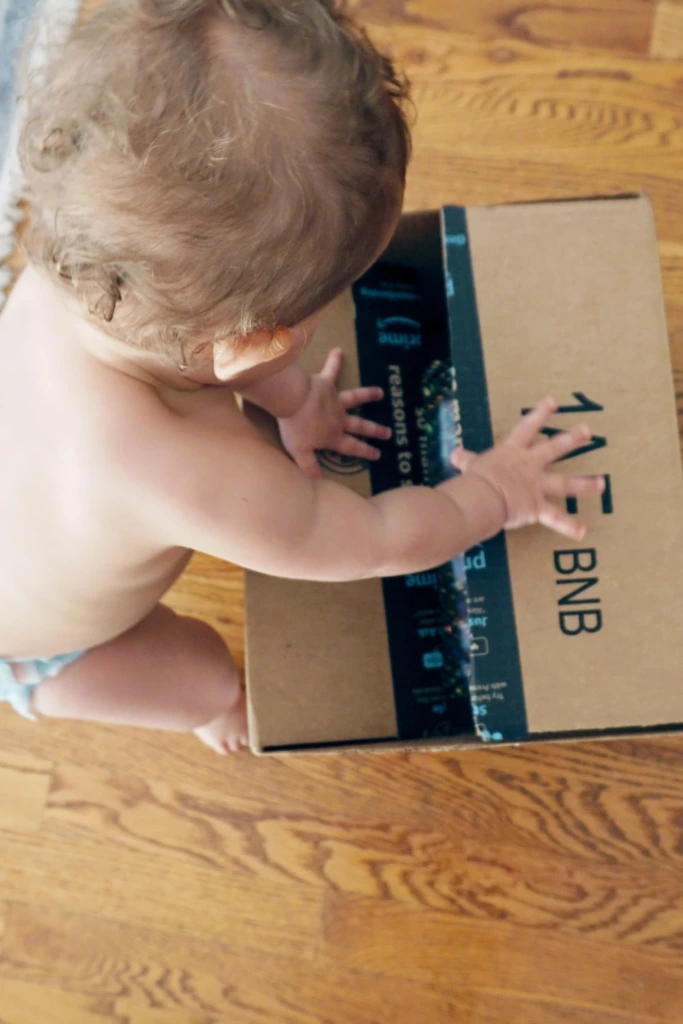
Peek-a-boo is a classic baby game that remains entertaining because it combines familiar faces, anticipation, and surprise. It can also encourage social interaction and help babies begin to understand that people and objects still exist when temporarily out of sight.
Cover your face with your hands, then reveal it with a cheerful smile. You can also hide behind a lightweight cloth while keeping your face visible whenever possible. Pause between repetitions to let your baby respond with smiles, squeals, or gestures. Follow your baby's reactions and keep the game gentle if they become startled.
3. Crawling to Different Objects
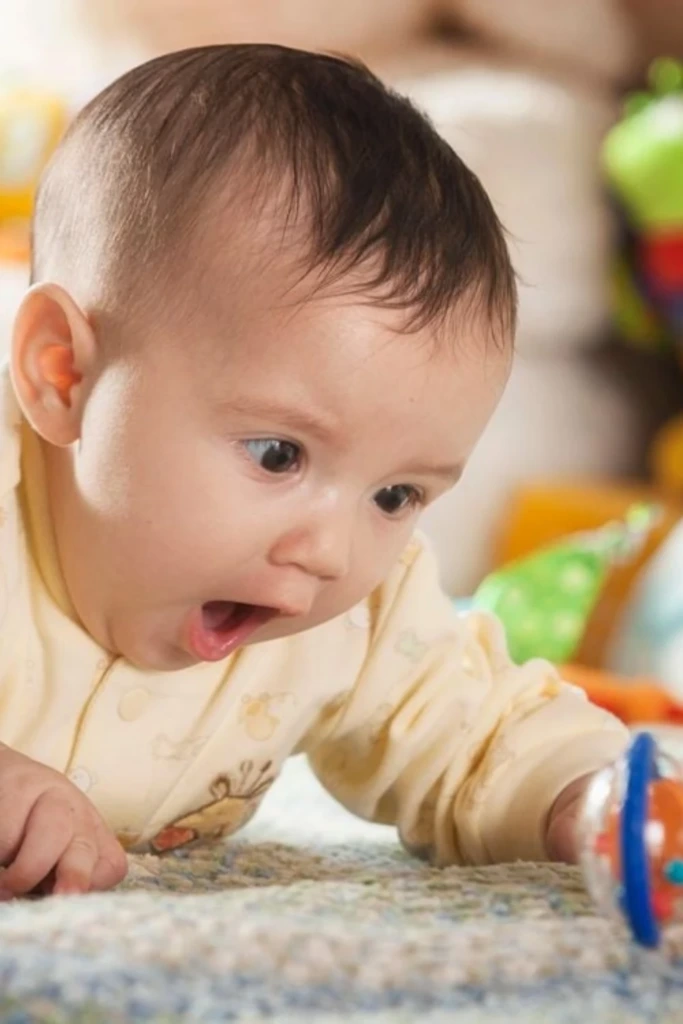
If your baby is beginning to crawl, this is a wonderful time to encourage movement through playful exploration. Place a favorite toy a short distance away and give your little one an opportunity to move toward it. Reaching, pivoting, scooting, and crawling all help babies develop coordination and strengthen their muscles.
Create a clear, comfortable play area on a nonslip floor mat. Try moving the toy slightly to one side or placing another interesting object nearby to encourage different movements. Keep the distances short and allow your baby to take breaks. If your child isn't crawling yet, reaching and turning toward a toy are equally worthwhile activities.
4. Walking Practice

Some eight-month-old babies enjoy pulling themselves up against sturdy furniture or bearing weight through their legs with adult support. Others are still working on sitting, rolling, and crawling. Both patterns can be normal, so walking should never be treated as a milestone that your baby must achieve at this age.
If your baby enjoys standing with support, sit or kneel in front of them and offer your hands for balance while they remain on a stable surface. You can also let them pull up at secure, appropriately positioned furniture while you stay close. Avoid pulling your baby by the arms to make them walk, and never use wheeled baby walkers, which can cause serious injuries.
5. Stacker Toys
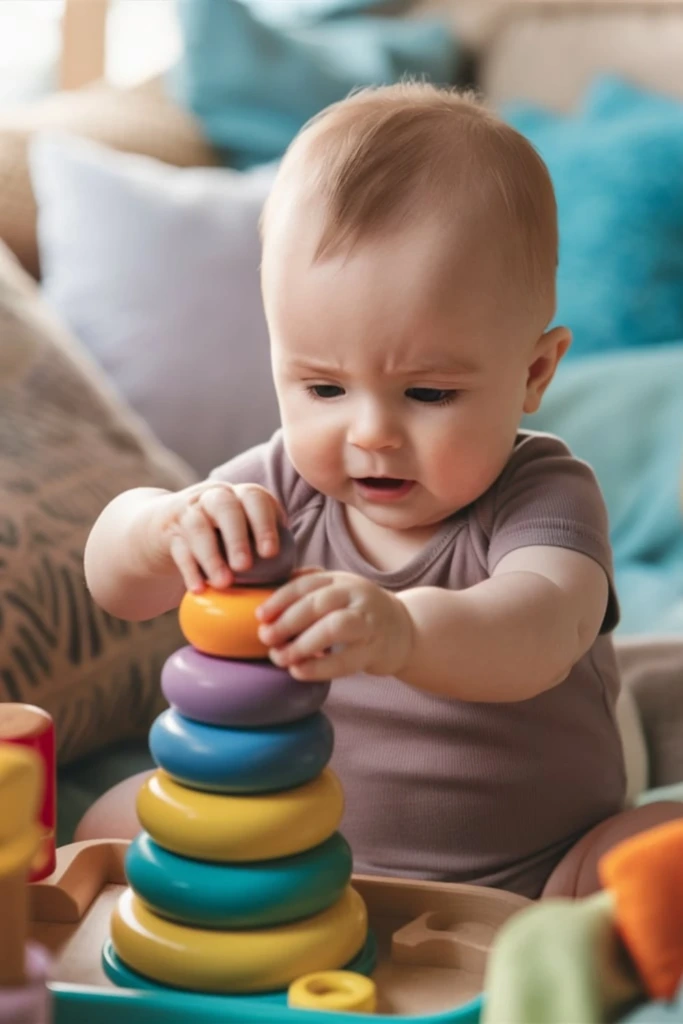
Stacking rings and nesting cups introduce babies to different sizes, shapes, and colors. At eight months, your child may be more interested in removing pieces, chewing on safe teething-friendly parts, or banging the toys together than stacking them independently. These explorations are still valuable.
Give your baby a simple stacking toy designed for their age and demonstrate how the pieces fit together. Let them pick up and release the pieces at their own pace. You can name the colors, describe the shapes, or count the pieces aloud as you play. Choose sturdy toys without detachable small components, and inspect them regularly for damage.
6. Sensory Bags
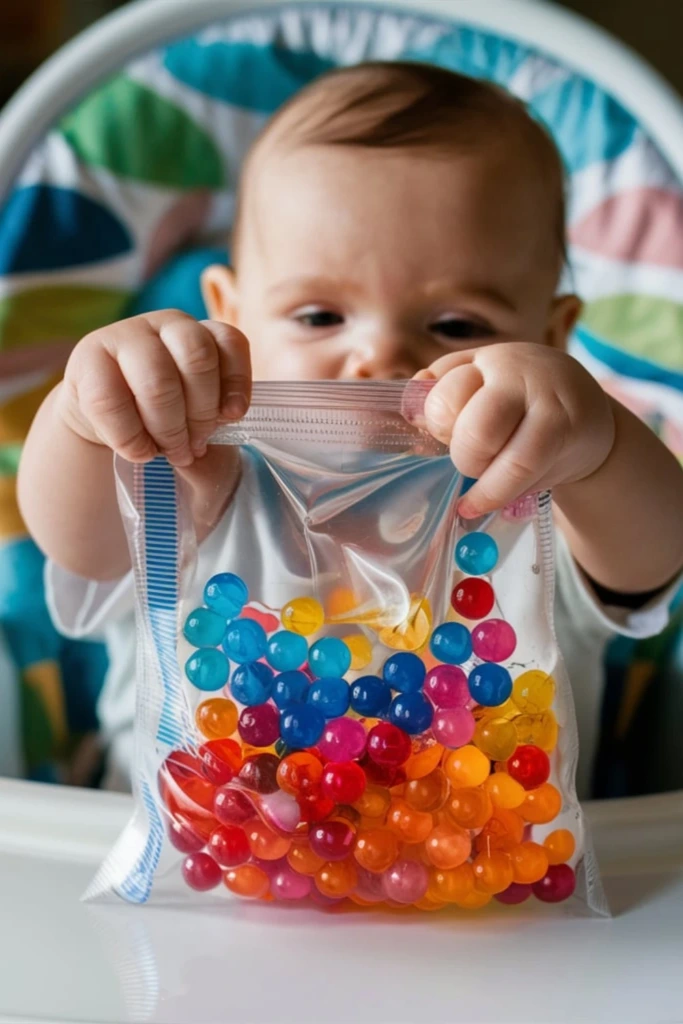
Sensory bags offer an interesting way for babies to explore movement, color, and texture without handling messy materials directly. A properly secured, purpose-made sensory pouch may contain a suitable liquid or soft, colorful material that shifts when pressed.
Place the bag on the floor in front of your baby and demonstrate how gentle touches make its contents move. Talk about what happens as your baby presses or pats the surface. However, homemade plastic bags filled with liquid, beads, glitter, or other loose items can leak, split, or create choking hazards. For an eight-month-old, choose a commercially manufactured, age-appropriate sensory toy that is designed to remain sealed, and supervise continuously. Remove it immediately if the material becomes damaged.
7. Hide and Seek with Toys
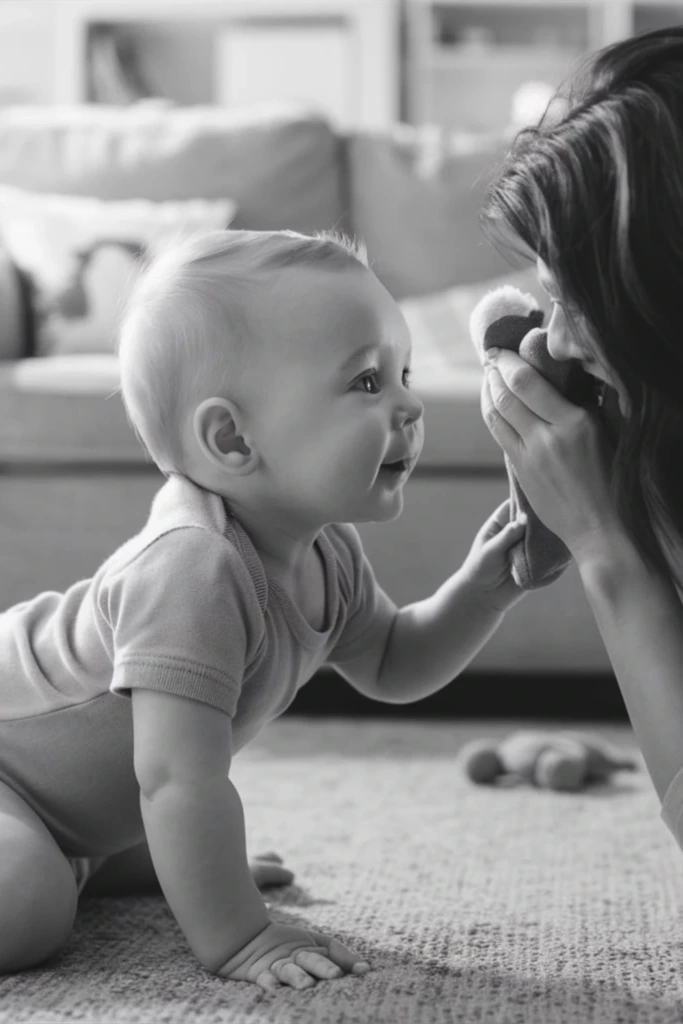
Hiding a favorite toy under a small cloth can turn ordinary play into an early problem-solving activity. Babies begin learning that an object may still be present even when they cannot see it, while reaching for the hidden toy encourages movement and coordination.
Show your baby a familiar toy, then cover it partially with a lightweight cloth. Ask, "Where did your toy go?" and give them time to pull the cloth aside or reach underneath it. Start with the toy only partly hidden, making the challenge harder as your baby becomes interested. Keep the cloth away from your baby's face and remove it as soon as the activity ends.
8. Reading
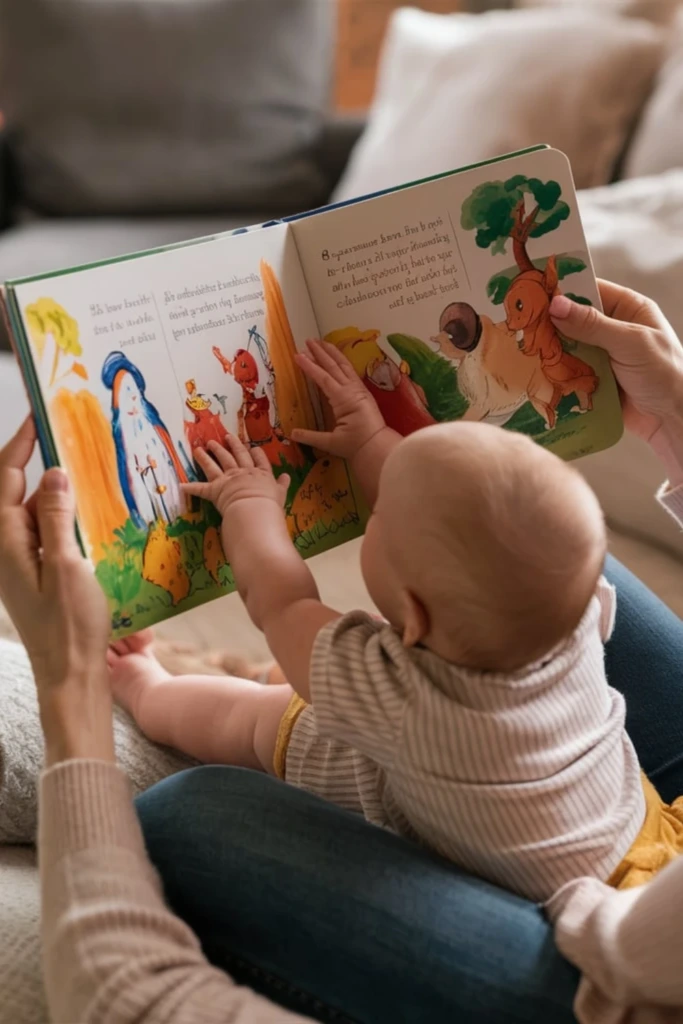
Reading together supports early language development, listening skills, and the growing bond between you and your baby. At eight months, colorful illustrations, familiar voices, and repeated sounds can be more engaging than following a story from beginning to end.
Choose sturdy board books with clear pictures, simple words, and recognizable objects. Point to a picture of a dog, for example, and say, "Look, a dog! The dog says woof." Let your baby touch the pages, turn them with assistance, and make sounds in response. Short reading sessions are perfectly fine; the goal is to make books enjoyable rather than expecting your child to sit still for a long time.
9. Exploring Textures with Sensory Bins
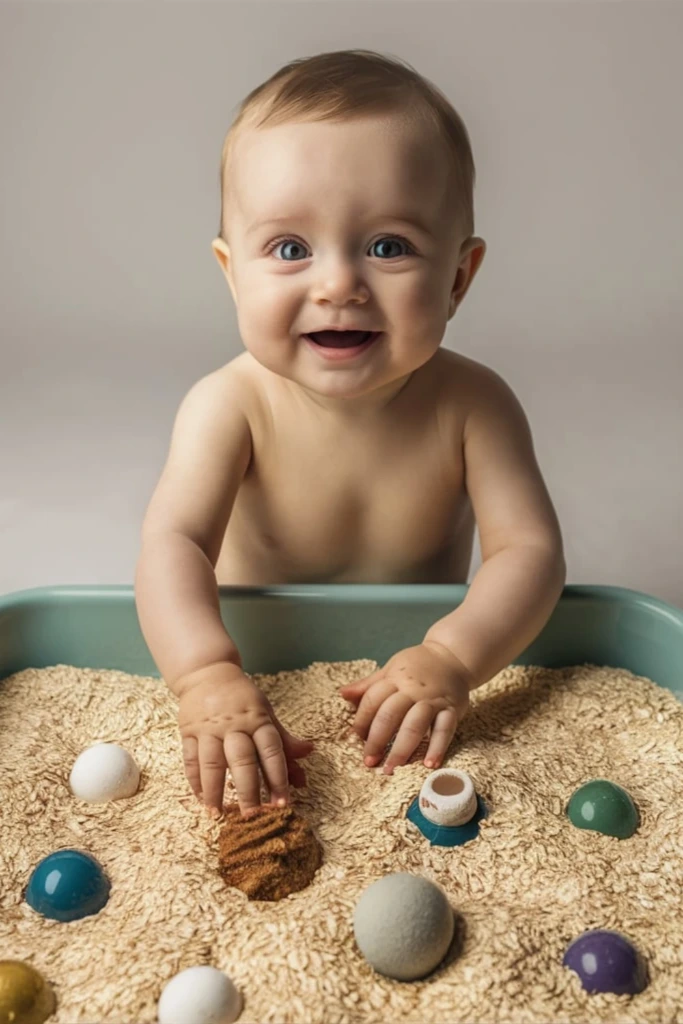
A sensory bin can introduce your baby to a variety of safe textures while encouraging touching, grasping, and exploration. At this age, the container should hold only large, baby-safe objects that cannot break apart or be swallowed.
Use a shallow, stable tray containing a few washable items, such as a large silicone spoon, a soft washcloth, and a sturdy textured ball. Let your baby touch each item while you describe whether it feels smooth, soft, or bumpy. Avoid rice, dried beans, water beads, small pasta, and other loose fillers that pose choking risks. Stay within arm's reach throughout the activity, and remove any object that becomes damaged or develops loose parts.
10. Homemade Ball Pit
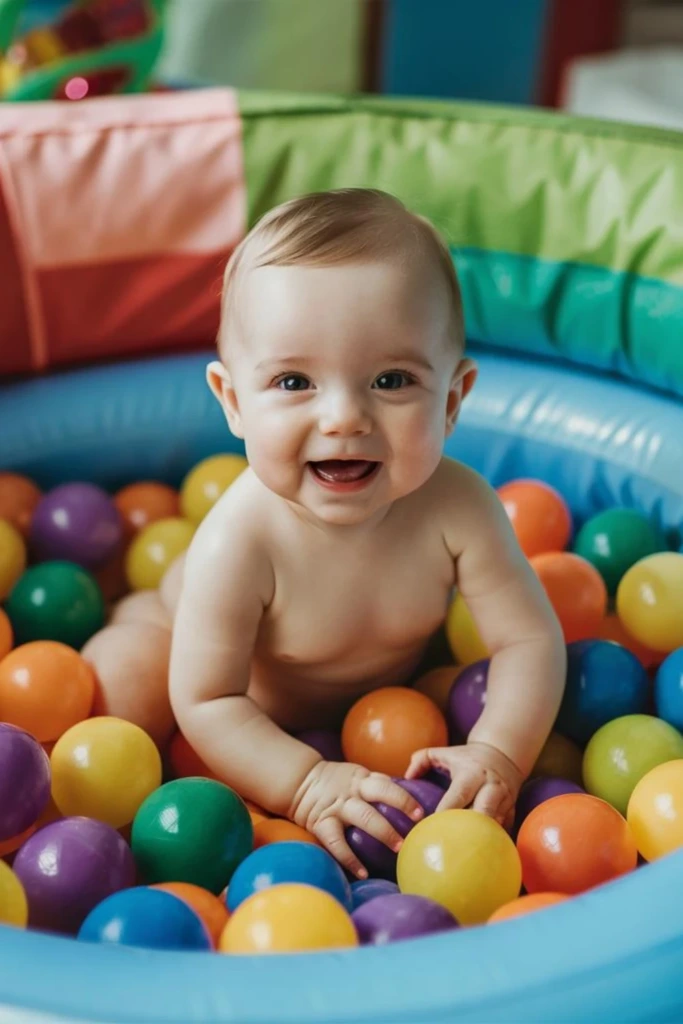
A small ball pit can give your baby a fun opportunity to explore colors, reach for objects, and practice shifting their body position. You can create a simple version using a shallow, stable play enclosure and a few large, lightweight balls designed specifically for infants.
Place your baby in a comfortable sitting position and offer the balls one at a time. Encourage them to reach, hold, or roll a ball toward you. Keep the number of balls manageable so your baby can move freely, and ensure the play area has no sharp edges or gaps where little fingers could become trapped. Never use small plastic balls, and do not leave your baby unattended in the enclosure.
11. Mess-Free Finger Painting
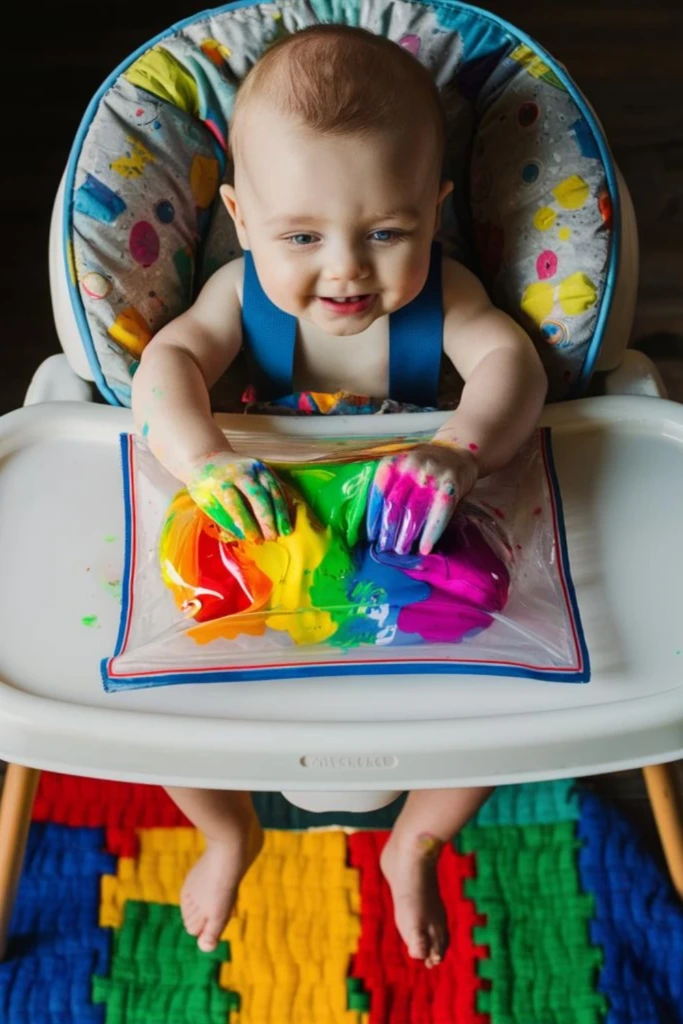
Finger painting can introduce babies to creative exploration without requiring a complicated craft project. For an eight-month-old, however, the materials must be safe for accidental mouthing, since babies commonly explore objects with their mouths.
One option is to use an age-appropriate, non-toxic finger-painting product on paper inside a purpose-made, securely sealed sensory pouch. Your baby can press the surface to move the colors around without touching the paint directly. Check the product's age guidance and ensure the pouch cannot open or leak. Avoid relying on homemade paint recipes as edible or universally safe, since ingredients can still cause irritation, allergies, or other problems. Supervise closely and stop if the pouch becomes damaged.
12. Splash Pad
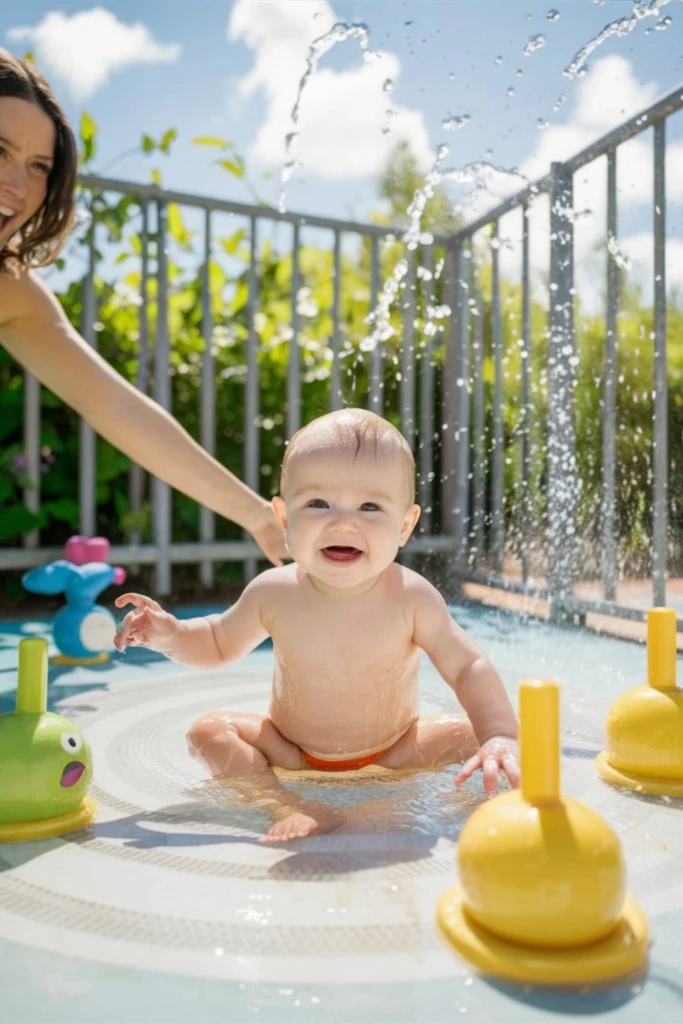
Water play can be an enjoyable sensory experience, especially during warm weather. A shallow splash mat or a small amount of water in a stable basin lets babies explore splashing, gentle movement, and the sounds water makes.
For an eight-month-old, place a little water in a shallow, nonslip container on the floor and sit beside your baby. Let them pat the surface with their hands while you describe the splashes. Keep the water away from electrical equipment and use a comfortable temperature. Even very shallow water can present a drowning risk, so maintain constant, hands-on supervision and empty the container immediately afterward. Outdoor splash mats should also be used on a safe surface and according to the manufacturer's instructions.
13. Playing with Pots and Pans
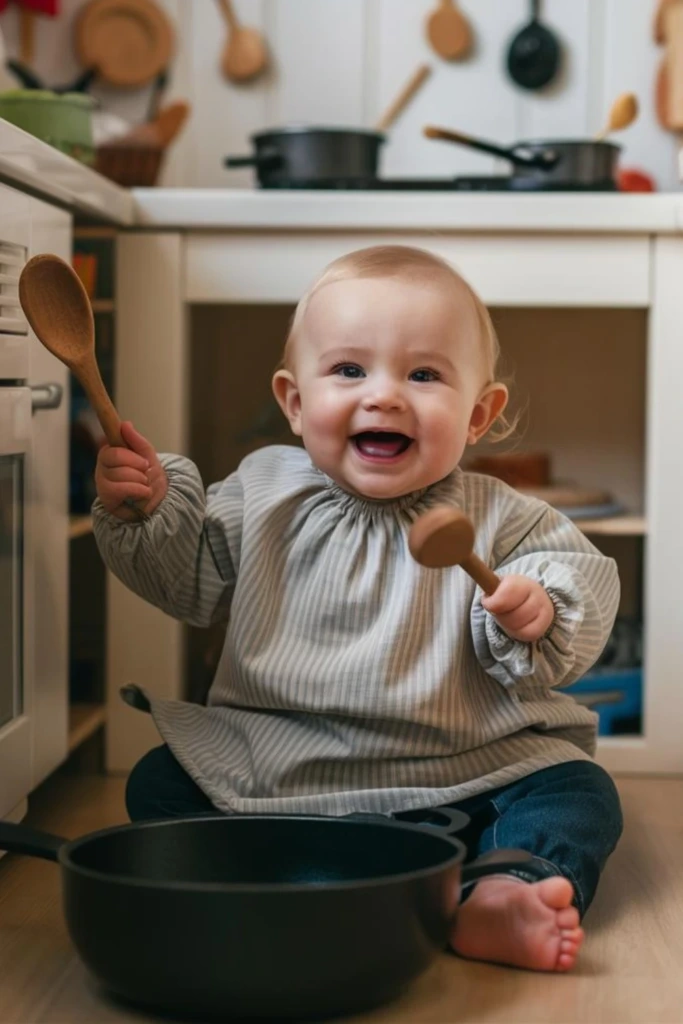
The kitchen can provide plenty of opportunities for playful exploration without buying additional toys. Lightweight, unbreakable pots, plastic measuring cups, and large wooden or silicone spoons can introduce different sounds and textures.
Place two or three clean items on a play mat and let your baby tap, hold, and transfer them between their hands. You can gently tap a spoon against a pot to demonstrate how the sound changes, then pause to let your baby try. Avoid heavy cookware, sharp utensils, glass containers, hot surfaces, and items with detachable pieces. Keep the activity in a safe play area rather than allowing your baby to explore the kitchen independently.
14. Passing Objects
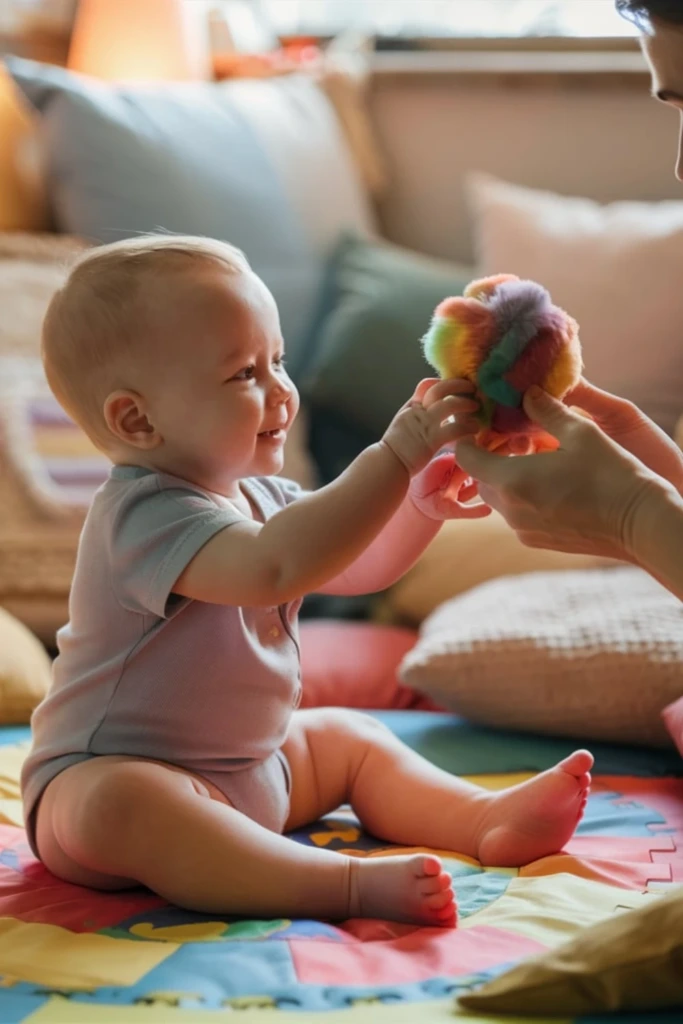
Passing toys from one hand to the other helps babies develop coordination and control over their movements. It also gives them opportunities to practice reaching, grasping, releasing, and exploring objects from different angles.
Offer your baby a large, easy-to-hold toy while they are sitting securely. Once they have grasped it, present another suitable toy nearby and see whether they transfer the first object to their other hand. You can also take turns handing a soft ball back and forth. Don't rush or force the movement; allow your baby to investigate the objects in their own way. This simple game can be repeated during short play sessions throughout the day.
15. Mirror Play
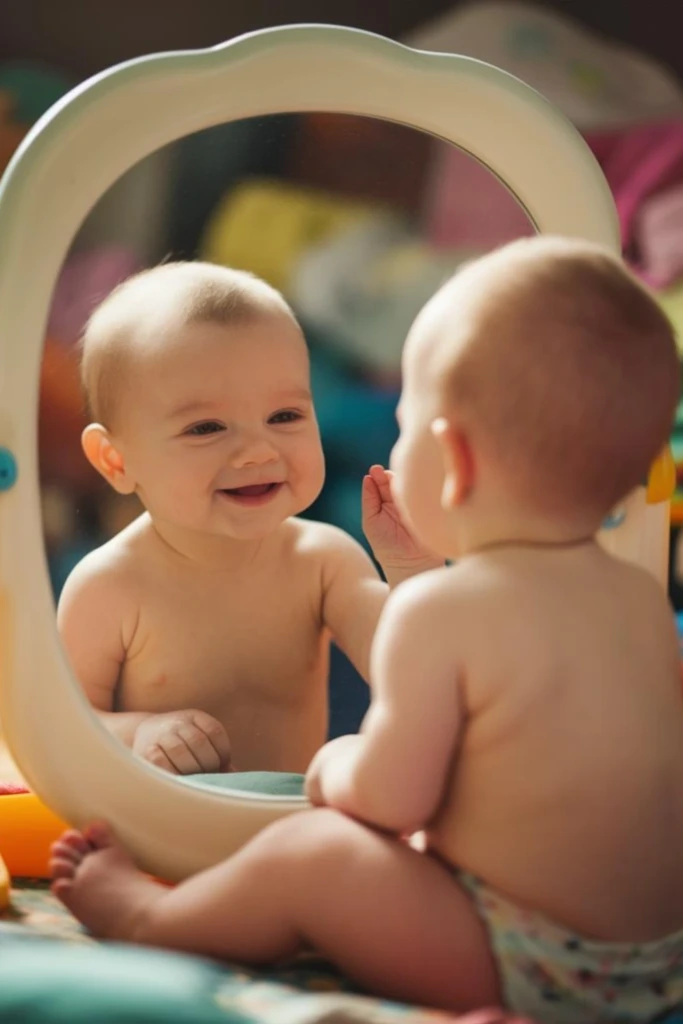
Babies often enjoy looking at faces, and a mirror provides an interesting opportunity to explore expressions and movement. Watching their reflection can encourage visual attention and make face-to-face interaction even more engaging.
Use an infant-safe, shatterproof mirror that is securely positioned at your baby's level. Sit beside your little one and smile, wave, or make gentle facial expressions. Point to your reflection and then to your baby's face while naming familiar features, such as eyes, nose, and mouth. Your baby may smile, touch the mirror, or babble in response. Keep the mirror stable and avoid ordinary glass mirrors that could tip over or break.
16. Soft Books
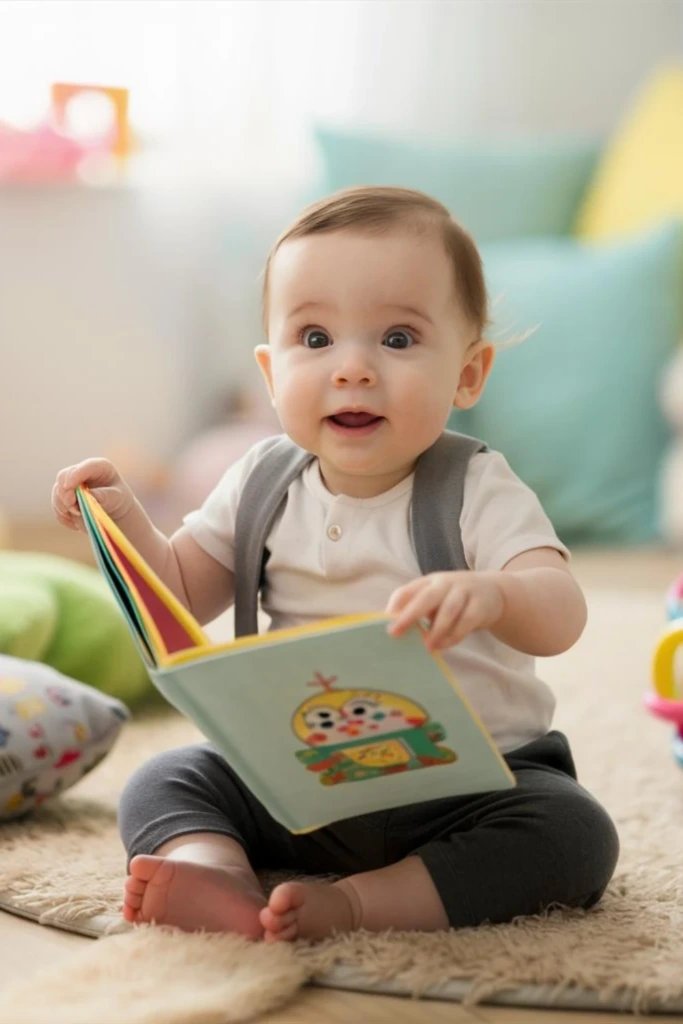
Soft books are well suited to babies who enjoy touching, mouthing, and turning objects. Many feature crinkly pages, textured fabrics, high-contrast pictures, or simple illustrations that make reading a multisensory experience.
Choose a washable cloth book or another baby-safe soft book with securely attached components. Sit with your baby and explore one page at a time, pointing out familiar objects and making animal sounds. Allow your little one to pat the pages or help turn them. Check fabric books regularly for loose stitching, torn sections, or detached decorations, and wash them according to the manufacturer's instructions.
17. Music and Dancing
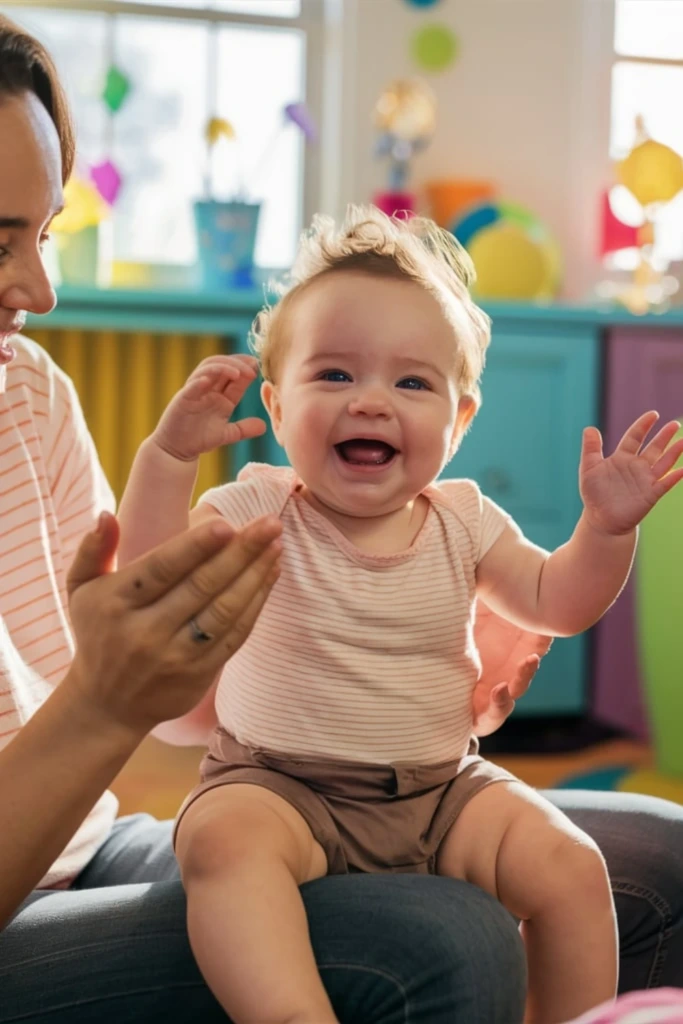
Music gives babies an opportunity to listen to different rhythms, notice changes in sound, and enjoy social interaction. Singing familiar songs, clapping gently, and swaying together can also support early communication and body awareness.
Play a gentle song or sing a nursery rhyme while holding your baby securely or sitting together on the floor. Move your hands to the beat and pause occasionally to see how your baby responds. You can also introduce a soft, age-appropriate musical toy. Keep the volume comfortable, avoid placing speakers close to your baby's ears, and stop if the sound seems overwhelming. Your own voice is often all the entertainment your baby needs.
18. Noisy Games
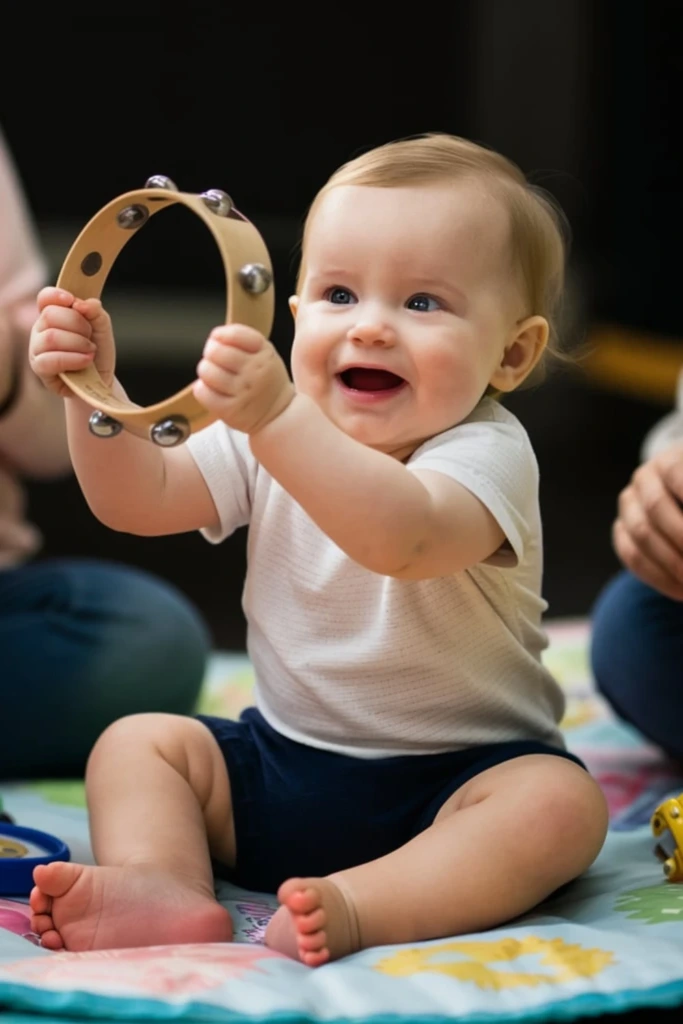
Babies learn about their surroundings by discovering that their actions can produce different sounds. A gentle rattle, a crinkly fabric toy, or a musical activity toy can encourage listening, movement, and curiosity.
Offer one sound-making toy at a time and demonstrate how to shake, tap, or squeeze it. Pause between sounds so your baby can listen and respond. You can imitate their babbling or take turns making gentle noises, turning the activity into an early conversation. Select toys made for infants, with securely attached parts and no sharp edges. Avoid loud bangs, sudden startling sounds, and toys that produce noise at an uncomfortable volume.
19. Exploring with Hula Hoops
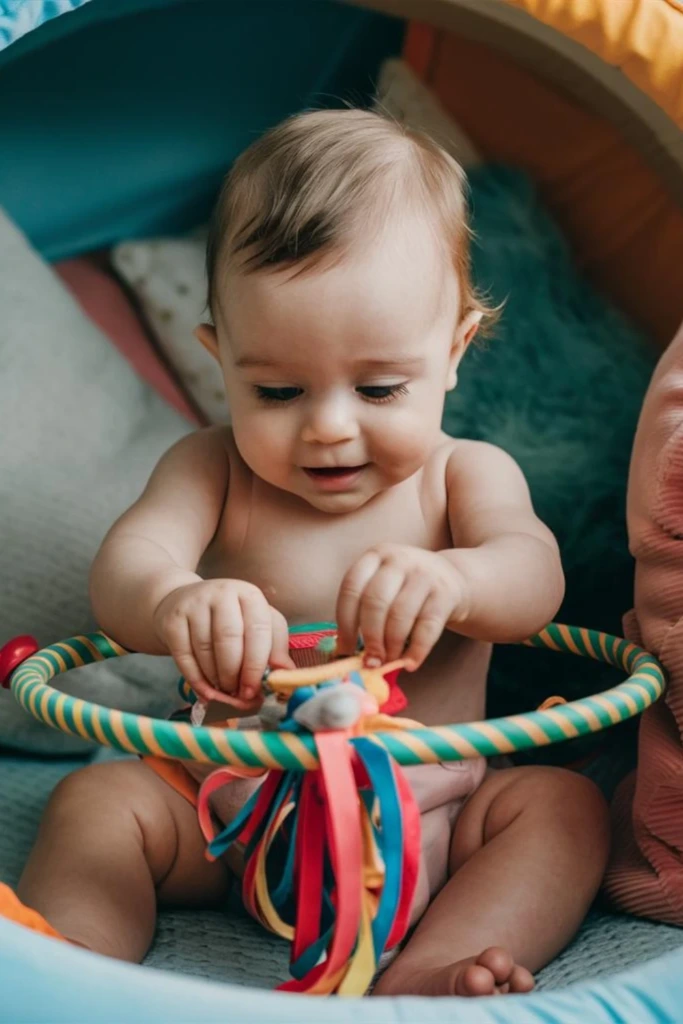
A hula hoop can be used as a simple visual boundary for floor play when it is sturdy, appropriately sized, and free of detachable parts. Its circular shape provides an interesting space for placing toys and encouraging your baby to reach in different directions.
Lay the hoop flat on a nonslip floor and sit with your baby beside it. Place a few large, baby-safe toys inside the circle, then encourage your little one to reach for a favorite item. You can move a toy around the inside edge to invite turning or crawling. Never stand the hoop around your baby, suspend it overhead, or use it as a climbing structure. Stay close and remove the hoop if it slides, tips, or creates a trapping hazard.
20. Sensory Bottles
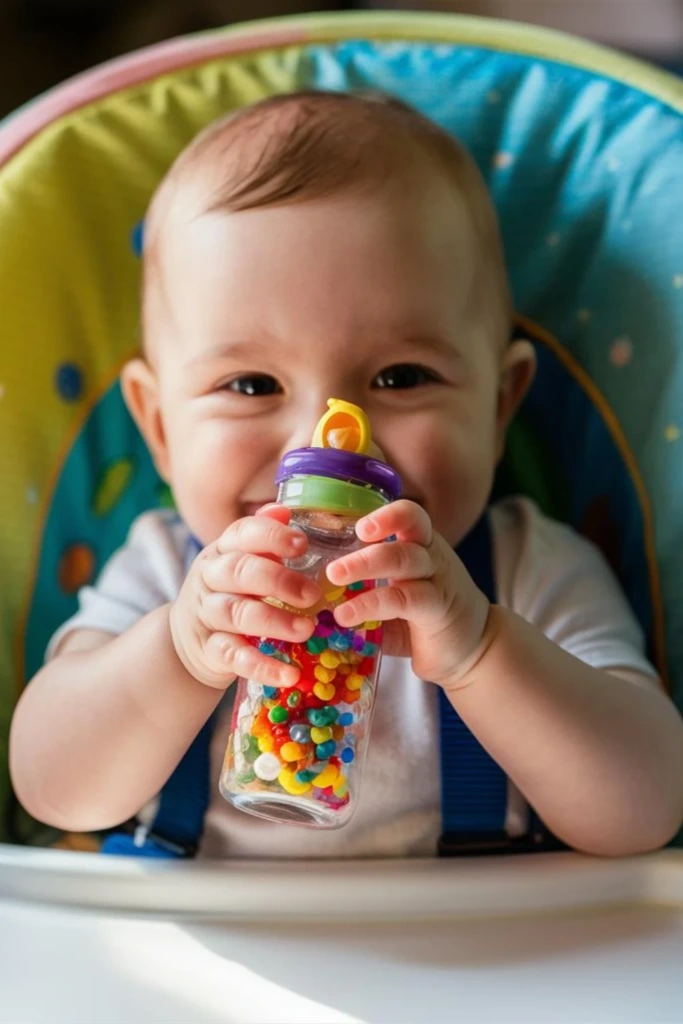
Sensory bottles can capture a baby's attention with moving colors, shifting contents, and gentle sounds. They may encourage visual tracking and curiosity as your little one watches what happens when the bottle is tilted or rolled.
For this age group, choose a commercially manufactured sensory bottle specifically designed for infants, with a durable, permanently sealed construction. Roll it slowly across the floor or tilt it gently while your baby watches. Describe the movement and give your child time to follow it with their eyes. Avoid homemade bottles containing loose beads, glitter, rice, or liquid unless they are specifically designed and secured as a safe infant product. Inspect the bottle before each use and remove it immediately if it cracks or leaks.
21. Pretend Reading

Even before babies understand written words, they can enjoy imitating the routines they see adults perform. Pretend reading allows your eight-month-old to explore books, hear language, and participate in a familiar social activity.
Give your baby a sturdy board book or soft book and sit beside them as if you are reading together. Turn the pages slowly, point to pictures, and use expressive sounds to describe what you see. Then let your baby hold the book, pat its cover, or help turn a page. You can also pretend to read a favorite book aloud from memory, giving your baby a chance to anticipate familiar sounds. Keep the activity relaxed and follow your child's interest.
22. Texture Exploration
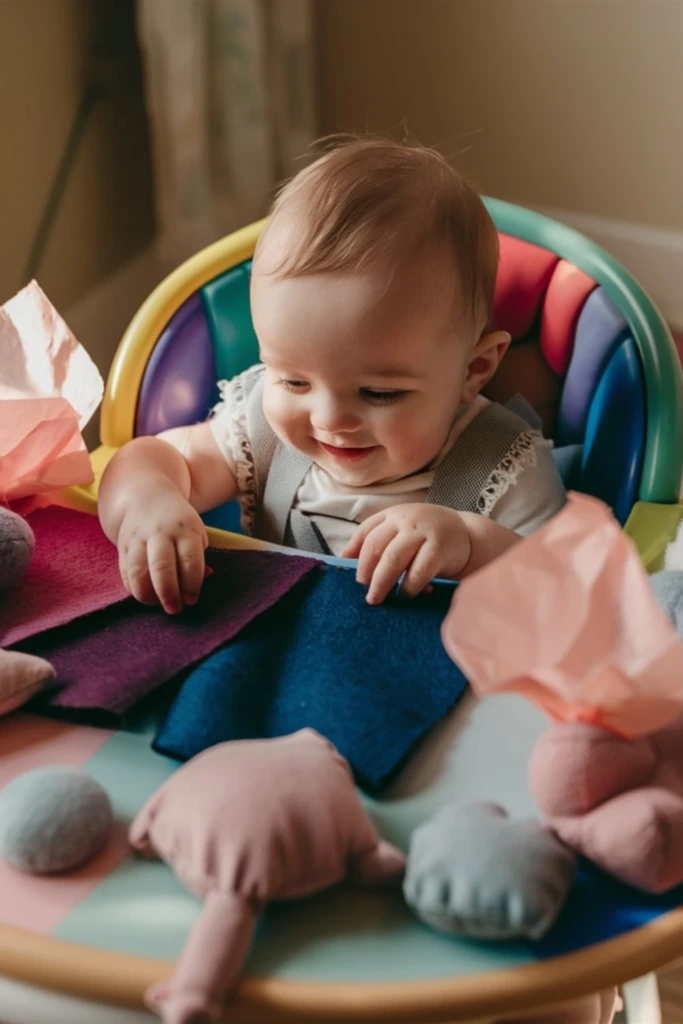
Babies learn through touch, and offering a variety of safe textures can help them discover how different materials feel. Smooth silicone, soft cotton, ridged fabric, and a plush toy each provide a different sensory experience.
Gather a few large, washable objects with contrasting textures and place them within your baby's reach while they sit securely. Let your little one touch each item as you describe it with simple words such as "soft," "smooth," or "bumpy." Choose materials that do not shed fibers, contain loose decorations, or have sharp edges. Avoid small textured accessories and anything that could become detached or swallowed. Watch your baby's reactions and let them move on whenever they lose interest.
23. Tummy Time

Tummy time helps babies strengthen the muscles needed for head control, reaching, rolling, and other developing movement skills. Although many babies have already spent considerable time on their stomachs by eight months, supervised floor play in different positions can still be useful.
Place your baby on their tummy while they are awake and alert, using a firm, flat play mat. Lie down in front of them, talk, or place an interesting toy just within reach to encourage looking up and moving their arms. If your baby is already rolling and crawling, you can continue offering opportunities to play on their stomach as part of normal floor time.
Always supervise tummy time and move your baby onto their back for every sleep. If your baby dislikes the position, try shorter sessions or engage them face-to-face rather than forcing them to remain there.
24. Chasing Games

A gentle chasing game can encourage babies to move toward interesting objects while building confidence in their developing mobility. The activity can be adapted whether your child crawls, scoots, rolls, or simply reaches toward a toy.
Sit a short distance away and slowly roll a large, soft ball across a clear floor. Encourage your baby to move toward it, then retrieve it and roll it back. You can also crawl slowly beside your baby or invite them to move toward your outstretched hands. Keep the pace relaxed, allow plenty of rest, and avoid making your child work beyond their current abilities. Clear the play area of furniture edges, cords, small objects, and anything that could cause a fall or injury.
25. Art Exploration
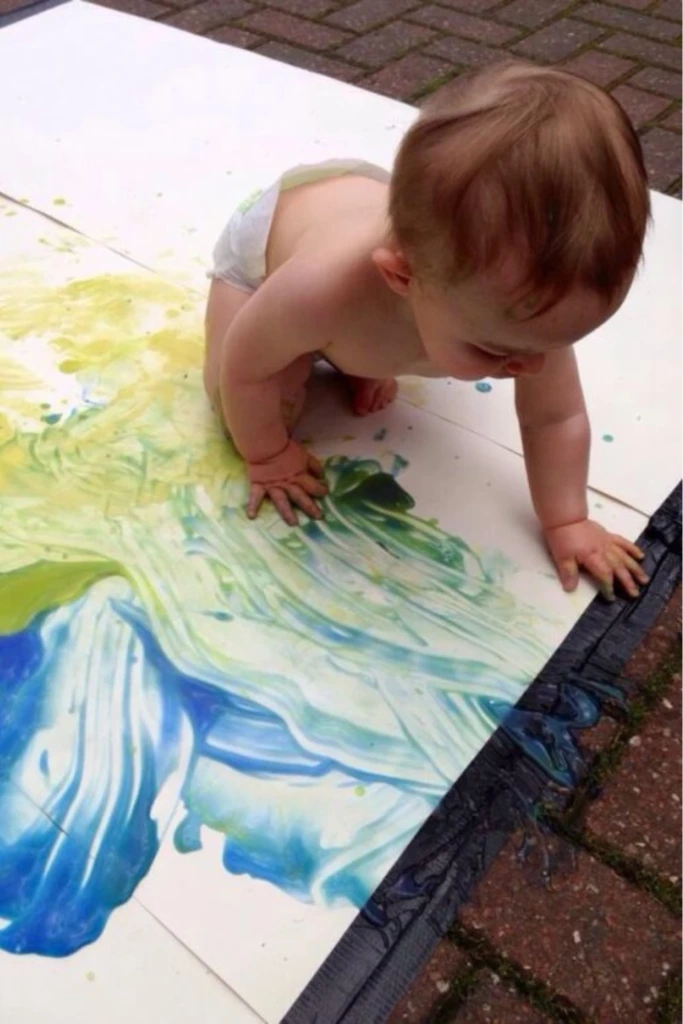
Art activities can introduce babies to colors, shapes, and creative experimentation without expecting them to produce a finished picture. At eight months, the main purpose is to explore safely, notice changes, and enjoy interacting with materials.
Offer a large sheet of paper and a baby-safe, age-appropriate art product, using a method that prevents direct access to paint if your baby is likely to put their hands in their mouth. For example, a purpose-made sealed painting pouch lets your little one press and move colors across the surface. You can describe the colors and movements as they explore.
Avoid small crayons, loose craft decorations, beads, buttons, and other items that could be swallowed. Supervise throughout the activity, inspect any sealed materials for damage, and clean your baby's hands afterward. Remember that a few minutes of curious pressing and touching can be a successful art session at this age.
Final Thoughts
The best activities for an eight-month-old baby are simple, safe, and responsive to their interests. Building blocks, peek-a-boo, music, books, and supervised sensory play can provide opportunities to practice movement, explore textures, and interact with the people around them.
You don't need to complete all 25 activities or follow a strict schedule. Offer a few options throughout the day, repeat the ones your baby enjoys, and make room for quiet time and rest. Always choose age-appropriate materials, supervise closely, and remember that every baby develops at their own pace. Everyday moments of talking, playing, and exploring together can make this stage both enjoyable and rewarding.