28 Closet Organization Small Walk In Ideas for 2026
A small walk-in closet can be both beautiful and practical when every shelf, hanger, and corner serves a purpose. With thoughtful storage solutions, coordinated colors, and smart use of vertical space, even a compact closet can feel spacious and easy to navigate. Whether you prefer a minimalist wardrobe, a boutique-inspired display, or a cozy design with natural textures, these closet organization small walk-in ideas will help you create a functional space that suits your lifestyle.
1. Add Double Hanging Rods
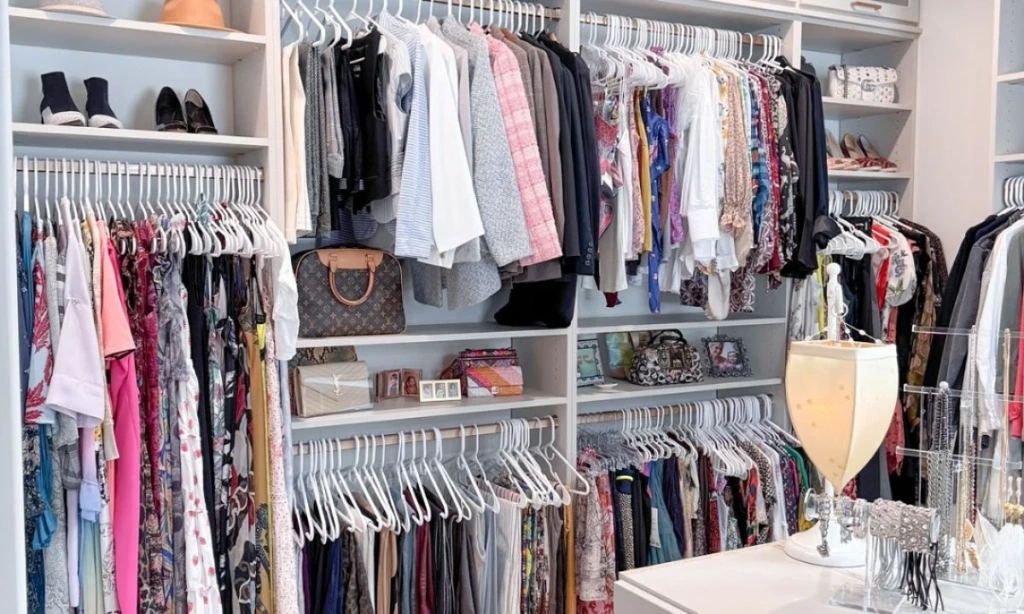
Double hanging rods are one of the easiest ways to increase clothing storage without expanding your closet. Install one rod above another on a wall where you primarily keep shirts, blouses, trousers, and shorter jackets. This arrangement uses the height of the closet more effectively than a single long hanging section.
Keep frequently worn clothes on the lower rod and less-used pieces on the upper one. Reserve a separate area for dresses, long coats, and other garments that need extra hanging length. Matching slim hangers can also make the arrangement look neater while freeing up additional space.
2. 26 Closet Organization Ideas
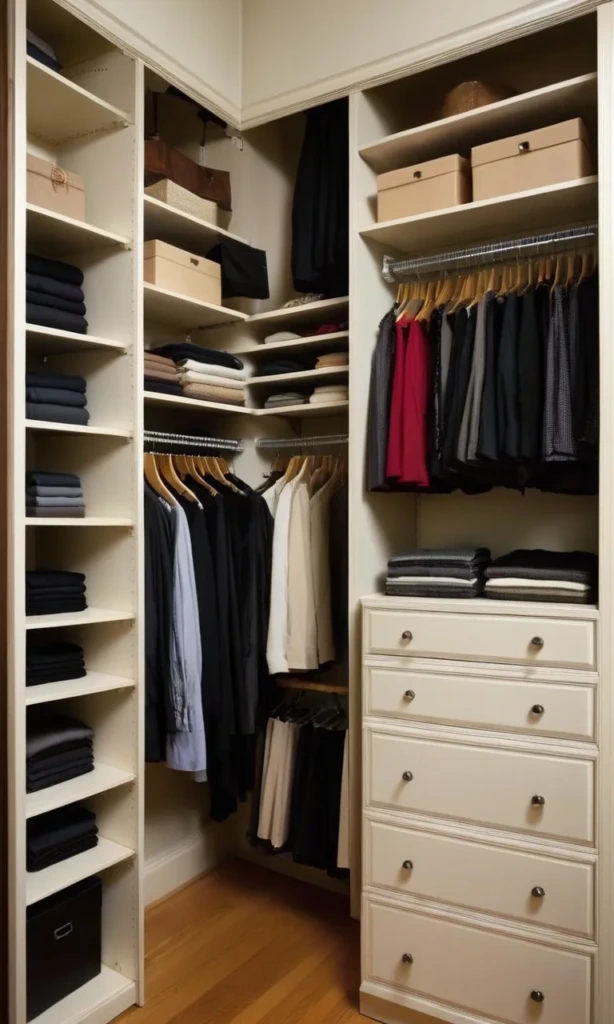
Organizing a small walk-in closet starts with understanding what you own and how you use it. Before purchasing storage accessories, remove items you no longer wear and group the remaining clothing by type. This makes it easier to identify which sections need hanging space, shelves, drawers, or dedicated shoe storage.
Consider combining several solutions rather than relying on one storage method. Adjustable shelves, hanging organizers, labeled bins, drawer dividers, and hooks can work together to accommodate different belongings. Use the upper shelves for seasonal items and keep everyday essentials within easy reach.
The most effective closet design is one you can maintain without constant rearranging. Choose storage that fits your wardrobe, available floor space, and daily routine.
3. Wire Rack System
A wire rack system offers a practical solution for closets that need affordable, adaptable storage. Its open construction allows air to circulate and makes it easy to see clothing, footwear, and accessories. Depending on the layout, you can combine hanging rails with shelves for folded garments, handbags, and storage containers.
Adjustable wire shelving is particularly useful when your wardrobe changes throughout the year. You can reposition shelves to accommodate tall boots, bulky sweaters, or additional baskets as needed.
To create a more polished appearance, use coordinated fabric bins or matching storage boxes on open shelves. Check the system's weight limits and secure it properly to suitable wall supports, especially when storing heavier items.
4. Chic Compact Display
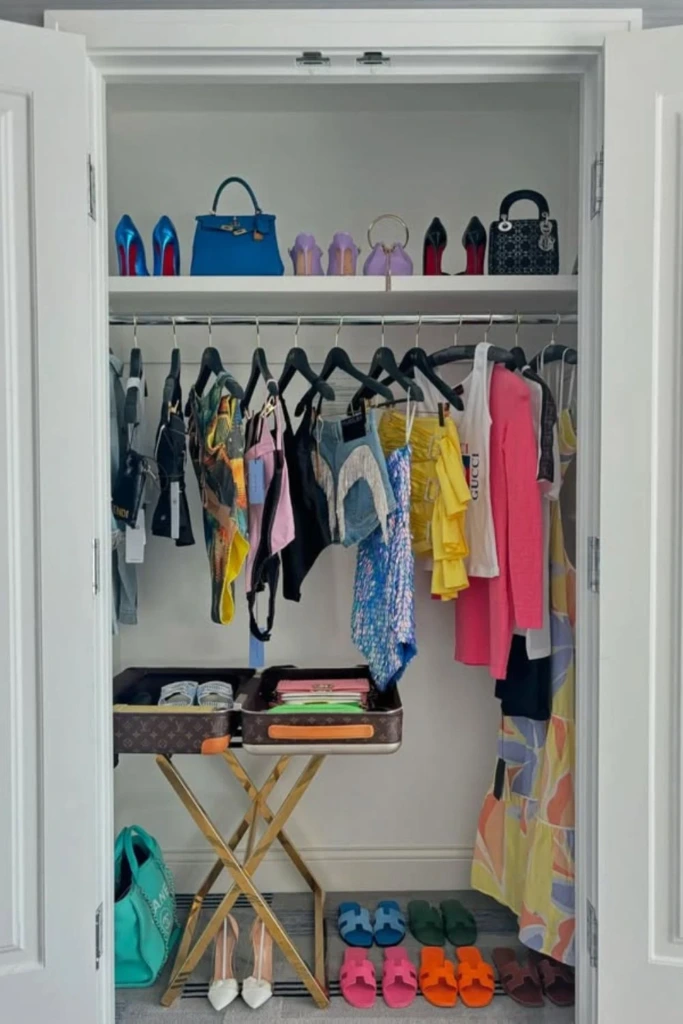
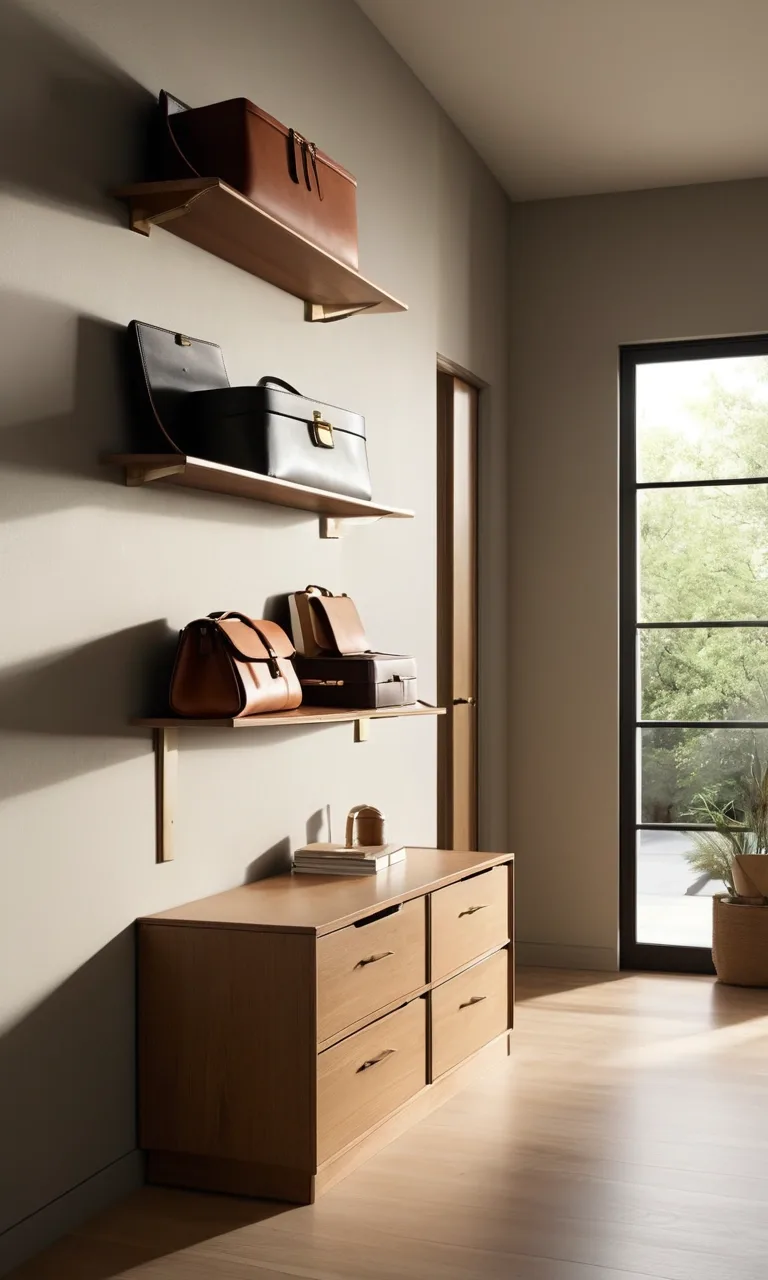
A compact closet can feel thoughtfully designed when everyday belongings are displayed with intention. Instead of filling every shelf, select a few attractive handbags, jewelry trays, or favorite accessories to create a curated look.
Keep the most visually appealing pieces on open shelves and store less attractive necessities inside drawers or baskets. Arrange handbags upright with enough space to preserve their shape, and use small trays to prevent jewelry and watches from becoming scattered.
A consistent palette of cream, beige, black, or warm wood helps the display feel cohesive. The key is to leave some breathing room between items so the closet looks stylish rather than crowded.
5. Balanced Built-Ins
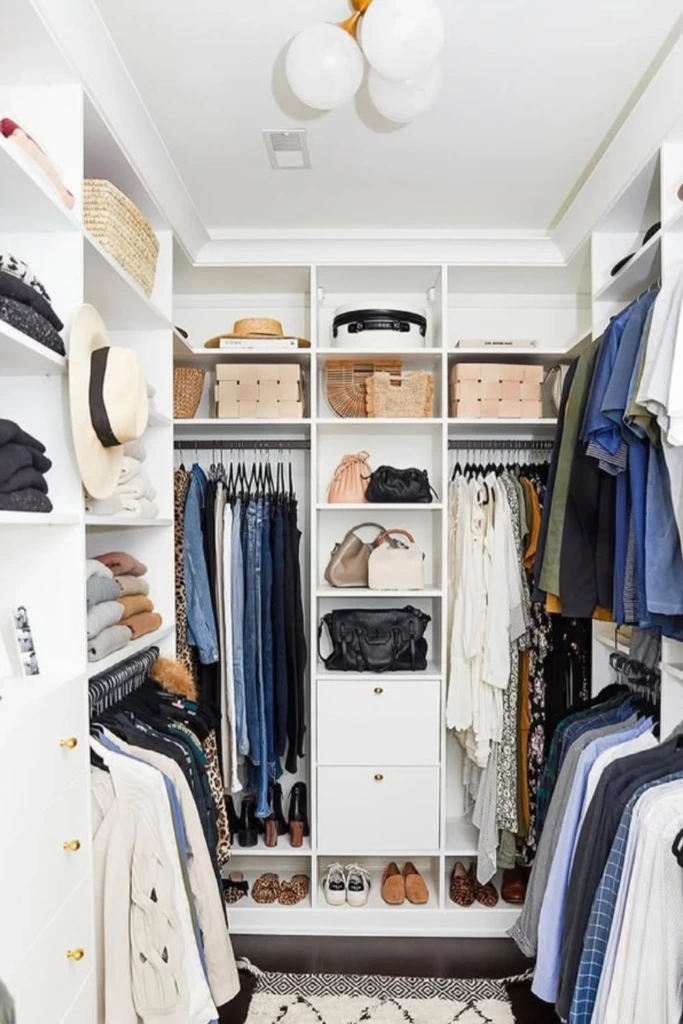
Built-in storage can make a small walk-in closet feel more organized by giving every category a designated place. A balanced arrangement might include drawers in the center, hanging sections on both sides, and upper cabinets for items used less frequently.
Symmetry can create a calm, orderly appearance, but the layout should reflect your actual storage needs. If you own more dresses than folded clothes, allocate additional hanging space rather than duplicating drawers simply for visual balance.
Choose cabinet depths that allow doors and drawers to open comfortably without obstructing the walkway. Light finishes and simple hardware can help the cabinetry blend into the room instead of making the closet feel enclosed.
6. Colorful Kid-Friendly Setup
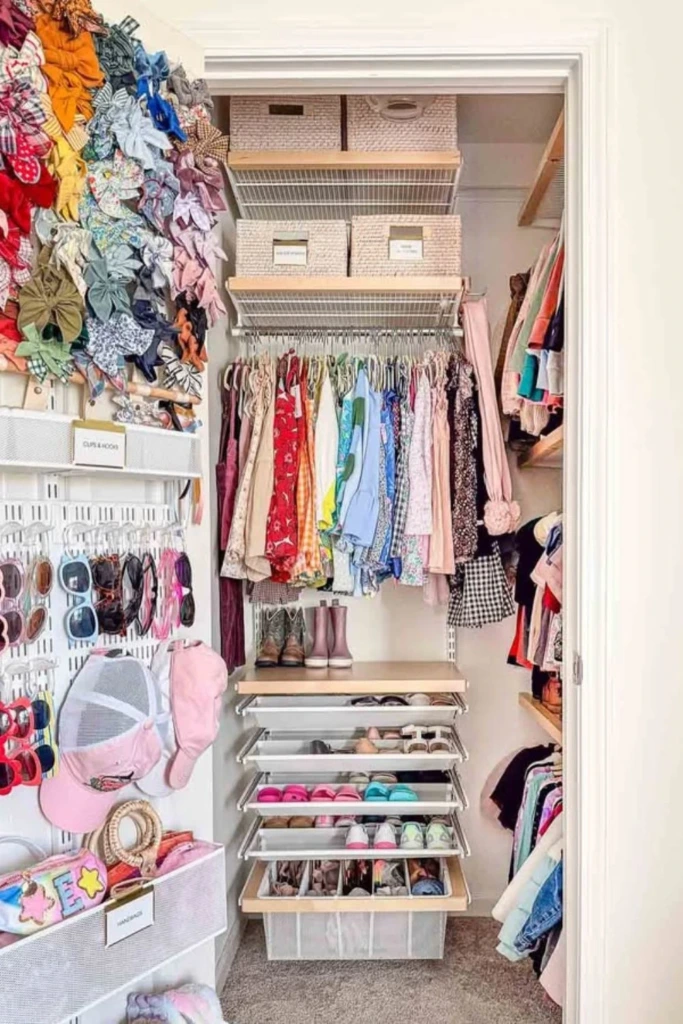
A child's closet works best when storage is easy to understand and accessible at their height. Install a lower hanging rail for everyday outfits, place frequently used shoes on reachable shelves, and use colorful bins to separate toys, accessories, socks, and seasonal clothing.
Simple picture labels can help younger children identify where belongings belong. Choose sturdy containers with smooth edges and avoid placing heavy objects on high shelves that children might try to reach.
Bright colors can make organizing more inviting without overwhelming the room. Use two or three complementary shades for baskets, hangers, or drawer fronts, then leave enough flexibility to adjust the setup as your child grows.
7. Warm Earthy Layers
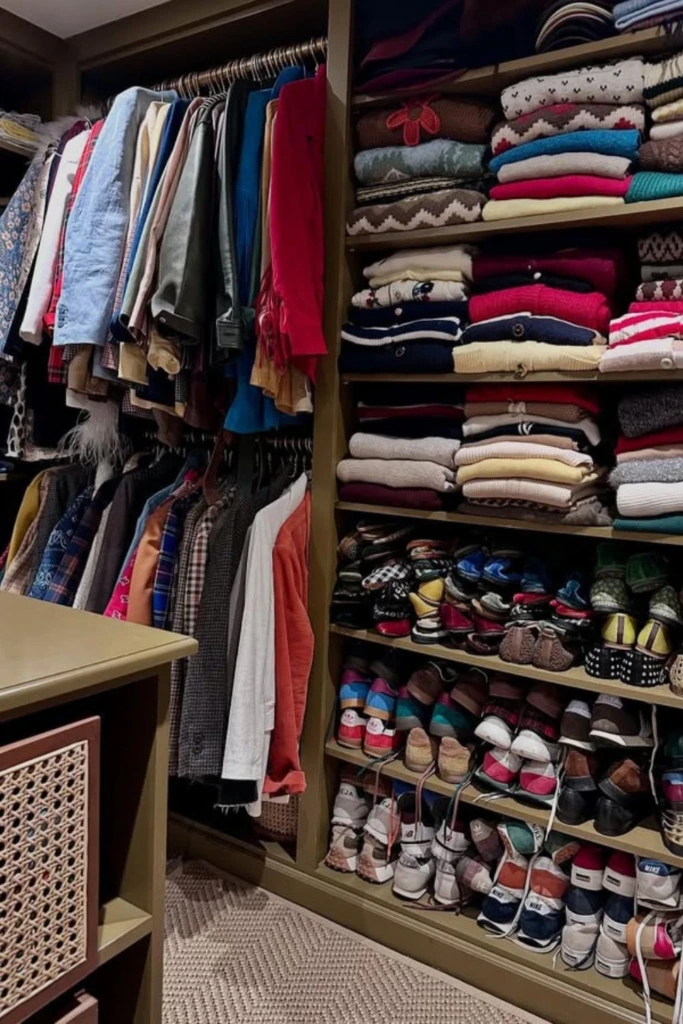
Earthy materials bring warmth to a compact closet while keeping its appearance relaxed and refined. Natural wood shelves, woven baskets, linen storage boxes, and soft brown or sand-colored accessories create a coordinated look that feels less utilitarian than basic shelving alone.
Use woven containers for scarves, belts, and smaller accessories, while keeping heavier items on sturdy shelves. A wooden hanging rail or wood-effect cabinet fronts can add texture without taking up extra space.
For a balanced finish, combine these natural materials with a light wall color and understated hardware. Limit decorative pieces to a few carefully chosen details so the storage remains practical and easy to clean.
8. Minimal Neutrals
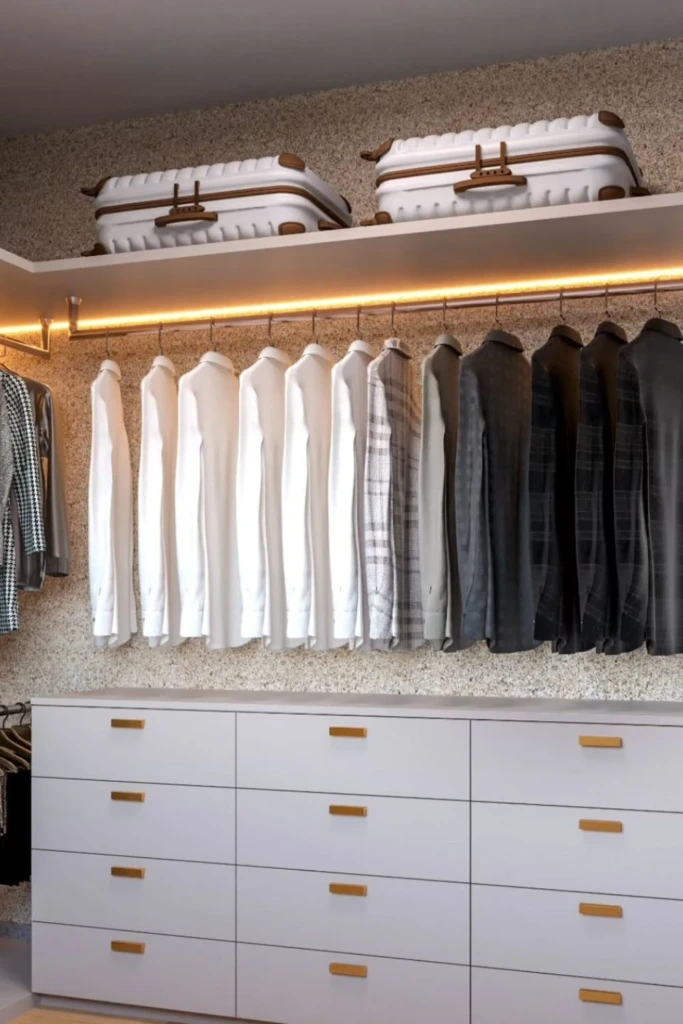
A neutral closet creates a clean backdrop that makes clothing easier to see and coordinate. White, ivory, taupe, and soft gray work particularly well in small spaces because they create visual continuity between walls, shelves, and storage accessories.
Use matching hangers, uncomplicated drawer fronts, and a limited selection of storage containers to reduce visual clutter. Group garments by category or color if that makes choosing outfits quicker, but avoid making the system so complicated that it becomes difficult to maintain.
Good lighting is especially important in a neutral closet. A bright ceiling fixture combined with suitable shelf or cabinet lighting can improve visibility and make darker corners more usable.
9. Bin-Based System
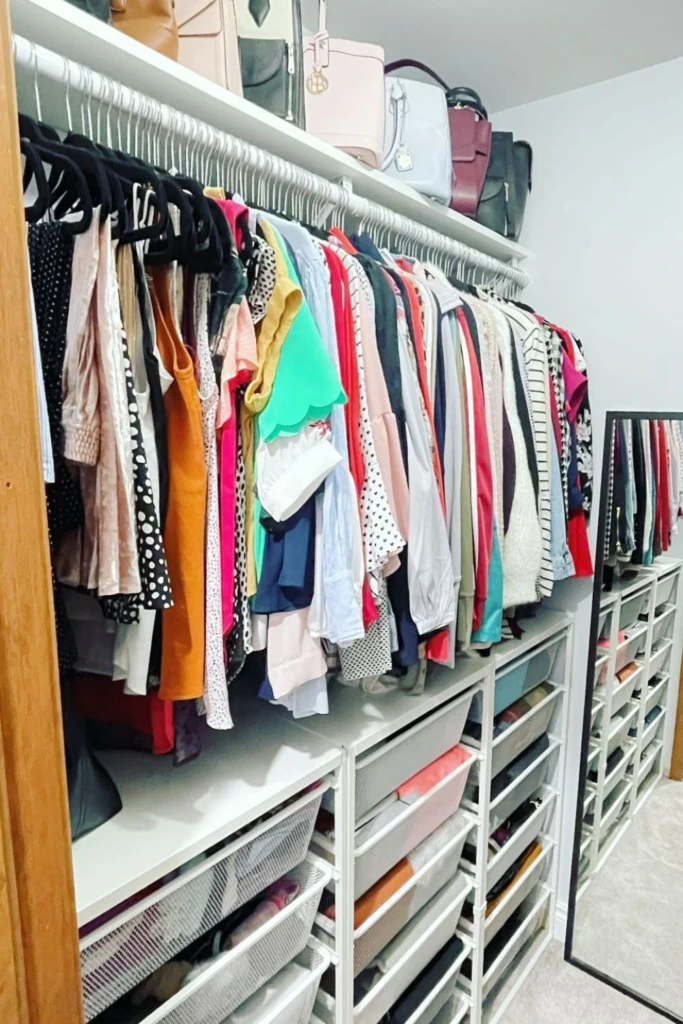
Storage bins are useful for gathering small or irregular items that otherwise spread across shelves. Assign each container a specific category, such as workout accessories, winter hats, swimwear, spare linens, or travel essentials.
Choose containers that fit the dimensions of your shelves so that you do not waste valuable space around them. Labels on the front make it easier to identify contents without pulling everything down.
Clear bins are convenient when visibility matters, while opaque fabric or woven containers provide a more uniform appearance. Place frequently used categories at eye level and reserve the highest shelves for items you need only occasionally.
10. Luxe Boutique Look
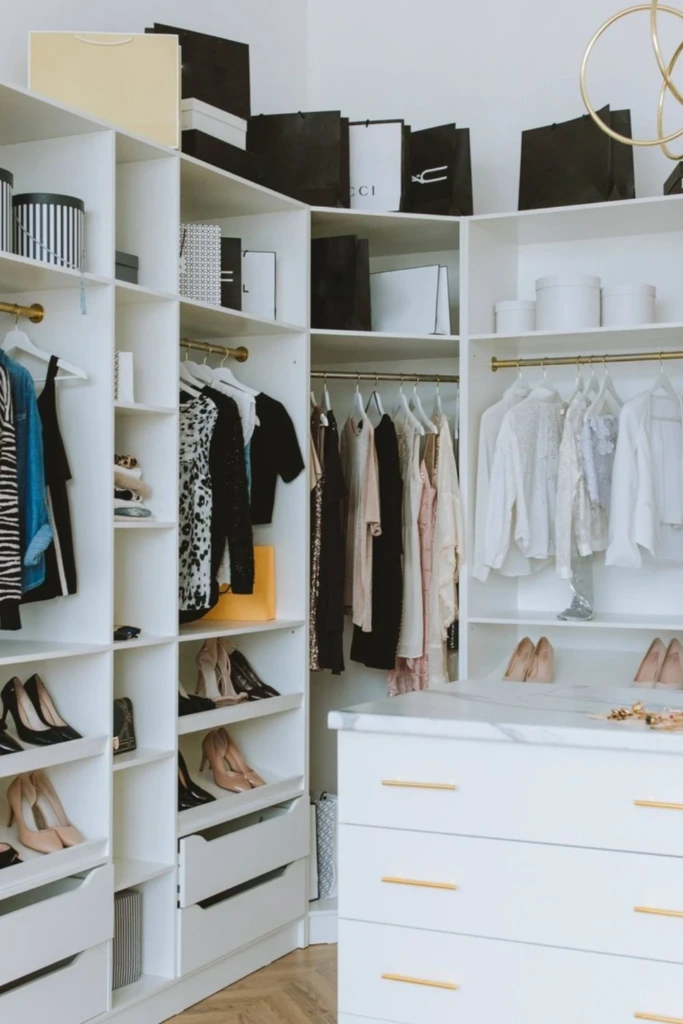
A boutique-inspired closet combines practical organization with attractive presentation. Use consistent hangers, neatly spaced garments, dedicated handbag shelves, and a small display area for watches, jewelry, or favorite accessories.
Warm LED lighting can highlight shelves and make it easier to distinguish clothing colors. Glass-front cabinets or a small illuminated display niche can add sophistication, provided they do not make the room feel crowded.
Keep the most frequently worn items accessible and store extra belongings behind closed doors. A luxurious appearance comes from thoughtful editing and orderly storage rather than filling every available surface with expensive accessories.
11. Capsule Wardrobe Zone
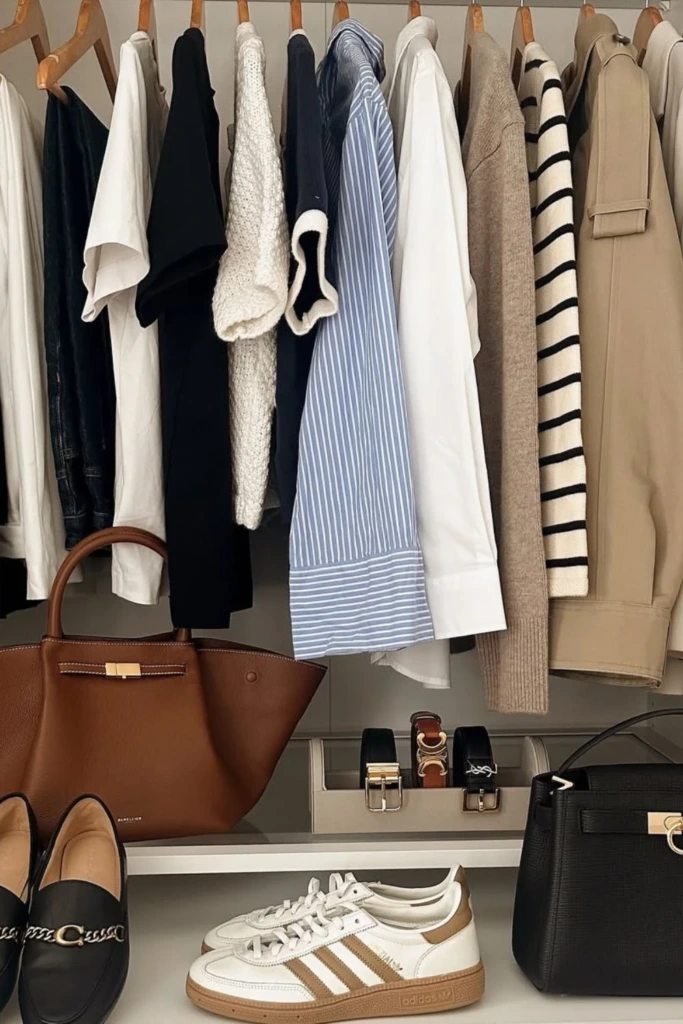
A capsule wardrobe section keeps versatile, frequently worn pieces together so that dressing takes less time. Dedicate one hanging rail or a defined group of shelves to clothing that works across several outfits, including basic tops, trousers, jackets, and everyday dresses.
Arrange garments according to how you use them. You might group workwear separately from casual pieces or organize everything by color to make combinations easier to spot.
Store off-season clothing elsewhere within the closet, such as in labeled upper-shelf containers. Review this section periodically to remove pieces that no longer fit your routine. A smaller, intentional selection can make a compact wardrobe feel considerably more manageable.
12. Coordinated Contrast
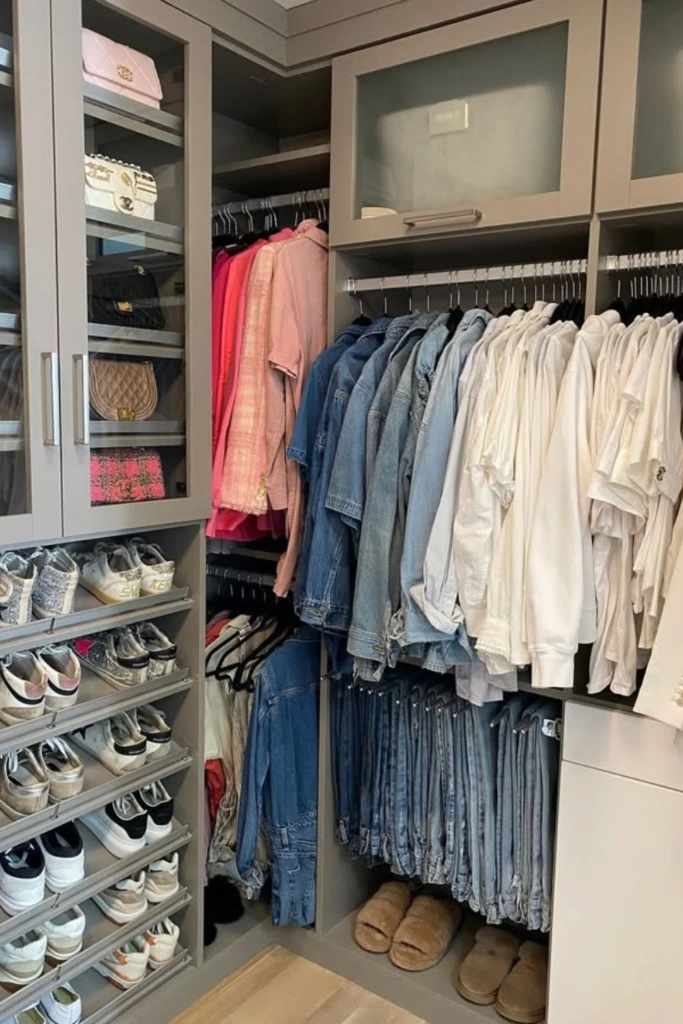
Contrasting finishes can give a small closet definition without requiring elaborate decoration. Pair light cabinetry with dark drawer pulls, combine black hanging rails with pale shelves, or introduce a wood accent against white walls.
Use contrast strategically rather than applying several competing colors. For example, dark hardware and matching hangers can create a consistent visual line while lighter shelves keep the overall design from feeling heavy.
The storage arrangement should remain the priority. Choose finishes that complement the room outside the closet, and make sure darker elements do not obscure clothing or reduce visibility in poorly lit areas.
13. Folded Perfection
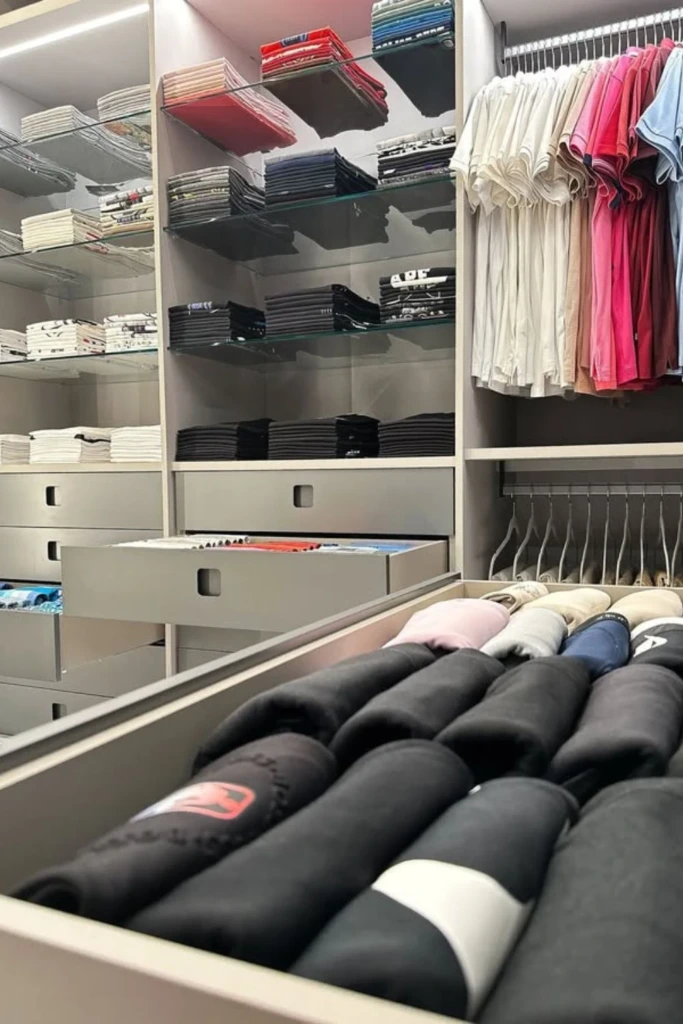
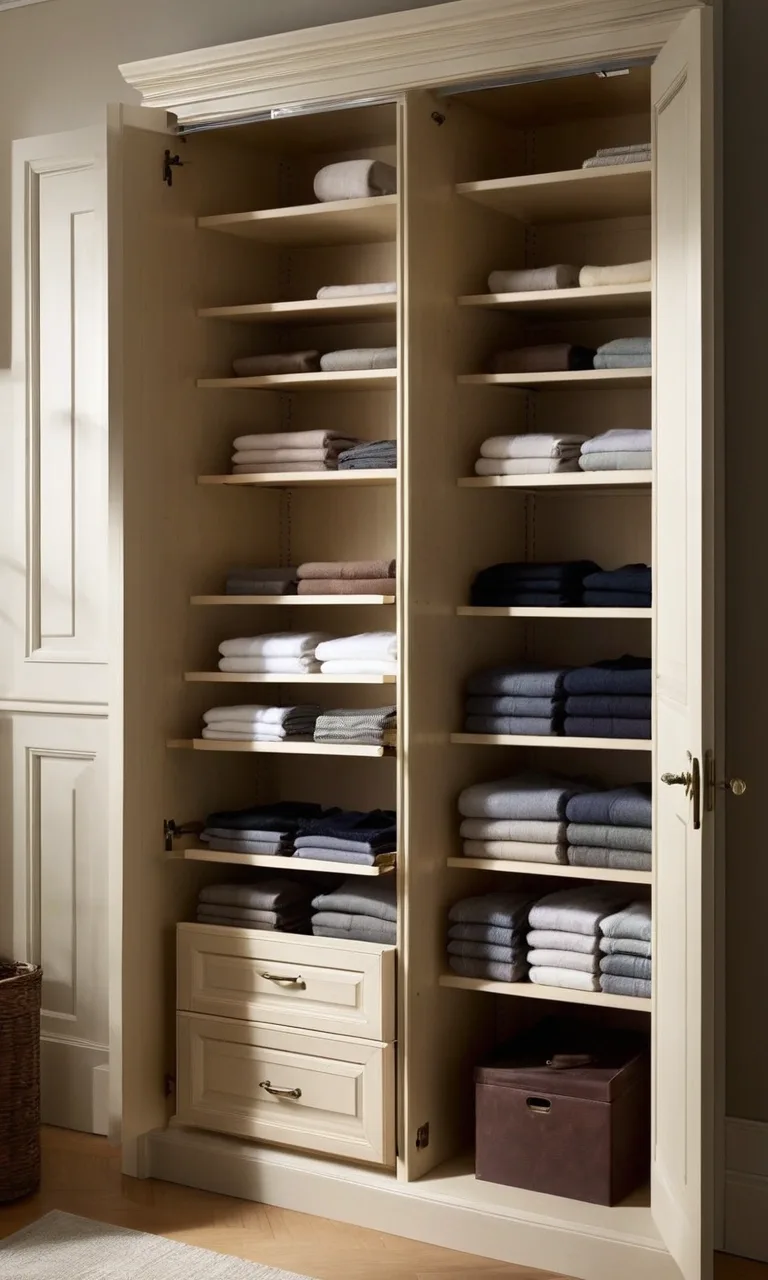
Well-organized folded clothing can free up hanging space and prevent shelves from becoming messy. Reserve separate stacks for T-shirts, jeans, knitwear, pajamas, and other garments that hold their shape when folded.
Arrange each stack so the front edges are visible, and avoid making piles so tall that removing one item disrupts everything underneath. Shelf dividers can help keep clothing upright and prevent neighboring stacks from leaning into one another.
For drawers, consider folding garments vertically so individual pieces are visible from above. This approach works especially well for everyday shirts, leggings, and sleepwear. Store delicate knits flat rather than hanging them, which can stretch the shoulders over time.
14. Vertical Essentials Hub
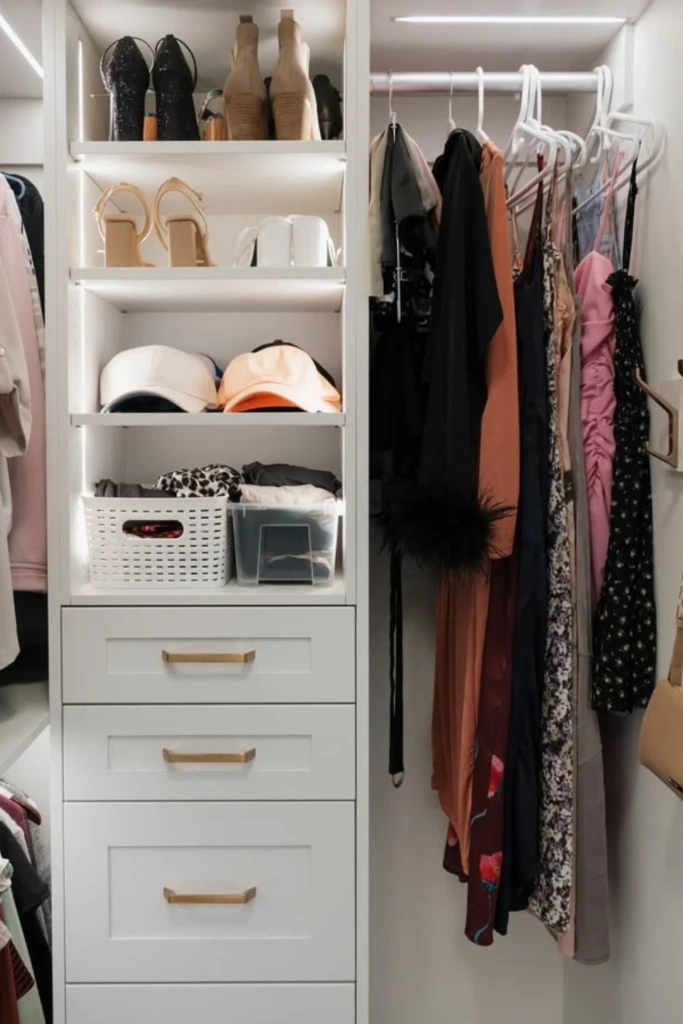
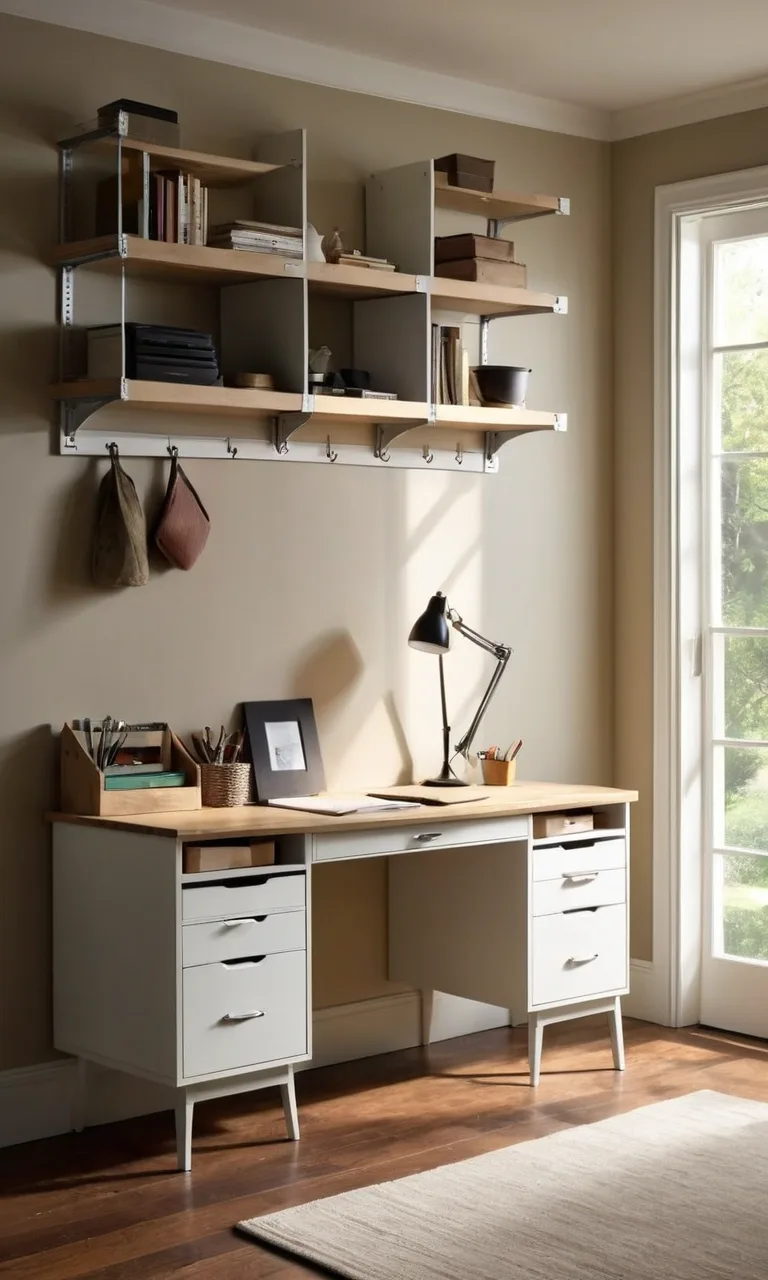
Walls and narrow vertical sections can provide useful storage when floor space is limited. Install hooks for frequently used bags, robes, belts, or lightweight accessories, and add a slim organizer for items that do not need a full shelf.
A vertical essentials hub works particularly well near the closet entrance, where everyday items can be reached quickly. Keep hooks spaced far enough apart to prevent bags and accessories from becoming tangled.
Use a narrow shelf above the hooks for sunglasses cases or small boxes, provided there is sufficient clearance. Avoid placing organizers where they interfere with doors, drawers, or movement through the closet.
15. Pink Luxe Zone
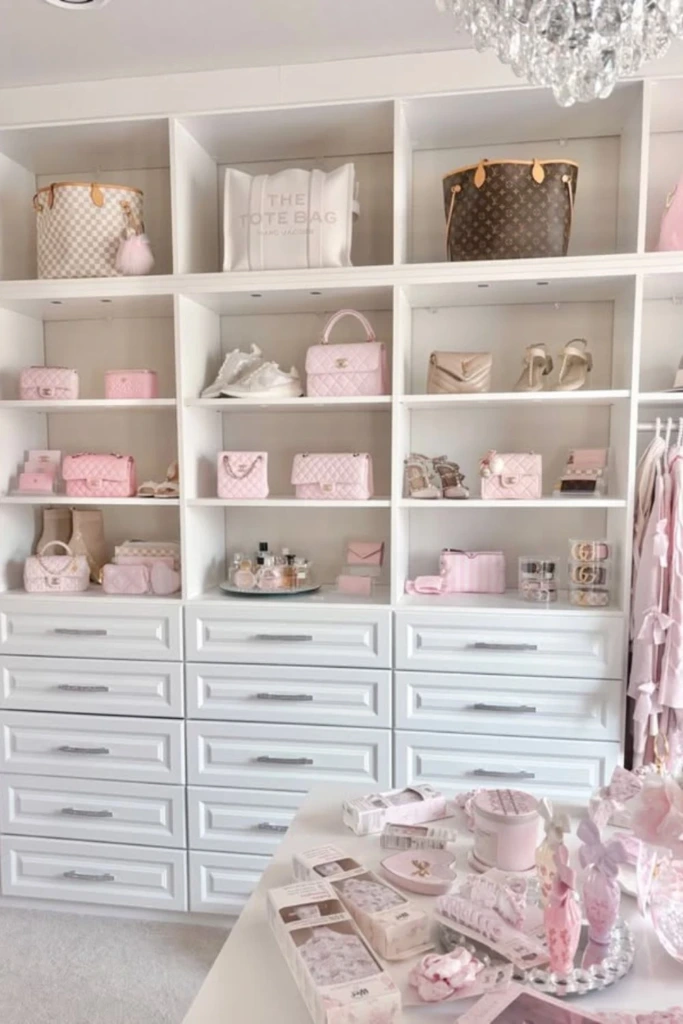
Blush pink can introduce personality into a small walk-in closet while maintaining a soft, sophisticated atmosphere. Consider pink drawer fronts, a painted accent wall, or a few blush-colored organizers instead of using the shade on every surface.
Pair pink with ivory, warm beige, brushed brass, or pale wood for a balanced appearance. Neutral clothing hangers and understated storage containers can keep the overall design from becoming visually busy.
If you prefer a temporary update, add pink fabric bins, a small jewelry tray, or matching boxes on open shelves. These details are easy to replace when your tastes change and do not require a complete renovation.
16. Structured Menswear Wall
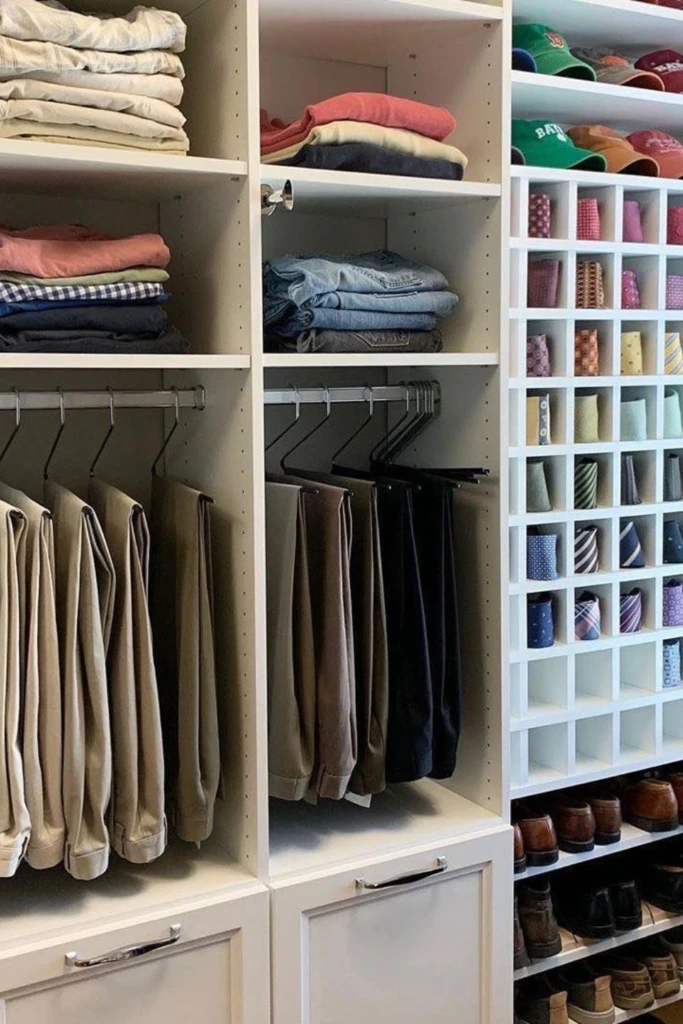
A dedicated menswear wall can simplify the storage of shirts, trousers, jackets, suits, and accessories. Divide the available space into clear sections, placing work shirts together, trousers on suitable hangers, and jackets in an area with enough vertical clearance.
Add a narrow shelf or drawer organizer for ties, belts, watches, and cuff links. Keep shoes below the hanging section, arranged by type or frequency of use, so everyday footwear is easy to retrieve.
For garments that wrinkle easily, avoid overcrowding the rail. Matching hangers and consistent spacing can improve visibility, while a separate section for longer coats prevents them from becoming compressed against other clothing.
17. Designer-Meets-Workspace
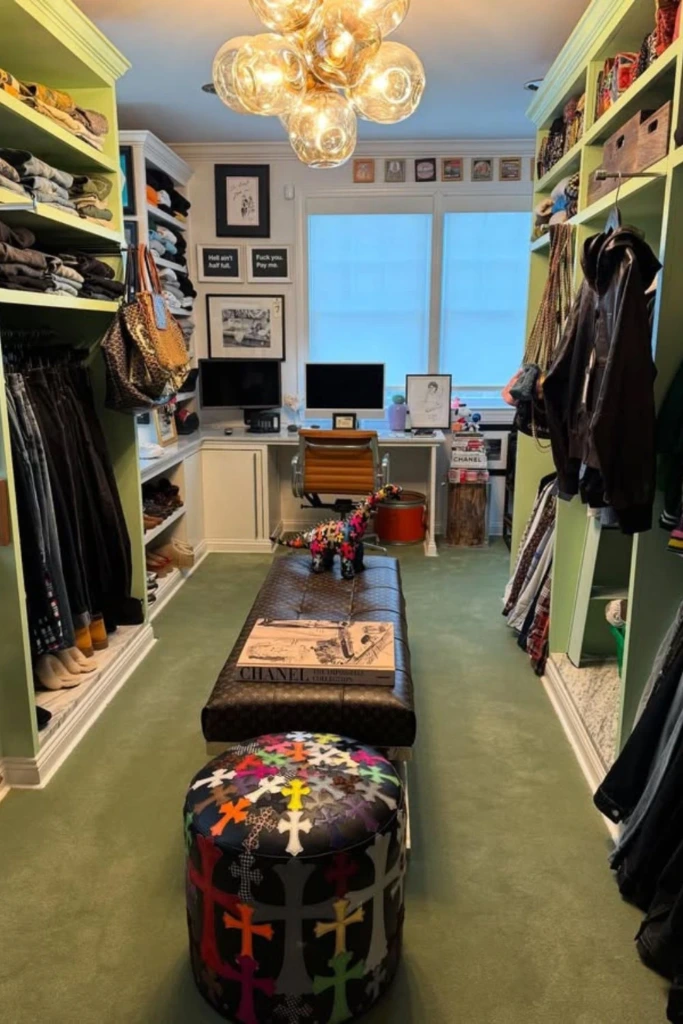
When space permits, a small dressing or preparation station can make a walk-in closet more versatile. A narrow built-in counter or compact vanity can provide a place for accessories, outfit planning, or everyday grooming without requiring a separate room.
Choose a shallow surface and pair it with drawers that store small essentials out of sight. A wall-mounted mirror helps preserve floor space, while a stool that slides completely underneath the counter keeps the walkway clear.
Lighting should be suitable for the tasks performed at the station, especially if it is used for makeup or detailed grooming. Keep the surface relatively uncluttered and avoid adding a workstation if it compromises access to the wardrobe or leaves insufficient room to move comfortably.
18. Compact Boot Station
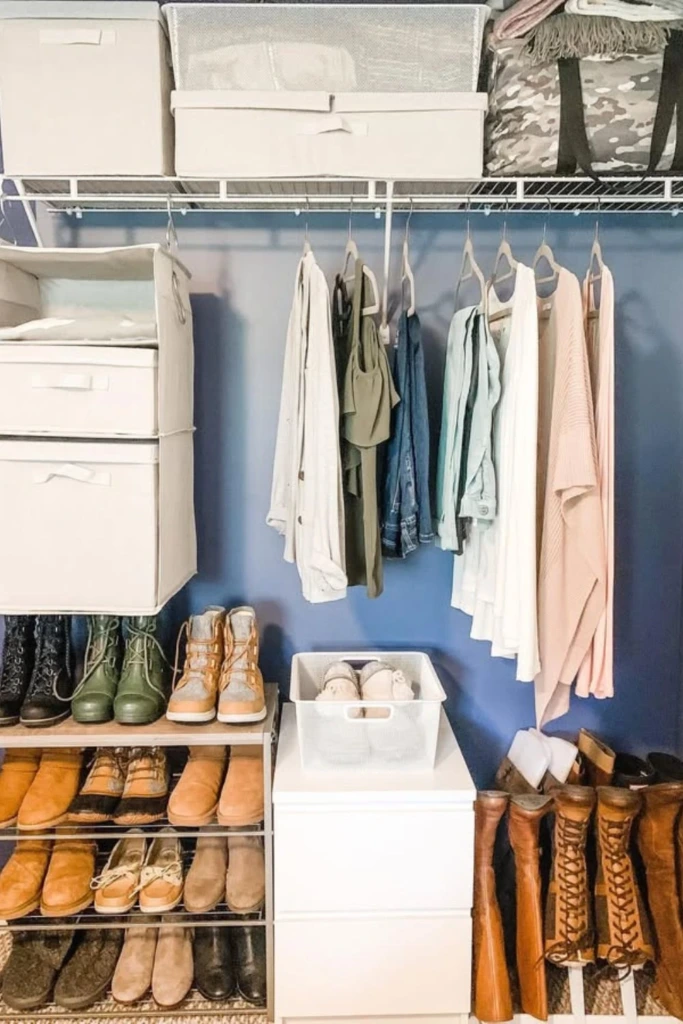
Tall boots require more vertical clearance than ordinary shoes, so a dedicated lower shelf or floor-level section can prevent them from being crushed. Measure your tallest pair before choosing the storage arrangement, especially if the closet has fixed shelves.
Use boot shapers or suitable supports to help maintain the shafts' shape. Arrange footwear in pairs, with frequently worn styles near the entrance and occasional or seasonal pairs farther back.
If the closet is also used for outdoor shoes, keep dirty footwear on an easy-to-clean tray rather than directly on fabric flooring. Leave enough space for boots to dry fully before storing them to reduce trapped moisture and odors.
19. Double-Tier Luxury
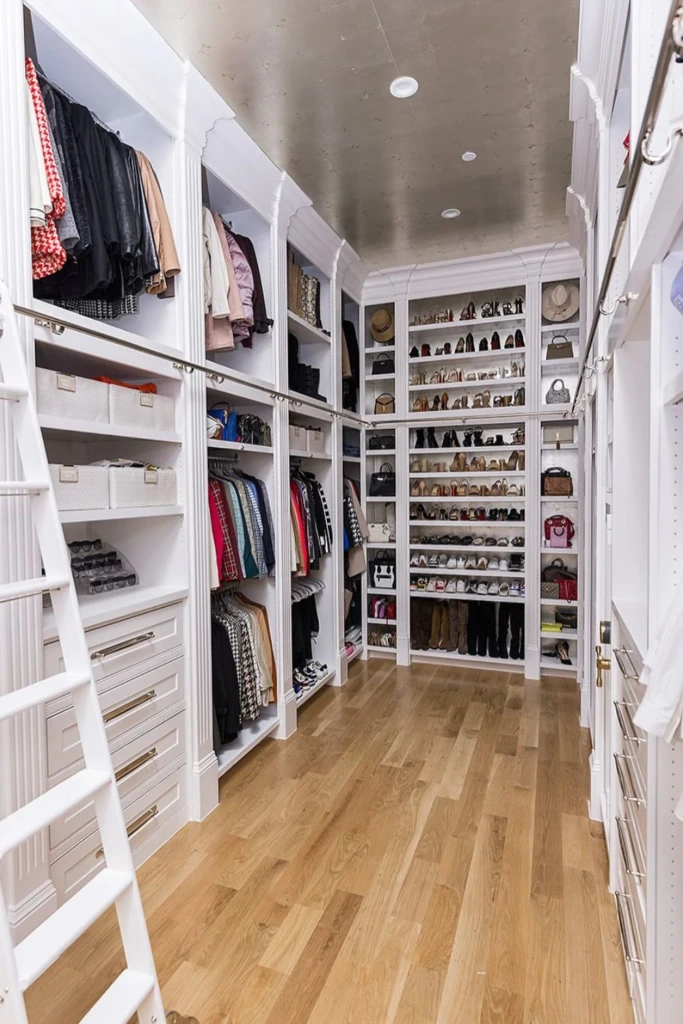
Double-tier hanging storage creates a more customized appearance while increasing the number of garments a compact closet can hold. Use two rails in sections dedicated to shorter items such as shirts, skirts, folded-over trousers, and lightweight jackets.
A coordinated layout might place upper and lower hanging rails beside a drawer unit, with overhead cabinets providing concealed storage for bags or seasonal clothing. Matching finishes and integrated lighting can make these practical features look like part of a unified design.
Before installing the upper rail, make sure there is enough room to reach the hangers comfortably. Keep longer garments in a separate section, and avoid adding a second rail where it would make daily access awkward.
20. Saree Fold Closet
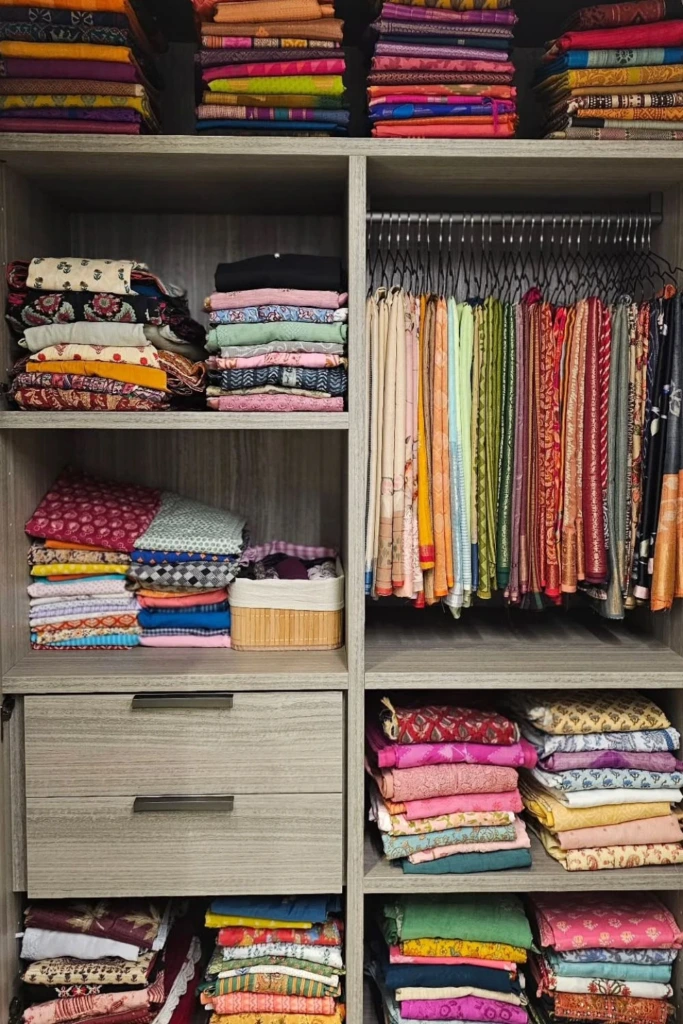
Sarees often need more careful storage than everyday clothing because fabrics, embellishments, and decorative borders can be delicate. A dedicated closet section with broad shelves or spacious drawers allows folded sarees to remain organized without being squeezed into narrow compartments.
Separate everyday cotton sarees from silk, embroidered, or occasion-specific pieces. Use clean, breathable storage materials and avoid stacking heavy garments on top of delicate fabrics. Depending on the fabric and embellishments, refolding items periodically can help prevent permanent creases along the same lines.
Keep matching blouses, petticoats, and accessories in nearby labeled compartments. For valuable silk or heavily embellished sarees, follow the fabric's care instructions and use suitable protective storage rather than sealing them away in containers that trap moisture.
21. Bold Color Block
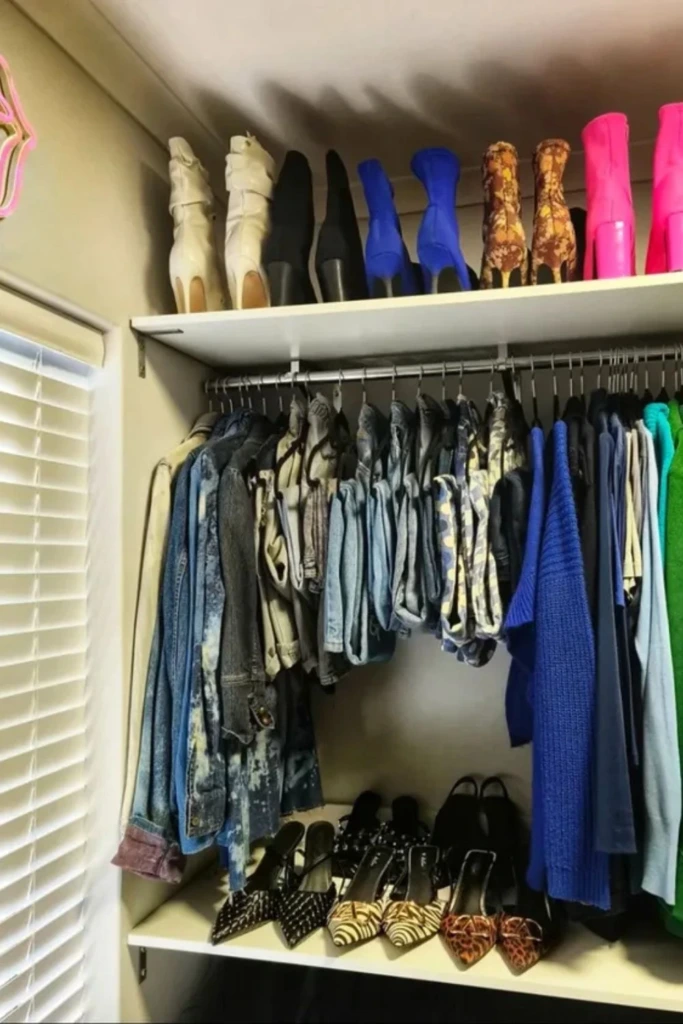
Color blocking introduces a striking design element without needing decorative objects throughout the closet. Choose one or two strong colors for selected cabinet fronts, drawer panels, or a feature wall, then balance them with quieter surrounding finishes.
Deep blue paired with warm wood can feel sophisticated, while terracotta and cream create a warmer atmosphere. A combination of muted green and pale beige offers another option for a contemporary closet.
Keep the color scheme consistent across the storage system and avoid making every section a different shade. In a small room, using bold color on a limited surface usually creates a clearer visual effect than covering all the walls and cabinetry.
22. Pull-Out Shoe Wall
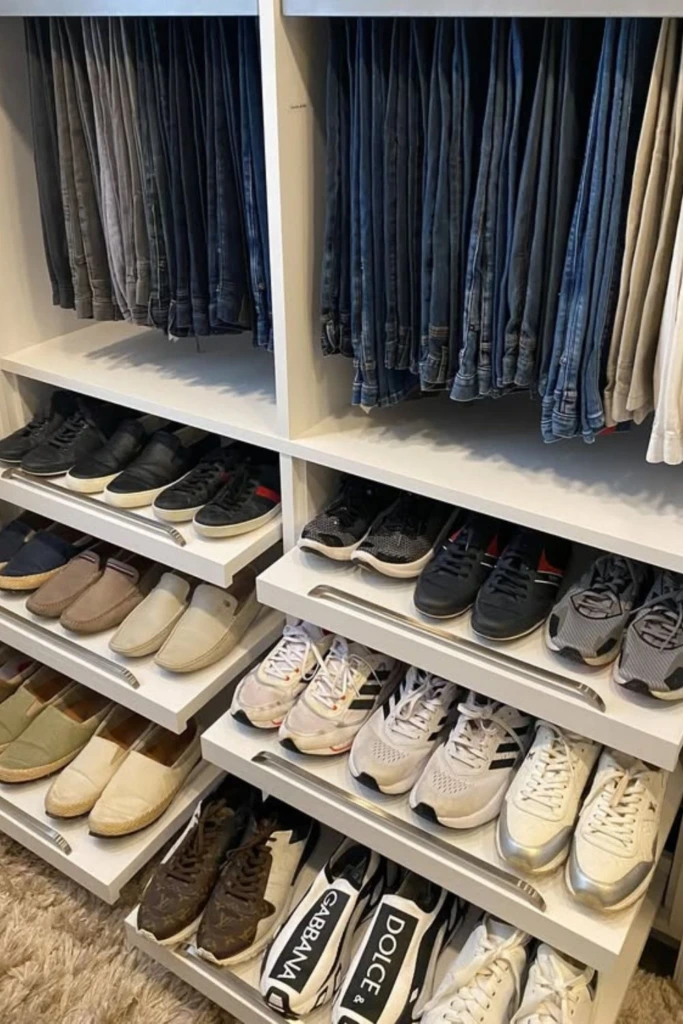
A pull-out shoe wall makes footwear easier to access when conventional shelves are deep or difficult to reach. Sliding trays allow you to view pairs stored toward the back without moving everything in front of them.
Organize shoes by category, such as sneakers, flats, heels, and formal footwear. Adjustable shelf spacing can accommodate different shoe heights, while shallow trays help keep pairs aligned and easy to retrieve.
Check the available clearance before installing a pull-out system. The shelves need enough room to extend without hitting nearby drawers or blocking the walkway. If a full sliding unit is too expensive or bulky, a series of accessible open shelves can achieve a similar organizational result.
23. Window-Centered Design
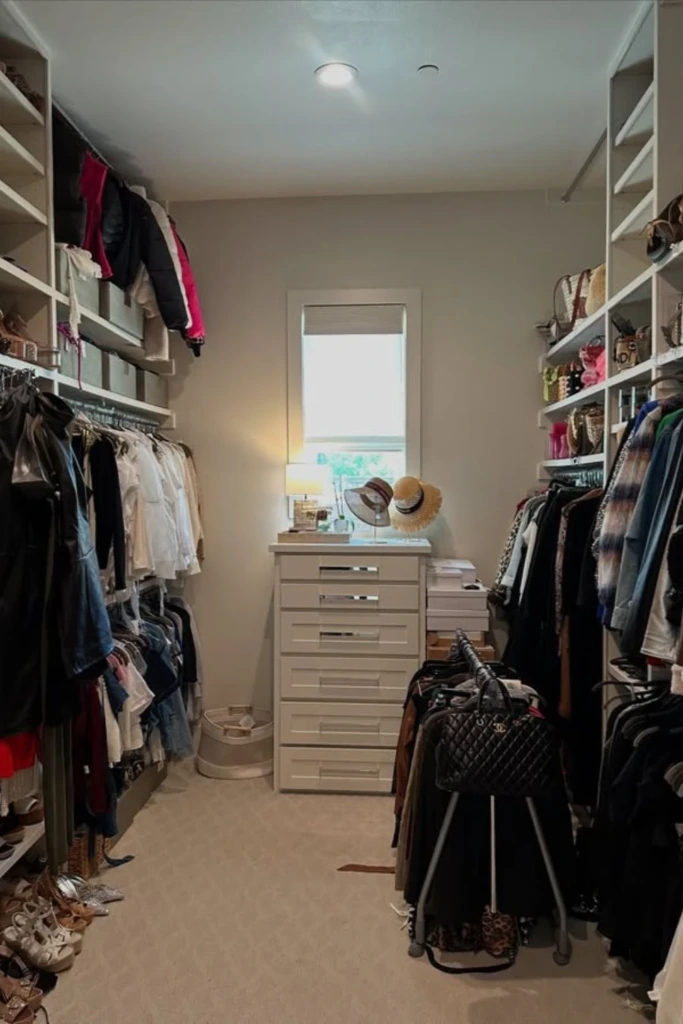
If your walk-in closet has a window, arrange the storage around it instead of covering it with tall cabinets. Natural light can make clothing easier to distinguish and help the room feel more open.
Low drawers or a narrow bench may fit beneath the window if the sill height and available clearance allow. Place hanging rails and taller shelving along the other walls, keeping the window unobstructed and ensuring that doors and drawers can open freely.
Use suitable window coverings when needed for privacy and to limit direct sunlight on clothing. Strong sunlight can fade fabrics over time, so delicate garments and valuable textiles should not be stored where they receive prolonged direct exposure.
24. Curved Shoe Feature
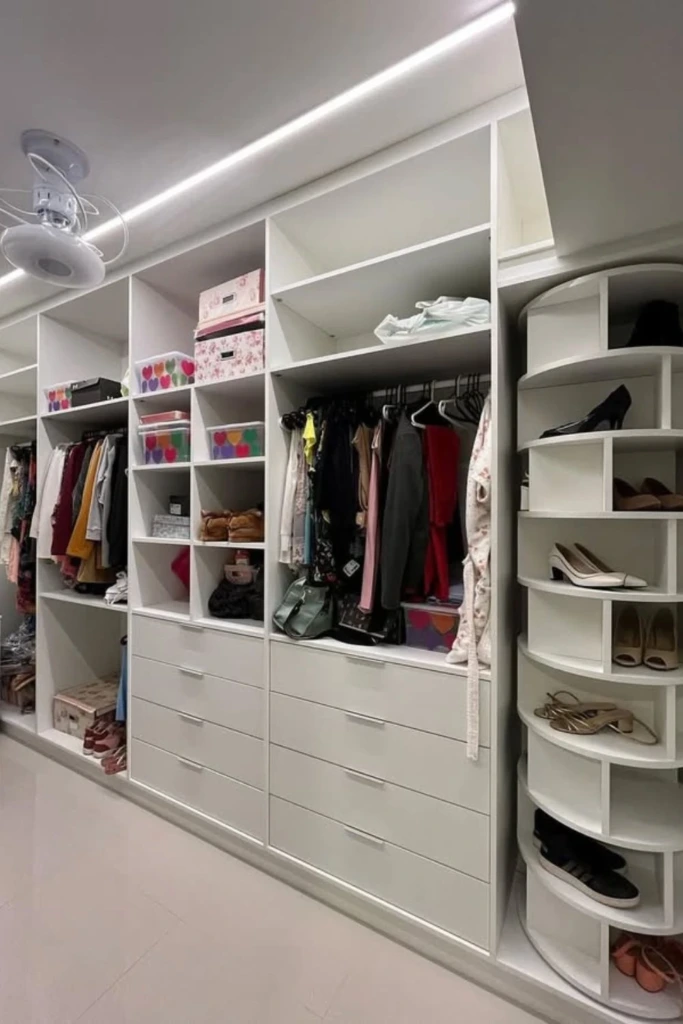
Curved shoe shelving introduces a distinctive architectural detail while creating a dedicated display for footwear. A rounded shelf unit can soften a closet dominated by straight cabinet lines and provide a focal point for favorite heels, sneakers, or special-occasion shoes.
In a compact room, a small curved end shelf or rounded corner unit is often more practical than a large custom installation. Choose shelf depths appropriate for your shoes and leave sufficient clearance for neighboring storage.
Keep the display selective, placing frequently worn pairs where they are easiest to reach. If custom curved cabinetry is outside your budget, rounded-edge floating shelves or a curved accessory stand can provide a similar visual effect with less work.
25. Neutral Wood Harmony
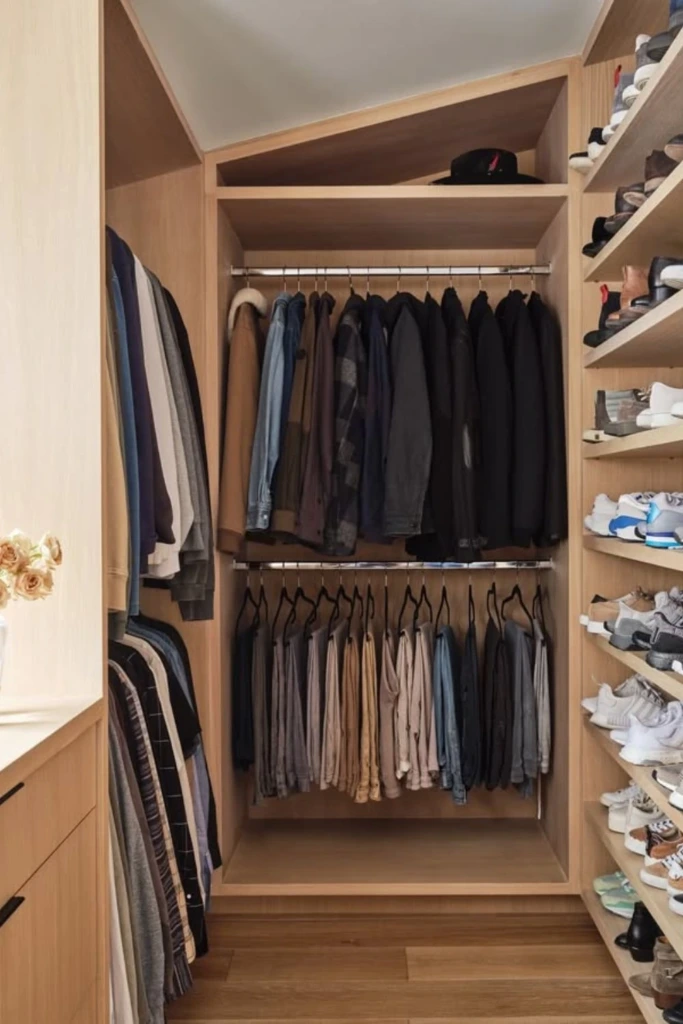
Natural wood and neutral finishes create a timeless closet design that feels warm without becoming visually overwhelming. Pair oak-effect shelving with cream cabinets, beige walls, or light gray drawers for a coordinated appearance.
Repeat the same wood tone in a few places, such as shelf edges, a bench, or drawer accents. This creates visual continuity while allowing different storage sections to serve their own functions.
For a small walk-in closet, lighter wood finishes can help the room feel brighter, especially when paired with good lighting. Use durable surfaces that are suitable for the closet's conditions, and select finishes that are easy to wipe clean and maintain.
26. Rustic Cozy Setup
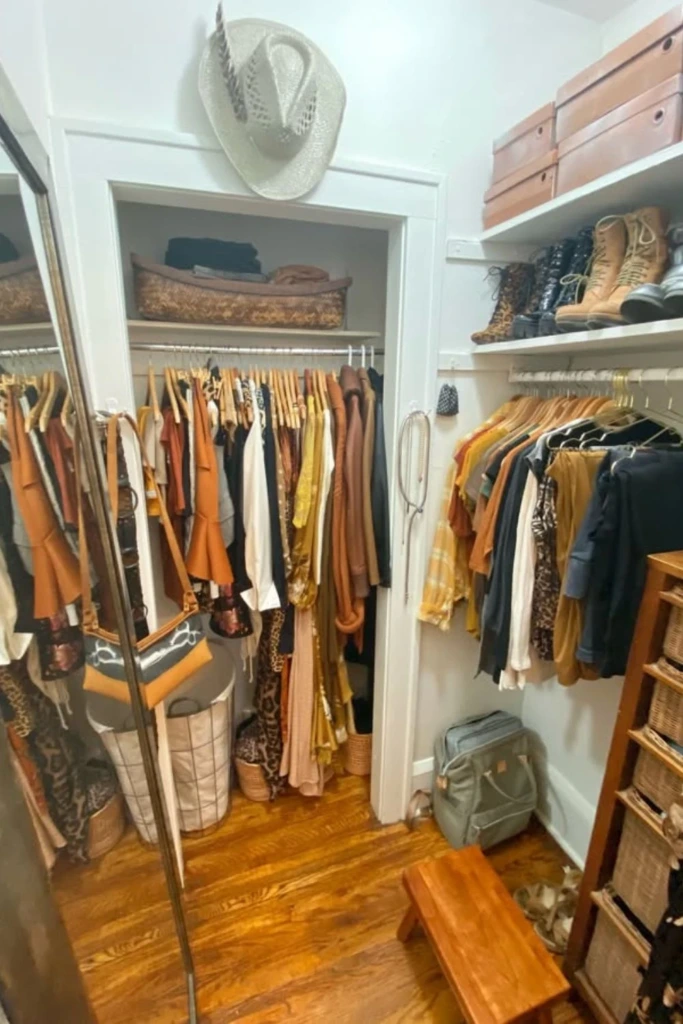
A rustic closet combines practical storage with natural textures and warm colors. Wood-effect shelves, woven baskets, matte metal hooks, and soft lighting can give the room a comfortable, lived-in character.
Use baskets to conceal smaller accessories and reserve open shelving for neatly folded clothing or items with attractive packaging. A wooden rail or bench can reinforce the rustic style, provided it does not take up too much valuable floor space.
Balance the textures with simple storage arrangements. Too many decorative objects can make a small closet feel crowded, so focus on a few durable materials that contribute both function and visual warmth.
27. Structured Elegance
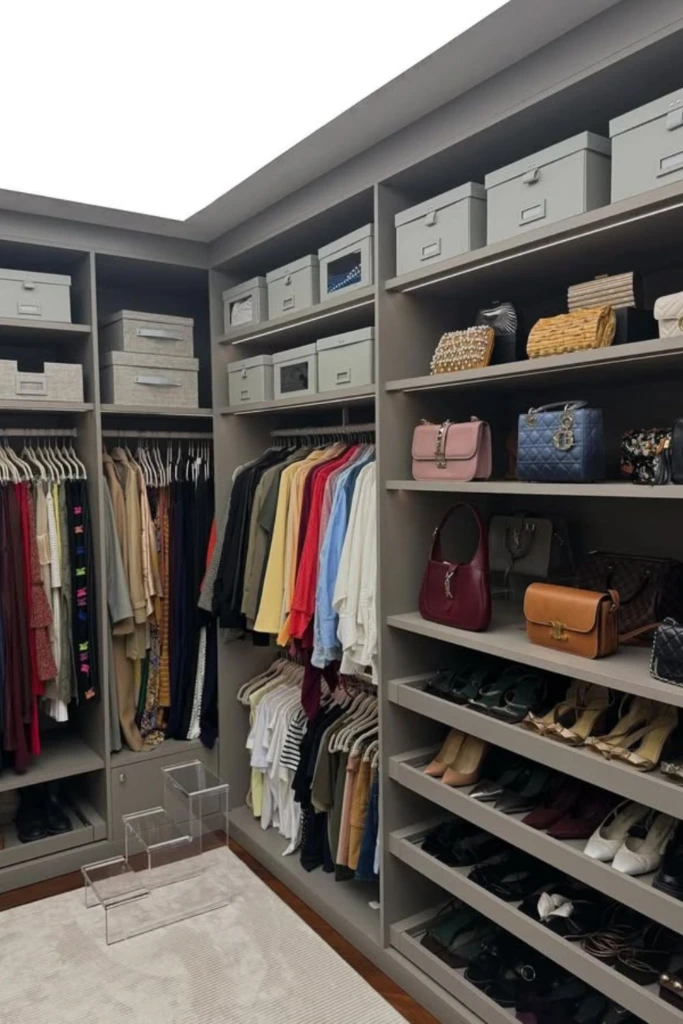
Structured elegance comes from combining clean lines, intentional spacing, and storage that feels consistent throughout the room. Matching drawers, aligned shelves, uniform hangers, and carefully arranged clothing can make even a modest closet look professionally planned.
Use closed cabinets for items that tend to create visual clutter, while leaving a few open sections for everyday clothing and accessories. Keep similar categories together and avoid overcrowding shelves, which can undermine the neat appearance.
Hardware, lighting, and finishes should complement one another without competing for attention. A restrained palette and a practical layout will generally remain appealing longer than a design built around short-lived decorative trends.
28. Soft Pastel Glow
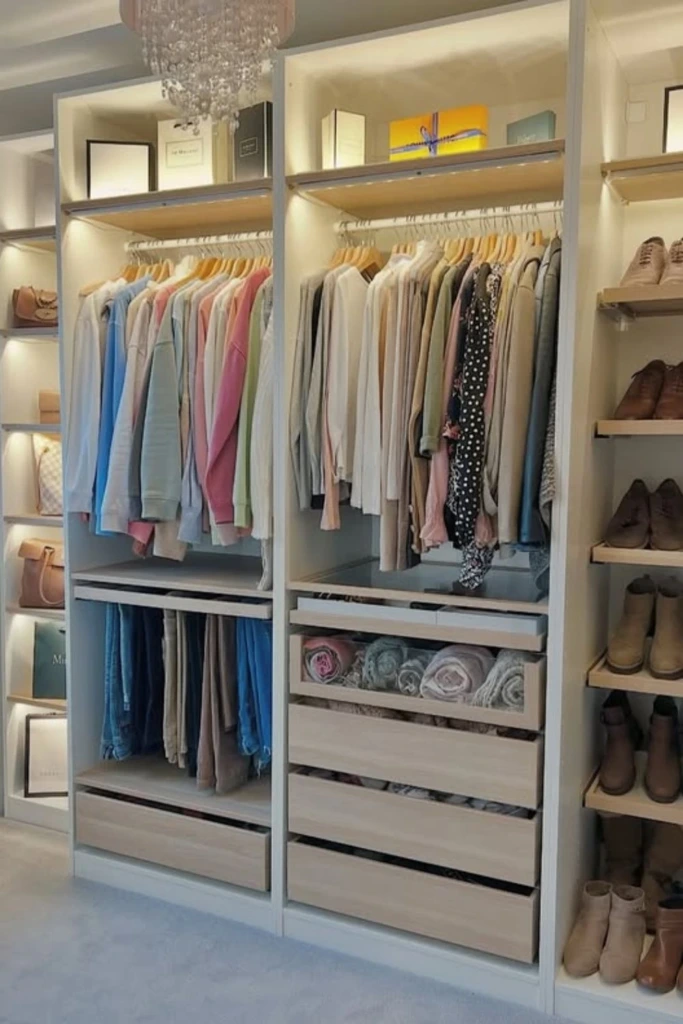
Soft pastel accents can give a compact walk-in closet a light, welcoming atmosphere. Consider pale blush, powder blue, muted lavender, or sage green for storage boxes, drawer fronts, or a single accent wall.
Pair these colors with white shelving, pale wood, and warm lighting to maintain a balanced appearance. A subtle pastel palette works particularly well when the rest of the closet contains neutral clothing and simple storage accessories.
For the best result, choose lighting that renders clothing colors accurately and avoids harsh shadows. Add only a few decorative details, such as a pastel jewelry tray or matching fabric bins, so that the room remains organized and easy to use.
Final Thoughts
Creating an organized small walk-in closet is about making the most of your available space while choosing a design that reflects your personal style. Double hanging rods, pull-out shoe storage, labeled bins, adjustable shelves, and well-planned drawers can significantly improve everyday functionality. Combine these practical solutions with coordinated finishes, thoughtful lighting, and a manageable wardrobe to create a closet that feels spacious, attractive, and easy to maintain throughout 2026.