
How to Build a Filing System for Home Paperwork
Paper has a way of taking over a home. One week it is a small stack of mail on the kitchen counter. A few months later it is a drawer that will not close, a pile on the desk, and a tax form you cannot find on the one day you need it. The missing bill turns into a late fee, and the lost school form throws off a whole week.
A filing system for home paperwork ends that cycle. It is not a fancy cabinet or a wall of color coded binders. It is a simple routine: every paper gets a home, and you always know where that home is. This guide walks you through the whole setup in a single afternoon, from gathering the piles to picking storage that fits your space. Once the system is in place, keeping it up takes only a few minutes each week.
Jump to section (4)
What Is a Good Filing System?
A good filing system is one that still works six months from now. The test is simple. Can you find any document in under a minute? And can you file a new paper without stopping to think about where it goes? If the answer to both is yes, the system is doing its job.
Your system also needs room to grow. A family adds school forms, medical records, and new accounts over time. Your money situation changes. A filing method built on a handful of broad categories can stretch to cover all of that without a rebuild. A partner or a teenager should be able to follow it too, without asking you to explain a legend.
Security matters as well. Birth certificates, passports, and wills need protection from fire and water. Everyday papers just need to be within reach. A good system treats those two groups differently.
A functional home filing system is:
- Organized: Everything has a home.
- User-friendly: No complicated color codes required.
- Adaptable: Easy to expand as life changes.
- Safe: Protects sensitive data from fire, water, and identity theft.
- Space-efficient: Fits your living area, not the other way around.
How To Organize Your Files
Setting up the system takes one focused afternoon. Plan on three to four hours to clear the backlog. That sounds like a lot, but most of that time is just making quick decisions about papers you have been avoiding. After the setup, upkeep takes only a few minutes a week.
What You Will Need
- Recycle bin and trash bags
- Paper shredder
- Pens and a label maker
- Hanging file folders
- Manila file folders
- Filing cabinet or portable file box
- Fireproof box (recommended for vital records)
- Binder (optional, for household manuals)
- Desktop inbox tray
1. Gather All Your Documents
Start by hunting down every scrap of paper in your home. Check the kitchen junk drawer, the home office desk, the bedroom nightstand, the car glove box, and your purse or backpack. Papers hide in all of these places, and a system only works if it starts with the full picture.
Do not sort as you go. Just carry everything to a large table or a clear patch of floor and pile it up. You need to see the total volume before you can judge what storage you will actually need. A small box of papers and a moving box of papers call for very different solutions, and guessing wrong means buying supplies twice.
2. Separate Documents Into 5 Categories
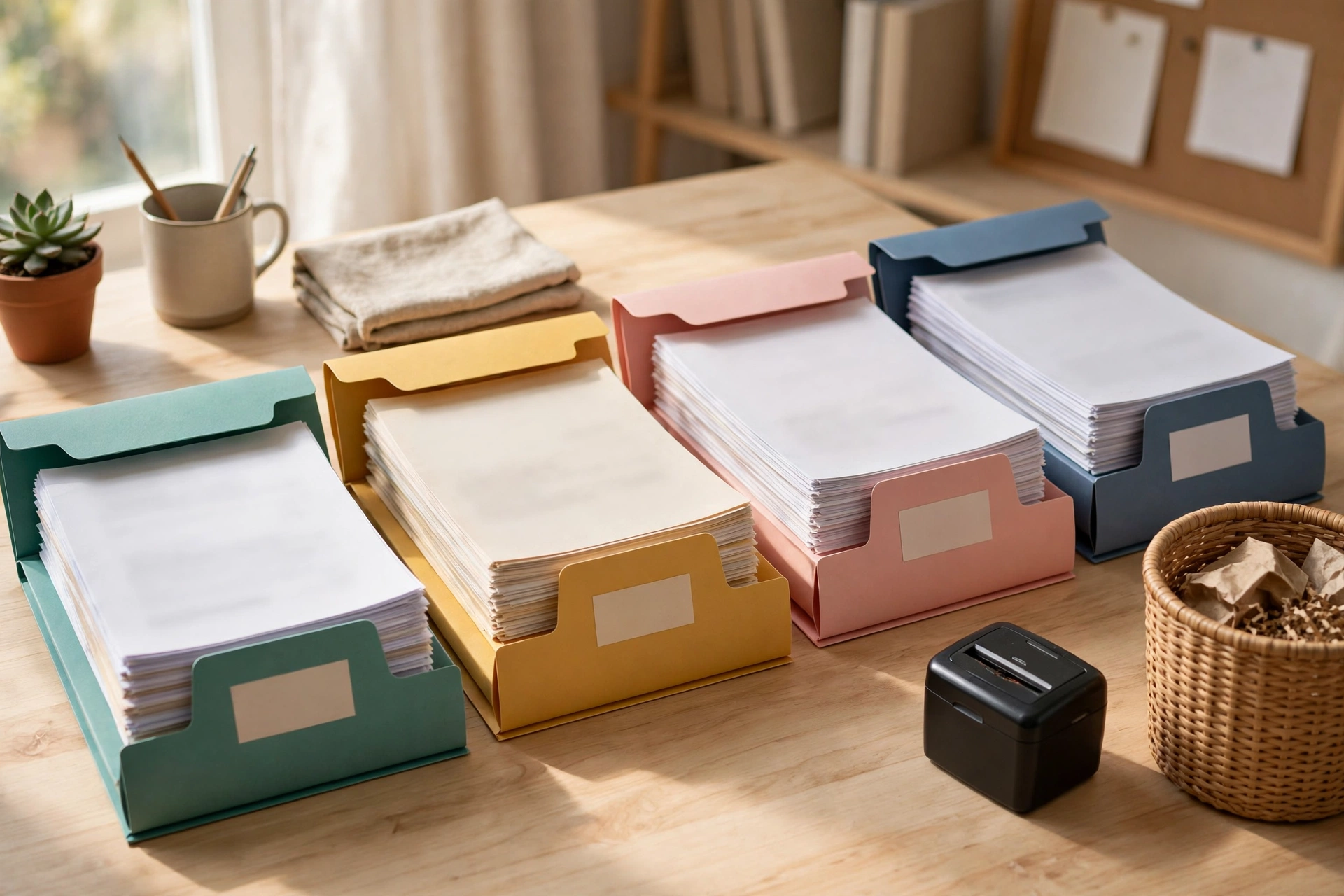
The fastest way to sort is the piling method. Clear your workspace and make five zones on the table: Action, Archive, Household, Recycle, and Shred. Pick up one piece of paper, make a quick decision, and drop it in the matching pile. Do not overthink each item yet. Speed matters more than perfection at this stage, and you can refine the piles later.
Action: These are the hot items that need attention soon. Ignore them and you face a consequence, like a late fee or a missed event. Examples include unpaid bills, RSVP invitations, permission slips, insurance claim forms, and appointment reminders.
Archive: These are the keep for years documents. You rarely look at them, but you must have them for legal or financial reasons. Examples include past tax returns, medical history records, property deeds, contracts, and investment statements.
Household: These are reference materials you reach for once a month or a few times a year to keep the house running. Examples include current insurance policies, appliance manuals, warranties, recipes, school calendars, and coupons.
Recycle: This pile should be your biggest. If a paper holds no sensitive data and you do not need it, toss it. Examples include junk mail, flyers, used envelopes, outdated magazines, and old homework. Save a few school keepsakes if you like, and recycle the rest.
Shred: Protect your identity. If a document shows your name along with an account number, a Social Security number, or a signature, it must be shredded, not recycled. Examples include credit card offers, old bank statements, paid utility bills, and medical bills.
3. Purge the Excess
Now that everything is sorted, deal with the Recycle and Shred piles right away. Bag the recycling and carry it out of the room. Run the sensitive documents through the shredder. This single step usually cuts the pile by more than half, and the job suddenly feels manageable.
Do not set these piles aside for later. The whole point of purging first is to shrink the work before you start the careful filing. A smaller pile is easier to organize, and the quick win keeps your energy up for the archive work ahead.
4. Organize the Archive File
The Archive pile usually holds the most paper, and it is also the pile you will touch least. Since you rarely need these documents, they belong at the back of your filing cabinet or in a separate box of their own.
How long should you keep each type of document? This schedule follows official guidance from the IRS and the FTC, so you can follow it with confidence:
- Tax records: Keep at least 3 years, which is the general IRS period of limitations. Keep 7 years if you claim a loss from worthless securities or a bad debt.
- Real estate deeds and auto titles: Keep as long as you own the property or the vehicle.
- Pay stubs: Keep until you have matched them to your W-2, then shred.
- Bank statements: Keep 1 year, unless a statement backs up a tax return.
- Medical bills: Keep 1 year after payment clears. Keep disputed or tax related bills for 7 years.
- Utility and credit card bills: Shred once paid.
Financial records: Group these by institution or by year. Broad labels work best, such as Banking, Taxes, Credit Cards, and Income and Pay Stubs. Start a fresh hanging folder for each tax year and label it Taxes plus the filing year, so every receipt and form for that year stays together.
Vital records: This is the most critical category. It includes birth certificates, marriage licenses, Social Security cards, wills, and passports. These documents are slow and stressful to replace, so store them in a dedicated fireproof and waterproof lockbox rather than a cardboard folder. If one does go missing, a replacement Social Security card can usually be requested online and arrives by mail in about 5 to 10 business days, while a certified birth certificate comes from the vital records office in the state where you were born.
Personal information: Sort medical and health records here. You can keep one folder per family member, or split them by Medical, Dental, and Vision. This is also the spot for pet records, including vaccination history and vet visits.
Education records: Keep transcripts, diplomas, and certifications here. If you have several children, give each child a color coded hanging folder. That way you can grab one child’s report card or immunization record without digging through the whole family’s history.
5. Arrange The Household File
Household files need to sit front and center because you reach for them often. Place them at the front of your drawer or in an accessible desktop organizer, ahead of the archive folders you rarely touch.
Labeling strategies: Broad categories work best for household files. Label hanging folders with main topics like Auto, Home, Insurance, and Manuals. Inside the Auto folder, add a manila folder for each vehicle you own. Inside the Insurance folder, separate policies for Life, Health, and Auto. The goal is to limit the number of places you have to look before you find what you need.
Color coding: A simple color code adds a visual cue that speeds up retrieval. For example, use green for financial folders like Bank and Taxes, red for medical and vital folders like Health and Doctors, blue for household folders like House, Auto, and Insurance, and yellow for personal folders like Kids, Pets, and Education. Do not make it too complex. If you have to consult a legend to file a single receipt, the system will fail.
6. Set Up The Action File
This is your inbox, and it lives on your desk, not in a cabinet. When mail arrives, filter out the junk right away, then drop the bills, invitations, and forms into the Action tray. Nothing else goes in this tray. The moment other papers sneak in, it turns back into a pile.
The habit that keeps it working is a weekly pass. Pick one day, Sunday evening works well for most families, and sit down with the tray. Pay the bills, mark the calendar dates, and file the finished paperwork into your Archive or Household folders. Ten minutes a week is enough once the system exists, and it keeps the tray from ever overflowing again.
Where To Store Your Files

Your storage solution depends on your space and the volume of paper you keep. A renter in a small apartment needs something different from a homeowner with a decade of tax returns. Here are the options that work best in modern homes.
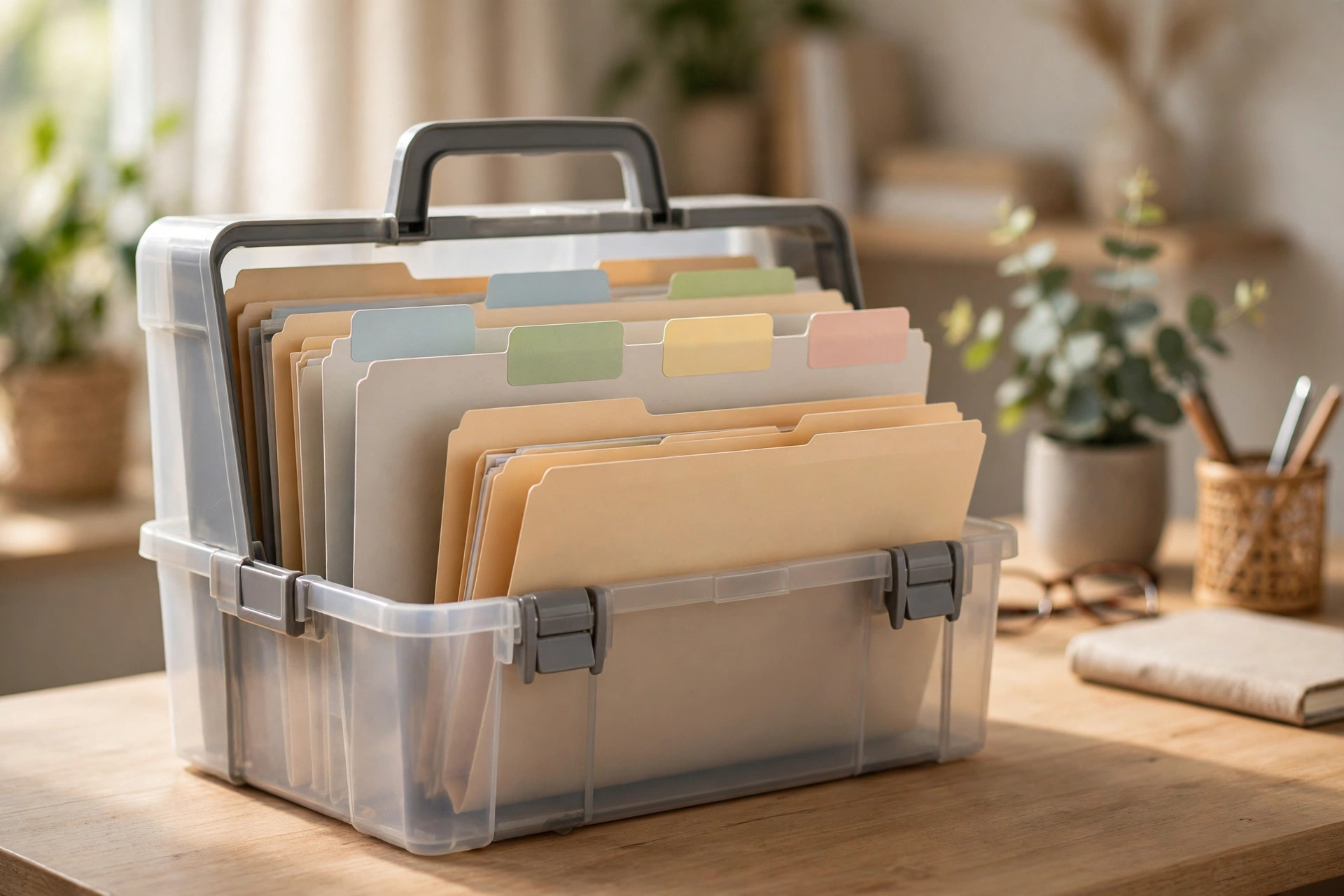
Plastic File Boxes
Portable plastic bins are durable, water resistant, and stackable. They suit renters and students who move often. Slide one under a bed or stack it in a closet. A good setup is one box for Archive and a smaller one for Household papers you need to reach often.
Cardboard Bankers Boxes
If you have years of tax returns to store, bankers boxes are the most affordable option. They are sturdy and sized to fit standard shelving. Label the outside clearly by category and year, then store them in a garage, attic, or high closet shelf, since you rarely need them.
Storage Ottomans
For a small apartment where you would rather not see a metal cabinet, try a storage ottoman. Many include internal rails made for hanging file folders. It doubles as seating or a footrest while hiding your paperwork in plain sight, which makes it a smart pick for living rooms and small bedrooms.
Desktop Filing Baskets
If you have gone mostly digital and keep only a few physical files, a simple decorative basket with a few hanging folders is enough. It looks tidy on a bookshelf and keeps your essential Household papers within reach without taking over a room.
Lateral Filing Cabinet
The classic choice for homeowners. Lateral cabinets are wider and shallower than traditional vertical cabinets, so they intrude less on a room. The flat top can double as a printer stand or a display surface, which helps the cabinet earn its floor space.
FAQs
How Do You Create a Digital Filing System?
Create a digital filing system by mirroring your physical categories on your computer or cloud drive. Make one master folder called Filing Cabinet, then subfolders for Financial, Medical, and Household. Scan each paper as it arrives and save it with a sortable name that starts with the date in YYYY-MM-DD form, followed by a short label like ElectricBill. Keep a second backup, an external drive or a separate cloud account, so one crash never wipes out your records.
How Does Marie Kondo Organize Papers?
Marie Kondo sorts papers into just three groups: pending, which needs action now; important, which you keep indefinitely; and miscellaneous, which covers reference items you use often. Her rule is to discard everything outside those three groups, on the logic that most filed papers are never read again. It is a stricter system than the five category method above, but it works well if you want to keep as little paper as possible.
What Important Documents Should I Keep?
Keep your vital records permanently: birth and marriage certificates, divorce decrees, Social Security cards, passports, wills, and estate planning paperwork. Hold real estate deeds, auto titles, and pension or retirement documents for as long as you own the asset or account. The FTC groups birth, marriage, divorce, and death records together with titles and deeds as long term keeps, so hold onto deeds and titles only as long as you own the property.
What Are the Disadvantages of Alphabetical Filing?
Alphabetical filing breaks down because of naming inconsistencies. You might file Auto Insurance under A one week and under I for Insurance the next, then lose it when you go looking. It also clusters, stacking many files under one busy letter while others sit empty. For home use, grouping by topic is usually faster and more intuitive, because you look for a subject, not a letter.
What Should I Put on My Desk at Home?
Keep only your immediate essentials on a home desk: a laptop or monitor, a notepad, a pen cup, and your Action or inbox tray. File everything else in drawers or on shelves so the surface stays clear. A clear desk makes the weekly paperwork habit far easier to keep, and it removes the temptation to start a new pile.
How Often Should I Purge My Files?
Purge on two schedules. Do a quick weekly pass on your Action folder, filing what is done and recycling what is not. Then run one deep clean a year, ideally at tax time, on your Archive and Household files. During that deep clean, shred expired warranties, old insurance policies, and utility bills more than a year old.
Where Can I Shred Documents Without a Shredder?
Take sensitive paper to a free community shred day, often hosted by banks, libraries, or local governments, where documents are destroyed on site. In a pinch, black out every account number, Social Security number, and address with a heavy permanent marker before recycling. The FTC also lists burning and pulverizing as safe ways to destroy paper records.