19+ Brain Games for Seniors Printable for 2026
Keeping the mind active can make everyday life more enjoyable, especially when activities encourage curiosity, concentration, and problem-solving. Printable brain games for seniors offer a convenient way to enjoy mental challenges at home, during family visits, or in a senior community. Most require only paper, a pencil, and a little time, making them accessible to people with different interests and experience levels.
From number puzzles to word challenges and visual games, there are plenty of options to explore. The key is to choose activities that feel enjoyable rather than frustrating. Here are 20 brain game ideas for seniors in 2026, with practical suggestions for adapting each one to different abilities and preferences.
1. Sudoku
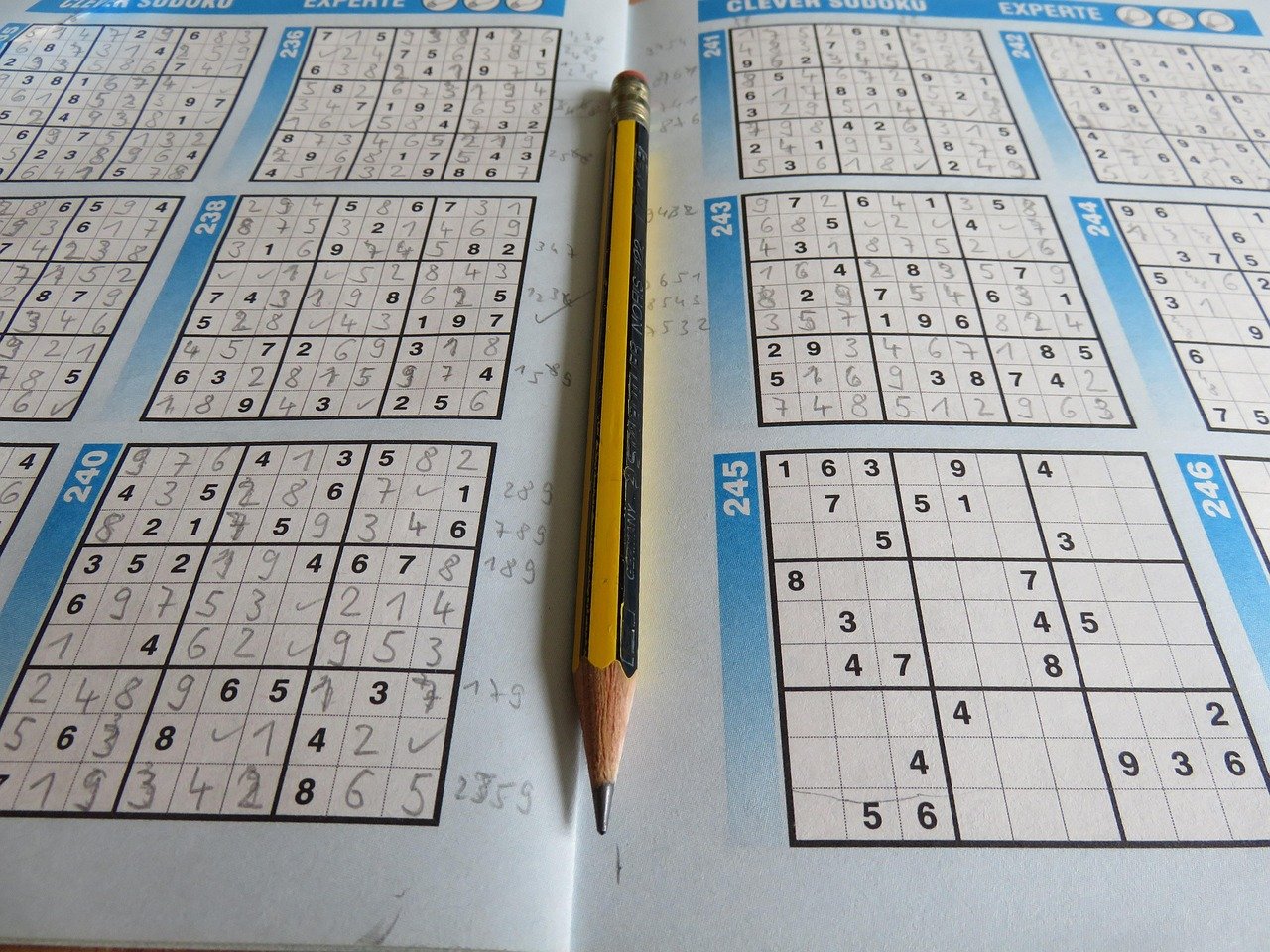
Sudoku is a number-placement puzzle that encourages logical thinking and careful observation. Players fill a nine-by-nine grid so that every row, column, and smaller three-by-three section contains the numbers one through nine without repetition.
Beginners can start with easy puzzles containing plenty of prefilled numbers. More experienced players may prefer harder grids that require several steps of reasoning. Printable Sudoku sheets are useful because players can write directly in the boxes, erase mistakes, and work at their own pace.
For seniors who find small print difficult to read, choose large-print versions with clear lines and spacious squares. There is no need to finish quickly; the enjoyment comes from solving each section one step at a time.
2. Word Search
Word searches provide a relaxing way to explore vocabulary and visual recognition. Each puzzle contains a grid of letters hiding a list of words that may appear horizontally, vertically, diagonally, or backward.
Choose themes that reflect familiar interests, such as gardening, cooking, travel, music, animals, or favorite holidays. A themed puzzle can make the activity feel more personal and encourage conversation about past experiences.
Large-print word searches are particularly helpful for people who prefer a less demanding visual task. Beginners can use puzzles with shorter words and fewer directions, while advanced players can try larger grids. Players can circle each discovery with a pencil and cross it off the list.
3. Maze Puzzles

Maze puzzles challenge players to find a route from a starting point to a destination without crossing walls or entering dead ends. They encourage planning, attention to detail, and the ability to reconsider a route when it does not work.
Simple mazes with wide paths are suitable for a relaxed session, while complicated designs offer a greater challenge. Printable versions allow seniors to trace possible routes using a pencil and erase unsuccessful attempts.
To make the activity more engaging, use themed mazes featuring gardens, houses, or outdoor adventures. Seniors with limited hand mobility may find large, uncluttered mazes easier to complete than puzzles with narrow paths and crowded lines.
4. Trivia Questions
Trivia games invite seniors to recall facts, recognize familiar names, and share what they know about different subjects. Questions can cover history, geography, movies, sports, literature, science, or popular culture from particular decades.
A printable trivia sheet might include multiple-choice questions, true-or-false statements, or short-answer prompts. Players can complete it independently or take turns answering questions with friends and family.
For a more social experience, prepare questions about classic songs, memorable historical events, traditional foods, or famous personalities. Allow participants to discuss their answers rather than focusing entirely on scores. Some questions may bring back personal memories, making trivia a useful conversation starter as well as an entertaining activity.
5. Word Scramble
Word scramble puzzles present letters in the wrong order and ask players to rearrange them into meaningful words. For example, the letters in "RTAEH" can be rearranged to form "EARTH."
These puzzles encourage attention to letter patterns, spelling, and vocabulary. They are easy to customize for different skill levels by changing the length of the words and the familiarity of the subject.
A beginner worksheet might use everyday objects, fruits, or household items. More challenging sheets can include longer words, unfamiliar vocabulary, or themed collections. Adding small pictures beside selected clues can make the game more approachable for people who benefit from visual hints.
6. Cryptogram Puzzles
Cryptograms turn ordinary messages into decoding challenges. In a traditional cryptogram, each letter is replaced by another letter according to a substitution pattern. Players examine repeated letters, word lengths, and familiar language patterns to uncover the original sentence.
For seniors who enjoy language-based challenges, cryptograms can provide an absorbing activity that rewards patience and logical deduction. A good starting point is a short quotation, familiar proverb, or well-known saying.
Printable worksheets often include an alphabet key where players can record which coded letter corresponds to each original letter. Beginners may benefit from a few revealed letters or a short hint. As confidence grows, longer messages can provide an additional challenge.
7. Rebus Puzzles
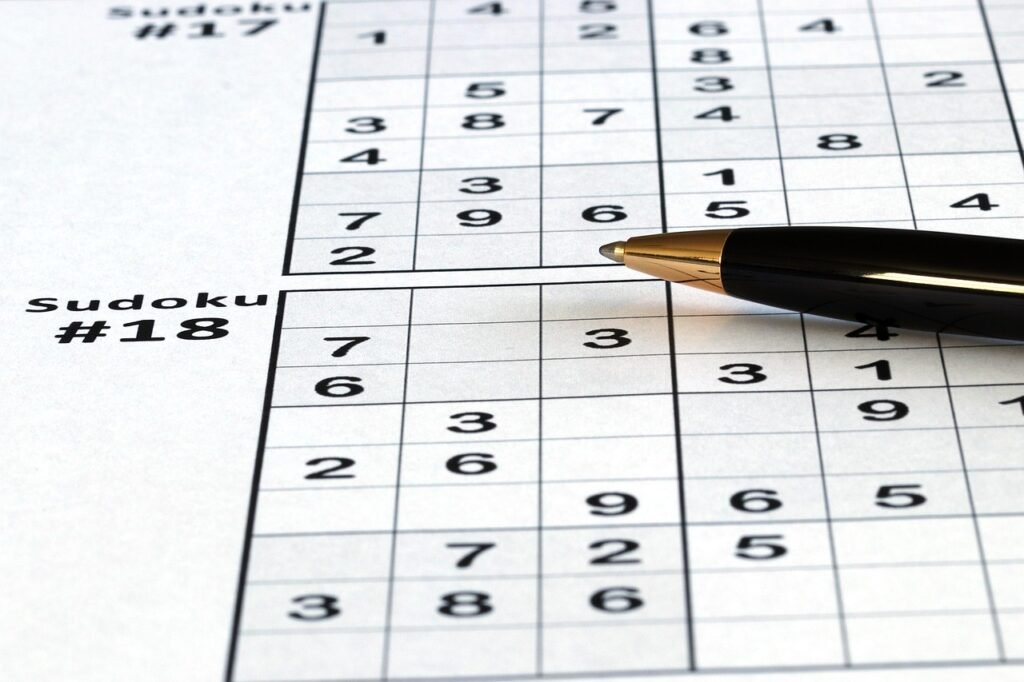
Rebus puzzles use combinations of words, letters, symbols, and their positions to represent a phrase or familiar expression. The solution may depend on how something is written rather than simply what the words mean.
For example, the word "HEAD" written above the word "HEELS" can suggest the expression "head over heels." Players must look at the entire arrangement and think creatively about its meaning.
These puzzles can be especially enjoyable in small groups because different people may interpret the same clue in different ways. Printable rebus sheets can range from straightforward expressions to more abstract riddles. Clear, large lettering helps make the visual clues easier to inspect.
8. Crossword Puzzles
Crossword puzzles combine vocabulary, general knowledge, and deduction. Players use written clues to fill words into intersecting horizontal and vertical spaces. Each correct answer can provide letters that help solve neighboring clues.
Seniors can choose crosswords based on their interests, including music, nature, literature, history, or everyday expressions. Short puzzles with familiar vocabulary are a sensible starting point, while larger grids offer more demanding challenges.
Printable crosswords also work well during quiet afternoons or group activities. If a clue proves difficult, players can skip it temporarily and return after filling in other answers. Large-print grids and clearly separated clues can improve readability and reduce unnecessary strain.
9. Hidden Object Games

Hidden object games ask players to locate specific items concealed within a detailed illustration. A picture might contain a garden, kitchen, market, or living room filled with objects that blend into the scene.
Players receive a checklist and mark each item as they discover it. The activity encourages visual scanning, sustained attention, and careful observation without requiring complicated written instructions.
To make the experience comfortable, choose images with sufficient contrast and objects that are not excessively small. Beginners can search for a short list of obvious items, while more challenging sheets can include overlapping objects or larger scenes.
These puzzles can also become a shared activity in which participants describe where they found each object and explain which clues helped them spot it.
10. Virtual Guess Who
A printable or virtual Guess Who game encourages players to identify a mystery character by asking questions that can be answered with yes or no. Questions might focus on hair color, glasses, clothing, facial hair, or other visible characteristics.
One player secretly selects a character, while the other asks questions and eliminates candidates until only one remains. A digital version can use a shared screen or video call, making the game suitable for family members who live far apart.
Printable character sheets allow players to mark off possibilities with a pencil. For seniors who prefer familiar subjects, the game can use fictional characters, historical personalities, or consenting family members' photographs.
The goal is to narrow down the options logically rather than guess randomly. Simple rules and clearly distinguishable pictures make the game easier to follow.
11. Treasure Hunt
A treasure hunt turns a series of clues into a small adventure. Participants solve riddles, interpret hints, or complete simple puzzles to discover the location of a hidden prize.
For a printable version, prepare a set of numbered clue cards. Each answer leads to another clue, with the final one revealing a small reward such as a favorite treat, a greeting card, or a keepsake.
The hunt can be adapted for an individual's interests. A music-themed hunt might include song titles, while a gardening version could feature pictures of familiar plants and tools.
For seniors with limited mobility, place all clues within an accessible room or let a helper bring the next clue after each answer. The challenge should come from solving the clues, not from navigating difficult spaces.
12. Memory Card Matching
Memory card matching uses pairs of identical pictures, symbols, or words. Players turn over two cards at a time, trying to remember their locations and uncover matching pairs.
To create a printable set, print two copies of each selected image, cut out the cards, and place them face down on a table. Participants take turns revealing two cards. If the pictures match, the player keeps the pair according to the game's rules; otherwise, the cards are turned face down again.
Start with a small number of pairs and familiar images, such as flowers, fruits, household objects, or animals. Add more cards as desired. Larger cards and strong visual contrast may be useful for people who have difficulty seeing small details.
This game offers a simple way to practice remembering locations while enjoying friendly competition or cooperative play.
13. Anagram Puzzles
Anagrams challenge players to create a new word or phrase by rearranging the letters of another word or phrase. For example, "LISTEN" can be rearranged to form "SILENT."
The activity encourages flexible thinking and familiarity with spelling patterns. It can be played with single words, themed vocabulary lists, or short phrases.
Printable anagram worksheets are easy to tailor to different abilities. Begin with short words and provide a category hint, such as food, animals, or places. More experienced players can work with longer words or solve several anagrams linked by a common theme.
A helpful approach is to look for familiar letter combinations, identify likely vowels, and try different arrangements. Players can also work in pairs, discussing possibilities until they reach a solution.
14. Jigsaw Puzzles
Jigsaw puzzles involve assembling individual pieces to recreate a complete picture. Players examine colors, shapes, edges, and visual details to determine where each piece belongs.
For seniors, a suitable puzzle depends on personal preference, vision, dexterity, and experience. A smaller puzzle with large pieces and a clear image can be a good starting point. Familiar scenes, such as gardens, landscapes, animals, and historic buildings, may make the activity particularly enjoyable.
Printable jigsaw puzzles can be created by printing a picture on sturdy paper, drawing puzzle-piece outlines on the back, and cutting along the lines. Alternatively, ready-made puzzles offer a convenient option for repeated use.
Working on a puzzle over several sessions is perfectly fine. There is no need to complete it in one sitting, and the process itself can be more rewarding than finishing quickly.
15. Matchstick Puzzles
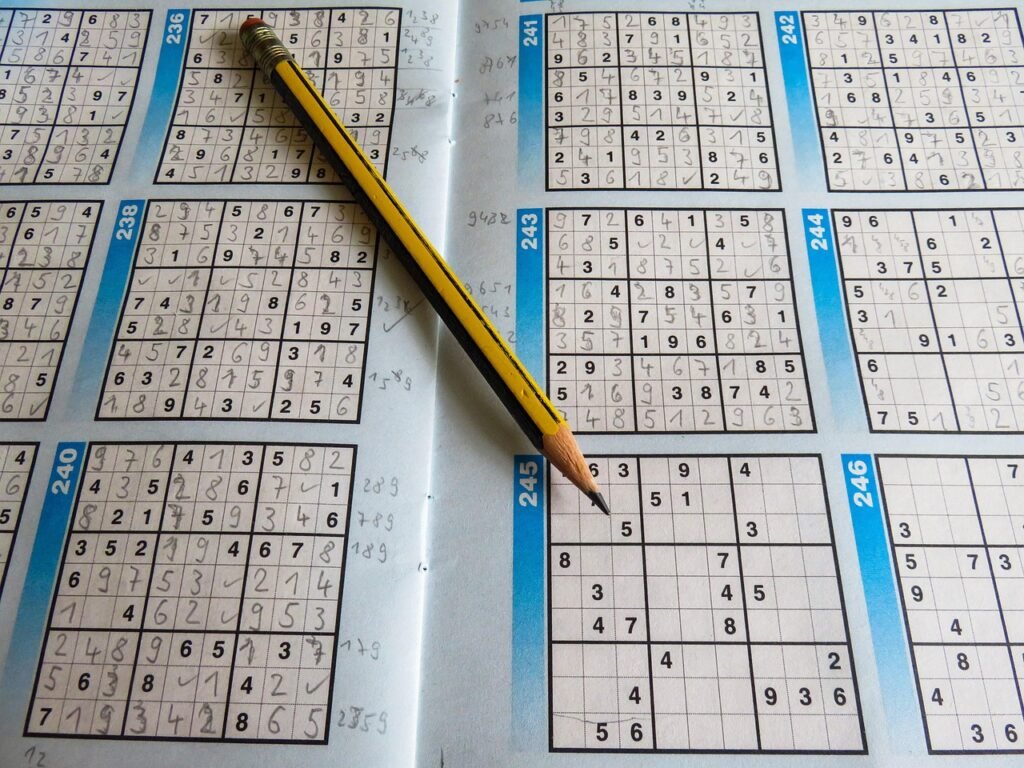
Matchstick puzzles use the arrangement of matchsticks or drawn lines to create equations, shapes, and patterns. Players are challenged to move, remove, or reposition a specified number of pieces to make the arrangement correct.
A simple worksheet might show an incorrect Roman-numeral equation and ask the player to move one matchstick to fix it. Other puzzles involve turning one shape into another or creating a particular number of squares.
Printable diagrams are a convenient alternative to physical matches, especially when loose objects would be difficult to handle. Players can draw their proposed changes directly on the sheet or use pencils as stand-ins for matchsticks.
These puzzles encourage experimentation and logical reasoning. Include a clear instruction with each challenge so players know exactly how many pieces they may move and what result they need to achieve.
16. Kakuro Puzzles
Kakuro is a number puzzle that combines elements of crosswords and arithmetic. Players fill empty cells with digits from one through nine so that each horizontal or vertical run adds up to its designated clue. A digit cannot repeat within the same run.
Unlike Sudoku, Kakuro focuses on reaching exact sums rather than placing every digit in each row or column. For example, a two-cell run totaling four must contain one and three because repeating digits is not allowed.
Beginners should choose grids with short runs and smaller totals. More advanced puzzles may require players to compare several possible combinations before deciding which numbers fit.
Printable Kakuro sheets are useful for anyone who enjoys arithmetic and structured problem-solving. Clear clue markings and sufficiently large cells can make the calculations easier to manage.
17. Spot the Difference
Spot the difference puzzles present two similar pictures containing a number of small changes. Players compare the images and identify differences such as a missing object, a changed color, an altered shape, or an item that has moved.
These activities encourage careful visual comparison and attention to detail. Familiar scenes, including kitchens, parks, houses, and gardens, can make the pictures easier to interpret.
For a printable activity, choose two images with clear outlines and a manageable number of differences. Seniors who enjoy a greater challenge can try more detailed scenes with subtle changes.
A useful strategy is to compare one section at a time, moving from left to right or from top to bottom. Marking each discovered difference prevents players from repeatedly checking the same area.
18. Logic Grid Puzzles
Logic grid puzzles ask players to use a set of clues to determine relationships between people, objects, places, or events. The clues gradually eliminate impossible combinations until the remaining arrangement satisfies all the conditions.
For example, a puzzle might describe three friends who each prefer a different drink and hobby. By examining the clues, players work out which person enjoys which activity and which drink they prefer.
Printable grids provide spaces for recording possible and impossible matches. Players commonly use check marks and crosses to keep track of deductions and avoid repeating the same reasoning.
Start with puzzles involving two or three categories and only a few characters. More complex versions can be introduced when players are comfortable following several clues at once. These games reward careful reading, organization, and step-by-step thinking.
19. Crossnumber Puzzles
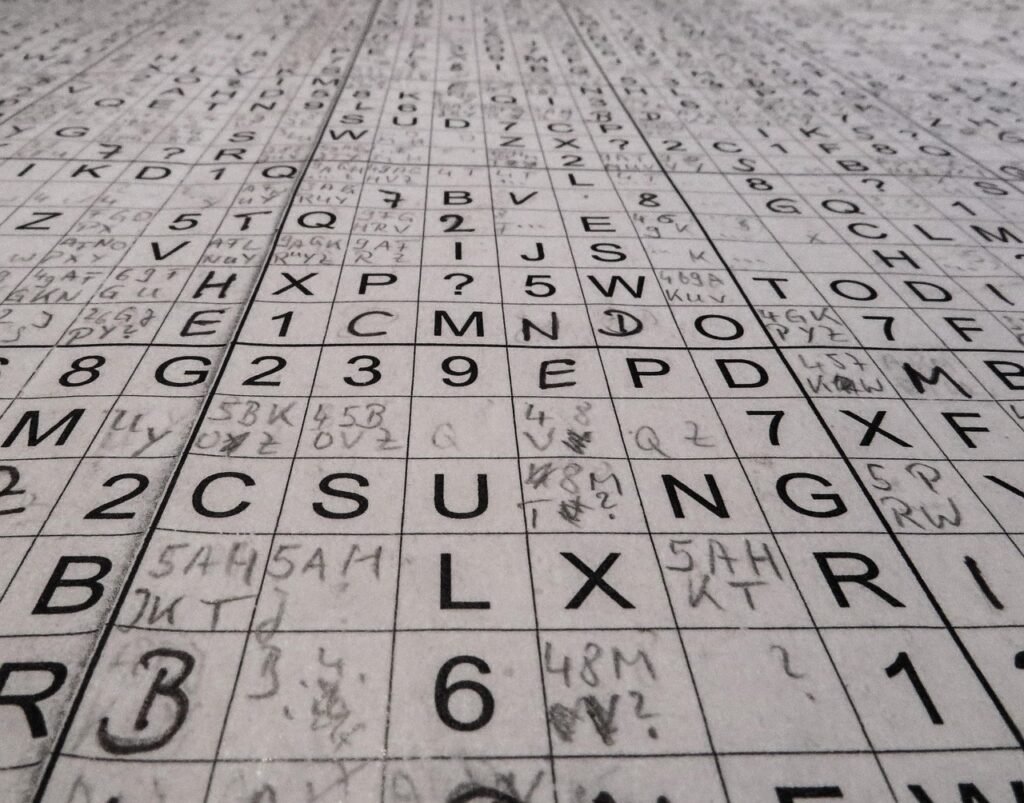
Crossnumber puzzles are numerical alternatives to traditional crosswords. Instead of filling the grid with words, players enter numbers by solving mathematical clues. Answers intersect, so digits from one solution can help reveal another.
Clues might involve addition, subtraction, multiplication, division, number sequences, or simple mathematical relationships. The exact rules vary by puzzle, so instructions should explain whether answers must meet any special conditions.
A beginner-friendly worksheet can use straightforward calculations and short answers. More advanced versions may incorporate prime numbers, fractions, or multi-step problems.
Crossnumber puzzles can appeal to seniors who enjoy numbers and want an activity that differs from ordinary arithmetic exercises. Large cells, readable clues, and room for calculations make printable versions more convenient to complete.
20. Hexagonal Puzzles
Hexagonal puzzles use six-sided shapes arranged into patterns, networks, or grids. Depending on the design, players may need to complete a number sequence, fit pieces together, identify a missing shape, or follow rules that connect neighboring hexagons.
These puzzles provide a different visual experience from familiar square grids. Players must pay attention to relationships in multiple directions, which can make even a small puzzle interesting.
Related Ideas You Might Love
For a simple printable activity, choose a honeycomb-style grid with missing numbers or shapes. Ask players to identify the pattern and fill the empty spaces. More challenging worksheets can involve rotating pieces, matching edges, or satisfying several rules simultaneously.
Begin with clear diagrams and only a few missing elements. Once the basic pattern becomes familiar, larger arrangements can offer additional variety. Hexagonal puzzles are particularly suitable for seniors who enjoy geometry, visual patterns, and discovering how individual pieces fit into a larger design.